A Letter From the Woman You Are Becoming

Reading Time: 5 minutes

From Future Amy, To the Amy Who Is Almost There

Dear you.

Dear brave, brilliant, bone-tired, still-standing, still-kind, still-carrying-the-lantern you.

I am writing from the other side of everything you are in the middle of right now, from the place you cannot quite see yet because you are still in the thick of the becoming, still in the part of the story that feels more like enduring than arriving,

and I want to tell you what is here.

I want to tell you what is waiting.

First, the practical things, because I know you, I know you need to know the practical things before you can let yourself feel the rest of it.

You are okay.

Financially, professionally, in all the ways that kept you awake at two in the morning doing the mathematics of whether you would make it through another April,

you are okay.

More than okay.

You found the room that was shaped like you. I know you have been looking for it for a very long time. I know there were years you stopped believing it existed,

but it exists.

It exists, and you are in it, and it feels exactly the way you imagined it would feel on the nights you let yourself imagine.

It feels like breathing. It feels like a morning that belongs to you. It feels like walking into a room and the room saying“There you are. We have been waiting. Come in, come in, stay as long as you like.

The doctorate is done.

I want to tell you that because I know how it weighs on you, the unfinished thing, the work that is so important and so yours.

It is done.

And it is extraordinary.

Not because a committee said so, though they did, but because it is true. Because you wrote it in your own voice, the voice that took years to trust, the voice that is scholarly and embodied and refuses to pretend that knowing happens outside of a body, outside of a life, outside of nineteen years of labour and love and parking lot mornings.

You wrote the truest thing.

Alonetude is in the world now. People are reading it. The ones who work in the in-between spaces, the ones on the contracts, the ones performing well in the parking lots of institutions that need their labour and withhold their belonging,

they are reading your words, and they are feeling less alone, and that is the work, that is the real work, that is what nineteen years was always building toward, even when it felt like it was building toward nothing.

Now let me tell you about the things that are not practical.

Let me tell you about a Tuesday morning.

An ordinary Tuesday. Not a milestone Tuesday. Not an achievement Tuesday.

Just a Tuesday when you woke up and lay still for a moment, the way you learned to do in Loreto,

and the first thing you felt was not the tightening.

The first thing you felt was yourself.

Present. Whole. Quietly, ordinarily, unremarkably glad to be alive on a Tuesday morning with the light coming through the window and nowhere to be for another hour and a cup of something warm in your future and the work you love waiting for you like a friend rather than a demand.

You lay in it, and you thought oh. So this is what they meant.

This is what rest was building toward. This is what the shore was practicing you for. This is the life on the other side of the performance of a life.

It is quieter than you expected. It is more ordinary than you expected.

It is so much better than anything you expected.

I want to tell you about your body.

Your shoulders come down.

I know that sounds like such a small thing. It is not a small thing. Your shoulders coming down is physical evidence that a woman is no longer waiting to find out whether she is still employed.

Your shoulders coming down is what safety feels like in the body.

You are safe. I need you to hear that all the way down.

You are safe.

The students found you.

The ones who needed you specifically. The ones who were on the contracts. The ones performing fine in the parking lots. The ones who read alonetude and recognized themselves in it and needed someone who had mapped the territory and come back to say I know this place, I know how to navigate this, here is what helped, here is how you find the shore inside yourself when there is no Loreto within reach.

You became that person.

I want to tell you about the writing.

You became a poet.

And you did not even know it.

I know that surprises you. But the line between scholar and poet turned out to be much thinner than you thought, and one morning you stopped trying to categorize yourself and just wrote what the truth required,

and what the truth required, Amy, was both.

It was always both. You were always both.

Tom knows.

I want to say that because I know you worry about whether the people who love you really see the whole of it.

Tom knows.

Not because you performed it less but because you finally let yourself be known the way you always knew how to know others, fully, carefully, without looking away.

And he stayed. Of course, he stayed. He has always been staying.

You are loved. You are chosen. You are someone’s permanent.

I want to tell you what I know now that I wish you knew then, in the middle of it, in the parking lot mornings, in the two a.m. turnings:

None of it was wasted.

Not one morning. Not one contract. Not one raised bar. Not one carefully worded rejection in professional language with warmth in the room.

None of it was wasted because it all became the work.

I want to leave you with something small.

A Tuesday morning. A cup of something warm. Your shoulders are coming down. The work you love is waiting like a friend.

A smooth stone in your pocket.

The knowledge, finally unshakeable, lived in the body, permanent as the shore,

that you were always good enough.

Come forward.

I am here. I am you. I am waiting for Tuesday morning, the open window, and the work that finally looks like what you always knew it was.

Come forward.

You have already done the hardest part.

All that is left now is the living of it.

And the living of it, Amy, the living of it is so very, very beautiful.

De tu yo futuro, que te ha estado esperando con los brazos abiertos y el corazón lleno. Ya casi llegas. Sigue caminando.

From your future self, who has been waiting for you with open arms and a full heart. You are almost here. Keep walking.

Future Amy
Writer. Scholar. Poet. Whole.
Keeper of smooth stones.
The woman who came through.
Still here. Still kind. Still luminous.
Aquí estoy.

A note from the present. I do not yet know whether the woman who wrote this letter will become the woman it is from. That is part of what writing toward her is for.


Translation Note: Spanish phrases in this letter were assisted by Google Translate (translate.google.com). The Spanish is woven in as an act of reclamation, a return to a language of the body and the self that exists beyond institutional English.

The Parking Lot

Reading Time: < 1 minuteAfter the handshake I walked out.

Across the pavement.
Flat light.
The kind that belongs to neither day nor night.

I sat in the car.
The door closed.

I let the thing happen
that I had been holding
through the warmth of the room,
through the careful language,
through the kindness
of people who could see what I needed
and could not give it.

They could see it.
That is the part I am still sitting with.

And then I drove home.
And then I made dinner.
And then I answered emails.

Twenty-five years of that.
Not the crying.
The returning.
The next morning.
The next September.

In the shoulders.
In the jaw.
In the particular way
a body learns to wait
when waiting is the only contract
it has ever been offered.

Someone should have put a hand
on the roof of the car.
Should have stood in the flat light
and said: I know.
This is real.
I see the cost of this.

Nobody did.

So I am saying it now
to whoever is sitting
in a parking lot somewhere
with the engine running
and the building still visible
in the rear-view mirror.

I know.
This is real.
I see the cost of this.

You can drive home now.

The Contract

Reading Time: 4 minutes

They gave me a contract the way you give someone an umbrella after the rain has already started,

a document, a date, a number of months carefully chosen to end just before anything could be called permanent.

I signed it.

Of course, I signed it. I signed it the first time with something close to joy, the particular joy of a person who has worked very hard, been seen working very hard, and is finally, finally being let in.

I did not read the expiry date as a warning. I read it as a beginning.

That is the thing about the first contract. It feels like a door opening. It takes years to understand that it was never a door. It was a revolving one, and you were always going to end up back outside.

The second contract came, and I signed it with slightly less joy and slightly more relief, which is a different thing, relief being what joy becomes when it has learned to be grateful just to still be here.

I was still here. That felt like something. I made it mean something.

Here is what no one tells you about living in one-year increments.

You cannot plan a garden.

That sounds small. It is not small.

A garden requires the belief that you will be there for the harvest, that the thing you put in the ground today will be yours to tend through all its seasons, that the roots go down into soil that belongs to you long enough to matter.

I could not plan a garden.

I could not plan the way people plan when they know they are staying.

I planned the way people plan when they are guests. Carefully. Lightly. Always aware of where the door was.

Every spring it came.

The email, or the meeting, or sometimes just the silence that lasted a beat too long before someone said, “We are planning to have you back.

Planning to.

Two words doing the quiet work of keeping a person just uncertain enough to be manageable.

Do you know what the annual uncertainty does to a body?

It does not break you all at once. That would almost be easier. A clean break, a clear moment, a before and after you could point to.

It is slower than that.

It is the way the shoulders never quite come down. The way sleep becomes a negotiation in the months leading up to renewal. The way you cannot fully celebrate the good semester, because somewhere in the back of every good thing is the question of whether there will be a next one.

And the cruellest part, the part that I am still sitting with,

is that they needed me.

Not abstractly. Not in the way institutions need warm bodies to fill rooms.

They needed me specifically. My expertise. My courses. My relationships with the students. My willingness to sit on the committees, cover the gaps, and do the invisible work that kept things running while they endlessly searched for the person they actually wanted in the position I was already doing.

They used my labour to hold the place for someone else’s permanence.

I was the placeholder. For nineteen years, I was the placeholder.

And they were kind about it. That is the part that makes it complicated. They were genuinely kind. They appreciated me. They said so. They meant it.

Appreciation and belonging are not the same thing. I know that now.

I am tearing up the contract now.

Not in anger. In grief. In the quiet grief of a woman who finally understands what she was signing all those years,

and who is ready, for the first time, to sign something different.

Something that says I belong to my own future.

Something that says my labour is not available for indefinite borrowing.

Something that says I am not a placeholder. I am not pending. I am not provisional.

Something that has no expiry date because it is written in the only ink that does not fade:

the knowledge of her own worth, which was never, not for a single year of all those years, in question.

A Coda, in My Own Voice

I want to say one more thing, before the closing.

I signed each contract knowing what it was, eventually. The first one I signed in something close to joy. The later ones I signed knowing the shape of the door, and I signed them anyway, because the work was the work I wanted to do and because the imagined alternative was a country I had no map for. The institution wrote the terms. I accepted them. I also negotiated, sometimes, in small ways. I also rested when I could. I also taught well within the arrangement and let myself be proud of that.

It would be too easy to write the poem in which I am only the one signed against. The fuller truth is that I was also the one who kept signing, kept hoping the next renewal would feel different, kept producing the goodwill that made the next renewal more likely. Compliance had a quiet payoff for me too. I want the record to hold that line beside the line about precarity.

I am tearing up the contract now. I am also acknowledging that, for nineteen years, I helped renew it.

Aquí estoy. Ya no esperando renovación. Soy permanente en mí misma.

Here I am. No longer waiting for renewal. I am permanent within myself.

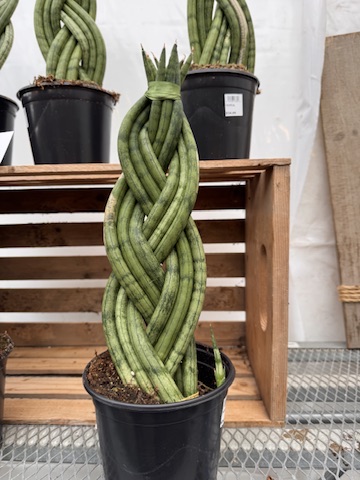
A snake plant with its stems intricately braided together, growing in a black pot on a greenhouse shelf, constrained into an elaborate pattern while still alive.

Woven into Something Not of Your Own Choosing
Photo: Amy Tucker, © 2026

Artist Statement: I found this plant in a greenhouse, a living thing that had been trained, woven, braided into a shape someone else chose for it. Still growing. Still green. Still entirely itself beneath the pattern that had been imposed upon it. I photographed it because the contract works the same way: take something living and weave it into increments, into one-year shapes, into a form that serves the institution’s aesthetics while the root keeps reaching down regardless. The braid is not the plant. The contract is not the person. Both are still alive underneath.


Translation Note: Spanish phrases in this poem were assisted by Google Translate (translate.google.com). The Spanish is woven in as an act of reclamation, a return to a language of the body and the self that exists beyond institutional English.

Poem: They Lied.

Poem: They Lied, a reckoning with the stories that institutions tell about labour, worth, and endurance. A poem of grief and clarity, written from the body of someone who believed them for too long.

Reading Time: 4 minutes

Content Warning: This post contains reflections on trauma, grief, and broken trust. Please care for yourself as you read, and feel free to step away if you need to.

A note on this poem. This poem is testimony. It does not include the self-questioning that I do in the essays, because testimony and analysis are different acts. I have chosen to let the poem be what it is.

Photograph from “Poem: They Lied.”, image 1.

Note. Thompson Rivers University, Faculty Council Award, 2025


They lied.
They lied and called it mentorship.
They lied and called it an opportunity.
They lied and called it a calling.

They told me the academy was a sanctuary.
They told me knowledge was sacred.
They told me my voice mattered.

So I gave them everything.

My mornings.
My nights.
My body, bent over screens until my eyes burned and my hands ached.
My stories, trimmed into acceptable methods.
My grief, formatted into theory.
My hope, footnoted into legitimacy.

They told me, Just one more course.
Just one more publication.
Just one more credential.

Sacrifice became the job description.

They dangled permanence like a mirage.
They called precarity “experience.”
They called overwork “passion.”
They called exploitation “professional growth.”

They told me belonging was coming.
Belonging never came.

They took my heart and turned it into service metrics.
They took my mind and turned it into deliverables.
They took my soul and turned it into outputs, grants, citations, and student evaluations that never saw me.

They smiled while doing it.
They thanked me while extracting me.
They called me resilient while grinding me down.

I am angry because they knew.
They knew the system was built on unpaid labour,
on feminised care work,
on racialized and precarious bodies that teach, grade, counsel, and disappear.

They knew, and they kept recruiting.

They sold me the myth of the scholar as a free thinker
while chaining my thinking to funding cycles, metrics, and institutional branding.

They called it education.
I call it extraction.

They stole nineteen years of my life
and told me I should be grateful.

They stole my weekends, my sleep, my joy,
and told me I was lucky to be here.

Lucky.

No.
I was useful.

But here is what remained beyond their reach:

My anger is clarity,
It is the sound of a system being named.

They cannot have the part of me that walks into the sea and remembers herself.
They cannot have the part of me that writes without permission.
They cannot have the part of me that refuses to confuse suffering with virtue.

They stole my labour.
They stole my trust.
They stole my youth.

They told me I was lucky.
Lucky to be underpaid.
Lucky to be temporary.
Lucky to be invisible until they needed my labour.

Lucky.

I was convenient.
Lucky had nothing to do with it.

They knew this system runs on people who care too much.
They knew women, racialized scholars, Indigenous scholars, contract faculty, and graduate students carry the weight of the institution on their backs.
They knew.

And they kept recruiting us anyway.

They told me I was a scholar.
Then, I chained my scholarship to funding cycles, productivity dashboards, and institutional branding strategies.

They told me teaching was sacred.
Then, I reduced it to enrolment numbers and student satisfaction scores.

They told me my voice mattered.
Then edited it until it fit their journals, their grants, their safe narratives.

They stole years of my life.
They stole sleep, relationships, health, and creativity.
They stole the wild parts of thinking and replaced them with templates.

And they had the audacity to call this a career.

I am angry because I see the architecture now.
I see how the academy consumes people and calls it mentorship.
I see how it extracts love and calls it professionalism.
I see how it eats souls and publishes the findings.

They took my labour.
They took my trust.
They took my youth.

My future is mine to keep.

My anger has direction.
It is a theory.
It is a method.
It is evidence.

It is the moment I stop confusing suffering with virtue.
It is the moment I stop calling harm an opportunity.
It is the moment I take my mind, my body, and my soul back from an institution that never planned to hold them.

They lied.
I believed.
Now I refuse.


Author’s Note

In this poem, they refer to the neoliberal academy: a system of higher education shaped by market logics, metrics-driven governance, academic capitalism, and precarious labour structures. The term names the institutional architectures and policies, and political-economic conditions that extract emotional, intellectual, and affective labour while promising belonging, security, and scholarly freedom that are rarely delivered. The poem is written as a critique of structural and symbolic violence within contemporary universities, and as a reclamation of agency, voice, and scholarly selfhood.

Aerial view of a blazing sunset above a sea of clouds, with snow-capped mountain peaks visible below, photographed from an airplane window.

Above the Smoke of What They Called a Career
Photo: Amy Tucker, © 2026

Artist Statement: I took this photograph from a window seat, ascending through the smoke and cloud of everything I was leaving behind. Below me, mountains I had not chosen; above me, a sky that had no record of my service. This image sits beside the poem because both of them refuse the ground floor. The poem names the extraction. The photograph holds the moment the body finally rose above it, not arrived, not saved, but airborne. Still moving. Still here.


Translation Note: Where Spanish appears in this collection, it was assisted by Google Translate (translate.google.com). The Spanish is woven in as an act of reclamation, a return to a language of the body and the self that exists beyond institutional English.
Poem: I Did Everything You Asked Me

Poem: I Did Everything You Asked Me, a poem of exhaustion, grief, and the moment of recognizing that full compliance is not protection. Written in the voice of someone who gave everything and was given nothing back.

Reading Time: 4 minutes

Content Warning: This post contains reflections on trauma, grief, and broken trust. Please care for yourself as you read, and feel free to step away if you need to.

A note on this poem. This poem is testimony. It does not include the self-questioning that I do in the essays, because testimony and analysis are different acts. I have chosen to let the poem be what it is.

I did everything you told me to do.
Every checkbox.
Every whispered rule was passed down like gospel.

I went back to school
When I was already carrying too much,
when sleep felt like a luxury,
When my body kept asking for mercy
And I kept answering with more work.

Seven years for a doctorate,
because I was teaching ten courses a year.

Thousands of students.
Hundreds of names passing through my inbox, my gradebook, and my care.

My days were never mine.
They belonged to the timetable.
To institutional clocks that paused for nothing: no thinking, no healing, no depth.

Morning to night,
grading until my eyes burned,
answering emails in the dark,
hands moving long after my body asked to stop.

I learned to read exhaustion as responsibility.
To mistake depletion for commitment.
To call survival professionalism.

I built other people’s futures carefully,
credit by credit, feedback by feedback,
while mine stalled in drafts and deadlines,
always almost ready, always postponed.

The work held me.
The pace did.

And my body kept the record
long before my CV did.

I collected debt like proof of devotion.
Eighty-five thousand dollars
for the right to keep chasing permanence.
For the privilege of becoming more hireable.
For the fantasy that if I sacrificed enough,
You would finally choose me.

I published.
I turned my life into citations,
my grief into theory,
my trauma into methods sections
that made pain legible and respectable.

I presented at conferences,
stood behind podiums with trembling hands,
smiling through exhaustion
while strangers called me “inspiring.”

I served.
Committees, reviews, mentoring,
equity work, invisible work,
the work that keeps institutions alive
and leaves women depleted.

I won awards.
Teaching awards.
Service awards.
Letters saying I was exceptional,
that I mattered,
that I was indispensable.

And still,
when I asked for permanence,
you chose someone fresher.
You chose someone younger.
You chose someone who had yet to spend decades
making themselves indispensable to survive.

You told me I was impressive,
never quite permanent.
Important
never quite institutional.
Valuable
never quite worth keeping.

They said,
Get more PD.
So I did.

Publish more.
So I did.

Go back to grad school.
So I did.

Be visible.
So I was.

Be excellent.
So I burned myself into excellence.

And still,
I remained temporary.

I am tired.
Tired in my bones,
tired in the marrow of credentials,
tired of translating exhaustion into professionalism.

I am tired of being a provisional life,
a renewable clause,
a syllabus name that disappears.

I did everything you told me to do.
And you taught me, quietly, structurally,
that the rules were never designed
for someone like me
to win.

I did everything you told me to do.
I paid with my body, mind and soul, for the privilege of believing you.
I gave you nineteen years of nights, weekends, and ten courses a year on your schedule.
You gave me exhaustion and called it opportunity.

I did everything you told me to do.
You kept me temporarily.
And I am tired.

I did everything you told me to do.
My mind earned the doctorate.
My body paid the debt.
And you still called me replaceable.

I did everything you told me to do.
You rewarded me with precarity, debt, and silence.
This is how institutions harvest women and call it mentorship.

I did everything you told me to do.
It was never about excellence.
It was about how long you could use me before I broke.

I did everything you told me to do.
You taught me that merit is a story institutions tell
to justify who they discard.

I did everything you told me to do. It was never enough, and that was the point.

Notation: This poem reflects the embodied costs of academic precarity, where institutional narratives of merit and excellence intersect with structural disposability, cumulative educational debt, and chronic overwork.

Written from the body that carried the labour, the teaching loads, the doctoral training, and the exhaustion, it critiques meritocratic promises that mask the extraction of precarious academic labour within neoliberal higher education systems.

This reflection also situates precarity as an embodied form of structural trauma that informs my doctoral research on alonetude as a healing, resistant, and relational practice, an intentional reclaiming of rest, presence, and self-worth beyond institutional validation.

In this closing, “You” refers to the academy as an institution and system, its hiring committees, evaluation metrics, productivity imperatives, and meritocratic narratives that promise stability while structurally producing precarity.

This reflection speaks back to academic systems that demand relentless credentialing, publication, service, and teaching in exchange for disposability.

It situates my embodied experience of denial, debt, overwork, and exhaustion within broader structures of neoliberal higher education, where excellence is extracted from precarious bodies.

This narrative also connects directly to my research on alonetude as a relational, decolonial, and trauma-informed practice of refusal and restoration, a way of reclaiming worth, rest, and presence beyond institutional validation.

I am enough.

Title: Always on the Outside

Photograph from “Poem: I Did Everything You Asked Me”, image 1.

Photo: Amy Tucker, © 2026

A woman in a red sweater smiling while looking out an airplane window at a frozen, pale landscape below a white sky.

She Bought the Ticket Herself
Photo: Amy Tucker, © 2026

Artist Statement: I took this photograph somewhere over a frozen landscape, mid-flight, somewhere between the institution and whatever comes after. I am smiling. I want to remember that. Not because everything was resolved, but because the window was mine, and the seat was mine, and no one had assigned me a schedule for the next three hours. The exhaustion in this poem is real. So is this moment. Both are true. I took the picture so I would not forget that the body that carried all of that weight also eventually looked out a window and smiled.


Translation Note: Where Spanish appears in this collection, it was assisted by Google Translate (translate.google.com). The Spanish is woven in as an act of reclamation, a return to a language of the body and the self that exists beyond institutional English.

Performing Fine

Reading Time: 4 minutes

The Exhaustion of Always Being Okay

Let me tell you about the morning routine.

Not the one on the wellness blog, not the one with the gratitude journal and the warm lemon water and the ten minutes of mindfulness before the day begins.

The real one.

The one that starts before the alarm, in the dark, in the space between sleep and waking, where the body knows things the performing self has not yet had time to manage.

The body knows it is tired.

Not the kind of tired that a weekend fixes. The kind of tired that has been accumulating since somewhere around year three, when she first understood that this was not temporary, that the precarity was not a phase, that she was going to have to find a way to live inside the uncertainty without letting it show,

because letting it show was a kind of weakness she could not afford in rooms that were already measuring her.

So she learned the routine.

Coffee first. Then the face. Not makeup, though that too, but underneath the makeup, the other face, the one that says I am fine, I am more than fine, I am exactly the kind of person who belongs in this room and is grateful to be here and has no complicated feelings about any of this.

She has been putting on that face for so long that it now comes on without effort. That is the most frightening part. How easy it has become.

She walks into the building.

Someone says, how are you?

Fine, she says. Really well, actually.

And she means it in the moment she says it, or she means the performance of it, which has become indistinguishable from meaning it, which is its own kind of loss.

Four words covering a parking lot morning, a two a.m. waking, a contract that expires in April, a rejection letter she has read enough times to have memorized its careful language, its warm tone, its devastating politeness.

Really well.

The performance has a texture.

She performs well in the meeting where they discuss the course she has taught for twelve years, as though it were hypothetical, as though anyone in the room could walk in tomorrow and do what she does in it.

She performs fine on the committee she did not want to join and joined anyway because she understood, without anyone saying it, that visible commitment was part of the performance, that being seen to invest in the institution that was not investing in her was somehow still required.

She brings the agenda items. She does the follow-up. She volunteers for the subcommittee.

She is very, very fine.

But here is what fine looks like from the inside.

Fine is the shower that runs a little longer than it needs to because the shower is the one place where the performance is not required, where the face can do what it actually needs to do, where the grief gets its ten minutes before being folded up and put away for another day.

Fine is the car parked a little longer than it needs to be, engine off, hands in her lap, gathering herself for the walk across the car park that has to look like a woman arriving, not a woman deciding whether she has enough left to make it through another day of this.

Fine is the student who asks, in passing, “Are you okay?

And she says yes, of course, just busy, end of term, you know how it is,

and she sees in their face that they almost said more, that they saw something she did not mean to show, and she pivots, efficiently, back to them, back to their needs, back to the performance of the woman who is here for everyone else and fine, always fine, about herself.

She has been performing fine for so long that she has almost forgotten what the alternative looks like.

Not fine lives in the parking lot. In the shower. In the middle of the night, when there is nothing left to manage it with.

Not fine is the body, the body that has been keeping the actual record all along, the body that does not perform, that cannot be convinced by professional language or institutional appreciation or the warm handshake of the person who will not give her the job.

The body knows. The body has always known.

I want to say something about the wellness programmes.

The institution had them. Of course, it had them. The workshops on resilience. The mindfulness sessions at lunch on Wednesdays. The employee assistance programme with the phone number she never called.

She did not call because she understood, without anyone telling her, that needing help within a system that was deciding her value was a risk she could not afford.

The wellness programme was in place, and she performed well through it. Everyone felt good about the Wednesday lunch, and nothing changed about the conditions that were making her unwell.

This is what she would later understand as the perfect performance, the institution’s performance, of caring without changing anything.

She recognized it because she had been performing for so long herself.

She is learning to stop.

Not all at once. That is not how you stop something that has become the texture of a life.

But slowly. In the small moments first.

When the student asks if she is okay, she pauses for a half-second longer before saying “fine.”

Just a half-second of letting the question actually land.

In that gap, small and fragile and very new, she is learning to let herself be not fine,

to let not fine be survivable,

to let one true thing through at a time.

She will not always be fine.

She is already not fine, and she is surviving it, and the surviving is starting to feel less like performing and more like living.

which is its own kind of beginning.

Which is, after all of this, enough.

Aquí estoy. No siempre bien, pero aquí. Y eso es suficiente por ahora.

Here I am. Not always fine, but here. And that is enough for now.


Translation Note: Spanish phrases in this poem were assisted by Google Translate (translate.google.com). The Spanish is woven in as an act of reclamation, a return to a language of the body and the self that exists beyond institutional English.
I Taught You How to Think

Reading Time: 4 minutes

A Love Letter to the Students

I want to start with the truth of it, the whole truth, beyond the professional version, beyond the version that fits neatly into a teaching philosophy statement or a curriculum vitae or a course outline with measurable learning outcomes.

The truth is this:

You were the reason.

Every morning, I drove to a building with uncertain commitment to keeping me, parked in a lot beyond my official territory, and walked into an office that remained mine only in temporary tenure.

And you were the reason I walked in anyway.

You were always the reason.

I taught you how to think.

Rather, I taught you how to think. I taught you to consider, to question, to hold complexity. That was the one thing I was most careful about, most deliberate about, most awake to the responsibility of, because I knew, I always knew, that the person standing at the front of the room holds a particular kind of power, the power of the first voice that names a thing, the power of the framing, the power of what gets put on the board and what gets left off,

and I was deliberate about using that power carefully.

Always. Every time.

I remember the ones who came in certain.

Certain they already knew. Certainly, the world was the shape they had been told it was.

I loved those ones especially.

Rather, I wanted to help them grow beyond certainty. Because I could see what was underneath the certainty, the bright, hungry, slightly frightened person who had learned that confidence was safer than curiosity,

and I wanted to show them that curiosity was the braver thing, the more useful thing, the thing that would serve them in every room they ever walked into for the rest of their lives.

I watched it happen. The slow unbuttoning of certainty. The moment a question landed differently than they expected, the moment they looked up from their notes and something in their face said wait.

I lived for that moment. I built entire lessons around creating the conditions for that moment.

I remember the ones who came in broken.

Invisibly. They were deeply broken on the inside. They had learned, as we all learn, to dress the breaking in something presentable.

But I could see it. I was always able to see it: the weight they were carrying into the room alongside their laptop bags, their coffee cups, and their careful normalcy.

I honoured their privacy. I created space for their pain rather than making them perform it for the curriculum.

I simply made the room safe enough that they could release the pretence, could let themselves be authentically themselves.

I taught you organizational behaviour, and what I was really teaching you was how power moves through a room and what to do when it moves over you.

I taught you business ethics, and what I was really teaching you was that ethics stands as a living practice, a daily commitment, lived in the small decision at the moment when no one is watching, the moment when the easier path and the right path diverge.

I taught you how to lead, and what I was really teaching you was that leadership resides in the voice that creates safety for others to speak, the voice that holds space for the full humanity of those around the table.

I want to tell you what you gave me.

Because this is a love letter, and love letters flow in all directions at once.

You gave me the email I opened on a Tuesday that said I got the job, and I kept thinking about what you said about integrity, and I wanted you to know.

You gave me the student who came back three years later to tell me she had started her own company and named one of her values after something she learned in my classroom.

You gave me the young man who sat in the back row for half a semester, saying nothing, and then one day said something so precise, so careful, so full of original thought, that the room went quiet in the best way, the way rooms go quiet when something true has just been said out loud for the first time.

I watched him realize what he had done. I watched him realize he could do that.

They withheld the job from me.

I need to say that here, in the middle of this love letter, because it belongs here, because you are the reason it hurt the way it hurt.

It was about the institution’s decision, and my response to it. I understand that now. And yet it felt personal because you were personal, because what we built in those rooms together was real and particular and mine, and to be told that I lacked the qualities they were seeking meant losing what felt like my own creation.

But it was real.

I know it was real because I carry you with me.

The institution’s decision about my contract cannot erase what happened in those rooms.

They lack that authority.

Thank you for trusting me with your uncertainty. Thank you for the questions that pushed me to become a better thinker. Thank you for changing. That sounds like a small thing. It is the largest thing.

To watch a person change, to be even a small part of a person coming into themselves more fully, that is the privilege of a lifetime.

I had it for nineteen years.

They can keep the title. They can keep the permanent office and the name on the door, and the security I was never offered.

They cannot keep what happened between us in those rooms.

That belongs to me. That belongs to you.

I taught you how to think.

You taught me why it was worth it.

Para mis estudiantes. Siempre fueron suficiente razón.

For my students. You were always reason enough.

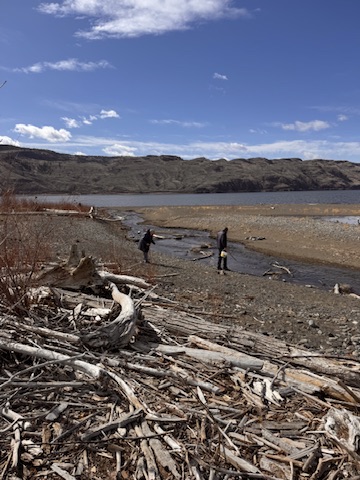
Two people standing at the edge of a wide river, surrounded by driftwood on a rocky shore, under a blue sky with dry hills in the background.

What We Made Together at the Edge of the Water
Photo: Amy Tucker, © 2026

Artist Statement: Two people at the river’s edge, surrounded by what the water had brought and left behind.


Translation Note: Spanish phrases in this poem were assisted by Google Translate (translate.google.com). The Spanish is woven in as an act of reclamation, a return to a language of the body and the self that exists beyond institutional English.
I Care Too Much

Reading Time: 2 minutes

I know.

I have been told. Not always in those words, but in the pause before them, in the slight tilt of the head that means you are going to get hurt, and I cannot protect you from yourself.

I care too much.

I care about the student at 11 at night who is falling apart, found my email address, and took a chance.

I care about the one who sits in the back row and has stopped submitting work, and I can see it, the withdrawal, the slow disappearance of a person deciding they are not worth the effort of continuing, and I cannot leave that alone. I was never able to leave that alone.

I care about doing it right.

Not right as in perfect. Right as in honest. Right as in the kind of teaching that does not just transfer information but actually touches the place in a person where they decide what they believe about themselves.

I care about the work the way some people care about cathedrals, the way some people will drive a hundred miles to stand in a specific light because beauty matters and attention to beauty is its own form of devotion.

That is what I bring to a classroom. That is what I always brought.

And yes, it has cost me.

It has cost me sleep, health, and the kind of detachment that would have made all of this so much easier to survive.

Detachment would have been armour. I never learned to wear it. I kept choosing the students over the self-protection, kept choosing the honest answer over the comfortable one, kept choosing to actually show up in the full sense of that phrase, present, awake, invested, mine on the table.

They called it inspiring. They called it a gift.

They also did not hire me.

And I have wondered, in the long nights, in the parking lot minutes, in the spaces between what I give and what comes back,

whether caring this much was a kind of wound I kept reopening, whether I should have learned the professional distance they teach you not in any course but in the accumulated silences of rooms that do not warm to you.

But I could not. I genuinely could not.

Because the moment I stop caring is the moment I become something I do not recognize, something that can sit across from a person in the most important years of their life and not feel the weight of that.

I cannot do it.

I care too much, and it is not a flaw I am willing to correct.

It is the most true thing about me.

It is the part of me that the right institution, the right room, the right people will one day recognize not as excess, not as liability,

but as exactly what they were looking for.

I am still waiting for that room.

I still believe it exists, after all of this.

That is either my greatest strength or my most faithful wound.

Perhaps it is both. Perhaps it has always been both.

Aquí estoy. Con todo mi corazón, todavía. With all my heart, still.


Translation Note: Spanish phrases in this poem were assisted by Google Translate (translate.google.com). The Spanish is woven in as an act of reclamation, a return to a language of the body and the self that exists beyond institutional English.

I Was Always Good Enough. I Just Never Belonged.

Reading Time: 4 minutes

A note on this poem. This poem is testimony. It does not include the self-questioning that I do in the essays, because testimony and analysis are different acts. I have chosen to let the poem be what it is.

That is the hardest kind of knowing.

Not the not-knowing, not the wondering, not the long nights asking yourself if maybe they were right, maybe there was something missing, maybe if you tried harder, became more, gave everything one more time.

That kind of not-knowing is painful, but it has somewhere to go. It has a project. It has another application, another credential, another bar to reach for.

But this knowing.

This quiet, cellular, unshakeable knowing that you were good enough, that you were always good enough, that good enough was never actually the question,

This has nowhere to go.

It just sits with you. It sits with you at the table and watches you eat. It sits with you in the classroom where you are brilliant, where you are exactly, precisely, quietly brilliant, and no one is taking notes on what that costs you to keep offering.

It sits with you, and it says,

You already know.

Belonging is a different thing from being good enough. In Spanish there is pertenecer, which holds inside it the word for to belong and the older idea of where one is held. English does not quite have that word. I had to go to another language to find the thing the institution had never offered me.

I had to learn that the hard way, the way you learn things that the body has to teach because the mind keeps finding reasons not to believe them.

I kept thinking that if I reached the standard, belonging would follow.

That competence was a key. That excellence was a door.

I did not understand that some doors are not locked from the outside.

They are simply not doors for you.

Not because of what you lack. Because of what you are.

Because belonging is not earned. It is either extended, or it is withheld, and the withholding can be so gracious, so warm, so full of genuine appreciation for everything you contribute,

that it takes you years to name it.

I belonged in the classrooms.

That I know. That I have always known.

I belonged in the moment a student’s face changed, the moment the confusion lifted and something settled in them, some new way of seeing that they would carry forward into a life I would never see.

I belonged in that. I was made for that.

That belonging was real, and no one can take it from me, not the committees, not the careful language, not the national searches that somehow always ended somewhere other than me.

But belonging in the institution, belonging in the structure, belonging in the place where your name is permanent, where your labour is protected, where you are not renewed or not renewed like a magazine subscription,

That belonging was never offered.

And I spent nineteen years trying to make myself into someone it would be offered to, without ever understanding that the offer was never about me.

It was about them. It was always about them. What they needed. What made them comfortable? What fit the picture, they had already decided to hang on the wall.

I was good enough. I was more than good enough. I was exceptional in the ways that actually matter, in the ways that change people, in the ways that send students back years later to say I have been thinking about what you said.

I just did not fit the frame.

And here is the grief of that.

The grief that has no clean edges.

The grief that is not about failure because there was no failure, the grief that is not about inadequacy because there was no inadequacy, the grief that lives in the gap between being good and being claimed,

between being valued and being wanted,

between being used and being belonged to.

I was always the one who gave everything.

I was rarely the one they built anything around.

That distinction is a quiet devastation.

It does not announce itself. It accumulates. It is the slow sediment of years of being appreciated but not anchored, celebrated but not secured, needed but not chosen.

They needed me. They just did not choose me.

I did not belong there.

I have said it now. I have let it be true without making it mean something is wrong with me.

I did not belong there.

And that is their loss, written in nineteen years of what they almost had,

and my life, written in every student who walked out, changed.

Aquí estoy. Siempre fui suficiente. Simplemente nunca fue mi lugar.

Here I am. I was always enough. It simply was never my place.

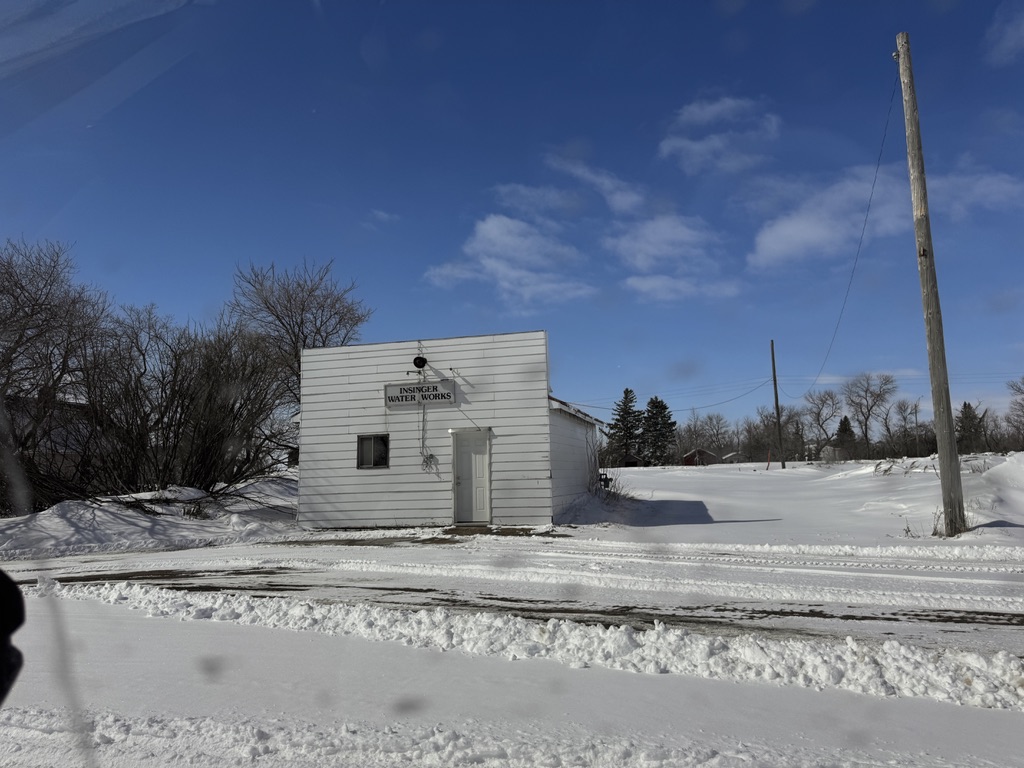
A small isolated white building labelled Insinger Water Works standing alone in a vast snow-covered prairie landscape under a bright blue winter sky.

The Place That Was Never Built for You
Photo: Amy Tucker, © 2026

Artist Statement: A small, functional building photographed from a moving vehicle on the prairie. No neighbouring building close enough to say you belong here.


Translation Note: Spanish phrases in this poem were assisted by Google Translate (translate.google.com). The Spanish is woven in as an act of reclamation, a return to a language of the body and the self that exists beyond institutional English.

Grief, and the Loving of Myself Back

Reading Time: 5 minutes

Let me tell you a story about a woman who cared too much.

You may already know her. She is the one who stayed late, because she felt called to remain while someone still needed her. She could imagine leaving, but the choice was never authentic.

She is the one who learned the true names of everyone in the room, beyond the official roster; the real names, the name of the fear behind the question, the name of the shame sitting in the back row pretending to look at a phone.

She saw it all. She always saw it all.

This is the story of what that cost her and what she is slowly, imperfectly learning to give herself back.

She grew up believing that goodness was a kind of currency.

That if you were honest enough, careful enough, if you held your ethics like a lantern in front of you and let it light the way for everyone who walked beside you, the world would eventually recognize the light and say, yes, come in, we have been waiting for you.

So she built herself around that belief.

She became a teacher not as a career but as a calling, the way some people are called to water, to the sea, to the particular kind of silence that is actually full of everything.

She walked into classrooms for nineteen years, and every single time, every single time, she felt the weight of it, the privilege and the gravity of standing in front of a person in the middle of their becoming and being trusted with some part of that.

She did not take it lightly. She never took it lightly.

The thought of causing harm, even a small harm, even an accidental one, a careless word on a difficult day, a mark that missed the story behind the work, it would find her at two in the morning and sit with her until she had turned it over enough times to find the place where she could do better.

That is who she was. That is who she is.

And then the rejections came.

Not once. Not the kind of once you can fold up, put in a drawer, and call experience.

Again and again, in professional language, in warm rooms, with people who shook her hand and meant it, who genuinely liked her, who would call her inspiring in one breath and not hire her in the next.

She did what she knew how to do. She worked harder. She got the specialization. She taught the courses they said required someone more qualified, taught them beautifully, taught them in a way students still write to her about, years later, to say that class changed something in me.

And they raised the bar.

She reached it. They raised it. She reached it again. They raised it again.

One more thing. There is always one more thing for a woman like her in rooms like those.

She gave them her mornings. She gave them her evenings. She gave them the years that were supposed to belong to her own becoming, and she gave it all without bitterness, or at least without letting the bitterness show, because she had been taught, without anyone ever saying it directly, that her bitterness would be the thing they remembered, not her nineteen years, not her students, not the lantern she carried into every room.

Here is the grief of it.

The grief is not the job. The grief is not the title, the permanence, or the office with her name on it.

The grief is the specific ache of a person who knows her own heart, who has always known her own heart, who has examined it the way she examined everything, carefully, honestly, with the lights on,

and found it good.

Found it genuinely, quietly, stubbornly good.

And then watched the world look at that goodness and calculate whether it was useful enough, credentialed enough, the right shape for the hole they needed to fill.

She cried in the parking lots. She cried in the shower where the sound was covered. She cried in the particular silence of a house gone quiet after everyone was asleep, when there was no one left to be strong for and the grief could finally take up its actual size.

It was large. It was larger than she expected.

But here is where the story turns.

Not sharply. Not the way stories turn in films, with music, a moment of clarity, and everything suddenly resolved.

Slowly. The way seasons turn, the way you do not notice the light changing until one morning it is different, and you realize it has been changing all along.

She started to forgive herself.

Not the institution. Not yet. Maybe not ever completely, and that is allowed; forgiveness is not a requirement for survival. She is learning that.

But herself.

She forgave herself for believing the promise. For thinking that merit was a straight line, that goodness would be seen, that the lantern would be enough.

She forgave herself for the parking lot mornings, for the two a.m. turnings, for the way she shrank herself in rooms that required her smallness, for every time she smiled when she should have named what was happening.

She was doing her best within a system designed for someone else’s best.

That is not a personal failure. That is a structural one, and she is only responsible for what is hers.

And slowly, in the way that only happens when you stop performing long enough to actually feel something, she started to love herself.

Not the self that was productive enough, published enough, specialized enough.

The self that stayed with the student at eleven at night. The self that could not walk past the person in the back row who had gone quiet. The self that agonized over a single careless moment because she believed that people deserved to be handled with care.

She started to love the woman who cared too much.

Not in spite of it. Because of it.

Because caring too much is only a problem in places where you don’t need to.

And she is no longer willing to edit herself into a shape that fits those places.

She is still here.

A little worn, a little wiser, carrying the grief not as a weight now but as a kind of knowledge, the knowledge of a woman who went all the way through something and came out the other side still herself, still kind, still ethical, still unable to walk past the person who needs her, and more in love with that than she has ever been.

She is learning to say: I was always enough. The room was too small. And I deserve a bigger room.

She is learning to say it and mean it.

She is not finished learning.

But she is here, and she is still the woman with the lantern, and the light has not gone out.

Aquí estoy. Con grietas, con gracia, con amor. Here I am. With cracks, with grace, with love.


Translation Note: Spanish phrases in this poem were assisted by Google Translate (translate.google.com). The Spanish is woven in as an act of reclamation, a return to a language of the body and the self that exists beyond institutional English.