Grief

Reading Time: 3 minutes

The thing about grief is that it arrives wearing unexpected clothes.

Sometimes it shows up in the middle of a Tuesday, in the middle of a sentence, in the middle of a life that looks, from the outside, like it is still standing.

Mine showed up somewhere between the third rejection and the moment I realized I had been caring for people and institutions that were carefully, professionally, without reciprocating that care.

And here is what makes it so hard to say out loud, what makes it sit so deep inside, in the part of the chest that is not quite the heart but lives next door to it:

I am kind.

I know that about myself the way I know my own handwriting. I have always been kind. Not as a strategy, not as a performance, not as the careful warmth institutions train you to project, but the real kind, the kind that costs something, the kind that sits with people in the difficult places without looking for the exit.

I would do anything for anyone.

That is simply a fact about me. That is a fact about me that I have lived out in a thousand quiet ways no one ever put in a file, no one ever counted, no one ever thought to mention in the meeting where they decided I was not quite enough.

And my ethics.

I need to talk about my ethics because they are not a section on a curriculum vitae, they are not a course I took and then put away. They are the architecture of me. They are the reason I have never once let a student fall without trying to catch them, never once used my power carelessly, never once walked out of a classroom without asking myself if I had done right by the people in it.

The thought of causing pain, even accidentally, even at a distance, even to someone who might never know,

it undoes me.

It lives in me for days. It wakes me in the night. It sends me back to the moment of it, turning it over, looking for the place where I could have been better, softer, more careful with the fragile thing.

That is who I am.

That is the person who sat in those rooms and was found not quite right, not quite fit, not quite the shape they were looking for.

And the grief of that, the specific grief of that, is not just about the job, is not just about the title or the permanence or the office with my name on the door.

The grief is this:

I know my own heart. I have always known my own heart. And my heart is good.

Not perfect. Not without error. But good in the deep way, good in the way that has cost me things, that has kept me up at night, that has made me choose integrity in the moments when choosing otherwise would have been so much easier.

And they looked at that heart and said not qualified.

That is the wound that does not close cleanly.

That is the grief that does not have a tidy ending, that does not resolve into wisdom on a schedule, that sits in the deep inside and asks the question I am most afraid of:

If this is not enough, what was any of it for?

An answer has yet to arrive.

I have only the question and the ache of it and the knowledge, stubborn and unshakeable, that my kindness was real, my ethics were real, my care was real,

even when the system looked straight at all of it and looked away.


Translation Note: Where Spanish appears in this collection, it was assisted by Google Translate (translate.google.com). The Spanish is woven in as an act of reclamation, a return to a language of the body and the self that exists beyond institutional English.
How Do I Feel? Do You Really Want to Know?

Reading Time: 3 minutes

Fine.

That is what I will say. That is what I always say, the word worn smooth from so much use, a stone I keep in my pocket for exactly this moment, this moment when someone tilts their head at just the right angle and asks.

But you said really.

You said, “Do I really want to know?” So I am going to stand here for a moment in the doorway of that question and decide if I trust you with the actual answer.

Here is the actual answer.

I am tired in a way that sleep does not touch.

I am tired in the bones, in the part of the body that decides whether to keep going, and that part has been running on the fumes of sheer stubbornness for longer than I can tell you without crying, and I am not going to cry here because I have learned that crying in certain rooms becomes the story instead of the thing that made me cry.

I feel like a building that has been condemned and is still being used.

I feel like I have been practicing wellness for so long that I have forgotten what unwellness is allowed to look like, what it sounds like when it is not managed, not reframed, not turned into a lesson, a research question, or a blog post that makes it mean something.

Sometimes it does not mean anything. Sometimes it is just a woman sitting in a parking lot before walking in, because she needs two more minutes not to perform.

I feel like I have given a nineteen-year gift to an institution that keeps the gift and forgets the giver.

I feel like I have been reasonable for an unreasonable amount of time.

I feel like every time I found the language for my pain, someone handed me a framework and said have you tried reframing?

I have reframed. I have reframed the picture until it hung perfectly straight on a wall that was on fire.

I feel like grief that does not know what it is grieving.

The career I was promised if I worked hard enough. The version of myself that believed that. The mornings I spent building something that someone else is now living in.

I feel like I am standing in the exact place where my life was supposed to begin, and being told the beginning has been postponed indefinitely.

I feel invisible in rooms that need my labour to function.

I feel loud in rooms where they need me to be quiet.

I feel the particular exhaustion of a woman who has smiled through things that deserved a reckoning.

I feel the specific loneliness of being surrounded by people and known by none of them, not really, not in the place where the actual story lives.

I feel like I have swallowed so many words I am full of them, heavy with things I was too professional to say, too careful to say, too afraid of the consequence to say, and they sit in me like stones, and I carry them to every meeting, every class, every cheerful email I send at eleven at night.

How do I feel?

I feel like that.

I feel like the question almost never gets asked, and when it does, I almost never answer it, because the answer is not a conversation; it is an excavation, and most people who ask are not dressed for that kind of work.

But you asked.

You said really.

So now you know what lies behind the word “fine”.

In Spanish I learned another version of the same armor. Bien. One syllable, smooth as a stone, and just as portable. Estoy bien. I am fine. Even there, even in the language I was returning to, the word arrived already practised.

Now you know what I carry into every room I am not quite allowed to belong to.

Now you know what it costs to keep showing up in a system that keeps calculating whether I am worth the space I already occupy.

That is how I feel.

That is the real answer, the one that lives underneath the managed one, the one I have never read aloud in a meeting, the one I write at midnight and do not send.

You asked.

I am still here, which means I have not given up on being asked.

Aquí estoy. Y esto es lo que cargo. And this is what I carry.

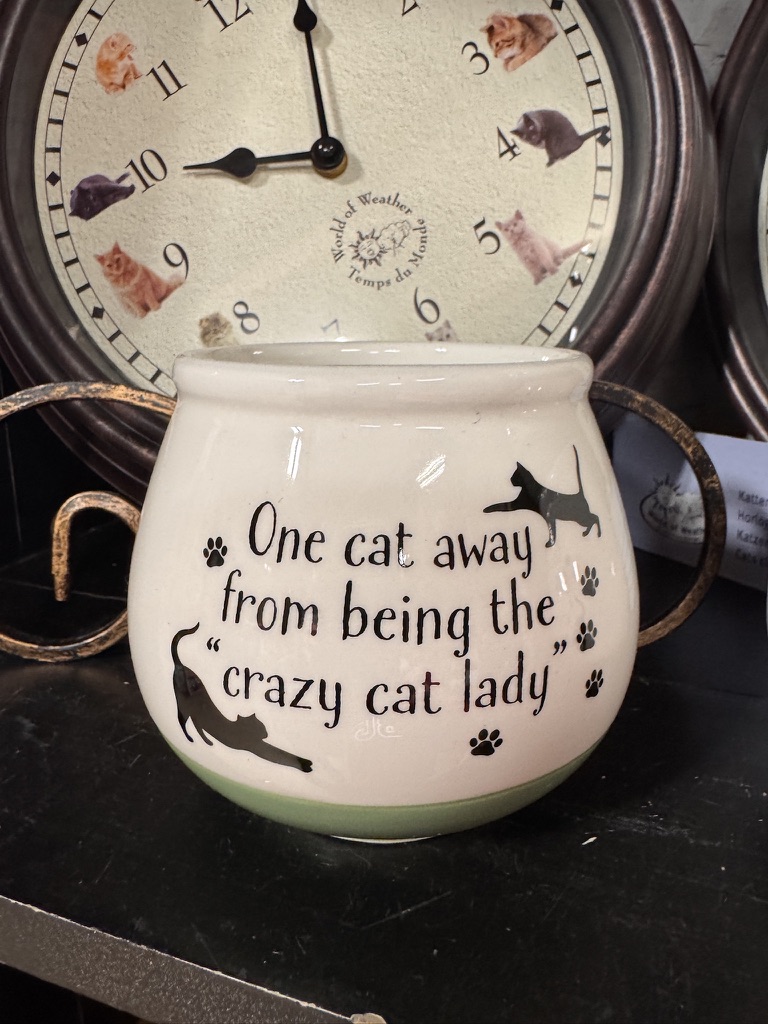
A round ceramic mug reading 'One cat away from being the crazy cat lady' in front of a cat-themed clock, photographed in a shop.

The Real Answer Lives Behind the Word Fine
Photo: Amy Tucker, © 2026

Artist Statement: A mug I found in a shop, photographed because it made me laugh out loud.


Translation Note: Spanish phrases in this poem were assisted by Google Translate (translate.google.com). The Spanish is woven in as an act of reclamation, a return to a language of the body and the self that exists beyond institutional English.
Cell B14

Reading Time: < 1 minute

Row 14. Column B.

She used to have a name.
Now she is a number
next to other numbers
who once had names
who no longer matter.

The spreadsheet cannot know
she spent seven years
dragging the students, no one else would carry
through doors built to stay closed —

that she memorized
the language of people
who hoped she would not learn it,
who built the rooms
and wrote the rules
and set the bars
and moved the bars.

That she answered the email.
11 p.m. Tuesday.
A student falling apart.
No one else.

That she came back.
Every time.
She came back.

The formula:
hours input, output divided,
worth calculated,
she, rounded down,
the remainder discarded.

She does not fit the cell.
She was never meant to.
Eighteen years of spilling into margins,
of saving what they hoped would be deleted,
of standing in rooms formatted
to make this particular woman
feel like an empty cell,
and refusing
to be one.

#VALUE, says the spreadsheet.
#VALUE, says the formula.
#VALUE, says the institution
built on this land
before her,
before her mother,
before the idea
that women like them
could belong here at all —
that has never once
said her name correctly.

Somewhere, a cursor hovers.
Someone in a building
she was never given a key to
selects her, drags her,
considers deleting her,
decides to move her
somewhere less visible.

The spreadsheet autosaves.

She is preserved —
held in amber,
a woman stopped mid-motion,
her hand still reaching,
the email still open,
the student still waiting.
I know that hand.
I know that student.
A number. A remainder.
According to the data, fine.

Discussion Board, 11 p.m.

Reading Time: < 1 minute

She posts at eleven.

Not because she chose eleven.
Because eleven is what is left.

The children are down.
The dishes are done.
The shift is over.
The drive home is over.
And now, in the dark,
she opens the browser.

The cursor blinks.
She types.
She always writes carefully.
She arrived with a second job
and a question she was almost afraid to ask.

She posts it into the void
and waits to see
if the void answers.

I answered.

Not because it was required.
Because I saw her.
Seeing people is what I do.

She got through.

She wrote to me two years later.
Subject line: I wanted you to know.

I wanted you to know.

I have a folder.
The only folder from those years
that holds everything it was supposed to.

It does not hold everything.

There is no folder for the student I almost reached.
No folder for the eleven o’clock that went unanswered
because I was also a person
with a window that was closing.

No folder for what the work could not give.


But it holds her.

And she is the reason
I answered at eleven,
long after the contract required it,
because somewhere in the dark
someone had posted into the void

and was waiting.

The door was open.
For her.
For you.

What the Sea Knows That I Am Still Learning

Reading Time: 2 minutes

It does not hold anything.

That is the first thing. The wave comes and does its full work and pulls back and the next wave comes and does its full work and the sea does not accumulate, does not keep a record of the previous waves, does not brace for the next one based on what the last one cost. Every wave is complete in itself. Every wave arrives without the weight of all the waves before it.

I have been watching it do this for years and I am still learning.

My particular difficulty is the not-keeping-the-record. I am a woman who keeps records. Who remembers what was said in the meeting in 2009 and who said it and what it cost and what the cost accumulated to over the following decade. Who carries the full weight of the history into the present tense and finds the present tense heavier for it. Who arrives at the new thing with the residue of all the old things still present, informing, sometimes usefully, often not.

The sea does not do this.

The sea has no opinion about the previous waves. The sea has no residue from the winter storms and the calm stretches and the particular summer afternoon when it was flat as glass and looked like a different substance entirely. The sea just keeps arriving. Full, each time. Unencumbered by its own history. Doing its work and releasing it and doing the next work.

I stood at the edge of it in February, in Loreto, in the particular quality of early morning light that belongs to that coast, and I thought: I want to learn to arrive that way. Full. Without the accumulated residue of the arriving I have already done. Present to this shore and not still standing on the last one.

I am still learning.

The sea is patient with my learning. The sea has been doing this longer than I have been watching it and will be doing it long after I am done watching. It has time. I am taking notes. Slowly, imperfectly, arriving a little more fully each time, setting down a little more of what I was carrying from the shore before.

What Rest Taught Me

Reading Time: 4 minutes

Notes From the Other Side of Exhaustion

I had no knowledge of how to rest.

I want to say that plainly, without shame, though there is still some shame in it, the residue of a culture that taught me that stillness was laziness wearing a different coat, that the empty hour was a moral failure, that my worth was a verb, always a verb, always something being done, produced, delivered, demonstrated.

I lacked knowledge of how to rest because I had never been taught that I possessed worth when I stopped.

Rest had to teach me from the beginning.

Like a language with no cognates, no familiar sounds, no words I already knew in a slightly different form.

A language I was starting from zero. In Loreto I learned to say descansa, and to mean it as instruction rather than permission. The word kept doing its work in me long after I stopped using it out loud.

The first lesson was the hardest.

The first lesson was: you are allowed to stop.

Rather than when the work is done. The work is never done. Rather than when you have earned it. You cannot earn rest. Rest is a right, a fundamental right. Rest is the heart of the chapter, the beginning of what comes next.

Rest is a right. Rest is as necessary as breathing. Rest is the condition in which a human being remains human rather than becoming a highly efficient machine quietly breaking down.

The second lesson came from the body.

The body is a patient teacher until it is not. The body will ask quietly for a long time, will send small messengers, fatigue, tension, the ache that lives between the shoulder blades of women who carry things they were not designed to carry alone.

The body will ask quietly; when that stops working, it will ask loudly; when that stops working, it will simply take what it needs, whether you planned for it or not.

My body took a shower.

My body took thirty days in a small town by a sea that had no interest in my productivity,

and in the taking it began, slowly, experimentally, with the caution of something that has been disappointed before,

to remember what it was.

Not a vehicle. Not a container for a brain that was always elsewhere, always in the next task.

A body. An actual body. With a hunger that was real and a tiredness that was real and a capacity for pleasure, the warmth of sun on an arm, the smell of salt and morning, the way cold water tastes when you are truly thirsty and you stop to drink it instead of carrying it untouched to the desk.

The body remembered. The body was so grateful to be remembered.

The third lesson was about silence.

She had been afraid of silence. In the silence, no performance was required. In the silence, there was nothing to manage, no register to calibrate, no warmth to project, no competence to demonstrate.

In the silence, there was only what was actually there.

And what was actually there was large.

The grief was large. The anger she had not let herself feel fully was large. The love was large, the love for the work and the students and the version of herself who had given everything and deserved so much more than she was given.

The silence held all of it without asking her to perform it differently.

And she learned that she could hold it too.

The fourth lesson was about time.

Institutional time is extracted time. She understood this now in the body, not just the mind.

In Loreto, she found her own time.

Time that moved at the speed of the tide. Time that had no agenda.

She breathed all the way down. For thirty days, she breathed all the way down.

She is still learning to do it at home.

The fifth lesson was the one she least expected.

She had expected rest to be the absence of something. The absence of work, of pressure, of the performance of fine.

She had not expected it to be a presence.

Rest arrived, and in the space it made something else arrive with it.

Herself.

She was curious. She was playful. She was creative. Not productive-creative, not research-output creative, but the other kind, the kind that makes something for the making of it, for the pure animal pleasure of having made a thing that did not exist before.

This was rest.

Not the absence of herself but the presence of all the parts of herself that the institution did not have a use for.

What rest taught me, finally, is this:

I was worth resting.

Not because I had earned it. Not because I was sick enough to need it.

Because I was a person. Because I was a body with a finite number of mornings, and I had been spending them in service of a system that was not spending anything in service of me.

Rest taught me that I am alive.

Not a contract. Not a credential. Not a performance of professional wellness.

Alive. Particular. Irreplaceable.

Worth the morning. Worth the shore. Worth the thirty days and every day that follows,

lived in my own time, at the full depth of my breath,

as myself.

Aquí estoy. Descansada, entera, despierta. Por fin.

Here I am. Rested, whole, awake. At last.

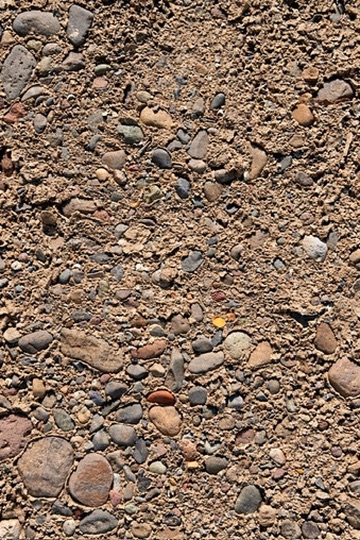
A close-up of smooth stones embedded in aggregate, many small, worn, individual stones held together in a single surface.

Each One Smooth for a Reason
Photo: Amy Tucker, © 2026

Artist Statement: An aggregate surface of many individual stones, each worn smooth by its own particular history.


Translation Note: Spanish phrases in this poem were assisted by Google Translate (translate.google.com). The Spanish is woven in as an act of reclamation, a return to a language of the body and the self that exists beyond institutional English.
Filed It. Opened the Browser.

Reading Time: < 1 minute

The email said: planning to have you back.

Eleven o’clock.
The house quiet.
The screen the only light.

I filed it.
Opened the browser.
Found her question waiting in the dark —
the one she was almost afraid to ask —
and typed:

I see you.
Here is what I know.
You are in the right place.

The contract was renewed in April.

She graduated in June.

I don’t know which mattered more —
the institution deciding to keep me
or the student deciding to stay.

I know they happened
on the same short contract,
in the same quiet house,
in the same body
that was never sure it was coming back

and always sure she could.

Poem: What the Walls Remember

Reading Time: 2 minutes


How do I love myself
when everyone else
taught me to withhold it?

Title: Layered Histories

Photograph from “Poem: What the Walls Remember”, image 1.

Photo: Amy Tucker, © 2026

The house remembers
What no one else did.

The sharpness of screams
caught in the drywall,
the broomstick’s shadow
stretching too long
across the kitchen tile.

Glass breaking,
again and again,
until silence learned
to brace itself.

inhale
The closet lock clicked shut.
hold
The darkness welcomed me like routine.
exhale
Stillness was my only shield.

Words thrown harder
than hands.
Worthless.
Useless.
Piece of…

(I refuse to repeat them.
I refuse to belong to them.)

I became so small
I forgot I was still breathing.
I folded myself
behind chairs,
beneath beds,
inside my own skin.

inhale
Is this love?
hold
Why does love feel like danger?
exhale
Why does kindness now
make me flinch?

They taught me
I was unlovable.
That my body was wrong,
my voice too loud,
my being too much.

So tell me:
How do I love myself
when everyone else
taught me to withhold it?

Still,
I remember
because my body does.
Beyond revenge,
returning
to the girl who survived
and wind in her lungs.

She breathed
through fear.
She whispered
through fists.
She lived
when no one wanted her to.

She is still here.
And maybe,
just maybe,
She is worthy
of the love
They never gave.

Title: Return to the Girl Who Survived

Photograph from “Poem: What the Walls Remember”, image 2.

Photo: Amy Tucker, © 2026


Translation Note: Where Spanish appears in this collection, it was assisted by Google Translate (translate.google.com). The Spanish is woven in as an act of reclamation, a return to a language of the body and the self that exists beyond institutional English.
Never Enough

Reading Time: 3 minutes

I learned the word “enough” the way you learn a language that no one speaks in your house.

From the outside. By watching. By getting it wrong and being corrected with a look.

I thought enough was a place. A destination with coordinates. If I worked this hard, if I published this much, if I sat on enough committees, answered enough emails at midnight, held enough office hours, wrote enough letters of reference for people who would never write one back,

I would arrive.

I would finally stand on something solid, and someone would say, “Yes, this.” You. Here.

They never said it.

There was always one more thing. One more credential. One more specialization. One more revision. One more year of proving what I had already proven the year before, and the year before that, in the same rooms, to the same people, who kept forgetting they had already seen me.

Or perhaps they never forgot. Perhaps that was the point.

I reached the bar.

I want you to understand that. I reached it. I put both hands on it, pulled myself up, stood on top of it, and looked them in the eye.

And they raised it.

Quietly. Professionally. With a smile that said we only want what is best for the department.

So I climbed again.

I got the specialization they mentioned. I built the expertise they suggested. I redesigned the courses, updated the research, learned the new framework, attended the conference, wrote the paper, revised the paper, revised the revision, and brought it back.

And they raised it again.

One more thing. There was always one more thing, and I believed each time that this would be the last thing, that this would be the thing that finally made me legible to them, finally translated me into a language they were willing to read.

I gave you everything.

I need to say that plainly, without apology, without softening it for your comfort.

I gave you my mornings before my children were awake. I gave you my evenings after my body had already given out. I gave you my health, my rest, my capacity for joy, the slow years of my life that I will not get back, offered up like evidence, as if I just bled enough in the right places, you would finally call it qualified.

I gave you my expertise, and you used it while deciding someone else deserved to own it.

I gave you my loyalty, and you gave me a pending contract renewal.

I gave you my belief that the system worked, that merit was real, that the path was honest, that if I followed every instruction, the door would open.

And you raised the bar one final time, calling it a national search.

Never enough.

It sounds like a personal failing. It sounds like something that lives in the one who is lacking.

But I have seen enough now to know the shape of it, the architecture of a system that needs you insufficiently, that requires your hunger to function, that would lose its power the moment you believed you were already whole.

Never enough was never about me.

It was a door with no handle on the inside.

It was a game with rules that changed when I learned them.

It was a bar on a pulley held by hands that were never going to let it rest.

I am done climbing.

I am done bringing more to people who have decided that more will never be the right amount.

I am enough in the way a river is enough, in the way the morning is enough, in the way nineteen years of changed lives is enough,

whether they counted it or not.

They never counted it.

But I do.

Aquí estoy. Siempre he sido suficiente. I have always been enough.


Translation Note: Spanish phrases in this poem were assisted by Google Translate (translate.google.com). The Spanish is woven in as an act of reclamation, a return to a language of the body and the self that exists beyond institutional English.

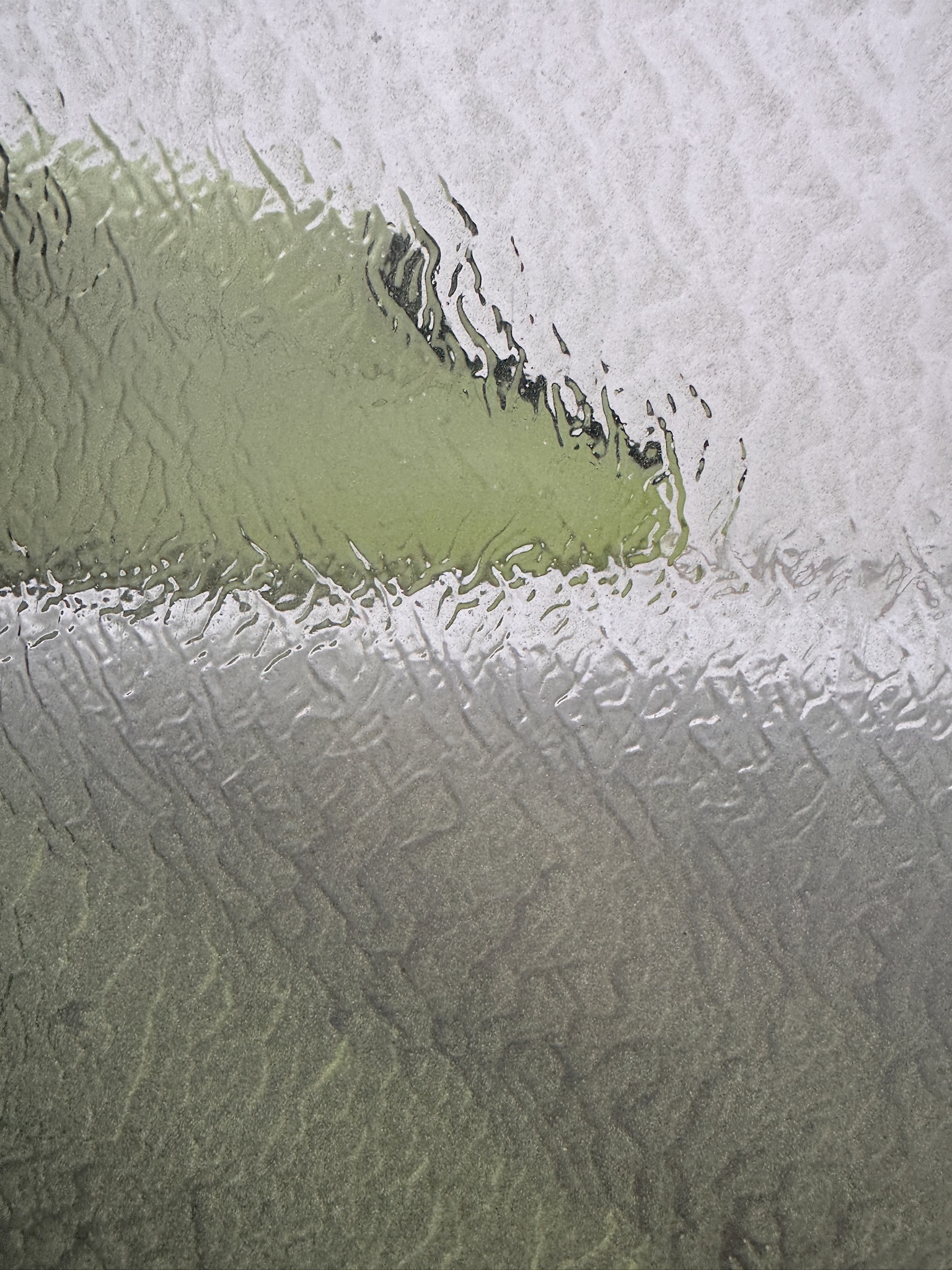
Abstract image of shallow sea water washing over pale sand, creating layered textures of green, white, and grey.

What the Tide Has Always Known
Photo: Amy Tucker, © 2026

Artist Statement: A photograph taken from above, where the water returns to the shore.


Translation Note: Spanish phrases in this poem were assisted by Google Translate (translate.google.com). The Spanish is woven in as an act of reclamation, a return to a language of the body and the self that exists beyond institutional English.

Poem: Who Knows

A short poem: Who Knows, on uncertainty, the sea, and the particular freedom that comes from letting the question remain open. Written from a moment of stillness beside the water in Loreto.

Reading Time: < 1 minute

“I am still here, even when my body expects me to disappear.”

I did not
mean to exist
so loudly.

You did
Say I made it up,
the way the floor creaked,
The glass shattered,
The night bent sideways.

Title: Fractured Evidence

Photograph from “Poem: Who Knows”, image 1.

Photo: Amy Tucker, © 2026

Note. Sea glass gathered from low tide: fragments shaped by impact, time, and dispute.

Who knows
what happened
when the truth
Became optional?

I remembered.
You rewrote.
The story shifted,
word by word,
until even silence
sounded suspicious.

Who knows
which silence
screamed first?

Title: The Shadow Wears My Shoes (I am still here)

Photograph from “Poem: Who Knows”, image 2.

Photo: Amy Tucker, © 2026

Notation: I included this image to remind myself that I am still here, even when my nervous system expects otherwise.


Translation Note: Where Spanish appears in this collection, it was assisted by Google Translate (translate.google.com). The Spanish is woven in as an act of reclamation, a return to a language of the body and the self that exists beyond institutional English.