A note on this poem. This poem is testimony. It does not include the self-questioning that I do in the essays, because testimony and analysis are different acts. I have chosen to let the poem be what it is.
That is the hardest kind of knowing.
Not the not-knowing, not the wondering, not the long nights asking yourself if maybe they were right, maybe there was something missing, maybe if you tried harder, became more, gave everything one more time.
That kind of not-knowing is painful, but it has somewhere to go. It has a project. It has another application, another credential, another bar to reach for.
But this knowing.
This quiet, cellular, unshakeable knowing that you were good enough, that you were always good enough, that good enough was never actually the question,
This has nowhere to go.
It just sits with you. It sits with you at the table and watches you eat. It sits with you in the classroom where you are brilliant, where you are exactly, precisely, quietly brilliant, and no one is taking notes on what that costs you to keep offering.
It sits with you, and it says,
You already know.
Belonging is a different thing from being good enough. In Spanish there is pertenecer, which holds inside it the word for to belong and the older idea of where one is held. English does not quite have that word. I had to go to another language to find the thing the institution had never offered me.
I had to learn that the hard way, the way you learn things that the body has to teach because the mind keeps finding reasons not to believe them.
I kept thinking that if I reached the standard, belonging would follow.
That competence was a key. That excellence was a door.
I did not understand that some doors are not locked from the outside.
They are simply not doors for you.
Not because of what you lack. Because of what you are.
Because belonging is not earned. It is either extended, or it is withheld, and the withholding can be so gracious, so warm, so full of genuine appreciation for everything you contribute,
that it takes you years to name it.
I belonged in the classrooms.
That I know. That I have always known.
I belonged in the moment a student’s face changed, the moment the confusion lifted and something settled in them, some new way of seeing that they would carry forward into a life I would never see.
I belonged in that. I was made for that.
That belonging was real, and no one can take it from me, not the committees, not the careful language, not the national searches that somehow always ended somewhere other than me.
But belonging in the institution, belonging in the structure, belonging in the place where your name is permanent, where your labour is protected, where you are not renewed or not renewed like a magazine subscription,
That belonging was never offered.
And I spent nineteen years trying to make myself into someone it would be offered to, without ever understanding that the offer was never about me.
It was about them. It was always about them. What they needed. What made them comfortable? What fit the picture, they had already decided to hang on the wall.
I was good enough. I was more than good enough. I was exceptional in the ways that actually matter, in the ways that change people, in the ways that send students back years later to say I have been thinking about what you said.
I just did not fit the frame.
And here is the grief of that.
The grief that has no clean edges.
The grief that is not about failure because there was no failure, the grief that is not about inadequacy because there was no inadequacy, the grief that lives in the gap between being good and being claimed,
between being valued and being wanted,
between being used and being belonged to.
I was always the one who gave everything.
I was rarely the one they built anything around.
That distinction is a quiet devastation.
It does not announce itself. It accumulates. It is the slow sediment of years of being appreciated but not anchored, celebrated but not secured, needed but not chosen.
They needed me. They just did not choose me.
I did not belong there.
I have said it now. I have let it be true without making it mean something is wrong with me.
I did not belong there.
And that is their loss, written in nineteen years of what they almost had,
and my life, written in every student who walked out, changed.
Aquí estoy. Siempre fui suficiente. Simplemente nunca fue mi lugar.
Here I am. I was always enough. It simply was never my place.
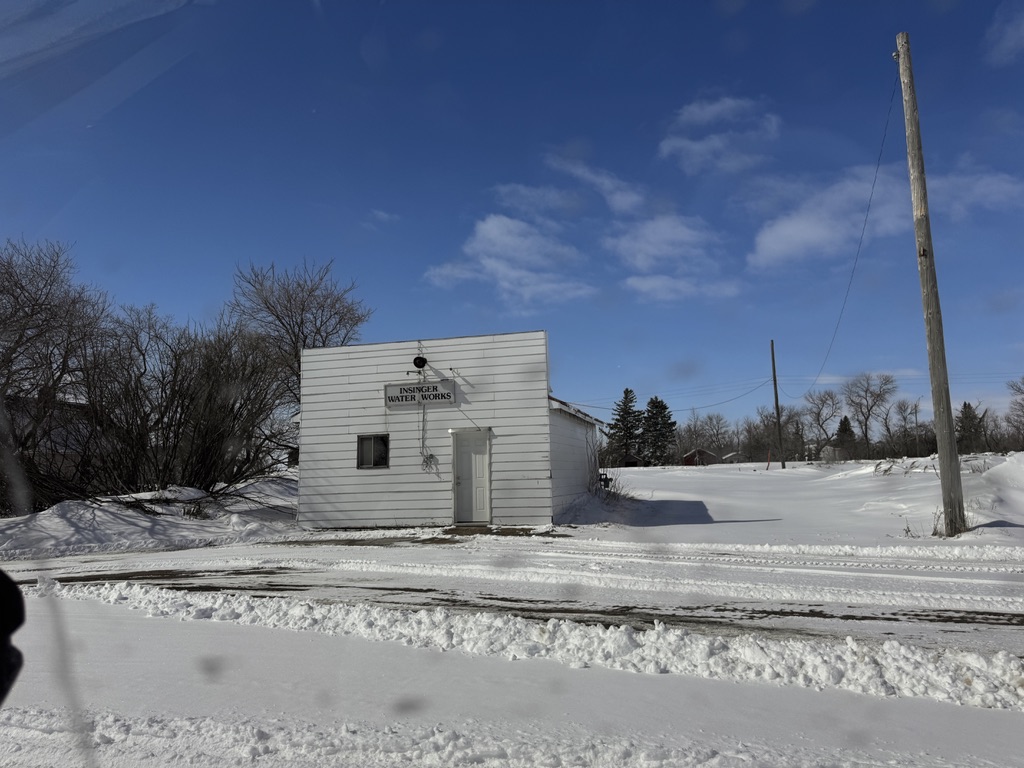
The Place That Was Never Built for You
Photo: Amy Tucker, © 2026
Artist Statement: A small, functional building photographed from a moving vehicle on the prairie. No neighbouring building close enough to say you belong here.
Translation Note: Spanish phrases in this poem were assisted by Google Translate (translate.google.com). The Spanish is woven in as an act of reclamation, a return to a language of the body and the self that exists beyond institutional English.

