Reading Time: 9 minutes
This piece belongs to A Human Geography of the Self, a series that reads my own life through the concepts geographers use to understand how people and places make one another. It draws on my doctoral and master’s work on contract academic labour, and on nineteen years of teaching on contract.
“For nineteen years I taught from inside an institution that never quite let me have a place in it.”
I have taught for a long time without an office. There were years when I graded a stack of papers at a kitchen table, joined a department meeting from a car, and answered student emails from a borrowed corner. I have been a faculty member who had to ask where the photocopier was, because by the time I learned a building I was teaching somewhere else. I belonged to the institution the way a guest belongs to a hotel. For nineteen years I taught from inside an institution that never quite let me have a place in it. I used to feel this as a personal failure of belonging. I understand it now as geography, and as a question about who is permitted a place at all.
Human geography has a precise language for the thinning out of place, for the spaces that refuse to become anyone’s, and for the working lives that are arranged to keep a person loose, mobile, and replaceable. This post sets two of those ideas side by side: the geographic concept of placelessness, and the geography of precarious work. Together they explain something I felt for two decades before I had the words for it.
The Thinning of Place
The foundational idea here belongs to the geographer Edward Relph. Merriman (2024), revisiting Relph’s 1976 book Place and Placelessness, explains its central worry. Relph argued that places matter because they have attracted and concentrated our intentions, becoming set apart from the surrounding space while still belonging to it, and that we form an essential relationship to places through the embodied practice of dwelling (Merriman, 2024). His fear was that the modern world was undergoing a gradual erasure of variety and localism under what he called the forces of placelessness (the thinning out of distinct, meaningful places into interchangeable, characterless space), leaving a weakened sense of place behind (Merriman, 2024).
Merriman (2024) then connects Relph to the anthropologist Marc Auge and his idea of the non-place (spaces of pure transit and circulation, such as airports, motorways, and malls, designed for passing through rather than dwelling in). In Auge’s account, the traditional place is familiar, historical, and relational, a space where identities and stories can be made, while the non-place is a space of circulation and consumption where, as Merriman quotes, solitudes coexist without creating any social bond (Merriman, 2024). I have worked in non-places. The borrowed corners and the between-class hallways were spaces I moved through without ever being permitted to dwell. The institution offered me circulation rather than belonging. I passed through it for nineteen years.
The Working Life Built to Keep You Loose
Why was I kept moving? Here the second body of scholarship answers, and it answers structurally rather than personally. Waite (2009), in the paper that helped open a critical geography of precarity (the condition of life and work organized around chronic uncertainty and insecurity), describes precarity as referring to life-worlds characterized by uncertainty and insecurity, and notes that the term is double-edged, naming both a damaging condition and a possible rallying point for resistance (Waite, 2009). That double edge matters to me. My precarity was a wound, and it became the ground of my advocacy. Both things are true, and Waite gives me the vocabulary to hold them together.
What strikes me most is how the geographers locate precarity in space itself. Ferreri, Dawson, and Vasudevan (2016), studying insecure dwelling in the flexible city, return to the very root of the word. The etymology of precarious, they note, comes from a Latin term meaning property held at the favour and pleasure of another person, a tenancy held at will (Ferreri et al., 2016). To be precarious, at the level of language, is to occupy a place only by someone else’s permission, a place that can be withdrawn. That is the most exact description of contract academic life I have ever read. I held my place in the university at the institution’s pleasure, semester by semester, always revocable. The word for my working life and the word for a place held on sufferance are the same word.
Ferreri and colleagues (2016) also dismantle the comforting idea that this insecurity belongs only to the low-waged or the unskilled. The shift toward casualization, they show, has spread to include graduate and highly skilled work, producing a precarious subjectivity that has become normalized across the cities of the global North (Ferreri et al., 2016). I am a doctor of social science who taught for nineteen years without a permanent place. I am exactly the figure they describe, the credentialed worker for whom security never arrived.
When Place Itself Becomes the Trap
There is a turn in this literature that complicated my own story in a way I needed. Simpson, Morgan, and Lewis (2021), studying manual workers in a struggling seaside town, develop the idea of place precarity (the way a particular place, through its narrowed opportunities, can itself produce and deepen insecurity). They show that precarity is far from only a condition of those forced to move; it can also root a person in one constrained place where the opportunities have thinned, producing what they call a geographical constriction (Simpson et al., 2021). Insecurity, in their account, is fundamentally rooted in the spatial context rather than floating free of it (Simpson et al., 2021).
This reframed my own situation honestly. I live in Oliver, a place I love, in a region I have chosen. My precarity was never the rootlessness of the migrant worker, and I will not borrow that experience. Mine was closer to what Simpson and colleagues describe: a deep attachment to a place I refused to leave, set against a profession that offered me no secure foothold within reach of it. The constriction was real, and it was spatial. I stayed near the water I loved and paid for that loyalty in insecurity. The geography names this exactly.
The Right to a Place
So I have stopped reading my long placelessness as a personal failure. It was a structure, and structures can be named, contested, and changed. This is why the work matters as a human rights story and not only as a personal lament. Relph showed that a meaningful place is something humans need, a field of dwelling rather than mere circulation. Waite, Ferreri, and Simpson and their colleagues show that precarious systems work by denying people exactly that, by keeping workers loose, revocable, and held only at another’s pleasure. To insist on the right to a place, an office, a contract, a foothold secure enough to dwell in, is to insist on something the geography confirms is a genuine human need.
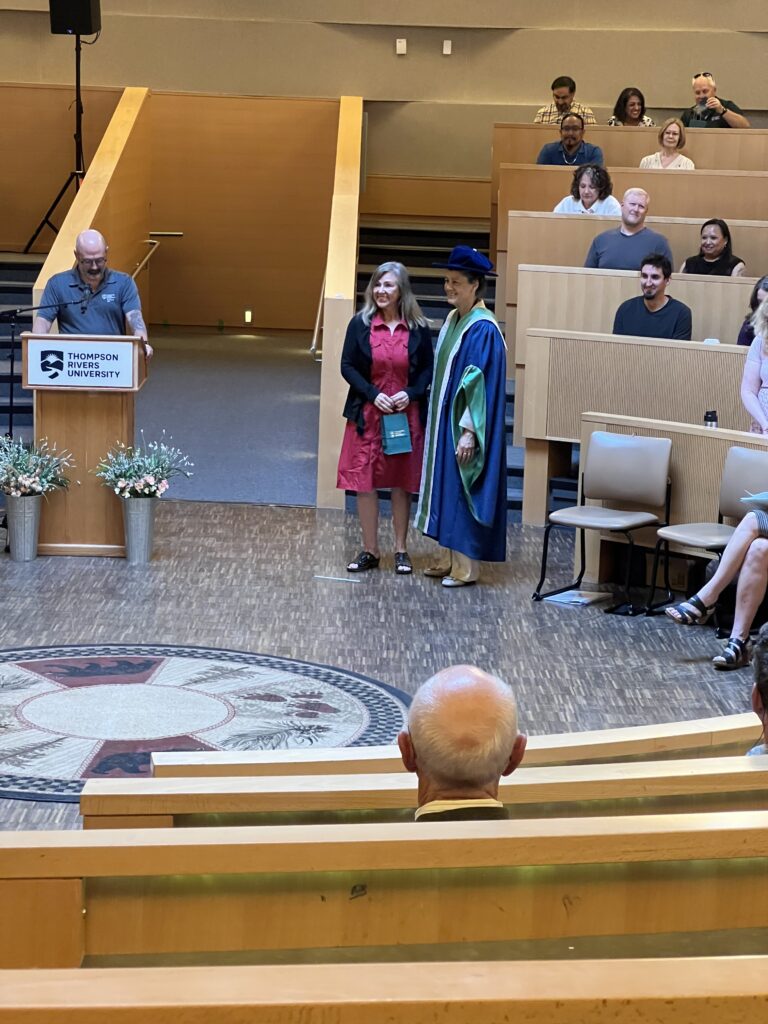
I have an office now, in the sense that matters most. I have built a place to stand in my writing, my advocacy, and my union work, a place no semester can revoke. I think often of the years at the kitchen table, the meetings from the car, the buildings I never learned because I was always leaving them. I used to think the problem was me, that I had failed to belong. The geography taught me otherwise. I was a person of deep attachments held inside a system designed to deny me a place. Naming that was the beginning of claiming one. Everyone who works deserves more than circulation. Everyone who works deserves somewhere to dwell.
References
Ferreri, M., Dawson, G., & Vasudevan, A. (2016). Living precariously: Property guardianship and the flexible city. Transactions of the Institute of British Geographers, 42(2), 246-259. https://doi.org/10.1111/tran.12162
Merriman, P. (2024). Places as refrains: A non-constructive alternative to assemblage thinking. Transactions of the Institute of British Geographers, 50(3), Article e12735. https://doi.org/10.1111/tran.12735
Relph, E. (1976). Place and placelessness. Pion.
Simpson, R., Morgan, R., & Lewis, P. (2021). Living and working on the edge: “Place precarity” and the experiences of male manual workers in a U.K. seaside town. Population, Space and Place, 27(8), Article e2447. https://doi.org/10.1002/psp.2447
Waite, L. (2009). A place and space for a critical geography of precarity? Geography Compass, 3(1), 412-433. https://doi.org/10.1111/j.1749-8198.2008.00184.x
ACADEMIC LENS
This post braids the geographic concept of placelessness with the critical geography of precarity to reframe academic contract labour as a spatial condition, grounded in peer-reviewed scholarship with one foundational book. Merriman (2024) supplies the authoritative recent account of Relph’s (1976) placelessness and Auge’s non-place, furnishing the post’s central image of an institution offering circulation rather than dwelling. Waite (2009) anchors the concept of precarity and its double character as both wound and rallying point, which legitimizes the writer’s movement from precarity to advocacy. Ferreri, Dawson, and Vasudevan (2016) provide two pivotal moves: the spatial etymology of precarious as property held at another’s pleasure, which fuses the post’s two concepts, and the documented spread of casualization to highly skilled and graduate work, which situates the credentialed contract academic precisely within the literature. Simpson, Morgan, and Lewis (2021) supply place precarity and geographical constriction, allowing the writer to distinguish her own rooted, place-attached precarity from the mobility-based precarity of migrant labour, an important ethical calibration that avoids appropriating a different population’s experience. Read through Scholarly Personal Narrative (Nash, 2004), the post converts two decades of felt institutional non-belonging into a structurally legible human rights claim, arguing that the need for a dwellable place is a genuine human requirement that precarious systems are designed to deny, while carefully bounding the analogy to the writer’s own situated experience.