Reading Time: 7 minutes
Reading Time: 7 minutes
Reading Time: 9 minutes
This piece belongs to A Human Geography of the Self, a series that reads my own life through the concepts geographers use to understand how people and places make one another. It draws on my creative doctoral and master’s work, and on my life as an open-water swimmer.
I have grieved shorelines the way other people grieve the departed.
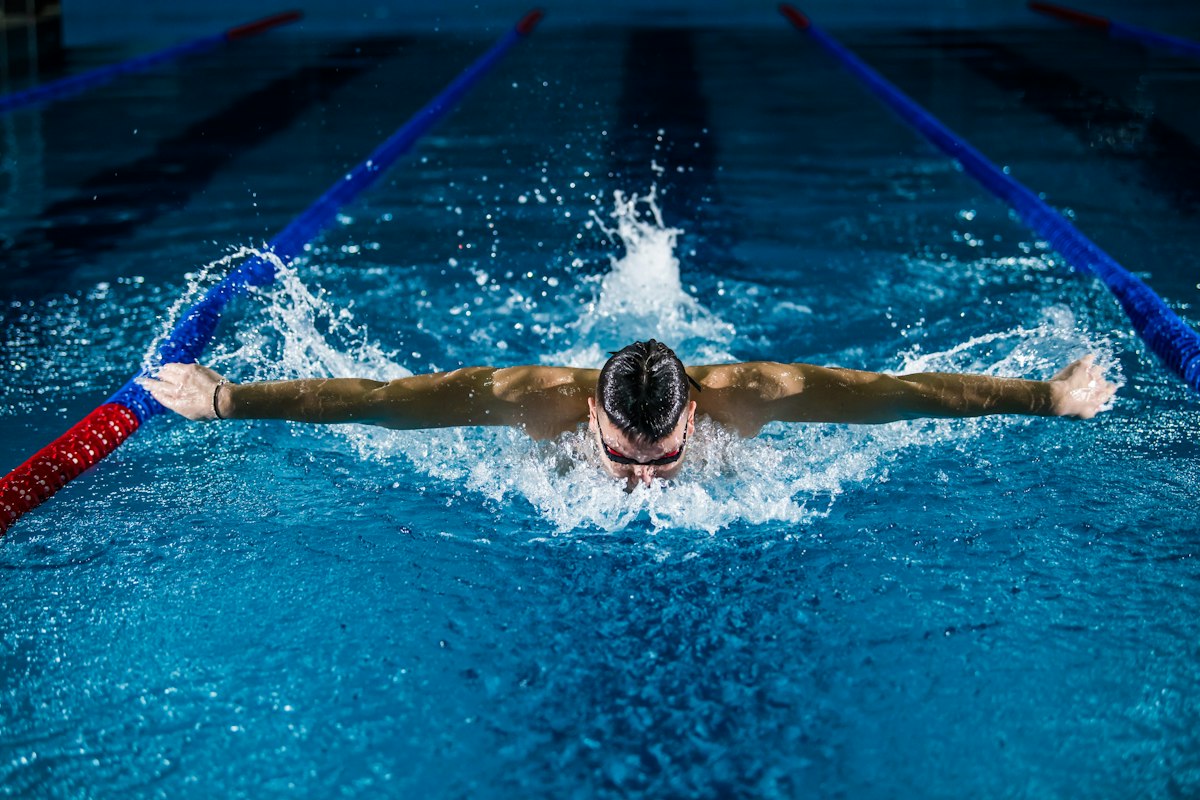
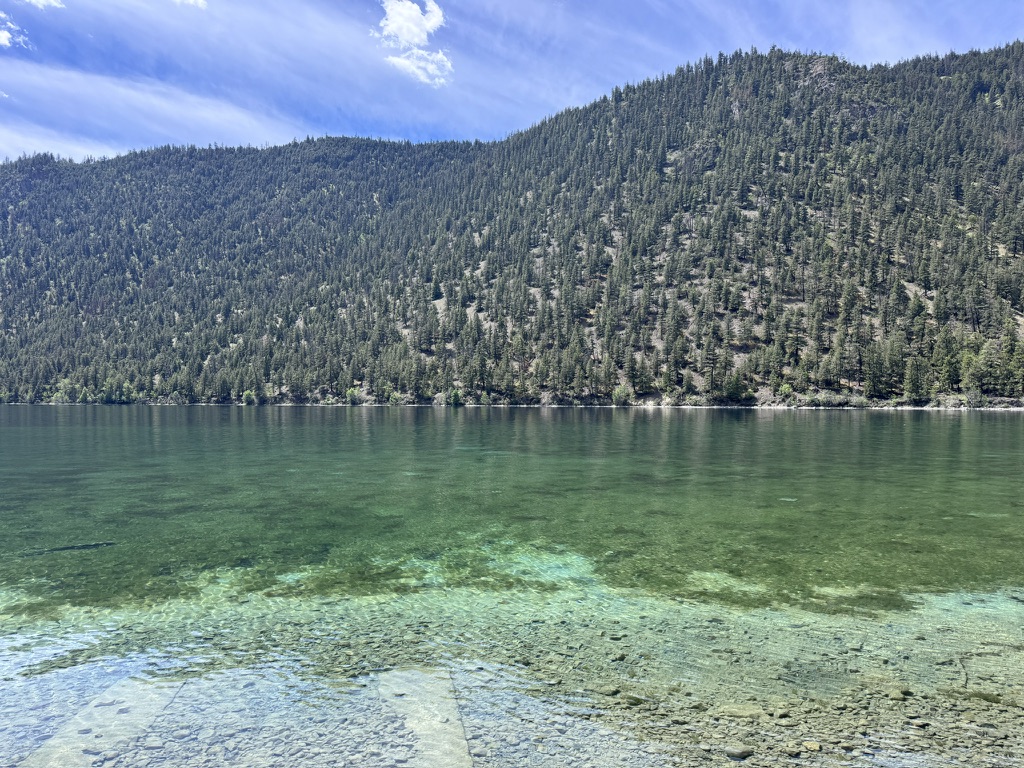
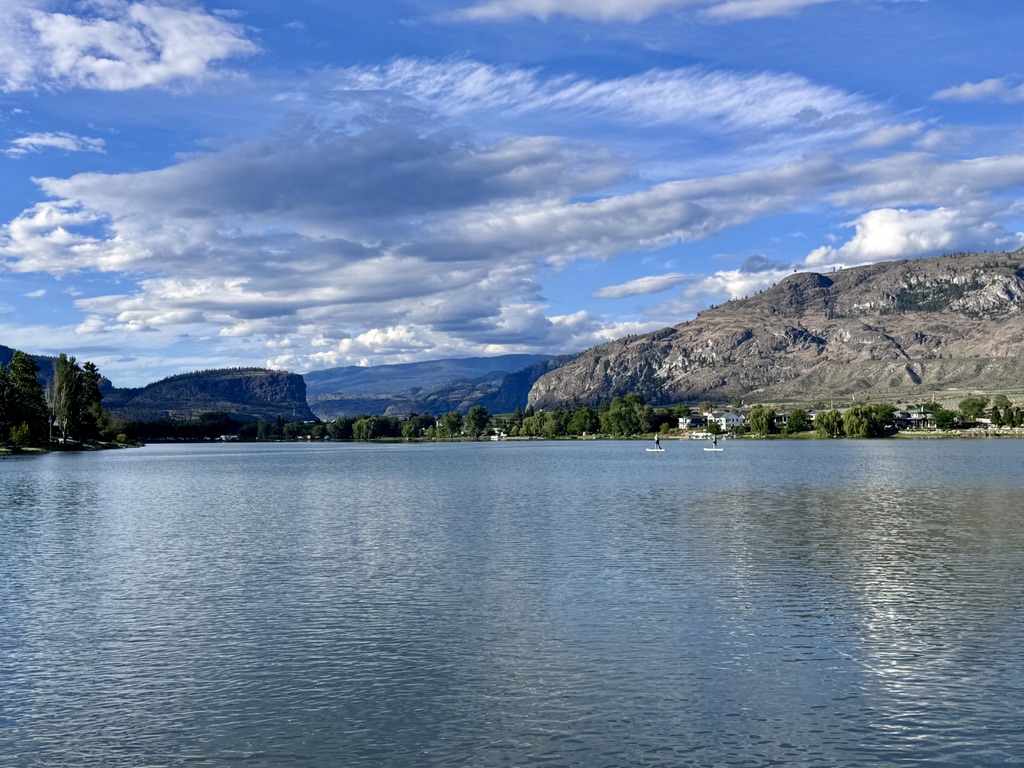
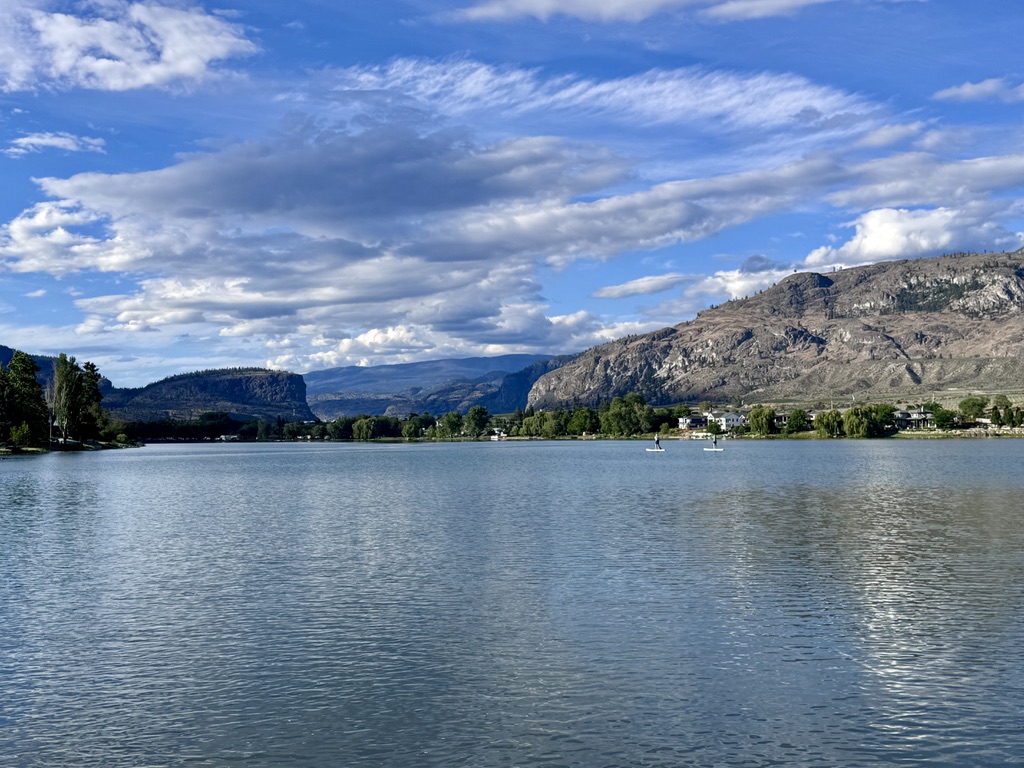
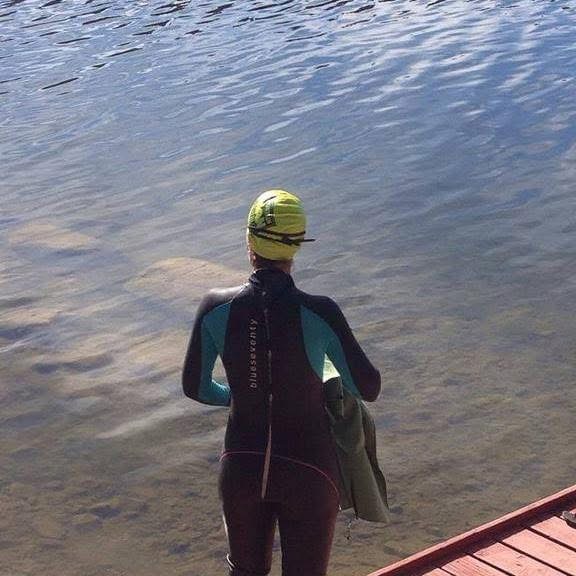
There is a stretch of cold water in the Okanagan that I love the way I love certain people. I know its moods. I know the place where the lake goes suddenly deep and the temperature drops like a held breath, and the place near the reeds where the morning sun arrives first. When I have been away from it too long, I feel the absence as a physical ache, the same ache I feel for a friend I have not seen. I have stood on its shore after a hard season and felt it recognize me. I have grieved shorelines the way other people grieve the departed. For a long time, I thought this was a private eccentricity, a swimmer’s sentimentality. Then I learned that geography has a name for it, and a whole literature, and that the love I feel for water is one of the oldest subjects in the human study of place.
The name is topophilia (the affective bond between a person and a place, the love of a particular piece of the earth). I want to write about what that bond is, why it behaves so much like love for a person, and why naming it has changed how I understand my own attachments to water, to retreat, to the few places that have truly held me.
The Love of Place
The word comes from the humanist geographer Yi-Fu Tuan, and the geographers who use it return to his definition again and again. Larter, Grek-Martin, and Silver (2019), studying how the people of Halifax reattached to a beloved park after a hurricane tore it apart, quote Tuan’s phrase directly: topophilia is the affective bond between people and place (Larter et al., 2019). They describe how Tuan’s focus on the love of place introduced a humanistic sensibility to geography, one that treated places as centres of felt value and fields of care rather than as neutral coordinates (Larter et al., 2019). That phrase, fields of care, undid something in me when I first read it. The lake is a field of care. I tend it in my attention, and it tends me in return.
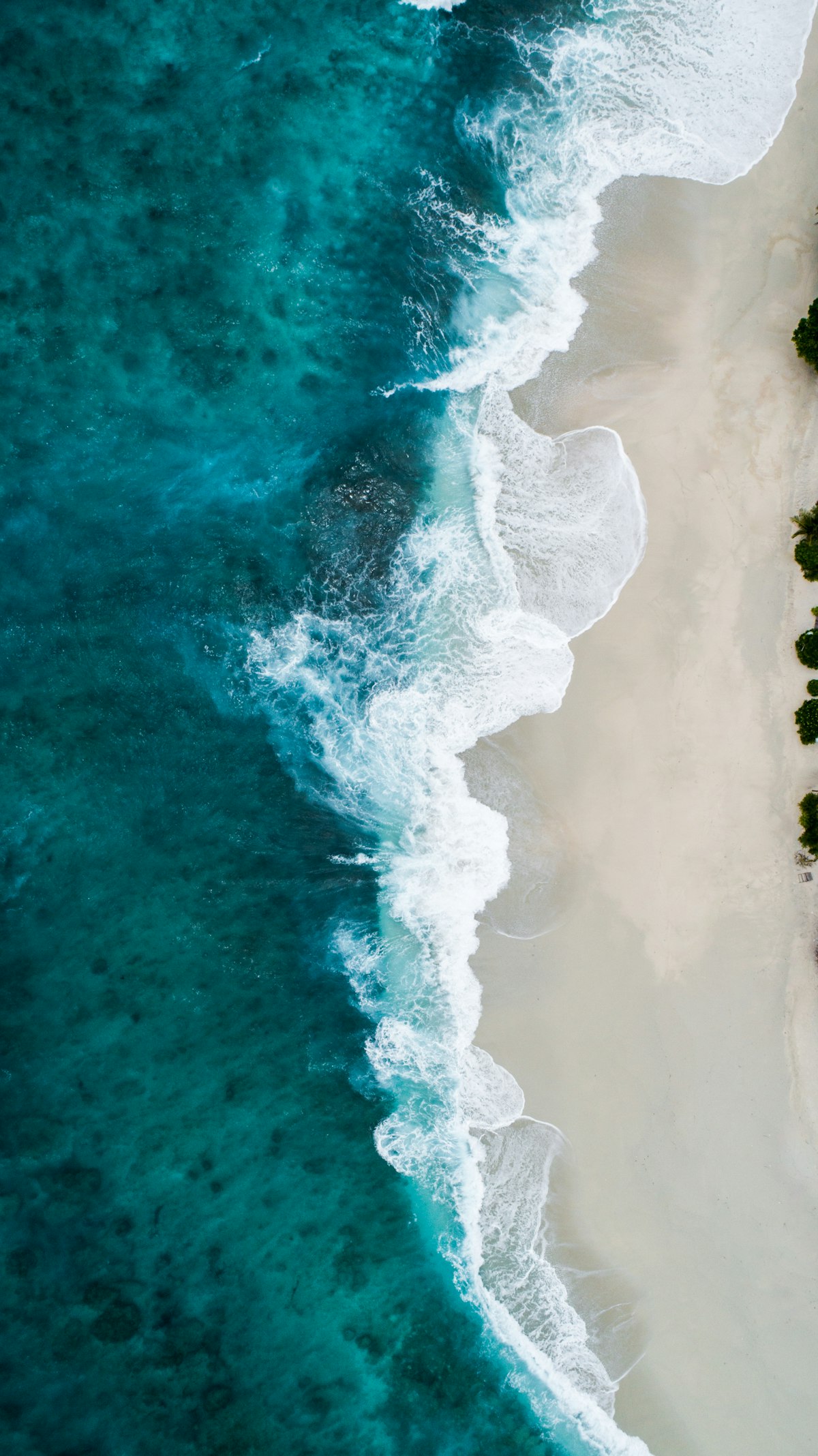
What moved me most in their study was the concept they used for the loss of such a place. They describe solastalgia (the distress a person feels when a beloved place is damaged or changed, a kind of homesickness felt without leaving home) as the grief that park users carried when the storm altered the landscape they loved (Larter et al., 2019). I have felt exactly this, watching a shoreline change, watching a low-water year expose the bones of a lake I love. Solastalgia gave a name to a grief I had carried without permission to call it grief. The geography validated the feeling.
Loved Like a Person
The heart of this post is a claim that sounds sentimental until a geographer says it plainly: the bond with a place can resemble the bond with a person, even the deepest such bond. Pascual-de-Sans (2004), writing about how people carry their attachments to place across migrations and lifetimes, openly draws the comparison. The bond between a person and their place, she suggests, can be compared to the bond between a mother and her child, specific and unique to them, even as they remain aware that countless other such bonds exist in the world (Pascual-de-Sans, 2004). The awareness of other people’s loves, she argues, deepens rather than diminishes one’s own (Pascual-de-Sans, 2004).
I have read that passage many times now. It tells me my love for the cold lake is far from a metaphor stretched too thin. It is a recognized form of human attachment, structured like the love between kin, particular and irreplaceable. When I say the lake knows me, I am describing what Pascual-de-Sans calls a relationship between a person and a place that becomes part of who that person is. The water has helped raise me. That is beyond poetry. It is geography.
Cross (2015), mapping the distinct processes through which people grow attached to places, helps me understand how such a bond is actually built. She identifies several interacting processes, among them the sensory (in which we come to know a place through the body and the five senses) and the narrative (in which we tell and retell the stories that bind us to it) (Cross, 2015). My attachment to the lake is sensory in the most literal way a bond can be. I have taken that water into my mouth and onto my skin ten thousand times. I have stories about it that I tell and retell until they have become part of my own history. Cross shows me that love of place is far from a single feeling. It is a set of practices, repeated over years, until the place is woven through the self.
The Bonds That Endure
One of the quiet gifts of this literature is its insistence that these bonds last. Dunkley (2018), studying why people volunteer to monitor the health of woodlands and rivers, found that the early affective bonds people form with ecological and water spaces endure throughout the life course, and that staying connected to those places becomes a way of remaining oneself (Dunkley, 2018). Her participants returned to their waters and woods across decades, drawn by a love that had taken root early and refused to fade (Dunkley, 2018).
I am one of her participants in spirit. The bond I formed with water as a young person, in the years when so much else was unsafe, has lasted through every season of my life. Water was the one place that never frightened me. It still is. Dunkley’s finding (that these affective bonds endure and that we organize our lives partly around keeping them) describes the shape of my whole swimming life. I have arranged decades around staying close to water. I understand now that this was attachment doing what attachment does, holding me to the places that hold me.
What the Lake Taught Me About Love
So I have stopped apologizing for loving places like people. The geography gives me permission, and more than permission, a vocabulary precise enough to honour the feeling. Topophilia is real. Solastalgia is real. The bond can be structured like kinship, built through the senses and through story, and it can last a lifetime. None of this is a swimmer’s sentimentality. It is one of the most thoroughly studied truths about how human beings live in the world.
I will go down to the cold lake again this week, the way you visit someone you love. I will feel the deep place where the temperature drops, and the warm shallows by the reeds, and I will feel the lake recognize me. I used to think I was projecting my need onto indifferent water. Now I think I was practising one of the oldest forms of belonging there is. The places I have loved like people loved me back, in the only language places speak, which is the language of holding. I have been held by that water for most of my life. To love it in return is the most natural geography in the world.
References
Cross, J. E. (2015). Processes of place attachment: An interactional framework. Symbolic Interaction, 38(4), 493-520. https://doi.org/10.1002/symb.198
Dunkley, R. A. (2018). Monitoring ecological change in UK woodlands and rivers: An exploration of the relational geographies of citizen science. Transactions of the Institute of British Geographers, 44(1), 16-31. https://doi.org/10.1111/tran.12258
Larter, P. C. L., Grek-Martin, J., & Silver, A. (2019). Does time heal all wounds? Restoring place attachment in Halifax’s Point Pleasant Park after Hurricane Juan. Canadian Geographies / Géographies canadiennes, 63(3), 494-506. https://doi.org/10.1111/cag.12542
Pascual-de-Sans, A. (2004). Sense of place and migration histories: Idiotopy and idiotope. Area, 36(4), 348-357. https://doi.org/10.1111/j.0004-0894.2004.00236.x
Tuan, Y.-F. (1974). Topophilia: A study of environmental perception, attitudes, and values. Prentice-Hall.
Academic Lens
This post translates topophilia into a Scholarly Personal Narrative account of an open-water swimmer’s love of place, grounded in peer-reviewed scholarship with one foundational anchor. Tuan (1974) originates the concept, and Larter, Grek-Martin, and Silver (2019) supply both the working definition (the affective bond between people and place) and the crucial concept of solastalgia, the grief attending a damaged beloved place, which the post uses to legitimize a previously unnamed form of loss. Pascual-de-Sans (2004) provides the post’s structural claim through her explicit comparison of the person-place bond to the parent-child bond, establishing that attachment to place is a recognized form of kinship-like attachment rather than mere sentiment. Cross (2015) supplies the mechanism, decomposing place attachment into interacting processes (notably the sensory and narrative) that explain how a bond with water is built through embodied repetition and storytelling. Dunkley (2018) anchors the claim of endurance, demonstrating that early affective bonds with ecological and water spaces persist across the life course and organize ongoing behaviour. Read through Scholarly Personal Narrative (Nash, 2004), the post enacts a move characteristic of the series: it takes an emotional experience the writer had treated as idiosyncratic (loving a lake like a person) and reframes it, through verified geographic scholarship, as a well-theorized and widely shared dimension of human dwelling, converting private feeling into legible knowledge.
🔍 Verified References
The citations in this post have been verified against CrossRef DOI records. View the verified reference list with notes for this post.

