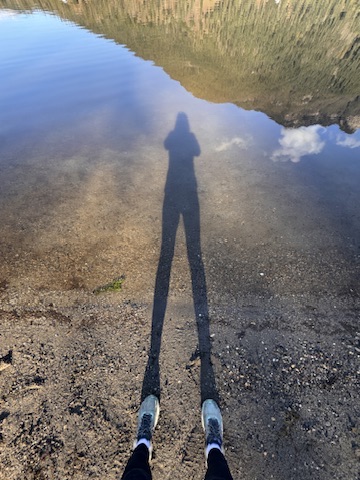
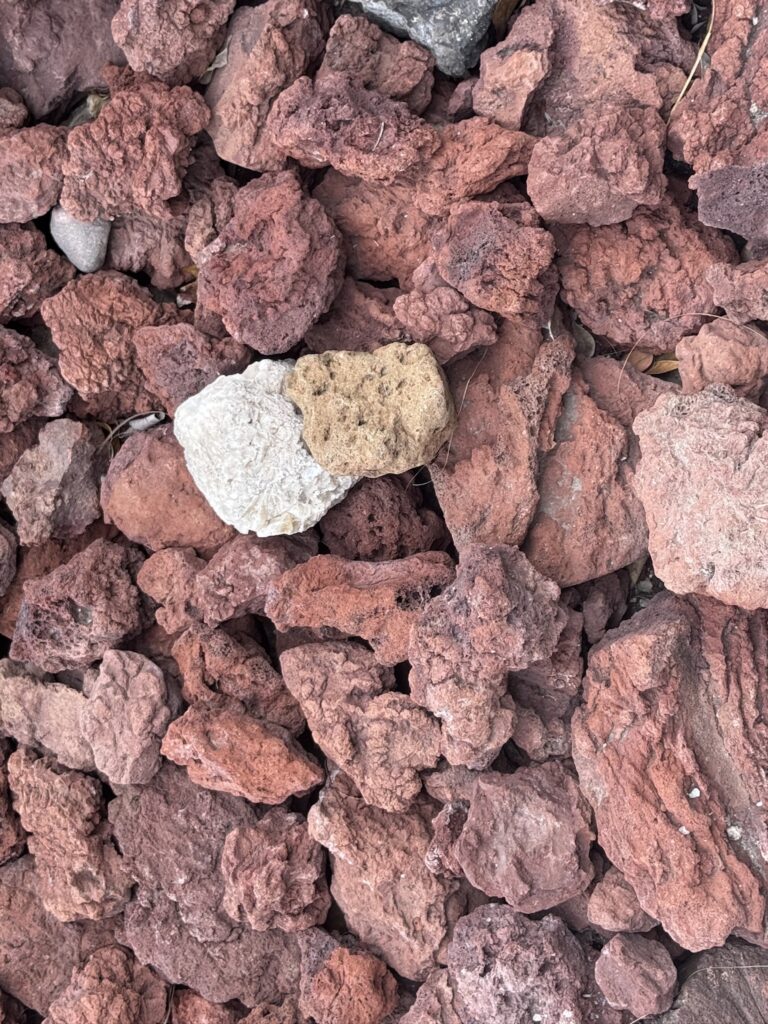
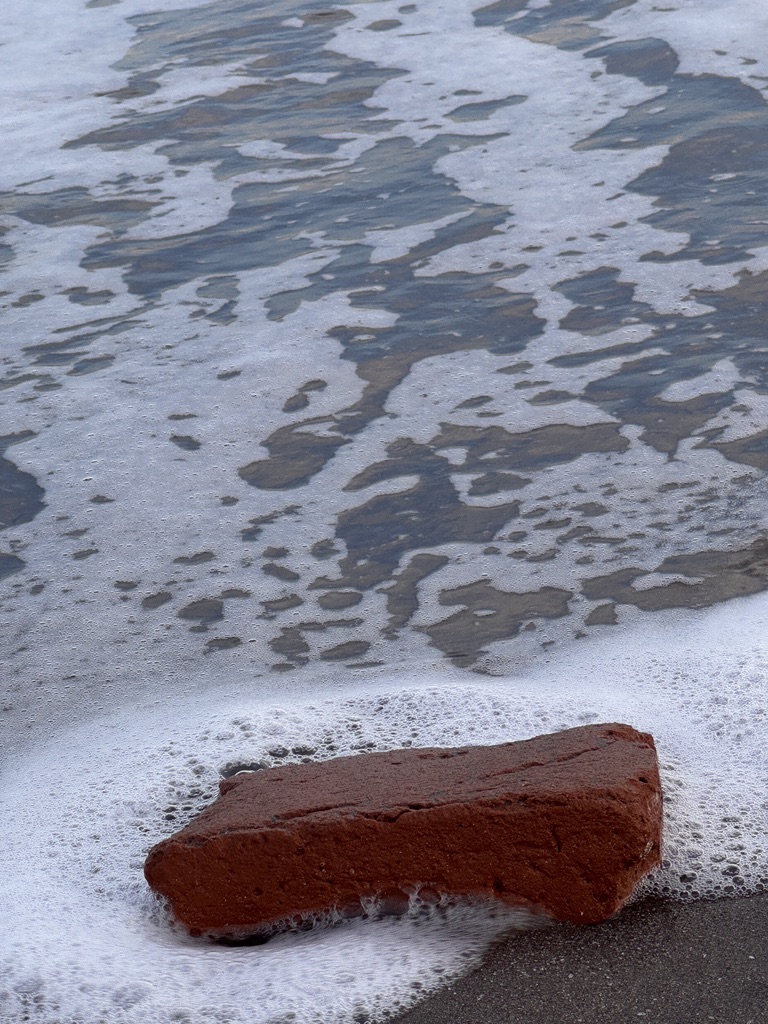
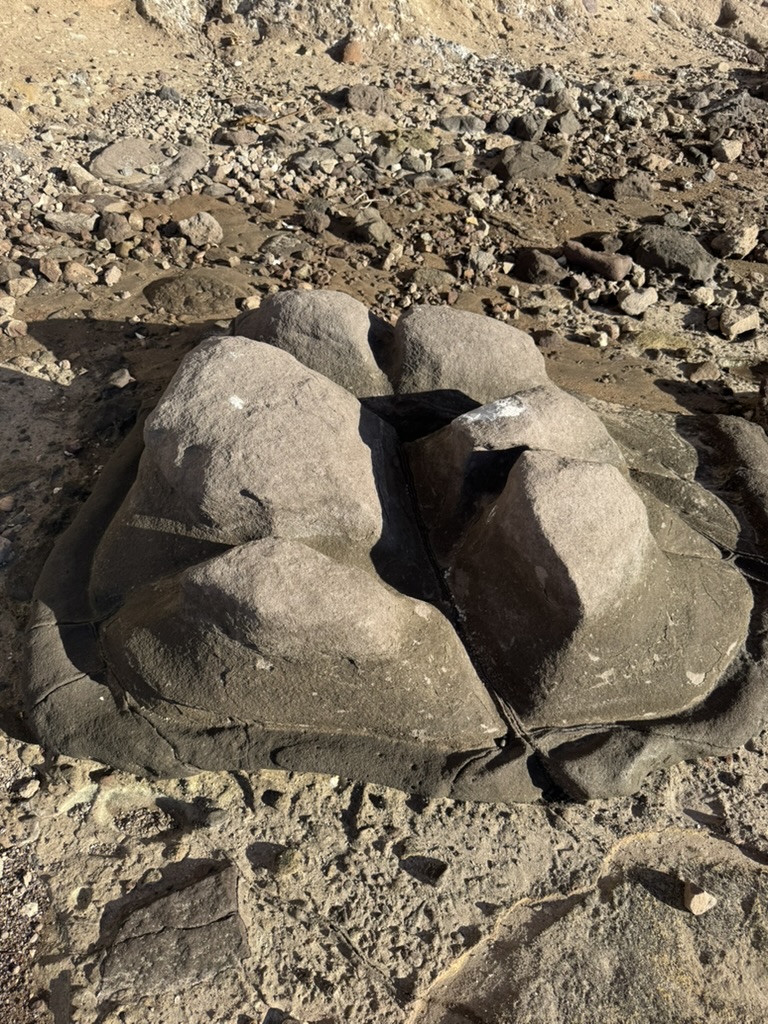
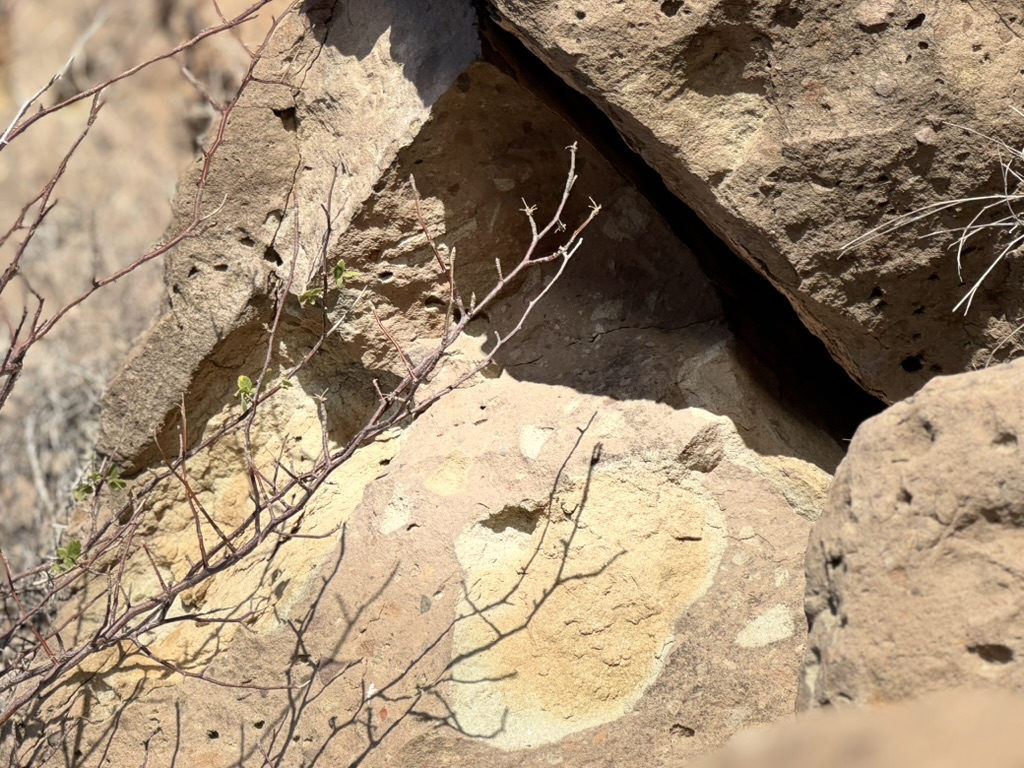
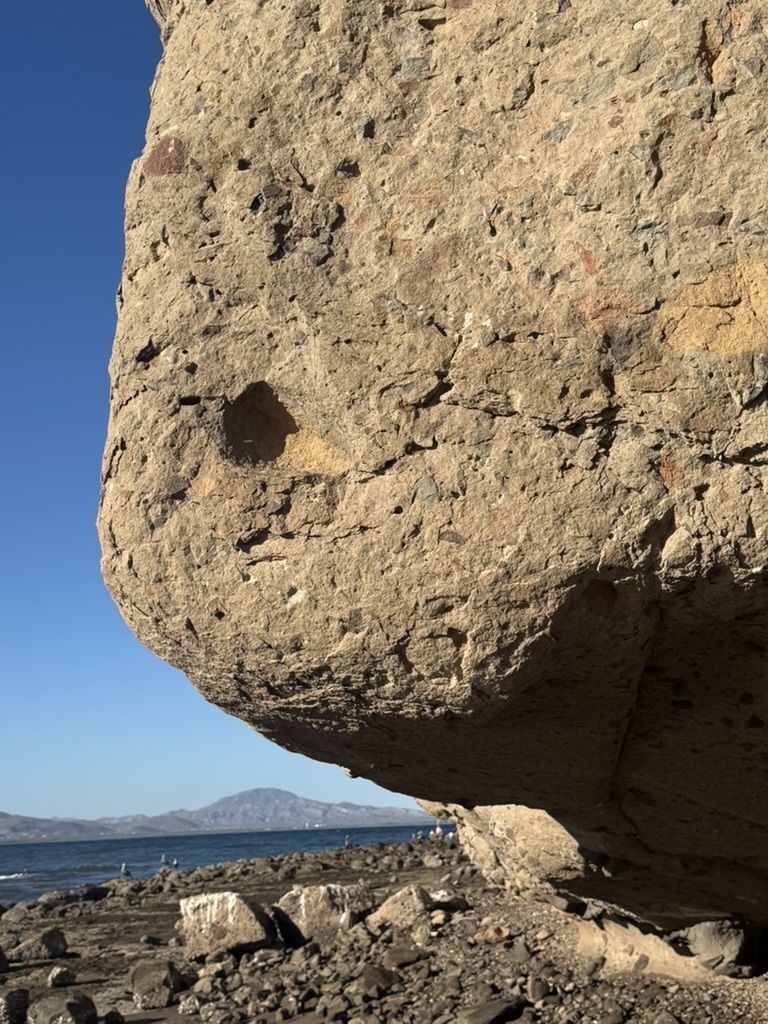
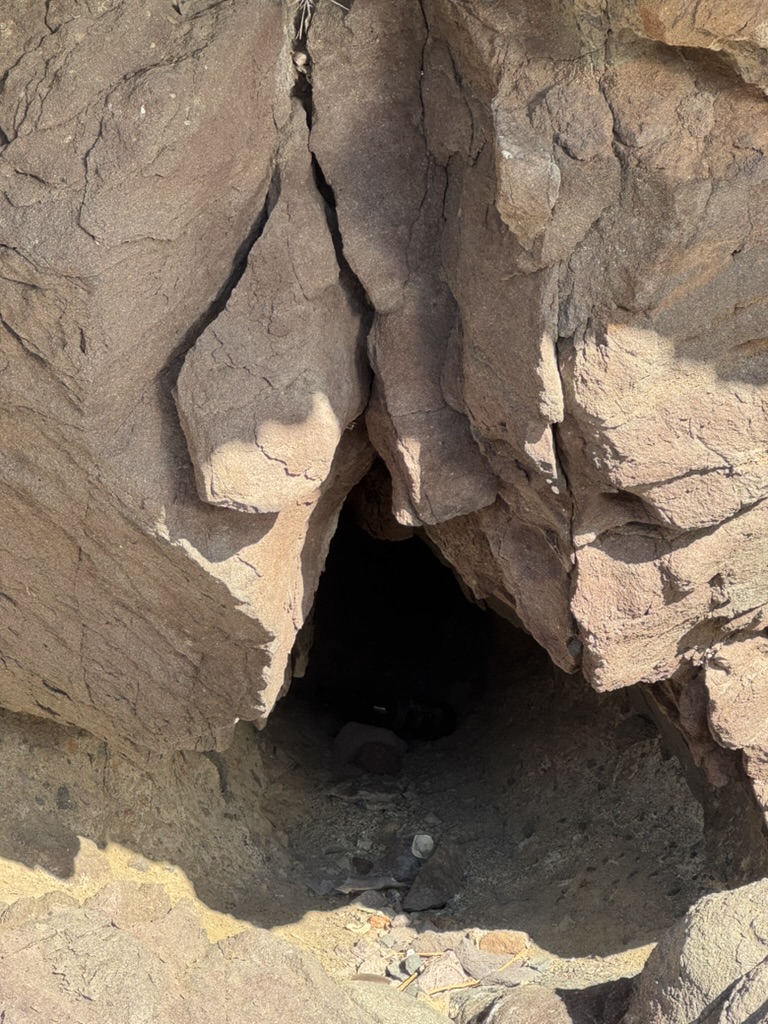
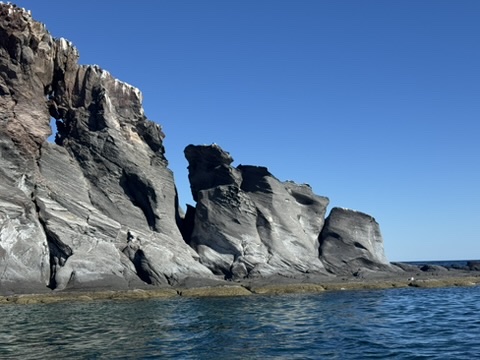
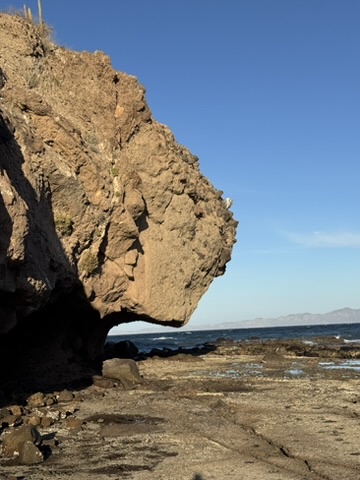
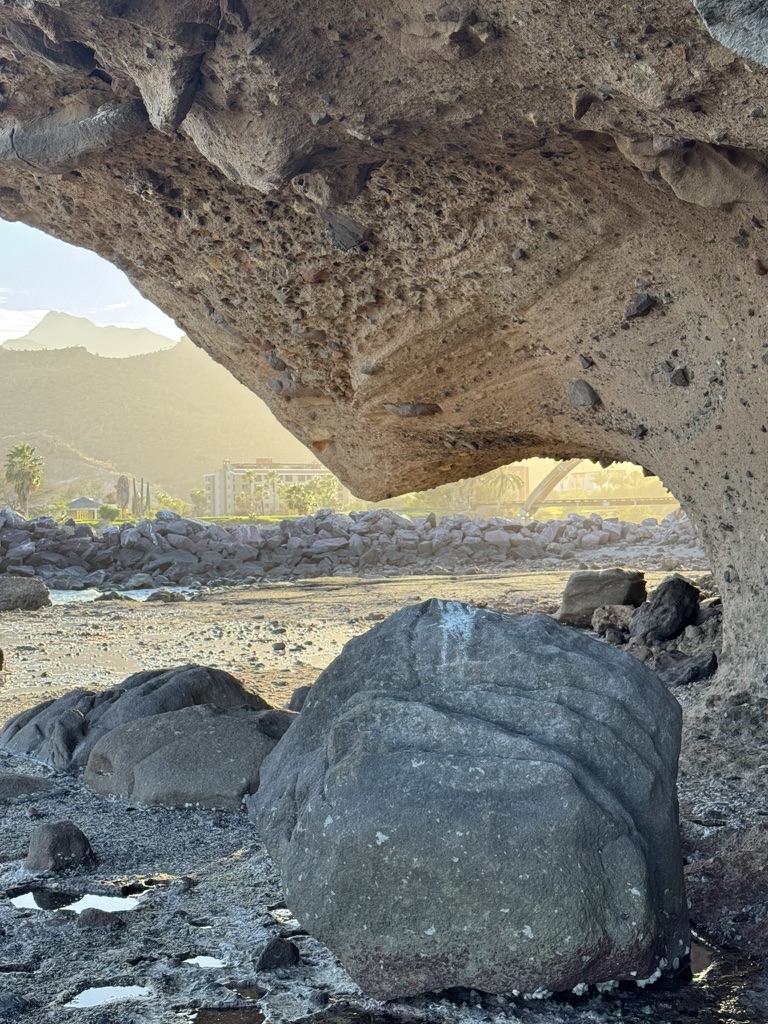
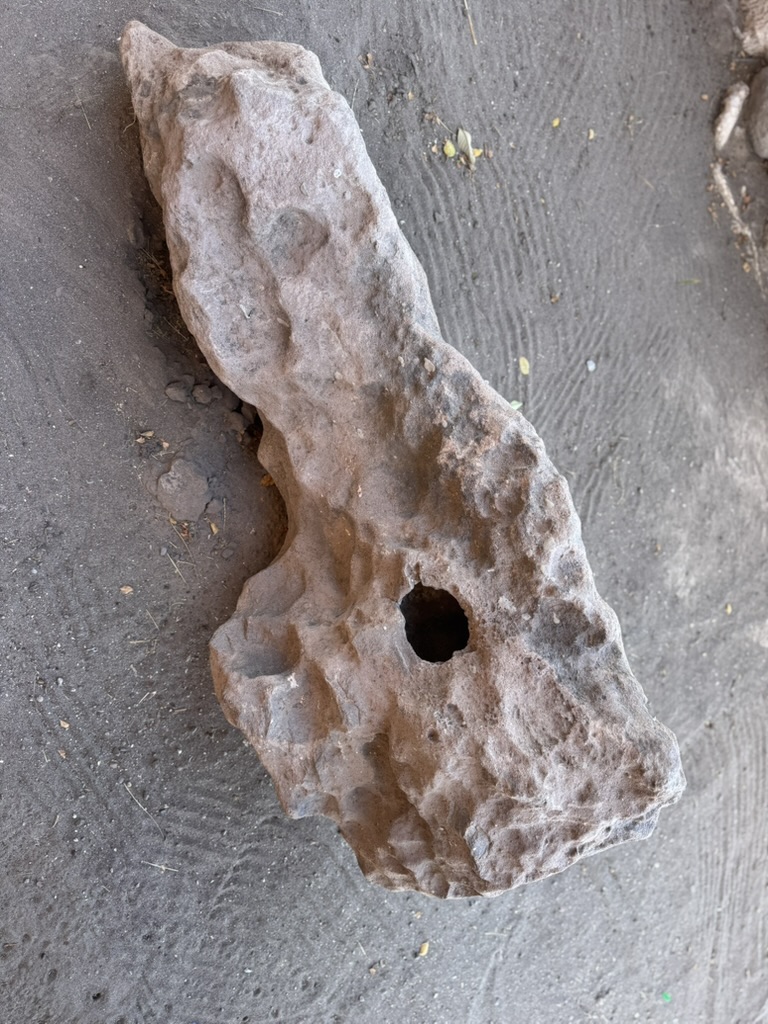
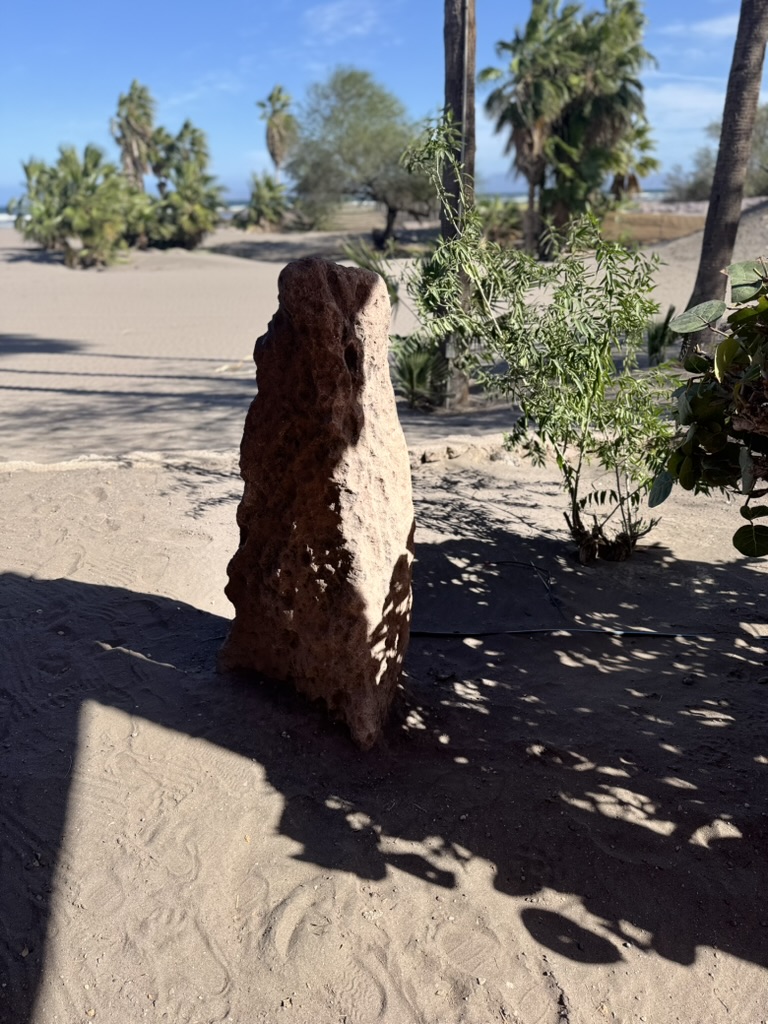
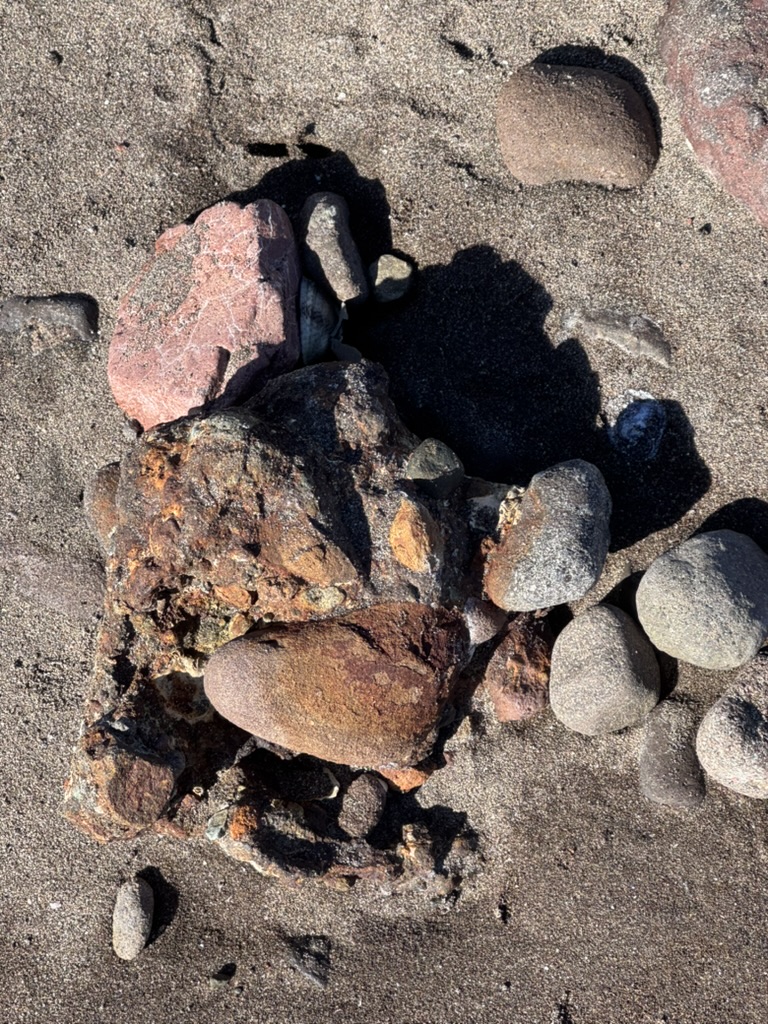
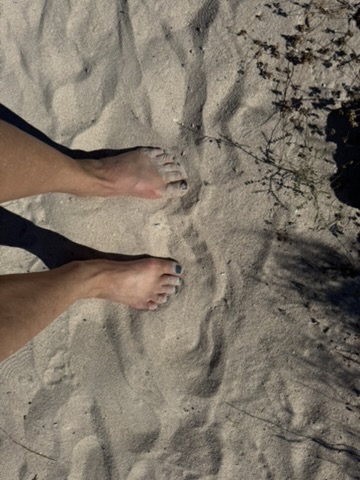
Day 15: La Edad y El Juego

Reading Time: 12 minutes

Age and Play

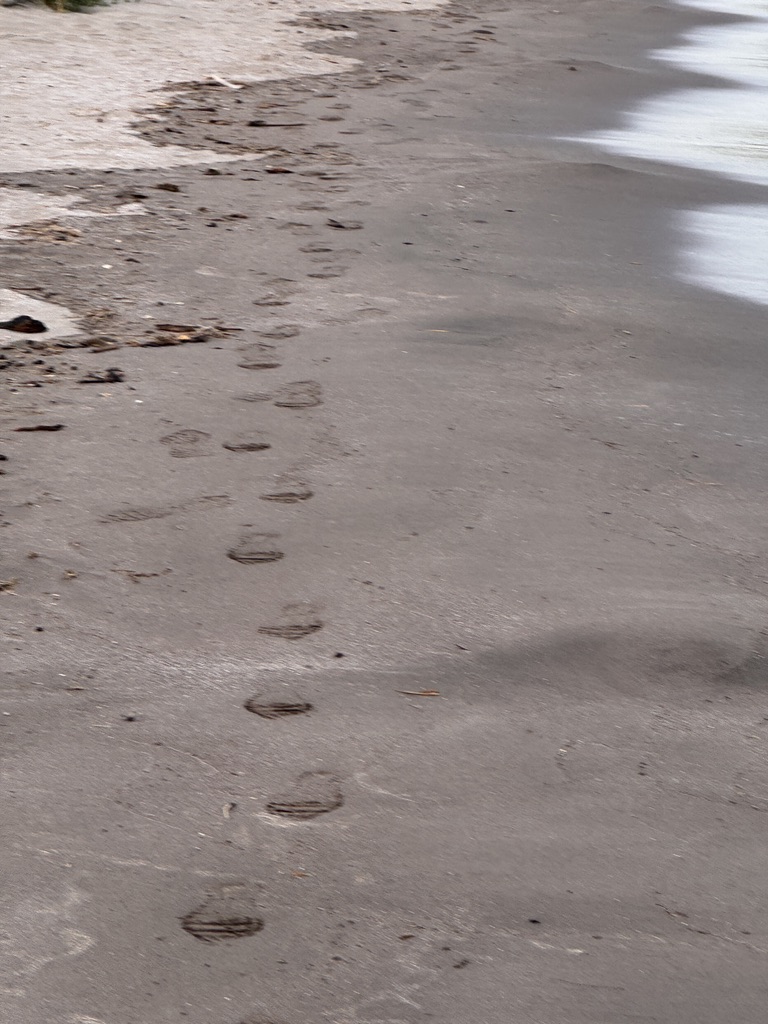
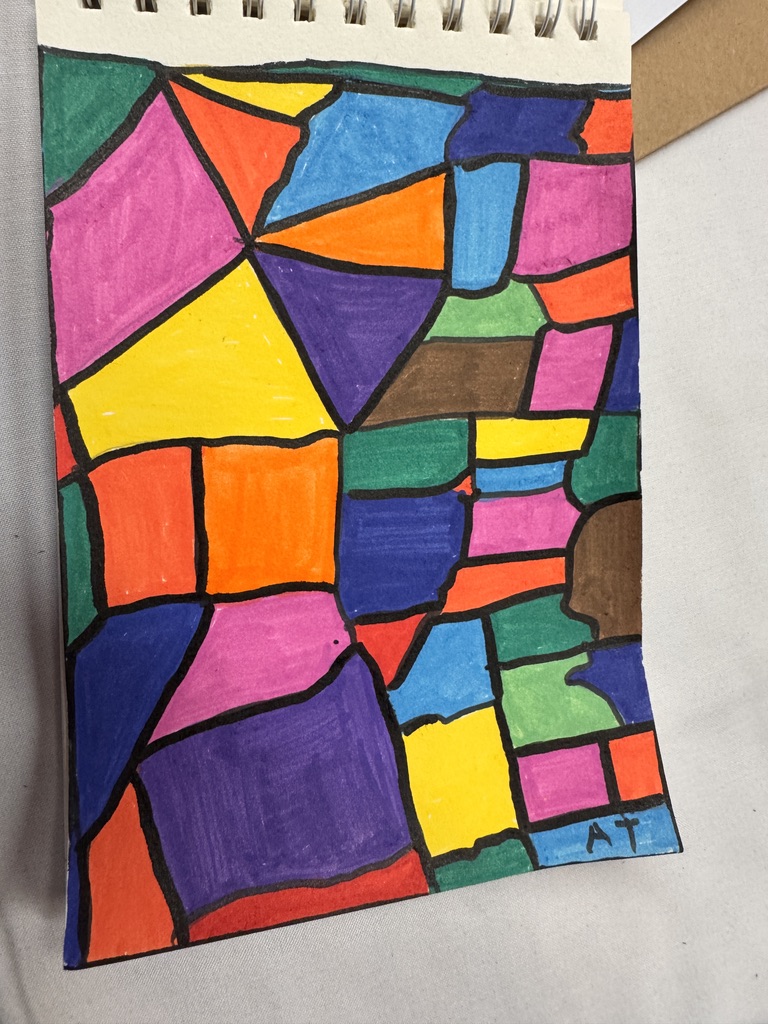
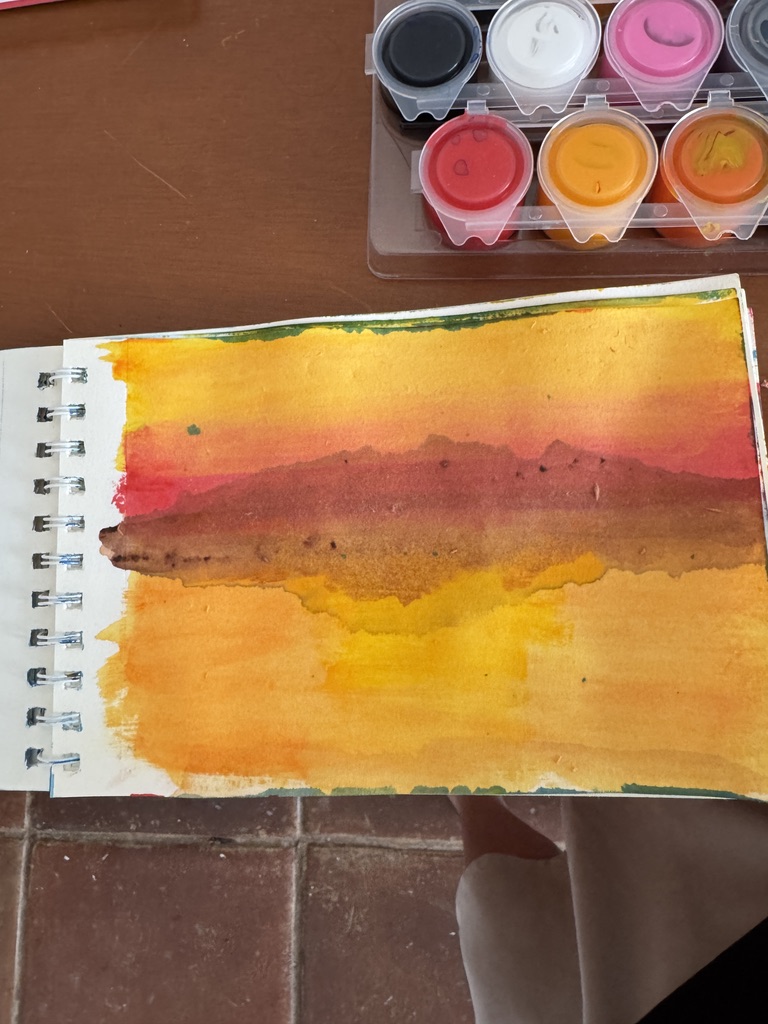
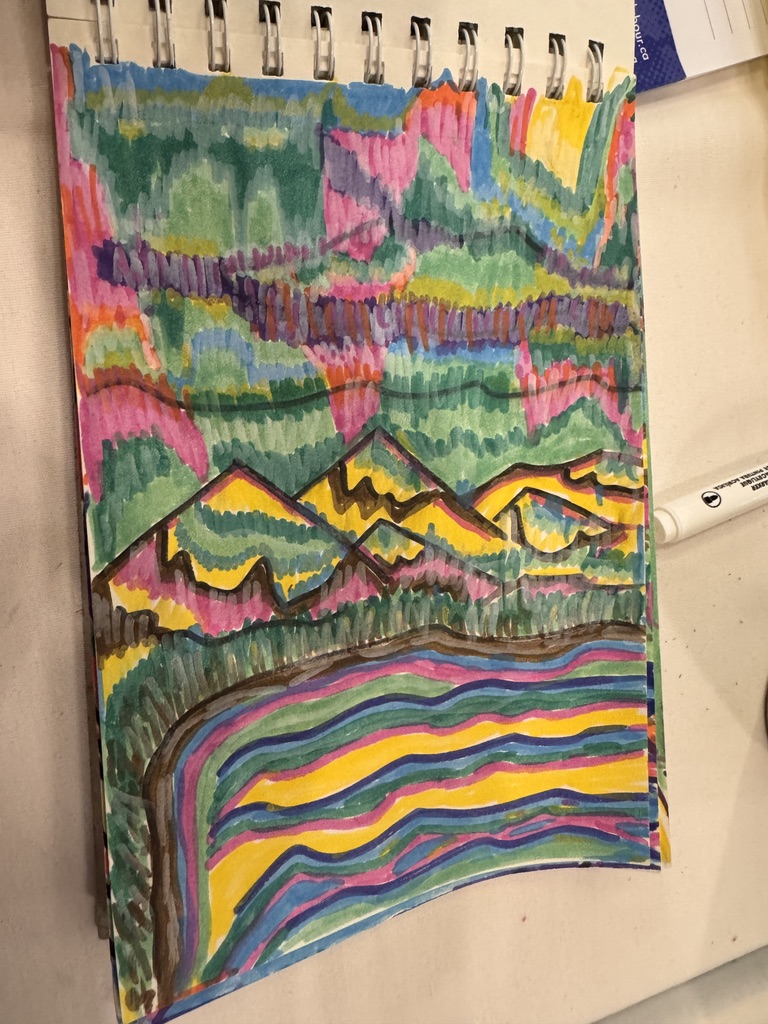
Title: Playing in the Sand

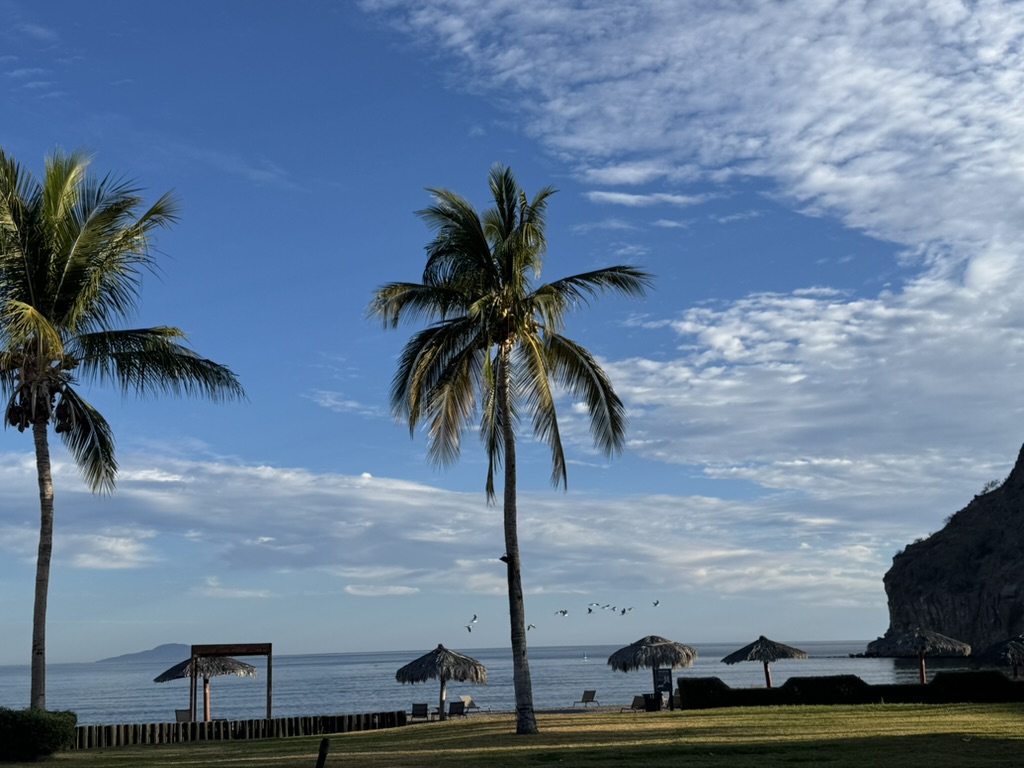
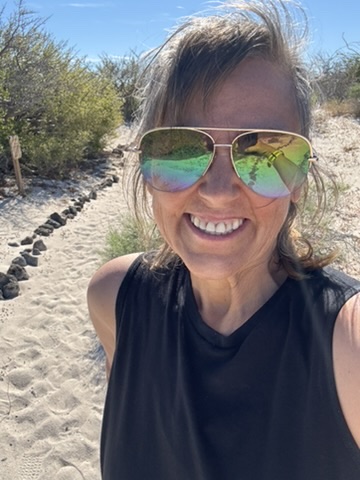
Photo Credit: Amy Tucker, 2026

The Sea Lions Know Something I Forgot

I am sixty years old, and I am learning to play.

This morning, I caught myself humming. No song. Just sound making itself because it wanted to. I stopped mid-hum and thought: when did I stop doing this? When did humming become something I had to notice rather than something that just happened?

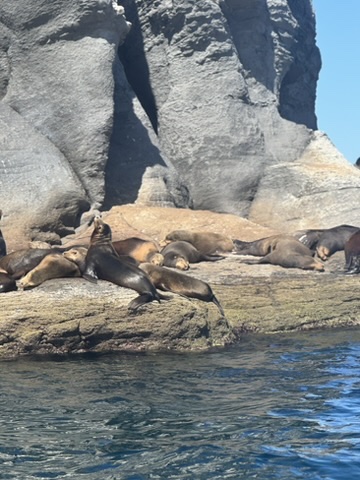
And then yesterday. The sea lions.

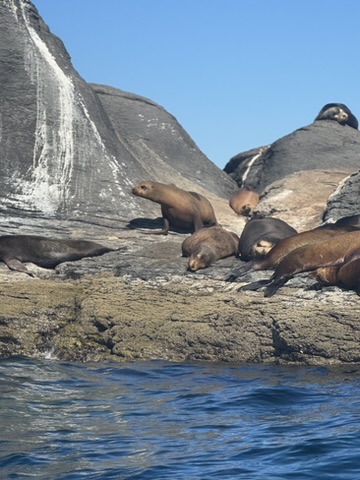
Title: Lions Playing on the Rocks

Photo Credit: Amy Tucker, 2026

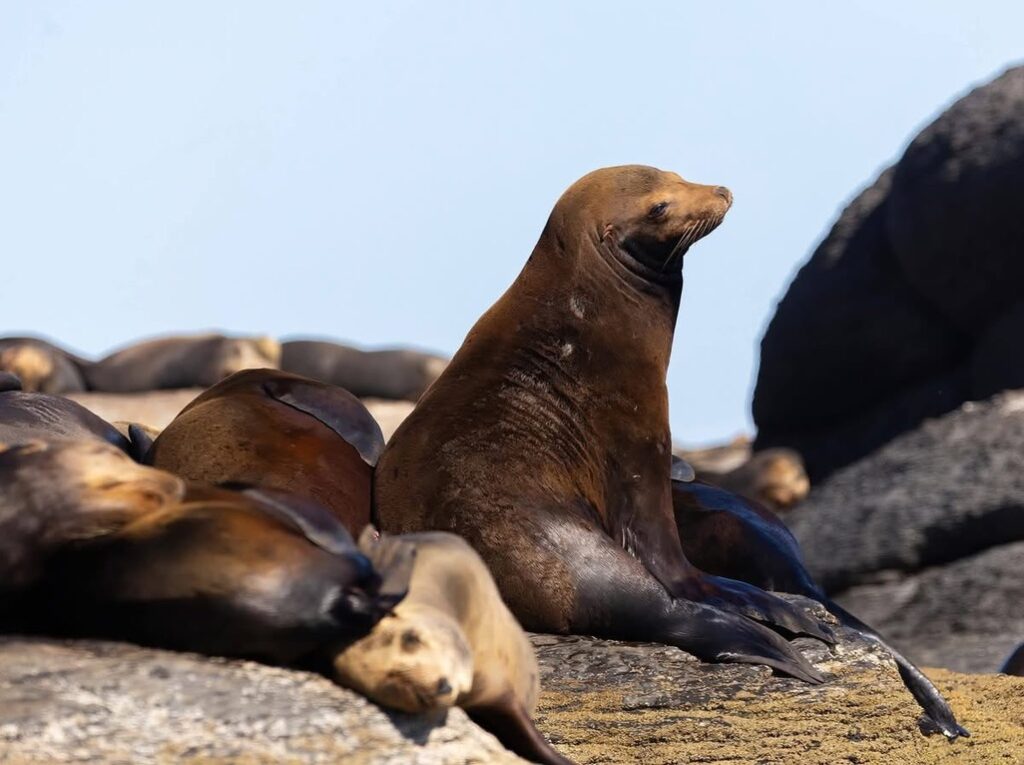
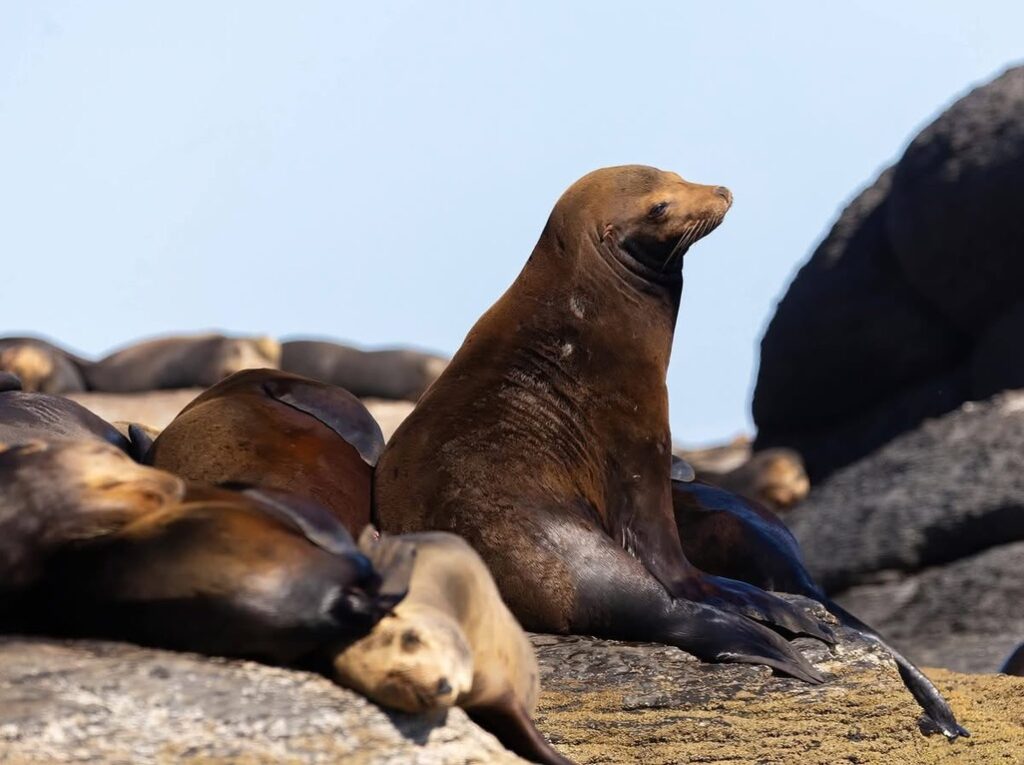
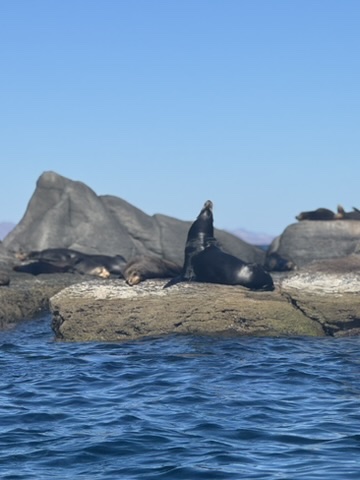
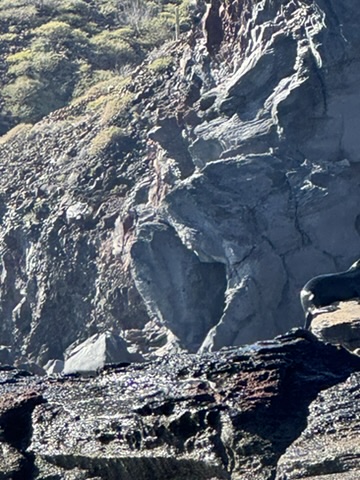
Hundreds of them off the coast of Loreto, leaping and spinning and riding waves with what looked like pure, uncomplicated joy. And here is what struck me: they were older. Many had grey muzzles. Scarred bodies. The marks of decades in the ocean. These were old sea lions. Experienced sea lions. Sea lions who had survived sharks and storms and whatever else the ocean throws at bodies over time.

And they were playing.

No different from young sea lions in their abandon. No careful moderation, no appropriate dignity. Just playing. Leaping. Spinning. Riding waves because riding waves feels good. Their age seemed irrelevant to the equation entirely.

I sat in the boat watching them, and something in my chest cracked open. Cracked, yes, but opened. Like a window that had been sealed shut for so long, I forgot windows could open, and suddenly there was air and light and the possibility of something beyond naming, but my body recognized immediately.

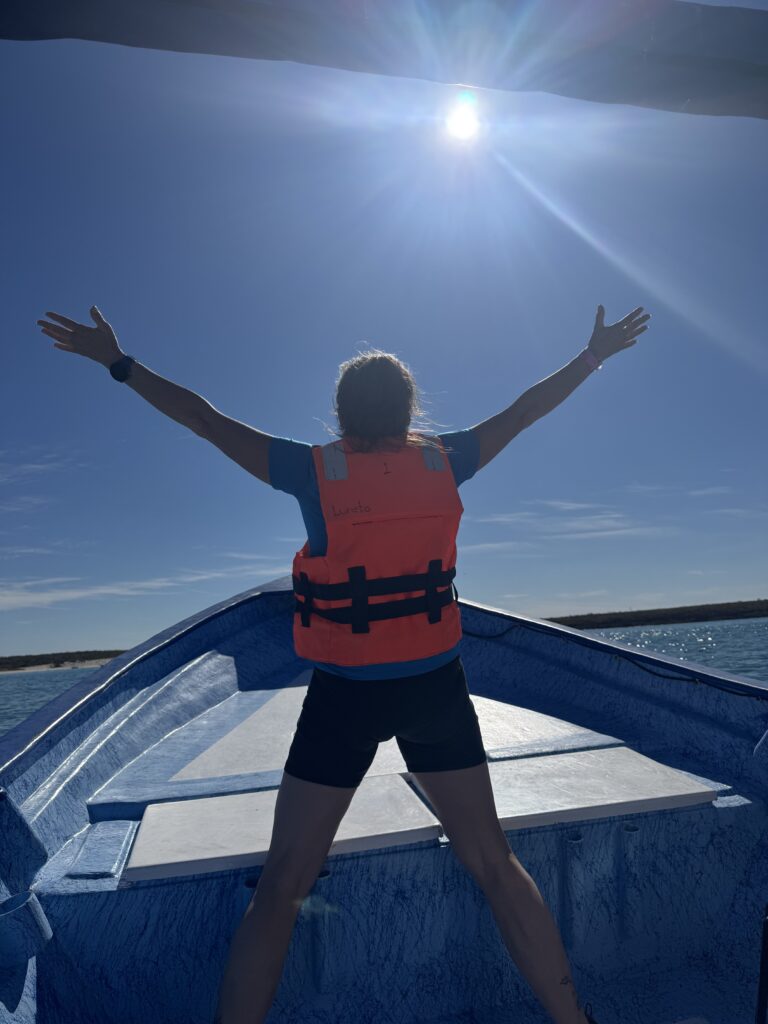
Title: Star Sunshine

Photo Credit: Amy Tucker, 2026

Alegría. Joy.

Joy unattached to happiness, contentment, or satisfaction with accomplishments. Joy. The kind that bubbles up from somewhere that has nothing to do with achievement, productivity, or being a responsible adult who takes life seriously.
The kind the sea lions have. The kind I seem to have misplaced somewhere between twenty and sixty. The kind I am just now realizing I want back.

What I Learned About Growing Up

Somewhere along the way, I learned that growing up means growing serious.
I cannot point to the exact moment this lesson took hold. There was no single conversation or event. It was more like osmosis. The gradual absorption of cultural messages about what mature adults do and avoid. Adults work. Adults are responsible. Adults plan, achieve, and contribute. Adults avoid wasting time. Adults avoid play.

Or if they play, it is scheduled, optimized, and turned into another form of productivity. Exercise that counts as play. Hobbies that produce results. Social games that serve networking functions. Play with purpose. Play with outcomes. Play that justifies itself.

But what the sea lions were doing yesterday required no justification. It served no purpose I could identify. Exercise was incidental (though movement was involved). Socialising was incidental (though they played near each other). Skill practice was incidental (though the skills were evident). They were just… playing. For its own sake. Because it felt good. Because they were alive and the ocean was there, and their bodies knew how to move through it joyfully.

I watched them and thought, “I used to know how to do this.” I did. I remember childhood summers when entire afternoons disappeared into invented games that had no point beyond playing them. I remember the absorption. The timelessness. The way my body knew what to do without my mind directing it.
And then I grew up. And growing up meant putting that away. Meant learning that time is currency, that activities should have purpose, that joy without justification is frivolous, immature, something you outgrow.

Except the sea lions seem to have skipped entirely. The grey-muzzled, scarred, elderly sea lions seem to have missed any memo about dignity, seriousness, and age-appropriate behaviour. They are still playing. Still joyful. Still leaping.
And I am sitting here at sixty, realizing: I got it wrong. The sea lions were right all along.

Title: What the Research Says (And Why It Matters That I Am Reading It)

Photo Credit: Amy Tucker, 2026

I am reading research on play and aging because that is what I do when I am trying to understand something. I read. I find frameworks. I look for explanations. This is probably part of why I lost play in the first place: I cannot just experience things. I have to understand them. Analyze them. Fit them into existing knowledge structures.

But the research is helping, so I am allowing it.

Brown and Vaughan (2009) argue that play is a lifelong human need, no mere developmental stage we pass through. They studied adults across the lifespan and found that people who maintain a capacity for play show better physical health, stronger social bonds, greater creativity, and more resilience when life gets difficult. The absence of play in adulthood belongs to suppression rather than natural maturation. It is suppression.

This word stopped me: suppression.

Something different from absence. From outgrowing. Suppression. Which implies something was there and was pushed down. Which implies it might still be there. Which implies it could be recovered.

I sat with this for a long time yesterday evening after the boat returned. Suppression. What suppressed my play? And the answer came quickly, almost too quickly, as though it had been waiting to be asked:

Everything. Work suppressed it. Poverty suppressed it. Precarity suppressed it. Chronic stress suppressed it. Cultural messages about what serious academics do suppressed it. Nineteen years of contract work, where every moment had to be productive because any moment could be your last, suppressed it.
My play was buried alive under layers of survival necessity, cultural expectation, and internalized messages about what maturity demands.

But suppression is different from death. Suppression means it is still there. Somewhere. Under all those layers. Waiting.

The sea lions confirmed this. They looked nothing like they were working to play. They looked like playing was the most natural thing in the world. Which suggests that play is natural. Which suggests that the unnatural thing is the absence of play. Which suggests I have been living unnaturally for a very long time.
Qué alivio. What relief. To know it endures. Just suppressed. Just waiting.

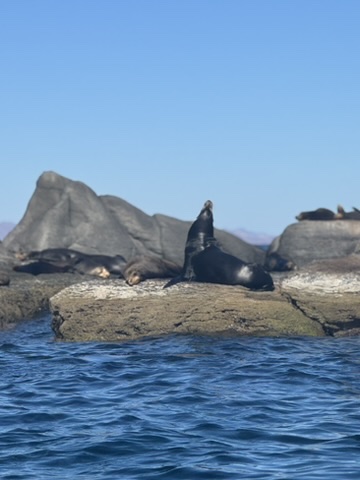
Title: Sea Lions Playing

Photo Credit: Amy Tucker, 2026

The Neuroscience of Joy (Or: Why Play Eluded Me Even When I Wanted It)
Here is something I learned from Porges (2011) that changed how I understand the last five months, the last five years, possibly the last nineteen years:
Play requires safety.

Something beyond cognitive understanding of safety. Beyond intellectual knowledge that you are probably fine. Physiological safety. The kind that the nervous system detects below conscious awareness through what Porges calls the body’s instinct to scan for safety. The body is constantly scanning the environment, asking: Am I safe? Can I rest? Can I play?

And if the answer is no, the social engagement system goes offline. This is the neural pathway that supports play, connection, and spontaneous joy. When the nervous system is in threat mode (preparing to fight, to flee, to freeze), the social engagement system shuts down. You cannot access Play. Cannot feel lightness. Cannot allow the vulnerability that playfulness requires.

This is autonomic regulation, beyond choice. The body makes decisions about resource allocation below the level where consciousness operates.
For five months before I came here, my nervous system never registered safety long enough for play to become possible. I was in constant crisis mode. Waiting for calls. Waiting for bad news. Waiting for the next emergency. My body had no resources for playfulness, for vulnerability, for the energy expenditure that play requires when every resource must go toward threat management.

My nervous system chose for me. The choice to avoid play was never mine.

And reading this, understanding this, I felt something unexpected: compassion. For myself. For my body. For the nineteen years before that, when contract work meant my nervous system never fully relaxed because security was always provisional, always temporary, always one crisis away from disappearing.

Of course play was unavailable to me. Of course, joy became impossible. Because my body was doing something very right rather than anything wrong: keeping me alive under conditions that offered no support for flourishing.

But here is what the research also says: nervous systems remain plastic across the lifespan. The capacity for play can be restored at any age if conditions support it. If safety can be established. If the threat can be interrupted. If the social engagement system can come back online.

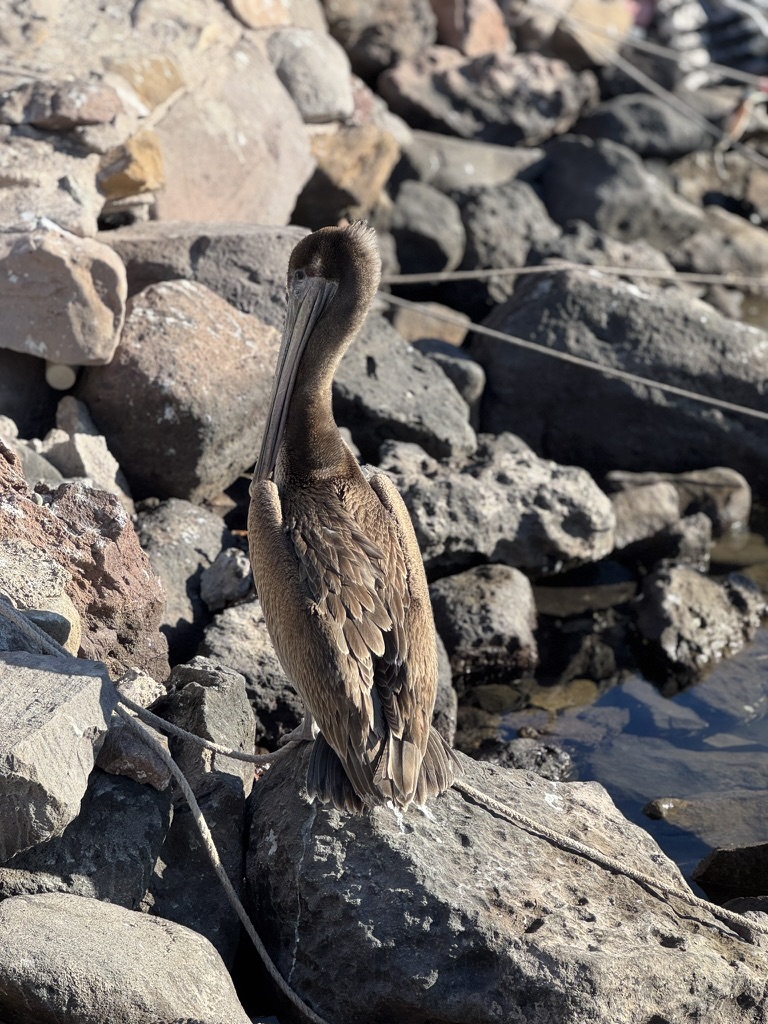
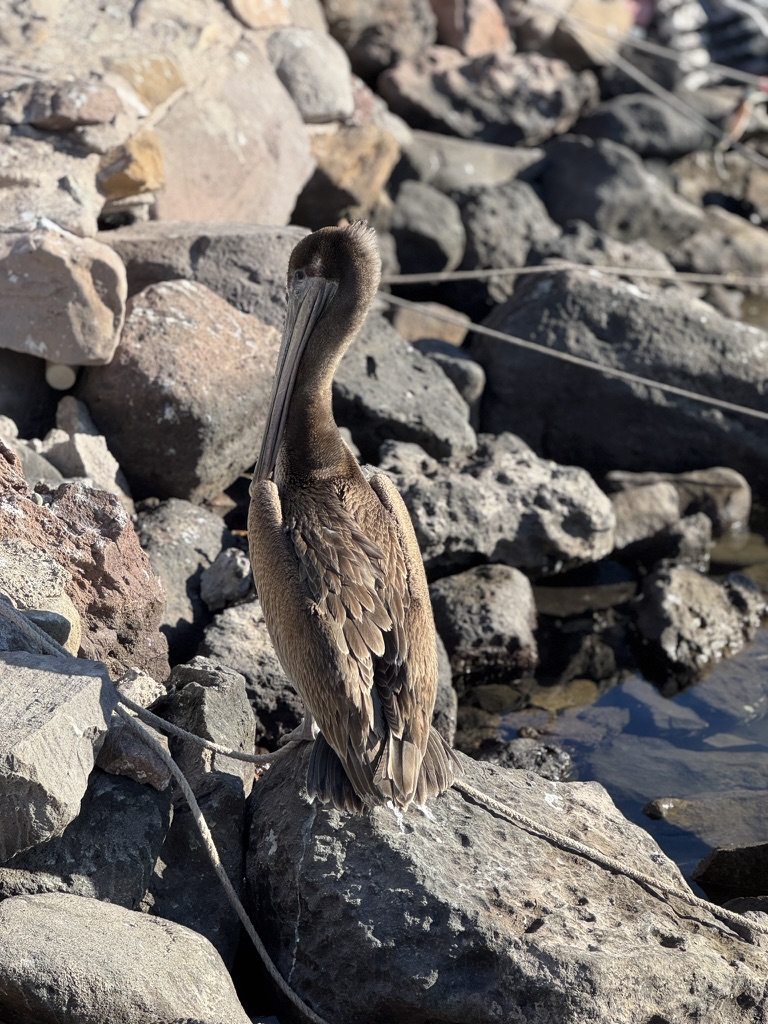
I am sixty years old, and my nervous system is learning safety. And as it learns safety, play is beginning to return. Quietly, incrementally. In small signals: humming. Swimming for pleasure. Watching pelicans without needing to make it productive.

Small. But real. And growing.

Pequeños milagros. Small miracles. Pero milagros de todos modos. But miracles nonetheless.

What Play Looks Like When It First Returns

This morning, I walked in the water along the seashore.

This is a small thing. Maybe it seems like nothing. But for someone who has spent decades organizing every activity around productivity, purpose, and outcomes, swimming because the water looks inviting feels revolutionary.
I got in. The cold shocked me like it does every morning. But instead of swimming laps, instead of counting strokes, instead of trying to improve my form, I just… moved. Followed curiosity about underwater rocks. Let my body do what feels good. Floated when floating felt right. Dove when diving felt right.

No plan. No goal. No timer.

And I realized: this is play. Unlike what I remember from childhood. Unlike what the sea lions do. My version. Sixty-year-old-woman-in-the-Sea-of-Cortez version. Modified. Tentative. Still learning. But real.

Guitard et al. (2005) studied play in older adults and found that play often looks different from childhood play but serves similar functions: engagement with novelty, absorption in the process rather than the outcome, pleasure for its own sake, and temporary suspension of everyday concerns. Older adults play through gardening, cooking, music, crafts, and exploration.

I am playing through swimming. Through humming. Through letting myself be curious about things without turning curiosity into research questions. Through allowing time to be unstructured. Through following impulses that have no justification beyond: this sounds good right now.

Small things. But they add up. Each one teaches my nervous system: it is safe to be spontaneous. Safe to follow pleasure. Safe to let go of control slightly and see what happens.

Each one is a tiny rebellion against the internalized voice that says: You are sixty years old, what are you doing? You should be serious. You should be productive. You should be concerned about declining capacities, limited time, and making every moment count.

Each one is a tiny agreement with the sea lions who say: no. Play. Leap. Spin. Your age is beside the point. Your joy is the point.

Estoy aprendiendo. I am learning.

Lentamente. Slowly.

Lero aprendiendo. But learning.

The Paradox That Makes Me Laugh

Here is something that makes me laugh now that I can laugh about it:
I am conducting research on rest and recovery and nervous system regulation. I am documenting how environmental conditions affect play capacity. I am reading literature on playfulness, aging, and successful life transitions.

I am turning the recovery of play into academic work.

This is very me. Very on-brand. Cannot just play. Have to study play. Have to document play. Have to theorize play. Have to turn play into scholarship because scholarship is how I make meaning, and scholarship carries legitimacy that pure experience often lacks in my mind.

But here is what I noticed yesterday watching the sea lions: they were documenting nothing. Reading no literature on play theory. Conducting no comparative analysis of their play behaviours across developmental stages. They were just playing.

And I thought: yes. That is the point. The point is to do it, first and foremost, with understanding secondary.

But I also thought: maybe both are okay. Maybe I can study, play, and also play.

Maybe the studying helps me trust that play is legitimate enough to allow.

Maybe the research gives me permission that my body needs before it can relax into playfulness.

Maybe there is no single right way to recover and play at sixty. Maybe scholarly-personal-narrative-researcher-trying-to-learn-to-be-playful-again is a valid way to do it.

The sea lions need no research to justify their play. But I might. At least for now. At least until my nervous system trusts playfulness enough to allow it without justification.

And maybe that is okay. Maybe that is my version. Nerdy. Academic. Needing frameworks before I can allow experience. But still moving toward the same place the sea lions are already inhabiting: joy. Lightness. Permission to leap.

Me río de mí misma. I laugh at myself.

What Sixty Knows That Twenty Could Barely Imagine

There is something sixty understands that twenty lacked the ground to know:

Nothing is permanent. Nothing is as high-stakes as it seems. Most of what feels catastrophic becomes a foundation. Failures leave you standing. Mistakes are survivable. The things you think will last forever dissolve. The things you think will destroy you become stories you tell.

At twenty, play was impossible because everything felt too important. Every choice felt permanent. Every failure felt existential. The stakes were always maximum.

At sixty I know better. I know that very little is as important as it seems. That most catastrophes become footnotes. That reputation is less fragile than fear suggests. That dignity survives embarrassment. That making mistakes carries no verdict on your worth.

This knowledge could support play. Could create psychological space where experimentation feels safe, where outcomes matter less than process, where I can be silly without it threatening my sense of self.
But knowledge alone falls short. The nervous system has to believe it. Has to feel safe enough to trust that playfulness leads somewhere other than catastrophe.

This is the work I am doing. Teaching my sixty-year-old body what my sixty-year-old mind already knows: it is safe enough to play.
And here is what is helping: the sea lions.

When I skip for three steps, I am completely here. Future thoughts quiet. Past replays absent. Just: body moving, sun warm, this feels good.
That presence is what I lost. What chronic stress took from me. What I am reclaiming now, three steps at a time.

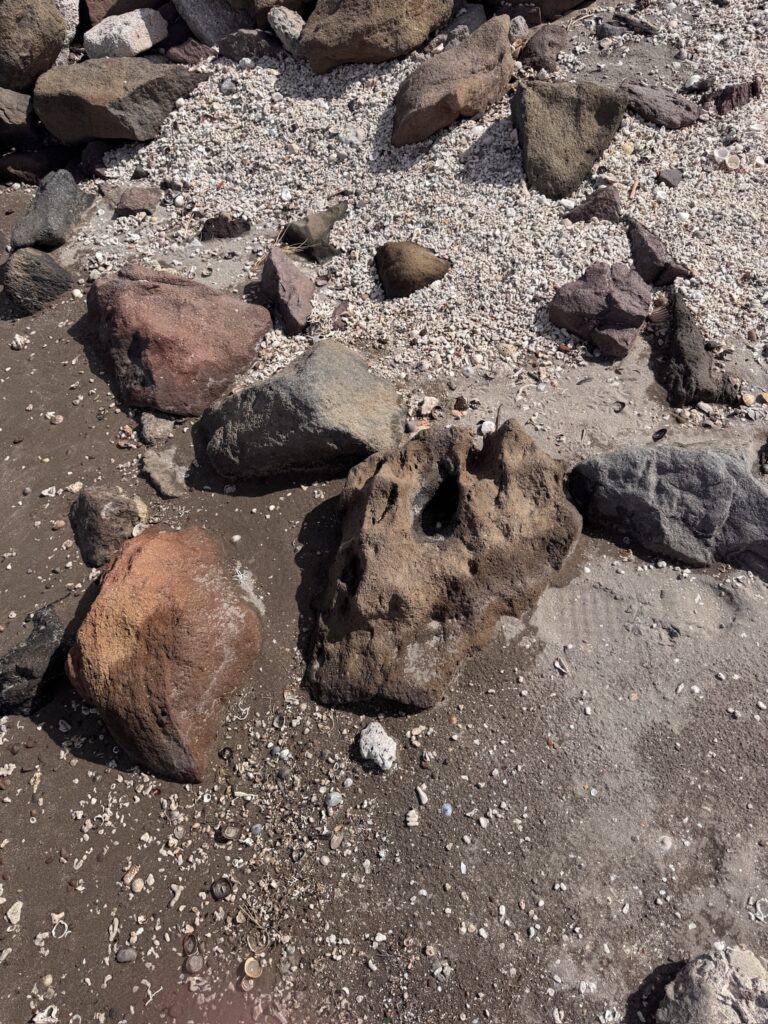
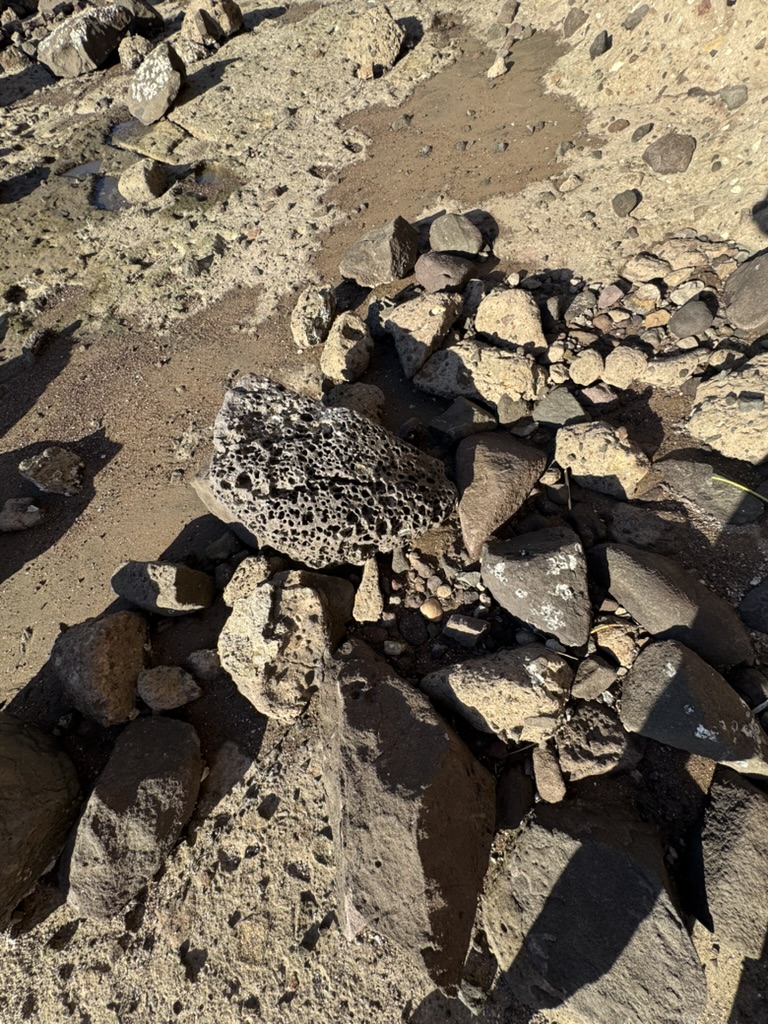
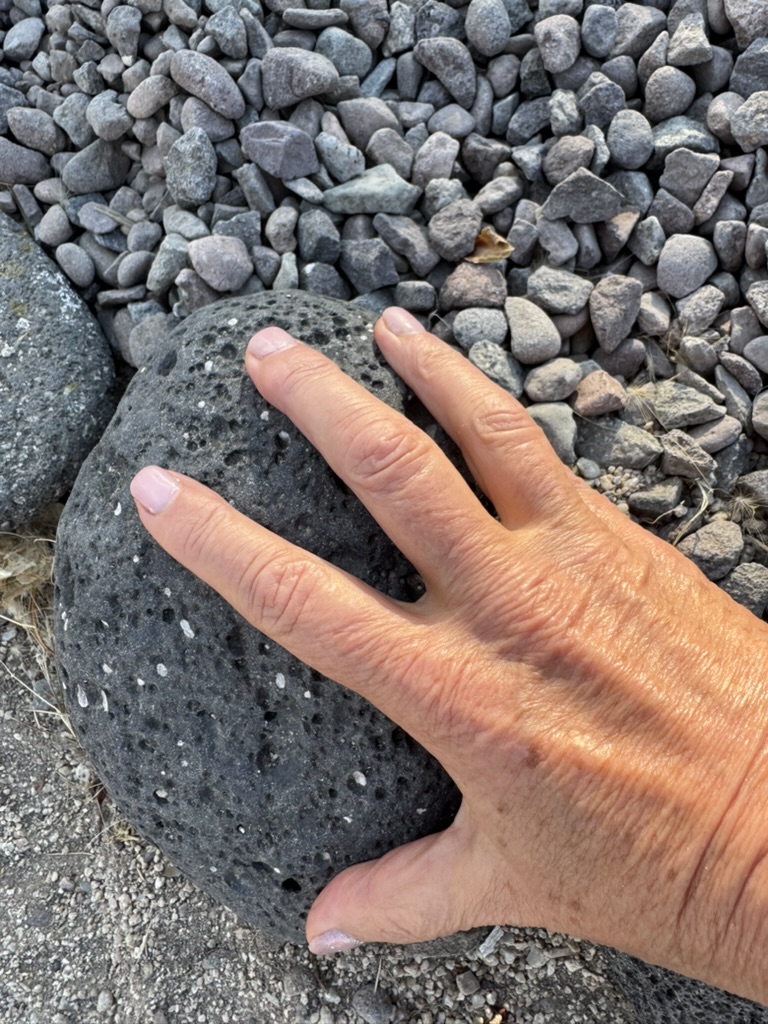
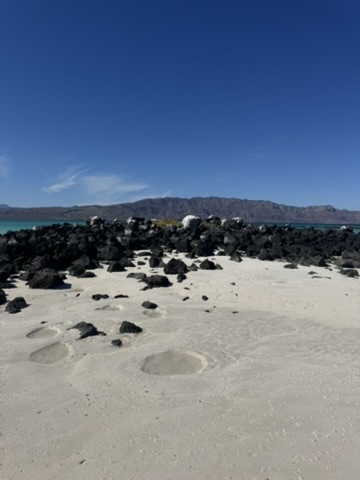
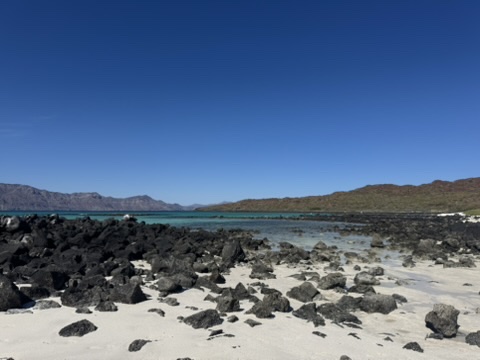
Title: Volcanic Rocks

Photo Credit: Amy Tucker 2026

And here is what surprises me: it feels good. Beyond the skipping. The reclaiming. The gradual return of lightness. The sense that my body is becoming a place where joy is possible again.

For years, my body was a site of vigilance. Of tension. Of preparing for a threat. Now it is becoming something else. Something softer. Something more playful.
Mi cuerpo se está curando. My body is healing.

No sólo descansando. More than resting.

Curando. Healing.

Y parte de la curación es recordar cómo jugar. And part of healing is remembering how to play.

What the Sea Lions Teach About Successful Aging

Traditional models of successful aging emphasize maintaining function. Physical health. Cognitive capacity. Productivity. Contribution. (Rowe & Kahn, 1997).

But the sea lions suggest a different model.

Successful aging might be: maintaining the capacity for joy. For curiosity. For absorption in the present moment. For play.

Their bodies are older. Scarred. Slower now, less agile than young bodies. But they play anyway, through aging rather than despite it. Their play is a present-moment engagement, no effort to recapture youth. It is present-moment engagement with being alive in the body they have now.

This feels important.

Twenty again holds no appeal for me. No idealized version of youth calls to me. I want to be sixty and playful. Sixty and joyful. Sixty and capable of skipping for three steps when skipping feels right.

I want what the sea lions have: age that leaves joy intact. Experience that carries lightness alongside wisdom. Wisdom that includes lightness.

Henricks (2015) argues that play in later life serves a generative function: modelling joyful engagement for younger generations, resisting cultural narratives that equate aging with decline, and demonstrating that vitality persists across the lifespan.

If this is true, then learning to play at sixty is a contribution, no form of regression. It is resistance. It is saying: this is what aging can look like. Alive. Present. Joyful. Still learning. Still curious. Still capable of surprise. No grimness, no resignation, no decline toward inevitable loss.

The sea lions model this every day. I am trying to learn from them.
Slowly. With academic footnotes and self-consciousness they never carry. But learning.

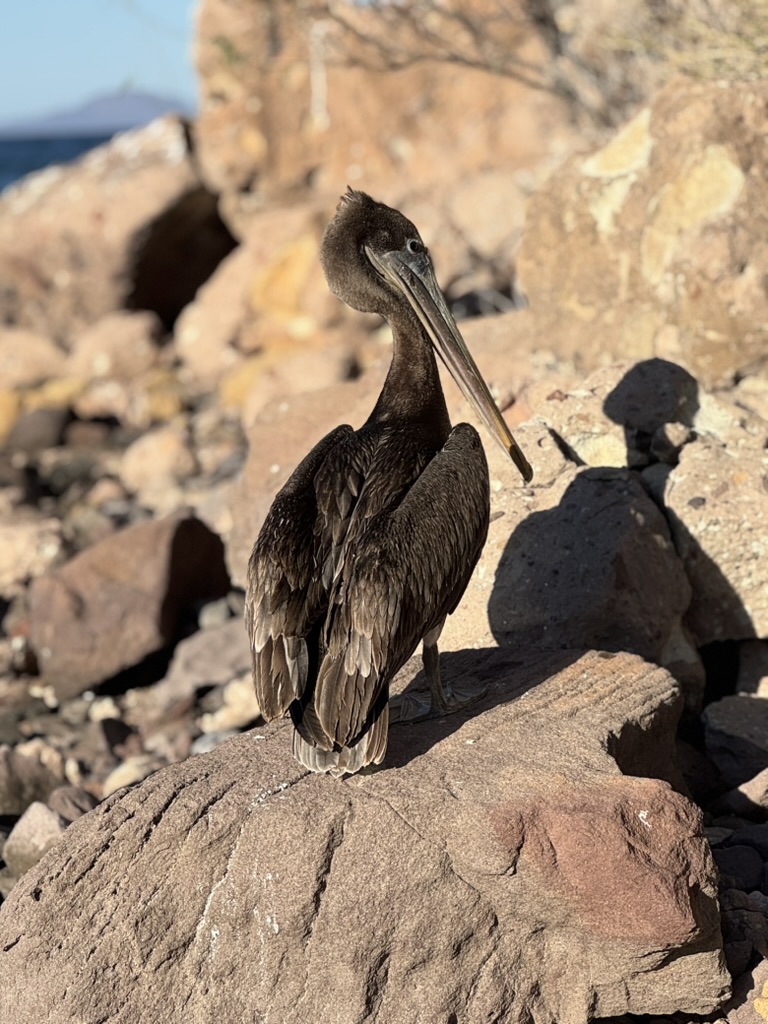
And occasionally, when I forget to monitor myself, when I am absorbed in water or surprised by pelicans or simply here, I play.
Just for a moment. Just for three steps. Just for one spontaneous laugh.
But it is there. Real. Growing.

Title: New Directions

Photo Credit: Amy Tucker, 2026


Translation note. Spanish language passages were generated using Google Translate and subsequently reviewed and refined by the author. Any remaining infelicities reflect the limits of machine translation rather than intent.

References

Brown, S., & Vaughan, C. (2009). Play: How it shapes the brain, opens the imagination, and invigorates the soul. Avery.

Google. (n.d.). Google Translate. https://translate.google.com

Guitard, P., Ferland, F., & Dutil, É. (2005). Toward a better understanding of playfulness in adults. OTJR: Occupation, Participation and Health, 25(1), 9–22. https://doi.org/10.1177/153944920502500103

Henricks, T. S. (2015). Play and the human condition. University of Illinois Press.

Porges, S. W. (2011). The Polyvagal Theory: Neurophysiological foundations of emotions, attachment, communication, and finding our own calm. W. W. Norton & Company.

Rowe, J. W., & Kahn, R. L. (1997). Successful aging. The Gerontologist, 37(4), 433–440. https://doi.org/10.1093/geront/37.4.433

Academic Lens

Age and play in the same frame raises the question of what Brown (2010) calls the permission to be imperfect: the cultural prohibition on adult play is internalized most deeply in those whose worth has been contingent on productivity. Csikszentmihalyi (1990) identifies play as the purest form of autotelic experience, activity valuable in itself beyond any outcome. The bodily joy described in this entry is also a body-based signal of the nervous system's continued decompression: Porges (2011) notes that playfulness is a marker of genuine safety engagement, a physiological state unavailable under chronic threat.

Day 14: Ballenas y Piedra

Reading Time: 15 minutes

Ballenas y Piedra / Whales and Stone

Title: The Sea of Cortez

Photo Credit: Amy Tucker, 2026

I had no plan to see whales.

The boat tour was about the island, about Coronado with its ancient volcanic stone rising from the sea like something too dramatic to be real. I wanted to see the geology. Wanted to understand how fire becomes stone, how destruction becomes foundation, how violence cooled into something that now holds life.

The whales were absent from the itinerary. They were passing through. We were lucky, the captain said. Muy afortunados.

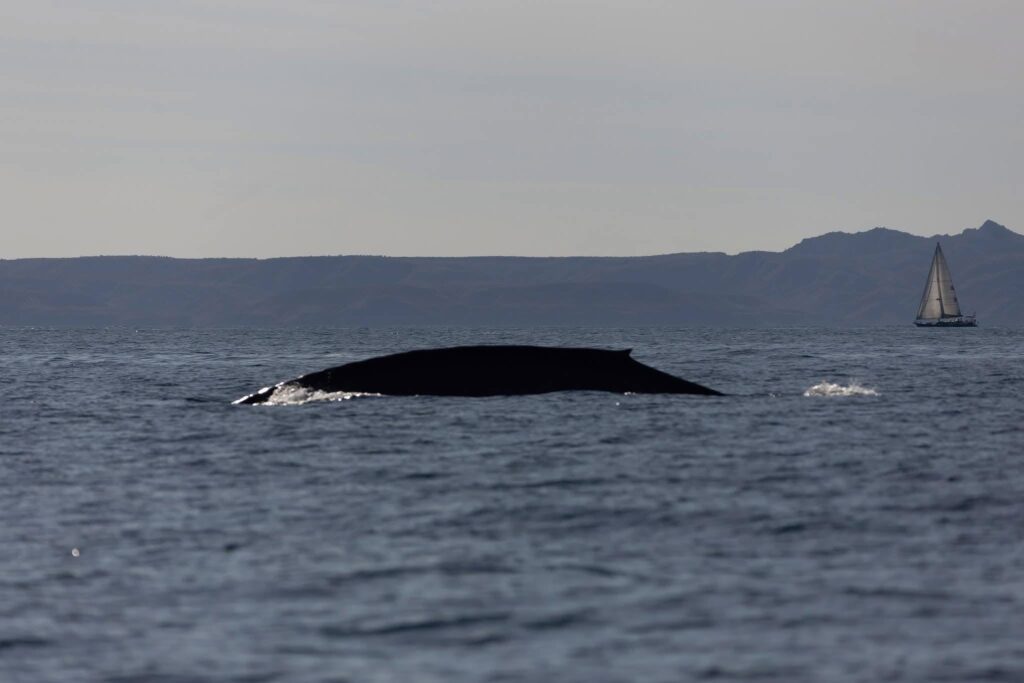
Title: Grey Whale

Photo Credit: Amy Tucker, 2026

I felt anything but lucky at first. I felt unprepared. As though I should have known this was possible, should have researched grey whale migration patterns, should have brought a better camera, should have been ready for this moment rather than sitting in a small boat with no idea where to look or what I was about to see.

Then the water broke, and there was a back. Grey. Massive. Longer than our boat. The whale surfaced, breathed (a sound I cannot describe except to say it sounded like the ocean exhaling), and disappeared again into water that closed over it as though nothing that large had just been there.

I forgot about being prepared. Forgot about cameras. Just watched the space where the whale had been, waiting, holding my breath, aware suddenly of my own breathing in a way I had forgotten since the panic attacks that brought me here began to ease. The whale breathes air like I breathe air. We are both mammals. Both carry our ancestors’ decision to leave the ocean and then (in the whale’s case) the decision to return. Both are shaped by evolutionary pressures I can name but struggle to fully comprehend.

The whale surfaced again. Fifty metres ahead this time. I could see barnacles clustered on its head, the mottled grey of skin that looked like stone worn smooth by water. Another breath. Another dive. And I realized I was crying. Quietly, undramatically. Just tears on my face that I left alone because they felt like the right response to whatever was happening.

van der Kolk (2014) writes that trauma resolution occurs less through understanding than through the body’s learning to feel safe again. I have been here two weeks learning that lesson: letting my body remember what safety feels like. But something about the whale’s presence intensified it. The whale’s breath synchronised my own breathing in ways beyond my control. My nervous system responded to the whale’s presence before my mind registered what I was seeing. This is what Porges (2011) calls the body’s instinct to scan for safety, the body’s capacity to detect safety or danger below conscious awareness through environmental cues, including, apparently, the respiratory patterns of other mammals.

Learning Scale Through Bodies

I have been thinking about scale.

Title: Egypt Gods

Photo Credit: Amy Tucker, 2026

For two weeks, I have been learning to feel small in ways that leave me whole. Small against the stars. Small against the sea. Small against geologic time. But the whale is different. The whale is something other than cosmic distance or abstract deep time. The whale is right here, breathing the same air I am breathing, made of the same carbon and oxygen and complexity. And it is so much larger than me that my body cannot quite process it.

Fifteen metres long, the guide said. Up to forty tonnes. These are numbers. They mean nothing until you are in a six-metre boat and a whale surfaces close enough that you understand: I am the size of the whale’s eye. Maybe smaller. The whale could overturn this boat without meaning to, just by surfacing in the wrong place. We are here because the whale allows it. Because the whale, in its vast mammalian intelligence, has chosen to regard us as harmless.

This is different from the stars’ indifference. The stars choose nothing. They simply are, and my presence or absence makes no difference to them. But the whale is aware. The whale has agency. The whale sees me (I watched its eye track our boat as it passed) and makes decisions about whether I am worth noticing, worth avoiding, or worth approaching. I am in a relationship with the whale, regardless of my intention. And the whale, by refraining from destroying us, by passing peacefully, by allowing us to witness, is teaching me something about coexistence I had no idea I needed to learn.

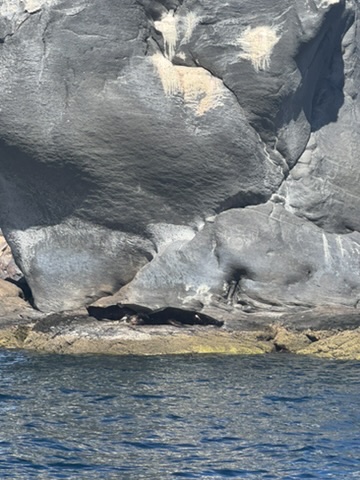
Title: Sea Lions on the Rocks

Photo Credit: Amy Tucker, 2026

Buber (1923/1970) writes about I-Thou relationships, encounters in which the other is met as a subject rather than an object, where genuine relation becomes possible even across vast differences. The whale encounter fell short of I-Thou in Buber’s full sense (the whale was silent toward me, was entering no reciprocal relation), and yet it resisted the category of I-It (the whale as object, as thing to be observed). It was something in between. Something more like: we share this moment. We share this water. We share the fact of being alive at the same time in the same place, and that sharing, however brief, however one-sided, matters.

Boss (1999) writes about ambiguous loss, about relationships that defy clear categories. I am thinking about this now in a different context. What is my relationship with the whale? Beyond connection in the usual sense (the whale carries no knowledge of me). Beyond threat (I pose none). Beyond kinship (though we share mammalian ancestry, that seems too distant a claim to make). Something else. Something more like a witness. I witnessed the whale. The whale, perhaps, witnessed me. And that mutual witnessing, even without recognition or acknowledgment, creates a kind of relation that matters.

The whale needs nothing from my witnessing. But I seem to need to witness the whale. Need to know that something this large, this ancient (grey whales as a species evolved approximately 2.5 million years ago; Swartz, 2018), this indifferent to human concern still exists. Still migrates. Still breathes air, nurses its young, and navigates thousands of kilometres using senses I cannot imagine. The whale’s existence, independent of my need for it, feels like permission. Permission to exist independently of others’ needs for me. Permission to migrate toward what I need without justifying the journey. Permission to be large in my own right, even when that largeness is invisible to those who look at me and see only the surface.

Fire Becoming Stone: On Transformation and Time

We continued toward Coronado Island, and I was quiet.

The others in the boat were talking about the whales, about luck, about whether we might see more on the return trip. I had no words. No way to translate what I was feeling into words that would make sense to people who had seen the same thing I had seen, but seemed to have experienced it differently. They saw whales. I saw something I still lack language for.

The island rose ahead of us. Red and black stone. Sharp angles softened by millennia of erosion, but are still clearly volcanic. The guide explained the geology: an ancient volcano, now extinct, part of the volcanic chain formed when tectonic plates pulled apart millions of years ago, and magma rose to fill the gaps. The red is iron oxide. The black is basalt. The textures tell stories about how quickly lava cooled, how gas bubbles were trapped and never escaped.

I listened, but I was thinking about something else. About fire becoming stone. About destruction becoming a foundation. About the fact that everything solid was once liquid, once too hot to touch, once actively destroying everything it encountered. And now it sits peacefully in the sun. Now it is a habitat. Now birds nest on it, sea lions bask on it, and fish hide in its underwater crevices.

What does it take for violence to cool into peace? How long? Under what conditions? Can a human lifetime be long enough for that transformation, or do we need geologic time, millions of years, the patient work of water and wind wearing down sharp edges until they are smooth?

Herman (1992) writes that trauma recovery unfolds in stages: establishing safety, reconstructing the trauma narrative, and restoring connections with others. But she acknowledges that recovery follows no straight line, that setbacks occur, that some trauma leaves permanent marks even as healing proceeds. The volcanic stone teaches something similar. The violence of eruption is permanent in some sense; the stone will always be volcanic stone, will always carry the signature of fire in its composition and structure. But it is also transformed. Cooled. Made into something that can be touched, that can hold life, that is no longer actively destructive even as it remembers destruction.

I am carrying violence inside me. None of it my own. Violence witnessed. Violence absorbed through trying to protect someone beyond my reach to protect. The past five months have been volcanic: sudden eruptions, molten rage, heat that destroyed everything it touched. And I came here hoping that distance, time, and consistency might cool it. Might turn it from something actively harmful into something that can be lived with. Maybe even something that becomes a foundation.

Two weeks may be enough. If thirty days will be enough. If any amount of time in any location will be enough. But watching volcanic stone hold seabirds and sea lions, I felt something like hope. If fire can become this, maybe anything can transform. Maybe cooling is less about erasing what happened but about integration. About the violence becoming part of your structure without remaining your defining characteristic. About carrying fire’s memory without burning.

Touching Ground: what the body knows

We anchored in a small bay, and the captain said we could swim if we wanted.

I lowered myself into the water, and the cold shocked every thought out of my head. My body contracted. My breath stopped. Then started again, harsh and fast. Then slowed. Then the cold became bearable. Then it became exactly right.

I swam toward the island’s edge where stone met water. Underwater, volcanic rock was even more dramatic: sharp ridges, smooth faces, crevices dark with shadow and possibility. I reached out and touched it. Ran my hand along the surface. Rough. Solid. Still holding some memory of heat, though that heat is millions of years old, cooled now to ocean temperature.

My body knows stone differently than my mind knows it. My body reads texture, temperature, and solidity. My body has no use for tectonic plates or million-year timescales. My body just knows: this is real. This is here. This can be touched. And touching it changes something. The stone remains indifferent. But me. I have been changed by touching the stone that was once fire.

Title: Volcano Rocks

Photo Credit: Amy Tucker, 2026

Merleau-Ponty (1945/2012) writes about embodied perception, about how we know the world primarily through our bodies before we know it through concepts. The body’s knowledge is immediate, pre-reflective, and cannot be fully translated into language. This is what Sheets-Johnstone (2011) calls kinesthetic knowing, knowledge that emerges through movement and touch, through the body’s direct engagement with the material world. This knowing precedes and often exceeds what language can capture.

This is what I was experiencing in the water. Feeling the volcanic stone rather than thinking about it. Learning it through skin, through the resistance it offered when I pushed against it, through the way it scraped my palm when I held on too tightly. My body was gathering information my mind struggled to process: the stone’s texture, its temperature gradients, its stability, its indifference to my presence. All of this registered in the body before I had words for any of it.

Damasio (1994) argues that emotion and feeling are fundamentally embodied, that what we call consciousness emerges from the body’s ongoing process of finding our own calm and environmental response. The body knows before the mind knows. The body responds before conscious thought directs it. And often the body knows things the mind never fully grasps because those things exist at the level of sensation, of immediate experience, of contact with the world that exceeds conceptual capture.

I stayed in the water longer than I intended. Kept swimming around the island’s edge, kept touching stone, kept trying to understand through my hands what my mind had yet to grasp. Eventually, I climbed back into the boat. Wrapped a towel around myself. Sat in the sun, which felt impossibly good after the cold. And thought: I came here to touch ground. That is what this month is. Touching ground after years of free-fall. Learning what is solid. Learning what holds.

Finding Pattern in Movement

The whales we saw this morning migrate up to twenty thousand kilometres annually. Arctic feeding grounds to Baja breeding lagoons and back. They navigate using what scientists believe is a combination of magnetic field detection, sun position, memory of coastline features, and possibly echolocation. Grey whales are baleen whales rather than toothed whales, so their sonar works differently from that of other sea mammals (Swartz, 2018).

What strikes me is the fact itself, more than the mechanism. Twenty thousand kilometres. Every year. For their entire lives. They stay in no one place. They are built for movement. Their survival requires migration, requires leaving feeding grounds when food runs out, requires travelling to warm water to give birth, and requires trusting that the journey is possible even when you cannot see the destination.

I have been thinking about this in relation to my own life. The constant movement. The inability to stay. Nineteen years of contract work meant never knowing whether I would be in the same place next semester or next year. Always preparing to leave. Always holding relationships lightly because attachment to place or people or routine felt dangerous when any of it could be taken away with two weeks’ notice.

Standing (2011) writes about the precariat, the growing class of workers whose employment is temporary, insecure, and without benefits or stability. Precarious workers live in perpetual uncertainty, unable to plan for the future, unable to establish roots, always one crisis away from catastrophe. This precarity creates what Standing calls “status frustration” and chronic stress that accumulates over time, wearing away at health, relationships, and sense of self.

But the whale’s migration is different from my precarity. The whale chooses to leave. The whale knows where it is going. The whale has done this journey before and will do it again. There is certainty in the pattern, even though each journey is unique, even though conditions change, even though some years are harder than others. The whale’s movement carries no precarity. It is rhythm. It is a pattern. It is a kind of stability that emerges through movement, even because of it.

What I am attempting here is something like that. No true migration (I will return to the same city, the same life), but the development of a pattern. The trust that this rhythm I am establishing can be carried forward. That I can know where I am going even when I cannot yet see it. That leaving may carry no loss in it. Sometimes, leaving is how you find your way home.

Witness of Joy

On the trip, we also saw hundreds of sea lions.

Title: Sea Lions Playing

I watched them and cried again. No particular sadness in it. No pure happiness either. Just the body’s response to witnessing something it recognizes but cannot name. What we call joy in humans belongs to a wider mammalian inheritance.

But watching them, my mind moved away from neuroscience. I was thinking about the five months before I came here. The heaviness. The way joy became impossible, through no choice for sadness but because the capacity for lightness had been worn away by constant vigilance, constant crisis, constant weight. I forgot that joy was possible. Forgot that bodies can move just for the pleasure of movement. Forgot that play is a real thing animals do, a fundamental expression of being alive.

Porges (2011) describes the social engagement system, the neural pathways that support play, connection, facial expression, and vocalization. This system only functions when the nervous system registers safety. When we are in threat states (the body’s alert state or dorsal vagal shutdown), the social engagement system goes offline. We cannot play. Cannot connect easily. Cannot access the lighter states that make joy possible. Play requires a nervous system at rest, a body that trusts its environment enough to lower its defences.

Title: The Lioness

Photo Credit: Amy Tucker, 2026

Play has been absent from my life for months. Maybe years. Have been too vigilant, too responsible, too aware of everything that could go wrong to allow the kind of unselfconscious absorption that play requires. But watching the sea lions, I felt something shift. Recognition rather than permission. Recognition that the capacity for play still exists in me somewhere. That it has been temporarily inaccessible, dormant but alive. The nervous system can move from a chronic threat response back to states where play becomes possible.

The sea lions do it. That whales do it (I read later that grey whales are known to approach boats, allowing humans to touch them, seeming curious about us in ways that look like play). That maybe, given enough time, safety, and consistency, I can do it too.

Brown and Vaughan (2009) argue that play is essential rather than frivolous, serving crucial functions in mammalian development and adult well-being: reducing stress, building social bonds, enhancing creativity, and maintaining cognitive flexibility. The absence of play, they suggest, is a marker of systems under stress, of lives organized around survival rather than flourishing.

I understood: I have been in survival mode. The return to play will signal that something fundamental has shifted. That I am safe enough to be playful again.

Making Meaning

Back at the dock, stepping from boat to land, I felt unsteady.

Physically, I was fine. But something about spending hours on water had changed my relationship with solid ground. The architectural structures of human settlement: buildings, walls, boundaries water lacks.

Title: Afternoon Seista

That evening, I lay in a hammock and thought about the day. About whales’ breathing. About volcanic stone, teaching me that fire can be cooled. About sea lions playing. About my body’s response to all of it: unplanned tears, unexpected joy, a steadiness that came from witnessing things beyond my control continuing to exist in their full complexity.

Nash (2004) writes that scholarly personal narrative requires staying with experience long enough to understand what it means, resisting the rush to conclusions and allowing meaning to emerge through sustained reflection. This is the work of sense-making, as Park (2010) describes the process by which individuals integrate difficult experiences into their life narratives, restoring a sense of coherence and purpose. sense-making bypasses silver linings and forced positive interpretations. It is about the harder work of acknowledging what happened, sitting with its difficulty, and gradually discovering how it connects to the larger story of who you are and what matters to you.

I am doing that now. Making no claim to understand what today meant, only acknowledging that it did. That seeing whales changed something in me I cannot yet name. That touching volcanic stone mattered. That witnessing sea lions mattered. That my body knows things my mind has yet to find language for.

Title: Sea Lions

Photo Credit: Amy Tucker, 2026

Tomorrow I will wake, and the whales will be farther north. The sea lions will be somewhere else in the sea. The volcanic stone will still be there, still cooling, still becoming whatever it is becoming over timescales I cannot comprehend. And I will still be here, still learning what it means to be small and temporary and witness to things larger and older and more indifferent than I am.

But I will carry today. The sound of whale breath. The texture of volcanic stone under my hand. The sight of the sea lions. The recognition that my body still remembers how to cry in response to beauty, still registers awe even after months of numbness, still has capacity for the kind of witness that feels like prayer even when belief in anything to pray to has left you.

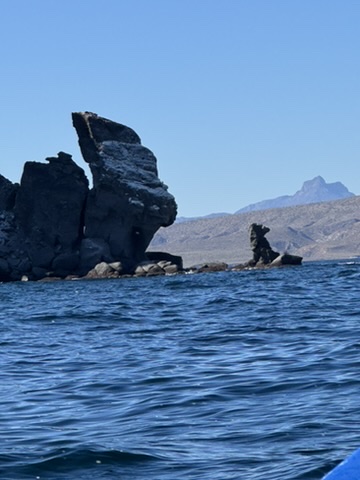
Title: Rock Formations

Photo Credit: Amy Tucker, 2026

Gracias, ballenas. Thank you, whales.

Por respirar donde yo podía oírte. For breathing where I could hear you.

Gracias, piedra volcánica. Thank you, volcanic stone.

Por recordarme el juego. To remind me about play.

Gracias, cuerpo. Thank you, body.

Por saber cómo llorar cuando las palabras no bastan. For knowing how to cry when words fall short.


Translation note. Spanish language passages were generated using Google Translate and subsequently reviewed and refined by the author. Any remaining infelicities reflect the limits of machine translation rather than intent.

References

Boss, P. (1999). Ambiguous loss: Learning to live with unresolved grief. Harvard University Press.

Brown, S., & Vaughan, C. (2009). Play: How it shapes the brain, opens the imagination, and invigorates the soul. Avery.

Buber, M. (1970). I and Thou (W. Kaufmann, Trans.). Charles Scribner’s Sons. (Original work published 1923)

Damasio, A. R. (1994). Descartes’ error: Emotion, reason, and the human brain. Putnam.

Google. (n.d.). Google Translate. https://translate.google.com

Herman, J. L. (1992). Trauma and recovery: The aftermath of violence, from domestic abuse to political terror. Basic Books.

Merleau-Ponty, M. (2012). Phenomenology of perception (D. A. Landes, Trans.). Routledge. (Original work published 1945)

Nash, R. J. (2004). Liberating scholarly writing: The power of personal narrative. Teachers College Press.

Park, C. L. (2010). Making sense of the meaning literature: An integrative review of meaning making and its effects on adjustment to stressful life events. Psychological Bulletin, 136(2), 257–301. https://doi.org/10.1037/a0018301

Porges, S. W. (2011). The Polyvagal Theory: Neurophysiological foundations of emotions, attachment, communication, and finding our own calm. W. W. Norton & Company.

Sheets-Johnstone, M. (2011). The primacy of movement.

Standing, G. (2011). The precariat: The new dangerous class. Bloomsbury Academic.

Swartz, S. L. (2018). Grey whale (Eschrichtius robustus). In B. Würsig, J. G. M. Thewissen, & K. M. Kovacs (Eds.), Encyclopedia of marine mammals (3rd ed., pp. 422–428). Academic Press.

van der Kolk, B. A. (2014). The body keeps the score: Brain, mind, and body in the healing of trauma. Viking.

Academic Lens

Whales and stone: two orders of time meeting the human body. The whale's presence, a creature of vast scale, indifferent to the observer, is a profound instance of what Kaplan and Kaplan (1989) call extent: an environment large enough to contain and exceed the self, producing the felt sense of being part of something beyond individual concern. This encounter also instantiates alonetude (Tucker, 2026) at its most expansive: alone in the presence of something vast, the self becomes appropriately small, and the experience is freeing rather than frightening.

Day Thirteen: La Tierra Bajo Mis Pies

Reading Time: 9 minutes

The Earth Beneath My Feet

Title: The Sea Etched in the Earth

Photo Credit: Amy Tucker, 2026

I woke this morning thinking about roots.

Actually thinking about roots. About how they reach downward into darkness. About how they find water through the soil. About how they hold plants steady against wind while also drawing nutrients upward into the stem, leaf, and flower. Roots as anchor and conduit. Roots as holding and feeding at once.

My attention has been held by the sea. Twelve days of walking in it, watching it, letting it move through my body. Yet this morning, my awareness shifted downward rather than outward. Toward earth. Toward the land that holds this place, this village, this precise curve of coast where the Sea of Cortez meets the Baja desert.

The land has always been here. I have walked across it daily. Still, my attention treated it as surface, as passage, as the space between cottage and shoreline. Water received my devotion. Land remained background.

This morning, I attended differently.

Turning from Water to Land

Today I leave my current space and move to a small village called Nopoló, also settled along the sea’s edge. The change feels subtle yet consequential. A relocation measured in minutes yet weighted with meaning. A shift in orientation rather than distance.

Title: The Colonial Village

Photo Credit: Amy Tucker, 2026

Entering the Landscape

In the afternoon, I explore Loreto Bay at Nopoló. The sea, the rock formations, the cliffs. I move slowly, allowing the landscape to lead rather than plans or expectations.

The earth here carries a different texture than the earth I know. Rocky. Sparse. The colour of sand, yet compacted and dense, shaped by centuries of sun, wind, and a climate where rain arrives rarely and leaves quickly. Growth here reflects careful strategy. Cacti store water patiently. Shrubs hold small leaves that conserve moisture. Palms appear only where underground water rises close enough for roots to reach.

This kind of understanding emerges through long attention to place. Anthropologist Keith Basso describes how knowledge forms through sustained presence, through learning how the landscape holds memory, instruction, and meaning over time (Basso, 1996). The Cochimí people lived on this land for thousands of years before the arrival of Spanish missions. They knew which plants carried water in their roots. Which animals moved through during particular seasons? Where springs surfaced after rare rains. How weather revealed itself through birds, air, and light.

I lack this knowledge. Thirteen days cannot produce it. Still, attention can begin. I can notice that the land teaches differently from the sea. Each carries wisdom shaped by its own rhythms.

Learning What the Land Knows

Place-based learning grows from exactly this kind of attention. Knowledge is formed through bodily presence, through noticing patterns, textures, and temporal rhythms associated with a specific location. Gruenewald describes this learning as emerging from a relationship rather than abstraction, from inhabiting a place rather than observing it from a distance (Gruenewald, 2003). Ingold similarly writes that understanding arises through movement, through walking landscapes and learning their contours over time (Ingold, 2021).

Here, the land teaches patience. Economy. Endurance.

Title: The Faces in the Rock

Photo Credit: Amy Tucker, 2026

I climb higher. The street becomes a dirt road. The dirt road becomes a path. The path leads to a small rise where I can see the village below me, the sea beyond it, and the islands visible in morning light across the channel.

I sit on a rock, a rock embedded in the earth, part of the hillside’s bone structure. Warm already from the sun, though the morning is still early. Rough texture. Solid.

My body recognizes this differently from water. Water yields. Shapes itself around you. Holds you through buoyancy, through displacement, through the physics of floating. Rock is what yields to. Rock holds its form. Rock is a limit, a boundary, a fact that stops you.

And yet that framing needs adjusting. Rock does yield. Just slowly. On timescales beyond human body perception. Wind erodes rock grain by grain. Water wears channels through stone. The mountain I am sitting on was once seafloor, thrust up by tectonic forces that continue to reshape this landscape, imperceptibly, constantly.

Geologic time: the scale at which mountains rise and fall, continents drift, oceans open and close. The scale at which everything solid reveals itself as fluid, moving at speeds that make our lifetimes appear like single breaths (McPhee, 1981).

Sitting on this rock, I am sitting on an ancient seafloor. The calcium in my bones came from the same ocean that deposited the limestone this rock is made of. I am made of the same elements as the mountain. Different arrangement. Different timescale. But the same stuff.

My body knows this. My bones recognize stone. The calcium, the minerals, and the slow patient being that both rock and bone share.

Title: The History of Time

Photo Credit: Amy Tucker, 2026

Shared Heat

A lizard appears beside me. Small. Brown. Entirely still except for the pulse in its throat and the movement of eyes tracking something unseen.

We sit together for several minutes. Two beings warming ourselves on the same sunlit rock. The lizard remains. I remain. No negotiation. No interaction. Shared occupation.

This differs from encounters with village dogs, which involve social cues and mutual recognition. The lizard and I coexist. The rock holds us both.

When the lizard disappears into a narrow crack, I stay. Feeling warmth against my legs and palms. Feeling how my body prefers stone to sand or grass. Perhaps an ancestral memory. Mammals draping themselves across sun-warmed rock for temperature regulation.

Thermoregulation describes the capacity to maintain internal temperature. Humans rely on metabolism, shivering, sweating, and also behaviour. Seeking the sun. Seeking shade. Using the material world to support cellular life.

The lizard depends on this more actively. Still, I participate as well. Sitting. Warming. Settling.

The land teaches this, too. I am material. I require what stone requires. Stability. Mineral composition. Time. Stone holds what I require. Warmth. Solidity. Memory.

Title: The Breath of the Sea

Photo Credit: Amy Tucker, 2026

Land as Relation

Walking back down the hill, I think about Indigenous land relationships. The Cochimí and, later, the Kiliwa and Paipai peoples understood themselves as continuous with the land, responsible to it, and shaped by it (Shipek, 1988). Land existed as a relation rather than a possession.

This understanding largely disappeared within settler cultures. Land became property. Resource. Commodity. Something external to the body rather than continuous with it.

Basso writes that Western Apache people understand places as teachers. Places carry stories. Places remember. Time spent with place produces change. Knowledge emerges through relationships, shaped by the landscape over time (Basso, 1996).

Thirteen days mark the beginning of this instruction. Teaching arrives through the body rather than language. Bones recognize stone. Lungs adapt to this particular air. Skin acquires a balance among sun, wind, and dryness.

What Place Teaches

This reflects place-based learning. Knowledge formed through sustained physical presence. Through walking contours. Through noticing what grows where and why. Through feeling the weather on the skin. Through reading time through light and seasonal rhythm (Gruenewald, 2003; Ingold, 2021).

The land teaches groundedness. Literal grounding. A reminder that I am terrestrial. That my legs belong to earth. That water offers refuge while land offers belonging.

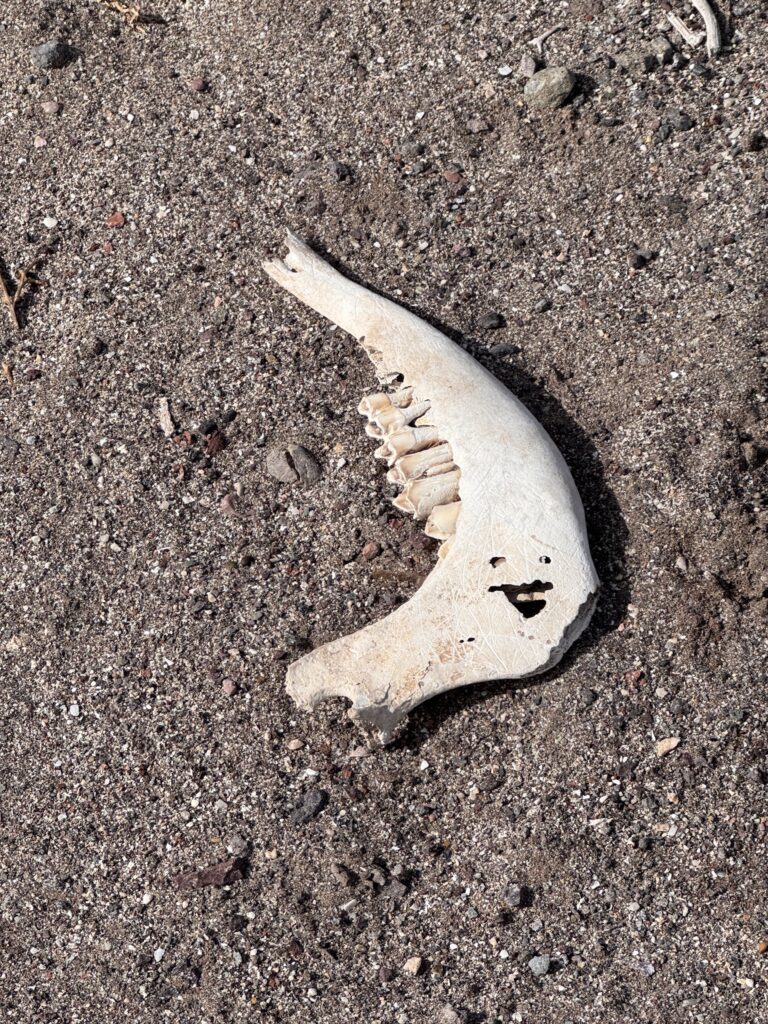
Title: Sea Bone

Photo Credit: Amy Tucker, 2026

Held, Temporarily

The day warms. Pelicans follow their mid-morning patterns. The sea continues its rhythms.

Something has shifted. Attention expands. Land joins water. Earth beneath the cottage. Mountains rising westward. Desert stretching along the peninsula. All alive. All teaching.

Tomorrow I will walk again. Perhaps up the arroyo that cuts through the village, dry now, shaped by rare floods. Perhaps south along the beach where buildings end, and desert meets sea without mediation.

The land has been here long before me. It will remain long after the cottage crumbles and the village becomes another layer in the geologic record. The rock that held me this morning has existed for millions of years. It will continue for millions more.

I am here briefly. The land holds me the way it holds everything. Temporarily. Lightly. Aware that all presence passes, all bodies return borrowed elements.

Gracias, tierra.
Thank you, Earth.

Por sostenerme.
For holding me.

Por enseñarme la paciencia.
For teaching me patience.

Por recordarme que soy hecha de ti.
For reminding me that I am made of you.

Y que volveré a ti.
And that I will return to you.

Title: Shoreline

Photo Credit: Amy Tucker, 2026

Walking back down the hill, I think about Indigenous land relationships. How the Cochimí and later the Kiliwa and Paipai peoples understood themselves as part of land rather than separate from it, continuous with it, responsible to it and for it (Shipek, 1988).

This is what settler cultures have largely lost: the understanding that we are of the land rather than on it. That land is relation, kin, the material basis of existence that cannot be owned any more than you can own your own body (though capitalism tries to convince us we can and should).

Basso (1996) writes about how Western Apache people understand places as teachers. Actually, beyond metaphor. Places hold stories. Places remember. Places shape those who spend time with them. To know a place deeply is to be taught by it, changed by it, made into someone slightly different from who you were before you arrived.

I have been here for thirteen days. The place has begun to teach me. Through presence rather than language, and the land’s own language may always exceed my fluency, but through my body. Through my bones, recognizing stone. Through my lungs, adjusting to this particular quality of air. Through my skin, learning this specific combination of sun, wind, and dryness.

Place-based learning: knowledge that emerges from sustained physical presence in a location rather than from books or lectures,on. From walking its contours. From noting what grows where and why. From feeling the weather on your skin and reading time through light, to learning the daily and seasonal rhythms that make this place what it is.

The land is teaching me something the sea cannot teach: groundedness. Literal grounding. The reminder that I am a terrestrial animal, that I walk on legs designed for earth rather than fins designed for water, that my primary relationship is with solid ground, even when I love the water.

Title: The Tide

Back in my space now. The morning has warmed considerably. The pelicans are fishing their mid-morning pattern. The sea continues its rhythms.

But something has shifted in how I hold my attention. Less focused solely on water. More aware of the land: the earth under the cottage, the mountains rising to the west, the desert stretching north and south along the peninsula. All of it is alive. All of it is teaching.

Tomorrow I will walk again. Different direction perhaps. Up the arroyo that cuts through the village, dry now but carved by occasional floods when rare rains come. Or south along the beach to where buildings end, and desert meets sea directly, no human settlement mediating the meeting.

The land is here. Has been here. Will be here long after I leave, long after the cottage crumbles, long after the village itself becomes another layer in the geologic record. The rocks I sat on this morning have been sitting there for millions of years. They will sit there for millions more.

I am here for thirty days. The land holds me the way it holds everything: temporarily, lightly, knowing that all occupation is provisional, all presence fleeting, all bodies eventually returning to the elements they borrowed.

Gracias, tierra. Thank you, Earth.

Por sostenerme. For holding me.

Por enseñarme la paciencia. For teaching me patience.

Por recordarme que soy hecha de ti. To remind me, I am made of you.

Y que volveré a ti. And that I will return to you.


Translation Note

Note. Spanish-language passages were generated using Google Translate (Google, n.d.) and subsequently reviewed and refined by the author. Any remaining infelicities reflect the limits of machine translation rather than intent.

References

Basso, K. H. (1996). Wisdom sits in places: Landscape and language among the Western Apache. University of New Mexico Press.

Google. (n.d.). Google Translate. https://translate.google.com

Gruenewald, D. A. (2003). The best of both worlds: A critical pedagogy of place. Educational Researcher, 32(4), 3–12. https://doi.org/10.3102/0013189X032004003

Ingold, T. (2021). Being alive: Essays on movement, knowledge and description. Routledge.

McPhee, J. (1981). Basin and range. Farrar, Straus and Giroux.

Shipek, F. C. (1988). Pushed into the rocks: Southern California indian land tenure, 1769-1986. University of Nebraska Press.

Academic Lens

Ground beneath the feet, earth, sand, rock, is one of the oldest body-based metaphors for stability. In Levine's (2010) body-based experiencing framework, grounding is a literal therapeutic practice: contact with the earth as a nervous system intervention, activating the sense of being held. The land of Baja California, Cochimí territory, carries no neutrality; this entry is implicitly engaged with what Wilson (2008) calls relational accountability in Indigenous research methodologies: the land has its own knowledge, its own history, and its own rights as a witness.

La Continuación / The Continuation

Reading Time: 6 minutes

I woke before the light this morning. I woke free of anxiety. My thoughts moved gently rather than racing toward demands. I was simply awake in the way an animal wakes: aware, present, responsive to some internal signal that sleep was complete and consciousness could return. I slept solidly last night.

Title: Crack of Dawn

Photo Credit: January 13, 2026

The darkness held a particular quality at this hour. It was dense and gentle. The Sea of Cortez whispered rather than spoke, its sound intimate and close, as though sharing secrets only pre-dawn can hear. I lay there listening, tracking the gradual shift from deep black to grey to that moment just before sunrise, when the world begins to remember colour.

Fifth morning of unbroken sleep. Cinco mañanas.

I notice how differently I hold this information now than on Day Nine, when the pattern first established itself. Then it felt miraculous, fragile, something that might shatter if examined too closely. Now it feels ordinary. It is natural-ordinary, the way breathing is ordinary: essential, life-sustaining, but no longer requiring constant amazement.

My system no longer scans for threats upon waking. It simply wakes, assesses the environment as safe through accumulated data points (consistent sounds, familiar light patterns, the absence of disruption), and allows consciousness to emerge without the defensive mobilization that characterized my mornings for months before arriving here. This is how we steady one another with place. The sea, the light, and the flight patterns of pelicans are my companions in restoration. My nervous system orients to their constancy.

This is re-inhabitation. A return to the deeper rhythms that survived beneath who I had to become. Learning has shifted from conscious recognition to what the body knows. From something I observe to something I am.

The light is beginning now.

Title: A View From My Deck

Photo Credit: Amy Tucker, 2026

I can see it even with my eyes closed: the gradual brightening that comes before sunrise, the world remembering itself. I get up, pull on clothes, and walk to the balcony. The pelicans are already fishing, their morning routine as established as my own has become.

I watch one pelican dive. The complete commitment of it: wings folding, body dropping, the compact missile of intention entering water with barely a splash. Surfaces. Waits. The fish is visible in the throat pouch, and the backward tilt of the head sends it down. Then stillness. Complete stillness. The body rests on water while the system processes what it has caught. No hurry. The pelican rests with what it has before seeking the next fish. Digests. Allows the body to complete one cycle before beginning another.

Esto también es una enseñanza. This, too, is a teaching.

The pelican dives because its body signals hunger, beyond any schedule that dictates it should fish at this hour. This is intrinsic motivation in its purest form: action arising from internal states rather than external pressures or rewards.

For nineteen years, I lived according to externally imposed rhythms. What I was experiencing, I now understand, was chronic autonomy frustration, one of the three basic psychological needs Self-Determination Theory identifies as essential for well-being.

This kind of exhaustion is disproportionately borne by women. Especially those navigating midlife in systems that reward endless availability and punish embodied limits. What I am naming here extends beyond personal recovery. It is a reclamation of rhythm in a world that teaches women to ignore their own.
What Gabor Maté (2022) calls “the myth of normal” is unravelling. I no longer pathologize exhaustion or anxiety as personal flaws. I see them as natural responses to abnormal conditions, conditions I am now beginning to unlearn.

Title: What is Normal?

Photo Credit: Amy Tucker, 2026

Twelve days ago, I arrived here holding the question of whether I could stay. I am here. The days unfold. The routine continues. And somewhere in the last twelve days, I stopped asking for permission and simply started living.

This is what Haraway (1988) means by situated knowledge: beyond abstract theorizing about what knowledge might be, grounded in the concrete recognition that I am in this body, in this place, at this moment, noticing what I notice. That observation matters.

Coming here, choosing this documentation, claiming this experience as scholarship: these are acts of resistance against that denial. I am saying my knowing matters. My observation counts. My embodied experience constitutes valid data.

The sunrise is happening now. The pattern provides structure. The variation provides life.

How do I document my own experience with enough rigour to make it a scholarship while remaining present enough to actually experience what I am documenting?

The theoretical scaffolding continues to build. But this morning, before the reading begins, I simply sit with what is here. Water. Birds. Light. Breath. The embodied reality that theory helps me understand but cannot replace.

And you, reading this: what has your morning taught you? What rhythms in your life have asked to be trusted, held without cross-examination?

Coffee now. The smell of it. The warmth of the cup. The first sip that signals morning has arrived, you are awake, and the day is beginning.

I think about routine again. It has stopped feeling like a constraint and has become a container. The predictability allows spontaneity because the calculating has quieted.

My body is learning to read time by sunrise, by the pelicans’ fishing patterns, by the quality of light at different hours. These serve as zeitgebers, helping my disrupted circadian system recalibrate to a more natural rhythm.

Now I know the difference. Freedom is a structure you choose that holds you safely and that you can trust to continue even when you stop monitoring it.

Soon I will swim. What I am learning through swimming is what Csikszentmihalyi (1990) calls flow, though the flow I experience is quieter than what he typically describes.

Perhaps this is what alonetude looks like in motion. Beyond performance or accomplishment. Just being fully present with yourself in an activity that asks nothing beyond presence itself.

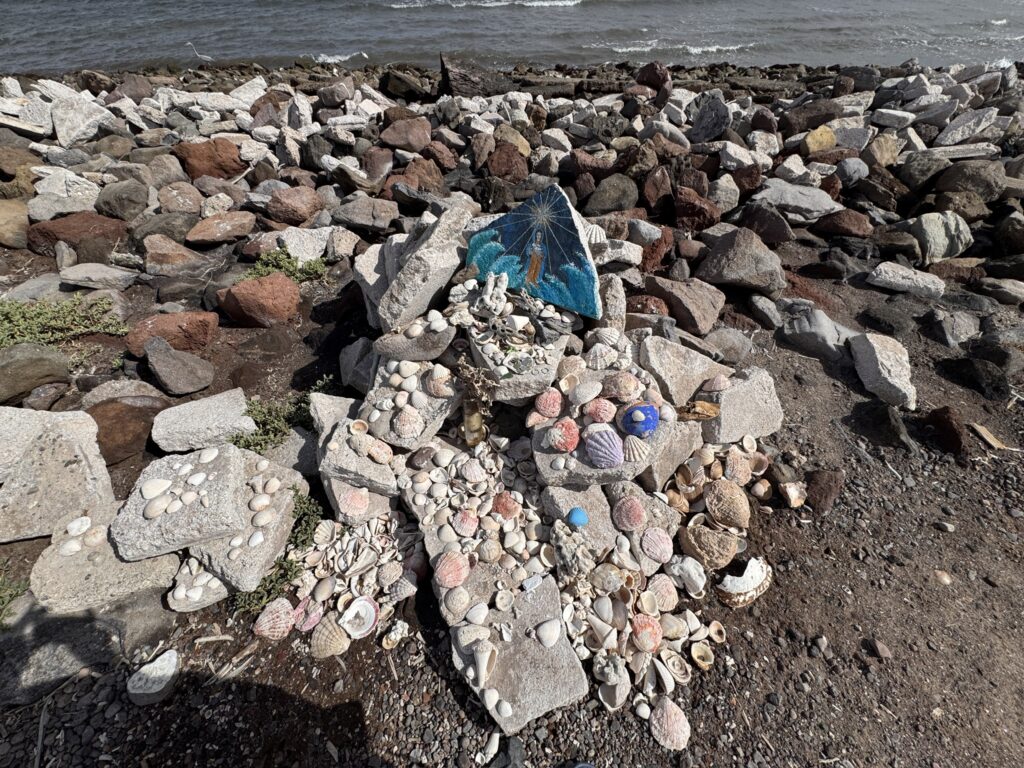
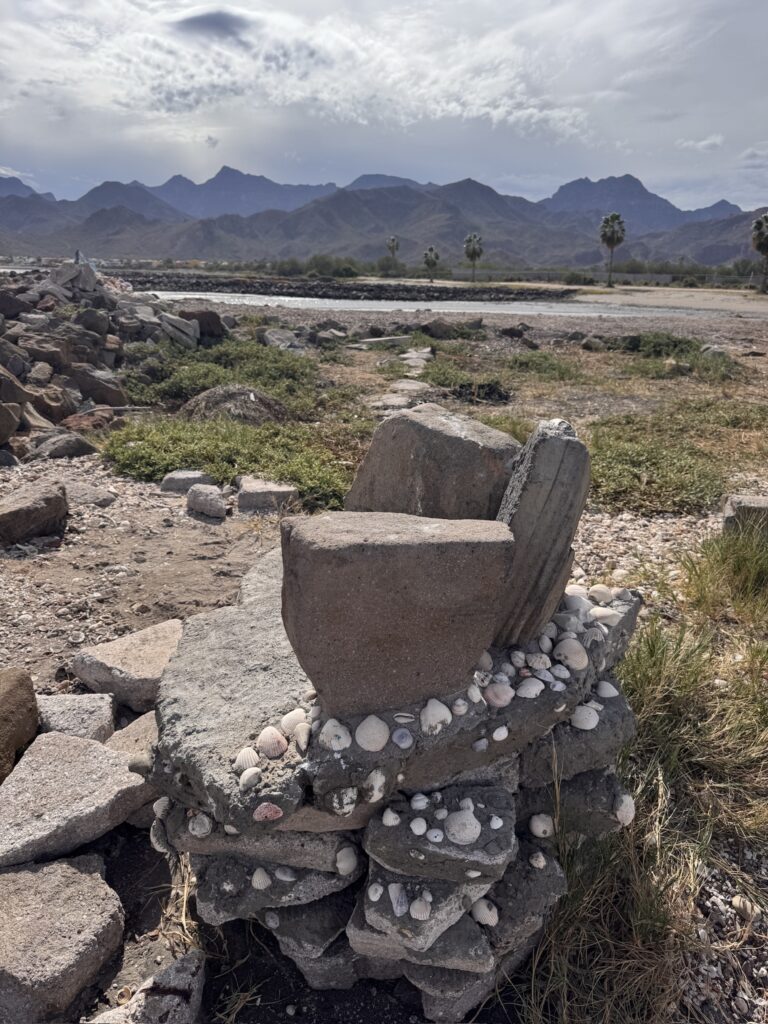
Title: Rock Art

Photo Credit: Amy Tucker, 2o26

La luz me sostiene. The light holds me.

El mar me enseña. The sea teaches me.

Y mi cuerpo recuerda. And my body remembers.


Translation Note

Note. Spanish-language passages were generated using Google Translate (Google, n.d.) and subsequently reviewed and refined by the author. Any remaining infelicities reflect the limits of machine translation rather than intent.

References

Csikszentmihalyi, M. (1990). Flow: The psychology of optimal experience. Harper & Row.

Google. (n.d.). Google Translate. https://translate.google.com

Haraway, D. J. (1988). Situated knowledges: The science question in feminism and the privilege of partial perspective. Feminist Studies, 14(3), 575–599. https://doi.org/10.2307/3178066

Maté, G., & Maté, D. (2022). The myth of normal: Trauma, illness, and healing in a toxic culture. Avery.

ACADEMIC LENS

The quality of waking described here, “aware, present, responsive to the world and unbraced against it,” represents what Porges (2011) calls ventral vagal activation: the biological state that underlies genuine curiosity, openness, and engagement. Van der Kolk (2014) distinguishes this from the forced calmness of emotional suppression: true regulation is characterized by ease rather than management. The image of “waking the way an animal wakes” deliberately bypasses the self-monitoring of the institutionalised academic subject, invoking instead Menakem’s (2017) concept of embodied animal wisdom: the somatic knowing that precedes and grounds conceptual thought. The word “continuation” also carries methodological weight: this entry records the continuation rather than any breakthrough or arrival, ongoing quality of a process, the steady accumulation of new somatic experience that Levine (2010) identifies as the mechanism of healing. It is the persistence of the changed nervous system state across days, rather than a single dramatic shift, that constitutes genuine recovery. Richardson and St. Pierre (2005) would recognize this daily writing practice itself as part of the inquiry: the journal entry as data, the noticing as method.

Twelve Days: Doce días.

Reading Time: < 1 minute

A field note. Some mornings ask for a poem instead of a paragraph. This is one of them.

La continuación.
The continuation.

No es dramática.
It is quiet, undramatic.

Es como el amanecer:
It is like sunrise:

sucede porque es lo que sucede,
it happens because it is what happens,

sin necesidad de hacer que suceda.
without needing to make it happen.

Yo también estoy aprendiendo esto.
I am learning this too.

Continuar sin esfuerzo.
To continue without effort.

Confiar en el patrón.
To trust the pattern.

Estar aquí.
To be here.

Nada exige urgencia.
Nothing requires urgency.

Todo sigue su secuencia.
Everything follows its sequence.

Yo también.
So do I.

Title: Overlooking the Sea of Cortez

Photo Credit: Amy Tucker, 2026


Note. Spanish-language passages were generated using Google Translate (Google, n.d.) and subsequently reviewed and refined by the author. Any remaining infelicities reflect the limits of machine translation rather than intent.

References

Google. (n.d.). Google Translate. https://translate.google.com

Day Ten: La Fundación

Reading Time: 10 minutes

Evening

Ten evenings. I am starting to understand why I came here.

Blue dissolving into gold, gold bleeding into rose, rose deepening into violet. Del azul al oro, al rosa y al violeta. I have watched this transformation from this balcony for ten evenings now, and it has never been the same twice. The colour shifts with cloud cover, humidity, and the presence or absence of wind. Each sunset is singular. Unrepeatable. A gift offered once and then gone.

I am learning to receive it without trying to hold it.

This is harder than it sounds. My instinct, honed by decades of academic work, is to document, analyze, and pin down. To turn experience into data that can be preserved, referenced, and cited. But sunsets resist this treatment entirely. They happen, they transform, they vanish. All you can do is be present while they occur.

Title: Shadows that Haunt Me

Photo Credit: Amy Tucker, 2026

Ten days. Diez días.

It feels both longer and shorter than that. Longer because so much has shifted, the sleep that consolidates, the thoughts that clarify, the nervous system that learns to trust. Shorter because time here moves differently from time in my old life. The days unfold rather than accumulate into weeks that must be gotten through. They simply unfold, each one complete in itself.

This morning I wrote about being ready for deeper work.

This afternoon, I discovered whether that was true.

Three hours reading Kaplan and Kaplan’s The Experience of Nature. Dense academic writing. Multiple theoretical frameworks were synthesized. Complex arguments are built across chapters. The kind of scholarship that, a month ago, would have required multiple passes, extensive notes, and constant backtracking to passages still just beyond my grasp.

Today, it made sense on first reading.

Title: Rock Art

Photo Credit: Amy Tucker, 2026

Some concepts will need return visits, to sit with, to let marinate. But the basic structure of their argument, the way they build their case for nature experience as psychologically restorative, the relationship they trace between environmental qualities and cognitive restoration: clear. Accessible. My mind is following along without forcing it.

This is what full cognitive capacity feels like. The ability to think deeply, with them. To follow sustained arguments. To hold multiple ideas in relationship. To synthesize.

The relief of this is enormous.

I had begun to wonder whether the cognitive impairment was permanent. Whether months of sleep fragmentation and chronic stress had done lasting damage. Whether I would ever again be able to engage with complex theory the way I once had.

The answer, apparently, is yes. Given sufficient rest, given release from chronic threat, given time for the nervous system to recalibrate, the capacity returns.

Arnsten’s research on stress and prefrontal function helps me understand why. When the nervous system operates in a defensive state for extended periods, blood flow and glucose are redirected away from the prefrontal cortex, the brain’s executive centre, toward more primitive structures involved in survival. This is adaptive in the short term. Nuanced analysis is useless when facing immediate danger. You need fast, automatic responses.

But when the threat becomes chronic, when the nervous system never gets the signal that it is safe to stand down, those executive functions simply go offline. Offline. Temporarily unavailable. The biological infrastructure that supports complex thought is taken out of commission to conserve resources for survival.

These ten days have convinced my nervous system that the emergency is over. Those resources can be redirected back toward thinking, toward curiosity, toward engagement with ideas.

The prefrontal cortex is online again.

Gracias, cuerpo. Thank you for this restoration.

Title: The Skies Above Me

Photo Credit: Amy Tucker, 2026

After reading, I stopped.

This is remarkable, though it may sound otherwise.

For years, I have operated with a productivity logic that says: if you can still function, you should keep working. Rest is what you do when you literally cannot continue. Until then, push.

This afternoon I was tired. Just tired in that natural way, that comes after sustained intellectual engagement. My body said enough for now. And I listened.

I made lunch. Sat on the patio. Ate without reading, without working, without multitasking. Simply ate. Tasted the food. Felt the sun.

Title: Lunch

Photo Credit: Amy Tucker, 2026

Then I lay in the hammock for an hour.

Resting, in a hammock in the afternoon with the sound of waves, the movement of air, and the warmth of the sun filtered through palm fronds.

This is what Nash means when he writes about Scholarly Personal Narrative as a practice of presence. Being fully in the experience, beyond just documenting it. Allowing yourself to notice what is actually happening rather than constantly narrating it, analyzing it, and turning it into something useful.

Sometimes you just lie in a hammock.

That is the whole story.

Title: Rocks!

Photo Credit: Amy Tucker, 2026

Late afternoon, I walked.

Beyond fitness goals or counted steps. Without a destination in mind. Just walking because my body wanted to move, and the beach was there, and the light was beginning to change.

I walked north until I reached the tide pools. Sat on a rock. Watched small crabs scuttle between crevices, tiny fish dart through shallow water, sea anemones open and close their delicate tentacles.

Title: Sea Life

Photo Credit: Amy Tucker, 2026

An entire world in a depression carved into stone by centuries of waves.

Time felt different there. Expansive. Unhurried. As though the afternoon had all the space it needed, and there was no rush to get to the evening. Merleau-Ponty (1945/2012) writes about lived time, time as experienced rather than measured. Time expands when you are fully present and contracts when you are anxious about what comes next.
When I finally stood to walk back, my legs were stiff from sitting, but my mind was quiet in a way months had taken from it. The constant low-level hum of anxiety, the voice that is always calculating, planning, worrying about what needs doing next, had simply stopped.

This is what Kaplan calls “the gentle pull of the natural world.” The quality of engagement that holds your attention gently, without effort, without demanding anything. Natural environments provide this. The movement of water. The scuttling of crabs. The opening and closing of anemones. Your attention is engaged and unhurried. And in that gentle engagement, something in the nervous system settles.

The quiet way nature restores us. Theory argues that modern life depletes what they call “directed attention,” the capacity to focus on tasks that require effort, to inhibit distraction, and to sustain concentration. We exhaust this capacity constantly: driving in traffic, responding to emails, sitting through meetings, forcing ourselves to concentrate on work that holds little natural interest.

Nature restores directed attention by allowing rest rather than stimulating further. By providing what Kaplan calls “being away,” a break from the demands that deplete us. By offering the gentle pull of the natural world, engagement without effort. By creating compatibility between what the environment offers and what we need in that moment.

Sitting on that rock watching tide pools, I was away. I was softly fascinated. The environment was perfectly suited to what I needed.

And something that had been tightly wound for months finally loosened.

Title: Sea Gulls Fishing

Photo Credit: Amy Tucker, 2026

Evening now.

I made dinner as the light began its transformation. Simple food: canned fish with lime, rice, and vegetables. Ate on the patio. Watched the birds complete their final fishing runs before settling for the night.

Title: Dinner Time

The pattern is so familiar now that I could set a clock by it. Morning fishing. The midday rest. The late afternoon fishing. The evening returns to roosting sites. Day after day, the same rhythm.

Rich with variation, each day holds its own variations. Weather. Wind. The presence or absence of baitfish near the surface. Sometimes the pelicans fish alone. Sometimes in groups. Sometimes they dive from great heights. Sometimes they simply skim the surface, plucking small fish without submerging.

The rhythm allows for variation. The variation occurs within rhythm. Neither negates the other.

I am learning this. Estoy aprendiendo esto.

Slowly.

What has ten days built?

I have been asking myself this as the light fades and the first stars appear. What is different now from ten days ago when I arrived at this cottage, suitcase still packed, uncertain whether I knew how to stay?

Sleep: Three nights of sleeping through. The pattern is consolidating. My nervous system, learning that night, means rest: that darkness is safe, that vigilance can be released for seven hours without catastrophe.

Cognition: Prefrontal cortex restored. Can read complex theory. Follow sustained arguments. Synthesise across frameworks. Think without forcing each thought into existence through sheer will.

Embodiment: Being in my body rather than trying to manage it from outside. Can feel sensations without them being threatening. Can notice needs before they escalate into emergencies.

Rhythm: Evening sequence established. Morning patterns are consolidating. The body learning to read time through environmental cues, light quality, temperature, the pelicans’ flight patterns, rather than the external demands that structured my old life.

Trust: the foundation beneath everything else. My nervous system is beginning to trust. Trust that this environment is safe. Trust that rest will come. Trust that the next crisis can find me unhurried, the next email that changes everything, the next announcement that requires scrambling, repositioning, and proof of worth.

The foundation holds.

Tomorrow I will build on it. More reading. More theoretical engagement. Days eleven through twenty moving toward integration, bringing embodied experience into conversation with scholarly frameworks. Seeing how research illuminates what the body already knows. Contributing, eventually, to conversations about solitude and healing and the conditions that support nervous system regulation.

But tonight I simply rest in what ten days have created. In the capacity that has been restored. In the trust built brick by brick, through consistent rhythms and environmental cues, my conscious mind barely registered, but my nervous system tracked with precision.

Title: Sea of Cortez

Photo Credit: Amy Tucker, 2026

Long enough to begin.

In an hour, I will begin the evening sequence. The rituals my nervous system has learned to recognize as the approach of rest.

Dinner already eaten. Dishes washed. Cottage tidy. All the small acts of care that signal: evening is here, night is coming, you can begin to let go.

Will I sleep through tonight? Fourth night in a row would confirm the pattern even more strongly. It would give my system even more evidence that this is real, sustainable, and trustworthy.

But even if I wake, even if tonight fragments again, I know more now than I did ten days ago. I know what supports sleep. I know what environmental cues signal safety. I know how to maintain conditions even when the immediate results fall short of my hopes.

Healing releases control of outcomes. It is about maintaining conditions and trusting the system to respond.

I cannot force my nervous system to trust. But I can keep creating the circumstances that make trust possible. Keep following rhythms. Keep honouring the body’s signals. Keep providing the environmental conditions required for safety.

The actual sleeping, the actual healing, the actual transformation. These happen in their own time. Beyond conscious control. According to processes more ancient and wiser than anything my conscious mind can manage.

All I can do is maintain the conditions and step aside.

El umbral. The threshold.

I stand on it tonight. Looking back at the ten days that built a foundation. Looking forward to twenty more that will build on it.

Here. On this threshold. Leaving what was behind, arriving toward what comes next. Noticing what is.
The foundation holds. My body knows this. My nervous system has learned it through accumulated evidence that conscious thought played almost no role in gathering. Tomorrow I build upward from here.

But tonight, esta noche, I rest.

The pelicans have settled for the evening, wherever it is they go when light fails, and the sea turns dark. The stars are beginning to appear, one by one, then a handful, then too many to count. The waves continue their patient rhythm, the same rhythm they have maintained for millions of years, the same rhythm they will maintain long after I have left this place and returned to whatever life awaits me back home.

And I sit on the balcony on the tenth evening, holding the question that all thresholds hold:

What becomes possible when the foundation is sound?

Tomorrow I begin finding out.

La fundación sostiene.
The foundation holds.

Mañana construimos hacia arriba.
Tomorrow we build upward.

Pero esta noche, solo esto.
But tonight, just this.

El mar. Las estrellas. El ritmo constante.
The sea. The stars. The constant rhythm.

Y un cuerpo que finalmente descansa.
And a body that finally rests.


Translation Note

Note. Spanish-language passages were generated using Google Translate (Google, n.d.) and subsequently reviewed and refined by the author. Any remaining infelicities reflect the limits of machine translation rather than intent.

References

Arnsten, A. F. T. (2009). Stress signalling pathways that impair prefrontal cortex structure and function. Nature Reviews Neuroscience, 10(6), 410–422. https://doi.org/10.1038/nrn2648

Kaplan, R., & Kaplan, S. (1989). The experience of nature: A psychological perspective. Cambridge University Press.

Kaplan, S. (1995). The restorative benefits of nature: Toward an integrative framework. Journal of Environmental Psychology, 15(3), 169–182. https://doi.org/10.1016/0272-4944(95)90001-2

Merleau-Ponty, M. (2012). Phenomenology of perception (D. A. Landes, Trans.). Routledge. (Original work published 1945)

Nash, R. J. (2004). Liberating scholarly writing: The power of personal narrative. Teachers College Press.

ACADEMIC LENS

The concept of foundation, la fundación, names the epistemic shift that occurs when the body has rested sufficiently to become a reliable ground of knowing. Levine (2010) describes this as the “somatic floor”: the felt sense of bodily stability from which genuine movement and exploration become possible. Before the nervous system can restore, it requires what Porges (2011) calls cues of safety, consistently repeated signals that the environment is no longer hostile. Ten days of such signalling represents, neurologically, the beginning of what van der Kolk (2014) calls the revision of implicit memory: the gradual updating of the body’s baseline predictions about what the world holds. The bilingual form of this entry also enacts a kind of foundation: Anzaldúa’s (1987) argument that the borderlands between languages constitute an epistemological ground from which new thought becomes possible, precisely because neither language’s existing categories can fully contain the experience being named. The foundation built here is thus simultaneously somatic, linguistic, and methodological.

Day Nine: Lo Que La Restauración Hace Posible

Reading Time: 11 minutes

What Makes Restoration Possible

Title: When the Sky Speaks

Photo Credit: Amy Tucker, 2026

The sky is doing that thing again. Blue becomes gold, becomes rose, becomes violet, and if you blink, you miss the exact moment one colour surrenders to the next. Del azul al oro, al rosa y al violeta. (For the record, I have to look up every word in Spanish in my translator.) I have been sitting here on the balcony watching it happen, trying to find words for what today felt like, and I keep circling back to the same inadequate word: different.

Different. And yes, better.

Title: Coffee by the Sea

Photo Credit: Amy Tucker, 2026

Different in a way that makes me realize how long I have been living in that other place. The one where everything costs. Where even simple things, getting out of bed, making coffee, being present in my own life, require negotiation and force and that particular grinding willpower that is really just exhausted determination wearing a productivity costume.

Today arrived without force. No tuve que forzar nada.

I woke without the usual calculation of whether I had enough in the tank to make it through. No caffeine required, no stubbornness invoked to override my body. No careful rationing of attention, like it might run out before sunset.

Things just… happened. Todo fluyó. Thoughts connected. Words came. My body moved through space without requiring constant management. Natural. Like breathing. Like the way I imagine other people, rested people, move through their days without even noticing how easy it is.

Three hours

This morning I wrote for three hours. Tres horas. The kind of writing where you look up and realize time passed, and you were simply in it, beyond counting, beyond the forcing of each sentence into existence through sheer will.

I wrote about what happened last night. About sleep architecture and nervous system states, and why my body finally trusted enough to sleep through. I wove together material from Walker (2017) on sleep cycles and Porges (2011) on the nervous system system, along with what actually happened in my own body between 11 PM and 6 AM. Complex theoretical frameworks are talking to each other through my experience. All of it makes sense. All of it flowing.

Title: Sleep Cycle

Created: Gemini AI, 2o26

Three months ago, this would have been impossible.

Beyond hard. Impossible.

And I need to be precise about that distinction because it matters.

There is this thing that happens when you have been stressed and sleep-deprived for long enough. People talk about it like you are just a little foggy, a little slower, like turning down the volume on a radio. That description misses what it feels like from inside. From inside, it feels like parts of your brain just… stop. Go dark. Offline (Arnsten, 2009).

The prefrontal cortex, the part that does complex thinking, that holds multiple ideas at once, that synthesises and integrates and makes connections, needs massive resources to run. Blood flow. Glucose. Energy. And when your body thinks it is in danger, when your nervous system has been reading the environment as threatening for weeks or months, those resources get redirected. Away from thinking, toward surviving. The amygdala scans for threats. The brainstem is ready to react. Ancient survival systems running the show while the thinking parts go quiet (Arnsten, 2009; Goldstein & Walker, 2014).

Which makes perfect evolutionary sense if you are running from a predator. Nuance is useless when you need to run. You need fast, automatic, proven responses.

The problem is that economic precarity (precariedad económica) is no predator. Contract uncertainty cannot be outrun. But try telling that to a nervous system running million-year-old software that says: sustained threat equals redirect all resources to survival.

So the thinking parts go offline. Executive functions dim. And you tell yourself you are just tired, that you need to try harder, that you need more coffee.

Title: Untitled

Photo Credit: Amy Tucker, 2026

Except that trying harder proves ineffective when the biological structures that underpin complex thinking have been taken offline to conserve resources for mere survival.

This morning, those structures were back. I could feel it, bodily, somáticamente, in my actual body. I read something from Walker’s work, and I could hold the concept while simultaneously connecting it to Porges and to what happened in my own sleep last night. Three frameworks, held together, talking to each other in my mind.

A month ago, reading that same passage, I would have had to stop. Reread. Make notes. Force comprehension through sheer determination. Today it just… made sense. La comprensión fluyó. Understanding flowed.

The Files

After lunch, I did something I have been avoiding. I opened my files. The pages I wrote months ago when sleep was breaking every night, when my nervous system was in constant alert, when exhaustion had become so normal I had stopped recognizing it as a state separate from just being me.

I was bracing for it to be bad. Full of gaps. Incoherent in places. The kind of work you produce when your prefrontal cortex is running on fumes, and you are just trying to get through.

It was good. Actually, genuinely good. The arguments held. The theory was solid. The thinking was clear.

And I sat there staring at these pages I wrote while barely functional and felt this complicated tangle of relief and grief. Una especie de duelo. Because if I could do that work while exhausted, produce something sound while my body was in survival mode, while parts of my brain were literally offline, what might I have been capable of if I had been rested?

What did I lose to those months of pushing through?

I watched the pelican outside my window for a long time. Dive. Rest. Zambullirse y descansar. Dive. Rest. Over and over. That simple rhythm. And something shifted in how I was thinking about the question.

The assumption underneath my grief was that exhausted-me and rested-me are the same person in different states. But that framing misses something. The work I produced while exhausted was shaped by that exhaustion. The questions I asked, the frameworks I reached for, the way I approached the material: all of it came from living inside chronic activation and precarity.

That work has value because it was written from within the very thing it seeks to understand. Nash (2004) argues that lived experience (experiencia vivida) is legitimate scholarly data when you examine it rigorously. My exhaustion was enriching the work. It was part of the data.

What restoration gives me goes beyond redoing that work “properly.” It is the chance to add another layer. To examine chronic activation from the perspective of someone who has lived both states and can now see the relationship between them.

Both matter. Both are real. Both contribute.

I have been writing down what I notice in my body at different points today. For no formal reason. Just because the consistency seemed worth documenting.

Morning: Waking without an alarm. The body knows what time it is from some internal clock that fragmented sleep had disrupted. That feeling of being actually rested sinks all the way into my bones. Quiet joy mixing with disbelief, mixing with gratitude. High energy but organic, unforced, free of chemical aid, just available. First conscious thought: I slept through.

Mid-morning: Three hours of writing behind me. Shoulders loose. Jaw soft. Hands steady. That focused clarity without the edge of strain I am so used to. Still high energy, sustained without effort. No fatigue. Apparently, complex intellectual work thrives beyond defensive nervous system states. Who knew.

Afternoon: After lunch. Gentle hunger satisfied. Digestion easy. Muscles relaxed. Just… contentment. Being in my body instead of trying to manage it from somewhere outside. Energy is moderate now, appropriate to midday. Body speaking up clearly about needs: thirst, hunger, time to move, instead of waiting until an emergency before getting my attention.

Later afternoon: Reading dissertation. Sitting comfortably without conscious effort. No tension accumulating in the neck and shoulders. Emotions are complex, that relief-grief tangle, present but manageable. Holding contradictory feelings without my nervous system reading emotional complexity as a threat. Energy is holding steady.

Evening: Sunset. Cooling air. Breath synchronized with waves. Body at ease. Deep peace. That gentle anticipation of evening unfolding. Energy naturally declines as the day winds down. Unwound rather than crashed. Present rather than depleted. Responsive to circadian rhythms, to what is actually needed now.

Night: Preparing for sleep. The body is already beginning the transition. Muscles releasing. Calm. Trust that sleep will come, that my body knows how to do this. Very low energy, sleep-ready. And here is what strikes me: no anxiety about whether tonight will repeat last night. Just readiness.

Looking at this pattern, the way energy moved across the day, I can see how it is supposed to work. La naturalidad. The naturalness of it. High when needed for writing. Moderate for reading. Naturally declining toward rest. Responsive. Appropriate. Organic.

For months, my energy looked nothing like this. Low despite caffeine. Forced into function through will. Brief spikes when adrenaline kicked in. Complete crashes. Forced back up. Anxious and activated at night when I needed sleep.

That is the nervous system thrown off balance, affecting the performance of its functions. That is the nervous system thrown off balance. That is what happens when the nervous system cannot access the state that allows for appropriate energy modulation.

Today, my energy followed the pattern research says is healthy (Kaplan, 1995; Ryan & Deci, 2000). And I know that sounds abstract, mere “research says” abstraction, but from inside it feels like my body finally remembering how to be a body. How to respond to actual needs instead of just surviving threat after threat after threat.

Title: The Pelican’s Teaching

Photo Credit: Amy Tucker, 2026

My hands wanted charcoal this afternoon. For no reason except that they wanted it. So I drew the pelican. El pelícano. The one I have been watching all week. Beyond accuracy, trying to capture the quality of movement. The dive. The pause. The rest. El ritmo. That rhythm.

And here is what I am seeing: effort and ease work as partners. El esfuerzo y la facilidad no son opuestos. They are partners.

The dive takes everything. Wings folding, body plummeting, that violent entry into water, struggling with a fish. Real effort. Then the rest is complete. Body still on the surface, conserving, digesting. Real rest.

Neither negates the other. The effort is recognized; it simply requires rest. The rest is earned because it follows effort. They are both necessary. Both are part of the natural rhythm.

I have been living like they are in competition. Like rest is something I have to earn through sufficient effort. Like, I can only access it once I have accomplished enough to justify it. Like needing rest means I am weak or inefficient or somehow failing.

El pelícano no piensa así. The pelican holds no such story. The pelican dives when hungry. Rests because the body needs to conserve energy between dives. Neither requires justification. Both are what the body needs.

I am learning this. Despacio. Slowly. Con dificultad. With difficulty. But learning.

What I am afraid of

It is almost time for bed, and there is a question I have been avoiding all day. What if last night was a fluke? What if tonight I wake at 2 AM with thoughts racing? What if my nervous system’s trust was temporary, contingent, fragile?

I can feel anxiety activating around this. Shoulders tensing. Breathe shallow. a state of constant alertness, always scanning for danger creeping back: scanning, trying to control, attempting to guarantee through worry that last night repeats.

But here is what I learned this morning, what the research showed me: nervous systems bypass conscious decisions about safety entirely. They respond to environmental cues. Señales ambientales. To patterns repeated across time. To accumulate data (Porges, 2011).

Nine nights now. Same evening sequence. Same environmental cues. That is data my nervous system has been gathering.

One night of unbroken sleep does something more interesting than erase that pattern. It confirms it. The conditions that supported last night’s rest remain. Evening rhythm is stable. The acoustic environment provides low-frequency, rhythmic patterns that signal safety. Darkness is complete and held safely. Predictability that allowed my system to trust enough to release vigilance.

I cannot control whether I sleep through tonight. But I can maintain the conditions that supported last night. Follow the same sequence. Honrar el ritmo. Honour the rhythm. Trust my nervous system is doing what nervous systems do: gathering data, testing predictions, updating assessments.

And if I wake tonight? That is also data. Data. Information about how healing actually proceeds when you get close enough to see it.

Nine days

Nueve días. Nine cycles of morning and evening. Nine progressions dark to light to dark. The pattern repeats but is never exactly the same. Each day is similar in structure, unique in texture, in quality, in what it shows me.

Today showed capacity. Hoy reveló capacidad. The capacity to think clearly. Write with rigour and creativity. Hold complexity without overwhelm. Feel contradictory emotions without the nervous system thrown off balance. Notice what the body needs and respond appropriately.

I had begun to think these capacities were gone. Diminished permanently by months of stress and fragmentation. But they were offline, waiting. Estaban desconectadas. Waiting for conditions that would let them function.

Last night’s unbroken sleep provided those conditions. Seven hours of sustained regulation. Seven hours of complete sleep cycles. Seven hours of trust.

And today, the harvest. La cosecha de ese descanso. Clear thinking. Sustained energy. Natural rhythms.

Tomorrow night will bring its own data. Sleep through or wake, either contributes to understanding. The nervous system is learning what safety feels like. El sistema nervioso está aprendiendo cómo se siente la seguridad. Learning to recognize it. Trust it. That learning moves in spirals, circling back. Some nights, complete rest, some partial waking. Both teaching the system about regulation, about what supports healing, about the gradual recalibration from threat to safety.

Title: What Direction?

Photo Credit: Amy Tucker, 2026

What I know tonight, sitting here as the last light fades and first stars appear above the sea, mientras se desvanece la última luz del cielo y aparecen las primeras estrellas sobre el mar: healing is something concrete and measurable. It is a concrete, lived, measurable reality.

My body slept through last night. First time in months.

My mind engaged in complex theoretical work today. First time in weeks.

My energy modulated appropriately across the day. First time I can remember.

Facts. Data points. The larger pattern of regulation and recovery is becoming visible.

El ritmo continúa. The rhythm continues. The pattern repeats. The body learns. And I, finally, am learning to trust this.

Gracias, cuerpo. Thank you, body.

Por este día de claridad. For this day of clarity.

Por mostrarme lo que es posible cuando descansas. For showing me what is possible when you rest.

Por enseñarme que el esfuerzo y la facilidad son socios, no enemigos. For teaching me that effort and ease are partners.

Por el ritmo. For the rhythm.

Title: The Lion’s Breath

Photo Credit: Amy Tucker, 2026


Translation Note

Note. Spanish-language passages were generated using Google Translate (Google, n.d.) and subsequently reviewed and refined by the author. Any remaining infelicities reflect the limits of machine translation rather than intent.

References

Arnsten, A. F. T. (2009). Stress signalling pathways that impair prefrontal cortex structure and function. Nature Reviews Neuroscience, 10(6), 410–422. https://doi.org/10.1038/nrn2648

Goldstein, A. N., & Walker, M. P. (2014). The role of sleep in emotional brain function. Annual Review of Clinical Psychology, 10, 679–708. https://doi.org/10.1146/annurev-clinpsy-032813-153716

Google. (n.d.). Google Translate. https://translate.google.com

Google. (2026). From survival mode to flow state [AI-generated image]. NotebookLM. https://notebooklm.google.com

Kaplan, S. (1995). The restorative benefits of nature: Toward an integrative framework. Journal of Environmental Psychology, 15(3), 169–182. https://doi.org/10.1016/0272-4944(95)90001-2

Kaplan, R., & Kaplan, S. (1989). The experience of nature: A psychological perspective. Cambridge University Press.

Nash, R. J. (2004). Liberating scholarly writing: The power of personal narrative. Teachers College Press.

Porges, S. W. (2011). The Polyvagal Theory: Neurophysiological foundations of emotions, attachment, communication, and finding our own calm. W. W. Norton & Company.

Ryan, R. M., & Deci, E. L. (2000). Self-determination theory and the facilitation of intrinsic motivation, social development, and well-being. American Psychologist, 55(1), 68–78. https://doi.org/10.1037/0003-066X.55.1.68

Walker, M. (2017). Why we sleep: Unlocking the power of sleep and dreams. Scribner.

Academic Lens

What restoration makes possible, the return of curiosity, appetite, creative impulse, is the clinical literature's definition of recovery from burnout (Maslach, Schaufeli, & Leiter, 2001): the restoration of engagement, efficacy, and energy that chronic overextension depletes. Ryan and Deci's (2000) self-determination theory frames this as the re-emergence of intrinsic motivation once external demands are suspended. This entry marks a pivot point in the inquiry: the beginning of the third phase, where alonetude stops being survival and starts being inquiry.

Day Three: Día Tres: Perdida en el Azul

Reading Time: 8 minutes

Lost in the Blue

I have been staring at the sea for two hours. Maybe three. Time has become slippery here, something I can no longer hold in my hands. Rachel and Stephen Kaplan (1989) wrote about fascination, the effortless attention that natural environments invite, a quality of engagement that restores rather than depletes. The sea fascinates without demanding. It holds my gaze without asking anything in return.

Today I permitted myself to do nothing. I said it out loud this morning, standing in the kitchen of the casita with coffee warming my palms: Hoy, nada. Today, nothing. The words felt dangerous, like a confession. Tricia Hersey (2022), founder of The Nap Ministry, argues that rest is an act of political resistance, a deliberate refusal to participate in systems that equate human value with productivity, and that the recuperative power of rest is itself a form of collective defiance. I am trying to believe her.

El Mar y Sus Preguntas / The Sea and Its Questions

The Sea of Cortez is a particular blue I have never seen before. It shifts throughout the day, turquoise in the morning light, deeper sapphire by noon, silver-grey as evening approaches. This is what the Kaplans (1989) call the gentle pull of the natural world, a gentle hold on attention that leaves space for reflection, distinct from the hard fascination of screens and urgent notifications that dominate modern life. I watch the water change, and my thoughts change with it, drifting from one thing to another with no clear direction.

I think about my mother, who died eleven years ago and whom I still miss in ways that surprise me. Grief, writes Miriam Greenspan (2003), is one of the dark emotions, those feelings our culture teaches us to suppress or transcend rather than honour. She argues that grief carries wisdom if we can bear to feel it fully, that the only path through difficult emotion is directly into it rather than around it (Greenspan, 2003). Here, with nothing to distract me, grief surfaces like sea glass, worn smooth by time but still present, still catching light.

I think about the students I have taught over nineteen years, wondering where they are now, whether they are happy. I think about the papers I should be grading, the emails I should be answering, and then I remember: I am here to stop shoulding myself.

Debería. I should. The word haunts me even in Spanish. Ryan and Deci (2017), in their foundational work on self-determination theory, distinguish between autonomous motivation, acting from genuine interest and valued choice, and controlled motivation, acting from internal or external pressure. The voice of should is the voice of controlled motivation, and I have let it run my life for decades.

El mar no juzga. Solo recibe.

The sea receives, without judgment.

Pensamientos Sueltos / Loose Thoughts

My mind wanders. This is what minds do when you stop giving them tasks. Neuroscientists call this the default mode network, the brain regions that activate when external demands release their hold (Buckner et al., 2008). Far from idle, this network supports self-reflection, autobiographical memory, and the imagining of the future. The wandering mind is working, just on different problems than our productivity culture recognizes.

I think about the word retirement and how it sounds like something is being put away, stored in a closet, made invisible. I am 60. I am approaching the end of one kind of life and the beginning of another. Dan McAdams (2001), the narrative psychologist, writes that identity is an ongoing story we tell ourselves, a personal myth that integrates past and present into a coherent sense of self. Sitting here watching the waves, I wonder who I will be when I am no longer someone who works. The question has no answer yet. Perhaps that is why I keep asking it.

I think about all the women I know who are tired. Tired in their bones, exhausted in their souls, tired in ways that sleep alone cannot remedy. Sharon Blackie (2019) writes about the “long soul” of women at midlife, the accumulated weight of decades spent tending to others, and the fierce necessity of reclaiming time for oneself. We carry so much. We have been carrying for so long. I wonder if any of them are sitting somewhere right now, staring at water, permitting themselves to rest.

I think about the word enough to determine whether I have done enough. Whether I am enough. Brené Brown (2010) names this the voice of scarcity, the cultural message that we are never sufficient, that worthiness must be earned through endless striving. Brown (2010) describes wholehearted living as the practice of showing up in one’s own life from a foundation of inherent worth rather than conditional approval. I am 60 years old and still learning that my right to exist requires no earning.

The sea offers no answers. It just keeps moving, wave after wave, patient and indifferent and somehow, because of that, kind.

El Cuerpo Descansa / The Body Rests

I have done almost nothing today, and my body is grateful. I can feel it in the way my shoulders have dropped, the way my jaw has unclenched. Stephen Porges (2011) calls this the shift from the body’s alert state, the mobilized state of fight or flight, to genuine safety engagement, the calm alertness that emerges when the nervous system perceives safety. Small surrenders. The body knows how to rest if we let it. The problem is the letting.

I ate breakfast slowly this morning. Papaya, yogurt, and strong coffee. Jon Kabat-Zinn (1994), who brought mindfulness practice to Western medicine, writes about mindful eating, the simple act of being fully present with food. I tasted each bite instead of eating while scrolling, eating while working, eating while planning what comes next. Just eating. Just tasting. Just being a body receiving nourishment.
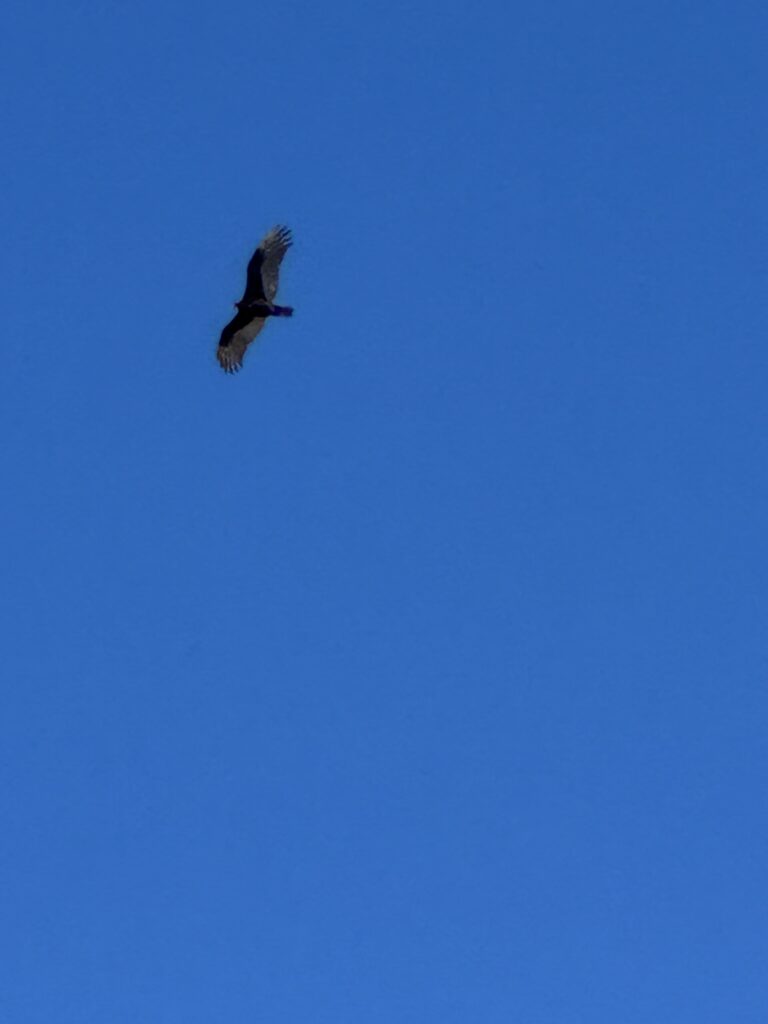
Qué lujo, I thought. What a luxury. And then I felt sad, because eating slowly should be ordinary, should be the baseline of a human life, and instead it feels like an extravagance I have to travel thousands of kilometres to access. This is what Hersey (2022) means when she writes that rest has become a privilege rather than a right, a commodity rather than a necessity.
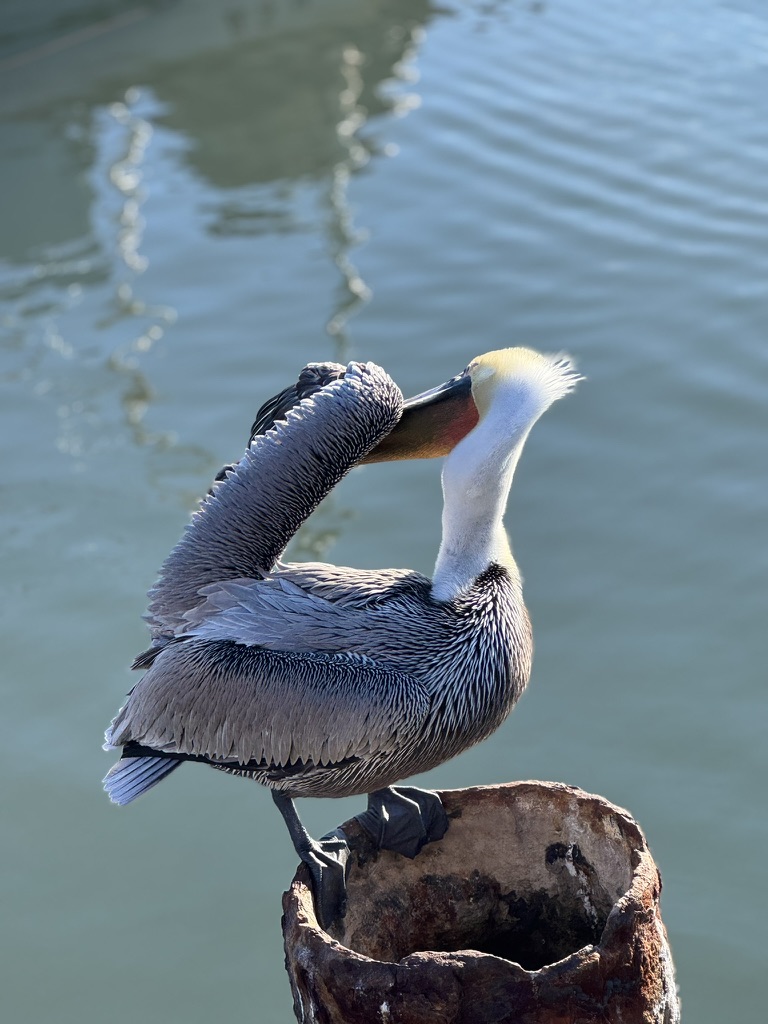
Lo Que Emerge / What Surfaces

When you stop moving, things rise. Memories. Feelings. The sediment you have been outrunning for years. Greenspan (2003) proposes that grief, fear, and despair function as messengers, uncomfortable but purposeful signals that carry information about what we value, what we have lost, and what needs attention in our lives. Solitude creates the conditions for these messages to be received.

Today, I remembered a conversation with a colleague from years ago. She told me I worked too hard, that I would burn out if I kept going at that pace. I smiled and thanked her, and changed nothing. Christina Maslach (Maslach & Leiter, 2016), who pioneered burnout research, defines burnout as a syndrome of emotional exhaustion, depersonalization, and reduced personal accomplishment resulting from chronic workplace stress. I wore my exhaustion like a badge, proof of my dedication, evidence of my worth. I had no way to know then that worth is birthright, that existing requires no proof of value.

I am learning this now, at 60, staring at the sea. Better late than never, I suppose. Better here than nowhere at all. Weinstein et al. (2021), in their narrative study of solitude across the lifespan, found that older adults often experience solitude as more restorative than younger people, having learned, perhaps through accumulated wisdom, how to be at peace in their own company.

A pelican dove into the water while I was writing that last sentence. It emerged with a fish in its beak, shook the water from its feathers, and flew on. Life continuing. The ordinary miracle of survival.

Estoy aquí. Eso es suficiente.

I am here. That is enough.

Al Atardecer / Toward Evening

The light is changing now. Golden hour, photographers call it. The mountains across the bay have turned pink and purple, colours I would dismiss as exaggerated if I saw them in a painting. But here they are, real and impossible, demanding to be witnessed. This witnessing, this full presence to beauty, is what Abraham Maslow (1964) called a peak experience, a moment of heightened awareness that transcends ordinary consciousness.

I walked to the malecón this afternoon, to move my body, just to feel my feet on solid ground. An old man was fishing from the seawall. He nodded at me, and I nodded back. No words necessary. Just two people sharing space at the edge of the water, each lost in our own thoughts. Nguyen et al. (2018) found that self-chosen solitude supports learning to settle the nervous system, the capacity to modulate emotional states from within rather than seeking external distraction. The old fisherman seemed to understand this intuitively.

¿Qué busca? I wanted to ask him. What are you looking for? But I suspect he would have turned the question back to me, and I am still working on my answer.

Antes de Dormir / Before Sleep

I accomplished nothing today. I produced nothing. I checked nothing off any list.

And yet.

I breathed. I watched. I let my mind wander without yanking it back to productivity. I sat with myself, which is harder than it sounds when you have spent decades avoiding that very thing. Long and Averill (2003) argue that the capacity for solitude is a skill, something that can be cultivated through practice. Today was practice. Tomorrow will be practice too.

Mañana, quizás, haré más. Tomorrow, perhaps, I will do more. Or perhaps I will do precisely this again. Maybe this is the work I came here to do: the slow, invisible labour of learning to be still what Robert Nash (2004) calls me-search, the deep dive into personal experience that precedes scholarly understanding. I am doing the me-search now, though it looks like nothing at all.

El mar sigue respirando.

The sea keeps breathing.

Yo también.

So do I.

Con cariño,

Amy

Loreto, Day Three


Translation Note

Note. Spanish-language passages were generated using Google Translate (Google, n.d.) and subsequently reviewed and refined by the author. Any remaining infelicities reflect the limits of machine translation rather than intent.

References

Blackie, S. (2019). If women rose rooted: A life-changing journey to authenticity and belonging. September Publishing.

Brown, B. (2010). The gifts of imperfection: Let go of who you think you are supposed to be and embrace who you are. Hazelden.

Buckner, R. L., Andrews-Hanna, J. R., & Schacter, D. L. (2008). The brain’s default network: Anatomy, function, and relevance to disease. Annals of the New York Academy of Sciences, 1124(1), 1–38. https://doi.org/10.1196/annals.1440.011

Google. (n.d.). Google Translate. https://translate.google.com

Greenspan, M. (2003). Healing through the dark emotions: The wisdom of grief, fear, and despair. Shambhala.

Hersey, T. (2022). Rest is resistance: A manifesto. Little, Brown Spark.

Kabat-Zinn, J. (1994). Wherever you go, there you are: Mindfulness meditation in everyday life. Hyperion.

Kaplan, R., & Kaplan, S. (1989). The experience of nature: A psychological perspective. Cambridge University Press.

Long, C. R., & Averill, J. R. (2003). Solitude: An exploration of benefits of being alone. Journal for the Theory of Social Behaviour, 33(1), 21–44. https://doi.org/10.1111/1468-5914.00204

Maslach, C., & Leiter, M. P. (2016). Understanding the burnout experience: Recent research and its implications for psychiatry. World Psychiatry, 15(2), 103–111. https://doi.org/10.1002/wps.20311

Maslow, A. H. (1964). Religions, values, and peak-experiences. Ohio State University Press.

McAdams, D. P. (2001). The psychology of life stories. Review of General Psychology, 5(2), 100–122. https://doi.org/10.1037/1089-2680.5.2.100

Nash, R. J. (2004). Liberating scholarly writing: The power of personal narrative. Teachers College Press.

Nguyen, T.-V. T., Ryan, R. M., & Deci, E. L. (2018). Solitude as an approach to learning to settle the nervous system. Personality and Social Psychology Bulletin, 44(1), 92–106. https://doi.org/10.1177/0146167217733073

Porges, S. W. (2011). The Polyvagal Theory: Neurophysiological foundations of emotions, attachment, communication, and finding our own calm. W. W. Norton.

Ryan, R. M., & Deci, E. L. (2017). Self-determination theory: Basic psychological needs in motivation, development, and wellness. Guilford Press.

Weinstein, N., Nguyen, T.-V., & Hansen, H. (2021). What time alone offers: Narratives of solitude from adolescence to older adulthood. Frontiers in Psychology, 12, Article 714518. https://doi.org/10.3389/fpsyg.2021.714518

Academic Lens

Being lost in the blue, absorbed into the sea and sky, is an encounter with what Csikszentmihalyi (1990) calls flow in its most elemental form: total absorption that dissolves the boundary between self and environment. In the quiet way nature restores us theory (Kaplan & Kaplan, 1989), this state of the gentle pull of the natural world is the primary mechanism of psychological recovery, the mind neither straining nor idle, but gently held. The bilingual title "perdida" (lost/feminine) also carries a gendered valence: a woman permitting herself to be directionless is a quietly transgressive act.

Day Nine: El Ritmo (Morning)

Reading Time: 8 minutes

When the Body Finally Rests


Understanding Sleep Architecture and What It Requires for Healing

Title: Desert Rose

Photo Credit: Amy Tucker, 2026

To understand why last night matters so much, why one night of unbroken sleep marks such an important moment in this healing process, I need to explain how sleep actually works. I came to grasp this fully only after reading the research. Sleep is layered, active work. It is far more than “being unconscious” for seven or eight hours. Sleep is a process, a carefully organized progression through distinct stages that unfolds in a specific order throughout the night. Researchers refer to this pattern as sleep architecture (Walker, 2017).

Here is how it works. When we sleep, we move through stages. There are stages of light sleep, which researchers call Stage 1 and Stage 2 non-rapid eye movement sleep, or non-REM sleep for short. Then there is deep sleep, the third stage of non-REM sleep. Scientists also call this slow-wave sleep because, when they measure brain activity during this stage with an electroencephalogram, they see large, slow waves. Finally, there is rapid eye movement (REM) sleep, named for the rapid eye movements that occur during this stage, even though the body is asleep (Walker, 2017).

We cycle through all stages all night. Instead, we repeatedly cycle through all of these stages. One complete cycle, from light sleep through deep sleep to REM sleep and back, takes about ninety minutes. A good night’s sleep involves completing four to six of these cycles, which is why we need seven to nine hours of sleep (Walker, 2017).

What I am learning is that each stage does something different and important for the body and mind. Light sleep is a transitional state. It eases us from being awake into deeper states. During this stage, our heart rate slows, our breathing steadies, and we begin to disconnect from what is happening around us. Deep slow-wave sleep is when the body undergoes physical repair. This is when tissues heal, the immune system strengthens, growth hormones are released, and our brains store the factual information we learned during the day, the kind of memory we can consciously recall later (Walker, 2017). REM sleep does different work. This is when we process emotions, when our brains integrate new learning with what we already know, when creative problem-solving happens, and when our psychological equilibrium gets maintained (Germain, 2013; Walker, 2017).

When sleep gets fragmented, when we wake up frequently or leave cycles incomplete, we miss essential processes. The body is unable to finish its maintenance work. This is what had been happening to me for months.

What the research taught me, and what my own body confirmed over these nine days, is that this architecture requires a specific function of the nervous system. Progression through these stages occurs only when the nervous system is in a particular state. Stephen Porges (2011, 2022), who developed a model of how the nervous system responds to safety and threat, calls this the state of genuine safety and connection. I will explain what this means because it is central to understanding what changed last night.

The genuine safety complex is part of the parasympathetic nervous system, which is associated with rest and restoration. Porges describes it as the most recent evolutionary branch of this system, unique to mammals. When we are in this state of genuine safety and connection, we feel safe. Our bodies can engage socially with others. Porges calls this “mammalian calm,” the state that allows for rest, restoration, intimacy, and even play. You can recognize this state in the body: the heart rate steadies with healthy variability, breathing is calm, the facial muscles relax, and we can make comfortable eye contact with others. And critically for sleep, in this state, we can surrender to unconsciousness without our nervous system remaining vigilant, constantly scanning for threats (Porges, 2011, 2022).

Title: Crown of Thorns

Photo Credit: Amy Tucker, 2026

The problem is that when the nervous system remains in a defensive state, sleep deteriorates. There are two main defensive states. One is the body’s alert state, commonly known as the fight-or-flight response. When this system activates, heart rate increases, cortisol rises, muscles tense, and alertness heightens. The body is preparing to fight or run. The other defensive state is dorsal vagal shutdown, also known as the freeze or collapse response. This is when the body immobilizes, when we dissociate, when we metaphorically “play dead” because the threat feels overwhelming (Porges, 2011, 2022). When the nervous system stays in either of these defensive states, sleep becomes fragmented, shallow, and non-restorative (Germain, 2013; Mellman et al., 2002). The state of constant alertness, always scanning for potential threats, prevents the deep relaxation that complete sleep cycles require. The nervous system resists fully surrendering to sleep because, below conscious awareness, it assesses that doing so would leave us vulnerable to harm.

The research on trauma makes this relationship very clear. People diagnosed with post-traumatic stress disorder, or PTSD, show severely disrupted sleep across multiple measures. Their sleep architecture looks broken. They obtain significantly less slow-wave sleep, resulting in less physical restoration. Their REM sleep is highly fragmented, compromising emotional processing. They wake frequently during the night, driven by what researchers call autonomic the body stuck in high alert, the nervous system’s persistent scanning for threat operating even during sleep (Germain, 2013; Mellman et al., 2002; van der Kolk, 2014).

But here is what matters for understanding my own experience: diagnosable PTSD is unnecessary to experience these patterns. Chronic occupational stress, particularly the sustained and unpredictable stress of precarious employment, produces remarkably similar patterns through the same underlying mechanism (Åkerstedt, 2006; Lallukka et al., 2010). Economic precarity, the sustained threat to livelihood and financial security, generates the same kind of autonomic the body stuck in high alert that traumatic events produce. The nervous system cannot distinguish between different types of threats to survival. It responds to the pattern of threat rather than to the specific content.

When I say I slept through the night, I mean that my autonomic nervous system maintained a state of genuine safety and connection, that state of felt safety, across multiple ninety-minute sleep cycles for seven consecutive hours. My body held the physiological state associated with safety long enough to complete the full restorative architecture of sleep. This is something my system has been unable to accomplish for longer than I want to admit.

Title: Desert Rose

Photo Credit: Amy Tucker, 2026

Nine days. Nine complete cycles of consistent environmental cues, predictable daily rhythms, and the systematic absence of things my nervous system reads as threats. That is what it took for my nervous system to shift its baseline assessment from “unsafe, must remain vigilant” to “safe enough to rest completely.”

Table 1

Sleep Architecture and Autonomic States: Physiological Functions, Indicators, and Impacts of Disruption

Sleep Stage or Physiological StateCategoryDescription and Biological FunctionPhysical IndicatorsImpact of Disruption or StressKey Research CitationsSource
Stage 1 & 2 Non-REMNon-REM Sleep (Light Sleep)Transitional states that ease the body from wakefulness into deeper sleep and progressive disconnection from the environment, supporting essential maintenance processes and preparation for restorative sleep.Slowing heart rate; steadier breathing; reduced muscle tone.Fragmentation disrupts maintenance processes and prevents progression into deeper restorative sleep cycles.Walker (2017)The Architecture of Sleep and the Science of Safety
Stage 3 Slow-wave SleepNon-REM Sleep (Deep Sleep)Primary stage for physical repair, tissue healing, immune strengthening, and growth hormone release; supports consolidation of factual and recallable memories.Large, slow brain waves measured by EEG (delta waves).Loss of physical restoration; markedly reduced in individuals experiencing chronic stress or PTSD.Walker (2017); Germain (2013); Mellman et al. (2002); van der Kolk (2014)The Architecture of Sleep and the Science of Safety
REM SleepRapid Eye Movement SleepProcesses emotions, integrates new learning with prior knowledge, supports creativity, and maintains psychological balance.Rapid eye movements with muscle atonia; variable heart rate and breathing.Fragmentation impairs emotional processing and memory integration; commonly interrupted by autonomic the body stuck in high alert in PTSD.Walker (2017); Germain (2013); Mellman et al. (2002)The Architecture of Sleep and the Science of Safety
a state of genuine safety and connectionParasympathetic State (Rest and Restoration)State of felt safety that enables rest, social engagement, and the capacity to surrender to unconsciousness without vigilance.Steady heart rate with healthy variability; calm breathing; relaxed facial muscles; ease in eye contact.Inability to sustain this state interrupts restorative sleep cycles and shifts the system into defensive states.Porges (2011, 2022)The Architecture of Sleep and the Science of Safety
the body’s alert stateDefensive State (Fight-or-Flight)Mobilization response to perceived threat, maintaining alertness and readiness for action.Elevated heart rate; increased cortisol; muscle tension; heightened alertness.Sleep becomes shallow, fragmented, and non-restorative as the body resists relinquishing vigilance.Porges (2011, 2022); Germain (2013); Mellman et al. (2002)The Architecture of Sleep and the Science of Safety
Dorsal Vagal ShutdownDefensive State (Freeze or Collapse)Immobilization response to overwhelming threat, associated with dissociation and withdrawal.Reduced movement; dissociation; lowered metabolic activity.Produces fragmented, non-restorative sleep and prevents the deep relaxation required for full sleep architecture.Porges (2011, 2022); Germain (2013); Mellman et al. (2002)The Architecture of Sleep and the Science of Safety

Note: This table integrates sleep-stage physiology with autonomic nervous system states to illustrate how safety, threat, and stress shape sleep quality. It emphasizes the interdependence between sleep architecture and autonomic regulation in restorative sleep and in trauma-related disruption.

Title: The Science of Resorative Sleep

Created by Notebook LM, 2026

This moment has clarified that restorative sleep is neither accidental nor simply a matter of time spent in bed. It is an embodied outcome of safety. Sleep architecture unfolds fully when the nervous system assesses the environment and the broader conditions of life as safe enough to release vigilance. One uninterrupted night mattered because it marked a physiological shift rather than a behavioural one. My body sustained a state of genuine safety and connection long enough to complete multiple cycles of repair, integration, and emotional processing. Healing, in this sense, emerged through conditions rather than effort. It arose as the threat receded, rhythms stabilized, and my nervous system received permission to rest. This understanding reframes sleep as a diagnostic signal of safety and a quiet indicator of recovery already underway.

References

Åkerstedt, T. (2006). Psychosocial stress and impaired sleep. Scandinavian Journal of Work, Environment & Health, 32(6), 493–501. https://doi.org/10.5271/sjweh.1054

Germain, A. (2013). Sleep disturbances as the hallmark of PTSD: Where are we now? American Journal of Psychiatry, 170(4), 372–382. https://doi.org/10.1176/appi.ajp.2012.12040432

Lallukka, T., Rahkonen, O., Lahelma, E., & Arber, S. (2010). Sleep complaints in middle-aged women and men: The contribution of working conditions and work-family conflicts. Journal of Sleep Research, 19(3), 466–477. https://doi.org/10.1111/j.1365-2869.2010.00821.x

Mellman, T. A., Bustamante, V., Fins, A. I., Pigeon, W. R., & Nolan, B. (2002). REM sleep and the early development of posttraumatic stress disorder. American Journal of Psychiatry, 159(10), 1696–1701. https://doi.org/10.1176/appi.ajp.159.10.1696

Porges, S. W. (2011). The Polyvagal Theory: Neurophysiological foundations of emotions, attachment, communication, and finding our own calm. W. W. Norton & Company.

Porges, S. W. (2022). Polyvagal Theory: A science of safety. Frontiers in Integrative Neuroscience, 16, Article 871227. https://doi.org/10.3389/fnint.2022.871227

van der Kolk, B. A. (2014). The body keeps the score: Brain, mind, and body in the healing of trauma. Viking.

Walker, M. (2017). Why we sleep: Unlocking the power of sleep and dreams. Scribner.

Google. (2026). The science of restorative sleep [AI-generated image]. NotebookLM. https://notebooklm.google.com

Academic Lens

Finding a morning rhythm in a new place is a form of what Csikszentmihalyi (1990) calls the early conditions for flow: a structure that is self-chosen, repeatable, and calibrated to one's own pace. The body's uptake of a different daily rhythm also reflects Porges's (2011) nervous system model: the nervous system steadying one another with the environment rather than with institutional time. Rhythm, here, is a body-based baseline from which genuine inquiry becomes possible.

Day Eight: La Quietud: Vespers

Reading Time: 11 minutes

Evening Reflection: When the Shoulders Finally Drop

Video Credit: Gemini, 2026

The sky over the Sea of Cortez turns amber and rose as I write this, the eighth sunset of this retreat. Eight days. One complete week plus one day of threshold-crossing. Long enough for the body to begin believing what the mind decided: that this time is mine, that rest is permitted, that I can stop performing vigilance.

This evening, I sat on the small balcony with nothing but cooling coffee and the sound of waves returning to shore. No task. No plan. No productive purpose. Just sitting as the light changed, watching pelicans settle onto pilings for the night, their bodies perfectly still after a day of diving. They looked the way I feel tonight, arrived, finally, into stillness.

Title: Evening Tide, Sea of Cortez. Rhythm Without Demand.

Photo Credit: Amy Tucker, 2026

La quietud. The quietness. The settling. The quality of being that emerges when striving pauses long enough for presence to surface.

Blue Background Water Colour

Credit: Amy Tucker, 2025

What Happens When the Body Exhales

For eight days now, I have been tracking my body-based state with the methodological rigour this research requires, but also with growing tenderness toward what the body reveals. This evening’s observation differs from previous entries in a manner best described as qualitative rather than quantitative. Something has shifted. Something has softened. The shoulders that have lived near my ears for years, decades, perhaps, have finally dropped.

Stephen Porges (2011, 2022) writes that the autonomic nervous system functions as a surveillance mechanism, continuously scanning for cues of safety or threat through what he terms the body’s instinct to scan for safety. This scanning occurs below conscious awareness, shaping our physiological state before we have language to describe our feelings. For years, my body’s instinct to scan for safety detected threat everywhere: in the precarity of contract work, in institutional politics, in the endless demands that arrived faster than I could meet them, in the quiet terror of never being enough.

Here, by the sea, the cues have changed. Predictable rhythm. Consistent warmth. The constancy of waves. The absence of urgent demands. No emails requiring immediate response. No meetings to navigate. No performances to sustain. Day by day, hour by hour, my nervous system has been gathering evidence: this place is safe. This time is protected. You can rest.

Tonight, the shoulders finally believed it. They dropped. And with that, the tears came.

Title: Circulation Without Effort

Photo Credit: Amy Tucker, 2026

The Grief That Hides in Muscle

It is a strange thing to discover that your body has been holding grief in places you had never thought to look. The shoulders, apparently, have been carrying years of it. The jaw, too, clenched through countless nights of fitful sleep, grinding away anxiety that had nowhere else to go. The chest, held tight against the vulnerability of being seen as struggling, as uncertain, as anything less than fully competent.

Bessel van der Kolk (2014) documents how trauma, and I would add chronic stress, chronic precarity, and chronic performance of adequacy, gets stored in the body’s tissues, in patterns of tension and bracing that become so familiar we forget they were learned. The body keeps the score, he writes, when the mind refuses to. My body has been keeping score for a very long time.

As my shoulders dropped tonight, something released. Tears came, quiet and steady, undramatic, arriving like rain after a long drought. I wept for the woman who carried so much for so long. I wept for the years of vigilance that never brought the security they promised. I wept for all the moments I had held rigid because softening felt dangerous, because survival required staying braced.

Miriam Greenspan (2004) writes that grief is a kind of alchemy, transforming pain into wisdom when we allow ourselves to feel it fully rather than bypassing it in favour of premature healing. Tonight’s tears were recognition. They were recognized. They were the body finally releasing what it no longer needed to carry.

When we give sorrow words, the grief that does not speak whispers the o’erfraught heart and bids it break.
Adapted from Shakespeare, as cited in Greenspan (2004)

But sometimes grief needs no words. Sometimes the shoulders drop, and the body speaks its own truth.

Title: Stone Angel

Photo Credit: Amy Tucker, 2026

Evening Body-based Record

Table 1
Day 8 Body-based Tracking: Evening Entry

TimeAutonomic StatePhysical SensationsEmotional QualityNotes
6:00 PMgenuine safetyShoulders noticeably lower, jaw loose, deep breath available without effortPeaceful, tender, slightly tearfulFirst evening where settling feels complete rather than effortful
7:30 PMgenuine safetyWarmth in chest, softness in belly, feet groundedGrateful, present, emotionally openTears came and passed gently; no activation followed
9:00 PMgenuine safetyThe first evening in years where sleep feels like an arrival rather than a collapseQuiet contentment, readiness for restThe first evening in years where sleep feels like an arrival rather than a collapse

Note. VV = a state of genuine safety and connection, characterized by parasympathetic activation, social engagement capacity, and felt safety (Porges, 2011). Tonight marks the first sustained evening-long state of genuine safety and connection without the body’s alert state spikes.

What Eight Days Has Taught

If someone had told me on Day 1 that eight days would be enough to feel this different, I would have dismissed the possibility entirely. Eight days against decades of patterning? Impossible. And yet here I am, shoulders lower, breath deeper, tears falling freely because safety has become believable enough for grief to surface.

the quiet way nature restores us Theory (Kaplan & Kaplan, 1989; Kaplan, 1995) proposes that natural environments restore depleted cognitive and attentional resources through four key qualities: being away (psychological distance from demands), extent (environmental richness), the gentle pull of the natural world (gentle engagement), and compatibility (alignment between environment and purpose). This retreat has offered all four. But what the theory leaves unnamed, what no theory fully reaches, is the embodied dimension of restoration.

Restoration is body-based first. It is body-based. It is muscular. It is nervous-system-deep. The mind can decide to rest, but the body must be convinced. That convincing takes time, takes consistency, takes environmental cues repeated until the ancient mammalian brain that governs survival finally accepts: we are safe here.

Eight days. That is how long it took for my shoulders to believe it.

Deepening Inner Body Awareness

Another shift tonight: the clarity of internal signals. I knew I was hungry before hunger became uncomfortable. I felt thirsty early enough to address it gently. I noticed fatigue creeping in and sat down rather than pushing through. These micro-adjustments represent inner body-sensing awareness, the capacity to perceive and interpret internal bodily states (Craig, 2002; Mehling et al., 2012), and represent a significant development from Week 1.

When the nervous system operates in chronic defence, inner body awareness dims. The body’s quieter signals get overridden by louder demands: deadlines, obligations, others’ needs. We learn to ignore hunger until it becomes urgent, to override fatigue with caffeine and willpower, to silence the body’s requests for rest because rest feels dangerous when survival depends on constant output.

Here, eight days into chosen stillness, inner body awareness has returned. I am learning again to hear what my body communicates. I am remembering that these signals are information, data rather than weakness; that responding to them is wisdom, deep listening rather than indulgence.

Table 2
inner body-sensing Awareness Development: Days 1–8

Struggled to sustain attention to the body; mind wandered constantlyDay 1Day 8
NoticingDifficult to detect subtle bodily cues; awareness fragmentedClear, early detection of hunger, thirst, fatigue, temperature changes
Struggled to sustain attention to body; mind wandered constantlyAttention to body was fragmented; mind wandered constantlyCan maintain gentle attention to internal states without forcing
Emotional AwarenessDisconnection between physical sensation and emotional stateGrowing recognition of how emotions manifest in the body
finding our own calmLimited capacity to use bodily awareness for regulationBeginning to use breath, posture, movement responsively
Body ListeningTendency to override or ignore bodily signalsIncreasing trust in body’s communications
TrustingBody felt unreliable, unpredictableEmerging sense that body’s signals are trustworthy data

Note. Framework adapted from Multidimensional Assessment of inner body-sensing Awareness (MAIA; Mehling et al., 2012). inner body-sensing capacity improves with reduced cognitive load and increased felt safety.

Title: Sea Treasure

Photo Credit: Amy Tucker, 2026

Visual Documentation: Artifacts of Settling

Tonight’s artifact collection includes the grey-blue pebble I found this morning on the beach walk, smooth, palm-sized, temperature-neutral. I have carried it all day, a tangible reminder of what settling feels like. The stone has been tumbled by tides for who knows how long, its roughness worn away by countless returns to shore. It is complete without being perfect. It is whole because the sea has shaped it, held whole by that very shaping.

I also photographed my hands this evening, palms open and resting on my thighs, fingers slightly curled. The image captures something about receptivity, about the body’s capacity to be open without gripping. These hands have held so much: students’ struggles, institutional politics, my own relentless standards. Tonight they are empty. Tonight they rest.

Tomorrow I will try charcoal drawing. I want to capture the quality of light at sunset, the way amber and rose bleed into each other across the water. Charcoal feels right for this: the smudging, the imprecision, the way it cannot be controlled entirely. A medium that requires surrender.

Theoretical Integration: When Safety Permits Grief

Tonight’s experience illuminates a vital relationship between nervous-system regulation and emotional processing. Porges (2022) emphasizes that the social engagement system, which involves a state of genuine safety and connection, must be activated before deeper emotional work becomes possible. When we are in the body’s alert state (fight-or-flight) or dorsal vagal shutdown (freeze), we lack the physiological capacity for the kind of emotional experience that supports integration and healing.

This explains why my grief waited eight days to arrive. The tears had to wait until my body released its defence mode. Safety had to stabilize first. The state of genuine safety and connection had to become reliable, consistent, and trustworthy. Only then could the grief surface without overwhelming me, without triggering a return to vigilance.

Title: The Whale Sculpture

Photo Credit: Amy Tucker, 2026

Deb Dana (2018, 2020), translating how the nervous system responds to safety and threat into therapeutic practice, describes this as “building the genuine safety muscle,” strengthening the nervous system’s capacity to remain regulated even when difficult emotions arise. Eight days of consistent safety cues have built enough genuine safety capacity that I could cry tonight without dysregulating. The tears came and passed like weather, leaving me softer rather than depleted.

This has implications for our understanding of healing from burnout. We cannot think our way out of the nervous system, which is thrown off balance. We cannot use willpower to override autonomic states shaped by years of chronic stress. We need environments that consistently communicate safety. We need time, more than we think, less than we fear. We need conditions that allow the body to gather evidence slowly, patiently, until it finally believes: we are allowed to rest.

Spanish Lessons the Sea Teaches

Title: Memories of the Sea

Credit: Amy Tucker, 2026

The Spanish phrase I learned today from a local fisher: déjate llevar, let yourself be carried. He was describing how to swim in the Sea of Cortez, how to work with the current rather than against it. But the phrase resonated beyond its literal meaning.

Title: Let Yourself Be Carried

Photo Credit: Amy Tucker, 2026

Déjate llevar. Let yourself be carried. Stop resisting. Stop bracing. Allow the existing support.

I have spent decades swimming against currents that were stronger than I could overcome: institutional precarity, economic insecurity, and cultural narratives that equate worth with productivity. I exhausted myself with that swimming. Here, eight evenings into learning a different way, I am beginning to understand the expression “dejar de llevar.” I am beginning to let the sea, this place, this time, this intentional solitude, carry me.

The shoulders dropped tonight because I finally trusted what was holding me. The grief came because safety made space for it. The healing is happening because I stopped swimming long enough to float.

End of Day Eight

Day 8 marks the threshold: the body has settled enough that analysis can be sophisticated without overwhelming. The artifacts I have been collecting, pebbles, photographs, and journal entries documenting sensory experience, can now begin to speak to one another, to reveal patterns, and to illuminate the mechanisms by which solitude supports healing.

But tonight, analysis waits. Tonight, there is only the amber sky fading to violet, the pelicans motionless on their pilings, the sound of water returning to shore. There is only this body, finally soft, finally believing in its own safety. There is only gratitude for eight days that changed everything by teaching one simple thing:

The shoulders can drop. The grief can come. The healing can happen. All we need is time, permission, and a place that holds us gently while we remember who we are when we stop performing strength.

Title: The Settling

Photo Credit: Amy Tucker, 2026

La quietud. The settling. The arrival. Finally being here.

Gracias, Mar. Thank you, seaa

Por enseñarme a descansar. For teaching me to rest.

Title: Figure X. The Body-based Arrival: How the Body Learns to Let Go

Image Credit: NotebookLM 2026

Note: The Body-based Arrival: A conceptual synthesis of nervous system settling, inner body-sensing return, and grief release observed across Days 1–8 of the retreat.

Listen to the podcast here by NotebookLM: https://notebooklm.google.com/notebook/5a728afe-1ad0-4fea-93aa-d87f483fe24f?artifactId=b2f3b31c-ebc2-4fc2-bcdc-c4b2891ff5fe


Translation Note

Note. Spanish-language passages were generated using Google Translate (Google, n.d.) and subsequently reviewed and refined by the author. Any remaining infelicities reflect the limits of machine translation rather than intent.

References

Craig, A. D. (2002). How do you feel? inner body awareness: The sense of the physiological condition of the body. Nature Reviews Neuroscience, 3(8), 655–666. https://doi.org/10.1038/nrn894

Dana, D. (2018). The Polyvagal Theory in therapy: Engaging the rhythm of regulation. W. W. Norton & Company.

Dana, D. (2020). nervous system exercises for safety and connection: 50 client-centred practices. W. W. Norton & Company.

Google. (n.d.). Google Translate. https://translate.google.com

Google. (2026). La Quietud [AI-generated image]. NotebookLM. https://notebooklm.google.com

Google. (2026). Evening Reflection: When the Shoulders Finally Drop [AI-generated video]. Gemini. https://gemini.google.com

Greenspan, M. (2004). Healing through the dark emotions: The wisdom of grief, fear, and despair. Shambhala Publications.

Kaplan, R., & Kaplan, S. (1989). The experience of nature: A psychological perspective. Cambridge University Press.

Kaplan, S. (1995). The restorative benefits of nature: Toward an integrative framework. Journal of Environmental Psychology, 15(3), 169–182. https://doi.org/10.1016/0272-4944(95)90001-2

Mehling, W. E., Price, C., Daubenmier, J. J., Acree, M., Bartmess, E., & Stewart, A. (2012). The Multidimensional Assessment of inner body-sensing Awareness (MAIA). PLoS ONE, 7(11), Article e48230. https://doi.org/10.1371/journal.pone.0048230

Porges, S. W. (2011). The Polyvagal Theory: Neurophysiological foundations of emotions, attachment, communication, and finding our own calm. W. W. Norton & Company.

Porges, S. W. (2022). Polyvagal Theory: A science of safety. Frontiers in Integrative Neuroscience, 16, Article 871227. https://doi.org/10.3389/fnint.2022.871227

van der Kolk, B. A. (2014). The body keeps the score: Brain, mind, and body in the healing of trauma. Viking Press.

ACADEMIC LENS

Vespers, the evening prayer office, provides the spiritual frame for what Porges (2011) describes as the physiological shift into parasympathetic rest: the moment the nervous system registers that the day’s demands have concluded and safety can be inhabited. The observation that “the shoulders finally drop” documents this transition somatically, naming what Levine (2010) calls the completion of a defensive response and the return to a regulated baseline. The eighth day as a symbolic threshold also resonates with Turner’s (1969) analysis of ritual structure: sufficient duration to begin genuine transformation, the liminal space no longer new and still finding its resolution. The amber and rose sky of the Sea of Cortez functions as what Ulrich (1983) identified as a restorative environment: natural settings with soft fascination that hold attention without requiring effortful processing, allowing the nervous system to discharge accumulated tension. The evening practice of intentional rest described here aligns with Richardson and St. Pierre’s (2005) argument that the researcher’s own body is a legitimate site of inquiry, and that attending to it carefully, without agenda, constitutes a form of data collection.