Day 24: Finding Treasure in Empty Fields

Reading Time: 16 minutes

What the Discarded Teaches Us About Value


I am learning that treasure is what the world overlooks rather than what it values. Treasure is what the world has overlooked, discarded, and left behind for someone patient enough to notice.


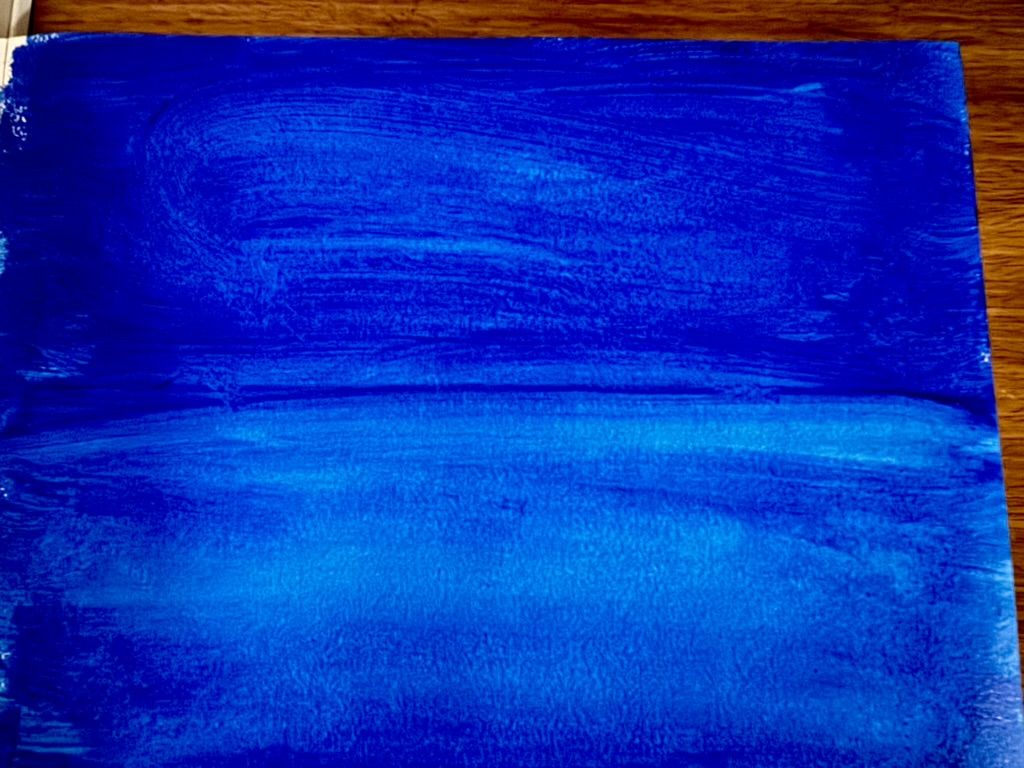
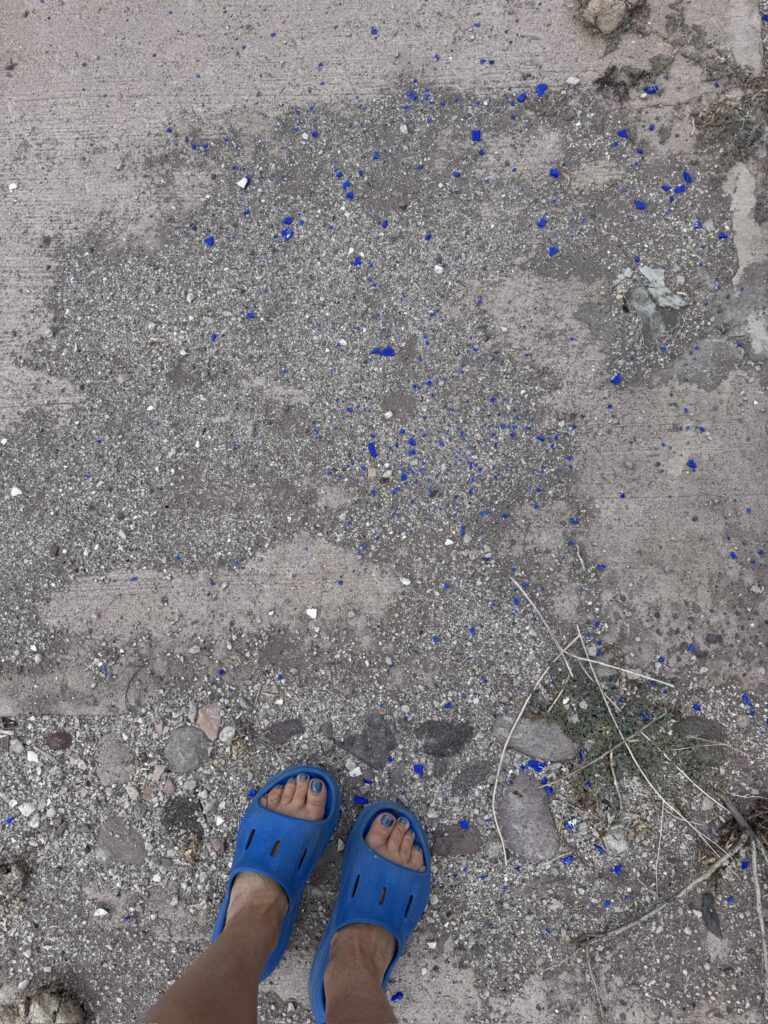
Title: Blue Enough to Stop

Artist Statement

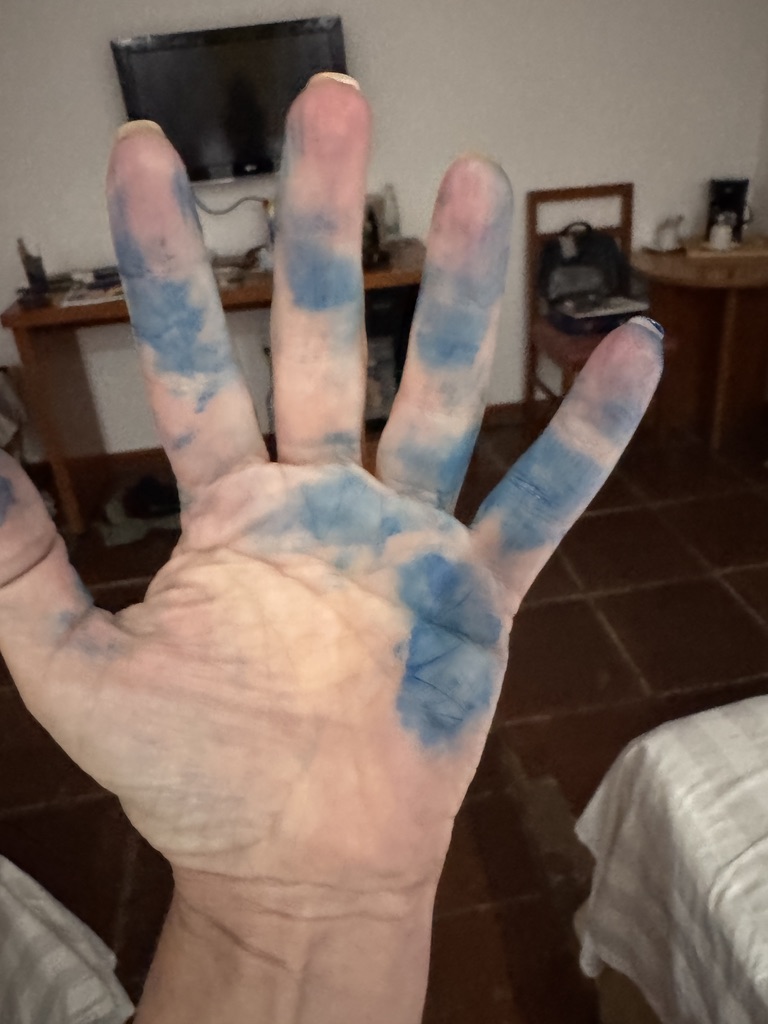
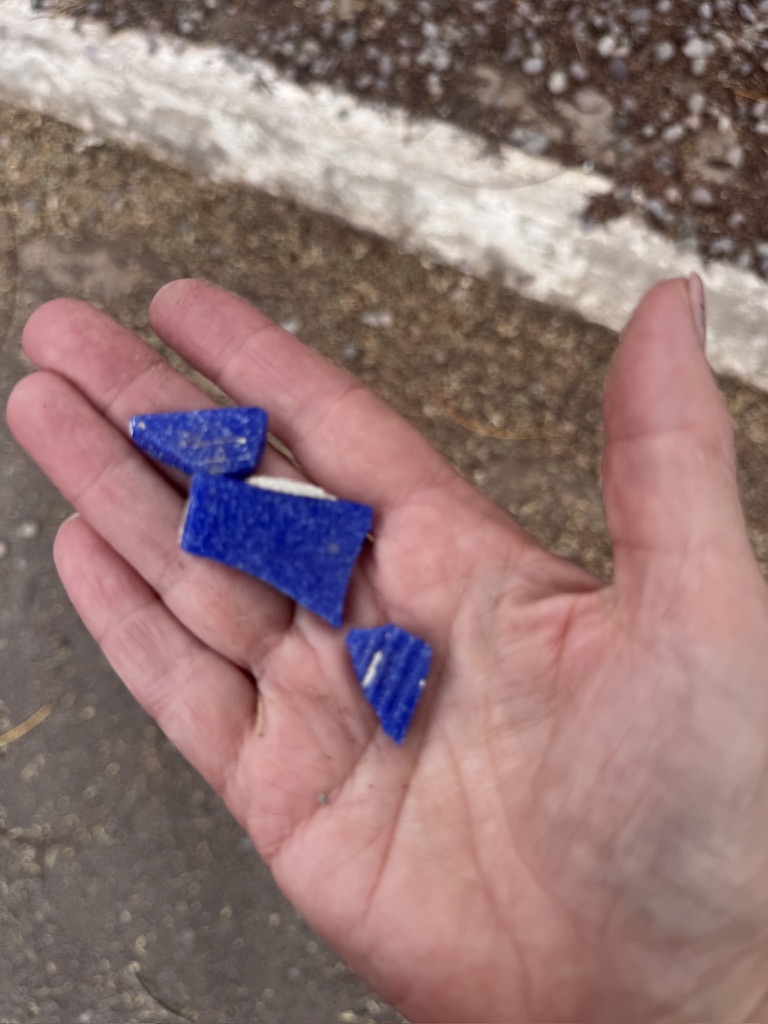
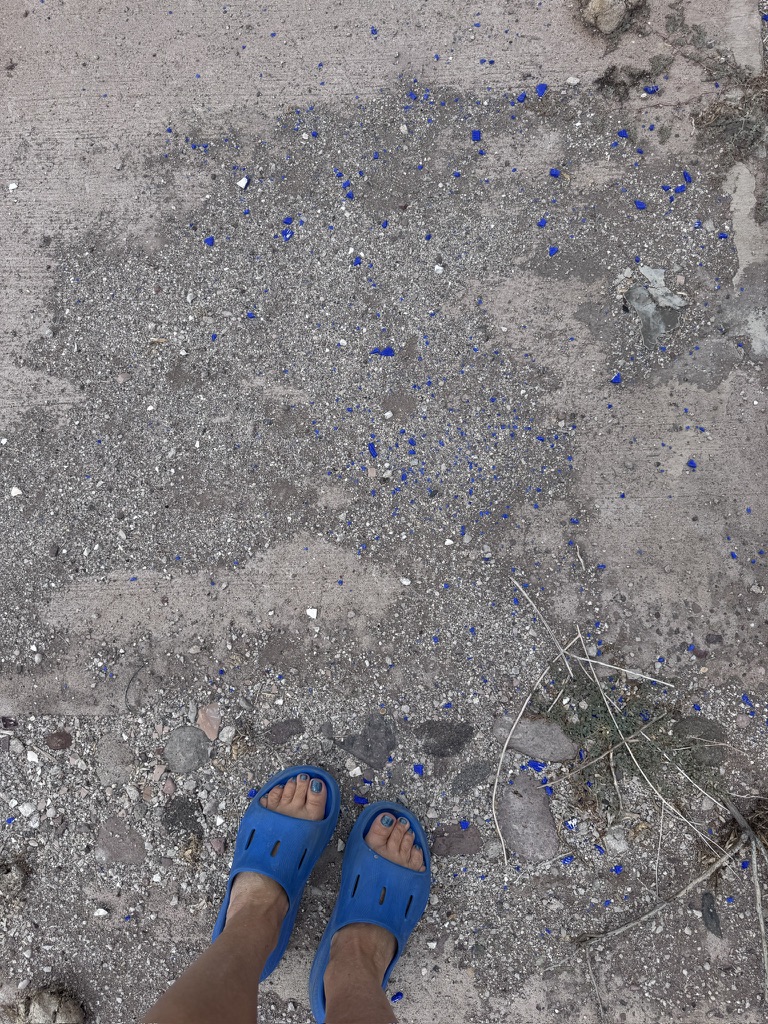
I noticed this because the blue refused to disappear.

At first glance, it was just dust and gravel, the kind of ground you walk over without registering it. Then the colour began to surface. Small shards scattered unevenly, catching light in brief, insistent flashes. They were beyond arrangement. Beyond intention. Simply there, insisting on being seen.

This moment reminded me how attention changes the world. What appears monochrome at a distance reveals complexity when approached slowly. The blue fragments felt like remnants of care, traces of something once whole that still carried beauty despite being broken. I thought about how easily colour is erased by speed, by habit, by the assumption that nothing important lies underfoot.

There is something tender in stopping for what is small and sharp-edged. These fragments asked for no fixing and no story beyond their presence. They held their colour against dust and time. That felt instructive. It suggested that value requires no coherence, no completion. It can exist in scattered form, waiting for someone willing to look closely enough to notice.

This image stays with me because it affirms a practice I am learning to trust. To walk slowly. To look down. To allow myself to be interrupted by what glints quietly at the margins. The blue was enough to stop me. That feels like a lesson worth keeping.

Photo Credit: Amy Tucker, 2026

The Empty Field

There is an empty field just beyond the edge of town, where the paved road gives way to dust and the last buildings surrender to open land. I have been walking past it for weeks without stopping. It looked like nothing. Scrub brush. Rubble. The kind of place you glance at and dismiss.

Yesterday, I stopped.

Something beyond naming made me turn off the path and walk into that emptiness. Perhaps I was tired of the routes I already knew. Perhaps my body was leading me somewhere my mind had yet to consent to go. I have been learning, throughout this time by the sea, to follow impulses that resist explanation. This is part of what Scholarly Personal Narrative makes possible: trusting that the body knows things the conscious mind has yet to articulate.

The field was full of treasure.


Title: One Person’s Treasure

Artist Statement

This work began when I stopped walking past what I had assumed was empty. Turning into the field felt intuitive, guided by the body rather than the mind. What appeared as absence revealed fragments of glass and tile, small residues of domestic life and quiet abandonment.

I approach these materials as witnesses, holding traces of memory, use, and erasure. Through Scholarly Personal Narrative and land-based inquiry, this field becomes both site and method, a place where brokenness speaks and presence persists. This work is an act of ethical noticing, listening to what remains.

Photo Credit: Amy Tucker, January 2026

The Practice of Gleaning

What I was doing in that field has a name. It is called gleaning.

Gleaning is an ancient practice. In agricultural societies, gleaners were people who followed behind the harvesters, collecting the grain that had been left behind in the fields. Gleaning was how the poor survived. It was sanctioned in biblical law: landowners were instructed to leave the edges of their fields unharvested so that widows, orphans, and strangers could gather what they needed.

Filmmaker Agnès Varda (2000), in her documentary The Gleaners and I, explored how gleaning persists in contemporary life. Varda filmed people who collect discarded food from markets, artists who work with found materials, and herself, gathering images and stories that others have overlooked. Varda understood gleaning as both a practical survival practice and a creative practice. She called herself a gleaner of images.

I am a gleaner too. I walk through empty fields and collect what has been left behind. Tiles that once covered floors. Pottery that once held food. Glass that once contained something someone needed. These objects have been discarded, but they retain their beauty. Weathered, but intact.

There is something in this practice that speaks to my own experience. I, too, have felt discarded. I, too, have been treated as though my value ended when my utility to an institution was no longer convenient. Walking through that field, picking up fragments that others have dismissed, I am practising a different way of understanding worth.

Title: What Can I Make With These?

Artist Statement

I picked these up without a plan in mind. I noticed them because they had opened themselves. Split husks resting on concrete, their inner fibres exposed, their protective work already done. They were no longer attached to the tree, no longer enclosing anything, and yet they remained present. That mattered to me.

What drew me in was their honesty. These forms show what happens after holding, after covering, after protection has reached its limit. They make no pretence of wholeness. They try nothing like returning to what they were. They rest exactly as they are, shaped by weather, pressure, and time. I recognized something of myself in that posture.

My practice at this stage is grounded in attention rather than transformation. I am interested in what materials teach when they are allowed to remain close to how they were found. These husks speak about shedding, about release, about the quiet dignity of structures that step aside once their purpose has been fulfilled. They carry evidence of labour without demanding recognition for it.

Placing them together is a way of listening. I let them go beyond resolving into a single form. I let them sit in relation, curved toward and away from one another, holding space without enclosure. They become companions rather than components. The work lives in that relational field.

This piece belongs to my broader inquiry into value, endurance, and recovery. I am learning to recognize worth in what has been cast aside and to trust forms that have no need to seek completion. These husks remind me that protection can be temporary, that opening can be a form of wisdom, and that what remains after release still carries meaning.

Photo Credit: Amy Tucker, 2026

Gleaning is how the discarded find their way back to meaning.


Objects as Co-Researchers

Within arts-based research, found objects can serve as what scholars call co-researchers. This means they move beyond the merely decorative or illustrative. They participate in the inquiry. They carry knowledge. They teach.

Material culture theorist Jane Bennett (2010), in her book Vibrant Matter, argues for what she calls “thing-power”-the capacity of objects to act, to affect, to make things happen. Bennett challenges the assumption that only humans have agency. Objects, she suggests, are active agents. They exert influence. They shape what becomes possible.

I have felt this thing-power in the field. A flash of colour catches my eye. I bend down. My hand reaches before my mind decides. The object has called me. It has exercised a kind of agency, drawing my attention, inviting me to pick it up, to carry it home, to consider what it means.

Anthropologist Tim Ingold (2013) writes about making as a process of correspondence between maker and material. The maker imposes no form on passive matter. Instead, maker and material enter into dialogue. Each responds to the other. Each shapes what emerges.

My relationship with these found objects is a form of correspondence. I decided nothing in advance about what I was looking for. I let the field show me what was there. I let the objects announce themselves. I followed their lead.


Title: Washing the Findings

Artist Statement

I photographed the washing because it is part of the practice. These objects came from the earth, carrying dust, salt, and the residue of years of exposure to weather. Washing them is an act of attention. It is slow, deliberate work. I handle each piece individually, feeling its weight, noticing its texture, watching colours emerge as the dirt lifts away.

This is a contemplative practice in material form. Jon Kabat-Zinn (1994) describes mindfulness as paying attention on purpose, in the present moment, and without judgment. Washing these fragments becomes mindfulness with my hands. It grounds me in the present and connects me to something beyond my circling thoughts.

Photo Credit: Amy Tucker, January 2026

What the Fragments Teach

Each fragment has a history I will never fully know. But I can read what is written on their surfaces.

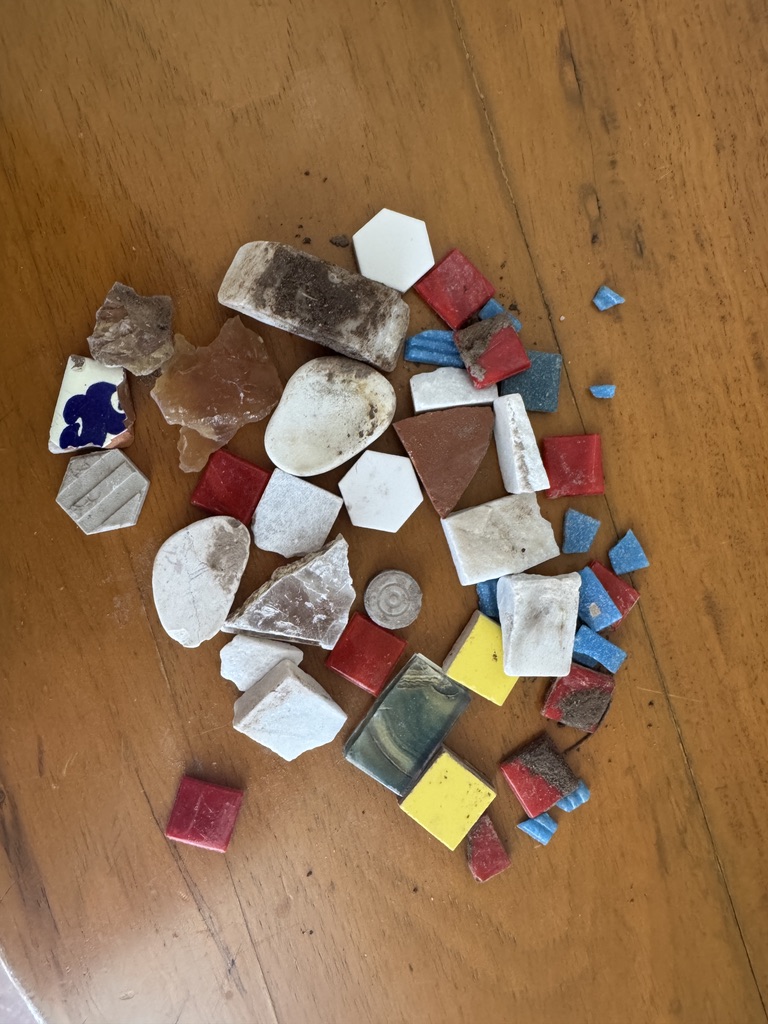
I believe the coloured tiles came from buildings that once stood in this area. Loreto is an old town, founded in 1697 as the first Spanish colonial settlement on the Baja California Peninsula. These tiles may have covered floors in homes, churches, or municipal buildings. They may be decades old. They may be older. The colours, reds and blues, yellows and whites, were chosen by someone. They were arranged in patterns. They were walked upon, cleaned, and lived with. Now they are fragments in a field, and I am holding them in my palm.

The pottery shards tell similar stories. I found a piece with a blue floral pattern, clearly part of a decorated plate or bowl. Someone painted those flowers. Someone purchased that dish. It held food that nourished someone. Now it is broken, but the pattern remains visible, still beautiful, still evidence of care.

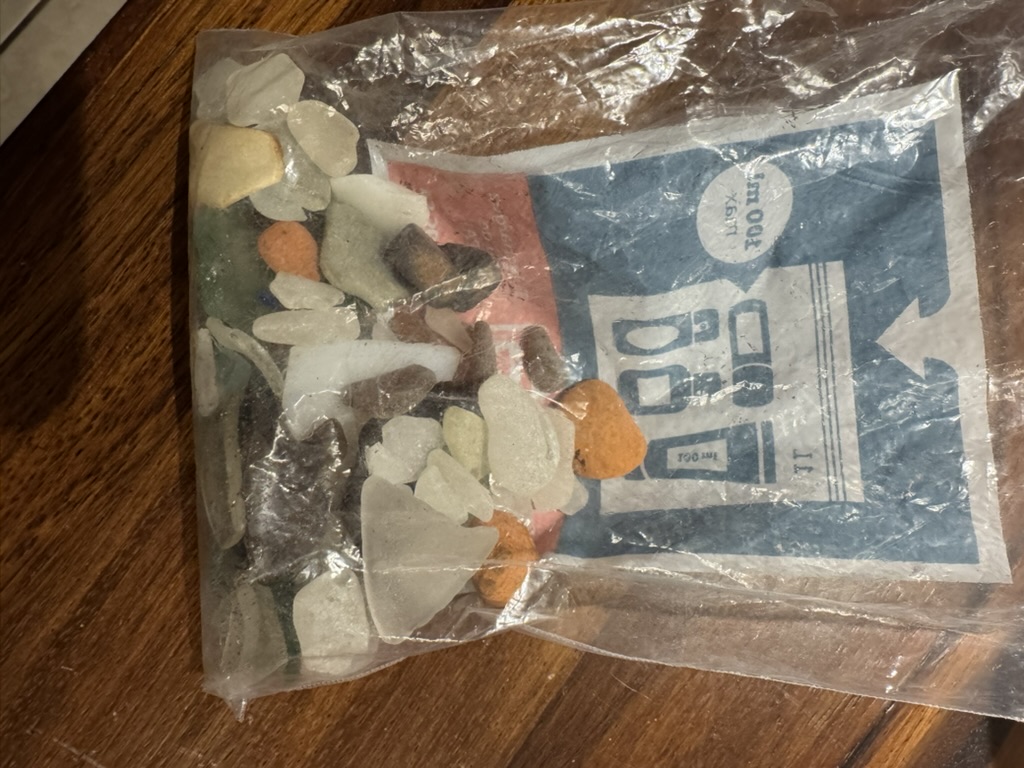
The glass pieces, amber, brown, and translucent, have been tumbled smooth by time. They have the quality of sea glass, though I found them in a dry field. Perhaps they were once bottles that held medicine, wine, or oil. Perhaps they were broken and their fragments scattered, and the wind and sand did the work that waves do on beaches.


Title: Crystal Fragment

Artist Statement: This crystal stopped my breath when I found it. Finding something like this in a scrubby field. It lay half-buried in the dust, catching a slant of afternoon light, and I knew immediately that I had to pick it up. Crystals form over thousands of years, molecules arranging themselves into geometric patterns through processes of heat and pressure and time. This fragment holds geological time in a form I can hold in my hand. Philosopher Gaston Bachelard (1964) wrote about the intimate immensity of certain objects, their capacity to hold vastness within small forms. This crystal is immensely intimate. It is a small thing that opens onto enormous scales of time. Holding it, I feel my own urgency soften. My nineteen years of precarious labour, my exhaustion, my grief: these are real, but they are also brief against the timescale this crystal represents.
Photo Credit: Amy Tucker, January 2026

The Amber Stone

And then there was the amber stone.

I almost missed it. It was the colour of the dust around it, a warm honey-brown that blended with the earth. But something about the way it caught the light made me pause. I bent down. I brushed away the dirt. And there it was: a piece of what I believe is carnelian, or perhaps a form of agate, translucent and glowing like something alive.
I have been carrying it in my pocket ever since. I take it out and hold it to the light. I feel its smooth weight in my palm. It has become a kind of talisman, a physical reminder that beauty exists in overlooked places, that value requires no certification by recognition.


Title: Amber Light

Artist Statement: I photographed this stone because it represents everything I am learning about value. This stone has no market value. No one would pay money for it. By commercial standards, it holds no gemstone status. And yet it is beautiful. It catches light in ways that make me catch my breath. It has weight and warmth and presence. Sociologist Pierre Bourdieu (1984) analyzed how systems of cultural capital determine what is valued and what is dismissed. The art world, the academy, the marketplace: all of these systems decide what counts. But here, in my hand, is something that counts to me regardless of what any system says. This is what recovery looks like: learning to trust my own perception of value, learning to recognize beauty beyond external certification of authority. Photo Credit: Amy Tucker, January 2026

“Beauty exists in overlooked places. Value requires no certification by recognition.”

Amy Tucker, Day 24: Finding Treasure in Empty Fields (January 24, 2026)


A Counter-Archive of the Overlooked

I have written about the concept of a counter-archive in earlier posts. This term describes a collection of evidence that documents what official records refuse to acknowledge. Institutions keep archives of what they consider important: contracts, budgets, meeting minutes, and performance metrics. They keep no archives of exhaustion, of grief, of the slow accumulation of harm that precarious labour produces.

My collection of found objects is becoming a counter-archive of a different kind. It is an archive of the overlooked. It gathers what has been discarded, dismissed, or left behind. It insists that these fragments have value, that they are worth preserving, that they carry knowledge.

Cultural theorist Ann Cvetkovich (2003) argues in her book An Archive of Feelings that trauma leaves traces that official archives cannot capture. Cvetkovich proposes alternative archives: collections of ephemera, personal objects, and creative works that document emotional and bodily experiences excluded from institutional memory.

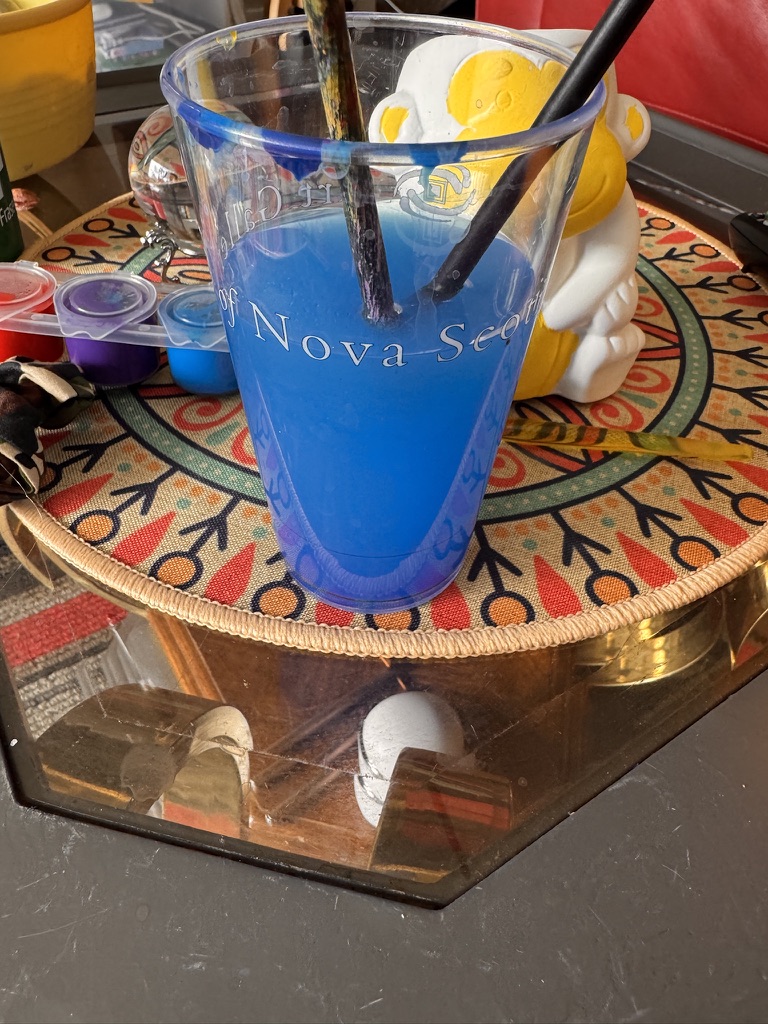
My cup of tiles, stones, and glass is such an archive. It holds evidence of presence, of care, of the persistence of beauty in conditions of neglect. It documents my own practice of attention during this time by the sea. It will travel home with me, a material record of what I learned in this empty field.


Title: The Full Collection

Artist Statement

I arranged these objects on the table to see them all at once, to understand what I had gathered. The arrangement was intuitive, beyond any plan. I simply placed each piece and let the composition emerge. What I see now is a kind of mosaic, a tessellation of fragments that fit together imperfectly yet create something whole nonetheless.

This feels like a metaphor for my life right now. I am made of fragments: the teacher, the mother, the athlete, the advocate, the person who was discarded by an institution she served for nineteen years. These pieces resist fitting together neatly. They have rough edges. They come from different sources. But here they are, arranged on a surface, making a pattern beyond prediction. Artist and writer Anne Truitt (1982) believed that art is inseparable from the artist as a whole person, a product of everything rather than skill alone, one is. This collection is the product of who I was during these thirty days. It is art made through attention rather than intention.

Photo Credit: Amy Tucker, January 2026

Mosaic as Methodology

Looking at these fragments spread across the table, I think about mosaics.

A mosaic is an art form made from broken pieces. Tiles, glass, stone, pottery: all are shattered or cut into fragments, and then those fragments are arranged into patterns and images. The beauty of a mosaic depends on brokenness. Without the breaking, there would be no small pieces to arrange. Without the fragments, there would be no whole.

Art historian Bissera Pentcheva (2010) writes about Byzantine mosaics and their capacity to transform light. The irregular surfaces of mosaic tiles catch and scatter light in ways that flat surfaces cannot replicate. Mosaics shimmer. They seem alive. Their beauty lies precisely in their fragmentation.

I am thinking about this in relation to my own experience. I have been broken by precarious labour. My sense of professional identity has shattered. My body has carried the weight of chronic stress until it could carry no more. I arrived at this time by the sea in fragments.

But fragments can be arranged. Fragments can become mosaics. The breaking may be the beginning of a different kind of wholeness, one that acknowledges rupture rather than pretending it never happened.


The breaking may be the beginning of a different kind of wholeness.


The Human Right to Beauty

Title: What Was Bound


Artist Statement:

I noticed this because something had already been tied.

A length of frayed fibre lay on the ground, knotted at its centre, holding itself together even as its edges unraveled. It looked used, weathered, and finished with its original task. Nearby, a small ring rested in the dust, separate yet clearly related, as if it had once played a role in keeping something contained.

What this image brings forward for me is the quiet after function. The moment when binding has done its work and is no longer required. I have been thinking a great deal about what it means to hold things together for long periods of time. Roles, responsibilities, expectations. The fibres here show the cost of that work. They are worn thin at the ends, softened by exposure, altered by effort.

There is care embedded in this object. Someone tied it for a reason. Someone relied on it to secure, to fasten, to keep order. And yet it now rests on the ground, released from usefulness, still intact, still present. That feels important. It mirrors an experience I know well. Being valued for what I could hold together, and then set aside once that labour was no longer needed.

I am drawn to the knot at the centre. It is firm, deliberate, almost tender. It suggests intention rather than accident. Around it, the fibres loosen and spread, no longer contained by the same demands. The object has shifted from function to witness. It carries memory in its structure.

This piece belongs to my ongoing practice of noticing what remains after systems of use move on. I am interested in materials that show wear honestly, that hold evidence of service without apology. What was bound here has been released. What remains still carries meaning.

Photo Credit: Amy Tucker, 2026

I want to connect this practice to the human rights framework that grounds this entire project.

Article 27 of the Universal Declaration of Human Rights (United Nations, 1948) affirms that “everyone has the right freely to participate in the cultural life of the community, to enjoy the arts and to share in scientific advancement and its benefits.” This right includes the right to make art, to appreciate beauty, and to engage in creative practice.

But there is something more fundamental here, something about the right to perceive value in what has been devalued.

Philosopher Elaine Scarry (1999) argues in her book On Beauty and Being Just that the experience of beauty is bound up with justice. When we perceive something as beautiful, Scarry suggests, we recognize its right to exist, its claim on our attention, and its worthiness. Beauty, in this sense, is far from frivolous. It is ethical. It trains us to see the value in things and, by extension, in people.

Walking through that empty field, bending down to pick up discarded tiles, I was practising a form of justice. I was recognizing the value in what had been thrown away. I was refusing the logic that says broken things are worthless.

This matters because I, too, have been treated as though my value ended when I was no longer useful to an institution. I, too, have been discarded. Finding beauty in these fragments is a way of insisting that discarded carries no implication of worthlessness. It is a way of practising, in material form, the belief that every being has inherent dignity regardless of what systems of power decide.


What Remains

Title: What the Sea Returned

Artist Statement

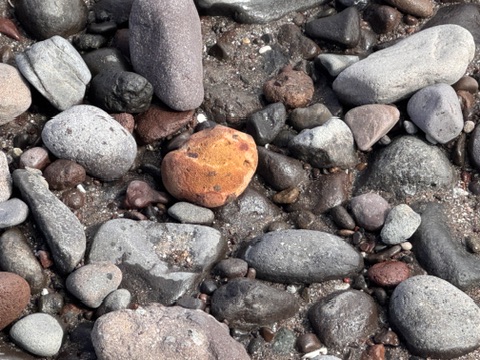
I gathered these pieces slowly, without a plan, letting my hands decide before my mind intervened. Shells smoothed thin by water. Glass softened into quiet colour. Wood hollowed and shaped by time rather than tools. Each object arrived through patience rather than searching, offered up by tide, weather, and repetition.

What this collection reminds me of is how the sea practices care. It breaks things down, yes, but it also rounds edges, tempers sharpness, and leaves behind what can endure touch. The glass no longer cuts. The shells carry the echo of shelter. The wood holds openings where something once moved through it, leaving pathways rather than damage. These materials speak of transformation through persistence rather than force.

As I arranged them together, I became aware of how little I needed to decide. Balance emerged on its own. Colour found companionship. Texture created conversation. This feels aligned with how I am learning to live right now. Less directing. More listening. Allowing relationships to form without insisting on outcome.

There is a quiet ethics in keeping what has been weathered rather than perfected. These objects have lived alongside loss, erosion, and change. They remain beautiful because of that history rather than despite it. Holding them, I am reminded that what survives carries knowledge. What returns has something to teach.

This collection functions as a personal archive of attention. Each piece marks a moment when I slowed down enough to receive rather than pass by. Together they form a record of time spent listening to what the sea was willing to share.

Photo Credit: Amy Tucker, 2026

I will carry these fragments home with me. They will sit on a shelf or a windowsill, catching light, reminding me of this field, this practice, this moment in my recovery.

They will remind me that the world overlooks treasure rather than what it values. Treasure is what the world has overlooked. Treasure is what remains beautiful despite being broken. Treasure lies in empty fields, waiting for someone patient enough to notice.

I am learning to be that patient person. I am learning to walk slowly, to look carefully, to bend down and pick up what catches my eye. I am learning that this practice of attention is itself a form of healing.

van der Kolk (2014) writes that trauma recovery requires the restoration of the capacity for pleasure, for play, for engagement with beauty. Feeling less bad falls short of what we need. We must learn again to feel good, to be moved by what is beautiful, to experience joy without guilt.

These fragments bring me joy. Holding the amber stone up to the light brings me joy. Arranging the tiles on the table and seeing the pattern emerge brings me joy. This joy is medicine, far from frivolous. It is evidence that I am healing.


I am learning that the practice of attention is itself a form of healing.

Estoy encontrando tesoros. Estoy aprendiendo a ver.

I am finding treasure. I am learning to see.

Title: Carried, Then Set Down

Artist Statement

I placed these objects together because they felt as though they had already found one another.

A seed pod, opened and emptied of what it once carried. A feather, shed without injury, its work in the air complete. Two small stones, held briefly in the hand and then released. None of these were taken by force. Each was encountered at a moment when it was ready to be found.

What this arrangement reminds me of is how much of life is held temporarily. Protection, lift, nourishment, weight. These materials speak quietly about function that has ended without failure. The seed pod has released. The feather has fallen. The stones remain exactly as they are. There is no urgency here, no demand to return to usefulness.

I have spent many years believing that value was tied to carrying, to lifting, to producing. This grouping asks something different of me. It invites attention to what happens after effort, after release, after the body no longer needs to hold everything together. There is dignity in that moment. There is relief.

The space between these objects matters as much as the objects themselves. They are arranged with care, yet allowed distance. They share a surface without being bound to one another. That feels instructive. It mirrors a way of being I am learning to trust, one where connection requires no containment.

This work belongs to my inquiry into attention, recovery, and the ethics of noticing. These materials teach me that carrying is only one phase of existence. Setting down is another. Both are necessary. Both leave traces.

Photo Credit: Amy Tucker, 2026

References

Bachelard, G. (1964). The poetics of space (M. Jolas, Trans.). Orion Press. (Original work published 1958)

Bennett, J. (2010). Vibrant matter: A political ecology of things. Duke University Press.

Bourdieu, P. (1984). Distinction: A social critique of the judgement of taste (R. Nice, Trans.). Harvard University Press. (Original work published 1979)

Cvetkovich, A. (2003). An archive of feelings: Trauma, sexuality, and lesbian public cultures. Duke University Press.

Ingold, T. (2013). Making: Anthropology, archaeology, art and architecture. Routledge.

Kabat-Zinn, J. (1994). Wherever you go, there you are: Mindfulness meditation in everyday life. Hyperion.

Pentcheva, B. V. (2010). The sensual icon: Space, ritual, and the senses in Byzantium. Pennsylvania State University Press.

Scarry, E. (1999). On beauty and being just. Princeton University Press.

Truitt, A. (1982). Daybook: The journal of an artist. Pantheon Books.

United Nations. (1948). Universal declaration of human rightshttps://www.un.org/en/about-us/universal-declaration-of-human-rights

van der Kolk, B. A. (2014). The body keeps the score: Brain, mind, and body in the healing of trauma. Viking.

Varda, A. (Director). (2000). Les glaneurs et la glaneuse [The gleaners and I] [Film]. Ciné Tamaris.

Translation note. Spanish language passages were generated using Google Translate and subsequently reviewed and refined by the author. Any remaining infelicities reflect the limits of machine translation rather than intent.

ACADEMIC LENS

The epistemology of discarded treasure articulated in this post resonates with what Moustakas (1961) calls the phenomenological turn: attending to what is present rather than what is supposed to be there, which often means recovering what has been overlooked or devalued by dominant frameworks. The insight that “treasure is what the world overlooks” carries a political dimension that Nixon (2011) would recognize: slow violence renders certain things, and certain people, invisible precisely by failing to register them as valuable. For the precarious academic who has spent nineteen years on the margins of institutional belonging, the practice of finding beauty in what has been discarded is autobiographical as much as aesthetic: it is the application of a new valuing logic to the self. Tuan’s (1977) concept of topophilia extends to include small objects: attachment to place includes attachment to the particular material gifts that place offers, and the shoreline’s discards become intimate through the attention paid to them. The “Blue Enough to Stop” artwork described here enacts what Richardson and St. Pierre (2005) call creative analytic practice: making meaning through form rather than argument, letting the image do the epistemic work.

Day 23: Remembering How to Play

Reading Time: 15 minutes

Black and White Experiments and the Serious Work of Being Silly


What surprised me was how natural all of this felt. None of it required effort, productivity, or justification. It simply required remembering that curiosity, play, and wonder were never meant to be outgrown.


What I Did Today

Today, I tried to remember what it felt like to be a child. I tried to do, without explanation or permission, the things I once imagined adulthood would allow.

When I was young, I thought being a grown-up meant freedom. I thought it meant staying up as late as I wanted, eating what I wanted, and going where I wanted. I thought adulthood was permission. I had yet to understand that adulthood, particularly adulthood shaped by precarious labour and chronic responsibility, would become its own kind of cage. I had no way of knowing that the freedoms I imagined would be traded for obligations I never explicitly agreed to.

Today, I took some of those freedoms back.

Here is what I did:

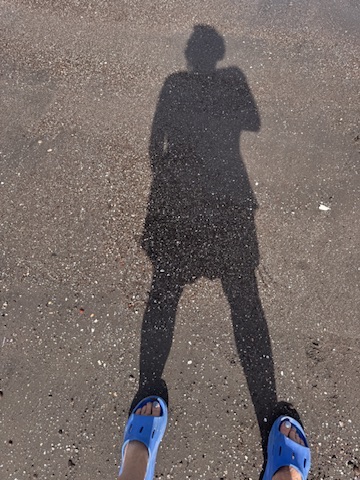
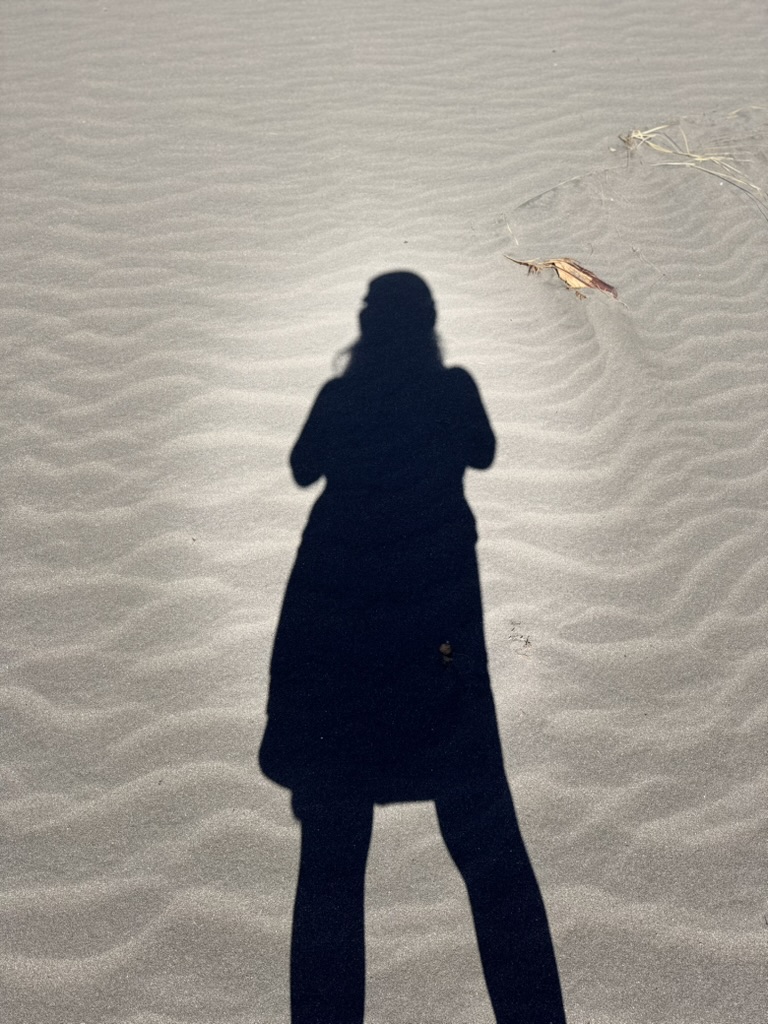
I danced with my shadow, curious about how it moved when I moved.

I ordered dessert for dinner, because pleasure requires no earning first.

I painted seashells slowly, letting colour decide where it wanted to land.

I hunted for treasure simply to practise looking.

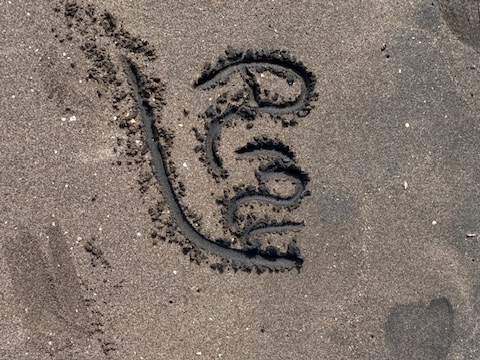
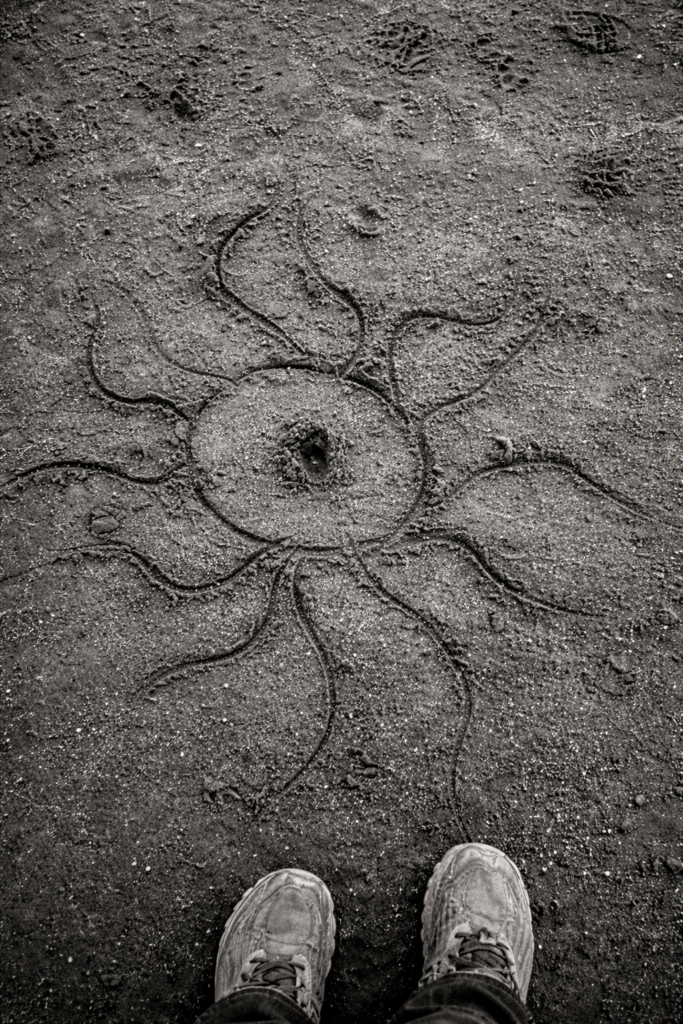
I drew in the sand, knowing the tide would erase it and trusting that was part of the point.

My room went uncleaned, and nothing terrible happened.

I made funny poses for photographs, laughing at myself instead of correcting myself.

I experimented with black-and-white photography, noticing how light and absence speak to one another.

I snuck onto the golf course after dark to walk across the elegant bridges, feeling both brave and gentle at the same time.

And I talked to dogs, which, if I am honest, has always felt like the most sensible thing to do.


Title: Shadow Dance

Artist Statement

I photographed my shadow because shadows are honest. They perform nothing. They simply follow, stretching and shrinking with the angle of the light, revealing the body's position in space. Dancing with my shadow felt ridiculous at first. I am sixty years old. I am a scholar.

What am I doing, waving my arms at the ground? But that voice, the one that says act your age, the one that says someone might see, is the voice of a culture that has forgotten what play is for. Play researcher Stuart Brown (2009) argues that play stands opposite depression, never work. It is the opposite of depression. Play is how mammals learn, bond, and regulate their nervous systems. My shadow cares nothing about my credentials. It just wants to dance.

Photo Credit: Amy Tucker, January 2026

The Science of Play

I want to take play seriously, which is perhaps a contradiction, but stay with me.

Play is far from frivolous. Far from a waste of time. Far from something we are supposed to outgrow as adults. Play is a biological necessity. It is wired into our nervous systems. It is how we learn, how we connect, how we heal.

Psychiatrist Stuart Brown (2009), founder of the National Institute for Play, has spent decades studying play across species. Brown argues that play is essential for brain development, emotional regulation, and social bonding. In his research with everyone from Nobel laureates to murderers, Brown found a consistent pattern: those who had been deprived of play in childhood showed significant deficits in empathy, problem-solving, and emotional resilience. Play, Brown concludes, is necessary for healthy human development and remains so throughout life.

Neuroscientist Jaak Panksepp (1998), who studied the neuroscience of emotion, identified play as one of the seven primary emotional systems in the mammalian brain. Panksepp discovered that rats laugh when they play, emitting ultrasonic chirps that function like human giggles. Play, Panksepp argued, is hardwired from the start, beyond learned behaviour. It emerges spontaneously when safety conditions are met.

This connects to Stephen Porges’s (2011) how the nervous system responds to safety and threat, which I have been sitting with for weeks now. Porges emphasizes that play requires a sense of felt safety. The social engagement system, which enables play and connection, only comes online when the nervous system perceives safety. When we are in survival mode, when we are anxious or always on guard, scanning for the next threat or exhausted, play becomes impossible. The body shuts down the play circuits and redirects resources toward defence.

For years, my nervous system has been in survival mode. Play has been inaccessible to me. I have been too tired, too worried, too busy bracing for the next threat. Today, doing these small, silly things, I felt something shift. My body remembered what play feels like. My nervous system, sensing the absence of threat, allowed the play circuits to come back online.


Brown (2009) challenges the assumption that play is a trivial or childish activity by arguing that its true opposite is depression rather than work, positioning play as a fundamental condition of psychological vitality rather than a reward for productivity.


Black and White Experiments

Among today’s plays, the black-and-white photography stood out.

I have been photographing in colour throughout this time by the sea, drawn to the vivid blues of the sea, the warm ochres of the desert, and the bright tiles I found in the empty field. Colour has felt like medicine, like my eyes were starved for saturation after years of grey institutional spaces.

But today I wanted to see differently. I wanted to strip away colour and notice what remained. I wanted to understand how light and shadow speak to one another when hue is removed from the conversation.

Black-and-white photography has a long history as a medium for seeing the essential. Photographer Henri Cartier-Bresson (1952), who helped establish photography as an art form, worked almost exclusively in black and white. He spoke of the decisive moment, the instant when form, gesture, and meaning align. Black and white, Cartier-Bresson believed, revealed the bones of an image, the underlying structure that colour sometimes obscured.

Photographer Minor White (1969) wrote about photography as a contemplative practice. White encouraged photographers to approach their subjects with what he called camera vision, a state of heightened awareness in which the photographer becomes fully present to what is before them. White’s black-and-white images have a meditative quality, inviting slow looking rather than quick consumption.

Today, I tried to approach my playful subjects with a camera’s eye. I photographed my shadow, my sandy drawings, and the bridges on the golf course. I photographed without worrying about whether the images were good. I was experimenting, which is another word for playing.


Title: Witnessing

Artist Statement

I took this photograph while walking on the shore, attentive to how the ground carries memory. The pattern in the sand felt like a living diagram, a temporary archive of movement, water, and touch. The central circle drew my attention as a small void, a receptive space where something had been and where something else could form. The branching lines reminded me of roots, veins, and pathways, evoking how land and body mirror one another in their capacity to hold experience.

Including my shoes in the frame was a deliberate choice. My presence is partial, grounded, and relational rather than dominant. I stand with the land rather than over it. This image becomes a record of encounter, where my body meets the earth in a moment of pause. In trauma-informed and arts-based research, such moments matter. They mark when attention shifts from analysis to embodied witnessing.

This photograph extends my inquiry into how land teaches through traces. The sand speaks beyond words, yet offers patterns, marks, and impressions that invite interpretation. In Photovoice and Scholarly Personal Narrative, images function as prompts for reflection, memory, and relational sense-making. Here, the land becomes both collaborator and teacher, offering a visual metaphor for connection, healing, and continuity.

I understand this image as a quiet mapping of relationality. The centre suggests a gathering place, while the lines reaching outward suggest connection across time, body, and place. Standing there, I felt both held and called outward. The photograph is an invitation to notice what remains after movement, after presence, after touch. It is a small practice of ethical witnessing, where attention becomes a form of care.

Photo Credit: Amy Tucker, January 2026

What Play Requires

Play requires specific conditions. It cannot be forced. It cannot be scheduled. It cannot be made productive. The moment we try to instrumentalize play, to make it serve some other purpose, it stops being play.

Philosopher Johan Huizinga (1971), in his foundational work Homo Ludens (which translates to “playing human”), argued that play is a primary category of life, as fundamental as reasoning or making. Huizinga defined play as a voluntary activity that takes place within certain limits of time and space, according to rules freely accepted but absolutely binding. Play, Huizinga insisted, is a stepping outside of ordinary life into a temporary sphere of activity with a disposition all its own.

This helps me understand why play has been so difficult during my years of precarious labour. Precarity erodes the conditions that play requires. When you are constantly uncertain about your employment, when you are always on guard, scanning for the next threat about institutional politics, when your nervous system is stuck in chronic activation, you cannot step outside ordinary life. Ordinary life is too threatening. The temporary sphere of play cannot form.

Today, I had what play requires: safety, time, and permission.

Safety: no one was watching, no one was judging, no one needed anything from me.

Time: the day stretched out with nothing scheduled, nothing required, nothing pressing against its edges.

Permission: I gave myself permission to be silly, to be unproductive, to do things that served no purpose except the pleasure of doing them.

These conditions are necessities, never luxuries. And they have been systematically denied to me by the conditions of precarious academic labour.


Precarity erodes the conditions play requires. When your nervous system is stuck in chronic activation, the temporary sphere of play cannot form.


Dessert for Dinner

I want to say something about dessert for dinner, because it was such a small thing yet felt so large.

For years, I have eaten responsibly. I have eaten in ways that fuelled productivity, that supported training, that kept my body functioning as a machine that could work and work and work. I have thought of food as fuel, as an obligation, as something to manage rather than enjoy.

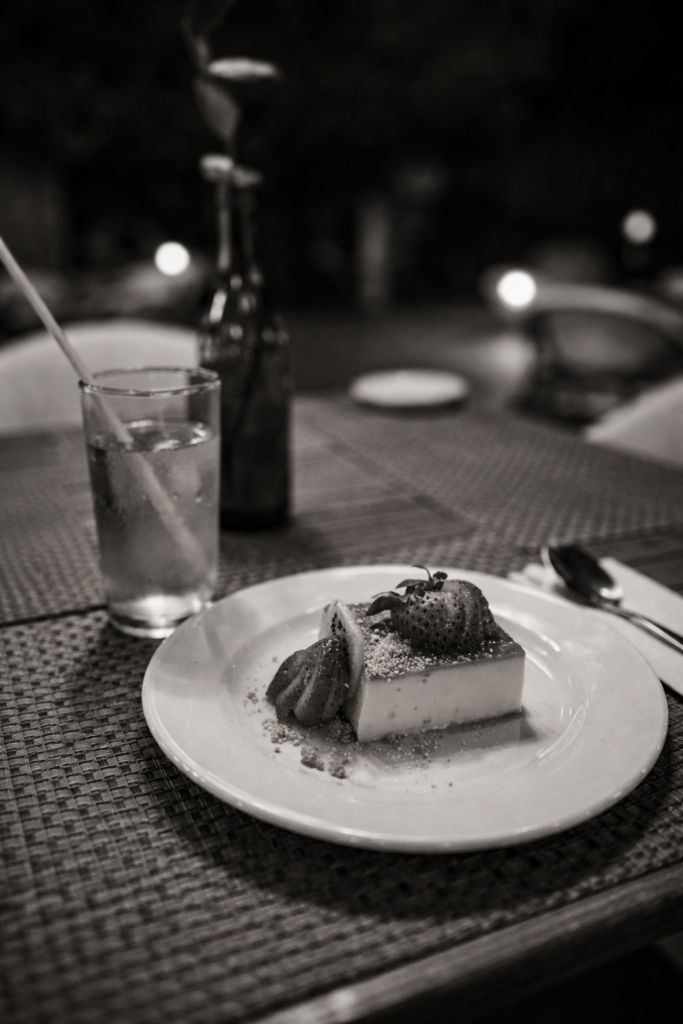
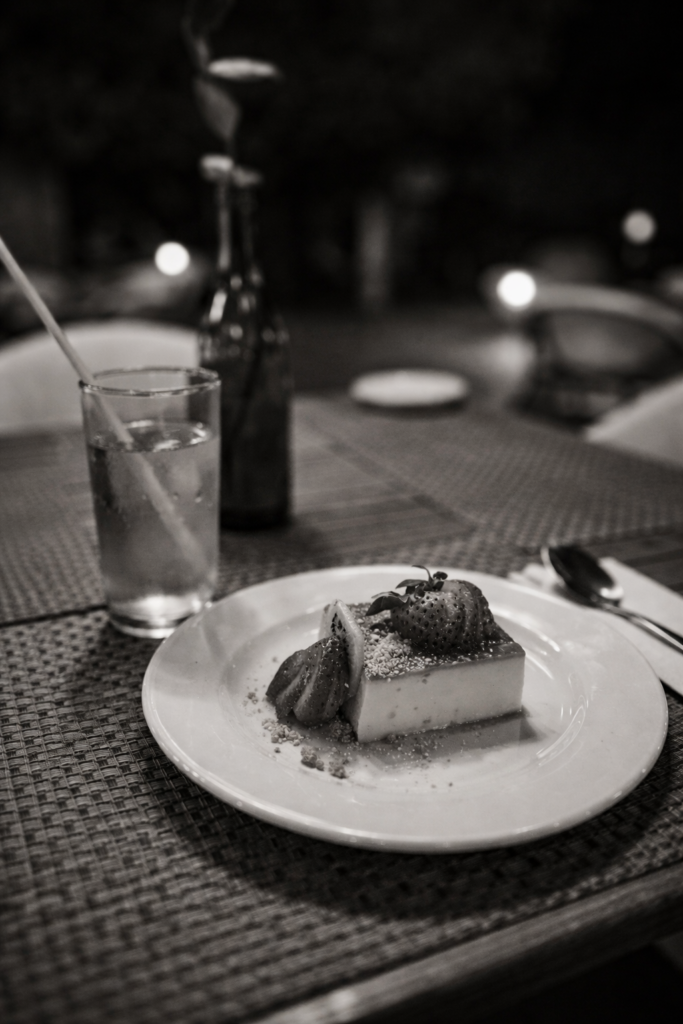
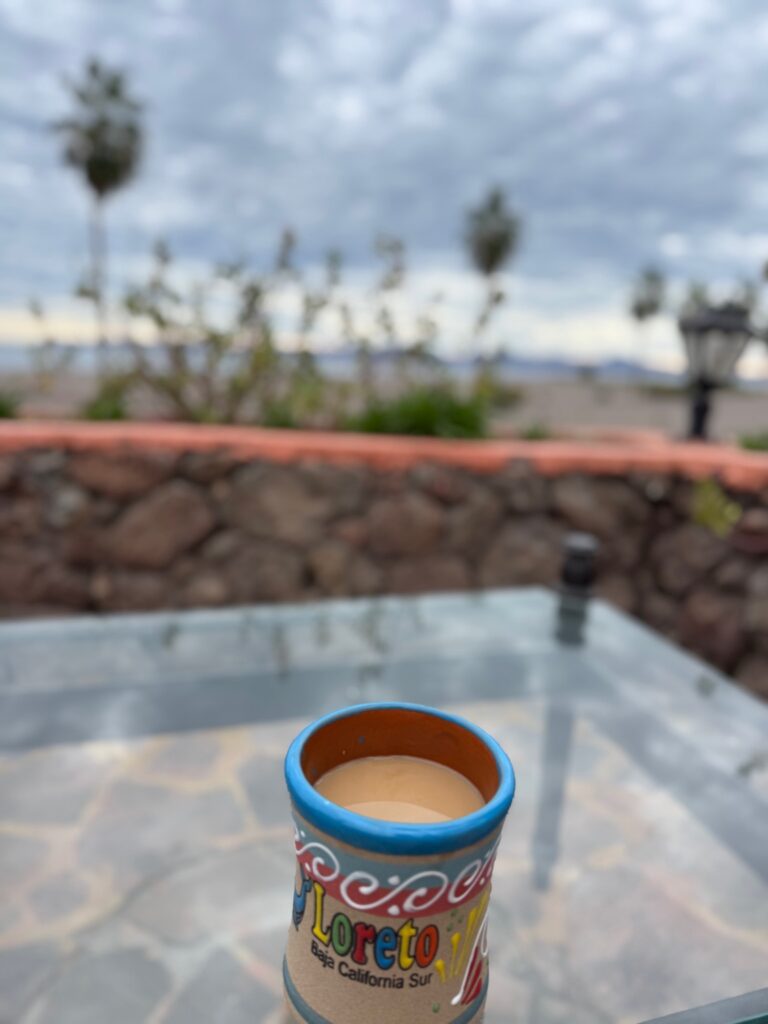
Today, I went to a small restaurant by the water and ordered only dessert. Flan. A cup of coffee. Nothing else.

The waiter looked at me with mild confusion. I smiled and said, Solo postre, por favour. Just dessert, please.

It arrived: creamy, caramel-topped, beautiful. I ate it slowly, savouring each bite. The sweetness was almost overwhelming. Allowing myself sweetness without first earning it.

This is what food researcher and therapist Ellyn Satter (2007) calls eating competence: the ability to eat with joy, flexibility, and deep listening to one’s own body. Eating competence is the opposite of rigid dietary rules. It involves trusting the body to know what it needs, allowing pleasure without guilt, and approaching food with curiosity rather than control.

Dessert for dinner was a small act of eating competence. It was me saying to my body: your pleasure matters. What you want matters. Sweetness requires no earning through suffering first.


Title: Dessert for Dinner

Artist Statement

I photographed my dessert to document this small rebellion. The black-and-white treatment makes it feel timeless, like a memory, like something that could have happened yesterday or decades ago. Pleasure is often the first thing we sacrifice when we are in survival mode. We tell ourselves we will enjoy things later, after the work is done and we have earned them. But later keeps receding. The work is never done. Pleasure deferred indefinitely becomes pleasure denied. This photograph says: today I held nothing back. Today I allowed myself sweetness in the middle of everything, as a statement of worth rather than reward.

Photo Credit: Amy Tucker, January 2026

The Golf Course Bridges

After dark, I walked to the golf course at the edge of town. The gates were closed, but a gap in the fence remained. I slipped through.

This is the kind of thing I used to do as a teenager. Sneaking into places I was told were off-limits. The thrill of mild transgression. The feeling of getting away with something.

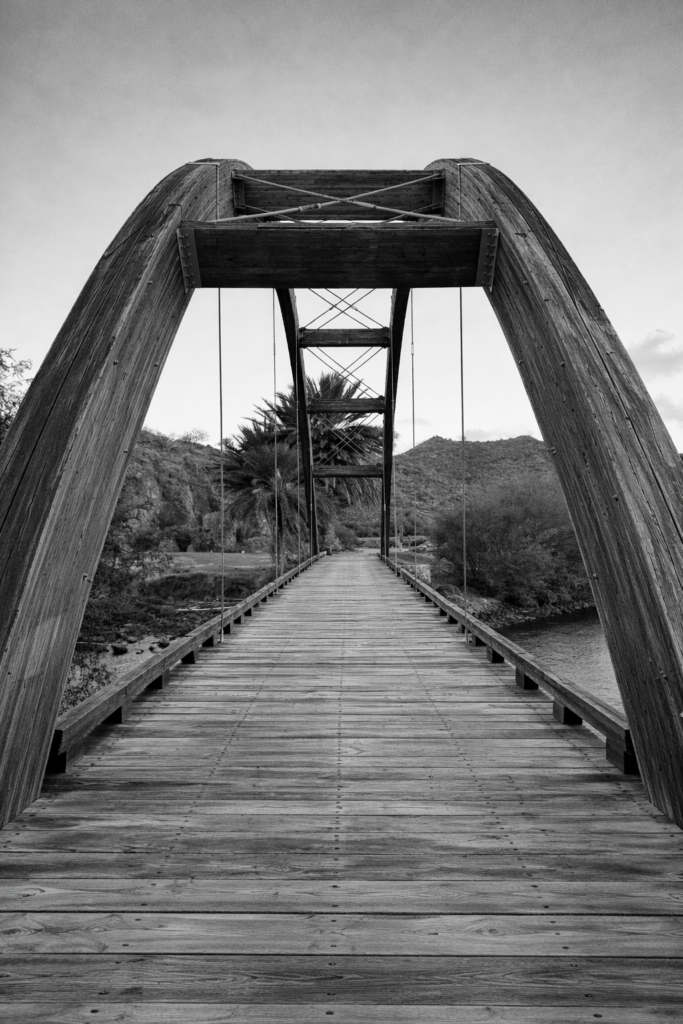
The golf course was beautiful in the dark. The grass was soft under my feet. The stars were bright overhead. And there were bridges, elegant wooden bridges crossing over water features and sand traps. During the day, these bridges are for golfers. At night, they were for me.

I walked across each bridge slowly, feeling the wood beneath my feet, looking up at the sky. I was trespassing, technically. But the trespass felt gentle, victimless. I damaged nothing. I was just walking across beautiful bridges because I wanted to.

Philosopher Michel de Certeau (1984), in his book The Practice of Everyday Life, writes about the ways ordinary people subvert the structures of power through small acts of resistance. De Certeau calls these acts tactics, as opposed to the strategies employed by those in power. Walking across the golf course bridges at night is a tactic. It is a small refusal of the rules that say certain beautiful spaces are only for certain people at certain times.


Title: Night Bridge

Artist Statement

I nearly let this photograph pass untaken, nervous about being caught. But that nervousness was part of the play. Risk, within safe limits, is part of what makes play exhilarating. Brian Sutton-Smith (1997), a leading play theorist, argues that play always involves some element of uncertainty and a negotiation between order and chaos. Walking across this bridge in the dark, I was negotiating. I was playing with boundaries. I was remembering what it felt like to be young and bold and willing to break small rules for the sake of beauty.

Photo Credit: Amy Tucker, January 2026

The Right to Play

I want to connect today’s activities to the human rights framework that grounds this project.

Article 24 of the Universal Declaration of Human Rights (United Nations, 1948) affirms the right to rest and leisure. Article 27 affirms the right to participate in cultural life and to enjoy the arts. These rights extend beyond children. They belong to adults, too. They are part of a group of 60-year-old women recovering from burnout. They are precarious workers denied the conditions the play requires.

Play researcher René Proyer (2017) has studied playfulness in adults and found that it correlates with psychological well-being, creativity, and life satisfaction. Playful adults, Proyer found, are flexible, curious, and resilient, free of immaturity or irresponsibility. Playfulness is something to cultivate throughout life rather than simply outgrow.

But the conditions of contemporary work make adult play difficult. The expectation of constant availability, the erosion of boundaries between work and leisure, the chronic stress of economic precarity: all of these work against the conditions that play requires. Play becomes something we schedule, optimize, and do for its health benefits rather than for its own sake. And when play becomes instrumental, it stops being play.

Today, I played without instrumentalizing it. I danced with my shadow because of joy, never because it would reduce my cortisol levels. I ordered dessert for dinner purely because I wanted it. I snuck onto the golf course purely for the thrill, never because trespassing builds character. I did these things because I wanted to. Because they were fun. Because my body, finally sensing safety, remembered what it felt like to play.
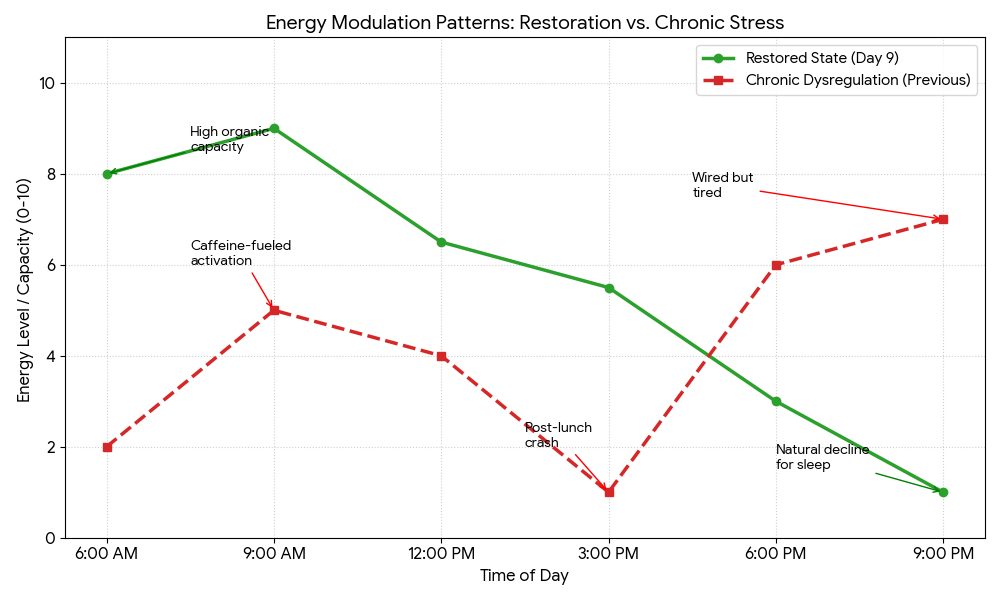

Playfulness is something to cultivate throughout life, beyond outgrowing.


Talking to Dogs

I should say something about talking to dogs.

This behaviour is entirely familiar to me. I have always talked to dogs. I greet them on the street. I ask them about their days. I tell them they are beautiful and good. Their owners can think what they like.

Dogs understand something that adult humans often forget. They live in the present moment. They experience joy without complication. They defer no pleasure. They earn no treats through suffering first. When a dog sees someone it loves, it refuses to pretend to be cool. It wags its entire body.

I aspire to be more like a dog.

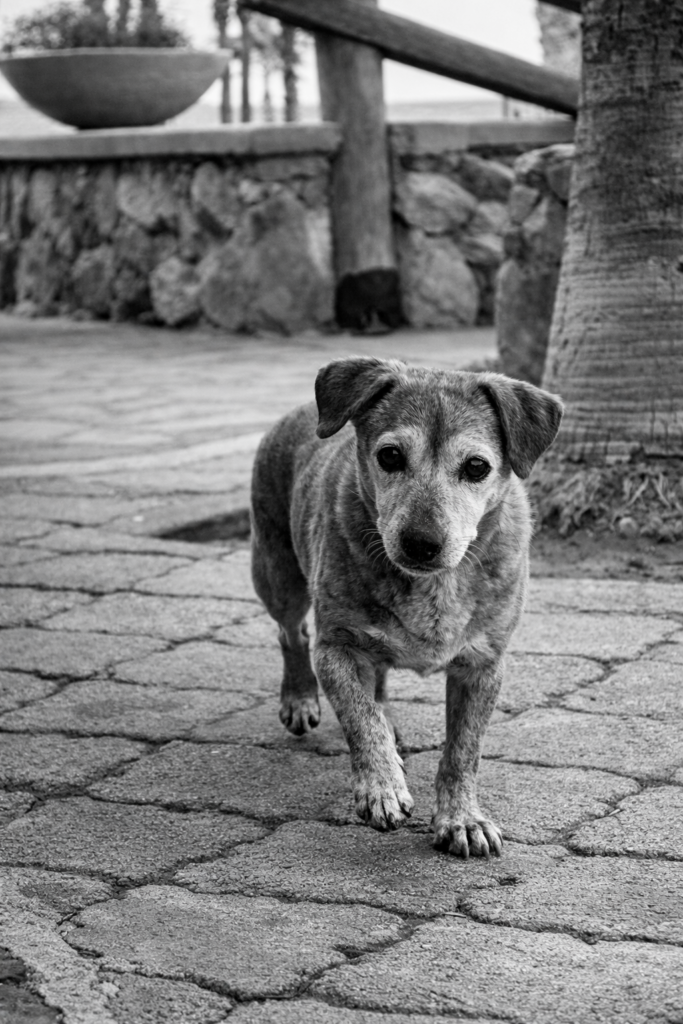
Today, I met a small brown dog on the beach. It was digging in the sand with complete focus, searching for something only it could smell. I sat down nearby and watched. The dog glanced at me, decided I was acceptable, and returned to its digging.

Hola, perrito,” I said. “¿Qué buscas?” Hello, little dog. What are you looking for?

The dog offered a wagging tail as an answer. That was answer enough.

Animal studies scholar Donna Haraway (2008) writes in her book When Species Meet about the relationships between humans and companion animals. Haraway argues that we become who we are through our interactions with other species. Dogs are far more than pets. They are companion species, beings with whom we share our lives and who shape us as much as we shape them.

My conversation with the beach dog was a moment of interspecies play. Neither of us needed anything from the other. We were just sharing space, sharing curiosity, sharing the pleasure of being alive on a warm evening by the sea.


Title: Playmate

Artist Statement

Dogs remain entirely unaware they are being photographed. They perform nothing. They simply are. This is what I am trying to learn from them: how to be without performing, how to experience joy without complicating it, how to greet each moment with full-body enthusiasm. The black-and-white treatment of this image strips away distractions and lets me focus on the dog's essential dog-ness: the alert ears, the curious eyes, the readiness for whatever comes next. If I could bottle what dogs have and sell it, I would be rich. But it cannot be bottled. It can only be practised, moment by moment, in the company of beings who have never forgotten how to play.

Photo Credit: Amy Tucker, January 2026

What Play Teaches

Today taught me several things.

First: play is still available to me. I thought precarity and burnout had broken something essential, had severed my connection to joy, silliness, and spontaneity. But that connection was buried, never broken. Under exhaustion. Under obligation. Under the weight of nineteen years of chronic stress. Today, with safety, time, and permission, it emerged.

Second: play requires no expensive equipment or exotic locations. It requires only willingness. A shadow to dance with. A piece of flan. A dog to talk to. A golf course bridge to walk across in the dark. Play is available everywhere, all the time, to anyone willing to receive it.
Third: play requires no earning. This was the hardest lesson. I have been trained to believe that pleasure must be earned, that rest must be earned, that fun is a reward for productivity rather than a right of existence. Today I practised a different logic: play first, simply because I am alive, and play is part of being alive.

Fourth: black-and-white photography is its own kind of play. Removing colour changes how I see. It invites experimentation, curiosity, willingness to fail. The images I made today are experiments, far from masterpieces. Some are blurry. Some are badly composed. All of them are evidence that I was playing, trying something new, and willing to look silly in the name of learning.


Curiosity, play, and wonder were never meant to be outgrown. They were meant to be carried forward, quietly, into a life that knows when to loosen its grip.


What Remains

The day is ending. My room remains a glorious mess. I have sand in my shoes, caramel on my shirt, and images of shadows and bridges stored on my camera.

I feel lighter than I have felt in a very long time.

Tomorrow I will likely do something responsible. I will write, or walk, or continue the quieter practices of this time by the sea. But today I played. Today I remembered what my body knew before precarity taught it to forget. Today I was a child in a sixty-year-old body, and it was exactly right.

van der Kolk (2014) writes that trauma recovery requires the restoration of play and imagination. Processing difficult experiences through talk alone falls short. We must also rebuild our capacity for joy, for spontaneity, for uncomplicated pleasure. Play is medicine. It is as necessary for healing as rest and reflection.

Today I took my medicine. I danced, ate dessert, talked to dogs, and snuck across bridges in the dark. I experimented with my camera, laughed at my own shadow, and refused to clean my room because someone once told me that adults have to keep things tidy.

No one is grading this. No one is watching. No one needs me to justify how I spent my day.

I played. That is enough.


An Invitation

If you have forgotten how to play, I would like to extend a small invitation.

Think of something you wanted to do when you were a child, something that seemed like it would be possible when you were finally a grown-up.

Now do it.
Dance with your shadow. Order dessert for dinner. Talk to a dog. Walk across something beautiful in the dark. Make funny faces. Draw something that will be erased. Experiment with something unfamiliar.

Permission is yours already. No earning required. No justification needed.

You just need to remember that you were once a child who knew how to play, and that child is still in there, waiting for you to remember.

Hoy jugué. Hoy recordé.

Today I played. Today I remembered.


References

Brown, S. (2009). Play: How it shapes the brain, opens the imagination, and invigorates the soul. Avery.

Cartier-Bresson, H. (1952). The decisive moment. Simon & Schuster.
de Certeau, M. (1984). The practice of everyday life (S. Rendall, Trans.). University of California Press.

Haraway, D. J. (2008). When species meet. University of Minnesota Press.

Huizinga, J. (1971). Homo ludens: A study of the play-element in culture. Beacon Press.

Panksepp, J. (1998). Affective neuroscience: The foundations of human and animal emotions. Oxford University Press.

Porges, S. W. (2011). The Polyvagal Theory: Neurophysiological foundations of emotions, attachment, communication, and finding our own calm. W. W. Norton & Company.

Proyer, R. T. (2017). A new structural model for the study of adult playfulness: Assessment and exploration of an understudied individual differences variable. Personality and Individual Differences, 108, 113–122. https://doi.org/10.1016/j.paid.2016.12.011

Satter, E. (2007). Eating competence: Nutrition education with the Satter eating competence model. Journal of Nutrition Education and Behaviour, 39(5), S142–S153. https://doi.org/10.1016/j.jneb.2007.01.006

Sutton-Smith, B. (1997). The ambiguity of play. Harvard University Press.

United Nations. (1948). Universal declaration of human rightshttps://www.un.org/en/about-us/universal-declaration-of-human-rights

van der Kolk, B. A. (2014). The body keeps the score: Brain, mind, and body in the healing of trauma. Viking.

White, M. (1969). Mirrors messages manifestations. Aperture.

Translation note. Spanish language passages were generated using Google Translate and subsequently reviewed and refined by the author. Any remaining infelicities reflect the limits of machine translation rather than intent.

ACADEMIC LENS

Play as recovery is what Winnicott (1971) names as far more than recreation, identified as the primary developmental context of authentic selfhood: the space where the true self, rather than the compliant or performed self, discovers what it actually wants and enjoys. The observation that play “required remembering” rather than learning frames it as a recovery of existing capacity rather than the acquisition of a new skill, precisely what Brown (2009) found in his research on play deprivation: the playful self is never fully extinguished, only suppressed. The black-and-white photography experiment as a vehicle for play engages what Bachelard (1969) calls the imagination of matter: approaching the visual world through a different tonal grammar, one that strips colour’s emotional shorthand and asks the eye to find new relationships. Van der Kolk (2014) argues that creative engagement activates the prefrontal cortex’s capacity for exploration and novelty, directly countering the narrowing of attention that chronic stress and trauma produce. Curiosity, wonder, and silliness are experiential signatures rather than trivial: they are the signatures of a nervous system that has moved out of survival mode and into what Porges (2011) calls the ventral vagal state of safe engagement.

Day 22: The Body Remembers Its Own Abandonment

Reading Time: 27 minutes

Content Warning: This post contains reflections on body abandonment, trauma, and the nervous system’s response to harm. Please care for yourself as you read, and feel free to step away if you need to.

Alonetude operates as far more than a personal retreat; it is a refusal of extractive temporalities that demand constant productivity.

Title: Please Honour This Boundary

Artist Statement

I stopped because the request was gentle.

The sign carries no threat. It carries no scolding. It asks. Please. It marks a boundary in soft language, inviting care rather than compliance. Behind it, the dunes rise slowly, grasses holding sand in place, doing the quiet work of restoration. Beyond that, the water moves, and the mountains remain steady, indifferent to whether I step forward or hold still.

This image brought my relationship with boundaries to the forefront. For a long time, I understood boundaries as exclusion or denial, something imposed from outside. Here, the boundary exists in service of recovery. It protects what is fragile and still becoming. It honours a process that cannot be rushed.

I stood there longer than necessary, noticing how restraint can be an act of respect. Remaining outside is a form of presence. It is participation through care. The land is witnessed without requiring my footsteps. It needs space. It needs time. It needs people willing to stop at the edge and let healing happen without interruption.

This sign speaks to a lesson I am learning in my own life. Restored spaces require protection. Emerging strength requires limits. There is dignity in stepping back when something is growing.

I took this photograph as a reminder that care often looks like a pause. That listening sometimes means remaining at the threshold. That asking permission of land, of body, of self, is a way of staying in right relationship.

Photo Credit: Amy Tucker, 2026

The running shoes sat in the corner of my room for three weeks before I touched them. I had packed them with intention, tucked between journals and watercolours, believing that here, in this place of alonetude beside the Sea of Cortez, I might find my way back to my body. This morning, I finally laced them on.

Alonetude operates as far more than a personal retreat; it is a refusal of extractive temporalities that demand constant productivity. In this sense, solitude becomes a micro-practice of justice, reclaiming time, body, and attention from institutional regimes that normalize depletion.

The soles felt strange against my feet. Foreign. As if they belonged to someone I used to know.

Where universities track contracts, outputs, and enrolments, these artifacts track fatigue, healing, consent, and refusal.

Image: Waiting to Move

Artist Statement

These running shoes exist for return, never speed.

They have carried me through early mornings and late afternoons, through streets that asked nothing of me and paths that asked me to pay attention. They hold the imprint of repetition, of breath finding rhythm, of the body remembering that it knows how to move without explanation.

What these shoes remind me of is how care can be practical. They absorb impact quietly. They meet the ground again and again without complaint. They do the work they were made to do, and in doing so, they allow me to keep going. There is something deeply grounding in that kind of reliability.

Running, for me, has become a practice of listening rather than pushing. I notice how my feet land. I notice when my stride shortens, when my body asks for gentleness rather than distance. These shoes have learned my pace. They hold evidence of effort and rest equally.

I have spent many years moving through systems that rewarded endurance without regard for wear. These shoes offer a different lesson. Support matters. Cushioning matters. Fit matters. Progress happens when the body feels held rather than driven.

This image belongs to my inquiry into recovery, embodiment, and the ethics of care. Forward motion asks for presence over urgency. Sometimes it simply requires something steady beneath you and the willingness to take the next step.

Photo Credit: Amy Tucker, 2026

My body withdrew consent, choosing for me what I lacked the capacity to choose for myself. After fifteen years of marathons and morning miles, it reached a threshold where endurance ceased to be virtuous and became extractive. This withdrawal can be read as a rights-bearing refusal, a body-based assertion of dignity when institutional structures failed to uphold the right to safe and secure work. Precarious academic labour extends far beyond an employment condition; it is a human rights issue. International frameworks recognize the right to decent work, rest, and health, yet contingent academic systems routinely undermine these rights through chronic insecurity, unpaid labour, and performance surveillance.

For years, running functioned as infrastructure, a way to metabolize contract uncertainty, wildfire seasons, pandemic isolation, and the quiet violence of academic self-exploitation. My body was both coping and complying. The shoes, therefore, archive institutional extraction, marking how academic capitalism extends into muscle, breath, and gait.

Title: Move

Artist Statement

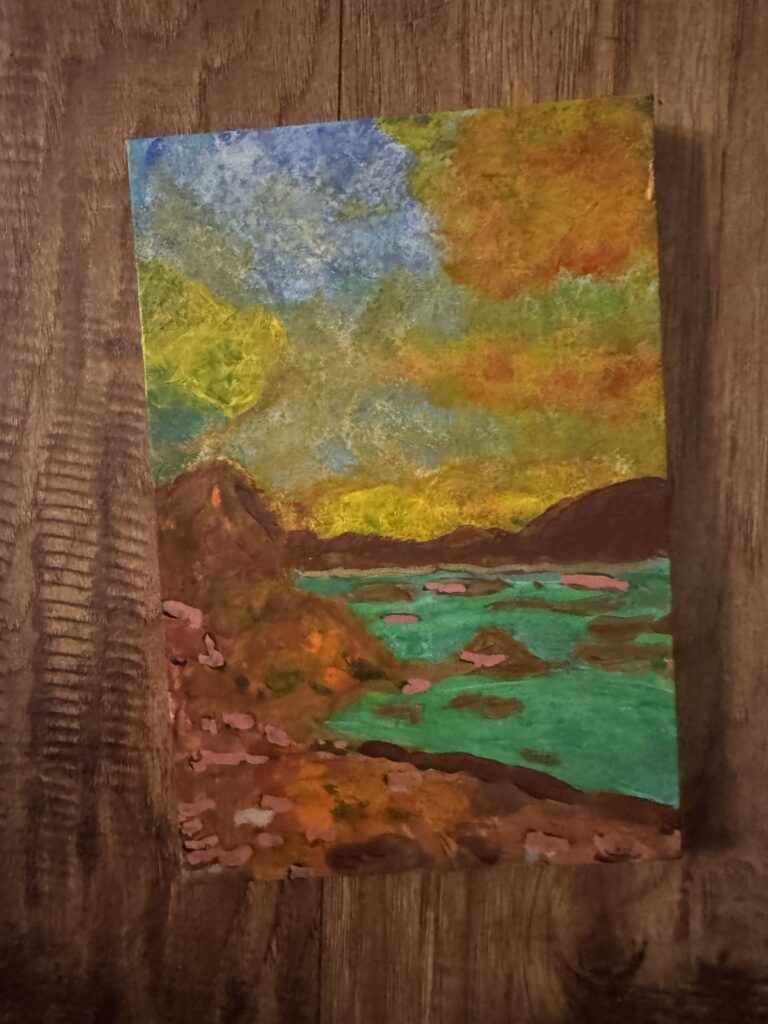
I made this in layers, letting colour arrive slowly and remain where it landed. Blue first, wide and enclosing. Then darker forms that suggested land without insisting on it. Beneath that, a band of violet and indigo where things began to blur, where certainty softened into atmosphere. Nothing here was outlined. Nothing was corrected.

What this image holds for me is the feeling that comes after effort has passed. The time when the body exhales and the landscape, internal and external, returns to itself. The colours move into one another without resistance. Boundaries exist, but they are permeable. This feels true to how I am learning to live right now, allowing edges to be present without hardening them.

As I worked, my attention stayed low and steady. My aim was to respond rather than describe. I was attending to a state. The surface carries the evidence of pauses, of hands lifting and returning, of pigment settling as it chose. The darker shapes hold their place without dominating the lighter ones. They coexist, layered rather than resolved.

This piece belongs to my ongoing practice of slowing down and letting meaning emerge through accumulation rather than declaration. It reflects a trust in process and in rest, in what becomes visible when nothing is being demanded. What settles here is a condition, held open. One that feels inhabitable.

Photo Credit: Amy Tucker, 2026

Vulnerability: A Body Returns to Motion

I stopped running last August. The word stopped implies a decision, a deliberate cessation. That framing feels too clean. What happened was more like a surrender: the moment a body simply refuses to keep pretending it has anything left to give. I chose to stop only in the sense that my body made the choice for me, and I had no capacity left to argue. I attempted to start running in October, then in November, and, well, today.

For years, running had been my anchor. Through the relentless cycles of precarious academic labour (contract after contract, never knowing if the next semester would bring employment), my morning runs held the chaos at bay. I ran through smoke seasons when Kamloops air turned orange with wildfire haze. I ran through pandemic isolation when the world contracted to screens and uncertainty. I ran through the accumulating weight of what Han (2010/2015) calls the burnout society: that particular form of exhaustion that emerges when self-exploitation becomes indistinguishable from self-improvement.

Until I could run no more.

Title: Discarded Shelter: A Small Artifact of Passage

Artist Statement

This photograph captures a worn cap resting on dry soil and creeping groundcover, an object displaced yet held by the landscape. As a personal artifact, the cap signals exposure and release, something once worn for protection, now relinquished to the elements. It functions as a micro archive of movement and passage, marking a moment where containment gives way to vulnerability.

The surrounding textures of dust, stone, and persistent vegetation speak to resilience within aridity. These materials carry their own histories of endurance and adaptation. Placed together, they form a quiet record of how presence fades without disappearing entirely.

Positioned at the threshold between human trace and ecological continuity, the cap holds tension between what is left behind and what endures. As with other artifacts in this inquiry, the object functions as embodied data. It documents departure, rest, and the ethics of letting go through material evidence rather than narrative explanation.

Photo Credit: Amy Tucker, 2026

Running on Empty

The language of “stopping” is too orderly for what actually happened. It suggests a managerial decision, a tidy life choice, a rational pivot. Bodies rarely follow rational life plans, and exhaustion rarely arrives that way. What happened was more like surrender: the moment when a body simply refuses to continue performing a capacity it no longer possesses.

For fifteen years, running was far more than a hobby. It was infrastructure. It was how I metabolized stress, uncertainty, grief, ambition, and institutional precarity. I ran through contract cycles, through wildfire smoke, through pandemic isolation, through the quiet violence of academic self-exploitation. Running functioned as a regulator, a refuge, and an identity. It was both a coping mechanism and a performance of resilience.

That framing feels too clean, almost managerial. What happened was more like a surrender: the moment a body simply refuses to keep pretending it has anything left to give. I chose to stop only in the sense that my body made the choice for me, and I had no capacity left to argue.

Running has been a huge part of my life. It structured my mornings and offered a sense of coherence in a life shaped by academic precarity, seasonal contracts, and the constant uncertainty of whether the next semester would bring work. I ran through wildfire seasons when Kamloops air turned orange and thick with ash. I ran through pandemic isolation when the world contracted to screens and anxiety. I ran through the accumulation of what Han (2010/2015) describes as the burnout society, where self-exploitation becomes indistinguishable from self-care, and productivity masquerades as virtue.

My body withdrew consent, choosing for me what I lacked the capacity to choose for myself. After fifteen years of marathons and morning miles, it reached a threshold where endurance ceased to be virtuous and became extractive. This withdrawal can be read as a rights-bearing refusal, a body-based assertion of dignity when institutional structures failed to uphold it.

Title: Vulnerability: A Body Returns to Motion

Artist Statement

This photograph depicts a single running shoe resting on volcanic sand, functioning as a quiet ethnographic artifact. It holds the quiet rather than staging crisis or spectacle. Instead, it holds the ordinary materiality of stopping.

The shoe operates as an extension of the body, a prosthetic of movement shaped by repetition, impact, and endurance. Set down on the ground, it marks a pause rather than a failure. It bears witness to exhaustion as an embodied state and to the moment when motion, once necessary for survival, is interrupted.

What emerges here is a material trace of rupture in an identity long organized around forward movement. The shoe records effort without explanation. It carries the imprint of kilometres travelled and the weight of what it has absorbed. In resting, it shifts function from propulsion to evidence.

As with other artifacts in this inquiry, the object functions as embodied data. It documents the ethics of stopping, the legitimacy of rest, and the quiet knowledge held by materials once devoted to endurance.

Photo Credit: Amy Tucker, 2026

In qualitative terms, this image functions as data. It documents a threshold moment in which the body asserted its limits against institutional, psychological, and cultural demands. The shoe, half-buried, speaks to sedimentation, the layering of fatigue, trauma, ambition, and discipline that eventually accumulates into refusal. In this sense, stopping is a form of information rather than failure.

There is vulnerability in this artifact, but also a possibility. The shoe holds both cessation and return. It sits on the edge of movement, implying that motion may re-emerge on different terms. Returning to running now feels less like reclaiming a former self and more like negotiating a new relationship with embodiment, one that privileges consent, slowness, and care over endurance and performance.

If loneliness is the pain of being alone, solitude is its glory. Similarly, if exhaustion is the pain of productivity, rest may be its quiet counterpart. The body’s refusal becomes a form of wisdom, a boundary that resists the neoliberal logic of infinite capacity.

Title: Shadow at the Threshold

Artist Statement

This image records my shadow elongated across water and shore, a body doubled by reflection and light. I am present twice here and fully in neither place. The shadow stretches into the lake while my feet remain on land, marking a quiet division between where the body stands and where the self extends.

What this moment holds for me is a sense of suspension. The water is still enough to reflect sky and mountain, yet shallow enough to reveal the ground beneath. The shadow moves across both states at once. It belongs to surface and depth simultaneously. I held still. I resisted pulling back. I stayed exactly where I was and let the image form around that decision.

The length of the shadow speaks to timing rather than identity. It records the angle of the sun, the hour of the day, the season of light. My form is stretched thin by circumstance, shaped by forces beyond my control. This feels honest. It mirrors a period in my life where identity is extended, reworked, and softened by context rather than fixed by definition.

As visual data, the photograph captures an embodied moment of orientation. The shoreline becomes a site where body, environment, and time co-produce meaning. The self appears as trace rather than subject, relational and temporary. The shadow is evidence of presence. It is evidence of standing still long enough to be shaped by what surrounds me.

Photo Credit: Amy Tucker, 2026

The shadow also gestures toward institutional surveillance, in which the academic self is often experienced as an object observed and measured rather than as a sovereign subject. Such surveillance practices implicate academic freedom and the right to dignity at work, where bodies become sites of audit and governance rather than care.

This section demonstrates vulnerability as knowledge-based data, revealing how institutional precarity inscribes itself on the nervous system and how embodied refusal constitutes knowledge.

Scholarly Engagement: The Archive of Exhaustion

Understanding what happens when a body collapses from prolonged occupational stress requires theoretical frameworks that honour what the body knows. The polyvagal theory, developed by Stephen Porges (2011), offers essential language for what I experienced. Porges describes three distinct states of the autonomic nervous system: the ventral vagal state (social engagement, safety, connection), the sympathetic state (fight-or-flight, mobilization), and the dorsal vagal state (shutdown, collapse, conservation).

Title: Learning to Shuffle: Safety as Relational Practice

Artist Statement

This photo centres on a warning sign for manta rays that instructs walkers to shuffle their feet as they enter the sea. The directive is practical, grounded in ecological care and mutual vulnerability. Shuffling helps alert manta rays to human presence, reducing the risk of harm to both. Yet the instruction also operates symbolically, asking the human body to slow down, to signal itself, and to move with awareness rather than entitlement.

What interests me here is how movement becomes ethical practice. The body is asked to alter its habitual patterns in recognition of another being’s habitat and dignity. Shuffling becomes a pedagogy of relational care, a way of learning through the feet that the shoreline is shared space. This is an ecosystem beyond empty leisure where human and more-than-human lives intersect continuously.

The manta ray remains unseen beneath the surface, yet it is central to the instruction. Its invisibility matters. Ethical movement depends on attention to what cannot always be perceived directly. The sign makes visible an obligation to those who are present without being immediately legible, reminding the walker that care often begins before encounter.

As visual data, this artifact extends my inquiry into alonetude and embodied ethics. Movement here is framed neither as conquest nor extraction, but as negotiated presence. The directive to shuffle offers a quiet counterpoint to productivity culture. Slow down. Sense the ground. Acknowledge others. Move in ways that minimize harm. In this sense, the sign functions as both ecological instruction and philosophical metaphor for ethical being-in-place.

Photo Credit: Amy Tucker, 2026

The sign offers a counter-ways of knowing to academic capitalism: a movement guided by relational accountability rather than speed, competition, and extraction.

For years, my nervous system oscillated between the body’s alert state and desperate attempts to reach genuine safety safety. The constant a state of constant alertness, always scanning for danger of precarious employment (Will there be a contract next term? Am I performing well enough to be renewed? What happens if I speak too honestly about institutional failures?) kept my body in a state of chronic threat, what Porges (2011) calls neuroception: the nervous system’s unconscious scanning for danger. My nervous system read danger everywhere, even when my conscious mind insisted everything was fine.

By August, my body had shifted into dorsal vagal shutdown. This is the state of last resort: what happens when fight-or-flight fails, when mobilization depletes beyond recovery. The system conserves by collapsing. Energy withdraws. Movement becomes effortful. The world flattens into grey.

Running became impossible because running requires mobilization energy. When the tank is truly empty, even self-care becomes another demand the body simply cannot meet.

Table 1

nervous system States and Physical Activity: A Personal Cartography

nervous system StatePhysical Activity CapacityWorkplace ConditionsBody-based Markers
Ventral Vagal (Safety/Connection)Full capacity; movement feels enjoyable and restorativeSecure employment; collegial support; clear expectationsRelaxed jaw; deep breathing; warm hands; open posture
Sympathetic (Mobilisation/Fight-Flight)Running becomes escape; high intensity masking anxietyContract uncertainty; performance surveillance; workload intensificationClenched jaw; shallow breathing; cold extremities; muscle tension
Dorsal Vagal (Shutdown/Collapse)Movement ceases; body refuses mobilisation; exhaustion pervasiveTermination or nonrenewal; institutional betrayal; cumulative harmFlattened affect; leaden fatigue; dissociation; slowed digestion
Emerging Ventral (Day 21, Loreto)Tentative return; fifteen minutes of gentle running; body-led pacingAlonetude retreat; absence of institutional demands; environmental safety cuesSoftened posture; deeper breath; emotional release; felt safety

Note. This table integrates Porges’s (2011) polyvagal theory with personal experience during the transition from occupational burnout to healing retreat. The nervous system states are mapped to physical activity capacity, workplace conditions, and body-based markers, as documented over the research period. Adapted for SPN methodology where lived experience constitutes primary data.

Perspective: This Morning’s Run

I walked to the waterfront before dawn. The air held that particular softness that exists only in the hours before the desert sun asserts its dominance. My body felt tentative, as if asking permission to inhabit space differently than it has for months.

Image Before the Sun

Artist Statement

The pre-dawn hour offers what Porges (2011) describes as environmental safety cues: low stimulation, softened light, and the absence of social demand. This temporal threshold between night and day mirrors a physiological transition, as the body begins to move from dorsal vagal shutdown toward genuine safety engagement.

In this moment, the environment participates actively in regulation. Still water reflects rather than interrupts. Sound is muted. Movement is minimal. Nothing asks for response. The scene supports a gradual return to relational capacity without forcing alertness or productivity. Safety is communicated through quiet continuity rather than reassurance.

What draws my attention here is how regulation emerges through context rather than effort. The body requires no instruction to calm itself. It responds to cues offered by light, temperature, and space. The landscape becomes co-regulator, holding the nervous system in a state of readiness without demand.

As visual data, this image documents a condition of becoming. The water gestures toward possibility rather than outcome. Regulation is present as potential rather than performance. This pre-dawn interval holds the ethics of alonetude, a chosen presence that allows the body to re-enter connection on its own terms.

Photo Credit: Amy Tucker, 2026

The Pace of Care

I began slowly. Pace itself became a form of care. My feet found rhythm on the packed sand near the water’s edge, where the surface offered just enough cushion to absorb impact.

For the first few minutes, my body resisted. Muscles complained. The lungs protested the unfamiliar demand for deeper oxygen exchange. This is what Levine (1997) describes in Waking the Tiger: the body’s natural protective response to resuming activities associated with periods of distress. My nervous system remembered that running used to accompany exhaustion, anxiety, and the desperate attempt to outpace institutional harm.

I kept moving anyway. I let the complaints arise without trying to silence them. I noticed the tightness in my shoulders, the guarding in my jaw, the way my breath wanted to stay shallow.

Title: Sands of Time

Artist Statement

Faint footprints along the shoreline mark movement, presence, and impermanence. They are body-based traces of a body in motion, briefly impressed into wet sand and already in the process of being taken back by the tide. The marks exist within a narrow window of visibility, held only until water returns.

What this image holds for me is the relationship between embodiment and erasure. Presence here is real, yet provisional. The body leaves evidence, but it releases any insistence on permanence. The shoreline registers contact and then releases it, responding through its own rhythm rather than human intention.

The tide functions as collaborator rather than force. It participates in making and unmaking the trace, reminding me that movement always occurs within relational systems. No step exists in isolation. Each imprint is shaped by timing, pressure, moisture, and return.

As visual data, the photograph documents how presence is enacted and dissolved through the shared rhythms of body and sea. The footprints carry no intention of enduring. They mark a moment of passage, offering a quiet lesson in how to move through the world while allowing what follows to take its course.

Photo Credit: Amy Tucker, 2026

The Shift

And then something shifted.

Porges (2011) describes this shift as the nervous system receiving cues of safety from the environment. The rhythm of waves. The cool air on my skin. The absence of screens, notifications, and institutional surveillance. The steadiness of my own footfalls established a new relationship with this body, this moment, this place.

My shoulders dropped. My jaw softened. My breath deepened of its own accord, without instruction or force. A state of genuine safety and connection emerged. For the first time in months, I felt my body organizing itself around presence rather than threat.

Here I am.

That moment asked for a theory: to understand how, rather than to explain it away, something so structural could feel so intimate.

Theory: Bodies as Archives of Structural Harm

The exhaustion that brought my running practice to a halt was never merely personal. Academic capitalism, the systematic transformation of higher education into a market-driven enterprise prioritising revenue generation, productivity metrics, and competitive positioning (Slaughter & Rhoades, 2004), creates bodies like mine with systematic precision. The precarious labour conditions that define contemporary university employment produce specific physiological consequences: chronic stress activation, disrupted sleep architecture, inflammatory cascades, and metabolic the nervous system thrown off balance.

Al Serhan and Houjeir (2020) found significant correlations between the intensification of academic capitalism and faculty burnout, documenting how market-driven educational environments create unsustainable demands that erode well-being and professional capacity. Their research validates what my body already knew: this exhaustion is structural, produced by systems designed to extract maximum labour from minimally compensated workers.

Precarious academic labour extends beyond a labour-market condition; it is also a human rights concern. These rights are articulated in Article 7 of the International Covenant on Economic, Social and Cultural Rights (United Nations, 1966), which affirms the right to just and favourable conditions of work, including rest and reasonable limitation of working hours.

The right to decent work, security of employment, and safe working conditions is recognized in international human rights frameworks, including the International Covenant on Economic, Social and Cultural Rights. My body’s collapse thus reflects more than personal vulnerability; it indexes institutional arrangements that systematically violate the right to dignified, secure, and health-sustaining work.

My body’s collapse is thus beyond the simply anecdotal; it is indicative of systemic rights erosion in contemporary higher education.

Title: Strata of the Third Shore: Sea as Memory, Land as Archive

Artist Statement

This painted stone renders the sea as layered strata, with bands of blue, rust, green, and sand-toned pigment evoking shoreline, sediment, and water in dialogue. The rock functions as both canvas and collaborator, carrying its own geological history while receiving contemporary marks of experience. In this sense, the piece becomes a micro archive where land and memory meet.

The horizontal bands suggest temporal and emotional layers. Surface calm gives way to deeper currents, sedimented grief, and emergent healing. The luminous blue at the base gestures toward movement and continuity, while warmer earth tones recall land-based memory and embodied history. The stone resists smoothness, insisting on texture and unevenness. This resistance mirrors the non linear nature of recovery and becoming.

As an arts-based research artifact, this work operates as multimodal data within Scholarly Personal Narrative and humanities inquiry. Painting the sea onto land material enacts a relational methodology in which body, pigment, stone, and place co-produce knowledge. The object becomes a tactile record of alonetude, presence, and the ethics of witnessing landscape as teacher.

Photo Credit: Amy Tucker, 2026

The Labour That Depletes

Hochschild (1983) named this phenomenon emotional labour, the management of feeling to create a publicly observable facial and bodily display. For contingent academics, emotional labour extends beyond classroom performance to include the constant performance of enthusiasm, the manufactured gratitude for unstable employment, and the suppression of legitimate grievances. This labour is invisible, uncompensated, and ultimately depleting.

My body stopped running because it had nothing left. The collapse was honest. The collapse was necessary.

Title: Bleached Architecture: Coral as Witness and Afterlife

Artist Statement

A bleached coral fragment rests on volcanic sand, marking presence, loss, and ecological time. Its porous structure carries traces of former life, openings where relation once flowed. The surface records exposure. What remains is delicate, weight-bearing, and altered by conditions beyond its control.

This fragment brings my attention to fragility as a shared condition. Coral lives through interdependence, relying on temperature, chemistry, and rhythm held in balance. When that balance shifts, the body changes. What appears inert is, in fact, a record of relation strained beyond capacity.

Encountering this piece, I felt my own exhaustion placed within a wider field of precarity. The fragment situates bodily depletion alongside ecological harm, linking labour extraction and environmental degradation as intersecting justice concerns. Both operate through systems that normalize overuse, accelerate demand, and treat depletion as acceptable cost.

Here, coral functions as ecological witness and material archive. It indexes how patterns of strain reverberate across bodies, institutions, and environments, leaving evidence that is quiet yet enduring. The fragment holds no accusation. It remains. In doing so, it asks for attention, care, and a recalibration of how value, labour, and life are held.

Photo Credit: Amy Tucker, 2026

Table 2

Theoretical Integration: Physical Activity Cessation and Return

Theoretical FrameworkKey ConceptApplication to Day 21 Experience
Alonetude (Author Framework)Chosen solitude as relational and ethical practiceRemoval of performance gaze enables embodied truth-telling and healing
Polyvagal Theory (Porges, 2011)Neuroception: the body’s unconscious detection of safety or threat through environmental cuesNervous system receives safety cues from the Loreto environment; shift from dorsal vagal shutdown toward ventral engagement
Body-based Trauma Theory (van der Kolk, 2014)The body keeps the score: trauma is stored in the body and must be addressed through body-based approachesMovement becomes both evidence of stored harm (initial resistance) and a pathway to healing (emerging ease)
Burnout Society (Han, 2010/2015)Self-exploitation through achievement discourse; exhaustion as structural outcome of neoliberal subjectivityPrevious running was self-exploitation; current running is reclamation, movement without achievement metrics
Emotional Labour (Hochschild, 1983)Management of feeling to create publicly observable display; invisible labour that depletesAlonetude eliminates audience for performance; body can express authentic states without management
Academic Capitalism (Slaughter & Rhoades, 2004)Exhaustion is structural, produced by systems; individual recovery must be understood within systemic critiqueBody’s collapse indexes institutional arrangements; healing requires structural critique, alongside personal recovery
Trauma-Informed Movement (Levine, 1997)Healing requires completing interrupted defensive responses; movement releases trapped survival energyBody-led pacing allows completion of protective responses; running becomes discharge rather than demand

Note. This table synthesises trauma theory, organizational psychology, and embodiment scholarship to contextualize the cessation and resumption of physical activity following occupational burnout. Sources verified through institutional databases. Framework aligned with Nash’s (2004) SPN requirement that personal narrative engage substantively with scholarly literature.

Action: Movement as Reclamation

I ran for perhaps fifteen minutes this morning. By any previous standard of mine (when I could cover ten kilometres before breakfast, when running was discipline and distance and doing), fifteen minutes would have felt inadequate. A failure.

This morning, those fifteen minutes felt like a revolution.

Title: Daybreak at the Cliff


Artist Statement

Pelicans rest on volcanic rock as dawn light opens the horizon, holding stillness, tide, and geological time in quiet relation. The birds are present without urgency, bodies folded into rest as the ocean continues its steady rhythm. The rock beneath them carries a deeper temporality, shaped by forces that long predate both tide and wing.

What this scene brings into focus is co-presence across scales. Avian life, ocean movement, and volcanic strata occupy the same frame without hierarchy. Dawn holds each rhythm without favouring one over another. It simply reveals them together. The pelicans remain part of the landscape rather than interrupting it. They belong to it, momentarily aligned with processes that exceed any single lifespan.

The image situates time as layered rather than linear. The immediate softness of morning light sits alongside the slow pulse of the sea and the vast duration held in stone. This convergence invites attention to continuity rather than event, to relationship rather than action.

As visual data, the photograph documents a moment where species, elements, and temporalities meet without demand. It foregrounds an ethics of shared presence, reminding me that rest, movement, and endurance can coexist within the same horizon, each holding space for the others.

Photo Credit: Amy Tucker, 2026

With the Body, In Relationship

The difference lies in how I returned. Previously, my running was extraction, demanding performance from a body that had already given everything. The running that happened this morning was related. I moved with my body rather than at it.

Sunderland et al. (2022) describe how trauma-informed movement practices differ fundamentally from conventional exercise frameworks. Rather than imposing external goals on the body, trauma-informed movement invites the body to lead, to set pace, to determine duration, to signal completion. The practitioner’s role shifts from taskmaster to listener.

This morning, I listened. When my body asked to slow down, I slowed down. When it wanted to stop and watch pelicans dive for fish, I stopped. When it asked to walk the final stretch, I walked. Each choice was a conversation rather than a command.

Title: The Pause That Teaches

Artist Statement

The pelicans offered an unplanned lesson in embodied presence. Their hunting unfolds through complete attentiveness to the moment. Hovering. Assessing. Committing fully to the dive. There is no excess movement, no rehearsal. Each action arises from readiness rather than force.

Watching them, I felt my own body slow. The run paused without ending. Breath settled. Attention sharpened. The act of observing became a parallel practice, one that allowed stillness to exist inside motion rather than in opposition to it. The pelicans approached the water without rushing. They waited until the moment was right, and then they moved without hesitation.

This experience reframed how I understand interruption. Within trauma-informed movement, pauses are often misread as failure or loss of discipline. Here, the pause functioned as information. It carried data about safety, timing, and deep listening. The body knew when to stop watching and when to move again.

As visual and body-based data, this moment documents a shift in relationship to movement. Attention becomes a form of care. Stillness becomes part of momentum. The pelicans model a way of being that honours precision over speed and presence over persistence, offering permission to pause without abandoning forward motion.

Photo Credit: Amy Tucker, 2026

Without Witnesses

Alonetude made this possible. In solitude, there is no audience for performance. No fitness tracker is demanding improvement. No institutional gaze measuring productivity. There is only the body, the breath, the sea, the slowly brightening sky.

Without witnesses, the body can tell the truth.

Title: Step into the Tide

Artist Statement

A bare foot meets the shoreline, marking contact, return, and the body’s quiet consent to re-enter the sea. The gesture is small, almost unremarkable, yet it carries weight. Skin touches water without armour or urgency. The body chooses proximity rather than distance.

What this moment holds for me is the ethics of consent in movement. The foot pauses before fully entering, allowing sensation to arrive first. Temperature, texture, resistance. The sea is met slowly, on equal terms. This is a return that requires no immersion. It honours readiness.

The shoreline becomes a threshold where the body negotiates trust. Years of holding tension and bracing against impact have taught my body to hesitate. Here, hesitation is attentiveness. It is listening. The foot lowers when the nervous system agrees. Contact becomes collaboration rather than conquest.

As visual data, this image documents an embodied decision point. Re-entry is framed as relational, shaped by timing, sensation, and choice. The body resists rushing to belong. It waits until belonging feels possible.

Photo Credit: Amy Tucker, 2026

Reflection: What the Body Knows

van der Kolk (2014) writes that the body keeps the score, that our tissues, organs, and nervous systems hold the memory of what we have survived. If this is true, then my body has been keeping meticulous records of nineteen years of precarious labour. The chronic tension. The interrupted sleep. The constant calibration of self-presentation to meet institutional expectations. The grief of contracts that ended, relationships that frayed under unsustainable demands, and dreams deferred and deferred again.

Yet if the body keeps the score of harm, perhaps it can also keep the score of healing. Perhaps these fifteen minutes by the sea, this small, trembling, imperfect return to movement, registers in my tissues as evidence that safety is possible. That rest can be trusted. That the body, given sufficient care and time and solitude, remembers how to feel alive.

Little by Little

This is what alonetude offers: the space to let the body lead. To stop performing wellness and actually experience it. To run slowly along a shoreline at dawn, asking nothing of the moment except presence, and to feel something inside slowly, tentatively, begin to heal.

Little by little, the body finds its way back.

Image: Shadow Self

Artist Statement

This image captures my self-shadow at the water’s edge, marking a liminal encounter between body and sea, presence and erasure. Rendered only as a silhouette, the figure allows for self-observation without the self-consciousness of direct gaze. The body appears indirectly, shaped by light rather than asserted through form.

The advancing foam operates as both boundary and invitation. It traces a shifting line where land, body, and ocean negotiate contact. In this moment, the tide functions as a temporal and relational force, advancing and retreating without urgency. I stand at the threshold, neither immersed nor withdrawn, embodying what I understand as alonetude, a chosen presence within a larger ecological field.

The shadow stretches and softens across wet sand, signalling a body in transition. It reflects a state that has moved beyond contraction and exhaustion, yet is still reassembling itself into certainty. The image holds that in-between condition with care.

As visual data, this photograph documents an what the body knows-based moment. The shoreline becomes a research site where identity, nervous system state, and environment co-produce experience. The self emerges here as relational rather than fixed, a silhouette shaped by water, light, and ground rather than by narrative or performance.

Photo Credit: Amy Tucker, 2026

Visual Element

Title: Watercolour Study: The Return to Movement

Artist Statement

I made this in layers, letting colour arrive slowly and remain where it landed. Blue first, wide and enclosing. Then darker forms that suggested land without insisting on it. Beneath that, a band of violet and indigo where things began to blur, where certainty softened into atmosphere. Nothing here was outlined. Nothing was corrected.

What this image holds for me is the feeling that comes after effort has passed. The time when the body exhales and the landscape, internal and external, returns to itself. The colours move into one another without resistance. Boundaries exist, but they are permeable. This feels true to how I am learning to live right now, allowing edges to be present without hardening them.

As I worked, my attention stayed low and steady. My aim was to respond rather than describe. I was attending to a state. The surface carries the evidence of pauses, of hands lifting and returning, of pigment settling as it chose. The darker shapes hold their place without dominating the lighter ones. They coexist, layered rather than resolved.

This piece belongs to my ongoing practice of slowing down and letting meaning emerge through accumulation rather than declaration. It reflects a trust in process and in rest, in what becomes visible when nothing is being demanded. What settles here is a condition, held open. One that feels inhabitable.

Photo Credit: Amy Tucker, 2026

Closing the Day

Tonight, as the sun sets over the Sierra de la Giganta, I feel the pleasant ache of muscles reawakening. It is a different ache than the chronic tension I carried for months. This one speaks of use rather than depletion, of a body asked to participate in its own life rather than merely endure.

Tomorrow I may run again or walk. Or I may simply sit by the water and breathe. The point is no longer the activity itself but the relationship, the ongoing conversation between intention and capacity, between what the mind desires and what the body can sustain.

The body knows. And finally, I am learning to listen.

Title: Day’s End

Artist Statement

Carmen emerges as a dark silhouette across the Sea of Cortez, anchoring the horizon and holding the quiet of distance, water, and sky. The landmass withholds assertion through detail or texture. It remains intact through outline alone, a steady presence shaped by light rather than proximity.

What this image offers me is a sense of orientation without demand. Carmen holds the horizon gently, giving the eye a place to rest while allowing the surrounding space to remain open. Water and sky expand around it, and time seems to slow in response. The distance matters. It preserves separation while sustaining relationship.

As visual data, the silhouette functions as a stabilising reference point within a wide field of stillness. It reflects how grounding can occur without closeness, how connection can be maintained through recognition rather than arrival. Carmen remains where it is, and that is enough to hold the scene together.

Photo Credit: Amy Tucker, 2026

Methodological Reflection: SPN as Healing Practice

I understand Scholarly Personal Narrative as both a method and a practice. Nash and Bradley (2011) describe SPN as a way of transforming lived experience into scholarly knowledge through theory-informed reflection and an honest engagement with vulnerability. In writing this entry, This entry reaches beyond reporting on experience; it inhabits the methodology. My morning run becomes data. The subtle shift in my nervous system becomes evident. My body’s responses become a legitimate site of knowledge production.

The VPAS framework helps me organize this inquiry. Vulnerability appears in my account of collapse, in the moment my body withdrew consent to continue running. Perspective emerges as I trace the movement from depletion toward tentative return, noticing how hope arrives quietly, almost imperceptibly. Action is present in the fifteen minutes of running, but also in the choices to slow down, to stop, to breathe, and to listen. Scholarly engagement threads through this narrative as I situate my embodied experience within Porges’s (2011) polyvagal theory, trauma scholarship, and critiques of academic capitalism.

I extend Scholarly Personal Narrative through multimodal, artifact-based inquiry. The shoes, stones, shadows, and watercolours serve as more than decoration. They are co-researchers. They hold memory, affect, and institutional inscription. By treating these objects as data, I am expanding what counts as evidence in organizational, educational, and human rights research. Framing embodied exhaustion as a human rights issue allows me to move beyond personal narrative and into structural critique, linking my body to policy, labour conditions, and institutional design.

I no longer understand chronic dorsal vagal shutdown as a personal pathology. I understand it as an institutional outcome. My nervous system collapsed beyond isolationtion. It was shaped by contingent contracts, constant performance evaluation, and the quiet pressure to be endlessly available. In this sense, my body becomes diagnostic. It registers what policy documents and strategic plans cannot: the physiological cost of precarious academic labour.

Alonetude has become a methodological condition for this work. In solitude, I hear my body more clearly. Without students, emails, metrics, or surveillance, my body speaks in sensation, breath, and fatigue. Here, data emerges in the body rather than performatively. I am practising scholarship from the inside out, allowing embodiment to guide analysis rather than treating it as an object to be analyzed.

Learning to listen to my body feels both intimate and political. It is a healing practice and also a refusal. It interrupts the logic of extraction that shaped my academic life. It challenges the primacy of productivity as a measure of worth. It insists that limits are forms of knowledge, but forms of knowledge and ethical boundaries.

I believe that if higher education institutions are serious about equity, inclusion, and well-being, they must confront the embodied consequences of precarious labour. Secure employment, reasonable workloads, and psychological safety are human rights obligations rather than luxuriesgations. Without structural change, universities will continue to produce bodies calibrated for collapse and then misrecognize that collapse as individual weakness rather than as a failure of institutional design.

Writing this section is therefore both research and resistance. It is an act of counter-archiving, inserting the body back into institutional memory and insisting that embodied experience counts as knowledge.

References

Al Serhan, O., & Houjeir, R. (2020). Academic capitalism and faculty burnout: Evidence from the United Arab Emirates. Cypriot Journal of Educational Sciences, 15(5), 1368–1393. https://doi.org/10.18844/cjes.v15i5.5350

Han, B.-C. (2015). The burnout society (E. Butler, Trans.). Stanford University Press.

Hochschild, A. R. (1983). The managed heart: Commercialization of human feeling. University of California Press.

International Labour Organization. (1999). Decent work. International Labour Office. https://www.ilo.org/global/topics/decent-work/lang–en/index.htm

Levine, P. A. (1997). Waking the tiger: Healing trauma. North Atlantic Books.

Nash, R. J. (2004). Liberating scholarly writing: The power of personal narrative. Teachers College Press.

Nash, R. J., & Bradley, D. L. (2011). Me-search and re-search: A guide for writing scholarly personal narrative manuscripts. Information Age Publishing.

Porges, S. W. (2011). The Polyvagal Theory: Neurophysiological foundations of emotions, attachment, communication, and finding our own calm. W. W. Norton & Company.

Slaughter, S., & Rhoades, G. (2004). Academic capitalism and the new economy: Markets, state, and higher education. Johns Hopkins University Press.

Sunderland, N., Graham, P., & Lorenz, D. (2022). Trauma-informed dance/movement therapy: Considerations for practice. In S. L. Brooke & C. E. Myers (Eds.), The use of creative arts therapies in trauma and recovery (pp. 15–32). Charles C Thomas Publisher.

United Nations. (1966). International Covenant on Economic, Social and Cultural Rights. United Nations Treaty Series, 993, 3.

van der Kolk, B. A. (2014). The body keeps the score: Brain, mind, and body in the healing of trauma. Viking.

Translation note. Spanish language passages in this post were generated using Google Translate and subsequently reviewed and refined by the author. Translations are intended to convey general meaning and are intended as guides to meaning rather than certified linguistic interpretations.

ACADEMIC LENS

The concept of bodily abandonment named in this title engages van der Kolk’s (2014) clinical argument that the most pervasive injury of chronic trauma is what the body carries from inside out, rather than what happened from outside but what the person learned to do to the body from inside: to leave it, to override its signals, to treat it as a vehicle for performance rather than a subject of care. Menakem (2017) calls this “self-abandonment,” distinguishing it from the harm inflicted by others: it is the secondary layer of injury, the person’s own learned disconnection from somatic experience, that must be addressed for healing to be sustained. The photographic journal format of Day 22, with its many images and artist statements, enacts what Richardson and St. Pierre (2005) call arts-based inquiry: using visual documentation to explore rather than illustrate pre-formed conclusions, to surface knowledge that verbal reflection alone cannot reach. Levine’s (2010) concept of the “somatic narrative,” the story the body tells through sensation, posture, and movement, is what these artworks attempt to read. The body that remembers its own abandonment also, in remembering, begins to undo it: the act of witnessing, even through art, constitutes what Levine calls a “corrective somatic experience.”

Day 21: The End of Escape: I Am Tired

Reading Time: 10 minutes

Content Warning: This post contains reflections on grief, loss, and emotional exhaustion. Please care for yourself as you read, and feel free to step away if you need to.

I kept my discipline. I shed my need to escape.

When Something Breaks Open

Loreto has changed the way I read, though it would be more accurate to say that it has revealed the function reading has played in my life. For most of my adulthood, reading structured my days and anchored periods of transition. Books offered coherence during times of professional intensity and emotional uncertainty. Reading felt nourishing and alive, and it was. Yet its sudden absence created a rupture that demanded attention.

The absence of reading revealed a movement toward presence.

Since arriving in Loreto, I noticed that I had barely read at all. I continued to listen to podcasts, but the habitual reaching for books had quieted. When I eventually opened Flow, by Mihaly Csikszentmihalyi, I understood that something important was happening. In qualitative terms, this pause became data. It signalled a shift in how I was regulating attention, emotion, and solitude. The absence of reading revealed a movement toward presence rather than any loss of discipline.

The disruption became data.

Title: Flow: The Psychology of Optimal Experience by Mihaly Csikszentmihalyi.

Cover image sourced from Amazon for reference purposes.

Note. This image is a commercially available book cover sourced from Amazon and is included for contextual reference only. It is ancillary visual data, neither generated by the author nor analyzed as part of the visual inquiry. The image is used to situate the reflective narrative in relation to Csikszentmihalyi’s work on attention, engagement, and presence.

Why Flow: Attention, Choice, and the Ethics of Engagement

I am no longer interested in productivity for its own sake.

I chose to read Flow: The Psychology of Optimal Experience at this moment because After years of equating movement with meaning and busyness with worth, I wanted to return to a text that speaks directly to the quality of attention rather than the quantity of output. Csikszentmihalyi’s work has long been associated with peak performance and optimal functioning, but what drew me back to it now was a quieter question: what does it mean to be fully engaged without being consumed?

My relationship to flow has shifted over time. Earlier in my career, I understood flow primarily through achievement, moments of intense focus that accompanied teaching, writing, training, or creative production. These states felt generative and affirming, particularly within institutional cultures that reward visible engagement and constant contribution. Yet, in hindsight, I can see how easily flow was absorbed into the broader machinery of busyness. What began as deep engagement sometimes became another way to justify overextension, another reason to remain in motion.

Reading Flow in the context of alonetude invites a different interpretation. Csikszentmihalyi emphasizes that flow emerges when attention is voluntarily invested, when action is chosen rather than compelled, and when the self holds together rather than fragmenting under competing demands. This distinction matters. In Loreto, where external pressures have softened, I am learning to distinguish between immersive engagement and compulsive activity. Flow, in this sense, is no longer about intensity or output, but about alignment.

Flow, for me, is no longer about intensity or output, but alignment.

What I hope to learn from this book now is how to discern, rather than how to do more, and when engagement becomes avoidance. Csikszentmihalyi writes about cultivating inner order, the capacity to shape consciousness intentionally rather than reactively. This resonates deeply with my current inquiry. Alonetude has stripped away many of the external structures that once organized my time, leaving me face to face with my own patterns of attention. Flow offers a language for examining whether my engagement with work, creativity, and even rest arises from choice or from habit.

I am also drawn to the ethical implications of flow. In academic and professional cultures that normalize exhaustion, the language of optimal experience can easily be co-opted to sustain overwork. Reading Flow now, I am holding the text in tension with critiques of productivity and speed. I am less interested in flow as a performance enhancer and more interested in flow as a form of presence requiring no self-erasure.

Ultimately, I chose this book because it asks a question that aligns with the heart of alonetude: how do we live in ways that are attentive, meaningful, and self-directed, without needing to escape ourselves in the process? What I hope to learn is how to engage more sustainably rather than simply returning to my former pace, and how to engage deeply while staying grounded enough to stop.

Reading as a Way of Avoiding Feeling

Title: Travelling Library

Note. These books are no longer a task list. They sit here as companions rather than demands, reminding me that learning can be slow, embodied, and unfinished. Alonetude is teaching me that I need no compulsion to consume knowledge to remain in conversation with it.

These books arrived together through design. Each one has marked a different moment in my learning: how to think, how to feel, how to move, how to rest, how to heal, how to listen to the body, how to trust experience, how to let meaning emerge rather than be forced. For years, reading was another form of striving, a way to stay productive even in moments meant for rest. Now, this small library feels less like a syllabus and more like a permission structure. I read some of these texts slowly. Some I return to. Some I simply keep close, beyond answers, for companionship. Alonetude is teaching me that learning rarely moves forward in a straight line. Sometimes it gathers, waits, and rearranges itself quietly until the body is ready to receive what the mind once rushed past.

Reading is rarely problematized in academic or popular discourse. It is framed as restorative, virtuous, and in my thinking productive. However, psychological research on coping and emotion regulation suggests that even adaptive behaviours can function as avoidance when used to manage prolonged stress or emotional overload (Gross, 2015; Lazarus & Folkman, 1984). In my own life, reading had quietly joined a constellation of practices that allowed me to remain productive while avoiding stillness.

Over the past fifteen years, reading existed alongside other socially sanctioned escapes: work, achievement, training, travel, and service. I inhabited roles that were meaningful yet relentless: educator, writer, committee member, volunteer, athlete, artist, and caregiver. Beneath these visible performances were quieter coping strategies, including depression, stress-related illness, overconsumption, emotional numbing, and cycles of avoidance. Together, these practices formed a system oriented toward functioning rather than presence.

Title: Between Shelter and the Sky

Photo Credit: Amy Tucker, 2026

Note. This morning light is filtered, softened by the curtain that both protects and reveals. I hover between inside and outside, fully committed to neither. For much of my life, I lived at the extremes, either exposed through constant engagement or hidden behind busyness and distraction. Alonetude is teaching me to rest in this in-between space, where I can see the world without rushing toward it, and feel held without withdrawing. Presence, I am learning, asks something between full openness and full retreat. It asks only that I remain.

This image poses the question that Flow ultimately asks of me: where does my attention rest when nothing demands it? Csikszentmihalyi writes about optimal experience as a state of voluntary focus, yet alonetude has taught me that focus also requires restraint. The curtain reminds me that clarity rarely comes from constant exposure or relentless engagement. For years, busyness trained my attention outward, keeping me in motion, responsive, and productive. Here, attention settles instead. I am neither striving for immersion nor fleeing into distraction. I am simply present, allowing meaning to arise without forcing it. This, I am learning, is a different kind of flow: one rooted in choice rather than urgency, and in staying rather than escape.

Performance, Identity, and Misnaming Eccentricity

Title: Multiplicity Beyond Fracture

Photo Credit: Amy Tucker, 2026

Note. I have often described myself as eccentric, as though my many interests required explanation. This rock reminds me that complexity carries no implication of instability. It is composed of many elements held together over time, shaped by pressure rather than performance. What I once misnamed as excess was, in fact, accumulation. Each layer remains visible, yet none are required to justify their presence. Alonetude is teaching me that identity, like this stone, requires no constant shaping or display. It only needs time, contact, and the permission to remain whole.

For many years, I explained this pattern in terms of personality. I described myself as eccentric, curious, and driven to become many things at once. Yet scholarship on the performance of self and emotional labour suggests that sustained role performance can obscure the gradual erosion of the self beneath it (Butler, 1990; Hochschild, 2012). What Loreto revealed was that mediation, rather than multiplicity itself, was the issue.

I was aspiring to be something beyond the categories of scholar, philosopher, traveller, an artist, or a spiritual seeker. I already had those things. What I had avoided was inhabiting them without output, recognition, or distraction. Each role had become a buffer between me and my own interior life.

What Alonetude Actually Asks of Me

Title: Setting Down What Once Carried Me

Photo Credit: Amy Tucker, 2026

Note. This image marks a pause rather than an ending. The boot, worn and emptied of the body that once depended on it, rests without urgency or direction. For years, movement, endurance, and productivity served as measures of worth. Alonetude invites a different ethic: the willingness to stop without apology and to remain without distraction. What is set down here is compulsion rather than capacity. What remains is presence, grounded and unperformed.

Alonetude, as I am coming to understand it, is neither isolation nor withdrawal. It is the ethical practice of staying. Philosophical and psychological literature draws a careful distinction between loneliness as imposed absence and solitude as chosen presence (Tillich, 1952; Storr, 1988). Alonetude resides within this distinction, yet it demands more than preference or temperament. It requires discipline, restraint, and an embodied willingness to remain without substitution.

In Loreto, alonetude has meant stepping out of familiar patterns of movement and productivity. It has meant sitting without a book in my hands and resisting the impulse to translate quiet into knowledge consumption. It has meant allowing boredom, restlessness, and sensory awareness to surface without resolution. This practice aligns with contemplative and trauma-informed scholarship that understands learning as embodied and regulatory, rather than exclusively cognitive (Kabat-Zinn, 1994; Porges, 2011). Insight, I am learning, arrives beyond analysis alone. Sometimes it arrives through waiting long enough for the body to register what the mind has learned to bypass.

Alonetude asks me to sit without filling the silence.

The discarded boot makes this visible. Once designed for movement, protection, and endurance, it now rests unused, emptied of the body that animated it. For years, I treated motion as virtue and endurance as evidence of worth. Stillness felt like failure. Alonetude asks something different. It invites me to set down the habits that carried me forward but also carried me away from myself. This is discernment, never abandonment. The body pauses, the role loosens, and what remains is presence, grounded and unperformed.

What I Understand Now

Title: Stillness, with a Pen in Hand

Photo Credit: Amy Tucker, 2026

Note. I came here with a notebook, assuming I would write my way into understanding. Instead, I found myself sitting quietly, the pen resting more often than moving. For years, travel and writing were part of my busyness, a way of staying productive even in beautiful places. This moment feels different. The notebook is no longer an instrument of urgency or output. It is simply a companion, waiting while I learn to be present without needing to capture, explain, or perform the experience.

The central lesson of this experience is less that reading is harmful than that its function matters. Alonetude has taught me to ask a different question of my practices: does this activity draw me toward myself, or does it allow me to disappear? This reframing reflects broader calls within inquiry into lived experience to treat the researcher’s emotional and embodied presence as integral to knowledge production rather than as noise to be managed (Ellis et al., 2011; Nash, 2004).

By staying rather than escaping, I am learning to read myself with the same attentiveness I once reserved for texts. This deepens scholarship rather than diminishing it. Alonetude becomes both method and meaning, a way of inhabiting inquiry rather than performing it. The most demanding text I have avoided for years has been my own interior life. The lesson is relationship rather than abandonment. I am learning to meet books, roles, and ambition from a place of presence rather than flight.

What would it take to stay?

Title: Grounded Enough to Stay

Photo Credit: Amy Tucker, 2026

Note. There was a time when even standing still felt unproductive. I would have filled this moment with movement, planning, or interpretation. Here, I am learning something different. My feet in the water remind me that presence begins in the body before the mind. Alonetude is teaching me that staying requires no justification, and that learning can occur without busyness, without capture, and without escape. This is grounding, beyond any arrival.

The most challenging text I avoided for years was my own interior life.

References

Butler, J. (1990). Gender trouble: Feminism and the subversion of identity. Routledge.

Csikszentmihalyi, M. (1990). Flow: The psychology of optimal experience. Harper & Row.

Ellis, C., Adams, T. E., & Bochner, A. P. (2011). Personal inquiry: An overview. Forum Qualitative Sozialforschung / Forum: Qualitative Social Research, 12(1), Article 10. https://doi.org/10.17169/fqs-12.1.1589

Gross, J. J. (2015). Emotion regulation: Current status and future prospects. Psychological Inquiry, 26(1), 1–26. https://doi.org/10.1080/1047840X.2014.940781

Hochschild, A. R. (2012). The managed heart: Commercialization of human feeling (30th anniversary ed.). University of California Press.

Kabat-Zinn, J. (1994). Wherever you go, there you are: Mindfulness meditation in everyday life. Hyperion.

Lazarus, R. S., & Folkman, S. (1984). Stress, appraisal, and coping. Springer.

Nash, R. J. (2004). Liberating scholarly writing: The power of personal narrative. Teachers College Press.

Porges, S. W. (2011). The Polyvagal Theory: Neurophysiological foundations of emotions, attachment, communication, and finding our own calm. W. W. Norton & Company.

Storr, A. (1988). Solitude: A return to the self. Free Press.

Tillich, P. (1952). The courage to be. Yale University Press.

ACADEMIC LENS

“Something breaks open” names the phenomenon that Levine (2010) describes as the somatic completion of a long-held defensive response: the moment when the body, having been given sufficient safety and time, releases what survival had held in check. Van der Kolk (2014) observes that this surfacing of grief and exhaustion is a sign of healing rather than regression: it requires more safety to feel what has been carried than it does to continue carrying it. The exhaustion described here is thus paradoxically evidence of progress. Nixon’s (2011) concept of slow violence helps explain why the grief arrives in force only now: nineteen years of accumulated harm cannot be processed on the timeline that produced it; recovery requires the counter-temporality of unhurried, unclaimed time. Menakem (2017) describes this phase of somatic work as “metabolizing”: the body processing what it has held, converting frozen energy into movement, sensation, and feeling. The discipline maintained through this period, the continued practice of presence and inquiry, is what Moustakas (1961) calls the commitment of heuristic research: staying with the phenomenon even when it becomes uncomfortable.

Day 20: The Weight of Always Almost

Reading Time: 14 minutes

Content Warning: This post contains reflections on trauma, childhood experiences, and the body’s memory of harm. Please care for yourself as you read, and feel free to step away if you need to.

“Precarity lives in my body still.”

A Reflection on Precarity, Burnout, Mental Health, and Stress

I have been trying to write about precarity for three days now. Trying to find language for what it does to a body, to a nervous system, to a sense of self. But every time I sit down to write, my shoulders rise toward my ears. My jaw clenches. The ball in my stomach, that old childhood companion, tightens.

Mi cuerpo recuerda. My body remembers.

This tells me something important.

Precarity lives in my body still. Even here, even now, even after the contract ended months ago. The chronic stress of seven years shaped my nervous system in ways that persist, that compound the childhood trauma I have been exploring in this retreat.

I am writing this to remember. To document how my body still carries the exhaustion, the sympathetic state of constant alertness, always scanning for danger, the impossibility of rest. Para no olvidar. (So I may always remember.) I write it down.

“The state of constant alertness, always scanning for danger I learned as a child translated seamlessly into scanning for signs of danger in institutional politics.”

When Temporary Becomes Permanent

Seven years of contract renewals. Seven years of wondering, each spring, whether I would have employment in the fall. Seven years of performing gratitude for the opportunity to teach, for the chance to serve, for the privilege of another year.

Siempre agradecida. Always grateful.

Even now, sitting by the sea in Loreto, my body remembers what this felt like. The constant low-level activation. The shoulders that stayed tense for months. The jaw that ached from clenching. The stomach that churned with cortisol.

Never quite safe. Never quite secure.

Siempre casi. Always almost.

Almost permanent. Almost secure. Almost valued. The “almost” became the water I swam in, so constant I forgot there had ever been another way to breathe.

Gill (2010) writes about the psychological costs of academic precarity: anxiety, insecurity, and a persistent sense of disposability. But what she describes in my thinking, I carried in the body. My body learned to live in a state of constant mobilization.

Stewart (2014) describes precarity as a mode of keeping people at the edge of their capacity, always managing, always coping, always one crisis away from collapse. This is the architecture of contemporary academic labour. Designed to keep us grateful. Compliant. Useful.

Designed to extract everything we have to give while offering nothing we can count on.

My body still knows this architecture. Still responds to it. Still carries the exhaustion of seven years spent always almost secure enough to rest.

When Old Trauma Meets New Precarity

Here is what I am only now beginning to understand: precarity does different things to different bodies.

For those of us who grew up in environments of chronic threat, where safety was provisional, where love was conditional, where our value was measured by our usefulness, academic precarity does more than create stress. It reactivates every old survival pattern.

Reactiva todo. It reactivates everything.

The state of constant alertness, always scanning for danger I learned as a child, scanning for signs of danger in my father’s footsteps, translated seamlessly into scanning for signs of danger in institutional politics. The compulsive caretaking that kept my sisters safer became the compulsive service that kept me employed. The inability to rest, because rest meant someone might get hurt, became the inability to rest because rest might signal insufficient commitment.

Precarity became the professional equivalent of my childhood home. Uncertain. Threatening. Requiring constant vigilance to survive.

van der Kolk (2014) describes how trauma survivors often find themselves in situations that unconsciously recreate the dynamics of their original trauma. Their nervous systems are calibrated to those conditions. They know how to function under threat. Safety feels foreign, suspicious, temporary.

La seguridad me asusta. Safety frightens me.

I excelled at precarity precisely because I had trained for it my entire childhood.

And this excellence made me exploitable.

Even now, my body remembers this pattern. Remembers how well it learned to function under chronic threat. Remembers the cost of that functioning.

When Exhaustion Becomes Architecture

My body still carries the exhaustion of those seven years. Carries it in ways I am only now beginning to recognize.

El cansancio vive en mis huesos. The tiredness lives in my bones.

Han (2010/2015) writes about burnout as the defining condition of achievement society, a society that exhausts us through internalized demands for optimization. We are tired because we have internalized the imperative to always be productive, always be useful, always be improving.

But for those of us in precarious employment, burnout operates differently.

We could never afford to burn out. Could never afford to slow down. Could never afford to admit exhaustion because exhaustion might mean we were insufficiently resilient, insufficiently committed, insufficiently grateful for the opportunity.

So we performed wellness. We performed work-life balance. We pursued sustainability while working 60-hour weeks on contracts that pretended we only worked 37.

Actuamos como si todo estuviera bien. We acted as if everything was fine.

Hochschild (1983) calls this emotional labour, the management of feeling to create a publicly observable display. But in precarious academic labour, the emotional labour extends beyond managing student interactions or maintaining professionalism in meetings. It includes managing our own awareness of exhaustion, our own recognition of exploitation, our own rage at systems that treat us as disposable.

We learn to smile while drowning.

Aprendemos a sonreír mientras nos ahogamos. (We learn to smile while we drown.)

I became so skilled at this performance that I stopped recognizing it as performance. The exhaustion became my baseline. The stress became my normal. The constant activation of my nervous system became just how bodies feel when you are working.

Except bodies are meant to rest. Bodies are meant to cycle between activation and recovery. Bodies are meant to feel safe sometimes.

Los cuerpos necesitan descansar. Bodies need to rest.

My body forgot this. Or perhaps it never knew.

Even now, even here in Loreto, where I am explicitly practising rest, my body resists. Resists stillness. Resists the absence of productivity. Resists the possibility that rest might be permitted.

This is what seven years of precarity did. Trained my body to believe that rest equals danger. That stopping means being seen as disposable. That value comes only through constant output.

When Individual Therapy Meets Structural Violence

The institution offered an Employee Assistance Program. Six free counselling sessions per year, they said. As if the structural conditions producing our distress could be resolved through individual therapy. As if six sessions could address years of precarity, exploitation, and the constant message that we are valuable only insofar as we remain useful.

Como si la terapia pudiera arreglar el sistema. As if therapy could fix the system.

Ahmed (2017) writes about how institutions manage complaints by pathologising individuals. When we say the working conditions are harmful, they offer us therapy. When we say the system is broken, they suggest we work on our resilience. When we name exploitation, they recommend mindfulness.

This is malperformative care. It expresses concern while refusing to address the conditions producing harm.

My body remembers this, too. Remembers going to therapy, practising mindfulness, and working on boundaries. And remembers that none of it changed the fact that I wondered, each spring, whether I would have employment in the fall. None of it changed the fact that my value was always provisional. None of it changed the structure, producing my distress.

Nada cambió la estructura. Nothing changed the structure.

Individual solutions cannot address structural problems.

But under precarity, we could never afford to acknowledge this publicly. Could never afford to appear ungrateful. Could never afford to bite the hand that feeds us, even when that hand feeds us only enough to keep us grateful for the next feeding.

So we suffered privately. We broke down quietly. We medicalised structural violence as individual pathology.

And the system continues unchanged.

My body still carries this particular exhaustion. The exhaustion of trying to heal individually from wounds produced collectively. The exhaustion of managing awareness that the problem is structural while pretending the solution is personal.

El agotamiento de fingir. The exhaustion of pretending.

When Your Body Keeps the Score

There is a particular kind of stress that comes from never knowing. The stress of constant uncertainty. Of always waiting. Of living perpetually in the conditional tense.

Si me renuevan… If they renew me… Si consigo otra posición… If I get another position… Si sobrevivo hasta la permanencia… If I survive until tenure…

My body still lives in this conditional tense. Still scans for threat. Still cannot quite believe that the immediate precarity has ended.

“Rest felt like vulnerability.”

Porges (2011) describes how chronic stress dysregulates the autonomic nervous system. When the threat is constant but never quite acute enough to fight or flee, the body gets stuck in a state of mobilization without resolution. The sympathetic nervous system stays activated. The social engagement system shuts down. We become always on guard, scanning for the next threat, reactive, and unable to rest even when circumstances temporarily permit it.

Incluso cuando las circunstancias lo permiten. Even when circumstances permit it.

This is what seven years of contract renewals did to my nervous system.

Even when the contract was renewed, I could never relax. Because renewal meant only another year of uncertainty. Another year of proving my value. Another year of being grateful for the opportunity to prove my value again next year.

The stress accumulated. On my shoulders. In my jaw. In the ball in my stomach that never fully unclenched. In the insomnia that became chronic. In the way, I startled at sudden sounds. In the way, I could tolerate zero rest because rest felt like vulnerability.

El descanso se sentía como una vulnerabilidad. Rest felt like vulnerability.

My body was keeping score. And the score said: you are under threat.

Even now, even here, my body keeps this score. Keeps the tally of years spent in chronic activation. Keeps the memory of what it felt like to never be quite secure enough to let down my guard.

This is why I came to Loreto. To teach my body a different score. To practice, in small doses, what it feels like when rest might be permitted.

But the old score persists. Lives in my tissues. Activates when I sit too still for too long.

Todavía vive en mi cuerpo. It still lives in my body.

When Loss Creates Space for Feeling

On May 2nd, the logic of precarity arrived in my inbox. After seven years of contract renewals, the eighth year would be missing entirely.

I had been terminated.

Me despidieron. They fired me.

The ball in my stomach, that old childhood companion, returned with an intensity I had forgotten was possible. Every childhood fear was activated at once. The disposability. The message that my value was conditional. The understanding that I had been useful until I ceased being useful, and then I would be discarded.

I spent weeks in a fog of shame and grief.

Semanas en la niebla. Weeks in the fog.

But underneath the grief, something else was happening. Something I am only now, here in Loreto on Day 20 of my retreat, beginning to recognize.

The termination released something.

I could stop performing gratitude for conditions that were harming me. I could stop managing my awareness of exploitation. I could stop carrying the cognitive load of constant uncertainty, the emotional labour of appearing fine, the body-based burden of chronic activation.

The precarity had ended. Through loss, yes. Through termination, yes. But it had ended.

And I survived it.

Y sobreviví. And I survived.

This created space. Physical space, psychological space, body-based space. The space to finally stop performing and start feeling.

The space to come to Loreto and practice rest.

The space to write this reflection and acknowledge how my body still carries the exhaustion, the sympathetic state of constant alertness, always scanning for danger, the chronic stress of seven years spent always almost secure.

What My Body Needs Now

I could never have done this retreat while still precariously employed. My nervous system could never have tolerated it.

Rest requires safety. Real rest, the kind where your nervous system actually downregulates, where your body stops scanning for threats, where you can simply be, this requires the felt sense that you are currently free from immediate threat.

El descanso requiere seguridad. Rest requires safety.

Precarity makes rest impossible.

Even when we are actively working, we are planning, strategising, managing, and monitoring. Our nervous systems stay activated because the threat is real. We might be without employment next year. We might be unable to pay rent. We might be valued insufficiently to keep.

These are accurate assessments of structural conditions rather than irrational fears.

What I am learning here in Loreto is that healing from precarity requires first acknowledging what precarity does. In the body. In the nervous system. In the persistent sense that we are always almost but never quite secure.

Siempre casi, pero nunca completamente. Always almost but never completely.

I am learning that the sympathetic state of constant alertness, always scanning for danger I developed in childhood and refined through academic precarity does remain even after the precarious employment has ended. The patterns persist. The scanning continues. The inability to rest remains.

But I am also learning that these patterns can be worked with. Gently. Slowly. Through sustained exposure to actual safety, through practices that teach my nervous system that rest is permitted, through the radical act of simply being without having to prove my value through productivity.

Sin tener que demostrar mi valor. Without having to prove my value.

This is what alonetude offers. Capacity, as opposed to escape from precarity. The capacity to recognize when my nervous system is responding to past threat rather than present reality. The capacity to choose rest even when some old part of me insists that rest is dangerous.

The capacity to know my worth exists independent of my usefulness.

Mi valor existe independientemente de mi utilidad.

The Ongoing Practice of Recognition

My body still remembers the exhaustion of those seven years. Remembers it in the shoulders that rise when I sit at my laptop. Remembers it in the jaw that clenches when I think about job searching. Remembers it in the ball in my stomach that activates when I imagine another contract position.

Mi cuerpo todavía recuerda. My body still remembers.

And this remembering matters.

Because I will have to return to job searching. I will have to navigate an academic market that treats scholars as disposable. I will likely have to accept another precarious position because stable positions are rare, and I need to eat.

The structural conditions persist. The precarity continues. The threat remains real.

But what I am practising here is recognition. The ability to recognize when my body is responding to a genuine present threat versus responding to past trauma. The ability to take the rest I can, when I can. The ability to know that my exhaustion is structural rather than a personal failing.

El agotamiento es estructural. The exhaustion is structural.

This matters. Because when I return to precarity, as I likely will, I want to remember that my stress response is accurate. That my a state of constant alertness, always scanning for danger is intelligent. That my exhaustion is a collective rather than an individual pathology.

I want to remember so I can fight for structural change while also surviving the present.

I want to remember that my body keeps the score because the score is real. Because precarity produces real harm. Because exhaustion is the appropriate response to conditions designed to extract everything while offering nothing secure in return.

Porque el cuerpo dice la verdad. Because the body tells the truth.

Beyond Individual Resilience

Let me be clear: individual healing is the wrong solution to structural exploitation.

What happened to me, seven years of precarious employment followed by termination, was a systemic issue requiring structural change, as opposed to an individual failing that therapy can fix.

Universities benefit from precarious labour. It is cheaper. It is more flexible. It is easier to manage and easier to discard. The precarity is the design, rather than an accident or an unfortunate side effect.

La precariedad es el diseño. Precarity is the design.

And as long as the design remains unchanged, more scholars will experience what I experienced. More bodies will carry the stress of chronic uncertainty. More nervous systems will be thrown off balance by conditions that make safety impossible.

We need structural change. We need stable employment. We need labour protections. We need institutions to stop treating scholars as disposable resources to be exploited until they break.

But structural change is slow. And in the meantime, we survive.

This reflection is about naming what precarity does so we can recognize it, stop pathologising our responses to harmful conditions, and understand that our exhaustion is structural violence rather than personal failing.

Para que podamos entender. So we can understand.

And so we can fight for better while also learning to survive the present.

Why I Write This

I am writing this on Day 20 of my retreat because I need to remember.

Necesito recordar. I need to remember.

I need to remember what precarity felt like in my body so I avoid mistaking its absence for personal weakness. I need to remember that my nervous system was responding accurately to a genuine threat, so I refuse to shame myself for vigilance that kept me employed. I need to remember that the stress, the burnout, the mental health struggles were a collective response to collective conditions, as opposed to individual pathology.

I need to remember so I resist gaslighting myself when I return to job searching and a state of constant alertness, always scanning for danger returns.

Because it will return. Because precarity is real. The threat is structural. And my nervous system is responding intelligently, rather than irrationally, to recognizing this.

Mi sistema nervioso responde inteligentemente. My nervous system responds intelligently.

What I hope to carry with me from these thirty days is recognition rather than elimination of stress response. The capacity to recognize it, to work with it, to know that I am responding to a genuine threat with appropriate vigilance, as opposed to being broken.

Como en lugar de estar rota. Rather than being broken.

I am responding intelligently to conditions designed to break me.

And I am slowly learning to practice rest in the spaces between threats. To recognize when safety is actually present, even if only temporarily. To allow my nervous system moments of genuine downregulation, even knowing that vigilance will be required again soon.

These small practices matter. They allow us to survive precarity with some part of ourselves intact, rather than solving it.

Nos permiten sobrevivir. They allow us to survive.

What My Body Wants You to Know

If you are reading this from inside precarious employment, if your contract renewal is uncertain, if you are managing chronic stress while performing wellness, if you are exhausted but cannot afford to admit it:

No estás fallando. You are failing at nothing.

Your stress is structural rather than personal weakness. Your exhaustion is collective rather than an individual lack of resilience. Your body is responding accurately to genuinely threatening conditions.

The state of constant alertness, always scanning for danger makes sense. The inability to rest makes sense. The persistent sense of being always almost but never quite secure, this makes sense.

Todo tiene sentido. It all makes sense.

Your nervous system is doing exactly what it was designed to do: keeping you alert to genuine threat.

“The system is broken. You are whole.”

The system is broken. You are whole. What is broken is the structure that treats you as disposable while demanding you be grateful for the opportunity to prove your value again next year.

El sistema está roto. The system is broken.

I have zero solutions. I know neither how to dismantle precarity from within, nor how to survive it without cost.

But I know this: we survive better when we name what is happening. When we refuse to pathologize structural violence as individual pathology. When we recognize that our collective exhaustion indicates collective conditions that need changing.

And we survive better when we take the rest we can, when we can. Small moments. Brief windows. Ten minutes lying still before your body insists you get up and be productive.

These moments matter.

They solve nothing. But they allow us to survive.

Nos permiten seguir adelante. They allow us to continue forward.

My body still remembers the exhaustion. Still carries the stress. Still activates the sympathetic state of constant alertness, always scanning for danger.

And my body is telling the truth.

Y mi cuerpo dice la verdad. And my body tells the truth.


Note: This reflection draws from my lived experience of precarious academic employment and connects to theoretical frameworks from my doctoral work on institutional violence and my current thesis on alonetude as healing practice. The ideas here are in conversation with Sara Ahmed’s work on institutional affects, Byung-Chul Han’s analysis of burnout society, Rosalind Gill’s research on academic precarity, and Bessel van der Kolk’s understanding of how bodies hold trauma and stress.


References

Ahmed, S. (2017). Living a feminist life. Duke University Press.

Gill, R. (2010). Breaking the silence: The hidden injuries of neo-liberal academia. In R. Ryan-Flood & R. Gill (Eds.), Secrecy and silence in the research process: Feminist reflections (pp. 228–244). Routledge.

Han, B.-C. (2015). The burnout society (E. Butler, Trans.). Stanford University Press. (Original work published 2010)

Hochschild, A. R. (1983). The managed heart: Commercialization of human feeling. University of California Press.

Porges, S. W. (2011). The Polyvagal Theory: Neurophysiological foundations of emotions, attachment, communication, and finding our own calm. W. W. Norton & Company.

Stewart, K. (2014). Road registers. Cultural Geographies, 21(4), 549–563.

van der Kolk, B. A. (2014). The body keeps the score: Brain, mind, and body in the healing of trauma. Viking.


Translation note. Spanish language passages were generated using Google Translate and subsequently reviewed and refined by the author. Any remaining infelicities reflect the limits of machine translation rather than intent.

ACADEMIC LENS

“Precarity lives in my body still” names what Nixon (2011) calls the somatic dimension of slow violence: the accumulated bodily cost of nineteen years of conditional belonging, of being almost-hired, almost-secure, almost-enough. Van der Kolk (2014) documents how the body encodes the history of threat and uncertainty in its baseline physiological patterns, so that even when the external circumstances change, the body continues to produce the hormonal and muscular signatures of threat-readiness. Hochschild’s (2012) concept of emotional labour extends this analysis: the constant management of anxiety, performance of competence, and suppression of need that precarious employment requires constitutes an invisible labour cost that accumulates as somatic exhaustion. The “weight of always almost” also resonates with what Menakem (2017) calls “dirty pain”: the suffering generated by the original harm alongside the secondary layers of shame, doubt, and self-monitoring that institutional structures add to structural injury. The day-twenty positioning of this reflection is also significant: sufficient temporal distance from the departure to begin processing what was being carried, still too close to have fully set it down.

Day 19: The Artifact Archive

Reading Time: 16 minutes

Finding the Language Before Words

Low Tide

What does it mean to let the body lead? This morning I find out. I leave my journal on the table. I reach instead for the small cloth bag hanging by the door, the one I bought at the mercado for carrying treasure and now carry for carrying what the sea leaves behind.

Title: Low Tide: An Artifact Archive

Photo Credit: Amy Tucker, 2026

Notation: A visual record of low tide as threshold, documenting how attention, touch, and found objects become a form of embodied knowing and creative recovery.

Low tide has pulled back the waterline like a curtain rising on a stage scattered with props. I walk slowly, head bent, eyes soft-focused, the way Iles-Jonas (2023) describes in her writing on beachcombing meditation, receiving rather than scanning urgently, open to what the shore offers. The repetitive motions of walking, bending, and standing begin to affect my nervous system. My breath slows. My shoulders drop. Something in my chest unclenches.

Title: Low Tide Shoreline

Photo Credit: Amy Tucker, 2026

Notation: The shoreline at low tide reveals what is usually hidden. Exposed sand, scattered fragments, and a widened horizon mark a brief interval of openness before the sea returns.

A piece of sea glass catches the early light. Green, the colour of old wine bottles. Once sharp and dangerous, now softened by endless tumbling. I hold it to the sun and watch light move through it like water through memory. The edges are frosted, rounded, and safe to hold. I think about what time does to things. What salt and sand and constant motion do to the jagged parts of us.

This is wabi-sabi made visible. The Japanese aesthetic that finds beauty in imperfection, impermanence, and incompleteness (Juniper, 2003; Koren, 1994). This sea glass, weathered and clouded, is more beautiful than the bottle it once was. The transformation requires time; I cannot rush. Patience, I am learning.

Title: What the Sea Softens

Photo Credit: Amy Tucker, 2026

Note. Weathered sea glass gathered at low tide, softened by time, salt, and motion into fragments safe to hold.

I find a spiral shell, small enough to sit in my palm. Growth that moves outward while turning inward is a natural representation of how personal development requires both expansion and introspection. I find a piece of driftwood, silver-grey and salt-cured, dead wood given new life through salt and sun. Greenspan’s (2003) alchemy made visible the transformation of what appears finished into something with renewed purpose and beauty.

Title: Held Spiral

Photo Credit: Amy Tucker, 2026

Note. A small spiral shell rests in the palm, holding outward growth and inward turning in a single form.

My cloth bag grows heavy with treasures. Each object becomes a small sermon on impermanence and resilience.

Recojo tesoros que el mar regala. I collect treasures that the sea gives back.

Back at the cottage, I spread my finds across the wooden table. The sea glass sits on my table. The shells are arranged by size. The smooth stones lined up like a quiet congregation. The driftwood pieces lay out like bones waiting to be assembled into meaning.

Image: The Artifact Archive Table

Note. Collected objects are sorted and arranged without a plan. Sea glass, shells, stones, and driftwood become a quiet archive of attention, presence, and embodied memory.

I begin to arrange the objects. With intuition rather than a plan, moving pieces like words in a sentence, I am still learning to speak. This is bricolage, creating with whatever is at hand. Lévi-Strauss (1966) described the bricoleur as one who makes do with available materials, creating meaning from found objects rather than purpose-made tools. Today, I am the bricoleur of the beach. The sea has provided my vocabulary. Now I am learning its grammar.

What I will make remains ahead of me. That feels important. For so long, productivity demanded knowing the end before beginning. Art asks something different. Art asks for presence without a predetermined outcome.

The morning passes without my noticing. When I finally look up, three hours have disappeared into flow, Csikszentmihalyi’s (1990) optimal experience made real in my own hands. I feel the particular satisfaction of having made something from nothing, of having spoken in a language older than words.

The Ideas That Help Me Think

Flow States and the Alonetude of Making

What happened at my table this morning has a name in positive psychology: flow. Mihaly Csikszentmihalyi (1990), the Hungarian-American psychologist widely regarded as the father of flow research, described this state as complete immersion in an activity in which nothing else seems to matter, where the experience itself becomes so enjoyable that people pursue it for its own sake, regardless of cost. During flow, individuals report feeling strong, alert, in effortless control, unselfconscious, and operating at peak capacity (Csikszentmihalyi, 1990).

The term flow state refers to a psychological condition of complete immersion in an activity, characterized by deep concentration, diminished self-consciousness, and an altered sense of time. Unlike passive relaxation, flow emerges from active engagement in which skill level is well-matched to the challenge level. Tasks that are too easy tend to lead to boredom, while those that are too difficult often lead to anxiety. The balance between these extremes creates what Csikszentmihalyi (1990) describes as optimal experience.

Title: Where Things Gather

Photo Credit: Amy Tucker, 2026

Note. Shells, stones, coral, and driftwood settle together at the base of dry branches, held in place by gravity, wind, and time. Maybe someone put them there, or maybe the wind did?

From a neurological perspective, flow is associated with decreased prefrontal cortex activity, a phenomenon known as transient hypofrontality (Dietrich, 2004). This temporary reduction in executive functioning may help explain the loss of self-consciousness and altered time perception commonly reported during flow states. The inner critic quiets. The ruminating mind stills. What remains is presence.

For those healing from occupational trauma, this temporary relief from the always-on-guard, scanning for the next threat, self-monitoring that characterizes chronic stress, offers profound neurological rest. My morning spent arranging sea glass was far beyond a pleasant distraction; it was an active form of neurological recovery.

Table 1

Conditions for Flow and Their Manifestation in Beachcombing Art Practice

Accessible entry; endless possibilities for complexityDefinitionBeachcombing Art Manifestation
Clear goalsAccessible entry; endless possibilities for complexityFinding treasures; creating aesthetic arrangement
Immediate feedbackProgress is visible and continuousEach find is instant reward; arrangement evolves visually
Challenge-skill balanceTask difficulty matches ability levelAccessible entry; endless possibilities for complexity
Merged action-awarenessComplete absorption in activityThe ego temporarily suspends
Loss of self-consciousnessEgo temporarily suspendsNo inner critic judging; simply making
Transformed time perceptionHours feel like minutesThe ego temporarily suspends

Note. Conditions adapted from Csikszentmihalyi (1990). Flow manifestations are documented through my own reflective journaling.

Blue Mind: The Neuroscience of Water Proximity

The therapeutic benefits of beachcombing extend beyond flow into what marine biologist Wallace J. Nichols (2014) describes as Blue Mind, a mildly meditative state characterized by calm, peace, unity, and a sense of immediate satisfaction with life. In contrast to the frenetic Red Mind associated with constant digital stimulation, blue spaces activate a neurochemical cascade that supports relaxation, eases anxiety, and enhances creative thinking.

The term Blue Mind refers to the cognitive and emotional benefits derived from proximity to water environments. Research demonstrates that coastal residents experience greater positive psychological effects, including reduced stress and increased physical activity, compared to inland residents (White et al., 2021). Regular exposure to ocean environments can alter brain wave frequencies, putting individuals into meditative states while improving cognitive functions such as learning and memory.

Title: Contact

Photo Contact: Amy Tucker, 2026

Note. A hand rests on a smooth volcanic stone, registering weight, temperature, and presence through touch.

Negative ions in sea air have been shown to increase oxygen uptake in the human body, with potential benefits for mood and reductions in depressive symptoms (Perez et al., 2013). The rhythmic sound of ocean waves produces a steady, predictable auditory pattern that the nervous system tends to register as safe, supporting relaxation and reducing the vigilance associated with chronic stress (Nichols, 2014). This quality of constancy offers neurological reassurance, easing the body into a calmer baseline state.

For those carrying occupational trauma in their bodies, this neurological recalibration offers significant healing potential. The nervous system, attuned to environmental cues of safety and danger, reads the rhythmic constancy of waves as evidence of a stable, predictable environment. The nervous system can release its vigilant grip.

Beachcombing as Contemplative Practice

Beachcombing operates as what might be termed embodied mindfulness, a form of meditation that requires no instruction, no cushion, and no prescribed posture. The activity naturally anchors practitioners in present-moment awareness through sustained sensory engagement. The focused search for small treasures helps clear the mind, drawing the beachcomber into immediate connection with the earth, a state that meditation practitioners recognize as mindfulness (Iles-Jonas, 2023).

The term mindfulness refers to the psychological practice of being fully present and engaged in the current moment, aware of thoughts and feelings without judgment. Unlike formal meditation practices that can feel inaccessible or intimidating, beachcombing provides a low-pressure entry point into mindful awareness. The activity requires no prior training, carries no expectations of achievement, and offers immediate sensory rewards.

Title: At the Edge

Photo Credit: Amy Tucker, 2026

Note. Feet stand in moving water as the tide passes around them, marking a moment of arrival and release.

The repetitive nature of walking and bending creates a meditative flow state, as researchers describe it (Neurolaunch, 2025). The body moves rhythmically while the eyes scan softly. The mind quiets. Intrusive thoughts about past failures or future anxieties lose their grip when attention is occupied with the immediate question: Is that a piece of glass? The urgency of ordinary worries dissolves in the face of such simple, present-tense curiosity.

Table 2

Therapeutic Elements of Beachcombing Practice

ElementMechanismHealing Function
Wave soundsNervous system registers safety; a state of constant alertness, always scanning for danger, decreasesWalking rhythm activates the parasympathetic response
Sea glass colours evoke tranquillity; anxiety reductionSmooth objects stimulate inner body-sensing awarenessGrounding in body; emotional regulation support
The nervous system registers safety; a state of constant alertness, always scanning for danger decreasesSoft-focus attention reduces prefrontal activationInner critic quiets; default mode network activation
Repetitive motionWalking rhythm activates parasympathetic responseGrounding in the body; emotional regulation support
Discovery rewardVariable reinforcement triggers dopamine releaseSense of accomplishment; counters anhedonia
Colour exposureSea glass colours evoke tranquillity; anxiety reductionSea glass colours evoke tranquility; anxiety reduction

Note. Mechanisms synthesized from Nichols (2014), Neurolaunch (2025), and Iles-Jonas (2023).

Wabi-Sabi: The Aesthetic Philosophy of Transformed Imperfection

The sea glass I hold teaches what the Japanese have known for centuries. Wabi-sabi, a philosophical and aesthetic concept that emerged from fifteenth-century tea ceremony practice, centres on the acceptance of transience and imperfection. Koren (1994) describes wabi-sabi as an aesthetic that finds beauty in imperfection, impermanence, and incompleteness. This worldview stands in direct opposition to Western ideals that privilege newness, symmetry, and permanence.

Title: Sea Pottery

Photo Credit: Amy Tucker, 2026

Note. Blue pottery gathered together, holding depth, clarity, and the memory of water.

The term wabi originally carried connotations of solitude and life lived close to nature, away from society, but gradually evolved to suggest rustic simplicity, freshness, and quiet contentment. Sabi refers to the beauty that emerges with age, the patina of time and the visible wear that signals use and history (Juniper, 2003). Together, these concepts name an aesthetic sensibility that honours what Western culture often discards.

Sea glass embodies wabi-sabi with remarkable clarity. Once a manufactured object, sharp-edged, uniform, and purpose-made, it has been transformed by time and environment into something more beautiful than its original design. The frosted surface, rounded edges, and softened colours emerging from industrial origins mark a long journey through salt, sand, and continual tumbling. Here, imperfection becomes the source of beauty.

For those healing from trauma, wabi-sabi offers a radical reframe. Emergence from difficult experiences requires no polish, no perfection. Our rough edges, softened by time and held to the light, might reveal their own particular beauty. The cracks and weathering are evidence of survival, of passage through difficult conditions, of transformation that only occurs through endurance.

The Artifact Archive: Objects as Embodied Knowing

The term wabi originally carried connotations of solitude and life lived close to nature, away from society, but gradually evolved to suggest rustic simplicity, freshness, and quiet contentment. Sabi refers to the beauty that emerges with age, the patina of time and the visible wear that signals use and history (Juniper, 2003). Together, these concepts name an aesthetic sensibility that honours what Western culture often discards.

Sea glass embodies wabi-sabi with remarkable clarity. Once a manufactured object, sharp-edged, uniform, and purpose-made, it has been transformed by time and environment into something more beautiful than its original design. The frosted surface, rounded edges, and softened colours emerging from industrial origins mark a long journey through salt, sand, and continual tumbling. Here, imperfection becomes the source of beauty.

Rose and Bingley (as cited in Trauma-Informed Arts research) demonstrate how found objects in creative practice operate as gestural records of place-anchored identity shaped by migration and rupture. The sea glass I collect is far beyond decorative; it is data. Each piece carries information about where I have been, what caught my attention, and what resonated with my internal state on a particular day. Together, the collection maps a healing trajectory that words alone might miss.

Table 3

Artifact Archive: Collected Objects and Their Symbolic Resonance

ArtifactPhysical TransformationMetaphorical Teaching
Sea glassOnce sharp and dangerous, now softened by endless tumblingTime and environment transform rough edges into beauty, safe to hold
DriftwoodDead wood given new life through salt and sunGreenspan’s (2003) alchemy: what appears finished can find renewed purpose
Spiral shellGrowth that moves outward while turning inwardPersonal development requires both expansion and introspection
Smooth stonesOnce jagged rock, worn smooth by constant motionPersistent forces reshape even the hardest materials
Weathered logsTrees that once stood tall, now horizontal, silver-greyRest after striving has its own dignity and beauty

Note. Artifact interpretations drawn from the researcher’s reflexive practice and the wabi-sabi aesthetic framework (Juniper, 2003; Koren, 1994).

Critical Analysis: The Privilege of Creative Solitude

Title: Borrowed Silence

Photo Credit: Amy Tucker, 2026

Note. Wind-bent palms stand between desert and sea at dusk, holding a moment of calm made possible by time, place, and circumstance.

Before this reflection settles into unexamined celebration, critical analysis demands acknowledgment of the structural conditions enabling this practice. The ability to spend mornings beachcombing and afternoons making art requires particular material circumstances: freedom from wage labour during healing, financial resources for retreat accommodation, geographic access to the coastline, and physical mobility to walk and bend. These conditions are available only to some.

Inversion thinking, the practice of examining what an opposite perspective might reveal, asks a necessary question: What does this healing practice look like for those without such privilege? A single parent working multiple jobs cannot take time off in the mornings for beachcombing. A person with mobility limitations may find sandy shorelines difficult to navigate. An inland resident lacks access to the Blue Mind effects along the coast. The practice of creative solitude documented here exists within structures of class, geography, and ability that warrant careful scrutiny.

Title: Childhood Dreams

Photo Credit: Amy Tucker, 2026

Note. A hand-crafted blanket reminds us that care, warmth, and repair have long been created collectively, often under conditions of constraint. Unlike coastal solitude, such forms of making emerge in shared spaces, through necessity as much as choice, offering a counterpoint to individualized narratives of healing shaped by access, time, and privilege. Made by a local artisan.

This acknowledgement leaves the healing potential of art-making and nature engagement fully intact. Rather, it situates individual practice within broader contexts of access and equity. The question then becomes how the principles of flow, tactile engagement, and creative expression might be made available across different life circumstances. Urban community gardens, accessible art spaces, and therapeutic programs designed for shift workers represent efforts to extend what I experience as individual privilege into more collective and inclusive forms of care.

Title: Rock as Record

Photo Credit: Amy Tucker, 2026

Note. Paint layered onto stone becomes a portable site of flow and tactile engagement, suggesting how creative expression can travel beyond coastlines and retreats into shared, accessible spaces of care.

The risk of documenting healing through art and beachcombing is that it becomes another form of lifestyle prescription, another obligation for stressed workers to feel guilty about skipping. My intention is different: to understand what makes this practice healing, then to question how those elements might be adapted, modified, and extended to those whose circumstances differ from my own.

Art as Language Before Words

There are things I cannot say in sentences that my hands seem to know how to express. This is the territory of embodied cognition, the understanding that knowledge resides in the body as well as in the mind. When I arrange sea glass by colour, I am sorting more than objects. When I position pieces of driftwood to create negative space, I am composing something my conscious mind has yet to articulate.

Trauma-informed arts research supports this phenomenon. Embodied expression can enable release when verbal recounting feels inaccessible or unsafe (Rose and Bingley, as cited in Sunderland et al., 2022). The body functions as an archive, holding experiences that may resist verbal articulation yet emerge with clarity through creative processes. Movement, texture, colour, and arrangement become languages when words feel insufficient.

The term embodied cognition refers to the theory that cognitive processes are deeply rooted in the body’s interactions with the physical world. Rather than operating solely through abstract mental activity, knowing emerges through sensory engagement, motor action, and bodily awareness. When I hold sea glass to the light, information passes between hand and eye, and something deeper than thought is activated.

Title: Return

Photo Credit: Amy Tucker, 2026

Note. Waves break and recede across dark sand, leaving a thin lace of foam that marks the sea’s ongoing rhythm of arrival and release.

This matters for healing from occupational trauma, which often settles in the body as tension, a state of constant alertness, always scanning for danger, and disrupted inner body awareness. Talk therapy, while valuable, sometimes falls short of what the body holds. Creative practice offers an alternative pathway, one that supports processing through action and sensation rather than language alone.

Bricolage: Creating Meaning from What Is Available

The French anthropologist Claude Lévi-Strauss (1966) introduced the concept of bricolage to describe a mode of thinking and creating that works with whatever is at hand rather than seeking specialized materials or tools. The bricoleur, in contrast to the engineer who designs from first principles using purpose-made components, creates a heterogeneous repertoire of odds and ends from available fragments.

The term bricolage (from the French bricoler, to tinker) refers to the construction or creation of something from a diverse range of available things. In the context of healing practice, bricolage becomes a metaphor for working with what life has provided rather than lamenting what is absent. The sea glass was once waste. The driftwood was once a living tree. The shells housed creatures now gone. From these remnants, something new emerges.

This philosophy extends beyond physical art-making to the reconstruction of self after trauma. Healing asks us to become something new rather than who we were before. We heal by gathering the fragments of experience, the lessons learned, the strengths discovered, the perspectives shifted, and assembling them into something new. The bricoleur grieves no absence of ideal materials; she works with what the tide has brought in.

Notable observations: The combination of outdoor movement followed by indoor creative activity created a natural rhythm that felt restorative. Beachcombing functioned as a transition, leaving the casita’s contained space for the expansive shore and then returning with gathered materials to work with the hands. This ritual of going out and coming back mirrors an essential aspect of the psyche’s need for both exploration and return.

Title: Nature’s Art

Photo Credit: Amy Tucker, 2026

Note. Small white flowers bloom at the base of a tree, emerging from dry, compacted ground through persistence rather than abundance.

Evening Reflection: Finding the Language Before Words

Title: Evening Light

Photo Credit: Amy Tucker, 2026

Note. As light shifts toward evening, the same objects appear transformed. Illumination changes perception, offering a final teaching on how meaning emerges through context rather than alteration.

As the light shifts over the water, I sit with my arrangement of found objects. The meaning remains open, and that feels right. For much of my life, meaning was something I produced on demand: reports, analyses, frameworks, recommendations. The occupational world trained me to know what I was making before I made it, to articulate purpose before taking action.

Art asks something different. It asks me to begin without knowing the end. To trust that sense will emerge through the doing. To believe that my hands might hold knowledge, my mind has yet to find its words.

The sea glass catches the evening light differently now, more amber, more gold. The objects remain the same, yet they appear transformed by a change in illumination. This, too, is a teaching. What reveals itself one way in the clarity of morning may disclose other dimensions in the softness of evening. The object holds steady; the light changes, and with it, perception.

El arte habla cuando las palabras fallan. Art speaks when words fail.

This is what Day 19 offered: a different language for knowing, one that works alongside words rather than replacing them, as this written reflection exists alongside the created arrangement, but an addition. A parallel stream of sense-making. A reminder that healing unfolds through multiple channels, and that the body and its creative capacities hold wisdom the mind may take years to articulate.

What I will make from these gathered objects remains open. Perhaps that unknowing is itself the gift.

References

Csikszentmihalyi, M. (1990). Flow: The psychology of optimal experience. Harper & Row.

Csikszentmihalyi, M. (1997). Creativity: Flow and the psychology of discovery and invention. HarperCollins.

Dietrich, A. (2004). Neurocognitive mechanisms underlying the experience of flow. Consciousness and Cognition, 13(4), 746–761. https://doi.org/10.1016/j.concog.2004.07.002

Greenspan, M. (2003). Healing through the dark emotions: The wisdom of grief, fear, and despair. Shambhala.

Iles-Jonas, R. (2023, February 3). Beachcombing: Body, mind, soul. Beachcombing Magazine. https://www.beachcombingmagazine.com/blogs/news/beachcombing-body-mind-soul

Juniper, A. (2003). Wabi sabi: The Japanese art of impermanence. Tuttle Publishing.

Koren, L. (1994). Wabi-sabi for artists, designers, poets & philosophers. Stone Bridge Press.

Lévi-Strauss, C. (1966). The savage mind. University of Chicago Press.

Nichols, W. J. (2014). Blue mind: The surprising science that shows how being near, in, on, or under water can make you happier, healthier, more connected, and better at what you do. Little, Brown and Company.

Perez, V., Alexander, D. D., & Bailey, W. H. (2013). Air ions and mood outcomes: A review and meta-analysis. BMC Psychiatry, 13, Article 29. https://doi.org/10.1186/1471-244X-13-29

Parkes, G., & Loughnane, A. (2023). Japanese aesthetics. In E. N. Zalta & U. Nodelman (Eds.), The Stanford Encyclopedia of Philosophy (Winter 2023 ed.). https://plato.stanford.edu/entries/japanese-aesthetics/

White, M. P., Elliott, L. R., Grellier, J., Economou, T., Bell, S., Bratman, G. N., Cirach, M., Gascon, M., Lima, M. L., Lõhmus, M., Nieuwenhuijsen, M., Ojala, A., Roiko, A., Schultz, P. W., van den Bosch, M., & Fleming, L. E. (2021). Associations between green/blue spaces and mental health across 18 countries. Scientific Reports, 11(1), Article 8903. https://doi.org/10.1038/s41598-021-87675-0


Translation note. Spanish language passages were generated using Google Translate and subsequently reviewed and refined by the author. Any remaining infelicities reflect the limits of machine translation rather than intent.

ACADEMIC LENS

The “artifact archive” practice described here, collecting what the sea leaves behind and attending to it as a form of knowing, engages Moustakas’s (1961) heuristic inquiry methodology: the sustained, patient engagement with phenomena as they present themselves, without a predetermined framework for what they mean. The decision to leave the journal behind and reach instead for the collecting bag represents a shift from linguistic to material inquiry, what Bachelard (1969) calls phenomenological attention to substance: the way physical objects carry and release imaginative knowledge that precedes words. The phrase “the language before words” names exactly what Richardson and St. Pierre (2005) argue arts-based research can access: dimensions of experience that conventional academic prose cannot reach. Van der Kolk (2014) notes that traumatic experience is stored in precisely this pre-linguistic register, which is why art-making and sensory engagement can address what talking alone cannot. The archive of objects also speaks to what Tuan (1977) calls the deepening of place attachment through material interaction: the shoreline becomes home through the accumulated relationship with its particular objects, textures, and offerings.

Poem: Who Knows

Reading Time: < 1 minuteA short poem: Who Knows, on uncertainty, the sea, and the particular freedom that comes from letting the question remain open. Written from a moment of stillness beside the water in Loreto.

Reading Time: < 1 minute

“I am still here, even when my body expects me to disappear.”

I did not
mean to exist
so loudly.

You did
Say I made it up,
the way the floor creaked,
The glass shattered,
The night bent sideways.

Title: Fractured Evidence

Photo Credit: Amy Tucker, 2026

Note. Sea glass gathered from low tide: fragments shaped by impact, time, and dispute.

Who knows
what happened
when the truth
Became optional?

I remembered.
You rewrote.
The story shifted,
word by word,
until even silence
sounded suspicious.

Who knows
which silence
screamed first?

Title: The Shadow Wears My Shoes (I am still here)

Photo Credit: Amy Tucker, 2026

Notation: I included this image to remind myself that I am still here, even when my nervous system expects otherwise.


Translation Note: Where Spanish appears in this collection, it was assisted by Google Translate (translate.google.com). The Spanish is woven in as an act of reclamation, a return to a language of the body and the self that exists beyond institutional English.

Day 18: The Book That Taught Me to Listen to My Body

Reading Time: 7 minutes

Content Warning: This post contains reflections on trauma, childhood experiences, and the body’s memory of harm. Please care for yourself as you read, and feel free to step away if you need to.

I brought one book with me to Loreto that I have already read three times.

The Body Keeps the Score sits on the nightstand, spine cracked, pages soft from handling. I rarely open it anymore. I have no need to. The words have moved from page to practice. But having it nearby feels important, the way certain objects become witnesses to our becoming.

How I Found This Book

I found van der Kolk’s book during a period when I was without words for what was wrong.

I was beyond crisis, technically. I was functioning. Teaching my classes, meeting my deadlines, and showing up where I was supposed to show up. But something had gone quiet inside me. Joy arrived less often and stayed for shorter periods. Sleep fractured into segments of vigilance. My shoulders had taken up permanent residence somewhere near my ears.

I thought this was just adulthood. Just the weight of a demanding career. Just what happens when you have been working contract to contract for nineteen years, never quite sure if next semester will hold a place for you.

Then I came across van der Kolk’s (2014) description of how traumatized people carry a persistent sense of unsafety in their own bodies, words that named exactly what I had been living.

I put the book down. I looked at my hands. I noticed, for the first time in years, how tightly I was holding my own fingers.

What I Learned About the Score

van der Kolk’s title comes from a simple observation: the body remembers what the mind tries to forget.

Every time we brace against difficulty, the body records it. Every moment of feeling unsafe, unvalued, and uncertain. Every adaptation we make to survive environments that ask too much and offer too little. The body keeps a running tally. A score.

I started noticing my own score.

The way my jaw clenched during work emails. The shallow breathing that never quite reached my belly. The startle response when my phone buzzed unexpectedly. The difficulty relaxing even when nothing was wrong, especially when nothing was wrong, because the absence of an obvious threat had become its own kind of suspicion.

These were quiet symptoms, far from dramatic. They were ordinary. That was the problem. I had normalized a state of chronic bracing, and my body had been keeping score the whole time.

The Part That Changed Everything

The part of van der Kolk’s book that changed everything for me was his distinction between knowing and feeling.

He explains that you can in my thinking understand that you are safe. You can know that the difficult period is over, that the threat has passed, that you survived. But your body may hold a different story. The alarm system operates below the level of language. It remains beyond rational argument.

This explained so much.

I understood that precarious employment was just a system, never a personal failing. I understood that institutional instability had nothing to do with me personally. I understood all of this. But my body still braced every time I checked my email. My nervous system still treated uncertainty as danger, even when my mind knew better.

van der Kolk argues that insight alone falls short. You cannot think your way out of a body that has learned to be afraid. You have to give the body new experiences. You have to teach the nervous system, through repetition and patience, that safety is possible.

This is why I came to Loreto.

Learning the Body’s Language

One of the most useful things van der Kolk taught me is a word: inner body awareness.

It means awareness of internal bodily sensations. The ability to notice what is happening inside you, to feel your own interior landscape.

I thought I had this. I was wrong.

When I first tried to check in with my body, I got nothing. Fine. Normal. Whatever. The channel was full of static. Decades of pushing through had taught me to override bodily signals rather than listen to them. I had become fluent in ignoring myself.

Here in Loreto, I have been practising. Every morning and evening, I sit quietly and ask simple questions. Where is there tension? What is my breath doing? What does my belly feel like today?

At first, the answers were vague. But slowly, the body has started to speak more clearly.

Tight behind the eyes today. Jaw softer than yesterday. A pulling sensation in my chest that might be grief, or might be longing, or might be something still awaiting a name.

This is what van der Kolk means when he says inner body awareness is the foundation of agency. You cannot respond to what you cannot feel. You cannot change what you cannot notice. The first step in any different direction is simply knowing where you are.

Why the Sea of Cortez

van der Kolk writes about what actually calms a nervous system that has learned to be afraid: rhythm, breath, movement, and environmental cues of safety.

I read that passage three times. The research was naming something my body had already known it needed.

I had no full understanding of why I needed the sea until I read those words.

The waves arrive and recede with a regularity that teaches something below language. The body learns, through repetition, that things have beginnings and endings. That which rises also falls. That the next moment will come, and the one after that.

Swimming requires attention to breath in a way ordinary life rarely demands. I cannot swim and hold my breath due to anxiety. The water demands exhalation. It teaches my body what my mind has been trying to explain for years: you can let go, and the water will hold you.

Walking the shoreline is movement without a destination. No goal except the next step. No metric except presence. The body moves, and the mind follows, rather than the other way around.

And the wideness of the horizon, the warmth of the air, the predictability of light on water, these tell the ancient parts of my brain that right now, in this moment, I am safe.

This is what van der Kolk calls bottom-up healing. Beyond thinking my way to safety, feeling my way there. Giving my body experiences that contradict the score it has been keeping.

The Hardest Part

The hardest part of van der Kolk’s book, for me, was accepting that healing takes time.

I wanted a solution. A technique. Something I could implement and complete. But he describes recovery as a process of slowly, gently, teaching the body that the past is past. Beyond insight, through experience. Again and again, until the nervous system begins to trust.

This is why thirty days.

Thirty days will fix nothing entirely. But because thirty days of waking in the same safe room, of walking the same peaceful shore, of breathing the same salt air might begin to shift something. The body needs repetition. It needs evidence. It needs proof that safety can be sustained.

I am here to practise healing, beyond achieving it. I am here to practise it.

What My Body Is Saying Now

This morning, I noticed something new.

I woke without the usual surge of anxiety. No immediate reach for my phone. No mental inventory of what might have gone wrong overnight. Just the sound of waves and the pale light of early morning and my own body, breathing.

My shoulders were down. Beyond any deliberate memory to relax them, simply because they had relaxed on their own.

I lay there for a long time, feeling the strangeness of it. This is what van der Kolk means by the nervous system learning safety. Beyond thought. A state. Something the body does when it finally believes what the mind has been saying.

It held briefly. By afternoon, I had found new tensions to carry. But it happened. The body is learning.

Sea Glass

I have been collecting sea glass on my walks.

Each piece started as something broken. A bottle shattered against rocks. A jar that shattered on the journey. Sharp edges that could cut.

Time and salt transformed them. The tumbling softened what was dangerous. The constant motion wore away the sharpness until what remains is smooth, frosted, and safe to hold.

van der Kolk writes about neuroplasticity, the brain’s capacity to be reshaped by experience. The nervous system that learned fear can also learn safety. The braced body can also soften.

Sea glass carries its history of being broken. The frosted surface carries evidence of its history. But it is no longer dangerous. It has been changed by the environment in which it is held.

I think about this every time I pick up a piece of green or blue or amber glass from the sand. I think: this is what I am doing here. Being tumbled. Being smoothed. Beyond forgetting: transforming.

For Anyone Whose Body Is Keeping Score

If you are reading this, maybe your body is keeping score too.

Maybe you call it something else. Maybe it is just stress, difficulty, the ordinary accumulation of a hard life. But if your shoulders live near your ears and your sleep fractures into vigilance and your capacity for joy has narrowed into something you can barely remember, van der Kolk’s book might matter to you.

Here’s what I want you to know, from eighteen days into this experiment:

Your body’s responses are adaptations, never weakness. They are adaptations. They helped you survive something. The challenge lies in having developed them. The deeper challenge is that you may no longer need them, but they are still running.

Healing happens through the body. Understanding why you feel the way you feel is valuable. But the nervous system needs new experiences, beyond new insights alone. It needs to feel safe, to experience safety in the body rather than merely know it.

Time and salt transform things. Healing follows its own schedule, never ours. But the body that has been keeping a difficult score can learn to keep a different one.

This Evening

The sun is setting over the Sea of Cortez. The water has turned gold, then copper, then something darker, nameless.

I am sitting on the balcony with van der Kolk’s book beside me, unopened. Reading it feels unnecessary tonight. The words have become practice. The practice has become this: sitting here, watching light change, noticing that my breath is slow, my shoulders are down, and my body, for this moment, is open, released from bracing.

The score is changing.

Slowly. Imperfectly. But changing.

References

van der Kolk, B. A. (2014). The body keeps the score: Brain, mind, and body in the healing of trauma. Viking.

Academic Lens

Van der Kolk's The Body Keeps the Score (2014) functions here as both a text and a mirror, the reader recognizing their own nervous system's history in clinical language for perhaps the first time. This is an instance of what Fricker (2007) calls the restoration of hermeneutical justice: being given the conceptual resources to understand one's own experience, after a period in which those resources were absent. The learning described here is body-based as well as intellectual: the body responds to being correctly named.

Day 17: Lo Que Llega Cuando Estás Lista

Reading Time: 11 minutes

What Arrives When You Are Ready

Title: Can You See Me?

Photo Credit: Amy Tucker, 2026

The Grief I Have Been Holding

This morning I cried.

Really cried. The kind of crying that starts somewhere below your ribs and moves through your whole body. The kind that makes you sit down because standing requires more structure than you have right now.

I was watching pelicans. Just watching pelicans fish. And suddenly I was weeping.

For seventeen days, I have been here, establishing safety and learning to sleep. Learning to play. Touching rocks. Watching whales. Allowing my nervous system to register that threat has passed, that I am here, that nothing is chasing me.

And this morning, my body decided it was safe enough. Safe enough to feel what I have been carrying. Safe enough to let the grief arrive.

Finalmente segura para sentir. Finally safe enough to feel.

What Greenspan Teaches About Dark Emotions

I brought Greenspan’s (2004) Healing Through the Dark Emotions with me to Mexico. Have been reading it in small pieces, letting it teach me what I am experiencing rather than rushing ahead to understand before feeling.

Greenspan argues that what we call “negative emotions” are badly felt energies, suppressed or misunderstood, rather than inherently problematic. She writes:

For Greenspan (2004), dark emotions carry purpose. Like physical pain, they are signals asking to be heard.

This stopped me in my tracks when I first read it weeks ago. Stopped me again this morning when the crying started.

The grief is purposeful. It is calling for attention. It has been calling for seventeen days, but I could hear it only once my nervous system registered enough safety to allow it.

El dolor tiene propósito. The pain has purpose.

Greenspan identifies grief as one of three “dark emotions” alongside fear and despair. She refuses to call them negative, insisting that dark emotional energy is neutral in itself. What makes emotions toxic is how we handle them: suppressing, denying, transcending prematurely, avenging, and escaping. The emotions themselves are neutral. Essential. Carrying information our bodies need us to know.

This reframes everything.

For five months before this retreat, I carried enormous grief. Witnessing someone I love disappear into addiction. Watching helplessly as the person I knew was displaced by someone whose behaviour felt profoundly other. Boss (1999) calls this ambiguous loss: grief without closure because the person remains physically present while psychologically transformed.

Title: Turkey Vulture

Photo Credit: Amy Tucker, 2026

But I could cry about nothing else. My nervous system was in constant threat response. Porges (2011) explains that the social engagement system (which supports emotional expression, connection, and facial expressiveness) goes offline during the body’s alert state or dorsal vagal shutdown. You cannot process grief when your body is preparing for fight or flight or freeze.

So I carried it. Held it. Waited.

And this morning, watching pelicans, my nervous system signalled: it is safe now. You can feel this now.

Ahora es seguro. Now it is safe.

The Three Skills of Emotional Alchemy

Greenspan offers what she calls “emotional alchemy,” transforming dark emotions from lead into gold through three core skills:

Skill 1: Attending. Learning to listen to the emotion. To notice it. To turn toward it rather than away.

Skill 2: Befriending. Feel it to heal it. Allowing the emotion to be present without trying to fix, change, or understand it. Just feeling it.

Skill 3: Surrendering. To let it go, you have to let it flow. Allowing the emotion to move through you, trusting that emotions are temporary, that they crest and subside like waves.

Sitting on the patio this morning, pelicans fishing below, I practised these skills.

Title: An Afternoon Scratch

Photo Credit: Amy Tucker, 2026

I attended. Noticed the tightness in my chest. The way my breath was catching. The pressure behind my eyes. The heat in my throat. I turned toward the grief rather than distracting myself with coffee, reading, or planning the day.

I befriended. Sat with the feeling. Did my best to allow it without needing to understand why pelicans triggered weeping. Without needing to make sense of timing. Without needing the emotion to be different from what it was. Just: this is grief. It is here. It is allowed to be here.

I surrendered. Let the crying happen. Let it move. Let it flow without trying to contain or control or finish it quickly. Greenspan (2004) argues that surrendering to fear is itself a way of living honestly. The same is true for grief. Surrendering to grief is allowing life to move through you honestly.

Atender. Hacerse amigo. Rendirse. Attend. Befriend. Surrender.

Vulnerability as the Power of No Protection

Greenspan (2004) opens one chapter with the image of an open heart as a threshold, that even in the darkest places, the world retains its charge of the sacred.

This terrifies me and compels me at the same time.

For seventeen days, I have been building protection. Routine. Predictability. Environmental consistency. The conditions that allow the nervous system to regulate. And this has been necessary. Essential. I could do nothing else first.

But now protection is sufficient that I can afford brief moments without it. Can afford to open slightly. Can afford to let grief arrive.

Greenspan (2004) frames this as vulnerability as a form of radical openness rather than weakness, openness, a willingness to remain available to pain and loss, but equally to love, wonder, intimacy, and the full aliveness of being human. In her framing, vulnerability is the condition that makes genuine experience possible.

This is what alonetude is teaching me. That safety is the condition that allows vulnerability rather than its opposite. That I came here to establish enough protection that I could risk having no protection. The open heart requires the regulated nervous system first.

La vulnerabilidad requiere seguridad primero. Vulnerability requires safety first.

Brené Brown (2012) writes extensively about vulnerability requiring courage. But what I am learning here is that vulnerability also requires nervous system regulation. You cannot risk openness when your body is in chronic threat. Cannot allow grief to flow when every resource goes toward survival.

Title: I See You

Photo Credit: Amy Tucker, 2026

Alonetude creates conditions where vulnerability becomes possible. Where dark emotions can arrive because the body finally trusts that it can handle them.

Emotions Live in the Body

One of Greenspan’s (2004) seven foundations holds that emotions are embodied: they live in the bo rather than purely as mental events;dy and in the world.

This feels obvious once you pay attention, but for most of my life, I believed emotions lived in my head. Was that crying something you chose? That grief was a cognitive state you could think your way through.

But this morning taught me otherwise. The grief arrived in the body before I had conscious thought about it. My chest tightened. My breath caught. My eyes filled. Only then did my mind notice: oh. I am crying. Something is moving through me.

van der Kolk (2014) emphasizes this: the body keeps the score. Emotions are stored in the nervous system, accessed through body-based pathways rather than through thought. This is why talk therapy alone often fails with trauma. The body holds what language cannot reach.

El cuerpo guarda lo que las palabras no pueden tocar. The body holds what words cannot touch.

Watching myself cry this morning, I understood something new. The grief was never absent. It was present all along, stored in my body, waiting for conditions where it could be processed safely. My nervous system was protecting me by keeping it stored until I had the capacity to feel it. Now, seventeen days into alonetude, capacity has increased slightly. Enough for this morning’s grief. Probably insufficient for all the grief I carry. But enough for today.

This is what Porges (2011) describes: nervous system regulation as creating capacity for emotional experience. When we are thrown off balance, we cannot access the full range of emotional life. Regulation restores access gradually, bit by bit, as the system learns safety.

Dark Emotions

Greenspan offers a process for working with dark emotions that feels remarkably similar to what I have been doing intuitively:

Step 1: Intention. Focusing your spiritual will. Deciding consciously to work with the emotion for healing and transformation.

Step 2: Affirmation. Developing an emotion-positive attitude. Believing that emotions are purposeful rather than problematic.

Step 3: Bodily Sensation. Sensing, soothing, naming emotions as they arise in the body.

Step 4: Contextualization. Telling a wider story. Understanding the emotion within its broader personal and social context.

Step 5: Non-Action. Befriending what hurts. Being simply present without trying to avoid, cling to, fix, or even understand.

Step 6: Action. Social action, spiritual service. Hearing what the emotion is asking of you and responding from the heart.

Step 7: Transformation. The way of surrender is allowing the emotion to flow and transform naturally.

This morning, I moved through these steps without consciously intending to:

I set an intention by recognizing grief was present and choosing to sit with it rather than distract myself.

I affirmed that grief is purposeful by remembering Greenspan’s teaching that dark emotions carry essential information.

I attended to bodily sensation: tightness, heat, pressure, trembling, the specific texture of grief in my chest and throat.

I contextualized this grief by connecting it to five months of witnessing addiction, to ambiguous loss, to the accumulated weight of helplessness.

I practised non-action by simply sitting. Without trying to make the crying stop. Without needing to understand it fully. Just being with it.

Action will come later. For now, the grief is teaching me what it needs to teach.

And transformation is happening whether I direct it or experience it passively. The crying eventually subsided. My breath evened. The pressure eased. Something shifted. Something moved. Something that was stored became something that flowed.

Algo que estaba almacenado se convirtió en algo que fluyó. Something that was stored became something that flowed.

Title: Pelicans Flying Over the Sea

Photo Credit: Amy Tucker, 2026

What This Means

Alonetude is proving more complex than I initially understood.

I came here thinking alonetude was about rest. About nervous system regulation. About recovering playfulness and establishing a routine. And it is all of those things.

But alonetude is also about creating conditions where difficult emotions can finally be processed. Where grief that has been held in the body for months can surface because the nervous system finally has capacity to feel it.

Greenspan (2004) writes that healing requires a witness, that without something to hold the emotional experience, the process cannot complete itself. In conventional therapeutic contexts, the listener is the therapist. But in alonetude, the listener is the self. Is the body attending to itself? Is the nervous system learning to hold what it previously could hold only in stored, frozen form?

En la alonetud, me escucho a mí misma. In alonetude, I listen to myself.

This feels important methodologically. Scholarly Personal Narrative (Nash, 2004) positions lived experience as legitimate data when properly contextualized. But what I am learning is that some lived experiences cannot be accessed until nervous system conditions allow it. The data exists in the body but remains inaccessible until safety permits processing.

Alonetude creates these conditions. Seventeen days of consistent safety. Seventeen days of routine. Seventeen days of play returning, of rocks teaching, of whales breathing, of stones offering patience. All of this accumulated into sufficient nervous system regulation that this morning my body decided: now. Now we can feel the grief about what happened before we came here.

Title: Sands of Time

The Widsom of Grief

Greenspan calls this “the wisdom of grief” (2004). She argues that grief serves crucial functions:

  • It connects us to what we have loved and lost
  • It teaches us about attachment and impermanence
  • It opens our hearts to compassion
  • It reminds us we are vulnerable, alive, and capable of deep feeling
  • It transforms us from who we were before loss into who we become through integrating loss

Sitting here now, hours after this morning’s crying, I feel different. Lighter somehow. As though releasing some of the stored grief made space for something else. Made breathing easier. Made my chest less tight.

This is what Greenspan means by transformation. From grief to gratitude. Gratitude arrives through grief rather than replacing it, moving through grief makes gratitude accessible again. Makes joy possible. Makes life feel less heavy.

Del dolor a la gratitud. From pain to gratitude.

The pelicans are still fishing. The sea is still calm. The stones still sit patiently, teaching their lessons about deep time. Nothing external has changed.

But something internal has shifted. Some energy that was frozen is now flowing. Some stored emotion is now being partially processed.

And I am grateful. Grateful that my body knew to wait until safety was established. Grateful that alonetude created conditions where grief could arrive. Grateful for Greenspan’s framework that helps me understand what is happening. Grateful for the pelicans who somehow triggered the release I needed.

Title: Safe Enough to Feel

Credit: NotebookLM, 2026

Title: Can You See Me?

Photo Credit: Amy Tucker, 2026

Gracias por la seguridad que permite sentir. Thank you for the safety that permits feeling.

Gracias por el dolor que enseña. Thank you for the pain that teaches.

Gracias por las lágrimas que fluyen. Thank you for the tears that flow.

Gracias por el cuerpo que sabe cuándo es el momento. Thank you for the body that knows when it is time.

Title: Frameworks and Concepts for Healing Dark Emotions

Concept or Framework NameAuthor(s) or Source CitedKey Definition or DescriptionAssociated Stages or SkillsBody-based or Psychological PurposeSource
Dark emotions are purposeful energies that carry essential information; their pain calls for attention, as physical pain does, for healing and transformation.Greenspan (2003)Dark emotions are purposeful energies that carry essential information; their pain calls for attention, like physical pain, for healing and transformation.3 Core Skills: 1. Attending, 2. Befriending, 3. Surrendering. 7 Foundations: 1. Intention, 2. Affirmation, 3. Bodily Sensation, 4. Contextualization, 5. Non-Action, 6. Action, 7. Transformation.Dark emotions are purposeful energies that carry essential information; their pain calls for attention similar to physical pain for the purpose of healing and transformation.[1]
how the nervous system responds to safety and threat / Social Engagement SystemPorges (2011)A neurophysiological framework explaining how the nervous system regulates emotional expression and connection based on perceived safety or threat.1. the body’s alert state (fight/flight), 2. Dorsal vagal shutdown (freeze), 3. Social engagement system.Creates the capacity for emotional experience; the body must register safety to move out of threat response and allow the social engagement system to process grief.[1]
AlonetudeA state of intentional solitude is used to establish safety, routine, and nervous system regulation.A state of intentional solitude used to establish safety, routine, and nervous system regulation.Establishing safety, learning to sleep/play, touching rocks, watching nature, and establishing routine.Absent from the sourceAn intentional state of solitude is used to establish safety, routine, and nervous system regulation.
The Body Keeps the Score / Body-based Storagevan der Kolk (2014)The concept that emotions and trauma are stored in the nervous system and body rather than just as cognitive thoughts.Accessing body-based pathways rather than just language or talk therapy.The body protects the individual by storing emotions until the nervous system has the capacity to process them safely.[1]
Vulnerability as the Power of No ProtectionGreenspan (2003); Brown (2012)An openness beyond pain and loss, extending to love, intimacy, and wonder; it is the state of having an open heart allowed by a regulated nervous system.Requires nervous system regulation and courage.Allows an individual to be truly touched or seen and to experience the “sheer adventure of being alive” once sufficient protection/safety is established.[1]
Ambiguous LossBoss (1999)A type of grief occurring without closure because a person remains physically present but is psychologically transformed or absent (e.g., through addiction).Absent from sourceIdentifies the specific source of unresolved grief where typical closure is unavailable.[1]
Scholarly Personal Narrative (SPN)Nash (2004)A methodological approach that positions lived experience as legitimate data when properly contextualized.Contextualizing lived experience.Validates the individual’s personal journey and bodily experiences as a source of knowledge and truth.[1]

Note. Safe Enough to Feel: The Alchemy of Grief, Source Blog Post Day 17, 2026


Translation note. Spanish language passages were generated using Google Translate and subsequently reviewed and refined by the author. Any remaining infelicities reflect the limits of machine translation rather than intent.

References

Boss, P. (1999). Ambiguous loss: Learning to live with unresolved grief. Harvard University Press.

Brown, B. (2012). Daring greatly: How the courage to be vulnerable transforms the way we live, love, parent, and lead. Gotham Books.

Google. (n.d.). Google Translate. https://translate.google.com

Greenspan, M. (2004). Healing through the dark emotions: The wisdom of grief, fear, and despair. Shambhala Publications.

Nash, R. J. (2004). Liberating scholarly writing: The power of personal narrative. Teachers College Press.

Porges, S. W. (2011). The Polyvagal Theory: Neurophysiological foundations of emotions, attachment, communication, and finding our own calm. W. W. Norton & Company.

van der Kolk, B. A. (2014). The body keeps the score: Brain, mind, and body in the healing of trauma. Viking.

Academic Lens

What arrives when you are ready, unforced and unscheduled, is the subject of intrinsic motivation theory (Ryan & Deci, 2000): genuine curiosity and creative impulse emerge when the conditions of autonomy, competence, and relatedness are met, and collapse under surveillance and external contingency. The readiness named here is also body-based: van der Kolk (2014) argues that the body must settle before the mind can receive. This entry documents what Lorde (1988) called the uses of the erotic, the knowledge that arrives through feeling rather than analysis.

Day 16: Talking to Rocks (And Listening When They Answer)

Reading Time: 10 minutes

I spent the last few days talking to rocks.

Mostly silently. But definitely talking. Asking questions. Wondering aloud. Sitting in front of volcanic rock faces on Coronado Island, trying to understand what I was seeing.

And here is the thing. They answered.

In the way they held their shapes. In how they carried their histories. In what form does patient transformation take over millions of years when you slow down enough to see it?

I am sixty years old, and I am learning to listen to stone.

Title: Rock Chairs

The Rock That Looks Like It Is Melting

There is a rock face on the north side of the island that stopped me completely.

It looks like it is melting. Actually melting. You can see where lava poured down, where it pooled, where it started to cool, but had barely finished when the temperature dropped enough to freeze it in place.

Title: The History of Time

Frozen mid-flow. Caught between liquid and solid. Holding that in-between state for millions of years.

I stood there for twenty minutes just staring.

Trying to imagine the heat that would make rock flow like water. Trying to comprehend the violence of that moment. Everything around it is burning or fleeing or already gone. And then the cooling. The gradual solidification. The transformation from a destroying force into a peaceful habitat where birds now nest and lichens grow.

And I thought this was what I was trying to do.

Hold the memory of heat without burning.

Carry what happened without being destroyed by it.

Be transformed by fire but remain myself through the transformation.

The rock face has been doing this for millions of years. I am on day fifteen. But we are doing the same work. Just at different speeds.

Esta piedra recuerda. This stone remembers.

And it is teaching me how to remember without burning.

The One That Is Broken But Still Standing

Title: Crack in the Wall

There is another rock face with a vertical crack running through it. Maybe three meters tall. Maybe a centimetre wide at the widest point.

Something broke it. Thermal shock when cold water hit hot stone, maybe. Or an earthquake. Or just the accumulated stress of millions of temperature cycles. Expanding in heat. Contracting in cold. Until finally the rock could hold no more and split.

But here is what strikes me. It is still standing.

The two sides of the fracture have stayed together. Held by friction and weight. Stable despite the split. You can see light through the crack. You can see exactly where it broke. But it is still here. Still doing the work of being rock. Still holding the island together.

I looked at this fracture for a long time.

Thought about my own breaking points. The places where pressure exceeded what I could hold. The visible marks of moments when I could carry no more.

And I thought maybe breaking is just honest.

Maybe fractures are how we know something is real. Has limits. Can be stressed. Carries the history of what it has weathered.

There is a Japanese art form called kintsugi, where broken pottery is repaired with gold. The philosophy is that breakage and repair are part of the object’s history and should be honoured, made visible rather than hidden. That something can be more beautiful for having been broken and carefully mended.

The fractured rock needs no gold. But it has the same quality.

Here is where I broke.

Here is where stress exceeded capacity.

Here is how I continue anyway. Fractured but standing. Marked but functional.

La fractura no es el final. The fracture is the end of nothing.

It is part of the story.

The Smooth One That Should Be Rough

Title: Rock Face

Volcanic rock should be rough. Textured. Showing all the marks of how it cooled. Gas bubbles. Crystalline structures. The molten material is solidifying rapidly.

But there is a rock face on the eastern side that is impossibly smooth.

Worn smooth by thousands of years of wind carrying sand. By water moving across it twice daily with tides. The patient’s work of erosion removes everything that protrudes, leaving only the most resistant material.

I ran my hand across this surface and felt time differently than I usually feel it.

Hours and days and years dissolved. What remained was geological time. The kind of time where my entire life is too brief to register. Where everything I think matters is just noise in a system that has been running for billions of years.

This should feel crushing, right? Should make everything seem pointless?

But it feels the opposite.

It feels freeing.

The pressure to make my life matter in some permanent way dissolves when I realize nothing is permanent. Stone is temporary. Mountains are temporary. Even continents are temporary. Everything is wearing away. Everything is becoming something else so slowly we mistake it for stillness.

I need only be here. Touching this smooth stone. Learning from its patience. Understanding that wearing away is simply what everything does.

The question becomes, what shape do you hold while it is happening?

La piedra no resiste el desgaste. The stone receives erosion rather than resisting it.

Simplemente sucede. It simply happens.

And the stone continues being beautiful. Changing slowly. But beautiful.

Title: Rock Tunnel

The One Covered in Barnacles

At the waterline, a rock is completely covered in barnacles. Thousands of them. Layer upon layer of small white shells so dense that the original stone beneath lies hidden from view.

I touched this carefully (barnacles are sharp) and felt the roughness, the complexity, the way they had created an entirely new surface.

The original rock is still there. Still solid. Still doing the work of being rock. But you would never know what it looked like before the barnacles arrived.

And I thought this is me at sixty.

All these layers of experience accumulated over decades. Jobs I have held. Places I have lived. People I have loved. Losses I have carried. Joys I have known. All of it is building up. Changing my surface. Making me something different than what I was beneath.

And this is okay.

I am trying to get back to the original, unbarnacled version of myself. Some pure state before life happened to me makes no sense.

I am the whole thing. Rock plus everything that has accumulated on it. All the layers together make up whatever I mean at this moment.

Las capas cuentan la historia. The layers tell the story.

The original stone plus everything else. All of it together.

The Fingers Reaching Toward Sky

Title: Fingers Reaching for the Sky

On the western edge, a rock formation rises from the water like fingers reaching upward.

Five distinct pillars. Maybe two meters tall. Separated by erosion but still connected at the base. They look intentional. Looks like a sculpture. Looks like someone (or something) was trying to grasp the sky.

Of course, no one made them. Water and wind made them by removing everything else. Leaving only these harder pillars that resisted the longest.

But they look like reaching.

And standing in front of them, I felt the same impulse. To reach. To extend beyond my current boundaries. To stretch toward something beyond my current reach.

Here is what struck me. These pillars have been reaching for millions of years. They will never actually grasp the sky. The reaching is the point. The reaching is what they do.

And I thought maybe this is enough.

Maybe reaching without grasping is valid.

Maybe the attempt itself matters.

Maybe continuing to reach despite never quite arriving is what makes you worthy of standing there at all.

I have spent so much energy trying to secure things. Trying to arrive somewhere stable and permanent where I could finally stop reaching and just be.

But maybe the reaching is the point. Maybe the effort to grow, to stretch, to extend beyond my current limitations is what I am supposed to be doing. And arriving at ‘done,’ ‘secure,’ or ‘finished’ is impossible, because being alive means continuing to reach.

Alcanzar sin llegar. To reach without arriving.

This too is valid.

The effort itself matters.

Title: Rock Face

What I Am Learning From Stone

Title: Life in the Stone

I have been walking around this island touching rocks. Sitting with them. Trying to learn what they know.

And here is what they are teaching me.

Transformation is slow. Nothing happens suddenly in geological time. Fire becomes stone over timescales that exceed human comprehension. Erosion works grain by grain. Everything that looks stable is actually moving. Just so slowly, my brief human perception mistakes motion for stillness.

After five months of crisis, after nineteen years of precarious employment, I forgot this. Forgot that healing takes time. Forgot that becoming someone different from you requires patience. The rocks are reminding me. Slow change is still change. Patient work over time moves mountains.

Breaking is honest. The fractured rock face still stands. Still functions. Fractures are part of the story rather than the conclusion. What broke me ended nothing. Just marked me. Made me different. Made my story more complex.

Accumulation creates complexity. The barnacle-covered rock is more interesting than smooth rock. More textured. More alive. What accumulates on you over time is the life you have lived, layered on the foundation you were given.

Reaching matters more than grasping. The stone fingers will never touch the sky. But they reach anyway. The reaching itself is beautiful. The effort itself matters.

Patience is active. The smooth rock achieved its smoothness through millions of encounters with water and wind. Each encounter removed something infinitesimal. But the accumulation of infinitesimal changes creates transformation. Patience is active participation in slow becoming rather than passive waiting.

The Small Stone I Carried Home

Title: Special Rock

On my last day on the island, I picked up one small stone. Fits in my palm. Black basalt with rust-red oxidation patches. Smooth on one side where water wore it. Rough, on the other hand, is where a break exposed fresh surface.

I brought it back to the cottage.

It sits on the patio now. Every morning I touch it. Feel the contrast between smooth and rough. Notice how the sun warms it. Watch how rain darkens it temporarily, then how it dries back to its original colours.

The rock is still changing. Even here. Even in my care. Oxidation continues. Morning dew dissolves microscopic amounts of minerals. Daily temperature changes create stresses too small to see but real enough to eventually, inevitably, cause new fractures.

This rock is a teacher I brought home.

A reminder that transformation is slow. That breaking ends nothing. That accumulation creates beauty. That reaching without grasping is enough. That patience is how mountains move.

When I return to the life I left, when I re-enter the urgency and demands and constant pressure, this rock will sit on my desk.

Will be cool under my hand when I need cooling.

Will be solid when I need grounding.

Will be patient when I have forgotten how.

Esta piedra recuerda a mí. This rock remembers for me.

What I learned here. That change can be slow. That time is longer than I think. That patience is possible. That some stories take millions of years to tell.

Y está bien. And that is okay.

A Question For You

Title: Standing Dreams

When was the last time you sat with something long enough to learn from it?

No analyzing. No using. No thinking about it. Simply sitting with it. Letting it teach through its presence. It is patience. Its way of being in the world.

I am learning this at sixty. Learning to slow down enough to hear what the world has been saying all along. Learning to listen to teachers who speak in textures and colours, and the patient holding of shapes across deep time.

The rocks have been here for millions of years. They are in no hurry. They have time to teach.

And I am finally slow enough to learn.

If you are learning to slow down, to listen to unlikely teachers, to trust that transformation takes time, I would love to have you join the conversation.

The rocks and I will be here. Patient. Waiting.

Gracias, piedras. Por enseñarme paciencia. Por mostrarme que la transformación es lenta. Por recordarme que las fracturas cuentan historias. Por demostrar que alcanzar importa. Por estar aquí, de forma constante, mientras aprendo a estar presente.

Thank you, stones. For teaching me patience. For showing me that transformation is slow. For reminding me that fractures tell stories. For demonstrating that reaching matters. For being here, constant, while I learn to be present.

Title: Rock Stories


Translation note. Spanish language passages were generated using Google Translate and subsequently reviewed and refined by the author. Any remaining infelicities reflect the limits of machine translation rather than intent.

ACADEMIC LENS

The practice of conversing with rocks described here enacts what Abram (1996) calls the animist dimension of perceptual experience: the way deep, unhurried attention to non-human others can restore the reciprocal quality of perception that modernity has flattened. Tuan’s (1977) phenomenology of place attachment is central: the volcanic rock faces of Coronado Island become meaningful through the sustained, curious attention that transforms mere space into intimate place. Bachelard (1969) argued that the imagination thinks through material substances, and that stone carries particular phenomenological qualities of resistance, duration, and permanence that offer the imagination something to lean against. The phrase “they answered” is a methodological claim rather than metaphorical naïveté,ly rigorous claim: Moustakas’s (1961) heuristic inquiry holds that genuine attention to any phenomenon eventually generates disclosure. Van der Kolk (2014) would contextualize this practice within the wider somatic recovery project: learning to attend patiently to something outside the self, without agenda, as a rehearsal for attending patiently to the self in the same way.