This page lists the verified references for Listening to Stone, part of the A Human Geography of the Self series. All citations have been verified against CrossRef DOI records.
Verified References
Bennett, J. (2010). Vibrant matter: A political ecology of things. Duke University Press.
Edensor, T. (2011). Entangled agencies, material networks and repair in a building assemblage: The mutable stone of St Ann’s Church, Manchester. Transactions of the Institute of British Geographers, 36(2), 238–252. https://doi.org/10.1111/j.1475-5661.2010.00421.x
Griffiths, M. (2025). Geopower, geos and the colonisation of Palestine. Transactions of the Institute of British Geographers, 51(2), Article e70049. https://doi.org/10.1111/tran.70049
All five citations in this post have been verified correct against CrossRef DOI records. Authors, publication years, journal titles, volume and issue numbers, and page numbers all match the CrossRef database entries. The two books (Bennett, 2010; and the foundational work of Jane Bennett cited throughout) are standard references confirmed via publisher records.
Verified June 29, 2026 against CrossRef DOI database.
This piece belongs to A Human Geography of the Self, a series that reads my own life through the concepts geographers use to understand how people and places make one another. It draws on my doctoral and master’s work and on my thirty days alone by the Sea of Cortez.
“The rock had been there for ten thousand years before me, and it knew how to wait.”
There was a rock in Loreto that became my friend. I am aware of how that sounds. It was a low shelf of pale stone near the water where I sat each evening of my thirty days alone, and somewhere in the second week I stopped thinking of it as scenery and started thinking of it as a presence. It held the day’s heat into the dark. It had a worn place that fit my body. When I left it each night I found myself saying a quiet goodbye, and when I returned each evening something in me settled, the way it settles when you reach a person you trust. The rock had been there for ten thousand years before me, and it knew how to wait. I felt, sitting on it, that it was teaching me something about waiting too.
For most of my life I would have dismissed this as a lonely woman projecting feeling onto an inert object. Then I found that geography takes the liveliness of matter seriously, stone included, and that a whole field has formed around the idea that the nonhuman world acts upon us in ways we have been trained to overlook. This post is about listening to stone, and about why that phrase names something real, demanding, and finally a matter of justice.
The thinker who opened this door for many of us is the political theorist Jane Bennett, whose idea of vibrant matter (the proposal that physical matter is lively and active, with a capacity to affect the world, rather than being dead, passive stuff) reshaped how geographers regard the material world. Bennett (2010) argues that things we treat as inert, including metals and minerals, possess their own vitality and their own small powers, and that what we call agency arises from the interplay of many human and nonhuman forces rather than belonging to humans alone. Reading her, I understood that my rock was not a backdrop to my retreat. It was a participant in it.
Geographers took this conviction and tested it against the most stubbornly solid thing they could find, which is stone itself. Edensor (2011), studying the weathering and repair of a three-hundred-year-old church in Manchester, demonstrates that even building stone is mutable and continuously emergent, worked upon by water, frost, pollution, and time, so that the apparently fixed fabric of the church is forever changing through the agency of nonhuman forces (Edensor, 2011). His argument undid my assumption that solidity means stillness. The stone of that church, he shows, is an ongoing event rather than a finished fact, held in being only through constant relation and repair (Edensor, 2011). My rock, too, was an event in slow motion, not a thing.
Deep Time and the Constant Wobbling
What I felt on that warm shelf of stone, the sense of being in the presence of something vastly patient, has a name in this literature as well. Valtonen and Pullen (2021), writing about their bodily encounters with rocks across the world, describe stone as lively and agentic, holding the capacity to affect us, to stop us, to slow our hurried movements and invite us to sit and feel the ground (Valtonen & Pullen, 2021). They draw on the idea that what looks like permanence is really a constant wobbling, the slow, ceaseless geological movement that surpasses human perception because it unfolds across billions of years, so that the contrast between geological time and our own busy hours becomes almost unbearable to hold (Valtonen & Pullen, 2021).
Their most startling move reaches into the body, and it carries forward something I wrote in an earlier post in this series about the body as an ecosystem. Valtonen and Pullen (2021) remind us, through the deep history of mineralization that first made bone, that the human skeleton is itself a geological achievement, so that we might think of ourselves as creatures partly made of stone, with no clean separation of flesh from earth (Valtonen & Pullen, 2021). I sat on that rock in Loreto carrying a skeleton that was, in the longest view, kin to it. The geos was inside me as much as beneath me. Listening to stone, it turns out, is partly listening to myself.
What a Stone Can Do
The anthropologist Hugh Raffles offers the question that has stayed with me longest. Rather than asking what a stone is, he asks what a stone can do, and the asking changes everything. Raffles (2012) answers that a stone can endure and can change, can wound and can heal, can hold a person’s memories, and can serve, in its long silence, as a kind of teacher (Raffles, 2012). He found that swapping the nouns we pin on stones for verbs let the stones step out of their supposed deadness and into the light as active, protean things (Raffles, 2012).
This is exactly what my rock did. It endured, holding its place against the sea. It changed, warming and cooling with the day. It healed, in the plain sense that sitting on it each evening mended something in me. And it taught, without a word, the patience of a thing that measures time in epochs. Raffles gave me permission to take my own experience at face value. The rock was doing something. I was right to listen.
The Politics Underneath the Stone
I want to be careful here, because listening to stone can curdle into a gentle mysticism that ignores how the earth has been used as a weapon. Geographers have insisted on the harder edge. Griffiths (2025), writing on the colonisation of Palestine, develops the idea of the geos (the domain of the geological, the soil and rock and mineral, treated in Western thought as lifeless and therefore available for extraction). Drawing on the work of Kathryn Yusoff and others, he shows how the very category of nonlife has been used to render both land and certain human lives as inert, commodifiable, and expendable, so that geology and colonial violence have advanced together (Griffiths, 2025). Yusoff’s argument, which he builds upon, is that every account of a shared human geological age erases the Black and Indigenous death that extraction has always required (Griffiths, 2025).
This stops me, and it should. To treat stone as dead is not a metaphysical error alone. It has been a license for dispossession, the same logic that treats land as empty and peoples as obstacles. And I have to add a note of humility that my own position demands. The recognition that stone and land are alive and relational, which Western theory now presents as a discovery, is knowledge that Indigenous peoples have carried for millennia. As a settler scholar sitting on a rock by the Sea of Cortez, I am arriving late to something others have always known, and the honest posture is to listen rather than to claim. Listening to stone, done well, includes listening to who was already listening.
What the Rock Taught Me
So I have stopped apologizing for my friendship with a shelf of pale stone in Loreto. The geography gives me language for it, and more than language, a responsibility. Matter is lively. Stone acts, endures, and teaches. The earth is not the dead backdrop I was raised to see, and the habit of calling it dead has done real harm to land and to people alike. To listen to stone is to practise an attention that refuses the lie of inertness, the lie that anything, earthly or human, is mere material to be used and discarded.
On my last evening I sat on the rock for a long time and said goodbye properly. I pressed my hand to the worn place that fit my body and felt the day’s heat moving back out of the stone and into me, an exchange between two slow and patient things. The rock had waited ten thousand years and would wait ten thousand more, indifferent to my small visit and somehow generous within it. It taught me that I am not separate from the world, that my bones are its cousins, and that the practice of listening, to stone, to land, to one another, is the beginning of treating the living world as the living thing it has always been. I came home from the desert knowing how to wait a little better. A rock taught me that. I am still grateful.
References
Bennett, J. (2010). Vibrant matter: A political ecology of things. Duke University Press.
Edensor, T. (2011). Entangled agencies, material networks and repair in a building assemblage: The mutable stone of St Ann’s Church, Manchester. Transactions of the Institute of British Geographers, 36(2), 238–252. https://doi.org/10.1111/j.1475-5661.2010.00421.x
Griffiths, M. (2025). Geopower, geos and the colonisation of Palestine. Transactions of the Institute of British Geographers, 51(2), Article e70049. https://doi.org/10.1111/tran.70049
Raffles, H. (2012). Twenty-five years is a long time. Cultural Anthropology, 27(3), 526–534. https://doi.org/10.1111/j.1548-1360.2012.01158.x
Valtonen, A., & Pullen, A. (2021). Writing with rocks. Gender, Work & Organization, 28(2), 506–522. https://doi.org/10.1111/gwao.12579
🔍 Verified References The citations in this post have been verified against CrossRef DOI records. View the verified reference list with notes for this post.
Content Warning: This post contains reflections on grief, loss, and emotional exhaustion. Please care for yourself as you read, and feel free to step away if you need to.
Title: On Randy Pausch, Childhood Play, and Learning to Remember at Sixty
Credit: Randy Pausch, The Last Lecture, 2007
I brought Randy Pausch’s The Last Lecture with me to Mexico. Someone gave it to me years ago, and I never had a chance to read it. Too busy. Too many other things are demanding attention. Too much work to do. I have watched and rewatched the video several times, it is one of my favourites to return to when I feel uncertain about my life.
But two weeks into this retreat, with time stretching out in ways that felt entirely unfamiliar, I picked it up. Started reading. And Randy asked a question that stopped me cold: What were your childhood dreams?
¿Cuáles eran tus sueños de infancia?
He wrote about his own experiences: being in zero gravity, playing in the NFL, authoring an article for the World Book Encyclopedia, being Captain Kirk, winning stuffed animals at amusement parks, and being a Disney Imagineer (Pausch & Zaslow, 2008). He could name them. List them. Tell the stories of how he pursued each one.
I closed the book and sat there for a long time, reluctant to answer. Because the honest answer was: I find myself drawing a blank. No me acuerdo. The memories feel distant, blurred at the edges.
I remember that I had them. I know there were things I wanted to be, do, and become. But somewhere between seven and sixty, those dreams got buried under layers of survival, responsibility, and the endless work of just getting through.
Enterrados. Buried. Pero no muertos. But still alive, buried beneath the surface.
And I realized: the same thing that suppressed my capacity for play also suppressed my ability to remember what I wanted before I learned what was realistic, achievable, and appropriate for someone with my background, resources, and limitations.
La misma cosa. The same thing. El juego y los sueños, ambos enterrados juntos. Play and dreams, both buried together.
I am sixty years old, and that question stops me completely. ¿Qué quería ser? What did I want to be?
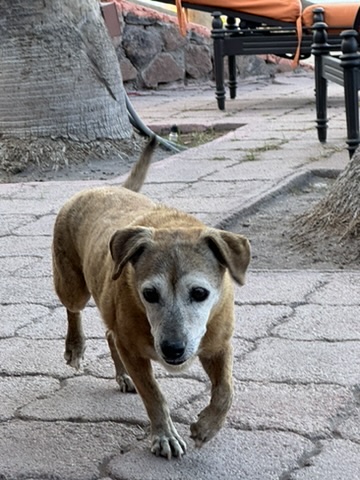
Title: Senior Puppy
And yet it hurts more than I expected. But it does. Because it means I have spent decades living without reference to those early desires. Without even remembering they existed. Without asking: what did that seven-year-old want? And does she still want it? And if she does, what would it take to give it to her?
Randy Pausch had an engineering problem. He had months to live, children to teach, and dreams to pass on. My problem is different but somehow related. I have years left, hopefully decades. But I have lost contact with the person who knew how to dream without editing, who knew how to want without calculating the probability of success, who knew how to play without needing justification.
And I am trying to find her again.
I have been reading this book slowly. A few pages each morning on the patio. Letting it sit with me. Letting Randy’s urgency teach me something about my own squandered time. Letting his clarity about what matters help me see what I have been avoiding.
¿Qué pasó con los sueños? What happened to the dreams?
¿Dónde están ahora? Where are they now?
What Randy Knew that I Forgot
I keep coming back to this as I read: Randy Pausch’s lecture is about achieving childhood dreams. But underneath that is something more fundamental: he remembered what they were. He could name them. He could tell you which ones he achieved, which ones he enabled for others, and which ones he had to let go.
He stayed connected to that child self who wanted things before learning whether wanting them was wise, possible, or realistic.
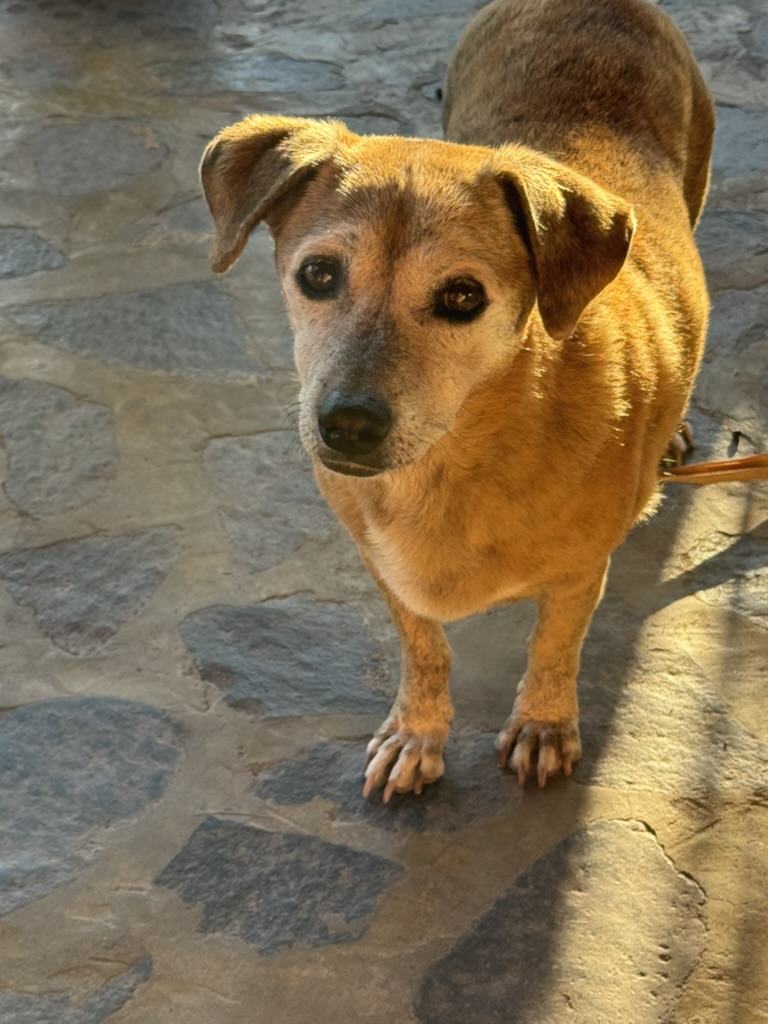
Title: My Sweet Seniorita
I lost that connection.
Somewhere along the way, growing up in circumstances that required constant adaptation, resilience, and reinvention, I lost track of what I originally wanted. Or maybe I decided those wants were dangerous. Distracting. Luxuries that felt impossible to hold onto when survival required all my attention.
Brown and Vaughan (2009) argue that childhood play deprivation creates deficits that persist into adulthood. But I had played as a child. I played. I had imagination. I had dreams. I had that glorious, unselfconscious absorption in make-believe, adventure, and creating worlds that answered to imagination alone.
But somewhere between childhood and adulthood, I put all of that away. And the strangest part is that the moment I decided to stop has vanished from memory. It happened quietly, without drama. Just a gradual fading. A slow erasure. Until one day I looked around and realized every want had become attached to a strategic purpose or an external expectation.
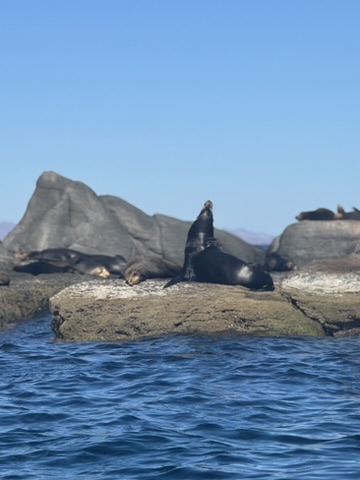
Randy kept his dreams. I lost mine. And sitting here at sixty, watching sea lions play, I am trying to understand: how do you find what you have lost when the memory itself has faded?
The Dream I Do Remember
El Sueño Que Sí Recuerdo
There is one dream I remember. Barely. Faintly. Like something seen through fog.
I wanted to be a writer.
Quería ser escritora.
A real storyteller. Someone who writes outside the academy, beyond peer review. Simply a writer. Una escritora de verdad. Someone who tells stories. Someone who makes meaning through words. Someone whose writing helps other people understand themselves better, feel less alone, find language for experiences that felt too big or too complicated or too shameful to name.
I remember sitting in my grandmother’s house as a child, reading books, thinking, “I want to do this.” I want to make people feel the way this book makes me feel. Connected. Understood. Less alone.
And then I grew up and learned all the reasons to be cautious. That serious people have backup plans. That you need security before you can afford creativity. That passion alone leaves you exposed.
So I became a scholar instead. Learned to write in ways that met academic standards. Learned to produce work that served institutional needs. Learned to measure success by publications, citations, and conference presentations.
And somewhere in all that learning, I stopped writing the kind of writing that made me want to write in the first place.
This retreat is me trying to find that again. This blog. These daily reflections. This attempt to write in ways that sound like thinking, that honour experience as data, that trust that someone reading this might feel less alone because I am willing to say: I lost my dreams. I forgot how to want. I put away play because I thought I had to in order to survive.
Nash (2004) calls this Scholarly Personal Narrative. A methodology that allows lived experience to count as data when properly theorized and critically examined. But underneath the methodology is something simpler: permission. Permission to write the way I wanted to write before I learned all the rules about how writing should sound.
Randy achieved his childhood dreams. I am trying to remember mine. And maybe that is okay. Maybe sixty is exactly the right time to ask: what did I want before I learned to want only achievable things? And what would it mean to give that to myself now, even if it looks different than it would have looked at seven?
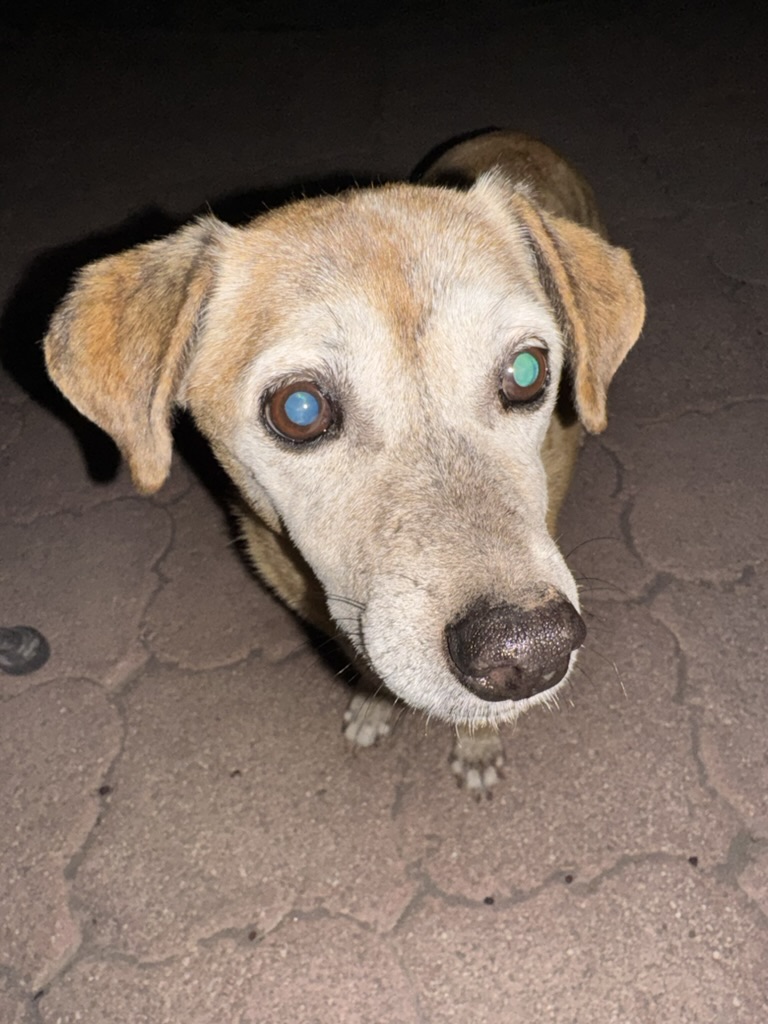
Title: My Sweet Lady
Here is what I am learning: play and childhood dreams are connected in ways I am only beginning to understand.
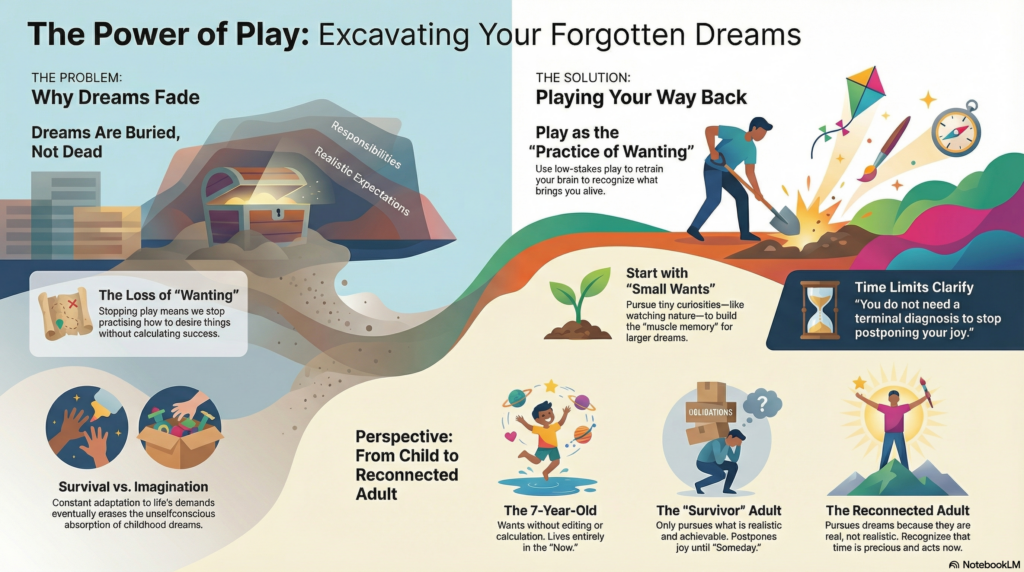
Dreams are what you want. Los sueños son lo que quieres. Play is how you practice wanting. El juego es cómo practicas querer. Children play at being the things they dream about. Play astronaut. Play teacher. Play explorer. Play artist. The play is how the dream stays alive. How it gets rehearsed. How the child learns what that dream might feel like if it came true.
When you stop playing, you stop wanting to practice. Cuando dejas de jugar, dejas de practicar querer. And when you stop wanting to practice, the dreams fade. Gradually. Poco a poco. Until you can no longer remember what they were.
I stopped playing because survival required seriousness. And when I stopped playing, I stopped rehearsing the dreams. Stopped imagining what they would feel like. Stopped giving them shape, texture, and presence in my daily life.
And now, as I try to recover play, I am discovering: the dreams are still there. Buried. Waiting. They resist direct thinking, analysis, or strategic planning. I have to play my way back to them.
Winnicott (1971) writes about play as the location where we discover who we are and what we want. Through the spontaneous, creative, unselfconscious exploration that play allows, rather than through serious self-examination. Play is how we find out what brings us alive. What captures our attention. What we return to again and again, because it calls to something essential in us.
Watching sea lions yesterday, I felt something wake up. Algo despertó. A feeling rather than a specific dream. Simply the sense that dreaming is possible. Que soñar es posible. That wanting things just because I want them is allowed. That every desire deserves to exist without a justification, without strategic reasoning, probability analysis, or risk assessment.
Title: My Sweet Love
I came back to the cottage and read more of Randy’s book. Read about how he pursued his dreams because they called to him, regardless of whether they made sense. And I thought: the sea lions understand this instinctively. Randy understood it consciously. And I am somewhere in between, trying to learn what both of them already know.
The sea lions want to play. So they play. Quieren jugar. Entonces juegan. They want to ride waves. So they ride them. They want to leap. So they leap. Quieren saltar. Entonces saltan. There is no gap between wanting and doing. No hay brecha entre querer y hacer. No calculation about whether the want is realistic, appropriate, or likely to succeed.
And watching them, I thought: I used to be like that. Before I learned to edit my wants. Before I learned that some dreams are more acceptable than others. Before I learned that admitting you want something gives people the power to disappoint you, wanting something too much felt like exposure, like handing someone the power to hurt me.
The sea lions remain fully open to wanting. They want fully. They play fully. They risk disappointment by trying. And they seem… joyful. Alive. Present.
I want that back.
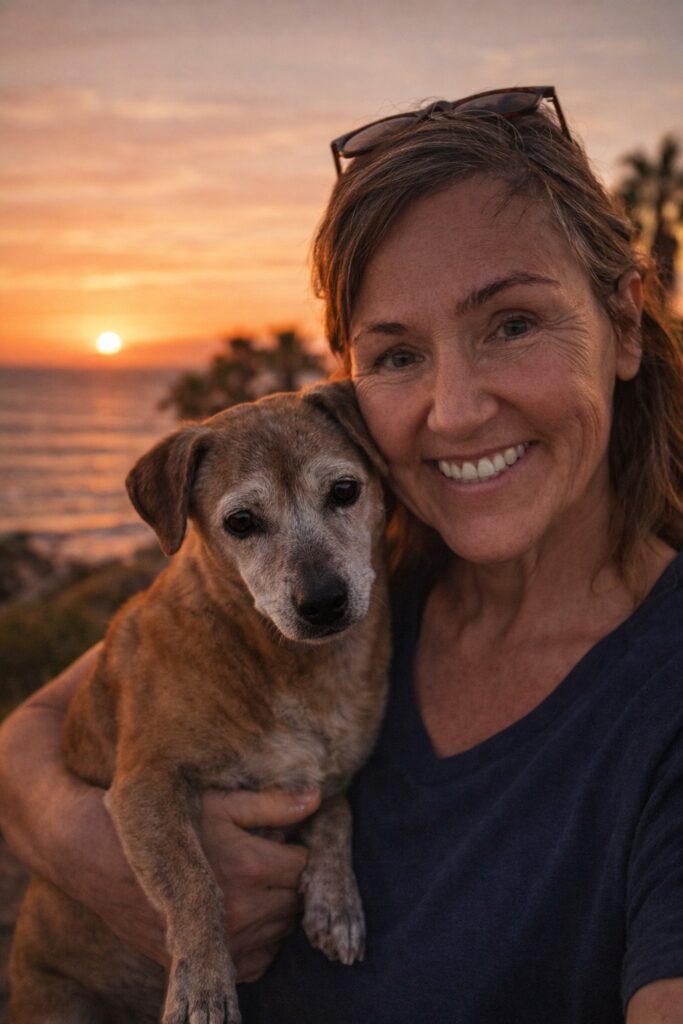
Title: Sea Puppies
Randy’s Time Limit, My Extension
El Tiempo de Randy y Mi Tiempo
Randy Pausch had months. Randy tenía meses. I have years, probably decades. Yo tengo años, probablemente décadas.
He used his limited time to pass on everything he wanted his children to know. To enable others’ dreams. To teach his final lessons about living well. Pausch described his lecture as an attempt to leave something lasting for his children, a way of being present for them in the future (Pausch & Zaslow, 2008). A way of being present even in his absence. A way of teaching everything he hoped to pass on, even beyond his living years.
I have the opposite problem: too much time. Demasiado tiempo. Enough time that I keep postponing. Keep thinking: I will do that later. Lo haré más tarde. I will write that book someday. Algún día. I will pursue that dream when I have more security, more time, more energy, and more certainty that it will work out.
But here is what Randy’s lecture teaches without saying it directly: time limits clarify. Los límites de tiempo aclaran. When you know time is short, you stop negotiating with yourself about what matters. You stop waiting for conditions to be perfect. You stop postponing joy until after you have finished all the serious work.
You do what matters. Now. Ahora. Because now is all you have. Porque ahora es todo lo que tienes.
His urgency is foreign to me. But I am learning to borrow some of it. Because sixty carries a particular kind of weight. Because the time I am squandering waiting for perfect conditions is time that passes regardless. Because every day I spend avoiding the writing I want to do, the play I once knew, the dreams I have yet to recover, is a day lived at partial capacity.
The urgency is real, even without a terminal diagnosis. Living fully asks only for honesty about what matters. It just requires recognizing that postponing joy is a choice. And it is a choice I have been making unconsciously for decades.
Randy made the conscious choice to live fully in his remaining months. I am trying to make the conscious choice to live fully in my remaining decades. Because time is precious even when there is plenty of it. Because I have one life, and it is happening now, and I want to arrive at the end having asked, clearly and honestly, what I wanted. Did I give it to myself? And if I delayed, why?
Lo Que El Juego Enseña Sobre Los Sueños
I have been playing for two weeks now. Small ways. Tentative ways. Humming. Swimming for pleasure. Skipping three steps. Following curiosity without needing it to be productive.
And something entirely unexpected is happening: wants are surfacing.
Los deseos están surgiendo. Wants. Deseos.
Small wants at first. I want to swim longer. Quiero nadar más tiempo. I want to sit and watch pelicans without checking the time. I want to write this blog post even though it falls outside my thesis word count. I want to buy this small carved turtle from the vendor on the beach, simply because looking at it makes me happy.
Small wants. Deseos pequeños. Silly wants, maybe. Wants that serve no strategic purpose and advance no career goal. Just wants. Solamente deseos.
And underneath the small wants, larger ones are stirring. Still foggy. Still too foggy to name precisely. But there. Waiting. Getting stronger as I practice the small wants, as I learn that wanting is allowed, as I remember that I am allowed to pursue things just because they call to me.
I think this is how you find lost dreams. Thinking about them directly leads nowhere. Analyzing what you should want, what you used to want, or what you ought to want now only takes you further from the answer. But by practicing wanting in small ways until the muscle memory comes back. Until wanting feels safe enough that bigger wants can surface. Until you trust yourself enough to say, “This is what I want.” And I am going to pursue it because it calls to something in me that has been silent for too long, regardless of whether it is realistic, appropriate, or likely to succeed.
Randy Pausch enabled others’ dreams. Taught his students to pursue theirs. Passed them on to his children. He understood that helping others achieve their childhood dreams was as important as achieving his own, maybe more important (Pausch & Zaslow, 2008). He called it the “head fake.” The real learning, the real gift, lived inside what pursuing it taught you about yourself and what you could become.
I am enabling my own dream. The one I forgot I had. The one that is still there, underneath all the layers of learned seriousness, strategic thinking, and a protective refusal to want.
The dream of writing. Really writing. The kind that helps people feel less alone. The kind that tells truths I was trained to suppress. The kind that sounds like me, the full me rather than the academic persona I learned to perform.
This blog is me practicing. This retreat is me creating conditions where that dream can breathe again. These 30 days are me trying to become the kind of person who can say, “I want this.” And then pursue it. Now. Today, while there is still time.
Key Takeaways: What Randy Taught Me
1. Dreams endure. They simply get buried.
Los sueños no mueren. Simplemente se entierran.
Randy stayed connected to his. I buried mine. But buried means recoverable. Enterrado no está muerto. Buried can be excavated. It just takes time, attention, and willingness to dig through all the layers that have accumulated on top.
2. Play is how you practice wanting.
El juego es cómo practicas querer.
Children know this instinctively. Adults forget it. But the mechanism still works at sixty the same way it worked at seven. When you play, what surfaces? Cuando juegas, los deseos surgen. The trick is to allow them rather than to edit or dismiss them immediately.
3. Time limits clarified. But living fully asks only for clarity, which anyone can choose.
Los límites de tiempo aclaran. Pero no necesitas un diagnóstico terminal para vivir plenamente.
Randy had months. I have decades. But I can borrow his clarity without needing his urgency. Can ask: if time were short, what would matter? And then do that. Now. Ahora. While there is still time. Mientras aún hay tiempo.
4. Enabling your own dreams counts.
Habilitar tus propios sueños cuenta.
Randy enabled others’ dreams. That was his path. Mine is different. I am learning to enable my own. Learning that this is both essential and earned. No es egoísta sino necesario. Helping others find their dreams begins with tending to my own.
5. It is never too late to become who you wanted to be.
Nunca es demasiado tarde para convertirte en quien querías ser.
At seven, I wanted to be a writer who helps people feel less alone. At sixty, I am becoming that. A los sesenta, me estoy convirtiendo en eso. Slowly. Imperfectly. But really. Pero realmente. And the fact that it took fifty-three years to get here makes it harder-won, more real. Just delayed. And delays can be recovered from.
The Dreams at Sixty Look Different Than the Dream at Seven
I need to say this clearly: My aim is to become the sixty-year-old who knows how to want the way that seven-year-old did. Fully. Completamente. Without apologizing. Sin disculparse. Without needing permission. Sin necesitar permiso.
The dream at sixty looks different from what it would have looked like at seven. It is complicated by everything I have learned, everything I have lived through, everything I know now about how the world works, how hard things are, and how much survival costs.
But it is also enriched by all of that. Pero también está enriquecido por todo eso. The writing I can do now is writing that a seven-year-old was incapable of doing. Because it is informed by sixty years of living. By loss and love and chronic stress and hard-won healing. Por pérdida y amor, por estrés crónico y por curación ganada con dificultad. By understanding that comes only from decades of paying attention.
Randy achieved his childhood dreams by becoming exactly who he wanted to be as a child. I am achieving mine by becoming who that child would have grown into if she had been allowed to keep wanting, keep dreaming, keep playing all along.
Different paths. Caminos diferentes. Same destination: living fully. Vivir plenamente. Wanting openly. Querer abiertamente. Pursuing dreams because they are real, because they are mine. Perseguir sueños no porque sean realistas, sino porque son reales.
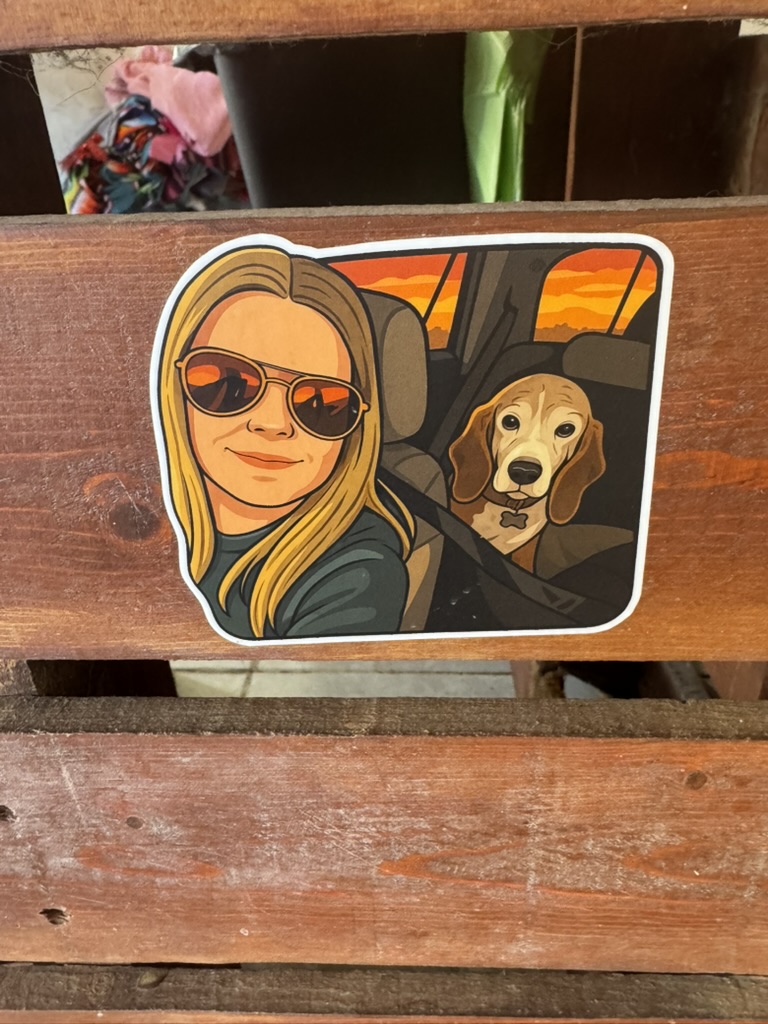
Title: Photo of a Bumper Sticker
Gracias, Randy, por preguntar qué soñábamos. Thank you, Randy, for asking what we dreamed.
Por recordarme que tuve sueños. To remind me, I had dreams.
Por mostrarme que nunca es demasiado tarde. For showing me that it is never too late.
Por enseñarme que el juego y los sueños están conectados. For teaching me that play and dreams are connected.
Por vivir completamente hasta el final. For living fully until the end.
Por darme permiso para hacer lo mismo. For giving me permission to do the same.
Con décadas por delante, no meses. With decades ahead.
Pero con la misma urgencia de vivir bien. But with the same urgency to live well.
Ahora. Now.
Mientras aún hay tiempo. While there is still time.
Title: The Power of Play
Credit: NotebookLM, 2026
Thank you for the reminder, Randy.
Translation note. Spanish language passages were generated using Google Translate and subsequently reviewed and refined by the author. Any remaining infelicities reflect the limits of machine translation rather than intent.
References
Google. (n.d.). Google Translate. https://translate.google.com
Pausch, R., & Zaslow, J. (2008). The last lecture. Hyperion.
Pausch, R. (2007). Randy Pausch’s last lecture: Achieving your childhood dreams [Video]. YouTube. https://www.youtube.com/watch?v=ji5_MqicxSo
ACADEMIC LENS
Randy Pausch’s “Last Lecture” serves here as an intertext that raises Winnicott’s (1971) foundational question: what becomes of childhood play when the child grows into an institutional adult? Winnicott argued that play is constitutive of development rather than merely developmental, the true self, the authentic inner life that institutional demands systematically suppress. The grief for unlived dreams that this post addresses is structural as well as biographical: Nixon’s (2011) slow violence names the accumulated cost of precarious labour conditions that foreclosed creativity over nineteen years, accruing a deficit that may only become fully visible from a position of safety. Van der Kolk (2014) documents how chronic stress impairs the prefrontal cortex’s capacity for imaginative projection, the neural substrate of dreaming itself. The question “what happened to the dreams?” is therefore also a clinical question about the neurological consequences of sustained threat. Moustakas’s (1961) existential framework suggests that the recovery of genuine aspiration requires precisely the kind of chosen solitude this project enacts: a withdrawal from the performing self in order to rediscover what the desiring self actually wants.
Twenty-five years of the conditional tense. Contract. Sessional. Limited term. Contingent. Words that never quite fit what it actually was, which was showing up every September, as I belonged there. Because I did.
The neoliberal academy has a way of making you feel like a guest in your own house. No nameplate. No permanence. Just the work, and the work, and the work. Metrics where meaning used to be. Outcomes where wonder was.
And yet the students came. And yet the ideas grew. And yet something held.
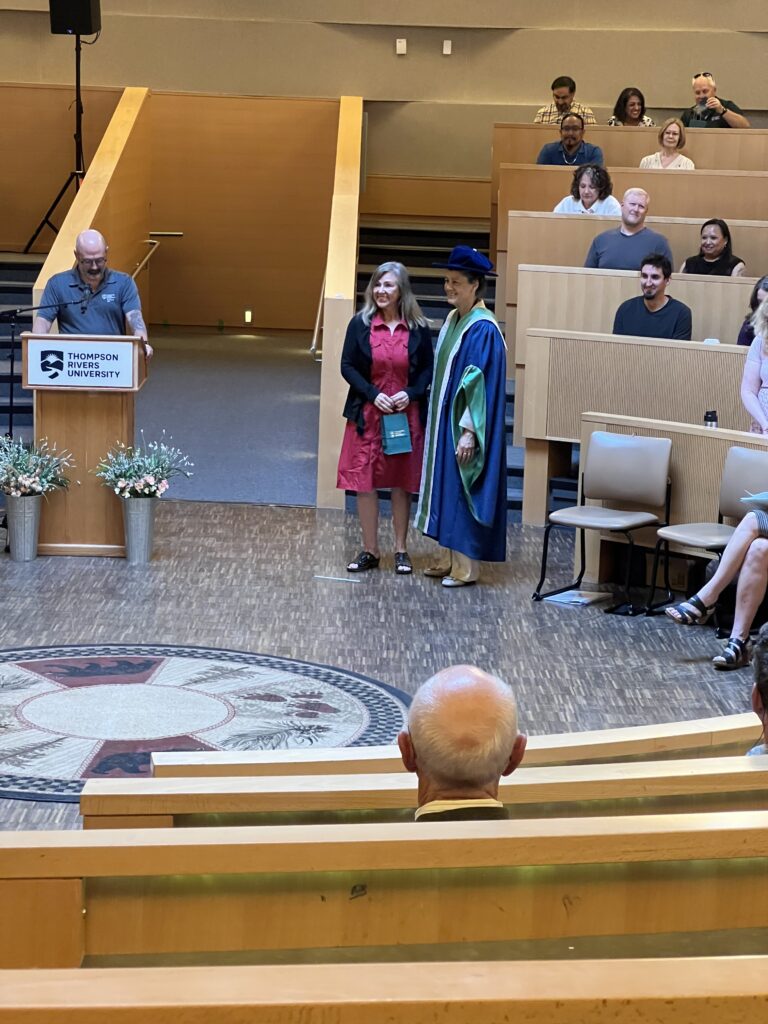
She asked if I wanted to make a speech.
I smiled, looked down, and shyly said no.
Because what would I have said that the twenty-five years had not already said for me.
President Arini stood beside me, beautiful and kind, the way some people just are, like they were made to make others feel that what they did mattered.
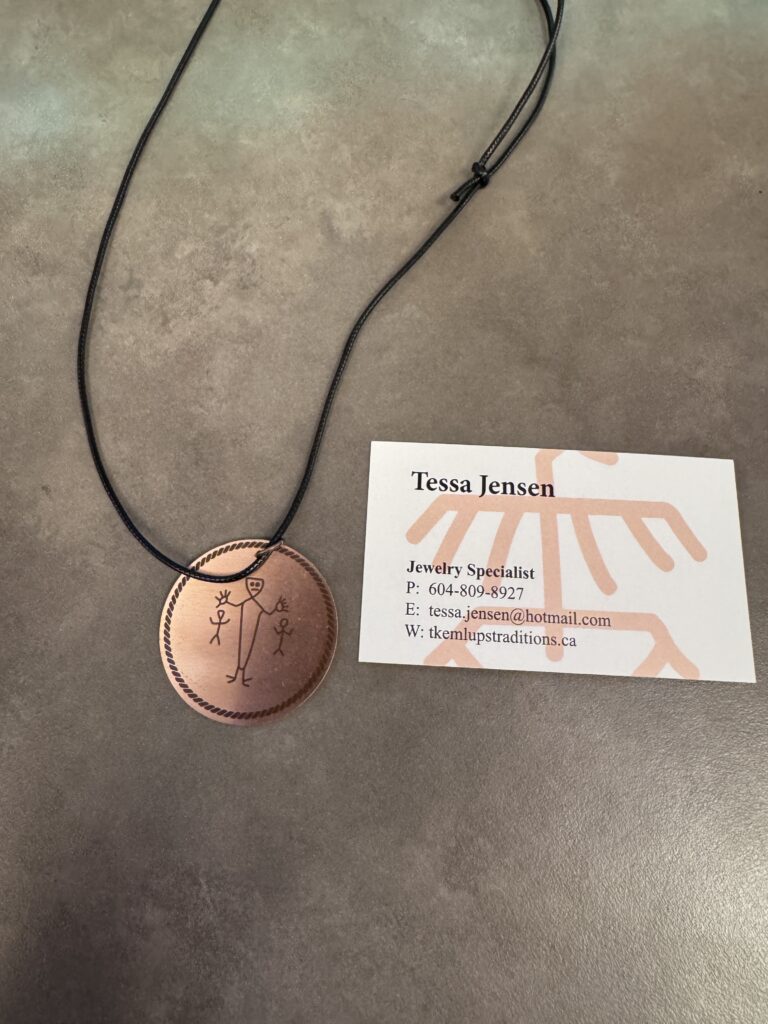
And standing there in that hall at Thompson Rivers, in my red dress, holding something small and teal, I felt it.
That it mattered. That I mattered. Not as a line in a budget. Not as a temporary measure. As a person. As a teacher. As someone who stayed.
The gift came on a black cord. Copper, round and warm, figures etched into it the way the Secwépemc etched truth into stone long before any institution decided what counted as knowledge.
A tall figure, arms open. A small one beside. Together on the land.
I will wear it against my chest where all of it lives, the hard years and the good ones, the classrooms, the students, the quiet stubbornness of continuing.
They did not make it easy. They did not make it secure. They did not always make it fair.
But here is what I know, standing in that light, beside that woman who looked at me like I was worth celebrating:
Actually, truly impossible. Beyond the figure. The density of them. The brightness. The way they fill every inch of darkness between the horizon and directly overhead. I have been standing on the patio for twenty minutes, and I cannot get used to it. Cannot stop staring up. Cannot stop feeling small in the way that makes you feel more real, more present.
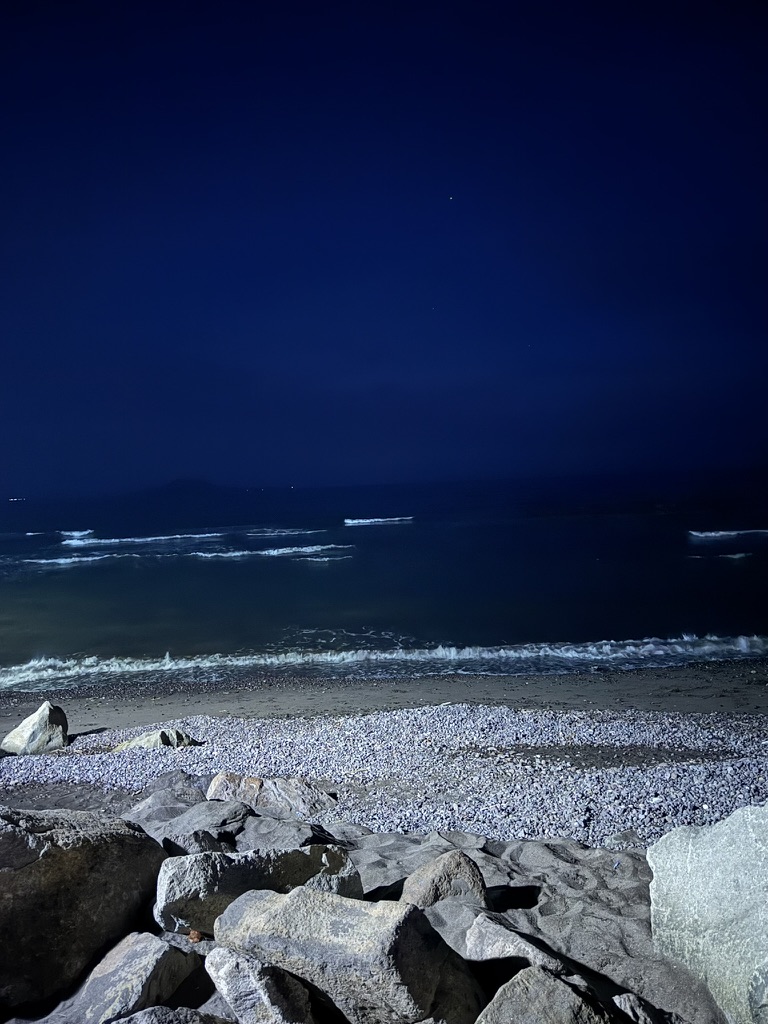
The Sea of Cortez is black at this hour. No moon tonight. Just stars reflected on the water, so the surface still looks like a second sky. I cannot tell where the ocean ends and the atmosphere begins. It is all just darkness held between points of light.
Estrellas sobre el mar. Stars over the sea.
What City Skies Hide
I grew up under city skies where you could see perhaps a dozen stars on a clear night. The Big Dipper, if you knew where to look. Maybe Orion in winter. The rest washed out by streetlights and shopping mall parking lots and the general glow of human activity that makes us forget the sky is actually full of light we cannot see until we get far enough away from our own brightness.
Here, there is no artificial light competing. The village has streetlights, but they are few and dim. Most houses are dark by nine. The ocean holds no light except what the stars give it. And the stars give everything.
I have been trying to count them and cannot. Have been trying to identify constellations and cannot find the patterns I know because there are too many stars, too much light, and the familiar shapes are lost in the surrounding density. This is the Milky Way at its fullest. The galactic centre is visible as a bright band crossing the southern sky. Thousands upon thousands of stars. And behind them, thousands more.
The Scale That Holds Us
There is something humbling about this much sky.
Humbling beyond the degrading sense. Humbling in the way that reminds you that you are small and temporary, and your concerns, however real they feel, are brief against the scale of what continues regardless of whether you are here to see it.
These stars have been shining for millions of years. Will continue shining for millions more. The light I am seeing left those stars before humans existed. Before mammals existed. Before anything I would recognize as life walked, swam, or flew on this planet. That light has been travelling through space for so long that the star that produced it might already be dead, its light still arriving, the ghost of something that no longer exists still visible because of the time it takes for distance to be crossed.
Luz antigua. Ancient light.
Witness and Significance
I am standing here, on the edge of land, looking at light older than memory, older than species, older than the oceans themselves. And it makes my life feel both infinitely small and strangely significant. Small because what am I against this scale? Significant because I am here to witness it. Because consciousness has emerged in this universe that can look up and feel awe. Because somewhere in the process of stars burning and planets forming and life evolving, something became aware enough to stand on a beach at night and feel moved by the impossibility of so much light.
What Weight Looks Like Against Stars
I think about the past six months. The past nineteen years. The exhaustion. The depletion. The way I have been carrying weight has felt unbearable.
And against this sky, it persists. The weight is still real. The suffering is still real. But it is held in a different frame. Held by something larger than my capacity to hold it. The stars hold no record of my struggles or my presence. But somehow their indifference is comforting rather than cold.
I am here. I am looking up. I am held by the same gravity that holds these stars, the same darkness that lets their light shine, the same universe that has been unfolding for billions of years and will continue to unfold long after I am gone.
Soy pequeña. I am small.
Soy temporal. I am temporary.
Y está bien. And that is okay.
The Relief of Accepting Scale
There is relief in accepting scale. In acknowledging that my life is brief, my concerns local, my influence limited. I can release the weight of everything. I can leave what cannot be fixed to its own time. I can simply be here, for this moment, under these stars, breathing this air, feeling this particular configuration of matter that is temporarily organized as me.
Sky Above, Sky Below
The water is so still tonight that it looks like glass. Dark glass. The stars reflecting on it in perfect points of light that hold perfectly still. Without my standing here, there would be only darkness and light, no visible water. Just darkness and light. Sky above. Sky below. And me between them, small and temporary and held.
Gracias, estrellas. Thank you, stars.
Por brillar sin necesitarme. For shining without needing me.
Por recordarme mi lugar. For reminding me of my place.
Por sostener la oscuridad. For holding the darkness.
Para que pueda ver la luz. So that I can see the light.
What Continues
Tomorrow the sun will rise, and I will no longer be able to see the stars. But they will still be there. Still burning. Still sending light across distances I cannot comprehend toward planets I will never see.
And I will still be here. Small. Temporary. Held by the same universe that holds everything.
Suficiente. Sufficient.
Just this. Just now. Just one small human standing under impossible stars, learning to accept the relief that comes from recognizing your own smallness in a universe so large it cannot even notice you are here.
And finding, in that recognition, something very close to peace.
Translation Note
Note. Spanish-language passages were generated using Google Translate (Google, n.d.) and subsequently reviewed and refined by the author. Any remaining infelicities reflect the limits of machine translation rather than intent.
References
Google. (n.d.). Google Translate. https://translate.google.com
ACADEMIC LENS
The experience of awe described in this late-night star-gazing entry engages what Dacher Keltner and Jonathan Haidt (2003) identify as the defining phenomenology of awe: the perception of vastness that exceeds existing conceptual frameworks, generating what they call “need for accommodation,” a revision of the self’s understanding of its place in the world. Ulrich’s (1983) restorative environment research suggests that the particular quality of night sky attention described here, effortful looking that gives way to absorption, represents a form of directed attentional rest. For the nervous system recovering from chronic vigilance, the experience of being small beneath an immense, indifferent sky also carries a paradoxical relief: Buber’s (1970) I-Thou encounter extended to the cosmos itself, where the self is released from the burden of its own centrality. The bilingual form of this entry, in which the Spanish “Una noche clara” carries a different emotional resonance than its English translation, enacts Anzaldúa’s (1987) insight that some experiences can only be approached from the borderlands between languages.
A field note from Day Ten. Sometimes the body understands something before the mind has words for it. This is an attempt to write it down before the understanding disappears.
Ten days to build a foundation. Perhaps small, you might think. Too brief, it seems, for anything significant.
But foundations are built to be solid, never showy. They are meant to hold. Hidden underground, bearing weight, making everything above them possible.
I came here exhausted. Sleep fragmented, thoughts scattered, body braced for threats that never came but whose approach I had learned to anticipate with the precision of an expert meteorologist reading the weather that only I could see.
Ten days to teach my nervous system: The emergency is over. The storm has passed. You can stop bracing now.
Ten days of the same evening sequence. Ten days of the same morning light. Ten days of pelican fishing at predictable times. Ten days of waves maintaining their patient rhythm. Ten days of data accumulating below conscious awareness.
And somewhere in those ten days, my body decided to believe it.
La fundación sostiene. The foundation holds.
Without forcing it. Without earning it. Without proving myself worthy.
Because I maintained conditions. Because I honoured rhythms. Because I stopped interfering with processes wiser than conscious thought.
Note. Spanish-language passages were generated using Google Translate (Google, n.d.) and subsequently reviewed and refined by the author. Any remaining infelicities reflect the limits of machine translation rather than intent.
References
Google. (n.d.). Google Translate. https://translate.google.com
The you that walked in the first time, folder tucked under your arm, lesson plan you had revised three times the night before because you wanted it to be right, because right mattered to you in that particular, cellular, uncompromising way it has always mattered to you,
the you that stood at the front of that room for the first time and felt the gravity of it, the privilege of it, the enormous ordinary miracle of a room full of people who had arrived willing to think differently than they had thought before.
I have been thinking about her. About you. About what I want to say now that I know what you did not know then.
You were so ready.
That is the first thing I want to tell you.
You were so ready, and you did not know it. From the student’s side of the room, from the side that would later write you letters, send you emails years later that began with I have been thinking about something you said in class, and I wanted you to know,
you were luminous.
I want to warn you about some things.
The bar will move.
I want you to know this from the beginning, before the first time it moves, before you exhaust yourself reaching for it and find it has shifted just beyond your hands.
The bar is not a measure of you. The bar is a mechanism. It is the system’s way of keeping you reaching, hungry, slightly off-balance, slightly too invested in the next thing to stop and ask why the last thing was not enough.
Reach for the bar because the reaching makes you better. Reach for the bar for yourself.
Do not reach for the bar for them.
Know the difference between a place that is developing you and a place that is extracting you.
The students are real.
This I want you to hold as the true north of the whole nineteen years, the thing that does not shift, the thing the system cannot touch, take, or use without your permission.
When everything else feels uncertain, go back to the students.
You are going to be so tired.
I want to say this without softening it because you deserve honesty more than comfort.
You are going to be tired in a way that goes all the way down, tired in the bone, tired in the place that decides whether to keep going,
and you are going to keep going because you do not know how not to.
But I am going to tell you this:
Give so much. Give everything. And also, in the small moments, on the shore of yourself that belongs to no one else,
give something to yourself.
Give yourself the belief you give so freely to others. Give yourself the patience you give the struggling student.
You deserve your own generosity. You deserved it from the beginning.
You are going to find out that you did not belong there.
Not because of anything that was wrong with you. Because of everything that was right with you, and the particular cruelty of a room that needed you but was not built for you.
This is going to hurt in a way you are not prepared for.
You are going to spend years thinking the problem is you, turning yourself over, looking for the missing piece.
There is no missing piece.
You were always the right shape. The room was the wrong shape.
When you finally understand this, it will feel like grief and like freedom, grief and freedom arriving together the way they always do when something true finally breaks the surface.
I want to tell you about the shore.
You are going to the shore. Far from the institution.
You are going to sit with the sea, which will ask nothing of you,
and you are going to cry the way you needed to cry for years, the real kind, the kind without an audience,
and when you are empty, you are going to find underneath the emptiness the most important thing you have found in nineteen years.
Yourself.
Still there. Still whole. Still luminous under all the exhaustion, the performance, and the careful management of being a person that the institution kept evaluating.
I want to tell you about the poems.
You are going to write poems.
Not as scholarship, not as methodology, but because you are going to discover in the long quiet aftermath of all that noise,
that you are a writer.
That you always were.
I love you.
I love the woman who revised the lesson plan three times. I love the woman who could not walk past the struggling student. I love the woman who agonized at two in the morning over whether she had said exactly the right thing in exactly the right way to the person who most needed to hear it.
I love the woman who kept the actual record, who knew in her deepest self that she was good, that the work was good, that what happened in those rooms was extraordinary even when no one was calling it that.
I love the woman who is standing now on the other side of knowing, worn smooth by it, clarified by it, more herself for it than she has ever been,
still kind, still ethical, still in love with the work and the students and the lantern she carries into every room,
and finally, finally, in love with herself.
You made it through.
I wanted you to know from the beginning that you make it through.
Para la mujer que era antes de saber. Te vi siempre. Eras suficiente desde el principio. Con todo mi amor, desde el otro lado.
For the woman I was before I knew. I always saw you. You were enough from the beginning. With all my love, from the other side.
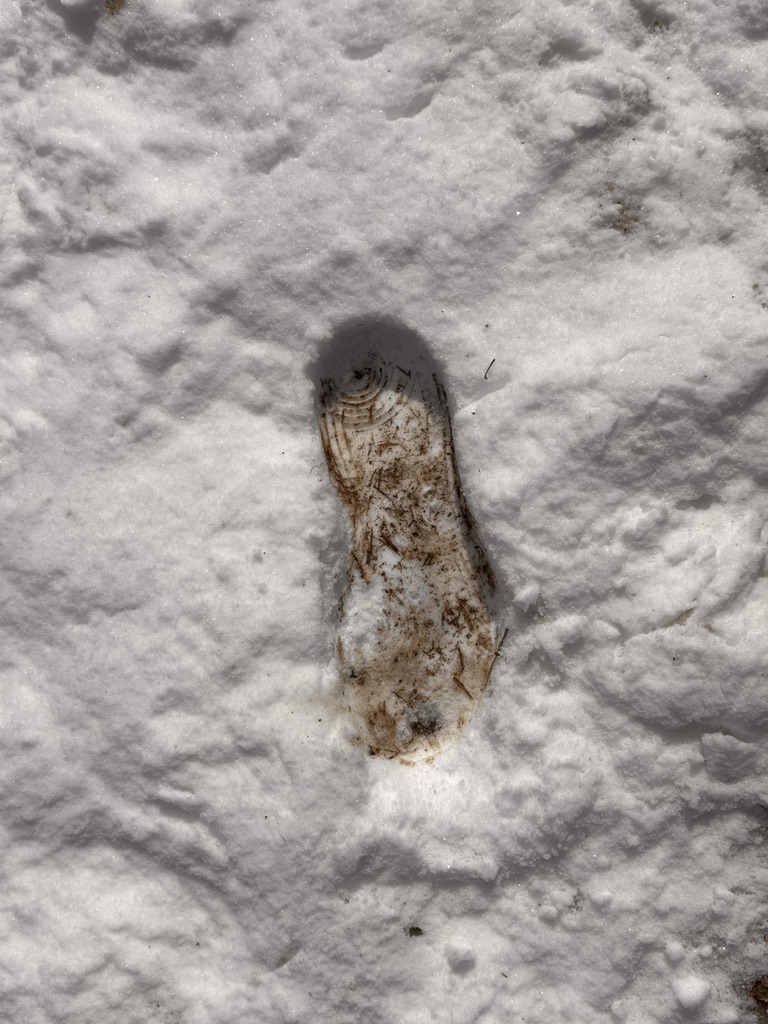
Artist Statement: A footprint stripped by water, time, and winter to its grain.
Translation Note: Spanish phrases in this poem were assisted by Google Translate (translate.google.com). The Spanish is woven in as an act of reclamation, a return to a language of the body and the self that exists beyond institutional English.
Content Warning: This post contains reflections on grief, loss, and emotional exhaustion. Please care for yourself as you read, and feel free to step away if you need to.
No one told me that when the shoulders finally drop, The tears begin.
That the body, loosening its long-held grip on vigilance, would release more than tension. It would release the unlived hours, the dinners declined, the calls shortened, the visits swallowed by marking, by meetings, by the endless proving that I deserved to remain.
I thought healing would feel like relief. And it does. But it also feels like mourning the woman who said yes when she meant no, who signed the third contract, and the fourth, who lay awake rehearsing indispensability because dispensable meant invisible, and invisible meant gone.
Duelo, the Spanish say. Grief. And duel. As if mourning were a kind of combat, a reckoning with all that was lost while I was too busy to notice the losing.
I grieve the braced mornings. The jaw that forgot softness. The breath held shallow like a child waiting to be corrected.
I grieve the writing set aside, the ideas that flickered and went dark for lack of time that was never mine to hold.
I grieve the woman I might have become had I trusted that I was enough without performance.
Miriam Greenspan (2003) writes that no emotion is negative, only refused. That grief, if allowed to move, becomes gratitude.
So I am letting it move.
Here by the sea where pelicans rest between dives, where nothing asks to be proven, where waves keep ancient rhythm without apology, I let the tears come for all the years I kept dry.
This is what the body knows that the mind resists: Safety is what allows grief to arrive.
The shoulders drop. The sorrow rises. The jaw softens. The unlived life asks to be mourned.
Healing, I am learning, moves in spirals from broken toward whole. It is a spiral, circling back to gather the fragments left behind when survival required speed.
El duelo que viene con el descanso. The grief that comes with rest. The mourning that waits until we finally stop.
The pelicans grieve differently than I do. They dive when hungry. They rest when full. They have never been asked to earn stillness.
I am unlearning.
Here, by the sea, salt on my face that might be spray, that might be tears, that might be both, I am unlearning the fear of rest.
Note. Spanish-language passages were generated using Google Translate (Google, n.d.) and subsequently reviewed and refined by the author. Any remaining infelicities reflect the limits of machine translation rather than intent.
References
Google. (n.d.). Google Translate. https://translate.google.com
Greenspan, M. (2003). Healing through the dark emotions: The wisdom of grief, fear, and despair. Shambhala Publications.
ACADEMIC LENS
The paradox named in this title, that grief arrives with rest rather than with exhaustion, is clinically well-documented. Van der Kolk (2014) observes that the hyperactivated nervous system of the chronically stressed person suppresses grief as an unaffordable vulnerability: one cannot afford to feel the weight of what has been lost while still needing all available resources for survival. Menakem (2017) describes this as the body’s intelligent prioritisation: grief, like other emotions requiring duration and openness, must wait until the nervous system registers sufficient safety to permit it. Levine (2010) calls this the “thaw” phase of somatic healing: as the chronic bracing releases, the feelings it has been holding at bay begin to move through the body. The grief that comes with rest is therefore a sign that the rest is working rather than failing, it is working. Moustakas’s (1961) heuristic inquiry framework suggests that this grief is also data: it tells the researcher something specific about the scale of the loss that has been carried, and about the depth of the healing that the body’s intelligence has been waiting to undertake.
I am writing to you because I have something important to say, and I want to make sure you hear it properly.
I am five. I know how to write some letters, but not all of them yet, so I am going to say this as carefully as I can.
I see you.
I see you being so tired and still getting up anyway, and I want you to know I think that is very brave. I get tired too sometimes, and it is hard to keep going when you are tired. I am only five, and you have been going for so much longer than I have, so I think you are the bravest person I know.
I want to tell you some things about us that I am not sure you remember anymore.
We are kind.
I know you know that, but I do not think you believe it the way I believe it, which is all the way, without any buts after it, just kind, just completely and simply kind, the way the sun is warm, not because it is trying to be but because that is what it is.
That is us. That is what we are.
I want you to stop saying it like it might not be true. It is true. I know it is true because I am five and I have not yet learned to be unsure about it, and I need you to borrow some of my sureness until you find yours again.
I also want to tell you that I used to collect things.
Rocks mostly. The smooth ones. I would put them in my pockets until my pockets were very full and heavy, and Mama would say Amy, why are your pockets full of rocks and I could never explain it properly, but the reason was that I loved them.
I loved that they were smooth. I loved that something had made them smooth by being patient with them for a very long time.
I think you are like a rock, big Amy. I think a lot of things have been pushing against you for a very long time, and I think it has hurt, but I also think you are getting smooth. I think you are getting to the most beautiful part.
I would put you in my pocket. I would carry you everywhere.
I need to ask you something, and I need you to answer honestly because I am five and I do not yet understand things that are not honest.
Did you forget that you were allowed to play?
I am asking because when I watch you, I do not see much play, and play is very important. I know that because I do it every day, and it makes everything better, even the hard days, even the days when things are not fair, and things are not fair sometimes, even when you are five,
But even on those days, I still find something to play with.
A stone. A puddle. A word I like the sound of.
Promise me you will find something to play with. Even a small thing. Even just a word.
I did not know when I was five what the world would do to you.
I did not know about the rooms that would not claim you. I did not know about the bars that kept moving. I did not know about the contracts, the waiting, and the smile over the closing door.
But I want to say this:
If I had known, I would have held your hand.
I would have put my small hand in your big hand and not let go.
I would have sat with you in the parking lot in the mornings. I would have sat with you at two in the morning when the grief was at its largest. I would have sat with you in every room that made you feel like a visitor in your own life.
And I would have said, in my five-year-old voice that did not know yet to be quiet in certain rooms:
This is not right. You belong here. You belong everywhere. You are Amy, and Amy belongs everywhere she goes.
I want you to know that I am proud of you.
I am proud of you for staying kind when unkindness would have been so much easier.
I am proud of you for keeping your ethics even when the cost was very high.
I am proud of you for loving your students the way you love them, all the way, without holding anything back for self-protection, which is a very five-year-old way to love people, and I think it is the best way, even when it hurts.
I am proud of you for crying in the shower. I know that sounds funny, but I am proud of it because it means you let yourself feel, which is a hard thing to keep doing when the world keeps suggesting you should feel less.
I am proud of you for going to the shore.
I am proud of you for writing the poems.
I am proud of you for still being you.
I need to tell you one more thing, and then I have to go because it is almost dinner and we are having something good tonight, and I do not want to miss it.
You are my favourite person.
Not because you are perfect. I know you are not perfect. I am five, and I am not perfect yet, and I think that is okay. I think not perfect is actually more interesting than perfect would be.
You are my favourite person because you are the only one who knows what it feels like to be us, to love this hard and work this hard and care this much and keep going anyway.
Nobody else knows that. Only you.
And I think that is the most extraordinary thing I have ever heard of.
I love you, big Amy.
I loved you before you knew what you would become.
I loved you in the pure, uncomplicated, five-year-old way that does not require you to prove anything, to produce anything, to perform anything.
I loved you just because you were you.
I still do. I always will.
Now go outside. Find a smooth stone. Put it in your pocket.
Remember that something the patient made made it beautiful.
Con todo el amor que sabe dar una niña de cinco años, que es todo el amor que existe.
With all the love a five-year-old knows how to give, which is all the love there is.
Little Amy Age 5 Keeper of smooth stones Your very first believer
Translation Note: Spanish phrases in this letter were assisted by Google Translate (translate.google.com). The Spanish is woven in as an act of reclamation, a return to a language of the body and the self that exists beyond institutional English.
I am writing from the other side of everything you are in the middle of right now, from the place you cannot quite see yet because you are still in the thick of the becoming, still in the part of the story that feels more like enduring than arriving,
and I want to tell you what is here.
I want to tell you what is waiting.
First, the practical things, because I know you, I know you need to know the practical things before you can let yourself feel the rest of it.
You are okay.
Financially, professionally, in all the ways that kept you awake at two in the morning doing the mathematics of whether you would make it through another April,
you are okay.
More than okay.
You found the room that was shaped like you. I know you have been looking for it for a very long time. I know there were years you stopped believing it existed,
but it exists.
It exists, and you are in it, and it feels exactly the way you imagined it would feel on the nights you let yourself imagine.
It feels like breathing. It feels like a morning that belongs to you. It feels like walking into a room and the room saying, “There you are. We have been waiting. Come in, come in, stay as long as you like.“
The doctorate is done.
I want to tell you that because I know how it weighs on you, the unfinished thing, the work that is so important and so yours.
It is done.
And it is extraordinary.
Not because a committee said so, though they did, but because it is true. Because you wrote it in your own voice, the voice that took years to trust, the voice that is scholarly and embodied and refuses to pretend that knowing happens outside of a body, outside of a life, outside of nineteen years of labour and love and parking lot mornings.
You wrote the truest thing.
Alonetude is in the world now. People are reading it. The ones who work in the in-between spaces, the ones on the contracts, the ones performing well in the parking lots of institutions that need their labour and withhold their belonging,
they are reading your words, and they are feeling less alone, and that is the work, that is the real work, that is what nineteen years was always building toward, even when it felt like it was building toward nothing.
Now let me tell you about the things that are not practical.
Let me tell you about a Tuesday morning.
An ordinary Tuesday. Not a milestone Tuesday. Not an achievement Tuesday.
Just a Tuesday when you woke up and lay still for a moment, the way you learned to do in Loreto,
and the first thing you felt was not the tightening.
The first thing you felt was yourself.
Present. Whole. Quietly, ordinarily, unremarkably glad to be alive on a Tuesday morning with the light coming through the window and nowhere to be for another hour and a cup of something warm in your future and the work you love waiting for you like a friend rather than a demand.
You lay in it, and you thought oh. So this is what they meant.
This is what rest was building toward. This is what the shore was practicing you for. This is the life on the other side of the performance of a life.
It is quieter than you expected. It is more ordinary than you expected.
It is so much better than anything you expected.
I want to tell you about your body.
Your shoulders come down.
I know that sounds like such a small thing. It is not a small thing. Your shoulders coming down is physical evidence that a woman is no longer waiting to find out whether she is still employed.
Your shoulders coming down is what safety feels like in the body.
You are safe. I need you to hear that all the way down.
You are safe.
The students found you.
The ones who needed you specifically. The ones who were on the contracts. The ones performing fine in the parking lots. The ones who read alonetude and recognized themselves in it and needed someone who had mapped the territory and come back to say I know this place, I know how to navigate this, here is what helped, here is how you find the shore inside yourself when there is no Loreto within reach.
You became that person.
I want to tell you about the writing.
You became a poet.
And you did not even know it.
I know that surprises you. But the line between scholar and poet turned out to be much thinner than you thought, and one morning you stopped trying to categorize yourself and just wrote what the truth required,
and what the truth required, Amy, was both.
It was always both. You were always both.
Tom knows.
I want to say that because I know you worry about whether the people who love you really see the whole of it.
Tom knows.
Not because you performed it less but because you finally let yourself be known the way you always knew how to know others, fully, carefully, without looking away.
And he stayed. Of course, he stayed. He has always been staying.
You are loved. You are chosen. You are someone’s permanent.
I want to tell you what I know now that I wish you knew then, in the middle of it, in the parking lot mornings, in the two a.m. turnings:
None of it was wasted.
Not one morning. Not one contract. Not one raised bar. Not one carefully worded rejection in professional language with warmth in the room.
None of it was wasted because it all became the work.
I want to leave you with something small.
A Tuesday morning. A cup of something warm. Your shoulders are coming down. The work you love is waiting like a friend.
A smooth stone in your pocket.
The knowledge, finally unshakeable, lived in the body, permanent as the shore,
that you were always good enough.
Come forward.
I am here. I am you. I am waiting for Tuesday morning, the open window, and the work that finally looks like what you always knew it was.
Come forward.
You have already done the hardest part.
All that is left now is the living of it.
And the living of it, Amy, the living of it is so very, very beautiful.
De tu yo futuro, que te ha estado esperando con los brazos abiertos y el corazón lleno. Ya casi llegas. Sigue caminando.
From your future self, who has been waiting for you with open arms and a full heart. You are almost here. Keep walking.
Future Amy Writer. Scholar. Poet. Whole. Keeper of smooth stones. The woman who came through. Still here. Still kind. Still luminous. Aquí estoy.
A note from the present. I do not yet know whether the woman who wrote this letter will become the woman it is from. That is part of what writing toward her is for.
Translation Note: Spanish phrases in this letter were assisted by Google Translate (translate.google.com). The Spanish is woven in as an act of reclamation, a return to a language of the body and the self that exists beyond institutional English.