A scouting note: what I found in December before I knew what January would become.
I had been to Loreto before.
The way I would return was different. Alone. Thirty days. A notebook and a research question I barely had the language for yet. The first time I arrived in Loreto, it was May, and I came with about thirty other people, and the purpose was simple and uncomplicated: to swim.
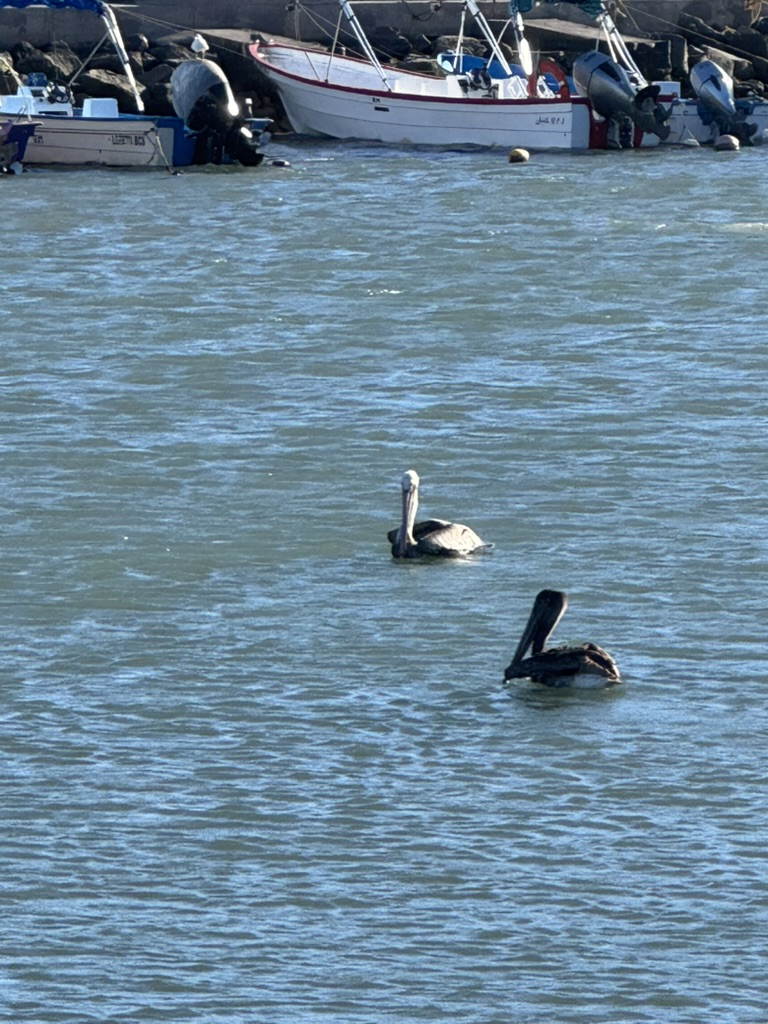
It was a masters swim camp. Open water. The Sea of Cortez. I had swum with this group before, and this trip was for fun, for the pleasure of moving through water with people who understood why that mattered. We swam in the mornings. We ate together. We watched the pelicans. I went to Loreto in May for the swimming, and only the swimming.
But the sea found me anyway.
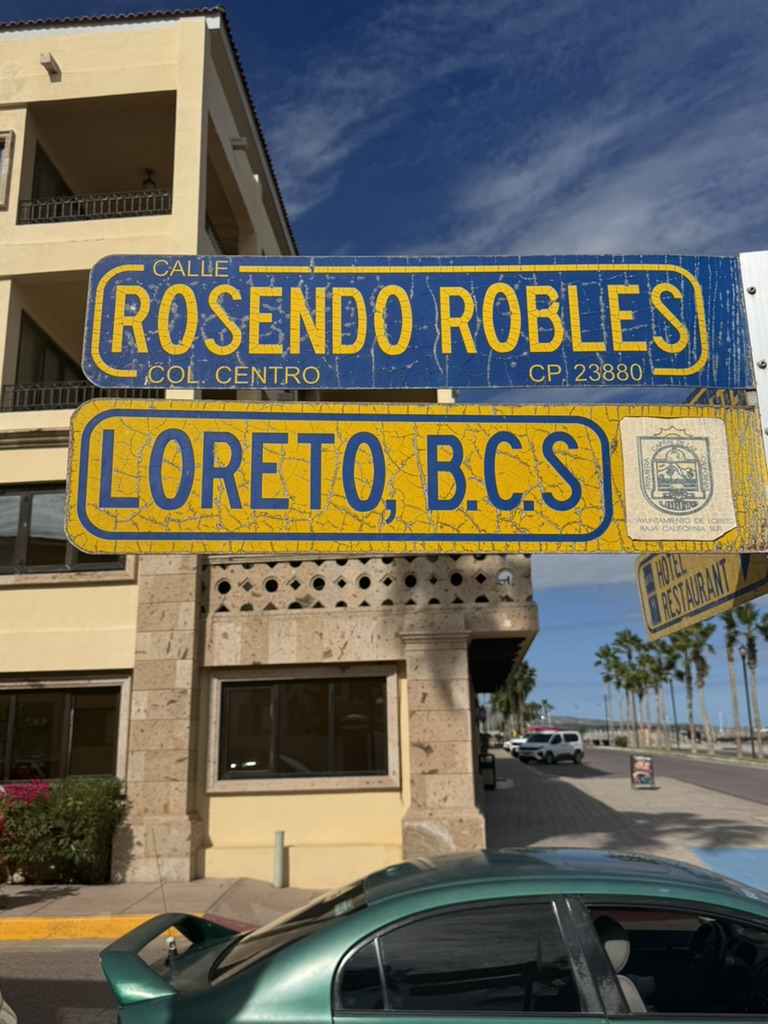
Arriving in Loreto, Baja California Sur
What the Sea of Cortez Did
There is something about open-water swimming that bypasses the thinking mind entirely. You enter the water, and the water reorganizes you. The sound changes. The light changes. Your body, which on land carries its history in shoulders and jaw and the tight place between the shoulder blades, begins, for the duration of the swim, to release its grip.
Psychiatrist Bessel van der Kolk (2014), whose work I would come to lean on heavily in the months ahead, describes how the body holds the accumulated evidence of what we have lived through. The nervous system, he argues, distinguishes poorly between past and present. It carries unresolved experience as physical tension, as breath that shallows, as vigilance that never fully stands down. What I know now, and only suspected then, is that I had been carrying nineteen years of precarious academic labour in my body, and the Sea of Cortez was the first environment in a very long time that asked nothing of that carrying.
None of this was conscious in May. I only noticed that I felt at ease in a way I had forgotten was available to me. I felt at ease in the water, in the town, in the unhurried rhythm of a place that knew nothing of my contracts, my committee work, or the endless institutional question of whether I would be renewed.
The seed was planted without my knowing it had been planted at all.
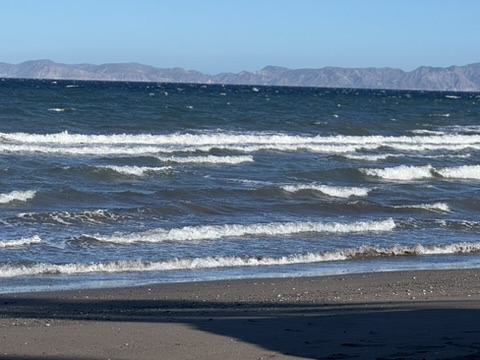
The Sea of Cortez, December
December: Burnt Out and Looking for Something I Could Not Yet Name
By the time I returned to Loreto on December 4th, everything had changed. My teaching had ended in April. My contract ended in June. My Master’s in Leadership, a creative expression project at Royal Roads University, was pressing toward completion. The defence was ahead of me. My doctoral ambitions were sitting alongside everything else, demanding attention I had long since depleted. I was trying, in the slow and often disorienting way of someone in the middle of a life transition, to determine what my post-institutional life would actually look like.
I turned sixty on December 12th, in the middle of that scouting trip. I had a quiet dinner alone by the water. There was no party, no ceremony, no milestone performance. Just the sea, and the fact of the number, and the strange calm of being somewhere that asked nothing of me on the day I crossed into a new decade. It felt right. It felt, in retrospect, like the first honest birthday I had given myself in years.
I was exhausted in a way that sleep alone cannot touch.
Transition theorist William Bridges (2019) describes this phase as the in-between: the disorienting space between an ending and a new beginning, when the old structure has dissolved, but the new one has yet to appear. It is the most generative phase of any transition, and also the most uncomfortable. Everything the old identity rested on has been removed. The person stands in the open, uncertain, without the familiar scaffolding of role and institution to tell them who they are.
The person stands in the open, uncertain, without the familiar scaffolding of role and institution to tell them who they are.
That was where I was in December. Standing in the open. I went back to Loreto because my body remembered something there that the rest of my life had stopped offering: the possibility of ease.
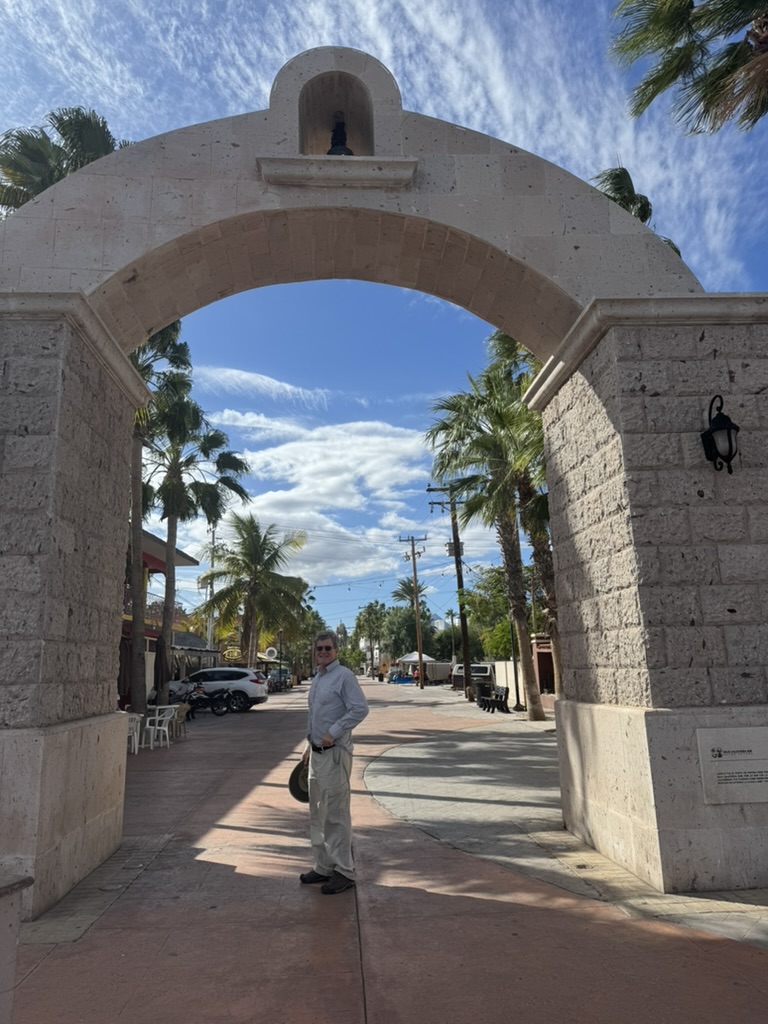
The Mission Arch, Loreto Town Centre
Morning Light on the Boulevard
Scouting: What I Was Actually Doing
I called it a scouting trip, and it was that. But scouting is too practical a word for what December was. I was doing more than checking logistics. I was asking the place a question: “Can you hold me for 30 days?” Is this somewhere I can be safe enough to finally stop performing, and still enough to actually think?
The practical answers were important. I walked the malecón at night and in the early morning. I ate alone at local restaurants. I walked unfamiliar streets without a map. I assessed, as a woman travelling alone, whether the community felt safe. It did. Loreto is a small town. People are visible to one another. There is a particular quality to places where community is woven into the daily fabric of life, where the evening paseo is a real institution, where the dogs sleeping in doorways, the fishermen heading to their boats, and the families eating in the plaza all exist within an unhurried and readable world. I felt held by its ordinariness. Unknown, perhaps, but unobserved in the way that mattered. No one knew my institutional history. No one required anything of me. I could be simply a woman walking, and that was enough.
I found the casita I would return to in January. I walked through it slowly. I noted the light in the morning, the sound of the sea through the window at night, the small kitchen, and the balcony where the palms moved in the wind. I checked whether it had what I needed: little, but exactly enough. A desk. A bed. Space for stillness.
I booked it before I left.
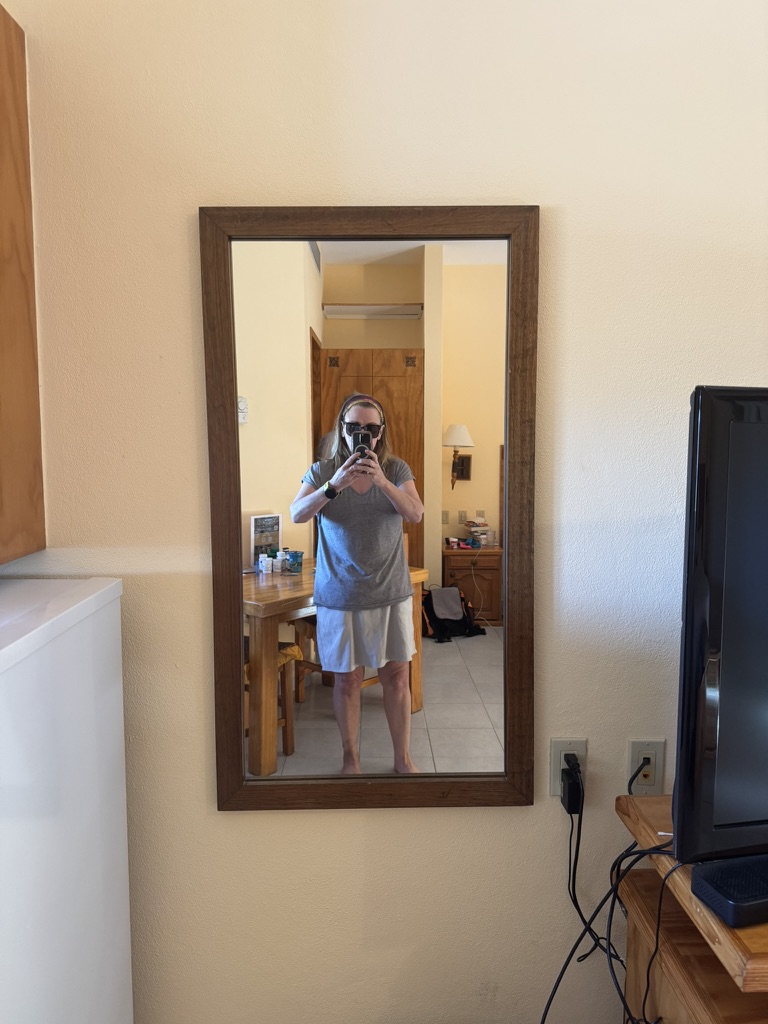
First Morning in the Casita
Pelicans at the Loreto Harbour
The Body Keeps the Score: Reading in December
I had brought my notebook and camera with me, as I always do. But the book I was reading during those two weeks in December was the one that would change the frame of everything I thought I was doing.
Van der Kolk’s The Body Keeps the Score (2014).
I had known the title for years. I had recommended it to students, cited it in passing, and been aware of its argument in the way we are aware of important things we keep at a careful distance. In December, sitting in a small restaurant on the malecón with the sea outside the window, I read it properly. I read it in the way you read something when you are ready for it, which is to say, I read it and recognized myself on nearly every page.
Van der Kolk (2014) argues that trauma is, at its core, a disruption of the body’s capacity to feel safe in the present, rather than a discrete event. The nervous system, shaped by overwhelming experience, remains in a state of chronic alert long after the original threat has passed. The body continues to respond as if the danger is ongoing, even when the conscious mind insists otherwise. The jaw clenches. The breath shallows. The shoulders stay locked. Sleep remains partial and vigilant. These are the body doing what it learned to do to survive, and nothing more.
I sat with this and let it account for things I had been explaining to myself in other ways for years.
The book changed what I thought January was for. It was no longer only a writing retreat, or a research project, or a recovery from burnout. It was something more specific: an experiment in creating the conditions under which my nervous system might, finally, learn to rest. Van der Kolk (2014) is clear that this requires environment, duration, and the consistent absence of demand. It cannot be rushed. It cannot be scheduled. It requires time and a place that asks nothing.
I looked up from the book and out at the Sea of Cortez, and I understood why I had come back.
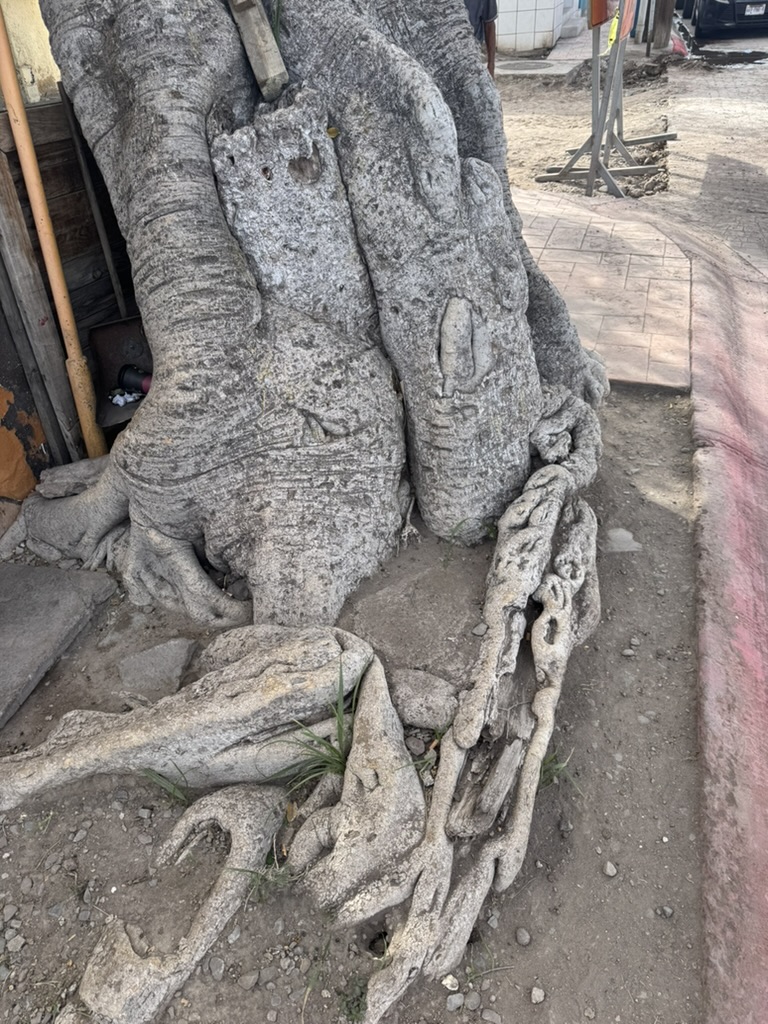
Roots That Hold: A Fig Tree on the Malecón
The Ideas That Began to Form
By the end of December, something had begun to clarify. It was the outline of something, still unformed, still becoming. I began writing in my notebook in ways that felt different from anything I had written before. For no committee. For no course. Without the need to demonstrate competence or meet a deadline. Writing to find out what I thought. Writing as a way of listening to what my body already knew.
Writing as a way of listening to what my body already knew.
I made notes toward a plan. A loose daily structure: writing in the morning, swimming and walking in the afternoon, painting and reflection in the evenings. No targets. No word counts. No deliverables. A commitment to presence rather than productivity.
I sketched the outline of what would become this project. I wrote notes toward a book. I asked, for the first time in a disciplined way, what I had actually experienced in nineteen years of precarious academic labour, and what the body was carrying that the institutional record had never recorded. I wrote about rest as something that had been taken from me rather than something I had neglected. I wrote about the right to stillness. I wrote about what it would mean to recover: from exhaustion, but also from the deeper erosion of having been treated as disposable for nineteen years.
The concept I would eventually name alonetude had no name at the time. But I could feel its shape. The particular quality of solitude I was experiencing in Loreto, chosen, inhabited, generative rather than empty, was already doing something to me that I had no words for yet. I wrote around it in December, the way you write around something you know is there but can barely bring yourself to look at directly.
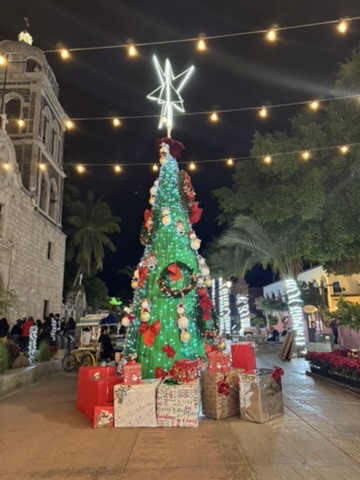
December in the Plaza
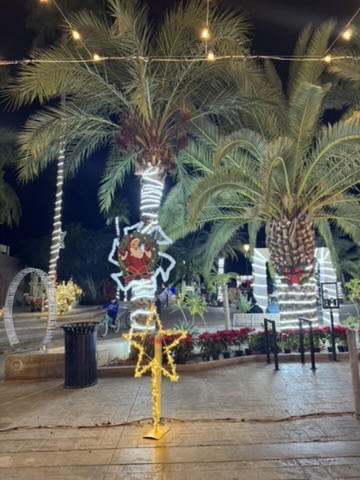
Navidad en Loreto
What December Gave Me
I left Loreto on December 17th with a booked casita, a notebook full of early thinking, and a body that had, for two weeks, been allowed to exist without institutional demand. I felt unhealed. Unready. More honestly, like someone who had confirmed that the thing she was looking for was real, even if she had no name for it yet.
The place was right. The sea was right. The unhurried community, the small town’s legible rhythms, the quality of the light in the early morning, the sound of waves through a window at night: all of it was right.
I would return on January 1st with one orange suitcase, a camera, a notebook, and a research question I was still learning to ask.
December had shown me where to look. January would begin the looking.
Note. This post is a retrospective account of a scouting trip taken December 4–17, 2025, prior to the thirty-day research retreat documented in the main body of this blog. It is situated before the formal inquiry begins, as context for the journey that follows.
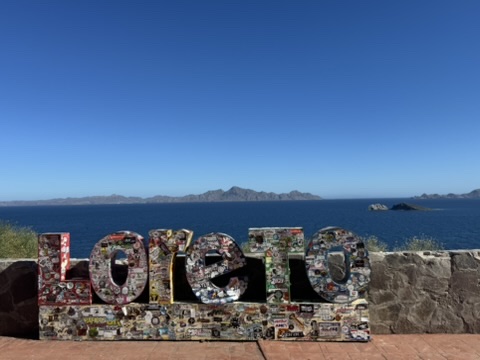
Loreto and the Sea Beyond
References
Bridges, W., & Bridges, S. (2019). Transitions: Making sense of life’s changes (40th anniversary ed.). Balance.
van der Kolk, B. A. (2014). The body keeps the score: Brain, mind, and body in the healing of trauma. Viking.
ACADEMIC LENS
December was the ground before the inquiry. This scouting note does what pre-research always does: it records the conditions that made something possible before that something had a name. Van der Kolk’s (2014) central argument, that the body holds unresolved experience as ongoing physiological tension, provides the theoretical ground for understanding why a specific place, encountered first through embodied pleasure and only later through scholarly intention, could function as a restorative environment. Reading The Body Keeps the Score in December constitutes a threshold moment in Nash’s (2004) Scholarly Personal Narrative framework: the moment when lived experience and scholarly framework find one another, and inquiry becomes possible. Bridges’ (2019) concept of the in-between names the structural condition that made this scouting trip necessary: the researcher, displaced from her institutional identity, required a place that could hold her while she found a new way of understanding what had happened to her. Loreto, encountered first through the body in May and returned to in December through intention, functions as what Bachelard (1964) calls a poetic space: a container intimate enough to allow genuine reflection, and generous enough to hold what that reflection would uncover.

