This essay is the personality-frameworks companion to What I Have Been Learning About Myself. Here I sit with what temperament inventories (MBTI, True Colours) reflect back and where I push against them; the companion essay carries the deeper work on limiting beliefs and on reclaiming introversion.
There comes a point in a long life of reflection when the question quietly changes. For most of my adult years, I had been asking what I should do next. What should I study. What should I publish? What should I train for? What should I become? These were useful questions, and they shaped a productive life. But they were all questions about direction, and they rested on an assumption I had never quite examined. The assumption was that I already knew who I was, and that the work was simply to figure out where I was taking her. In recent months, that assumption has quietly fallen apart. I have come to realize that I am still in the process of knowing who I am, and that much of what I thought was my identity was actually a set of adaptations I had made to the environments I moved through over a long career. The question shifted, almost without my noticing, from what I should do next to who was asking. That question is harder. It is also, I think, the question that matters most in the second half of a life.
Title: A Moment of Reflection
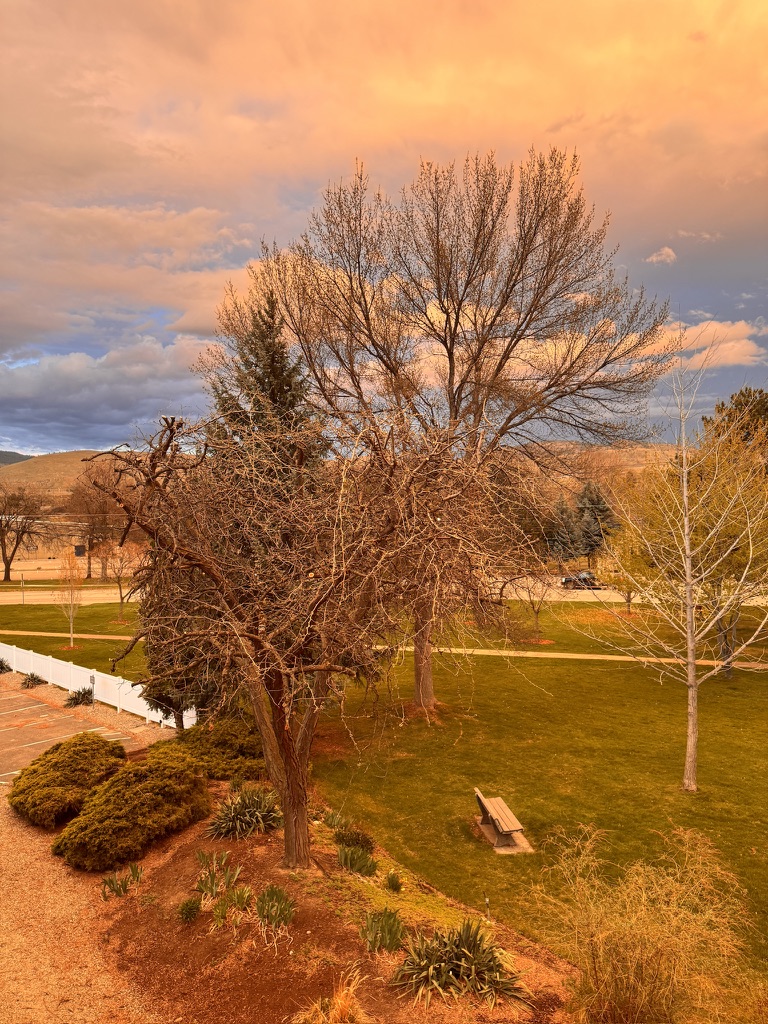
The look began with the frameworks. I had read about personality for years without quite using the material on myself, and I finally decided to sit with it honestly. I took the inventories. I read the profiles slowly. I let the descriptions have their chance to reflect something back. The Myers-Briggs Type Indicator (Briggs Myers & Myers, 1980) profile that emerged was INFJ, which describes a person oriented toward depth, meaning, attunement, and the interior life. The True Colours system (Lowry, 1978) placed me as Orange and Blue with Green close behind, and with Gold noticeably absent from my top colours. Reading these descriptions was a curious experience. Some of what they said landed with an almost physical recognition. Some of it made me pause. Some of it I wanted to push back against. I want to write about that honestly, because I think the habit of accepting every flattering description as the truth about ourselves is one of the subtle ways we keep ourselves hidden.
Title: New Growth
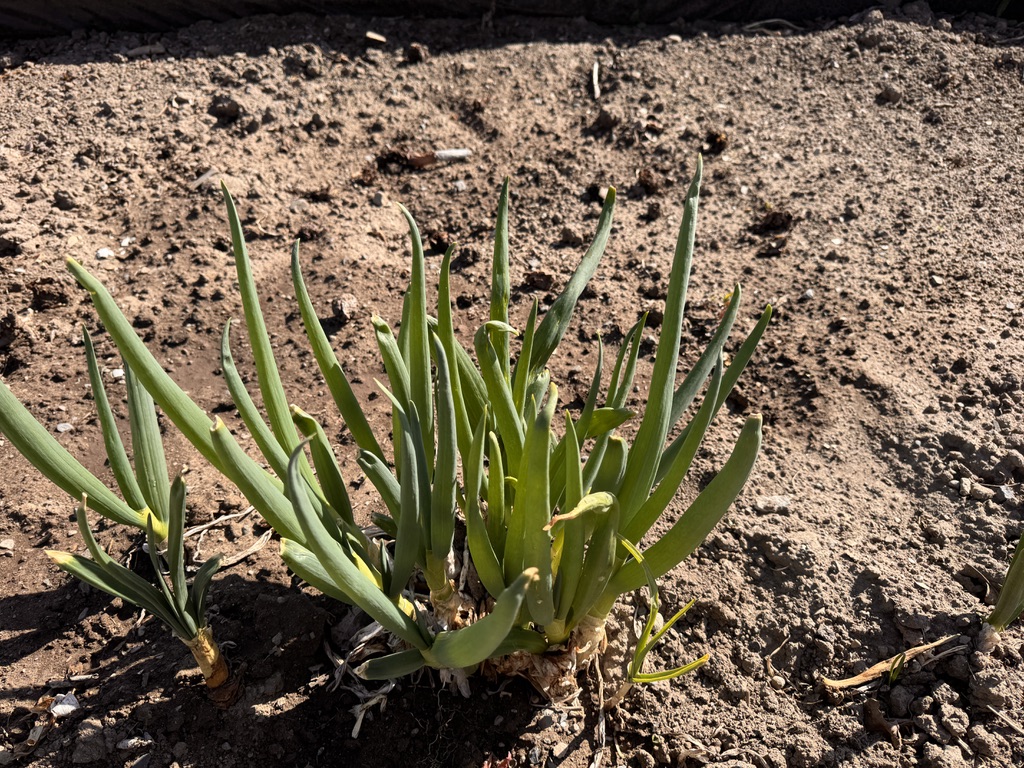
There was more agreement than I expected. The description of the INFJ as someone with a rich inner world that she rarely shares at its full depth, and whose composed external presentation often fails to match the complexity of her interior, was accurate enough that I sat down while reading it. That description named the girl I was at nine years old, already learning to arrange her face before entering a room, and it named the woman I have been for most of the years since. The description of a temperamental drive toward meaning-making was equally accurate. The dissertation, the wellness column, the blog, the book I am shaping, and much of the work I have done across a long career are all evidence of this pattern. I have been turning what I have lived through into contributions for as long as I have been alive. The True Colours reading of Orange and Blue and Green as roughly equal in me was also true, and the agreement there was harder to bear, because it named a tension I have lived with without having the language to describe it. My Orange wants to be in my body, training, running, and moving. My Blue wants to be with people, writing to them, caring for them. My Green wants to sit quietly with books and ideas. Each is legitimately me. Each asks for real time and energy. The tension between them has been part of my daily experience for as long as I can remember.
And yet, even as I was nodding, I was also pushing back. The frameworks describe a tendency toward perfectionism and a disproportionate sense of shame over small lapses, often framing these as essential features of the type. I disagree. I believe these are injuries rather than essential features. They are what happens when a sensitive, ethically attuned person absorbs performance standards that were never meant to be internalized and spends decades in environments that reward their internalization. The ethical rigour itself may be temperamental. The punishing internal critic attached to it is, I have come to believe, a learned response to environments that conflated high standards and self-punishment. That distinction matters more than almost any other insight I have arrived at this year, because one of those patterns is something I will live with to the end of my days, and the other is something I can set down. A framework that collapses the two into a single feature of the type deprives me of the distinction. I would rather hold the framework lightly, honour what it reflects accurately, and reserve the right to disagree when it tries to turn my adaptations into my essence.
What the frameworks were unable to reach, I am finding, lies beneath them. Temperament explains the shape of how I move through the world. Values explain what I am oriented toward. Neither of them describes the specific beliefs I have been operating from, the quiet instructions that have been running underneath my days for so long that I had stopped noticing them. Those beliefs are what actually organize a life. A framework can point in their general direction, but only the slow, unglamorous work of looking at my own days can bring them into focus. This is the work I have been doing recently, in a lesson on limiting beliefs, and it has been the most clarifying thing I have done in a long time.
Title: Deep Roots
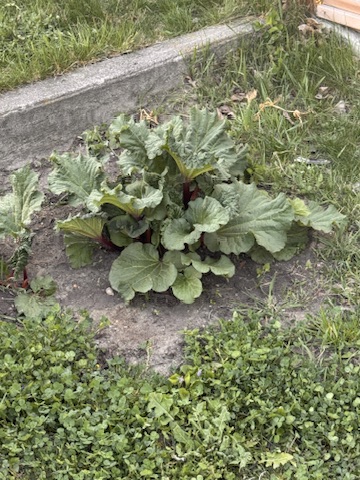
When I made my list of beliefs and looked at them honestly, one rose quietly above the others as the belief with the deepest roots. It was the belief that my worth was tied to what I produced. Of all the beliefs I named, this one ran beneath almost everything else. It shaped what I thought about rest. It shaped how I approached relationships. It shaped my relationship with my work. It shaped how I perceived value itself. I have no memory of a version of myself unfamiliar with this belief. It felt, in a way, like bedrock. Around it had grown an identity, which I could see clearly once I looked. I had become, over many years, the one who holds it all together. That identity was the public-facing expression of the deeper belief. If my worth was tied to what I produced, then the identity that made the belief workable was the identity of a woman who could be counted on to produce, to lead, to carry, to manage, to hold the centre of things when others were unable to. The belief was the instruction. The identity was the role that followed.
The exercise I was asked to do was to examine this belief and identity across three domains of my life, to see how they had shaped the texture of my days. I sat with the first domain, my relationships with others, and asked myself how the belief and identity were showing up there. What I noticed was that I most often show care through doing, through giving, through supporting others in tangible ways. The care itself is real. It is an expression of something genuine in me. What the belief has quietly done is turn that care into a form of currency. I feel more comfortable offering than receiving. I find it far easier to be the person who shows up with a meal, a piece of advice, a note of encouragement, than to be the person who lets someone else show up for me. I noticed that I overextend myself, particularly when I sense that someone else is struggling, and that I take on more than is mine to hold. I read the room quickly, identify what is needed, and step into the role of the one who provides it. This has been rewarded often enough in my life that I have come to rely on it. What the belief costs me, in a relationship, is the depth of connection that becomes possible only when I am willing to be received rather than only to provide. Equating being valued with being useful leaves very little room for the simple experience of being loved when I am producing nothing. The question that arose from sitting with this domain was what it might feel like to be valued simply for being present, rather than for what I provide. The answer remains ahead of me. The question itself is new.
The second domain was my work. Sitting with the belief and the identity here was more complicated, because my work has been both a source of profound meaning and a place where this belief has done much of its quiet damage. The belief has driven me to achieve, produce, lead, and contribute meaningfully across teaching, research, and service. The life that has resulted is one I am genuinely proud of. I want to honour those accomplishments fully by pretending the belief was only harmful. It was also, in its way, generative. What the belief has cost me, though, is the possibility of simply resting. Rest, under this belief, has always come with conditions. It had to be earned through prior productivity. It had to be justified by future productivity. It had to be framed as recovery, never as its own good. The possibility of simply resting, because a human body and mind need rest, without any reference to output at all, has been genuinely unavailable to me for most of my working life. The belief is closely tied, I realize, to experiences of precarity and to the need to demonstrate credibility within institutional systems that treated people, and me, inequitably. I have spent much of my career in environments where my place was precarious, and where visible effort was the price of remaining. The belief was accurate, far from paranoid. It was a memory. It was an accurate reading of the environments I was actually living in. What I am beginning to understand now is that those environments have changed, and that the belief has quietly persisted past the conditions that produced it. I am beginning to consider how my work might feel if it were grounded in purpose rather than proof. That is a different relationship with my work than I have ever had. I am still making my way toward it. Imagining it is itself a change.
Title: The Work of Wisdom
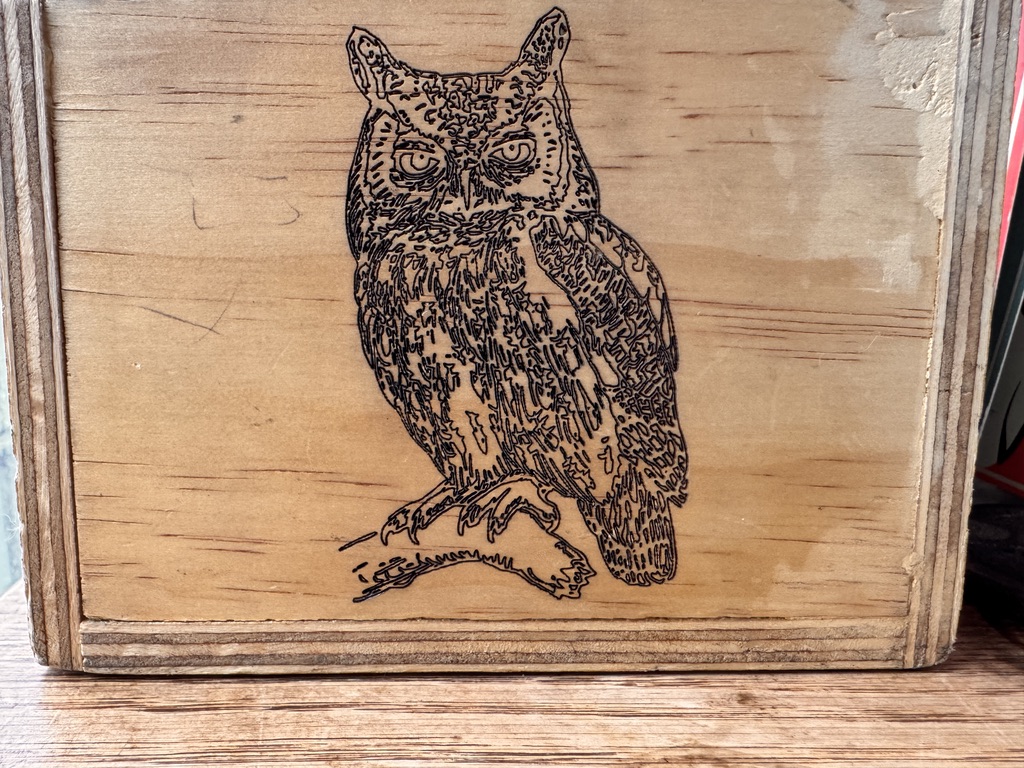
The third domain was my broader outlook on the world. Here, I noticed, with some discomfort, that I sometimes see environments as places where value must be demonstrated, recognition is tied to performance, and effort is required to secure belonging. Rooms can feel like assessments. Opportunities can feel like tests. New relationships can feel like introductions I need to pass. This is only part of my outlook. I also hold parallel beliefs in possibility, care, and transformation. The two perspectives coexist, and I move between them depending on the day and the room. What the limiting belief does, when it is running strongly, is narrow my view. It makes the world feel more demanding and evaluative than it may actually be. It obscures the rooms where I am already welcome, the people asking nothing of me by way of proof, the ordinary moments in which my presence alone is enough. When the belief is loud, I walk past those rooms without noticing them, because my attention is given entirely to the rooms that are asking me to perform. I am exploring the possibility that the world can also be a place where I am already enough, without continually having to demonstrate it. That exploration is slow and more demanding than positive thinking. It is the gradual reorientation of perception, room by room, over a long period of time.
Title: Environments That Demand
Sitting with this belief and this identity across these three domains taught me something that the personality frameworks, useful as they are, were unable to reach on their own. The frameworks describe my temperament. They suggest my natural orientation. They hint at where my strengths and my difficulties may lie. But they leave unaddressed which specific beliefs I have absorbed and how those beliefs are shaping the particulars of my daily life. That work is mine alone. It requires a different kind of looking. It also requires a different kind of patience, because the beliefs have been in place for so long that they no longer feel like beliefs. They feel like facts about the world. The work is to see them again as beliefs, which is to say, as interpretations I absorbed along the way and can, with time, revise.
What I am discovering is that the relationship between temperament, values, and beliefs is more complex than I had assumed, and that each layer requires a different kind of attention. My temperament gave me certain capacities, including my attunement, my depth, and my meaning-making. My values gave those capacities a direction, orienting me toward care, integrity, meaningful contribution, authenticity, and the other commitments I hold. My beliefs, on the other hand, were the interpretations I absorbed along the way about what my temperament and my values required of me. Some of those beliefs were accurate. Some of them were distortions. The belief that my worth was tied to what I produced was a distortion. It took something real about my temperament and my values: I am a person who genuinely cares about contribution, and it quietly twisted that care into a demand. The care itself is beautiful. The demand that has lived alongside it is where the suffering has been.
What I am slowly discovering is that I am neither the woman the frameworks describe nor the woman I have been performing for most of my life. I am somewhere between the two and still figuring myself out. I am an INFJ, insofar as that means anything useful. I am Orange and Blue and Green, with Gold mostly absent. I am a woman with nine clear values. I am also someone carrying specific limiting beliefs that I am now, for the first time, examining openly and naming out loud. The woman underneath all of these descriptions is someone I am only beginning to meet. She is ordinary and recognizable. She is recognizable. She is the kind of person who has always existed in human history, and who has always struggled with the same patterns I struggle with, and who has always found her way through the same honest work I am now doing. What makes her mine is simply that she is the particular version of this pattern that has shown up in my life, and that she is the one I am now responsible for tending.
There is an emerging belief underneath the older one, quieter, still learning to speak. I am worthy of connection, rest, and belonging without needing to prove it. I am practising this sentence, alongside the belief I have carried, as a companion to it rather than a replacement. Both are present. One is old and tired. One is new and tentative. I am letting them both exist, and I am trusting that over time, the newer voice will grow stronger, simply by being allowed to speak.
Title: Simple and Whole
What I would say to anyone who is in a similar season is something quiet. Take the frameworks seriously enough to let them reflect something back, and lightly enough to keep the right to disagree with them. Take your values seriously enough to name them honestly, perhaps in writing, where you can see them all at once. And take your beliefs seriously enough to examine them in the specific domains of your daily life, where they actually do their work. The frameworks will give you vocabulary. The values will give you direction. The belief that work will give you traction. All three are needed. None of them is sufficient on its own. The woman you are becoming will still be recognizably you. She will carry the same temperament she was born with. She will honour the same values she has claimed. But she will move through the world more lightly, with less self-punishment, and with more room to simply exist as the particular person she was made to be. That is the work. That is what all of this is finally for.
References
Briggs Myers, I., & Myers, P. B. (1980). Gifts differing: Understanding personality type. Davies-Black Publishing.
Lowry, D. (1978). True Colours. True Colours International.

