Las piedras no tienen prisa. Tampoco el dolor.
Stones know no hurry. Neither is grief.
A Bilingual Scholarly Reflection on Geological Time, Trauma, and Alonetude
Las piedras hablan / The Stones Speak
I have been collecting stones since my first walk along this shore.
Gathering without purpose. Without cataloguing or arranging. Simply bending down, picking something up, turning it over in my palm, feeling its weight, its smoothness, its particular refusal to be hurried. Some I carry back to my room. Some I return to the water. Most I hold for a moment and set back down exactly where I found them.
This practice arrived unexpectedly. But here I am, two weeks into thirty days beside the Sea of Cortez, and the stones are teaching me something available through no other path.
Las piedras hablan. Pero no con palabras.
The stones speak. In a language beyond words.
Tiempo profundo / Deep Time
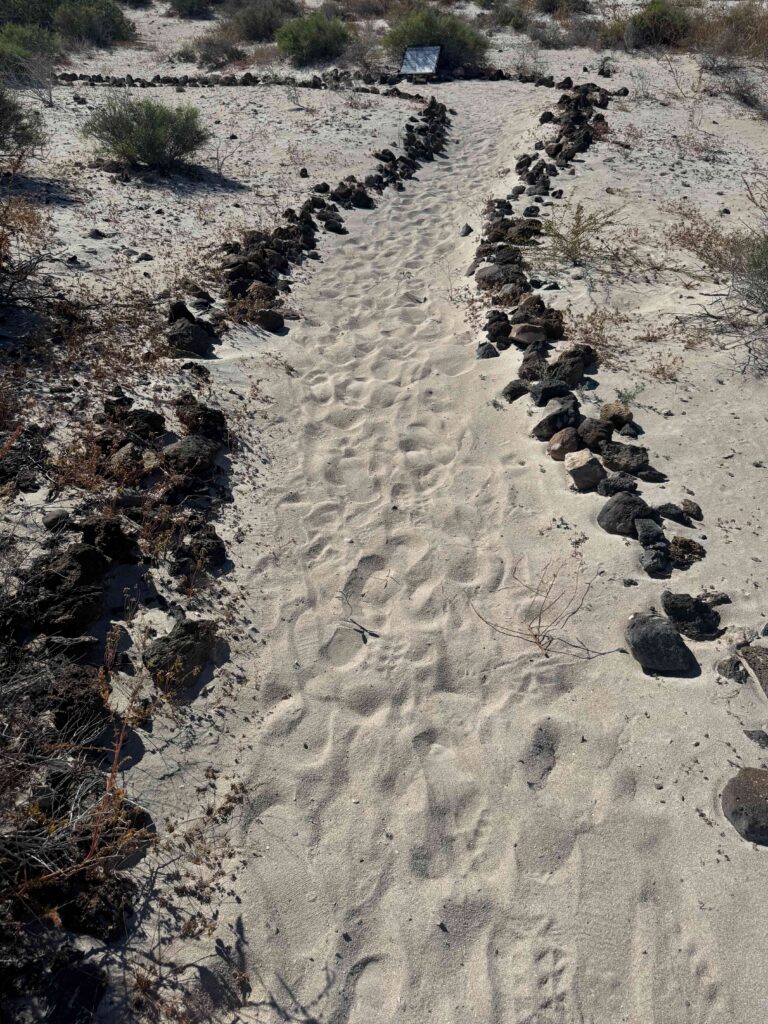
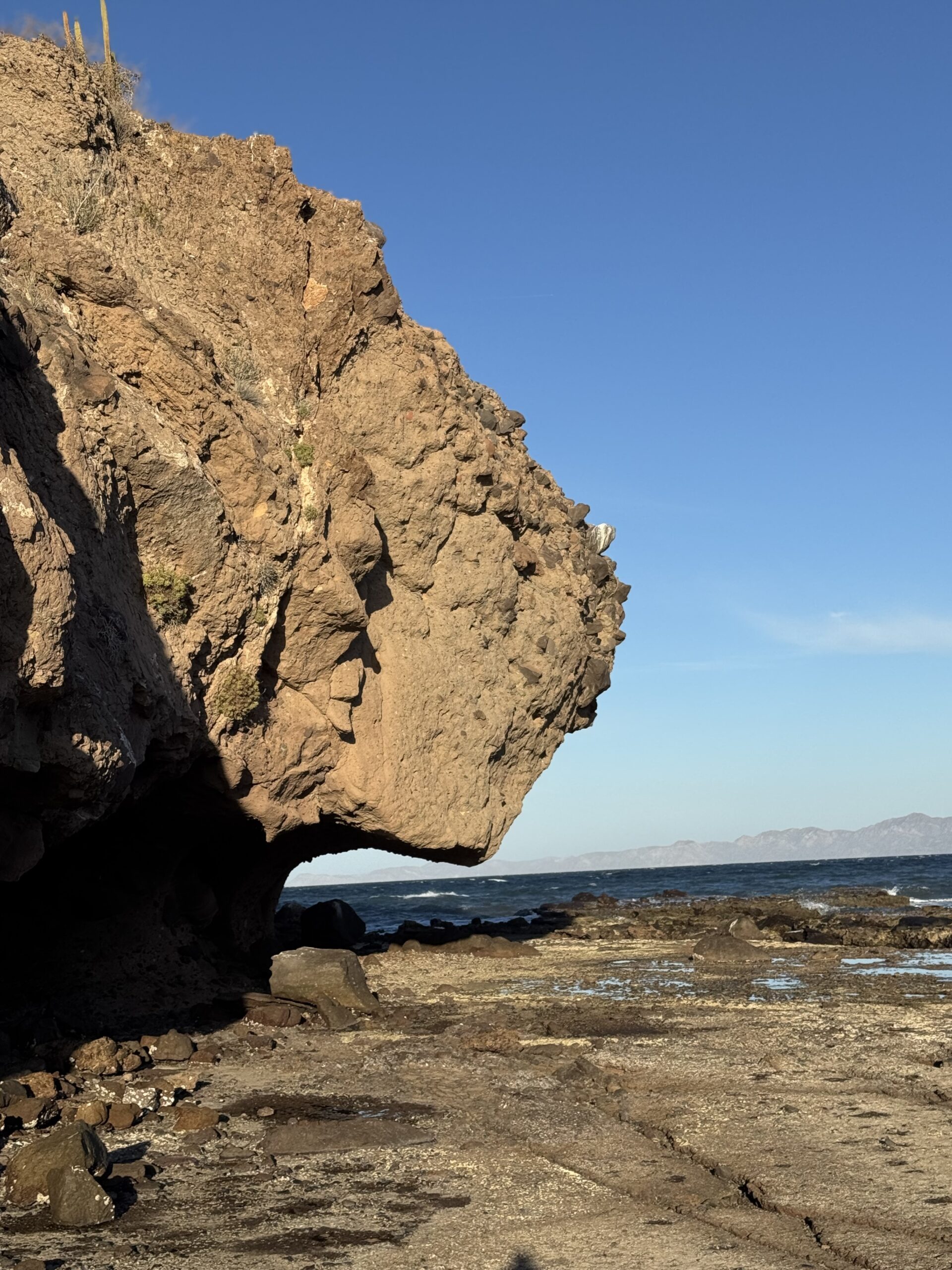
The stones on this shore are old in a way that rearranges something in the mind.
Geologists use the term deep time to describe the vast timescale of Earth’s history, a scale so large that human life occupies only a tiny fraction of it. The volcanic stone of the Sierra de la Giganta, rising at the edge of this bay, formed over millions of years. What I am holding in my hand has been shaped by water, wind, and heat across timescales I cannot fully imagine. And yet here it is. Smooth. Patient. Present.
Geographer Yi-Fu Tuan (1977) writes about the relationship between place and time, arguing that our sense of place deepens with duration, that the body learns a place slowly, through repeated contact and accumulating familiarity. The shore is teaching me this. Each morning, I walk the same stretch of beach, and it is never quite the same beach. The tide has rearranged it. The light falls differently. A stone I noticed yesterday has been turned over by water, offering me a different face.
El lugar me enseña paciencia. / The place teaches me patience.
This feels important. I have spent nineteen years in precarious employment, living inside what Rob Nixon (2011) calls slow violence: harm that unfolds gradually, accumulating across time without announcement. Slow violence has its own temporal logic. It teaches the body urgency. It teaches the nervous system that time is always running out, that the next contract may fail to arrive, and that rest is a risk. The body learns to treat duration as a threat.
The stones are teaching the opposite. They are evidence that time can accumulate as beauty rather than damage. That something can be shaped by forces larger than itself and emerge refined rather than broken.
El cuerpo como archivo / The Body as Archive
I have been thinking about what stones and bodies have in common.
Both are shaped by what they have been through. Both carry the evidence of their history on their surfaces and in their structures. A stone makes no decision toward smoothness. Smoothness is what the water makes of it, over time, through persistent contact. And a body makes no decision to brace. Bracing is what survival is made of, over the years, through persistent exposure to uncertainty.
Resmaa Menakem (2017) writes that trauma is stored in the body rather than only in the mind, passed between generations through nervous system inheritance. What the body learned to survive, it continues to enact, even when the original threat has passed. The stone cannot stop being smooth simply because the water has receded. And for a long time, stopping the bracing was beyond my reach simply because the contracts had stopped.
El trauma vive en el cuerpo. La curación también.
Trauma lives in the body. So does healing.
Bessel van der Kolk (2014) describes how the body keeps its own score, maintaining a somatic record of experiences the conscious mind may have rationalized or set aside. Healing extends beyond intellectual understanding of what happened. It is to give the body new experiences that gradually teach the nervous system a different story. New evidence. Repeated contact with safety. The slow accumulation of something other than harm.
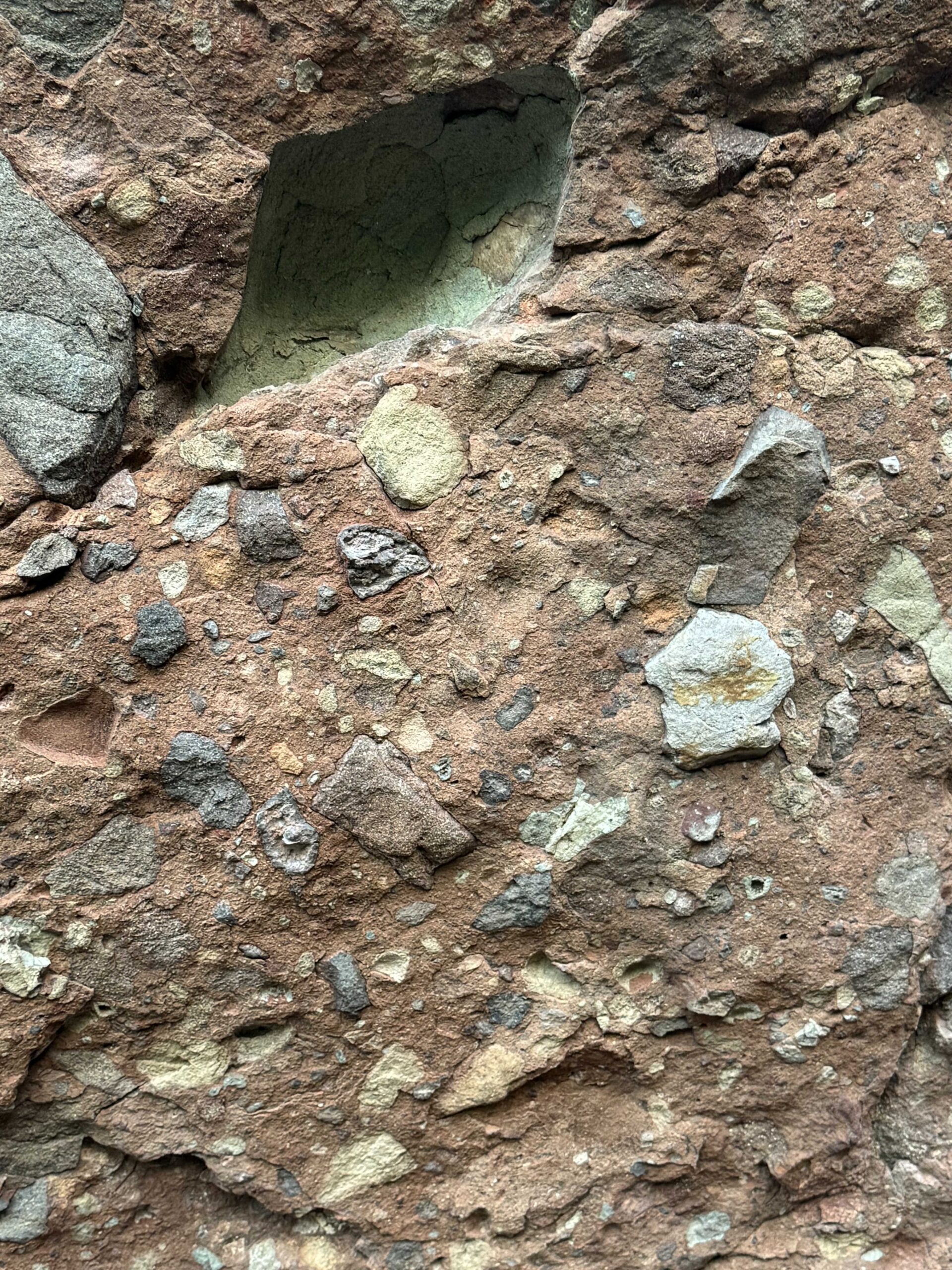
Holding a stone, I notice something release in my shoulders.
Gaston Bachelard (1969) argues that we think with our hands as much as with our minds, that the imagination is deeply material rather than purely visual or verbal, rooted in touch, weight, and texture. There is a kind of knowing that arrives only through the hands. Picking up a stone, I feel it rather than think about it, receiving what it has to offer through the sensory channels that precede language.
There is a kind of thinking that happens only in the hands. The stone offers no argument. It simply offers itself, and the body receives it.
Alonetud y piedra / Alonetude and Stone
The practice of picking up stones is a practice of alonetude.
Alonetude, as I am developing it, differs from both loneliness and the performed solitude of the retreat or the meditation app. It is a quality of presence, a willingness to be fully here with what is here, without an audience, without a purpose beyond the presence itself. It is the opposite of the hypervigilance that precarious labour instilled in me, the constant scanning, the waiting for the next demand, the inability to fully arrive in any moment because the next moment always carries a threat.
Estar sola, completamente presente. / To be alone, completely present.
When I pick up a stone, my full attention belongs to the stone. The stone requires my full attention, because presence itself requires it; once is simply what the encounter asks. I turn it over. I feel its weight shift. I notice the colour change where my warm hand has touched it. For these seconds, the sessional instructor waits for a contract to fall away. The researcher is anxious about the output falling away. I am a body in relation to a stone, and the stone is indifferent to all the rest.
This indifference is, strangely, a relief.
Philosopher Martin Buber (1970) distinguishes between I-Thou and I-It relationships, where genuine encounter requires full presence and mutuality. Most of my institutional life has been I-It: instrumental, transactional, surveilled. The stone cannot evaluate my performance. It cannot renew or decline to renew my contract. Its indifference holds no unkindness. It is entirely outside the economy of institutional assessment, and in that outside-ness, I find something I had almost forgotten how to feel.
La piedra no me juzga. / La piedra no me juzga. The stone withholds all judgment.
Las historias que cargamos / The Stories We Carry
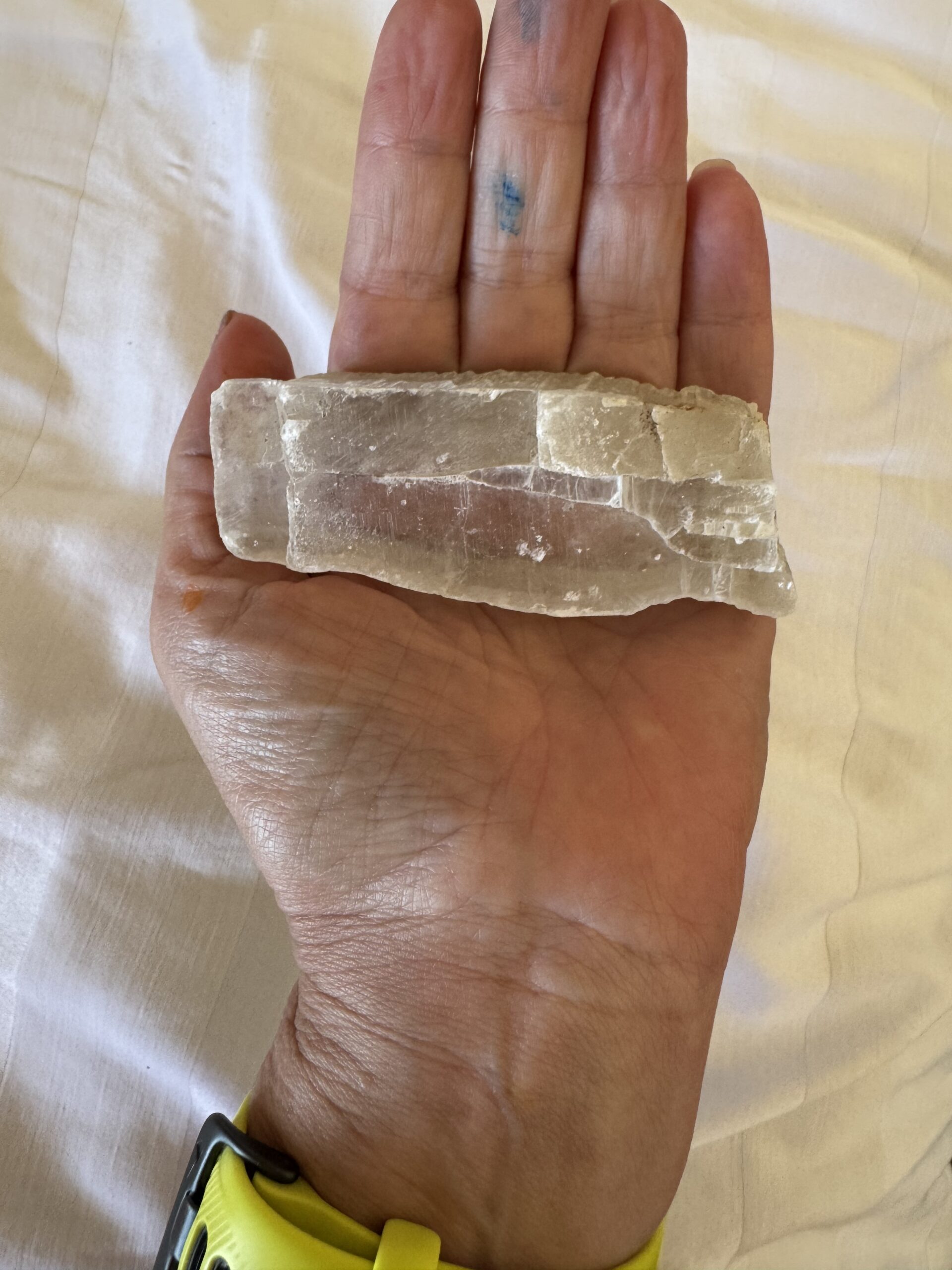
Each stone has a history.
I know this intellectually, in the way geologists know it: that the smoothness of a river stone records the duration and force of the water that shaped it, that the colour of volcanic rock carries information about the temperature at which it formed, that the weight in my hand is a compressed record of pressures and processes that unfolded across scales of time I cannot inhabit.
But I also know it in another way. The way the body knows things.
Menakem (2017) writes about the concept of the somatic narrative: the story the body tells through tension, posture, gesture, and breath. The body’s story lives beyond words. It is told in holding patterns, in the places breath has learned to avoid, in the flinch that arrives before the threat is even named. To heal is to learn to read this narrative, to listen to what the body has been trying to say.
The stones, in their patient silence, are teaching me to practise this listening.
Clark Moustakas (1961) writes about loneliness as an inescapable dimension of human experience, one that contains within it the possibility of deep self-knowledge. Genuine solitude, for Moustakas, transcends the absence of others: it is the presence of oneself, a turning toward rather than a turning away. Picking up stones alone on a shore in Mexico, I am practising this turning. Meeting myself in the quiet that forms between me and the geological world.
Las historias de vida de las piedras son también las mías.
The life stories of the stones are also mine.
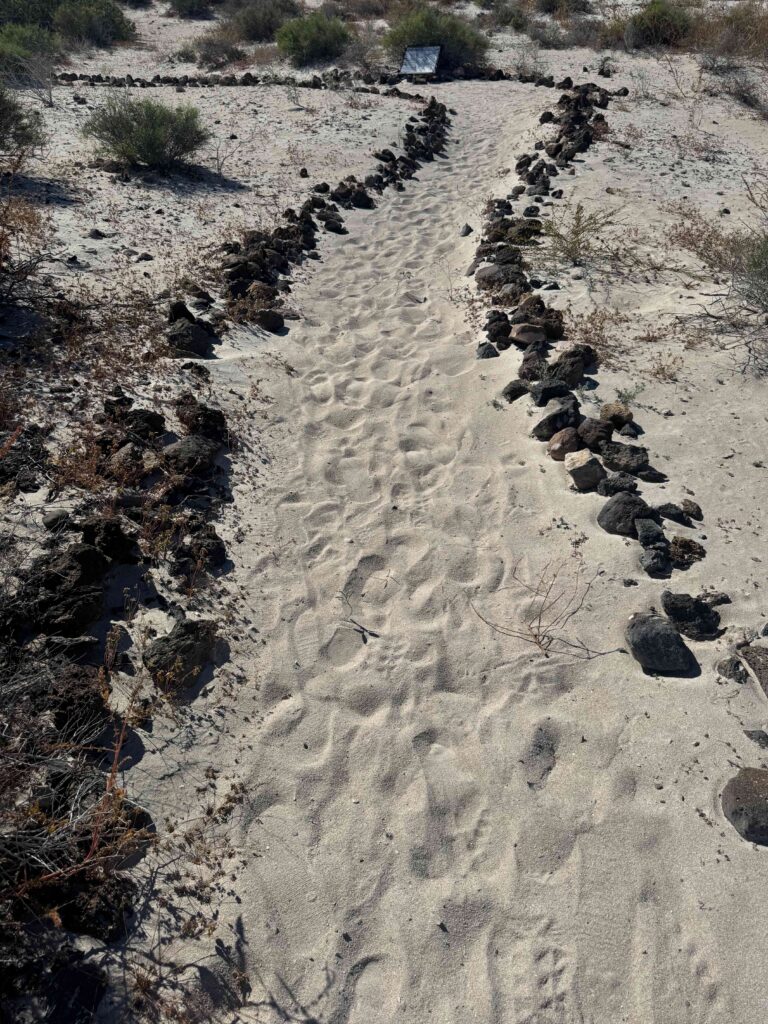
Lo que me llevaré / What I Will Take With Me
I am going to take three stones home.
I have been choosing them carefully over the past two weeks. Neither the most beautiful nor the most dramatic. Three ordinary stones that fit together in my hand, that have become familiar to me through repeated handling, that carry now the warmth of my attention.
Robert Levine (2010) writes about the body’s capacity to complete interrupted experiences, the way trauma keeps a process alive that was never allowed to finish. Healing, in this framing, is completion: returning to something left unfinished and allowing it to resolve. I think of the past nineteen years as an interrupted experience. A process that never reached resolution because the conditions for resolution, security, time, witness, and safety, were never present.
These thirty days are the beginning of completion.
The stones will come with me as witnesses. Evidence that I was here. That something in me held still long enough to be shaped by something other than urgency. That the body can learn, slowly, the way stone is learned by water: through patient and repeated contact with what is real.
Estas piedras son testigos. / These stones are witnesses.
References
Bachelard, G. (1969). The poetics of space (M. Jolas, Trans.). Beacon Press. (Original work published 1958)
Buber, M. (1970). I and Thou (W. Kaufmann, Trans.). Charles Scribner’s Sons. (Original work published 1923)
Levine, P. (2010). In an unspoken voice: How the body releases trauma and restores goodness. North Atlantic Books.
Menakem, R. (2017). My grandmother’s hands: Racialized trauma and the pathway to mending our hearts and bodies. Central Recovery Press.
Moustakas, C. (1961). Loneliness. Prentice-Hall.
Nixon, R. (2011). Slow violence and the environmentalism of the poor. Harvard University Press.
Tuan, Y-F. (1977). Space and place: The perspective of experience. University of Minnesota Press.
van der Kolk, B. A. (2014). The body keeps the score: Brain, mind, and body in the healing of trauma. Viking.
This reflection engages what Richardson and St. Pierre (2005) describe as the essential function of Scholarly Personal Narrative: using the first-person account as a site of rigorous inquiry, where the researcher’s lived experience becomes both data and analysis. The stones function here as what Tuan (1977) calls place objects: material things that anchor us to a place and through that anchoring, to ourselves. The somatic learning described is aligned with Menakem's (2017) argument that healing must reach the body level beyond the cognitive, and with Bachelard's (1969) phenomenology of material imagination, the insight that we think with the substances of the world, and that stone in the hand is already a kind of knowing.
Translation note. Spanish language passages were generated using Google Translate and subsequently reviewed and refined by the author. Any remaining infelicities reflect the limits of machine translation rather than intent.
For a full list of all sources cited throughout this project, see the References page.

