Afternoon
The heat has arrived.
By one o’clock, the temperature has climbed into the mid-thirties, and the village has responded the way it responds every afternoon: by stopping. Shops close. Streets empty. Even the dogs find shade and cease their wandering.
Title: Fishing Boat
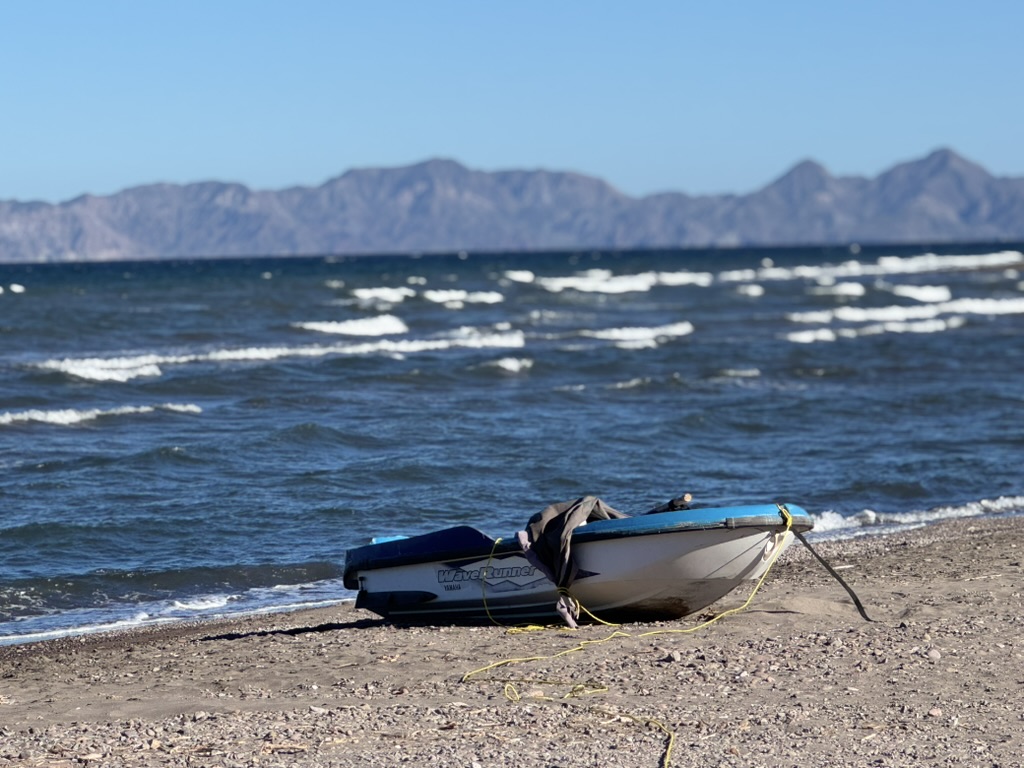
Photo: Amy Tucker, © 2026
I am learning this rhythm. Joining the collective surrender to the heat rather than fighting it. After lunch, I close the curtains against the sun, lie on the bed under the ceiling fan, and simply rest.
Rest, rather than sleep. The body horizontal, the mind quiet, time passing without purpose or productivity.
This is siesta. The practical wisdom of a place beyond romanticized tourism, a place that knows heat must be respected. You stop. You release the push-through. You rest. You wait for the world to become livable again.
For twelve days now, I have been learning to stop without guilt. To rest without justifying it. To simply be horizontal in the afternoon heat and let that be enough.
Today, it finally feels natural. Simply the appropriate response to what the day is asking.
El calor manda. The heat commands.
Y yo obedezco. And I obey.
Days of My Life
By three o’clock, the worst has passed. The temperature remains high, but the quality changes. Bearable. Moveable. I get up, drink water, and sit on the shaded patio watching the water.
A pelican flies past. Low and slow. Unhurried.
The village is beginning to wake again. A shop door opens. A car starts. Life resuming its rhythm, altered by the heat and still intact.
I think about the years I spent overriding my body’s signals. Tired but pushing through. Hot but staying at the desk. Needing rest but never quite allowing it because rest felt like failure, like giving up, like evidence that I lacked the strength others seemed to carry so easily.
Title: Afternoon Skies
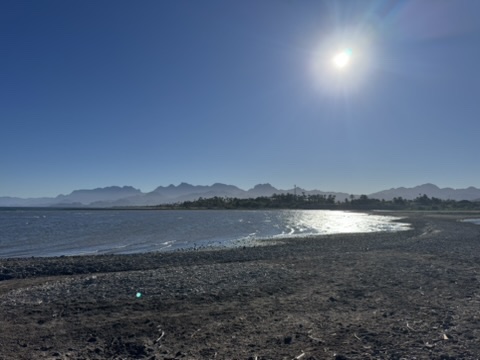
Photo: Amy Tucker, © 2026
The wisdom here is different. Rest is a response. It is the appropriate accommodation to conditions that require it.
Twelve days of practising this, and something is shifting. The guilt that used to accompany rest is dissolving. Slowly. But dissolving.
Poco a poco. Little by little.
The body learns what the village already knows: some hours are for work. Some hours are for rest. And knowing which is which is its own kind of wisdom.
Title: Mission Church
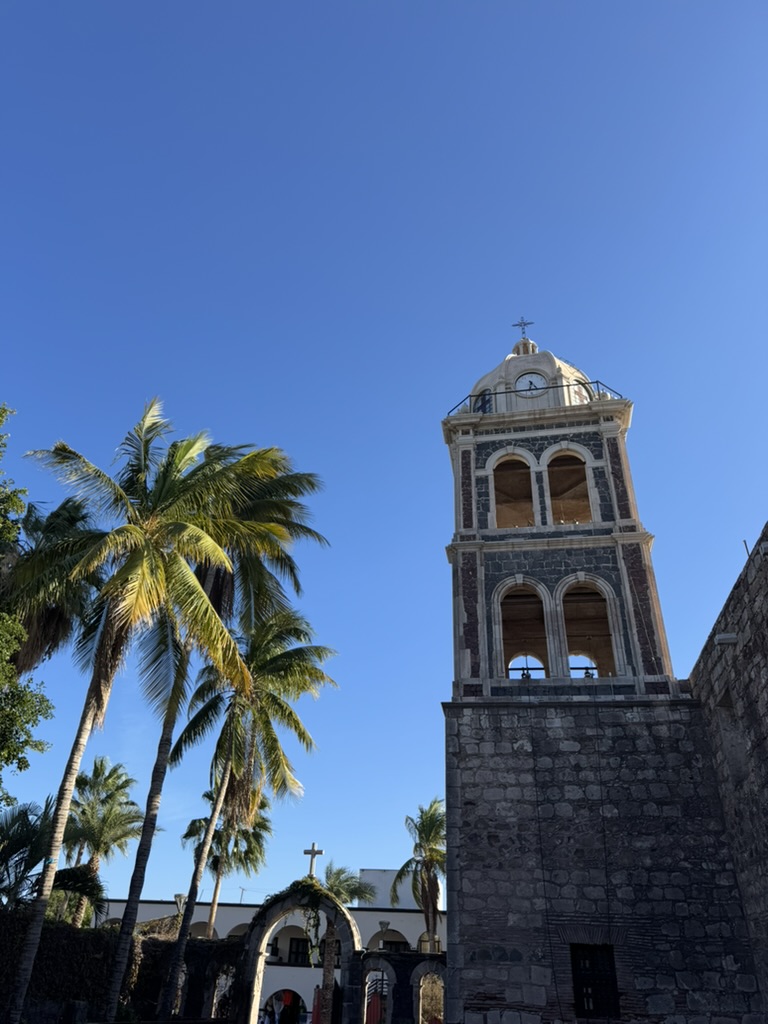
Photo: Amy Tucker, © 2026
ACADEMIC LENS
The siesta described here is more than a cultural curiosity; it is a somatic practice that enacts what Hersey (2022) calls “rest as resistance”: the refusal of a productivity ethic that treats the body as an instrument rather than a subject. The narrator’s observation that rest “felt like failure” for years names the internalized logic of what Maslach, Schaufeli, and Leiter (2001) identify as the burnout cycle, the compulsive override of the nervous system’s regulatory signals in service of institutional demands. Siesta, by contrast, offers what Levine (2010) describes as a completion cycle: the body allowed to move through activation and into genuine discharge, rather than being driven through exhaustion and back into performance.
The phrase el calor manda, the heat commands, carries epistemological weight beyond its simplicity. It articulates a form of environmental authority that precedes and exceeds human scheduling: what Merleau-Ponty (1945/1962) would recognize as the primacy of the body’s dialogue with its world over the abstractions of clock-time and productivity. The village’s collective rhythm enacts this daily, modelling what van der Kolk (2014) argues trauma survivors must relearn: that the body’s signals are trustworthy guides rather than obstacles to be managed. The recovery described across this entry, from guilt-laden rest to rest that “finally feels natural”, tracks precisely the trajectory Levine (2010) maps as somatic healing: a gradual recalibration rather than a sudden shift,n of the nervous system toward safety.

