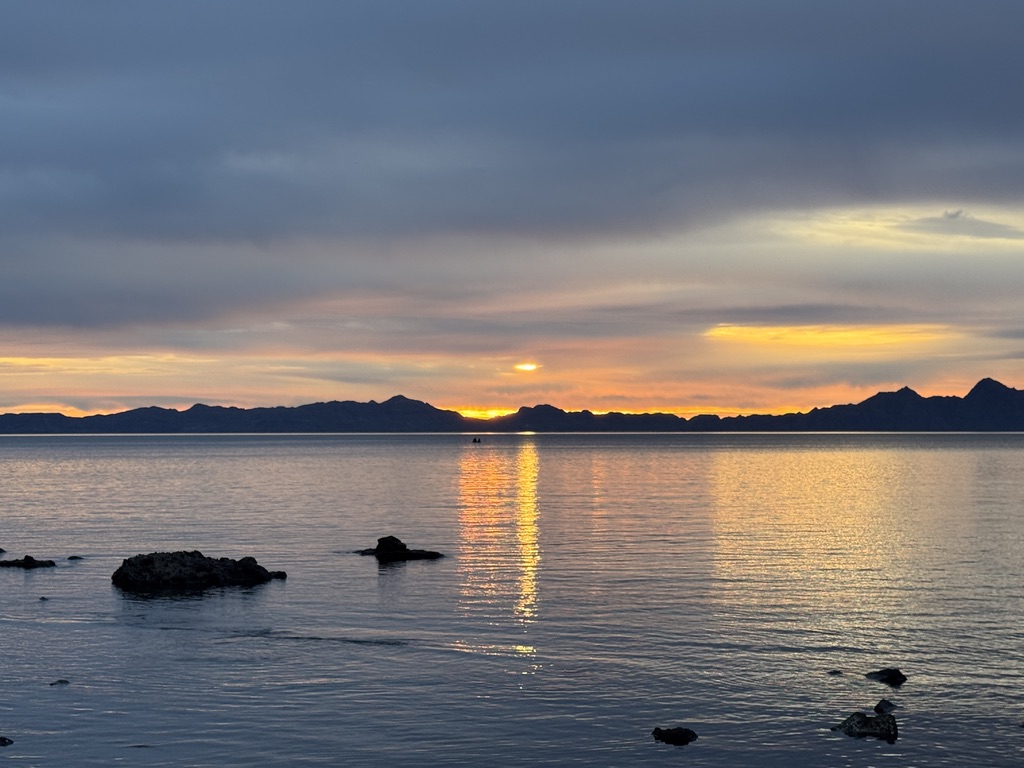
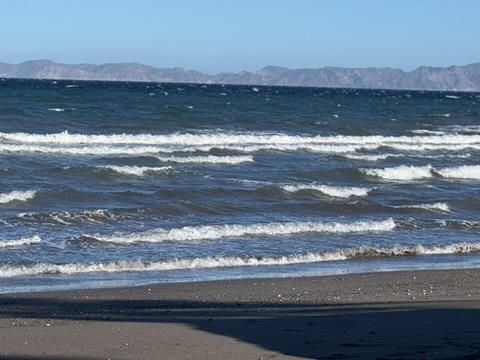
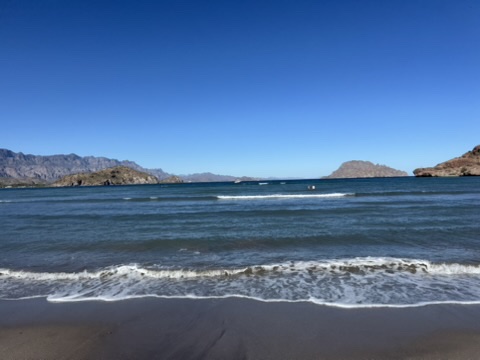
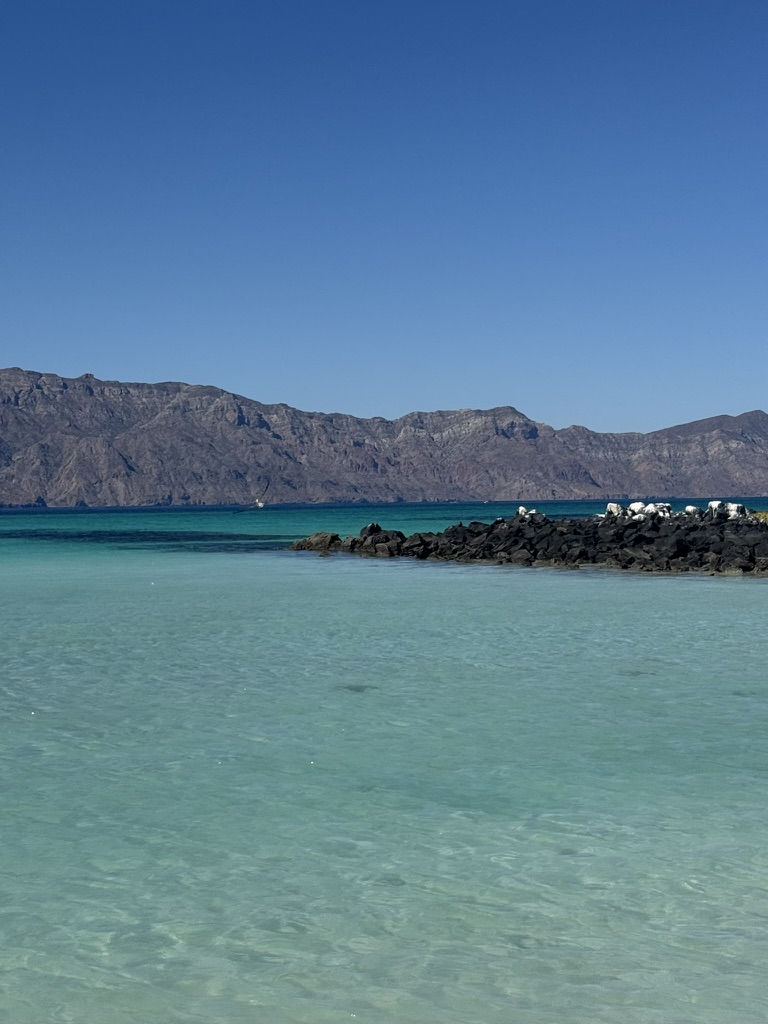
Puesta de sol, sunset on Day Two in Loreto. A bilingual reflection on the particular quality of light at the end of a first full day by the sea, and what the body begins to release when the world turns gold.
Sunset at the horizon.
This was something else entirely: a quality of presence, of being genuinely with myself rather than merely by myself.
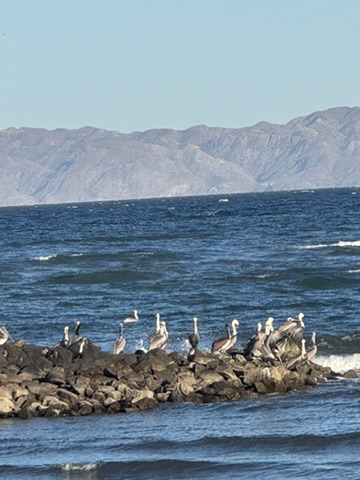
Title: The Gathering
Artist Statement

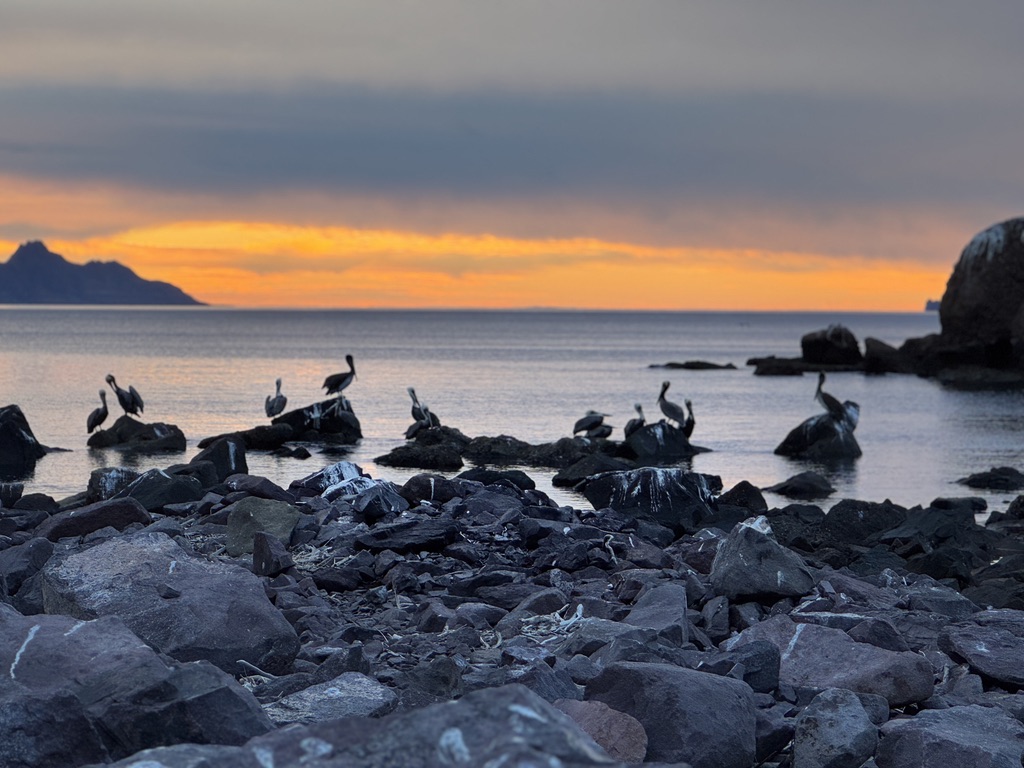
They gathered where the land gives way to water.

Perched along the rocks, they faced different directions, yet remained part of the same quiet formation. No urgency. No competition for space. Just bodies arranged along the shoreline, each holding its own stillness while sharing the same horizon.

I stood at a distance watching them.

What struck me was their patience. The way they waited without signalling waiting. The way they scanned the water without appearing restless. There was a rhythm to their presence that felt familiar to me, a kind of learned stillness that comes from spending long periods observing rather than intervening.

In that moment, I recognised something of my own practice reflected back.

This work of standing at edges. Of watching what moves beneath the surface. Of trusting that some moments ask only to be witnessed. Some moments ask only for attention. For steadiness. For remaining long enough that the landscape forgets you are there.

The mountains behind them held their own quiet authority, grounding the scene in time beyond the immediate. Water, rock, wing, distance. Each element coexisting without demand.

I kept my distance.

I allowed the distance to remain intact, understanding that proximity rarely determines connection. Sometimes respect lives in observation alone.

Photo Credit Amy Tucker, January 2026
References
Google. (n.d.). Google Translate. https://translate.google.com
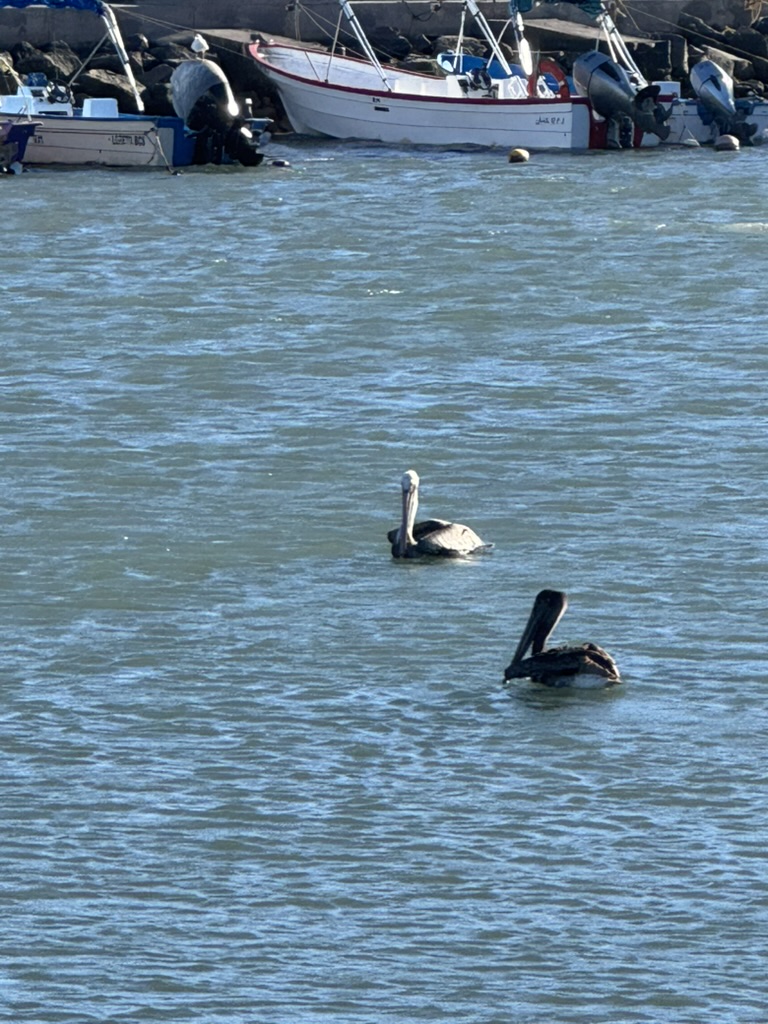
The evening I arrived in Loreto, Mexico, I stood on the malecón watching pelicans dive into the Sea of Cortez, and I felt something without a name.
Some moments ask only for attention.
It was something beyond loneliness, though I was profoundly alone, 3,000 kilometres from home, knowing no one, with thirty days of solitude stretching before me. Neither was it the comfortable solitude I had glimpsed in rare moments throughout my life, those brief pauses between obligations when I might read undisturbed or walk without destination.
I had no words for this experience. During Covid, I learned to call this place alonetude.
For decades, psychological research has approached solitude primarily through a deficit lens, and rightly so. Social isolation carries mortality risks equivalent to smoking fifteen cigarettes daily. Loneliness predicts cardiovascular disease, cognitive decline, and depression. The public health imperative to address what former U.S. Surgeon General Vivek Murthy called an “epidemic of loneliness” has produced essential knowledge and helped countless people.
But this focus created a gap. By treating solitude primarily as the absence of connection, we overlooked solitude as presence: the presence of self, meaning, and restoration that becomes available when social demands recede.
Alonetude requires four elements working together like legs of a table:
Intentional choice: Solitude must be chosen, never imposed. Research shows that autonomous motivation predicts positive outcomes regardless of introversion.
Felt safety: The nervous system must register it as safe. You cannot think your way into alonetude while your body scans for threat.
Present-moment awareness: Beyond rumination or distraction, genuine presence, what emerges when attention settles.
Meaning integration: Connection to values, purpose, or something larger than the passing moment.
Remove any one element, and the table collapses. Strength in one cannot compensate for the absence of another. This is the threshold model at the heart of the framework.
The Sea of Cortez cares nothing about whether humans theorise about solitude. The pelicans dive and surface following rhythms older than language. The mountains turn rose and gold at sunset regardless of who watches. But for those willing to participate, genuinely, patiently, with bodies regulated and hearts open, something becomes available. Presence to life, rather than escape from it. Presence of self, rather than absence of others.
Beyond loneliness and beyond mere solitude, something for which I needed a new word.
That word is alonetude. I offer it now as an invitation.
Presence to life, rather than escape from it.
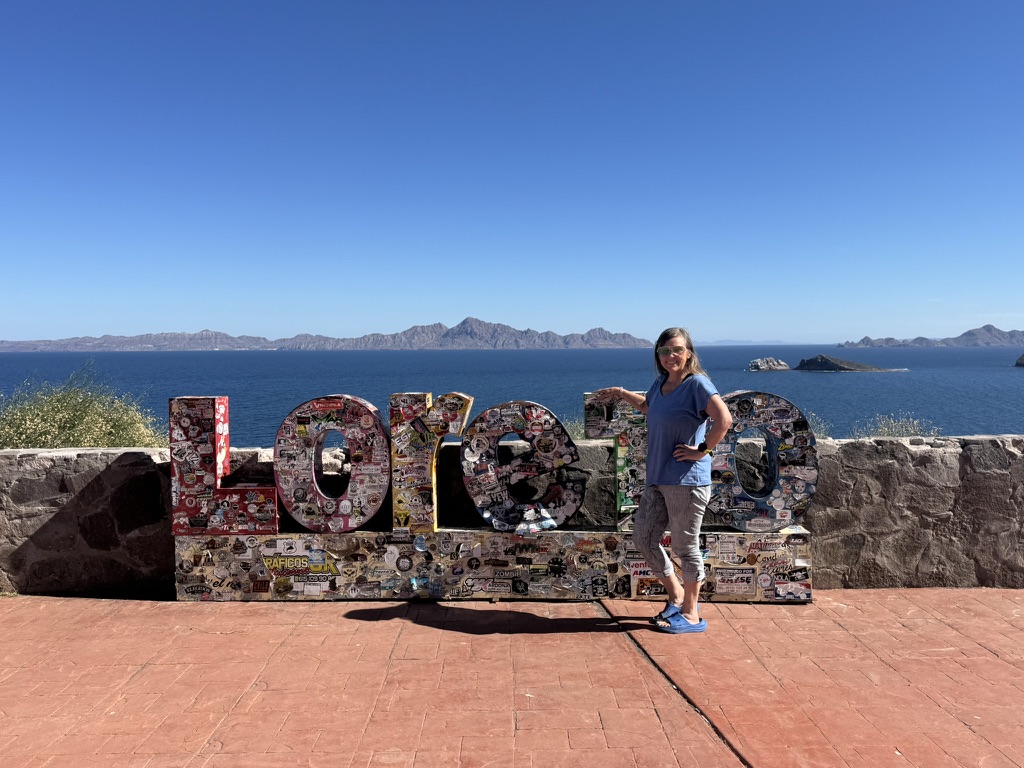
Title: Welcome to Loreto
Artist Statement

My arrival was anything but quiet.

The letters announced it before I could. Large, textured, impossible to ignore. Covered in stickers layered over time, each one evidence that others had stood here too, marking their presence in colour and adhesive and memory. I stepped into the frame, aware that this was a different kind of shoreline moment than the solitary ones.

This was a public threshold.

Behind me, the Sea of Cortez stretched wide and steady, holding its own depth regardless of the spectacle in front of it. Mountains sat low along the horizon, grounding the scene in geological time while the foreground pulsed with tourism, movement, and human imprint. The contrast was immediate. Vastness behind. Declaration in front.


Traveller. Researcher. Body in place. Name unspoken yet presence visible. Unlike the quieter images, this one carries performance within it. Beyond the institutional sense of performance, simply acknowledging that sometimes presence is witnessed, documented, shared. That being in a place can hold both interior meaning and outward expression.

I left soon after the photograph.

I stepped away from the letters and back toward the waterline, where scale shifts again and the body becomes smaller against land and sea. Yet the image remains important because it marks arrival in a way solitude cannot do alone.

A pause between anonymity and recognition.
Between landscape and inscription.
Between being there and being seen.

Photo Credit Amy Tucker, January 2026
I am still here.
Note. Spanish-language passages were generated using Google Translate (Google, n.d.) and subsequently reviewed and refined by the author. Any remaining infelicities reflect the limits of machine translation rather than intent.
Llegada, Arrival. Day Two in Loreto, Baja California Sur: the body touches down at last. A bilingual reflection on what it means to arrive somewhere alone, and to let the sea be the first thing you say hello to.
Arrival is the doorway through which everything else enters.
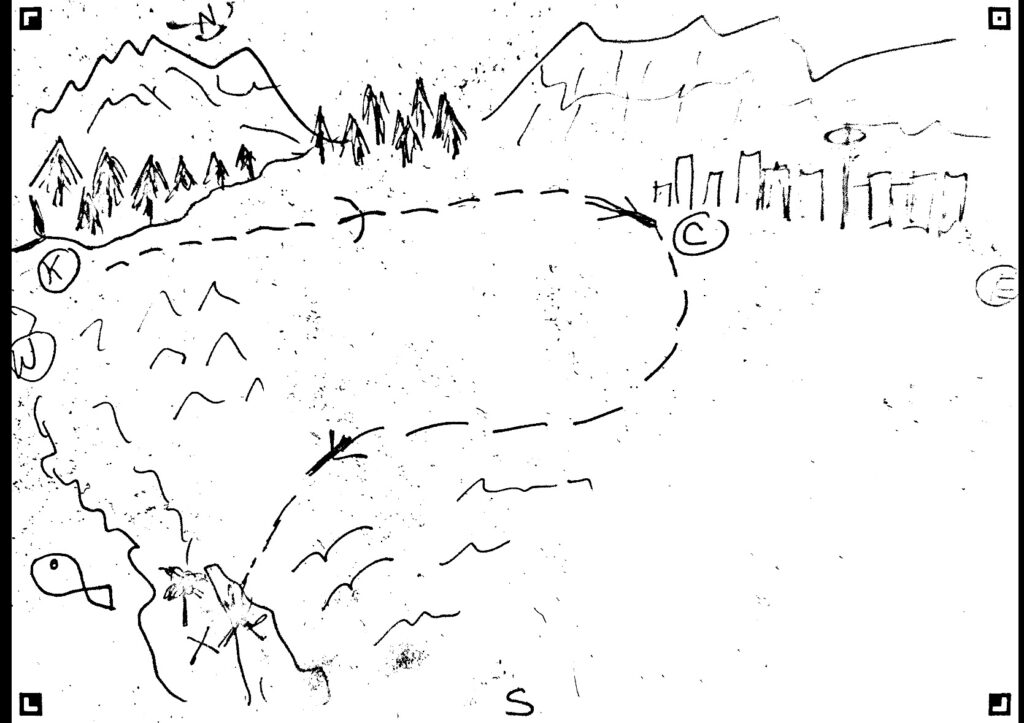
Screenshot
Artist Statement

This one came through quickly.

Unplanned. Unscripted. I drew it the way thoughts sometimes arrive when the body is tired but the mind is still moving. Lines first. Meaning later.

At first glance, it looks almost childlike. Loose marks. Unsteady figures. A pathway that curves without precision. Mountains on one side. Water on the other. Small symbols scattered across the space as if they surfaced faster than I could organise them.

But when I sat with it longer, I realised it was mapping something internal rather than geographical.

The road runs down the centre. Winding. Circuitous. It bends, loops, redirects. There are arrows that suggest movement but without certainty. It is a path that is being negotiated rather than followed.

On one side, there are figures and shapes that feel relational. Animals. Faces. Presences that suggest companionship, memory, or watchfulness. On the other side, sharper lines. Mountains. Edges. Terrain that feels more solitary, more effortful to cross.

There is even a small structure near the end of the path. Almost like a village, or a place of arrival. Yet it carries no detail. It sits lightly on the page, more suggestion than destination.

What strikes me most is the openness of the centre space. So much white. So much unfilled terrain.

It feels honest.

This drawing makes no claim to the whole route. It records movement in progress. The way journeys are often held internally before they become visible externally.

It reminds me that mapping is rarely about accuracy. Sometimes it is about witnessing where you are in the moment you draw the line.

Photo Credit Amy Tucker, January 2026
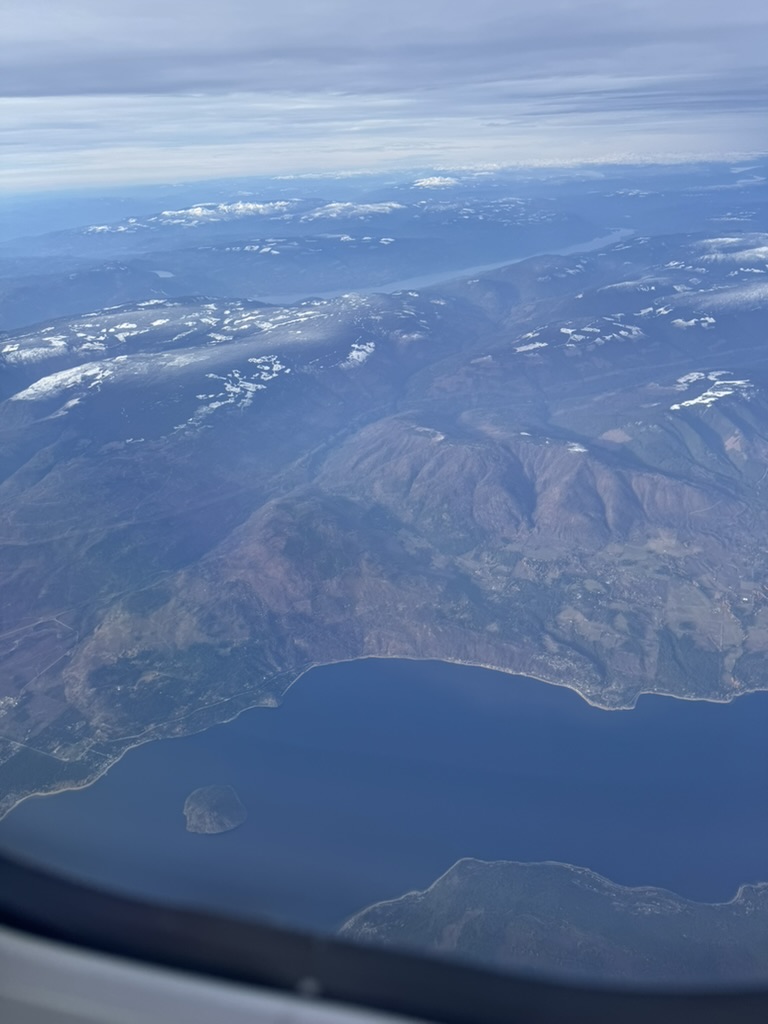
The plane descended over mountains I had only imagined. Below, the Sea of Cortez stretched turquoise and still, the body of water that Jacques Cousteau famously called the world’s aquarium (Pulitzer Centre, 2023). The desert rose glowed golden behind it, ancient and patient. I had come alone, deliberately, to a place where silence would be allowed to remain.
The flight attendant announced our arrival in two languages, but I barely heard her. My body had already begun the quieter work of landing. I noticed my shoulders softening, my breath slowing, the steady thrum of anticipation giving way to something gentler. Arrival, I would learn, begins before the wheels touch ground.
Where Desert Meets Sea
Loreto sits at the edge of two worlds. To the east, the Sea of Cortez stretches toward the Mexican mainland, its waters teeming with nearly 900 species of fish and 32 types of marine mammals (PanAmerican World, 2018). To the west, the Sierra de la Giganta rises abruptly from the desert floor, granite and volcanic rock shaped by millennia, holding canyons and ancient springs in its folds. This is a landscape of stark beauty, where the desert’s dry heat meets the sea’s salt-laden air.
This place carries layers of history that I was only beginning to understand on arrival. On October 25, 1697, the Jesuit missionary Juan María de Salvatierra founded the Misión de Nuestra Señora de Loreto Conchó at an Indigenous settlement called Conchó, home to the Monquí people (Misión de Nuestra Señora de Loreto Conchó, 2025). It became the first permanent Spanish mission on the Baja California peninsula. It served as the administrative capital of both Baja and Alta California for more than a century. The town’s motto still reads: “Loreto: Cabeza y Madre de las Misiones de las Californias,” which translates to “Head and Mother of the Missions of the Californias.”
Before the missions arrived, Indigenous peoples had inhabited this peninsula for thousands of years. The Cochimí lived in the central regions to the north, their rock art still visible in the Sierra de San Francisco, with paintings carbon-dated to over seven thousand years before present (Kuyimá Ecotourism, 2025). These were semi-nomadic peoples who moved with the rhythms of the desert and sea, living in small family bands that travelled seasonally in search of water, edible plants, and game (Cochimí, 2025). To the south lived the Guaycura and the Pericú. European diseases and colonial disruption would decimate these populations within a few generations, and by the nineteenth century, the Cochimí language had become extinct (Laylander, 2000; Indigenous Mexico, 2024). Their memory endures in archaeological sites and oral history, a reminder that the land I walked upon held stories far older than my own.
I arrived without consciously carrying this history. It was only later, walking the malecón, the seafront promenade, in the evening light, that I began to understand why this place felt layered. Silence here seemed to hold more than absence. It held memory.
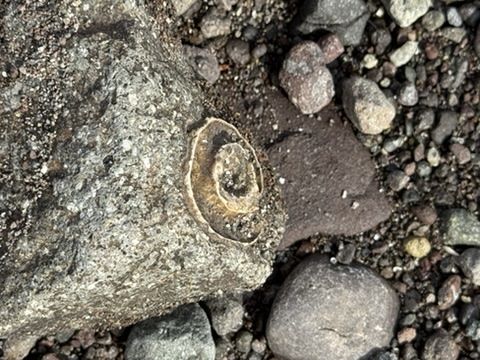
Title: The History of Time
Artist Statement

I almost missed it.

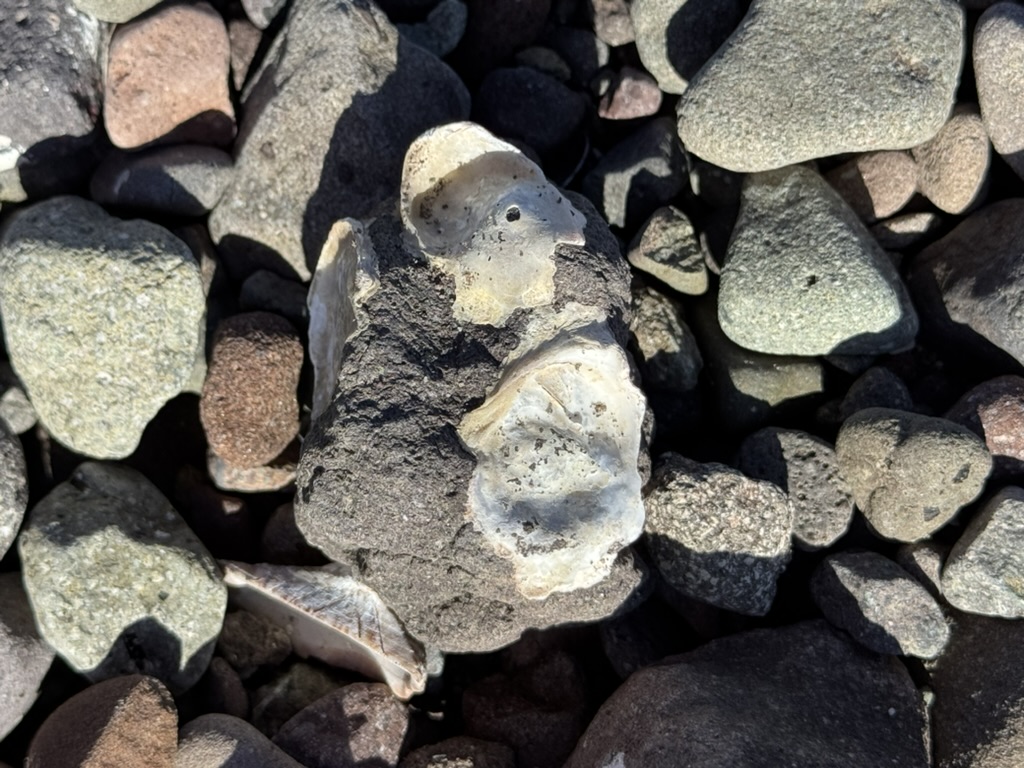
It sat quietly among the other stones, indistinguishable at first glance. Just another fragment in a shoreline made of fragments. It was only when I bent down, slowed my gaze, that the spiral revealed itself.

Perfectly held inside the rock.

A fossil. A record of life that once moved through water long before my own footsteps ever reached this shore. What struck me was its patience, more than its age. The way it had remained intact while everything around it had eroded, shifted, broken down into smaller pieces.

Time was visible here.

As compression. As density. As felt weight. Layers folded inward. Motion turned into memory. The spiral itself felt symbolic, but I resisted making it symbolic too quickly. Instead, I stayed with its material presence. Its texture. Its quiet persistence.

Holding this image, I thought about how many histories live beneath our feet without announcement. How much survives without spectacle. The fossil requires no demand. It waits for recognition.

There is humility in that.

It reminded me that archives take many forms beyond the written. Some are geological. Somatic. Embedded in landscapes that remember what human timelines often forget.

I left it there.

It felt important that it remain where it was found. Still held by the shoreline. Still in conversation with water, weather, and time.

Sometimes witnessing is enough.

Photo Credit Amy Tucker, January 2026
Why I Came Alone
Before I left, people asked whether I was nervous about travelling alone. Whether I was running from something or toward it. Whether thirty days was too long or too short. I had no clean answers.
What I knew was simpler: I was tired in ways that sleep alone could never reach. After years of institutional pressure, caregiving across generations, and the collective exhaustion that followed the pandemic, my nervous system had forgotten how to settle. Stillness felt dangerous. Silence felt loud. Being alone had become entangled with being abandoned, and I had lost the ability to tell the difference.
I came to Loreto to learn how to be with myself again. To practise what I have come to call alonetude, a term I use to describe the intentional, generative space between solitude and loneliness. I define alonetude as an enduring contemplative orientation toward chosen solitude, characterised by intentionality, presence, meaning, and a sense of safety. It is a posture of chosen presence with oneself, distinct from both the pain of loneliness and the mere fact of being physically alone.
Researchers have long distinguished between solitude and loneliness. Loneliness, understood as the painful gap between desired and actual social connection, persists even in crowds (Hawkley & Cacioppo, 2010). As Nguyen (2024) describes, it is an experience of perceived isolation characterised by unmet expectations in social relationships. Solitude, by contrast, can be volitional, meaning chosen or self-determined, and restorative, meaning it supports recovery and wellbeing. Research shows that when individuals autonomously decide how to spend their solitary time, they experience more positive emotions and lower stress (Nguyen et al., 2018). The key distinction lies in motivation: self-determined solitude occurs when a person spends time alone to gain emotional benefits or engage in meaningful activities, whereas non-self-determined solitude happens when aloneness is imposed by circumstance or social exclusion (Nguyen et al., 2024).
Somewhere between those poles lies the quieter possibility I was seeking: the decision to remain present with oneself, without urgency or escape. And so I chose a place where the sea would be my witness and the mountains my backdrop. A place with enough history to remind me I was small, and enough stillness to let that smallness feel like relief.
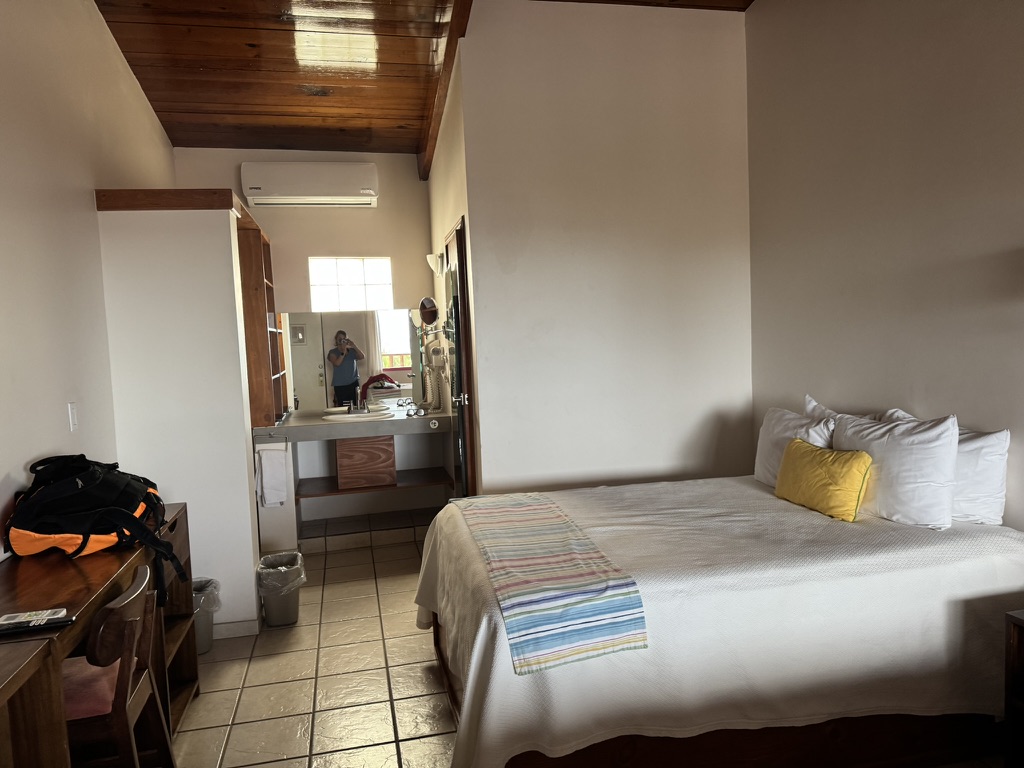
Title: My Space
Artist Statement

It was the stillness that met me first.

Quiet, contained, that only temporary rooms seem to hold. The bed was made with precision. Pillows aligned. A folded throw placed carefully across the centre as if anticipating arrival before I had even stepped inside.

I remember standing in the doorway for a moment longer than necessary.

There is always something disorienting about entering a space that is prepared for you, a stranger to itself. A room that offers comfort without history. Function without attachment. It asks nothing, but it also holds nothing of you yet.

My suitcase rested against the wall. Half-unpacked. A visible reminder that I was both arriving and already preparing, in some distant way, to leave.

The mirror reflected me back into the frame of the room. Researcher. Traveller. Body in transition. The image felt less like documentation and more like evidence of in-betweenness. Neither fully settled nor unsettled. Simply passing through.

What drew me most was the order.

Clean lines. Neutral tones. A controlled environment that contrasted with the emotional complexity I had carried with me. In that contrast, I felt a subtle recalibration begin. The nervous system recognising safety through predictability. Through the ordinary rituals of placing belongings, arranging clothing, setting a journal on the bedside table.

Temporary spaces can be profoundly instructive.

They remind us how little is required to begin again each day. A bed. A window. A place to write. A place to rest the body between movements.

Nothing extravagant. Just enough.

I let the room be what it was. I let it remain neutral. Let the relationship form slowly. Presence before imprint.

It was never meant to be mine.

Only to hold me for a while.

Photo Credit Amy Tucker, January 2026
The First Hours
At the small airport, the air hit me first. Dry and warm, carrying salt and something mineral. January in British Columbia had been grey and wet; here, the sky stretched blue without apology. I collected my bag and stepped outside. No one was waiting.
That fact landed differently than I expected. There was relief in it. No negotiation, no performance, no need to translate my fatigue into something legible for others. I hailed a taxi and watched the desert roll past the window. Cardon cacti stood like sentinels along the road, their arms raised to the sky. Smaller plants hugged the ground, adapted to scarcity.
When I arrived at my small casa, I sat with my bags still packed. I sat on the edge of the bed. I noticed the texture of the light coming through the shutters. I noticed my shoulders drop. I saw the impulse to fill the silence, to check messages, to plan, to narrate the moment to someone far away, and I let the impulse pass.
This is the work of arrival: resisting the urge to fill the space you have just entered immediately. Allowing the body to land before the mind begins its commentary. Trusting that orientation will come without forcing it.
I opened the windows. Outside, I could hear unfamiliar birds. The sea was close and visible from where I sat. I drank water slowly. I let the room remain unfinished around me.
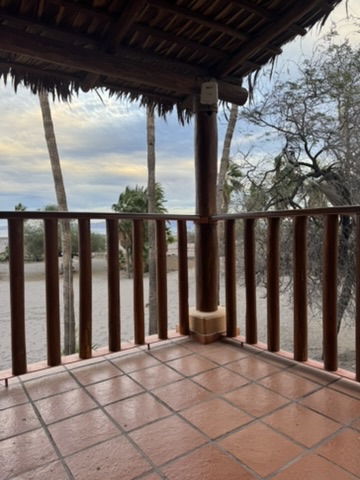
Title: Morning Views
Artist Statement

I kept returning to this balcony without meaning to. It became a quiet threshold in my days, a place suspended between inside and outside, between the life I carried with me and the landscape that asked nothing in return.

In the mornings, I would step onto the cool tiles barefoot, still half inside sleep. The body would register the air, the light, the slow movement of the palms before my mind began its usual work of organising and anticipating. I came to value that order. Sensation first. Thought later.

There was no spectacle here. Just rhythm. Wind moving through the trees. The horizon holding steady. Light arriving gradually across sand and railing. Nothing hurried me. Nothing required interpretation. I could stand at the edge of the day without performing readiness for it.

Over time, this space became orienting. Internally, rather than geographically. I stood here without writing or planning. I stood, breathed, and allowed myself to arrive slowly. The thatched roof overhead offered shelter, while the open railing kept me connected to the wider world. Protected, yet open.

It reminded me that solitude often lives in these in-between spaces. Places where one can look outward while staying grounded inward. Places where presence is enough.

This balcony was never dramatic. That is why it mattered. It held me quietly as each day began.

Photo Credit Amy Tucker, January 2026
Listening to the Body
That evening, I walked to the water. The malecón curved along the shore, lined with benches and the quiet activity of a small town at dusk. Pelicans floated in loose formations offshore. The light turned gold, then amber, then something closer to rose.
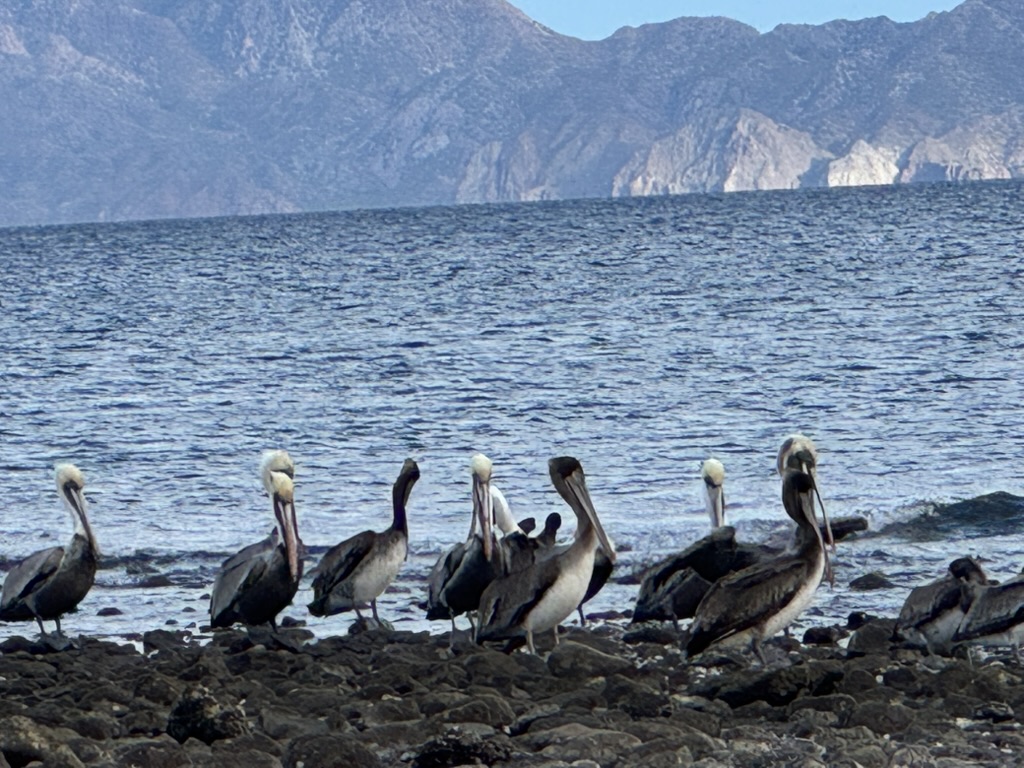
Title: All in a Line
Artist Statement

They were already gathered when I arrived.

A line of pelicans along the shoreline, facing the water as if the horizon had called them into formation. I stood back and watched. What held me was the pace of it, more than the scene itself. No urgency. No competition. Just bodies resting in proximity, each one holding its place without needing to claim it.

I noticed how easily they occupied stillness.

Waiting, unhurried. Together, without entanglement. The sea moved behind them in long, steady breaths, and I felt my own body begin to match that rhythm. In that moment, I was witnessing something, I was witnessing a posture. A way of being that measured nothing.

I stayed back.

Distance felt right. I stayed where I was, letting the scene remain intact. Watching them, I felt reminded that presence rarely requires action. Sometimes it is enough to stand at the edge of things, attentive, unhurried, and willing to belong to the pause.

Photo Credit Amy Tucker, January 2026
I found a bench and sat. I had no book, no phone in hand, no task. Just the sound of water lapping against stone and the slow parade of families walking after dinner. A child ran past laughing. A couple held hands. An older man fished from the rocks nearby, patient and unhurried.
The body knows arrival before the mind catches up. It registers safety in the loosening of the jaw, the deepening of breath, the release of tension held so long it had become invisible. Stephen Porges (2011), in his foundational work on polyvagal theory, explains that the autonomic nervous system continuously scans for cues of safety or danger through a process he calls neuroception. This term refers to the neural evaluation of risk and safety that occurs below conscious awareness, reflexively triggering shifts in physiological state (Porges, 2022). Unlike perception, which involves mindful awareness, neuroception operates automatically, distinguishing environmental features that are safe, dangerous, or life-threatening.
When the nervous system detects sufficient cues of safety, what Porges (2022) describes as a neuroception of safety, the body shifts from states of protection into states of restoration. The ventral vagal complex, a branch of the vagus nerve associated with calm, connection, and social engagement, becomes activated. This shift arrives below conscious choice. It is something we allow by creating conditions where safety can emerge.
Sitting there on that bench, watching the pelicans dive and the light change, I felt something unclench. Quietly, almost imperceptibly. The vigilance I had carried for years began, very slowly, to set itself down.
Arrival creates conditions for this shift. By slowing down. By resisting the impulse to perform or produce. By letting the first hours remain unstructured. When nothing is demanded, the nervous system begins to trust the moment.
An Invitation
Arrival, I learned that first evening, is a threshold. It marks the movement from one way of being into another. Thresholds resist rushing. When crossed too quickly, they close before anything has time to change.
You can practise arriving anywhere. It can happen in a parked car before going inside. In a quiet kitchen after everyone has gone to bed. In the first moments of waking, before you reach for your phone. These small arrivals matter. Research suggests that even brief periods of self-selected solitude can foster relaxation and reduce stress (Nguyen et al., 2018).
Wherever you are reading these words, I offer this as an invitation. Let yourself arrive here. Notice the surface beneath you. Notice your breath. Let the moment widen without needing it to mean something yet.
Arrival offers orientation before transformation. It offers orientation. The chance to acknowledge where you are, physically, emotionally, internally, before asking yourself to be anywhere else.
That first night in Loreto, I fell asleep to the sound of distant waves. The room was still unpacked. The days ahead were unplanned. And for the first time in longer than I could remember, that openness felt like permission rather than a threat.
Llegada. Arrival. The doorway through which everything else enters.
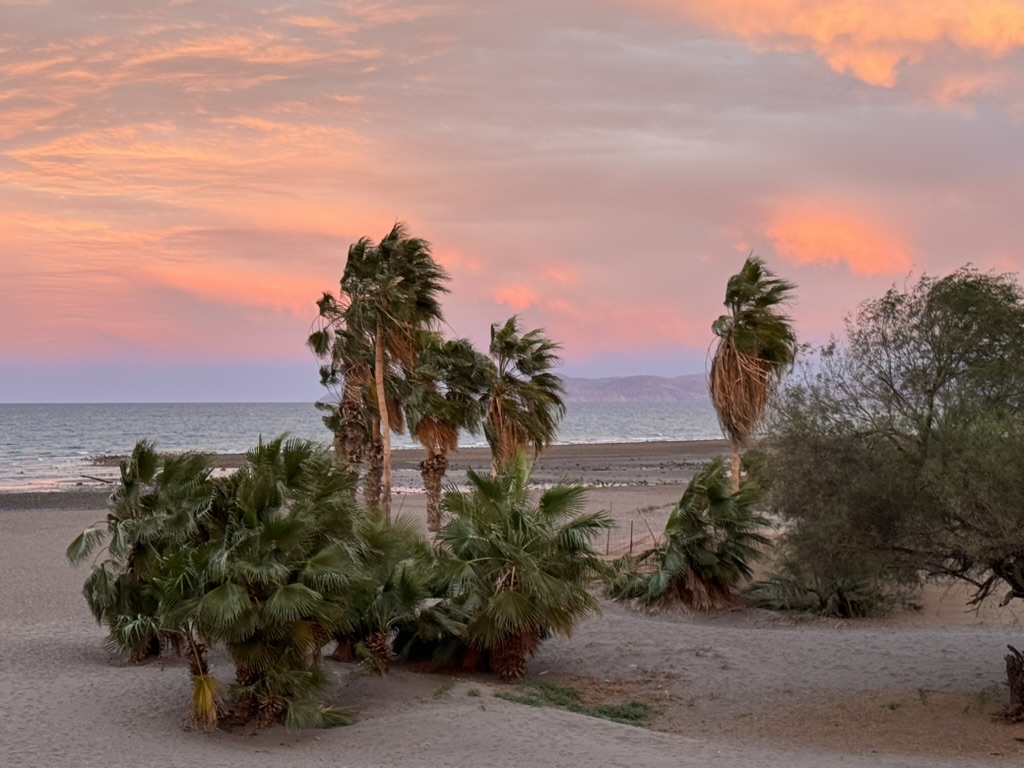
The Sea of Cortez, Loreto, Mexico
Artist Statement

The light arrived before I was ready for it.

I stepped outside and the sky was already holding colour, soft pinks moving slowly across the horizon, settling into the edges of the clouds as if the day were being introduced rather than announced. The palms moved in the wind, with weathered resilience, gently,. They bent without breaking. They have done this many times before.

I stood there longer than I planned to.

Watching the movement of the trees, the stillness of the sand, the quiet line where water meets land. What held me was the atmosphere of endurance, alongside the beauty. Nothing here was rushing. Even the wind felt patient. I noticed how my body responded, how my breathing slowed without instruction.

In that moment, I felt accompanied without needing company.

The landscape asked nothing of me. It simply allowed me to arrive as I was, tired, reflective, present. Standing there, I understood that rest arrives in many forms beyond full stopping. Sometimes it comes from witnessing something that knows how to keep standing, even in constant wind.

Photo Credit Amy Tucker, January 2026
References
Cochimí. (2025, November 22). In Wikipedia. https://en.wikipedia.org/wiki/Cochimí
Google. (n.d.). Google Translate. https://translate.google.com
Hawkley, L. C., & Cacioppo, J. T. (2010). Loneliness matters: A theoretical and empirical review of consequences and mechanisms. Annals of Behavioural Medicine, 40(2), 218–227. https://doi.org/10.1007/s12160-010-9210-8
Indigenous Mexico. (2024, September 4). Indigenous Baja California: The rarest of the rare. https://www.indigenousmexico.org/articles/indigenous-baja-california-the-rarest-of-the-rare
Kuyimá Ecotourism. (2025, August 24). The Cochimí: Indigenous tribe of Baja California Sur. https://www.kuyima.com/cochimi-indigenous-tribe/
Laylander, D. (2000). The linguistic prehistory of Baja California. In D. Laylander & J. D. Moore (Eds.), The prehistory of Baja California: Advances in the archaeology of the forgotten peninsula (pp. 1–94). University Press of Florida.
Misión de Nuestra Señora de Loreto Conchó. (2025, February 7). In Wikipedia. https://en.wikipedia.org/wiki/Misión_de_Nuestra_Señora_de_Loreto_Conchó
Nguyen, T.-V. T. (2024). Deconstructing solitude and its links to well-being. Social and Personality Psychology Compass, 18(11), Article e70020. https://doi.org/10.1111/spc3.70020
Nguyen, T.-V. T., Ryan, R. M., & Deci, E. L. (2018). Solitude as an approach to affective self-regulation. Personality and Social Psychology Bulletin, 44(1), 92–106. https://doi.org/10.1177/0146167217733073
PanAmerican World. (2018, November 21). Sea of Cortez: The world’s aquarium. https://panamericanworld.com/en/magazine/travel-and-culture/sea-of-cortez-the-worlds-aquarium/
Porges, S. W. (2011). The polyvagal theory: Neurophysiological foundations of emotions, attachment, communication, and self-regulation. W. W. Norton & Company.
Porges, S. W. (2022). Polyvagal theory: A science of safety. Frontiers in Integrative Neuroscience, 16, Article 871227. https://doi.org/10.3389/fnint.2022.871227
Pulitzer Centre. (2023). Mexico: Emptying the world’s aquarium. https://pulitzercenter.org/projects/sea-of-cortez-aquaculture-ocean-fish-farming-global-market
Note. Spanish-language passages were generated using Google Translate (Google, n.d.) and subsequently reviewed and refined by the author. Any remaining infelicities reflect the limits of machine translation rather than intent.
Academic Lens
Arrival at Loreto enacts what van Gennep (1960) calls the threshold crossing of a rite of passage: the moment of separation from the previous structure is complete, and the liminal phase begins. The wonder recorded here — the shock of a different sensory world — corresponds to what Kaplan and Kaplan (1989) term restorative experience: environments that require involuntary attention and allow directed attention to recover. Writing bilingually at this moment is itself a methodological choice: language as a site of embodied knowledge.
For much of my adult life, I believed that being alone was something to manage rather than something to understand. Like many people shaped by caregiving roles, professional responsibility, and constant availability, I learned to associate aloneness with either failure or escape. To be alone for too long was suspect. To seek it deliberately required justification.
Keywords: alonetude, loneliness, solitude, third way, being alone, human rights, rest, scholarly personal narrative, embodied knowing
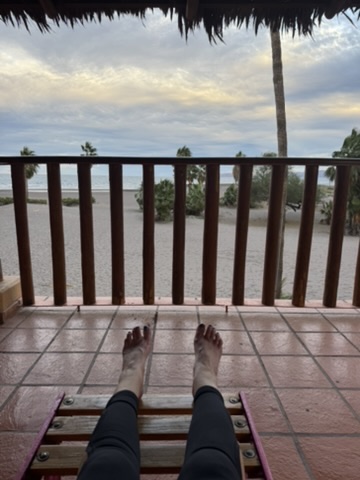
Title: The Threshold
Artist Statement

This image sits quietly at the intersection between arrival and release.

The body is positioned in rest, still partway toward surrender. Legs extended, feet bare, the posture signals pause rather than sleep. I am neither moving nor working. I am simply placed. The wooden railing forms a horizontal boundary across the frame, a subtle reminder of enclosure, of protection, of holding. Beyond it, the landscape opens without demand. Sand. Palms. Sea. Sky.

What strikes me most is how unfamiliar this posture felt when I first entered it. Rest, after prolonged precarity, comes with difficulty. The body takes time to trust stillness. Even here, overlooking water, there is a period of adjustment where the nervous system scans for urgency that is no longer present.

Within the Alonetude inquiry, this photograph documents the early stages of relearning safety. Polyvagal theory reminds us that the body must perceive safety before it can inhabit rest. The environment offers cues: horizon line, open air, diffused light, the absence of surveillance or expectation. Slowly, the breath lengthens. The shoulders release. The feet, unguarded, extend into space.

There is also something important about perspective. The image is taken from the body rather than of the body. This matters methodologically. It situates the viewer within the experience rather than outside it. This is inhabitation rather than observation.

Rest, here, is recalibration.

The threshold is the body learning it no longer has to brace.

Description

A first-person view from a shaded balcony. Bare feet extend toward a wooden railing overlooking sand, palm trees, and the sea under a soft, clouded sky. The composition centres stillness, horizon, and embodied perspective.

Photo Credit: Amy Tucker, January 2026
This tension has only intensified in recent years. Public discourse now frames loneliness as a public health crisis, with good reason. A growing body of research links chronic loneliness to increased risk of depression, cardiovascular illness, cognitive decline, and early mortality (Cacioppo & Cacioppo, 2018; Holt-Lunstad et al., 2015). Indeed, a meta-analysis of 148 studies involving more than 300,000 participants found that stronger social relationships were associated with a 50% higher likelihood of survival (Holt-Lunstad et al., 2010).
Yet alongside this concern runs another, quieter exhaustion: many people feel overwhelmed by constant connection, by the expectation of perpetual responsiveness, and by the emotional labour of being continually available.
We are caught between two unsatisfying stories about being alone.
On one side lies loneliness, understood as a painful, unwanted disconnection. In contrast lies romanticised solitude, idealised as a rarefied retreat available only to those with time, money, or particular personality traits. During my research and lived inquiry, I came to believe that this binary is incomplete. There is a third way of being alone that is neither deprivation nor escape. I call this way alonetude.
Defining Alonetude
Alonetude is a cultivated, sustainable relationship with one’s own company. It is the capacity to be peacefully and intentionally alone without collapsing into loneliness or relying on fantasy versions of solitude. Alonetude represents a way of being, beyond any particular place or retreat.
Unlike solitude, which is a neutral description of physical aloneness, alonetude refers to an inner condition. One can be physically alone without experiencing alonetude, and one can experience alonetude in the presence of others. It is defined by relationship rather than isolation: specifically, the relationship one has with oneself. Recent qualitative research confirms that both laypeople and researchers distinguish between objective solitude (physical separation from others) and subjective solitude (mental disengagement from social demands), with the latter possible even in public spaces (Weinstein et al., 2023a).
This distinction matters because much of the harm associated with being alone arises from the meanings we attach to it rather than from aloneness itself. Loneliness, as defined in the literature, is the subjective distress that results from a perceived gap between desired and actual connection (Perlman & Peplau, 1981). Solitude, by contrast, describes the absence of immediate social contact. Aloneness refers to what can arise when solitude is approached with choice, care, and presence.
Choice, Autonomy, and the Conditions for Alonetude
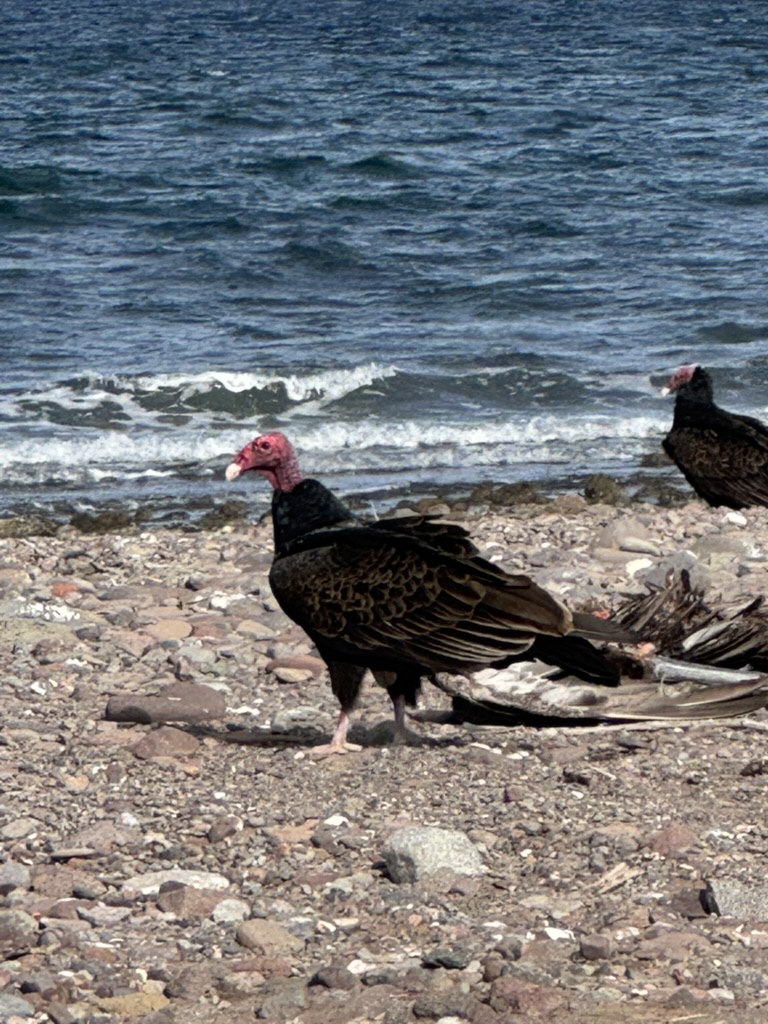
Title: Witness on the Edge
Artist Statement

They were already there when I arrived.

Standing at the shoreline, unbothered by my presence, as if I had entered their space rather than the other way around. The water moved in its steady rhythm behind them, small waves folding themselves onto the rocky beach. Nothing dramatic. Just repetition. Breath-like.

What struck me first was their stillness.

The absence of urgency rather than movement. They stood in a way that felt deliberate, almost ceremonial. One closer to me. One slightly behind. A quiet companionship beyond the need for interaction.

There is something about vultures that unsettles people. We are taught to read them as symbols of decay, of endings, of what is left behind. Yet standing there, watching them, I felt recognition rather than fear or discomfort.

I felt recognition.

They are cleaners of landscapes. Carriers of ecological responsibility. They arrive where others turn away. They do necessary work without spectacle.

In that way, they felt less like ominous figures and more like witnesses. Keepers of threshold spaces. Present where land, water, and mortality meet.

The shoreline itself felt like a liminal zone that morning. Caught between ocean and land. A place of arrival and departure. Of what washes in and what is taken back out.

Seeing them there, grounded and unhurried, I felt reminded that presence can exist without performance. Some forms of being are observational. Attentive. Essential without needing to be visible in celebratory ways.

I stayed where I was.

I let the distance remain. A respectful space between species, between roles. I watched. They watched. And the water continued its steady conversation with the shore.

Less symbolism. More coexistence.


Photo Credit Amy Tucker, January 2026
One of the most consistent findings in psychological research is that the quality of time spent alone depends less on personality and more on motivation. Research grounded in Self-Determination Theory demonstrates that solitude supports well-being when it is volitional and values-aligned, and undermines well-being when it is imposed or avoidant (Ryan & Deci, 2017; Nguyen et al., 2018). A 21-day diary study of 178 adults found that the detrimental effects of solitude on loneliness and life satisfaction were nullified or reduced when daily solitude was autonomous, that is, chosen rather than imposed (Weinstein et al., 2023b).
This insight reshaped my own assumptions. I had long believed that comfort with being alone was a matter of introversion. The research suggests otherwise. Three experimental studies by Nguyen et al. (2018) found that autonomous motivation for solitude predicted positive outcomes regardless of participants’ introversion levels. When people choose solitude for reasons such as restoration, reflection, or creativity, they tend to experience greater emotional regulation and clarity. When solitude is driven by fear, exclusion, or obligation, it often intensifies distress.
Alonetude emerges under conditions of autonomy. It arrives through allowance rather than force; one chooses to remain present with oneself rather than immediately seeking distraction or validation.
The Body’s Role in Being Alone Well
Another central insight from my research is that alonetude is, first and foremost, a physiological achievement. Polyvagal Theory offers a helpful lens here. According to this framework, the autonomic nervous system continuously scans for cues of safety or threat through a process called neuroception, the detection that occurs below conscious awareness and shapes emotional and relational capacity (Porges, 2011). When the body perceives a threat, the sympathetic nervous system mobilises the fight-or-flight response, and being alone can feel agitating or unbearable.
When the body experiences safety through activation of the ventral vagal pathway, quiet becomes accessible. This distinction explains why simply telling oneself that solitude is “good” rarely works. Felt safety cannot be reasoned into existence. It is established through rhythm, gentleness, predictability, and sensory cues that the body recognises as regulating. Only when the nervous system settles does reflective capacity return.
In this sense, alonetude is an embodied practice. It develops through repeated experiences of staying present long enough for the body to register safety, rather than through insight alone.
Alonetude and Relational Capacity
A common concern is that time alone weakens social bonds. My findings suggest the opposite. When individuals cultivate a stable, companionable relationship with themselves, they often return to others with greater attentiveness and emotional availability.
This aligns with research suggesting that positive solitude correlates with enhanced intimacy rather than diminished connection (Long & Averill, 2003). In their foundational exploration of solitude’s benefits, Long and Averill identified intimacy as one of four key benefits, alongside freedom, creativity, and spirituality, and noted that time alone can deepen rather than diminish our capacity for closeness. The relational ethicists Carol Gilligan (1982) and Nel Noddings (1984) similarly argue that secure self-connection supports healthier interpersonal engagement. Alonetude strengthens what I describe as relational capacity: the ability to engage with others without losing oneself, over-functioning, or seeking constant reassurance.
From this perspective, alonetude prepares the ground for connection rather than competing with it.
Loneliness as Visitor, as Teacher
Alonetude holds loneliness alongside itself. Even within chosen solitude, moments of missing others still arise. The difference lies in how these moments are met.
When loneliness is approached with presence rather than avoidance, it often reveals itself as evidence of attachment and care rather than deficiency. It signals what matters. Research on emotion regulation supports this approach, suggesting that allowing emotional states to be experienced without immediate suppression supports long-term well-being (Gross, 2015). Attempts to suppress or avoid emotions are counterproductive, whereas acceptance and reappraisal facilitate adaptive processing.
In this sense, loneliness is part of the terrain one learns to walk with steadiness.
Alonetude as a Gentle Discipline
Developing alonetude requires what I call the discipline of staying. This is discipline as faithfulness rather than rigidity or endurance, but discipline as devotion. It is the repeated choice to remain present with oneself rather than immediately filling silence or discomfort.
This practice echoes contemplative traditions while remaining accessible in everyday life. Alonetude is cultivated through small, consistent acts of attention: staying with a morning cup of tea, allowing quiet to stretch a little longer, noticing the impulse to distract and choosing to pause instead.
Over time, these practices create an inner refuge that can be carried into the noise of daily life.
Coming Home to Oneself
Alonetude is a relationship developed over time rather than a destination reached once. It allows a person to move through the world without constant self-abandonment, to be with others without depletion, and to return to oneself as a place of steadiness.
As I continue to write and research in this area, I find myself returning to a simple question that now guides much of my work:
What if home is a relationship we learn to inhabit within ourselves?
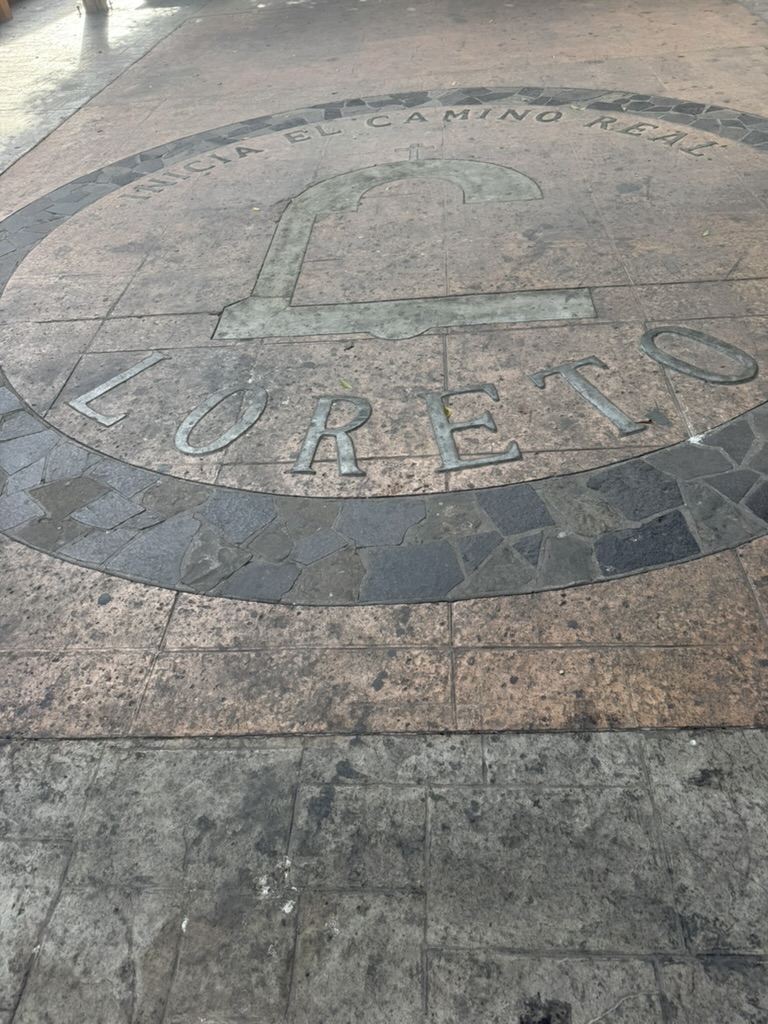
Title: What We See
Artist Statement
I almost missed it.
Simply because it was underfoot. Embedded into the ground in a way that asked for attention without demanding it. A circular marker, worn slightly by footsteps, weather, and time.
“Hacia el Camino Real. Loreto.”
Toward the Royal Road.
Standing there, I felt the quiet gravity of direction. Orientation rather than movement or departure. A reminder that paths existed long before I arrived and will continue long after I leave.
There is something humbling about markers placed in the earth rather than raised above it. They require you to look down. To lower your gaze. To acknowledge place before progress.
The stone held history without narration. No explanation panels. No instructions. Just an invitation to consider where you are standing and what routes extend outward from that point.
I stayed within the circle that day.
Instead, I stood within the circle for a few moments, noticing the textures beneath my feet. The worn edges of the lettering. The way the morning light caught the surface unevenly.
It felt less like a tourist marker and more like a threshold.
A place that holds both arrival and continuation. A reminder that every journey includes pauses of orientation. Moments where the body registers location before choosing direction.
Google. (n.d.). Google Translate. https://translate.google.com
Holt-Lunstad, J., Smith, T. B., Baker, M., Harris, T., & Stephenson, D. (2015). Loneliness and social isolation as risk factors for mortality: A meta-analytic review. Perspectives on Psychological Science, 10(2), 227–237. https://doi.org/10.1177/1745691614568352
Holt-Lunstad, J., Smith, T. B., & Layton, J. B. (2010). Social relationships and mortality risk: A meta-analytic review. PLOS Medicine, 7(7), Article e1000316. https://doi.org/10.1371/journal.pmed.1000316
Long, C. R., & Averill, J. R. (2003). Solitude: An exploration of the benefits of being alone. Journal for the Theory of Social Behaviour, 33(1), 21–44. https://doi.org/10.1111/1468-5914.00204
Nguyen, T. T., Ryan, R. M., & Deci, E. L. (2018). Solitude as an approach to affective self-regulation. Personality and Social Psychology Bulletin, 44(1), 92–106. https://doi.org/10.1177/0146167217733073
Noddings, N. (1984). Caring: A feminine approach to ethics and moral education. University of California Press.
Perlman, D., & Peplau, L. A. (1981). Toward a social psychology of loneliness. In S. Duck & R. Gilmour (Eds.), Personal relationships 3: Personal relationships in disorder (pp. 31–56). Academic Press.
Porges, S. W. (2011). The polyvagal theory: Neurophysiological foundations of emotions, attachment, communication, and self-regulation. W. W. Norton.
Ryan, R. M., & Deci, E. L. (2017). Self-determination theory: Basic psychological needs in motivation, development, and wellness. Guilford Press.
Weinstein, N., Hansen, H., & Nguyen, T.-V. (2023a). Definitions of solitude in everyday life. Personality and Social Psychology Bulletin, 49(8), 1185–1200. https://doi.org/10.1177/01461672221115941
Weinstein, N., Vuorre, M., Adams, M., & Nguyen, T.-V. (2023b). Balance between solitude and socialising: Everyday solitude time both benefits and harms well-being. Scientific Reports, 13, Article 21160. https://doi.org/10.1038/s41598-023-44507-7
Note. Spanish-language passages were generated using Google Translate (Google, n.d.) and subsequently reviewed and refined by the author. Any remaining infelicities reflect the limits of machine translation rather than intent.
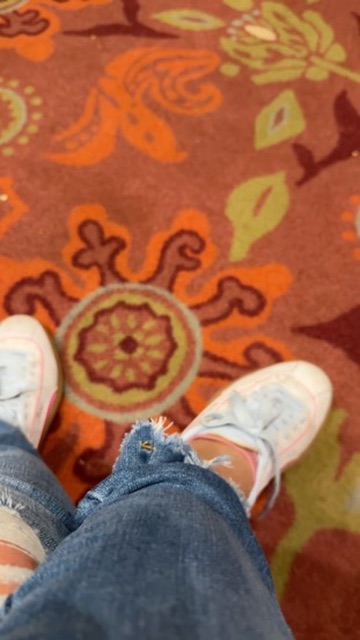
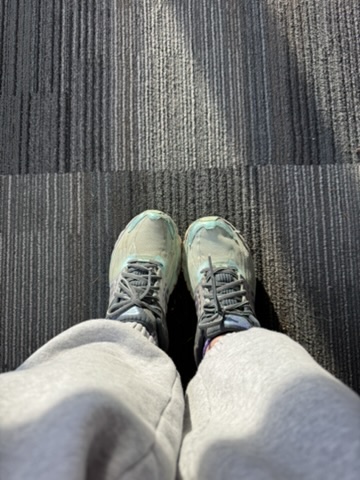
This photograph holds a simple orientation practice. Feet placed on patterned carpet, body paused between one step and the next. What draws my attention is the grounding rather than the destination. The ornate floor beneath me becomes a visual anchor, a reminder that movement begins in contact.
Within my work on alonetude, I return often to these micro-moments of bodily awareness. Solitude can be interior, quiet, and located anywhere. Sometimes it is interior, quiet, and located in transitional spaces such as hallways, lobbies, or thresholds between obligations.
The worn denim, the casual shoes, the downward gaze all signal an unguarded state. There is no performance here. Only presence. The body orienting itself gently within space.
This image documents a pause that might otherwise go unnoticed. A small act of returning to oneself before continuing on.
Photo Credit: Amy Tucker, January 2026
I am sitting in a hotel room in Calgary. I am a ghost haunting my own transition.
This space is the architectural equivalent of a blank stare. It is clinical and sterile, a box designed for the thousands of weary travellers who have sat in this exact chair before me, leaving behind nothing but the faint scent of industrial cleaner and the echo of a television left on too long. There is a bed, a desk, a television, and the relentless, mechanical humming of the mini-fridge. This low-grade vibration mimics the anxious, internal chatter of my own mind.
I have set up my maintenance equipment on the desk: my laptop, my books, and the literature review I am currently using as a shield. I wake at 5:00 a.m. sharp, Pacific Standard Time, my body moving as if this were a typical workday of busyness, as if staying occupied might still offer a sense of order.
The Trap of the Rehearsal
Even here, in this Neutral Zone between the life I left in British Columbia and the Alonetude awaiting me in Loreto, I am desperately trying to establish structure. I can feel my old self, the one who built an entire identity around reliability, availability, and competence, attempting to reestablish control.
The rehearsals begin almost immediately. Do I wake early to watch the sunrise, as someone grounded and intentional might? Do I anchor the day by watching the sunset, as if presence itself could be scheduled?
I am mentally planning my arrival as if it were a syllabus. I find myself agonising over the mundane details of a life still waiting to begin:
The Routine: Should I plan a strict writing schedule to ensure productivity?
The Performance: Should I jog at 7:00 am to prove I am still disciplined, or should I swim at 1:00 pm and siesta at 2:00 pm like a proper retiree?
The Logistics: Where should I shop? How will I navigate the village without looking like just one inadequate person at a table?
The Diet: Should I maintain a strict low-carb regime, or finally learn to “go with the flow” and listen to what my body actually needs?
I am realising that these questions are just the lies that burnout tells. They are my rehearsed explanations and elaborate to-do lists used to avoid the disorienting blankness of being truly alone.
I am addicted to the dopamine hit of a completed task, and I am terrified that if I stop acting, I will discover I am nothing.
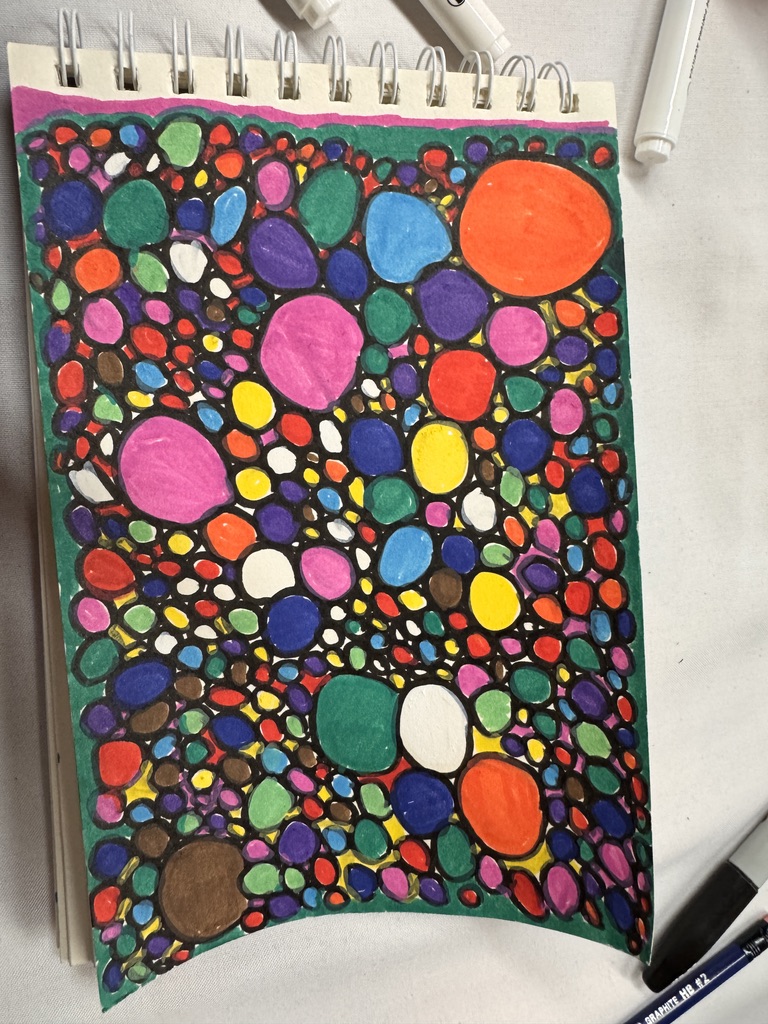
Title: Holding Presence
Artist Statement

This piece emerged without agenda.

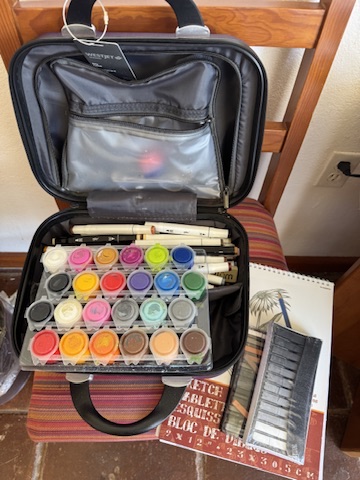
I began placing colour onto the page as one might place stones into a circle, to feel weight, texture, and relation rather than build structure. The shapes arrived organically. Some large and declarative. Others small, almost hidden, requiring closer attention.

What interests me is the coexistence as much as the brightness. No single colour dominates the field. Even the boldest tones must live beside quieter ones. The black outlines create containment, allowing intensity to exist without overwhelming the whole.

Within my alonetude practice, this work reflects the interior landscape of solitude. Solitude is often misread as emptiness. My experience is the opposite. When external noise recedes, interior colour intensifies. Memory, sensation, grief, curiosity, and calm all surface together.

This page holds that plurality. A visual mapping of inner life that resists simplification. There is no central focal point because solitude decentralises hierarchy. Everything matters. Everything belongs.

Photo Credit: Amy Tucker, 2026
The Unthought Known
By the door, my orange suitcase sits unopened. It is my “transformational object,” a vessel for the “unthought known,” the knowledge held in my body still awaiting words to name it. Christopher Bollas (1987) suggests that such objects hold parts of the self waiting to be rediscovered. Inside that suitcase is more than just linen and walking shoes; it keeps the “ash” of twenty-five years of academic performance and the quiet grief of the pandemic years that hollowed me out.
As I sit here, my nervous system is in a state of chronic activation, scanning for demands even in this unlived-in room. Drawing on Stephen Porges’ (2011) Polyvagal Theory, I recognise I am struggling to move from hyper-vigilance into a Ventral Vagal state of safety. I am a ghost haunting my own morning, showering without feeling the water, eating without tasting the food.
I am already mentally in the Sea of Cortez, replaying the past and rehearsing the future, while completely missing the sensory reality of the present.
The 25-Year Performance
For the past quarter-century, I have been juggling roles: the mother, the educator, the spouse, the neighbour, and the athlete. I sat on endless committees unpaid. I was the graduate student competing for two degrees at once, yet never taking the time to finish either, always rushing to the following requirement, truly.
I was the poster child of institutional success, the office superhero who showed up at 8:00 a.m. and stayed long after the day was over. I collected the markers of value:
The Best Teacher
The Best Employee awards.
The Interculturalization Award
Doctorate Research Award
Student Experience Award(twice)
The Advocate for precarious workers
I was kind, present, and reliable. I was shouting to the world: Look at me, I am a person of value and worth. But standing here now, I have to ask: Who was I trying to prove my worth to?
Nobody was listening. I included.
The Discipline of Staying
The invitation this morning is to stop the rehearsal.
I must notice the urge to escape into planning and “doing”.
I must pause and breathe through the fridge’s clinical hum.
I must practice the discipline of staying, staying with the silence, staying with the transition, and staying with the discomfort of having no next thing pressing against me.
Today, I leave the clinical layover in Calgary on the direct flight to Loreto. I am flying south to a place where the light is soft, and the water is gold. But the work of Arrival begins here, in the sterile quiet, by letting go of the need to manage the menu of my own transformation.
Actual arrival is about presence in the internal sense: being fully where you are, with no next thing pressing against the edge of the current thing. By letting go of the need to manage the menu of my own transformation, I am practicing what William Bridges (2019) identifies as the difficult necessity of the transition process: allowing the old identity to fall away before the new one has even begun to take shape.
As I prepare to board, I am consciously practicing the discipline of staying, staying with the silence and the discomfort of having no role to perform. I am moving from a state of hyper-vigilance into a Ventral Vagal state of safety, recognising that my body is already softening as I move toward the Sea of Cortez.
I am leaving behind the office superhero and the award-winning educator. I am choosing to be a body in water, a being alive on a planet spinning through space, rather than a vehicle carrying a brain to a meeting. I had arrived. And for this morning, in this clinical box, that has to be enough.
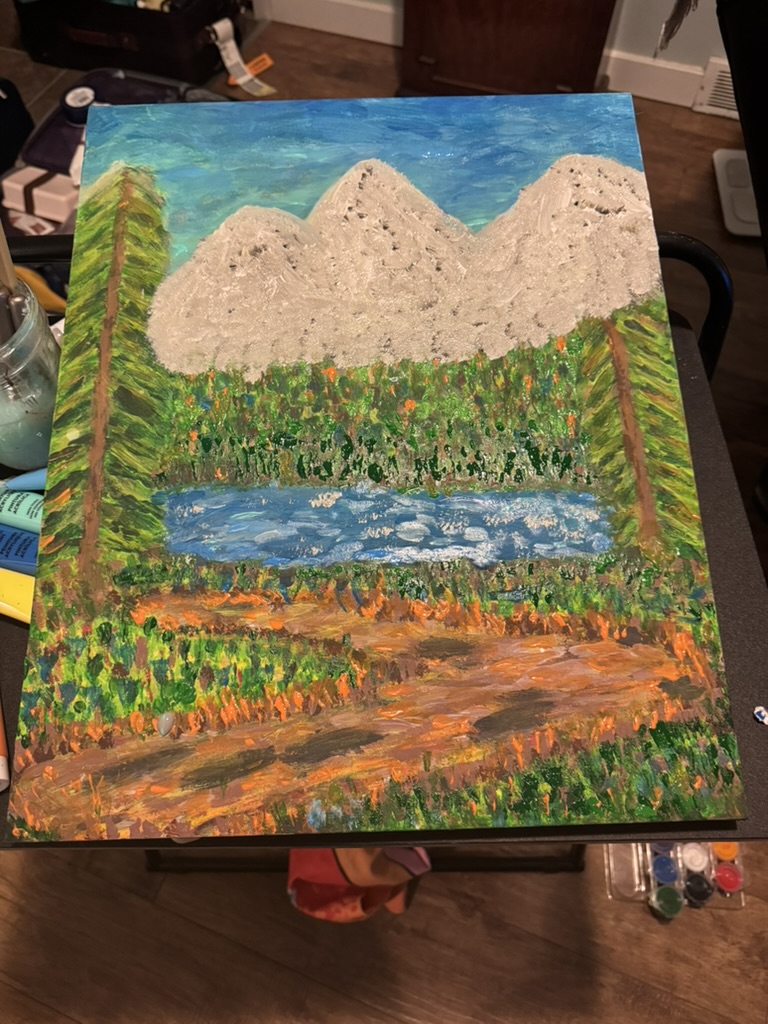
Title: Where the Body Remembers Green
Artist Statement

This landscape began as sensation, before scenery. It began as sensation.

I found myself returning to the memory of mountains, as orientation rather than geography. The peaks rise in the background, steady and unmoved, holding a kind of presence that the body recognises before the mind does. In painting them, I was trying to replicate a feeling I have carried, beyond any specific place I had seen. The mountains became anchors. Forms of steadiness. Witnesses to endurance.

Below them, the forest gathers in dense strokes of green. It is textured, layered, almost overgrown. I notice how the brush moves differently here, less controlled, more instinctive. The green accumulates the way experience accumulates. Years of labour, fatigue, survival, and adaptation sedimented into the body. And yet, within that density, there are sparks of orange and yellow. Small interruptions. Signals of life persisting even in exhaustion.

The water sits in the middle of the canvas as a pause. A reflective space. A place where the eye can rest and the breath can slow. This composition arrived without conscious planning, but I recognise it now as a psychological landscape. Mountain. Forest. Water. Ground. Stability, density, restoration, and movement held in one frame.

Within the Alonetude inquiry, this painting becomes an act of re-entering relationship with land, even from memory. It is less about depicting nature and more about locating where the body still feels safe enough to soften. Painting becomes a way of touching that softness without needing to explain it.

This is a place I returned to, beyond travel.

Photo Credit: Amy Tucker, 2026
References
Bollas, C. (1987). The shadow of the object: Psychoanalysis of the unthought known. Free Association Books.
Bridges, W., & Bridges, S. (2019). Transitions: Making sense of life’s changes (40th anniversary ed.). Balance.
Porges, S. W. (2011). The polyvagal theory: Neurophysiological foundations of emotions, attachment, communication, and self-regulation. W. W. Norton & Company.
Academic Lens
The airport layover as a site of dissociation is a form of liminality (Turner, 1969): suspended between the identity one is leaving and the one not yet formed. The "unlived life" named here is a recurring motif in the literature on ambiguous loss (Boss, 1999) — grief for a self that was foreclosed rather than lost. The body in transit, performing calm, reflects Hochschild's (1983) concept of emotional labour: the management of feeling as professional and social obligation.
Alonetude represents a positive, integrated relationship with being alone, where one feels at home with oneself, regardless of physical company.
The concept of being alone typically occupies two opposing shores in our cultural imagination: the painful isolation of loneliness or the romanticised retreat of the solitary genius. During my thirty days by the Sea of Cortez, I sought a different territory, which I term alonetude. Alonetude represents a positive, integrated relationship with being alone, where one feels at home with oneself, regardless of physical company. This blog post explores alonetude’s methodology through the lens of Nash’s Scholarly Personal Narrative, a framework that bridges personal experience with scholarly rigour.
Keywords: alonetude, scholarly personal narrative, solitude, embodiment, autoethnography, qualitative inquiry, Sea of Cortez, third shore
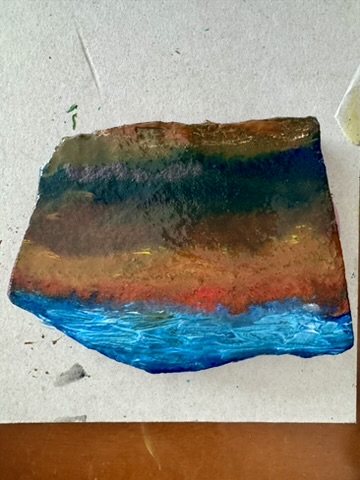
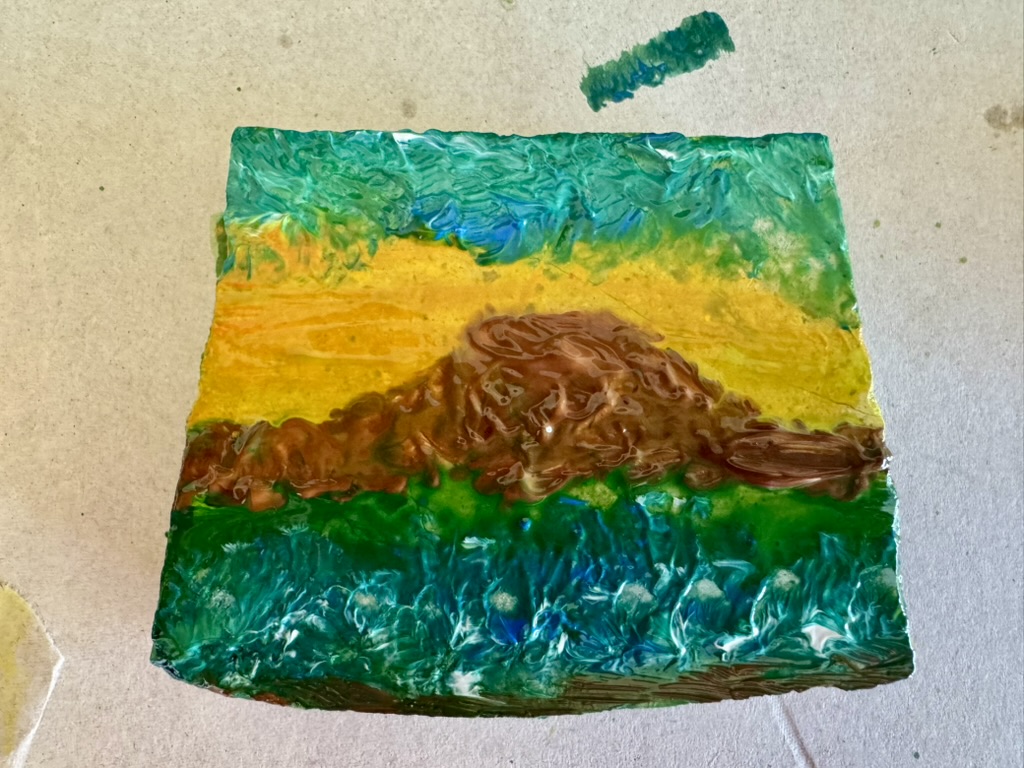
Title: Sediment of Memory
Artist Statement

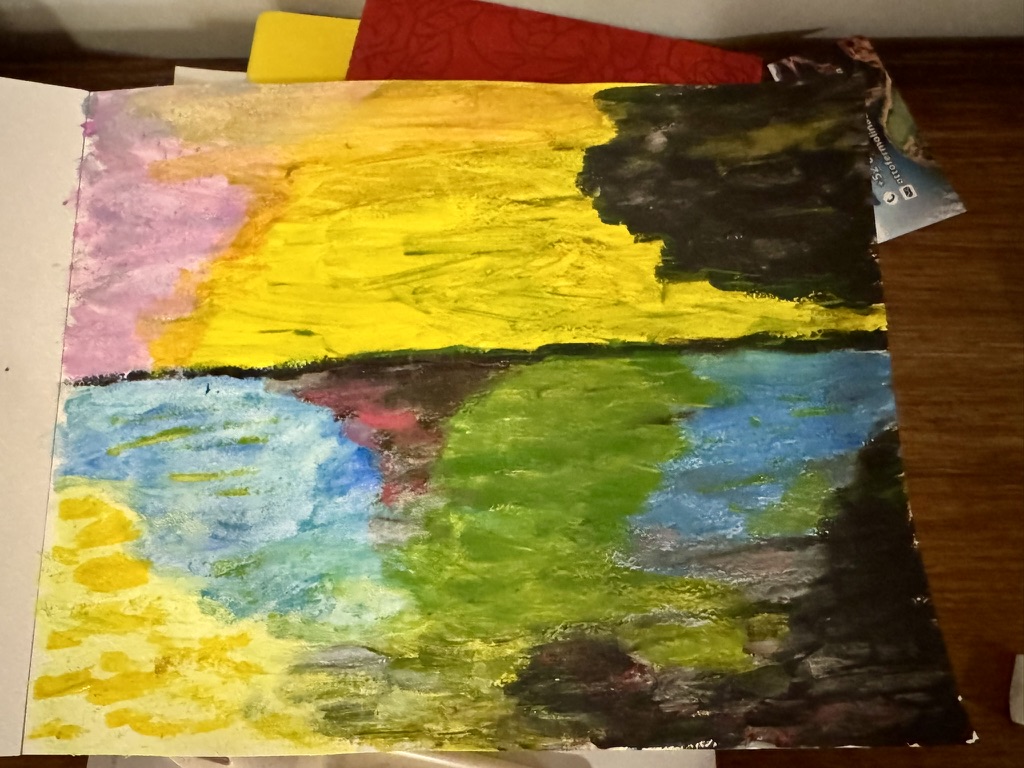
This piece emerged through layering rather than planning. Pigment settled into the surface in ways beyond my full direction, forming bands that resemble horizon lines or sedimentary memory. What holds my attention is the tension between opacity and translucence. Some areas conceal, others reveal. Light moves differently across each stratum.

I notice how the colours echo landscape without replicating it. Water, shoreline, mineral, and sky appear as impressions rather than representations. The work becomes less about place itself and more about the body’s memory of place. How it registers colour, depth, and distance even in abstraction.

Within my broader creative inquiry, this piece sits alongside other material experiments where process becomes method. It reflects an ongoing engagement with layering as both artistic and epistemological practice. Meaning accumulates at the surface rather than being applied to it. It accumulates slowly, through contact, pressure, and time.

Photo Credit: Amy Tucker, January 2026
The SPN Framework: Bridging Self and Scholarship
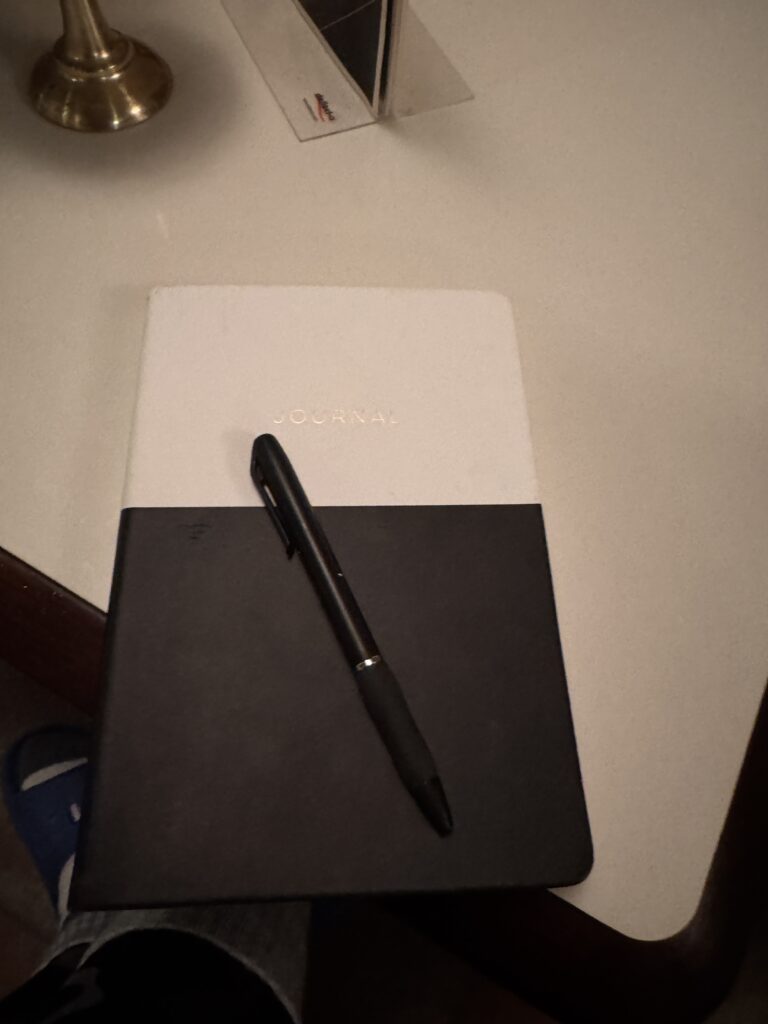
Title: Nothing Written
Artist Statement

This image sits at the threshold between experience and language. A journal closed. A pen resting diagonally across its surface. Nothing written yet, but everything present.

My work often returns to the moment before articulation, when thought is still somatic and unformed. In scholarly spaces, writing is framed as production. Here, writing is preparation. A readiness to listen inwardly before speaking outwardly.

The placement of the pen matters. It rests, ungripped, still. This resting signals consent rather than urgency. I write when something arrives. Force is absent from the process.

Within my broader inquiry into alonetude, journalling becomes a regulatory practice. A place where the body can settle into coherence before translating experience into theory. The closed cover holds privacy, safety, and containment. It reminds me that some insights are worthy of remaining inward, unreported, unperformed.

This photograph documents that pause. The space where reflection gathers strength before becoming language.

Photo Credit; Amy Tucker, January 2026
Scholarly Personal Narrative (SPN) provides a unique “third space” where analytical reasoning and personal authenticity intersect. Unlike traditional academic writing that demands detachment, SPN validates the researcher’s situatedness as a strength. This methodology treats lived experience as data, subjected to the same thematic synthesis as empirical materials. My inquiry into alonetude utilised a four-phase process:
Pre-Search: I began by aligning my internal motivations with SPN’s methodological commitments, identifying the core thematic concern of intentional solitude.
Me-Search: This phase involved a structured excavation of my own life, gathering raw fragments and vignettes from my time in Loreto to serve as the central field text.
Re-Search: I moved toward deliberate engagement with existing scholarship, such as self-determination theory and polyvagal theory, to contextualise my emerging themes.
We-Search: Finally, I translated my personal “I” into a collective “we,” offering thematic patterns and moral insights that resonate across varied life contexts.
Core Principles
The SPN methodology is operationalised through the VPAS model: vulnerability, perspective, action, and scholarly engagement (Nash, 2004). Each element informed my cultivation of alonetude.
Perspective transforms personal disclosure into something intelligible for an audience by embedding it in conceptual contexts. I framed my experiences against the “capacity to be alone,” a concept from Donald Winnicott (1958) that suggests aloneness is safe when one feels held by something larger. This interpretive layer ensures the narrative remains grounded in a broader human experience.
Vulnerability functions as an epistemic tool, enabling the writer to critically reinterpret moments of personal significance. In Loreto, this meant practicing self-interrogation and confronting the internal noise that surfaced when external distractions subsided. Vulnerability is selective; it serves the thematic throughline rather than standing as an isolated anecdote.
Action represents the translational moment where insights inform choices and behaviours. Cultivating alonetude required intentional shifts in practice, such as “mornings without performance” and “watching without comment.” These actions were enactments of meaning-making that altered my daily routines.
Scholarly engagement ensures that narrative meaning-making is intellectually valuable to the broader community. I integrated research on affective self-regulation to explain how volitional solitude supports well-being. This embeddedness enables individual trajectories to serve as sites for testing and expanding theory.
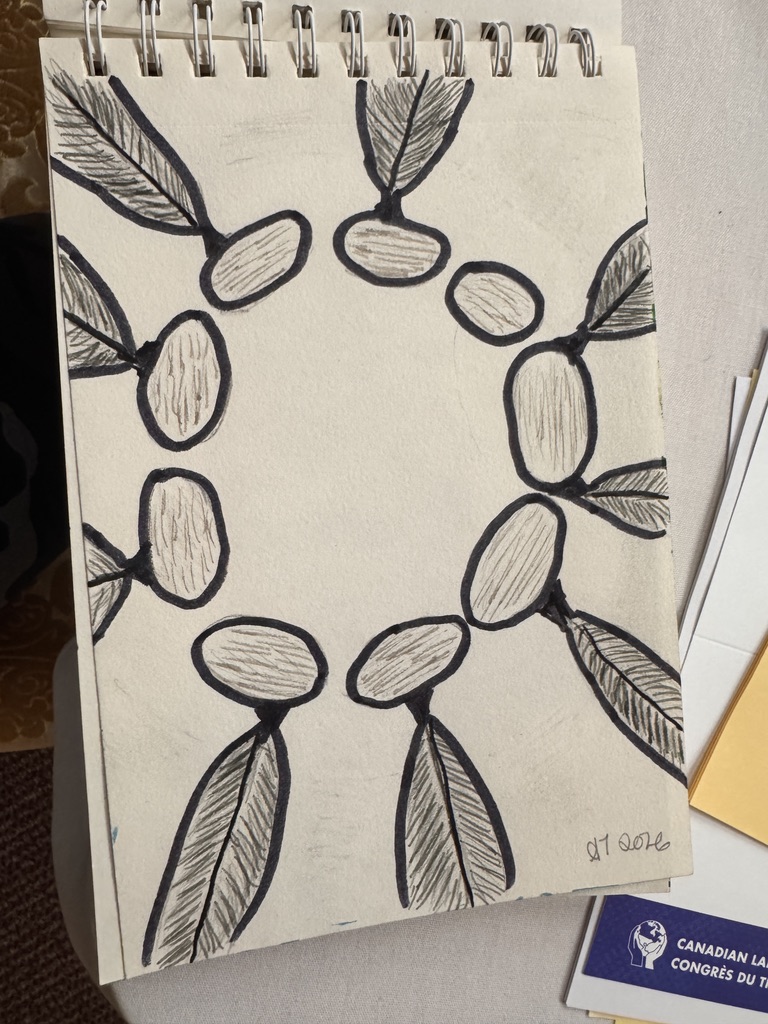
Title: The Circle of Witness
Artist Statement

This drawing emerges from my ongoing inquiry into relationality, witnessing, and the ethics of presence within alonetude. While solitude often carries connotations of separation, my work continues to reveal the opposite. Even in moments of intentional aloneness, I am held within circles of relation.

The figures in this piece are simplified, almost archetypal. Bodies reduced to gesture. Heads bowed or turned inward. Leaves extending from each form as though each figure is both human and ecological, person and landscape simultaneously. This merging reflects my broader research commitment to understanding identity as relational rather than individual.

The circular formation is deliberate. No figure leads. No figure dominates. Each occupies equal spatial ground, creating a visual field of mutual regard. The centre remains open, as possibility rather than absence. A space where listening gathers.

Within my methodological practice, drawing functions as a form of thinking. Line becomes language. Repetition becomes regulation. The slow rendering of each figure allows the nervous system to settle while insight surfaces without force.

This piece documents something other than isolation. It documents the felt sense of being surrounded by quiet forms of support that speak beyond language.

Photo Credit: Amy Tucker, 2026
Reading the Body as Archive: A Counter-Archival Practice
A central pillar of my methodology involves reading the body as an archive. This concept positions the corporeal form as a repository of lived experience, challenging traditional archival paradigms that privilege textual documentation (Derrida, 1996).
By treating the body as a site of knowledge, I engaged in a counter-archival practice. This approach recognises that bodies retain past experiences, particularly traumatic or transformative ones, as implicit somatic memories (van der Kolk, 2014). My methodology utilised several tools to document this embodied archive:
Somatic Logs: Documenting physiological and sensory shifts during the 30-day retreat.
Visual Witnesses: Using photography to capture the “soft fascination” of the environment, which facilitates attention restoration (Kaplan, 1995).
Intertextual Journals: Connecting scholarly reading to lived, felt experiences in real-time.
This framework is supported by Polyvagal Theory, which suggests that a state of felt safety, the ventral vagal state, is required to access these deep somatic archives (Porges, 2022). In the quiet of the Sea of Cortez, the absence of threat triggered the neuroception of safety, enabling a downregulation of defensive states and an opening of the embodied record.
The Portability of Alonetude
The ultimate goal of this methodology is universalizability: the capacity for a narrative to evoke recognition across contexts. Alonetude is a portable internal posture that remains available regardless of external circumstances. By employing the SPN and reading the body as an archive, researchers can bridge the gap between inner truth-telling and public knowledge-making. This process reveals that the home we seek is often found within ourselves, preserved in the very tissues of our being.
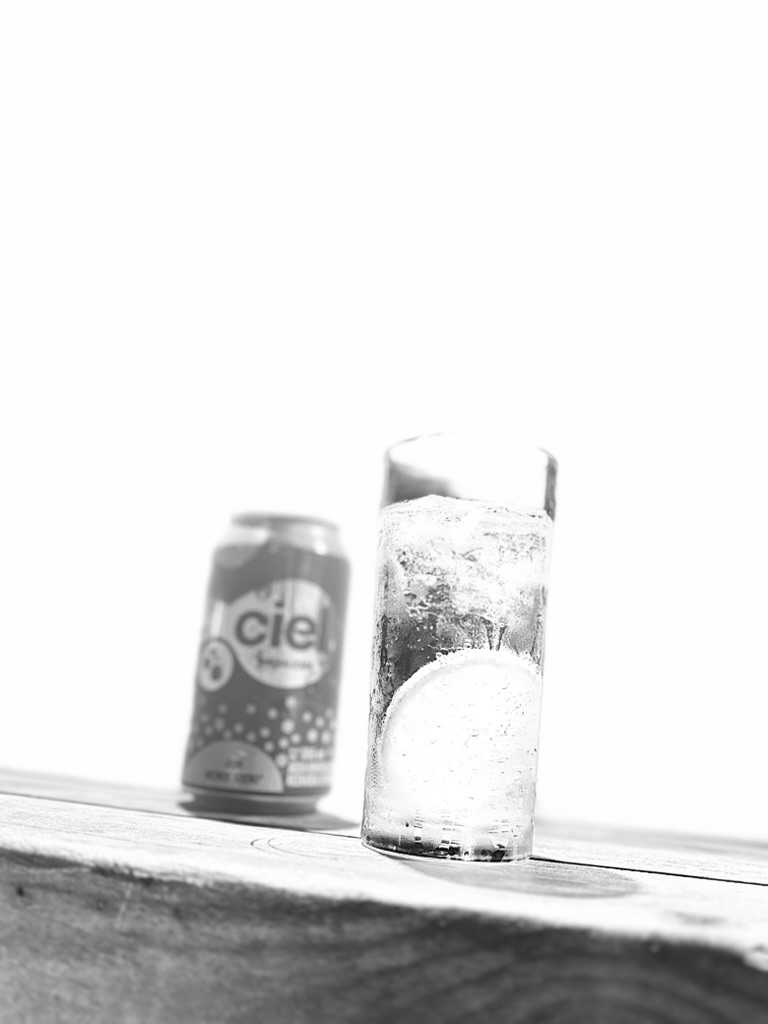
Title: Hydration, Paused
Artist Statement

This image sits within my ongoing visual inquiry into alonetude, embodiment, and the quiet rituals that sustain attention. My work turns away from spectacle. It turns instead toward ordinary moments where the body registers care before language has time to intervene.

A glass of mineral water, a slice of lime, condensation gathering along the surface. These are small events. Yet within them lives a form of restoration that is both sensory and relational. The body cools. The hand steadies. Time slows.

In my broader research, I examine how identity, labour, and precarity shape the nervous system’s orientation to rest. Here, relief is tactile. Visible. Measurable through droplets, temperature, and light.

This photograph participates in a methodology of noticing. It asks what becomes possible when attention is returned to the micro-gestures of care that make endurance sustainable.

Photo Credit: Amy Tucker, January 2026
References
Derrida, J. (1996). Archive fever: A Freudian impression. University of Chicago Press.
Kaplan, S. (1995). The restorative benefits of nature: Toward an integrative framework. Journal of Environmental Psychology, 15(3), 169–182. https://doi.org/10.1016/0272-4944(95)90001-2
Nash, R. J. (2004). Liberating scholarly writing: The power of personal narrative. Teachers College Press.
Porges, S. W. (2022). Polyvagal theory: A science of safety. Frontiers in Integrative Neuroscience, 16, Article 871227. https://doi.org/10.3389/fnint.2022.871227
van der Kolk, B. A. (2014). The body keeps the score: Brain, mind, and body in the healing of trauma. Viking.
Winnicott, D. W. (1958). The capacity to be alone. The International Journal of Psycho-Analysis, 39, 416–420.
January 1 is often treated as a symbolic reset, a cultural insistence that renewal can be declared on demand. Yet for many of us, particularly those shaped by long periods of precarity, caregiving, and professional vigilance, beginnings arrive with residue.
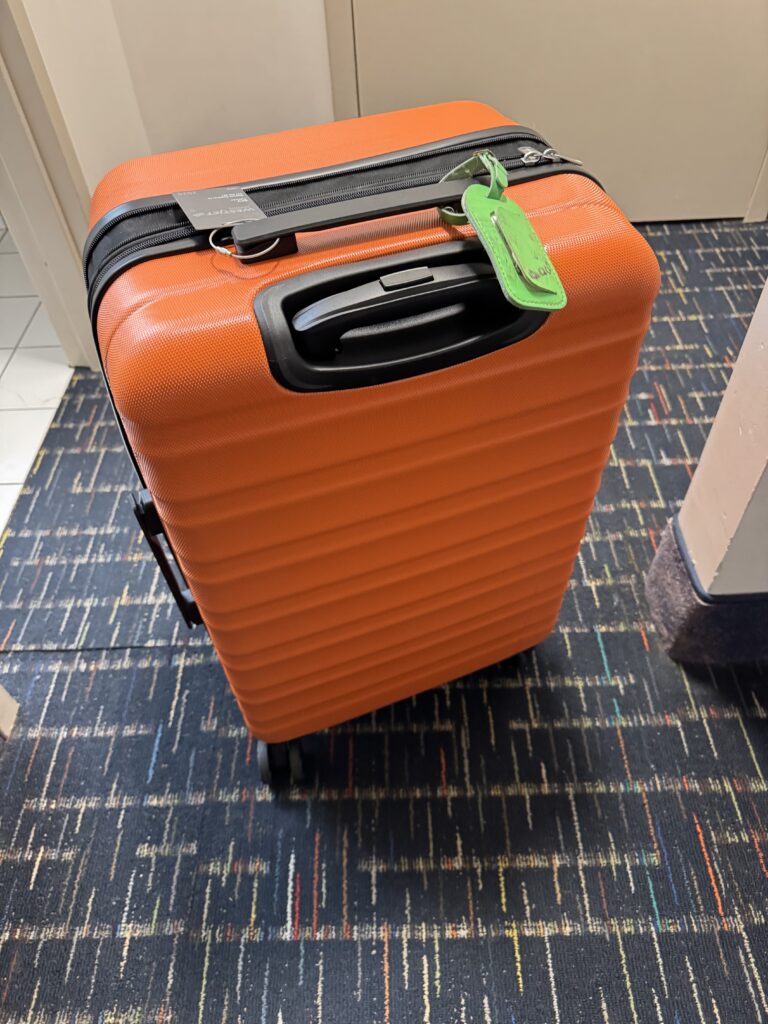
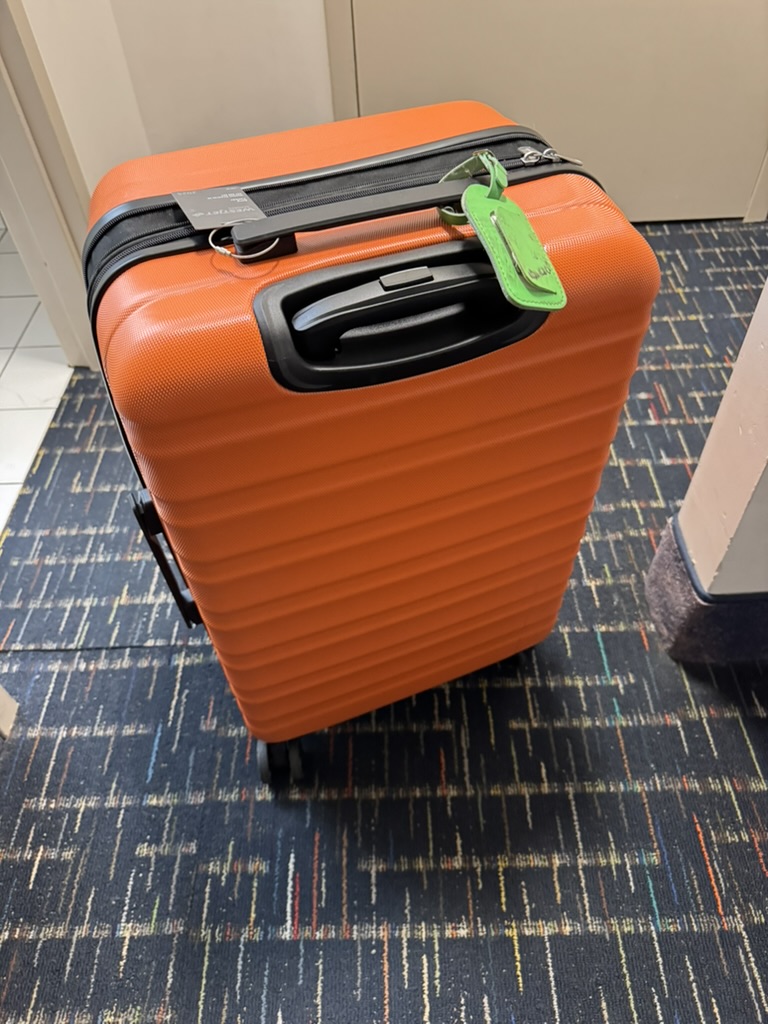
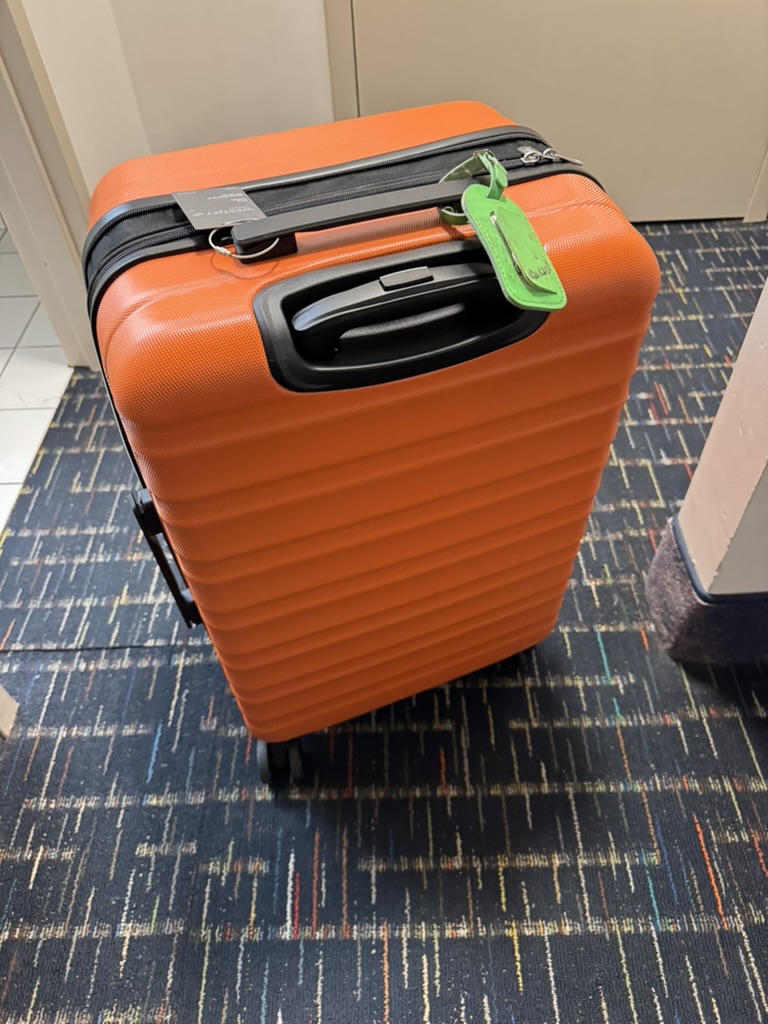
Image: The Orange Suitcase
Photo Credit: Amy Tucker, January 2026
They arrive through the body.
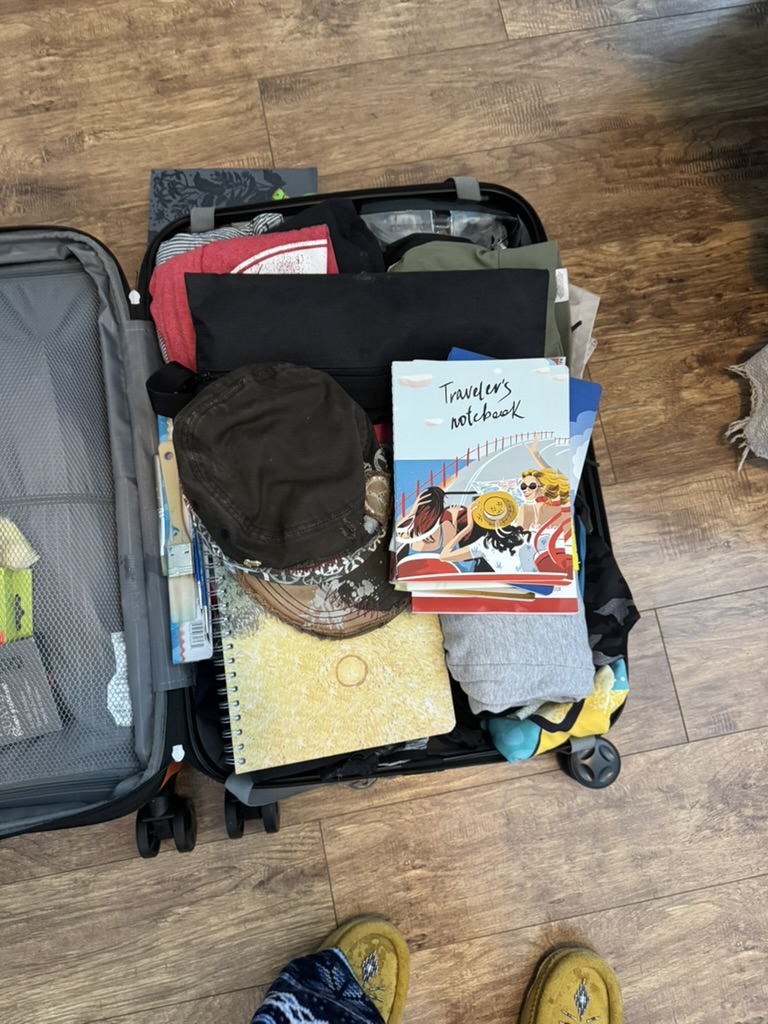
On the morning of January 1, I pack an orange suitcase. The act is deliberate, slow, and unexpectedly revealing. Packing, I come to realise, is more than logistical. It is an embodied practice of identity negotiation. What I choose to carry, what I leave behind, and how I tolerate the uncertainty created by that space becomes a form of inquiry into who I am becoming.
Identity as Process, as Becoming
Identity is often narrated as stable or cumulative, something we have rather than something we continuously do. Sociological and narrative scholars have long challenged this assumption, arguing that identity is formed through ongoing meaning-making, particularly at moments of transition (Giddens, 1991; Bruner, 2004). January 1, framed as a beginning, intensifies this process.
As I pack, I notice what is absent. I leave behind teaching materials. I leave behind contingency plans. I leave behind symbols of productivity. This absence is intentional. For decades, my professional identity as an educator within precarious academic labour has required constant preparedness and an outward orientation shaped by what Butler (2004) describes as the demand to render oneself intelligible and viable within institutional norms. Packing without these artifacts is a quiet refusal of that script.
This is a suspension of identity rather than an abandonment. A temporary loosening that creates space for becoming.
Anxiety, Uncertainty, and the Body
Transitions often activate anxiety, particularly when identity has been tethered to performance and responsibility. Rather than conceptualising anxiety here as pathology, I approach it as a learned response to prolonged uncertainty. As Ahmed (2010) reminds us, emotions reside within relationships and structures, beyond any single individual; they circulate through social and institutional arrangements.
Packing on January 1, anxiety appears as an impulse rather than panic. The urge to overpack. The desire to anticipate every scenario. The need to force clarity before it is available. These impulses are familiar. They once served as safety strategies.
What shifts in this moment is my response. Instead of obeying the impulse to force certainty, I practice restraint. I leave space in the suitcase. I allow questions to remain unanswered. In doing so, I engage what Brown (2021) describes as vulnerability as a willingness to remain present without guarantees, beyond any performance of exposure.
This is tolerance rather than fearlessness.
Relearning Safety Through Ordinary Acts
Much of the literature on trauma-informed and somatic inquiry emphasises that safety is established experientially rather than cognitively (van der Kolk, 2014; Carello & Butler, 2015). Packing becomes one such ordinary site of relearning safety.
Folding clothes slowly. Choosing comfort over appearance. Closing a suitcase that rests easy at the seams. These small acts register in the body as signals: there is no emergency here. Nothing needs to be forced.
This reframing matters. In neoliberal academic cultures that reward speed, output, and endurance, rest and restraint are often misread as failure (Hersey, 2022). Yet what unfolds here is recalibration rather than disengagement. A shift from vigilance to attentiveness.
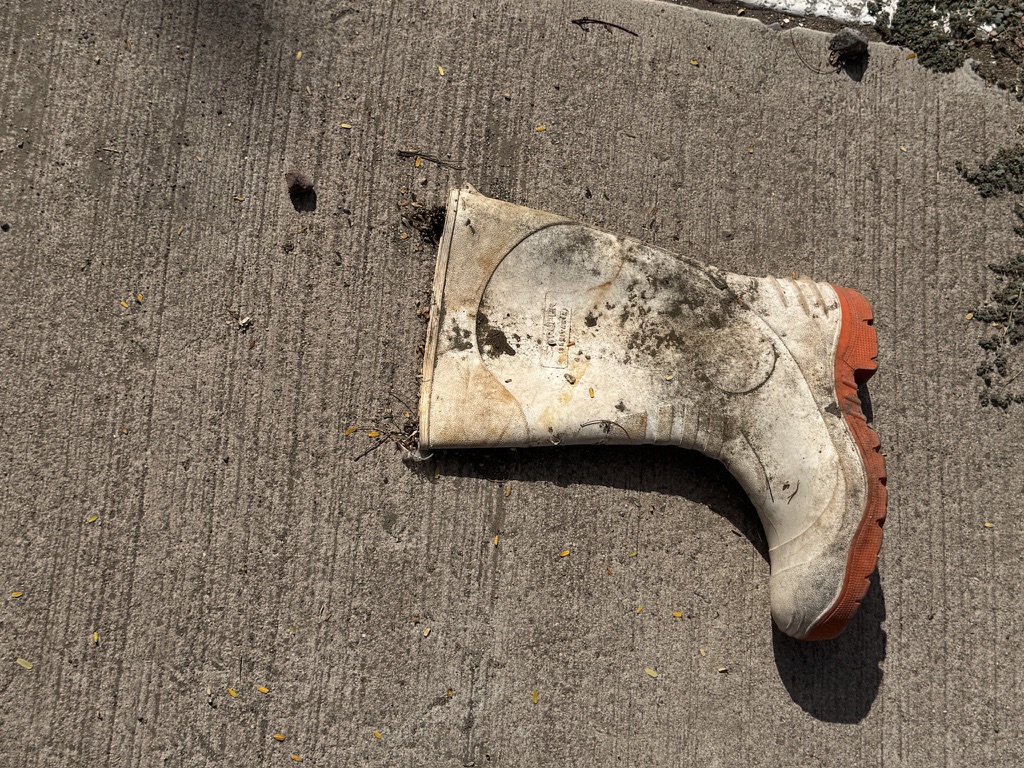
Title: What is Left Behind
Artist Statement

It was lying alone on the concrete. A single rubber boot, worn, dirt-marked, hollowed of its wearer.

I stopped because it felt like an artifact rather than debris.

There is something about abandoned footwear that registers immediately in the body. Shoes hold weight, direction, labour. They carry the imprint of terrain and the memory of distance travelled. When separated from the person who moved within them, they become evidence without narrative.

Within the Alonetude inquiry, this image speaks to what is left behind when identity shifts. Some things are left behind when identity shifts. Some roles, expectations, and former necessities fall away quietly, without ceremony.

The boot signals completion as much as loss. It signals completion. A task finished. A terrain crossed. A version of self that no longer requires the same protection.

Placed alongside images of suitcases, thresholds, and horizons, this photograph introduces a necessary counterpoint. Departure carries what we hold alongside what we release. It is also about what we release, whether intentionally or through time.

Less is carried. More is understood.


Photo Credit: Amy Tucker, January 2026
Leaving Without Idealising Arrival
A common narrative trap in stories of departure is idealization. The assumption that leaving automatically produces healing, clarity, or transformation. I resist this framing intentionally.
As I pack, I refuse to script who I will be on the other side of this journey. The destination requires no justification for leaving. This aligns with Nash and Bradley’s (2011) description of Scholarly Personal Narrative as one that resists premature closure, allowing meaning to emerge rather than be imposed.
What I carry forward instead is presence. Attention. A commitment to noticing without narrating every experience into productivity or insight.
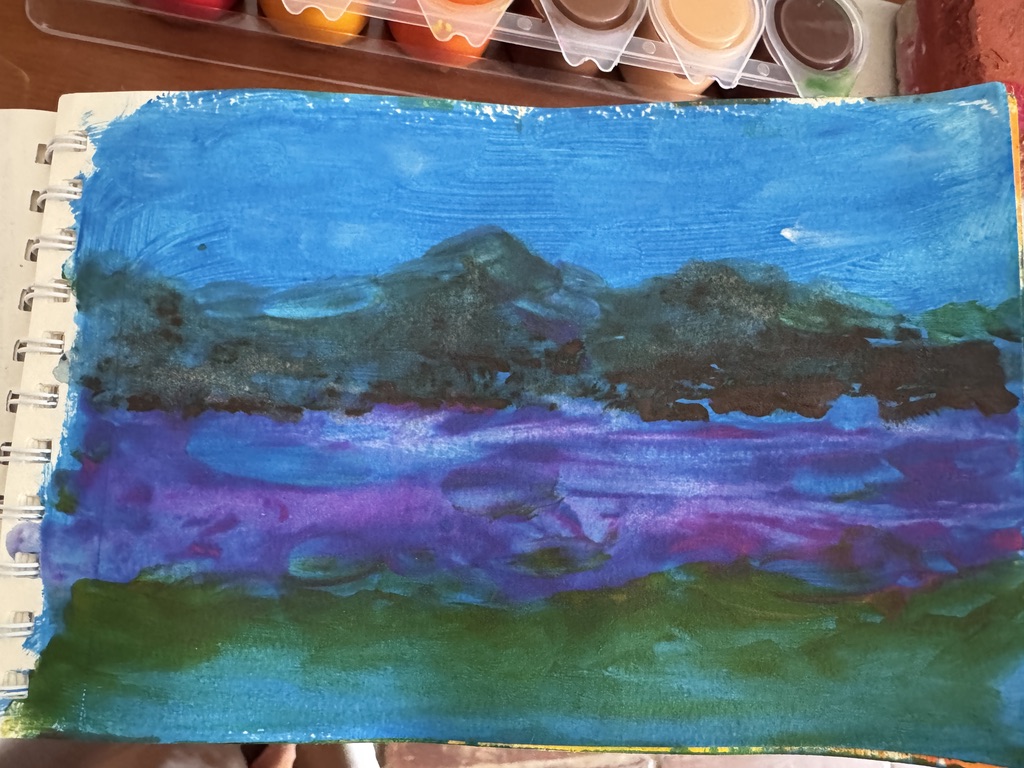
Title: Where the Water Holds the Sky
Artist Statement

This painting emerged slowly, without a preliminary sketch and without a fixed outcome. I worked in layers of blue, violet, and green, allowing the horizon to surface rather than be imposed. What appears as landscape is less geographic than somatic. It reflects how place is held in the body after extended solitude.

The darker band across the upper plane suggests mountain or shoreline, yet it resists precision. This lack of sharpness matters. Memory rarely preserves edges. It holds tone, atmosphere, and emotional temperature more than cartographic accuracy. The water below carries movement through colour rather than line, mirroring how stillness and motion coexist within reflective practice.

Within my broader inquiry on intentional solitude, painting becomes a parallel method of knowledge production. Where writing works through language and citation, visual expression registers what remains pre-verbal. The blending of pigments, the refusal to overcorrect, and the acceptance of diffusion all echo the ethical stance of alonetude: to stay with experience rather than discipline it into immediate coherence.

What interests me most is the meeting line between water and land. It is neither fixed nor symmetrical. It wavers. This wavering reflects the threshold state I often write about, the space between arrival and departure, knowing and sensing, holding and releasing.

The painting documents an internal geography rather than a specific location. It documents an internal geography shaped by time near water, open sky, and unstructured attention. It is less a representation of where I was and more an imprint of how I was while there.

Photo Credit: Amy Tucker, January 2026
January 1 as Ethical Beginning
What emerges through this act of packing is integrity rather than resolution. January 1 becomes less about reinvention and more about consent. Consent to begin again without erasing the past. Consent to carry less. Consent to meet uncertainty without escalation.
In this way, packing becomes both method and metaphor. A lived demonstration of identity as process, anxiety as information rather than command, and beginning again as a practice grounded in care rather than force.
The orange suitcase closes easily. That, too, appears to be data.
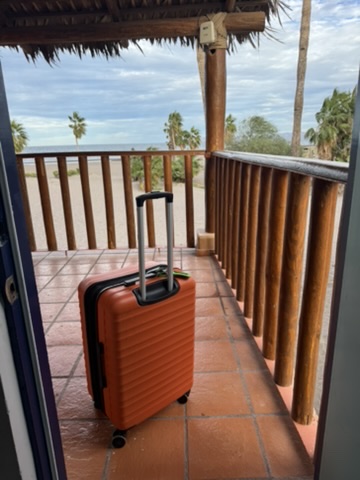
Title: Threshold Work
Artist Statement

There is always a precise moment when departure becomes real. It arrives beyond the booking of flights or the packing of suitcases. It happens when the bag is placed by the door and left standing there, upright and waiting. In that quiet positioning, the decision settles into the body. The balcony still held the same view that had framed my days: palms shifting lightly in the wind, the ocean stretching outward, the familiar horizon line that had slowly reorganised my internal pace. Nothing in the landscape had changed, yet something in me had.

What struck me in this moment was the composure of the suitcase itself. It felt unhurried. Unburdened. It felt deliberate. Within my research on intentional solitude, I have come to understand that departure is part of solitude's practice rather than its opposite. One enters solitude with intention, but one must also learn how to leave it without abandoning what was restored there. The suitcase, in this sense, holds more than belongings. It carries journals filled with reflection, rhythms that have slowed, breath that has steadied, and a nervous system that has had time to soften.

Standing in the doorway, I became aware that thresholds rarely announce themselves dramatically. More often they appear as ordinary architectural spaces: tiled floors, wooden railings, a partially open door. Yet these are the sites where integration begins. The work is no longer only about being away. It is about what is brought forward.

This image marks that pause. The moment of standing still long enough to recognise that something meaningful has occurred, and that it can be carried, carefully, into what comes next.

Photo Credit: Amy Tucker, January 2026
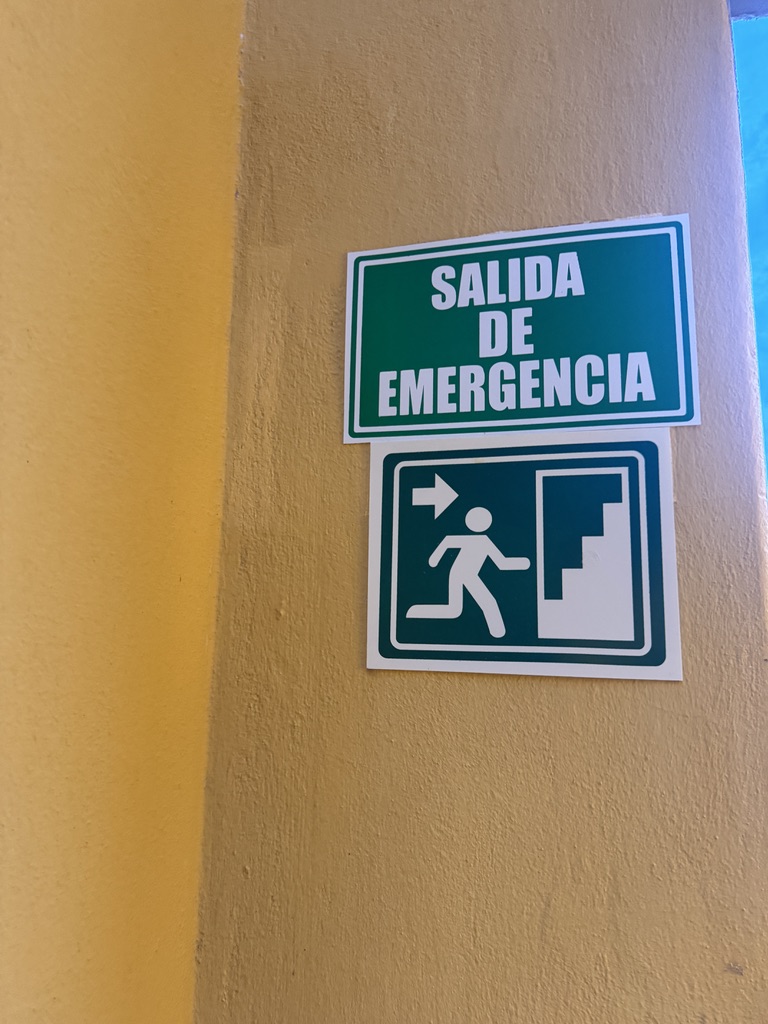
Title: Exit as a Method
Artist Statement

The sign appears ordinary at first glance. Functional. Directive. Institutional. Salida de Emergencia. Emergency Exit. It is designed to move bodies quickly, efficiently, without reflection. Yet what drew my attention was the quiet permission it offers rather than any urgency it implies.

In spaces shaped by productivity, expectation, and performance, exits are rarely named with such clarity. They exist, but they are obscured. Emotional exits. Cognitive exits. Spiritual exits. The pathways through which one might step away without crisis are seldom marked.

Within my research on intentional solitude and identity transition, this image registers as metaphor as much as documentation. It asks: What constitutes an emergency? Who decides when leaving is justified? And what happens when departure is restorative rather than reactive?

The figure on the sign is always in motion, always mid-stride. There is no depiction of hesitation, grief, or complexity. Institutional language simplifies leaving into action. Yet lived experience complicates it. To exit a role, an identity, or a way of being often requires extended negotiation with fear, responsibility, and belonging.

Photographing this sign became a moment of recognition. Of option rather than crisis. A reminder that leaving can be chosen with care rather than driven by collapse. It can be chosen with awareness. With timing. With care.

Within the broader Alonetude inquiry, the emergency exit becomes reinterpreted. As movement toward safety rather than escape from danger alone. A passage away from environments that demand constant readiness and toward spaces that allow restoration.

The sign remains fixed to the wall. The body, however, retains the agency to decide when the threshold has been reached.

Photo Credit: Amy Tucker, January 2026
Note. Spanish-language passages were generated using Google Translate (Google, n.d.) and subsequently reviewed and refined by the author. Any remaining infelicities reflect the limits of machine translation rather than intent.
References
Ahmed, S. (2010). The promise of happiness. Duke University Press.
Bruner, J. (2004). Life as narrative. Social Research, 71(3), 691–710.
Butler, J. (2004). Undoing gender. Routledge.
Carello, J., & Butler, L. D. (2015). Practicing what we teach: Trauma-informed educational practice. Journal of Teaching in Social Work, 35(3), 262–278.
Giddens, A. (1991). Modernity and self-identity: Self and society in the late modern age. Stanford University Press.
Google. (n.d.). Google Translate. https://translate.google.com
Hersey, T. (2022). Rest is resistance: A manifesto. Little, Brown Spark.
Nash, R. J., & Bradley, D. L. (2011). Me-search and re-search: A guide for writing scholarly personal narrative manuscripts. Information Age Publishing.
van der Kolk, B. A. (2014). The body keeps the score: Brain, mind, and body in the healing of trauma. Viking.
Academic Lens
Packing as identity-work surfaces the concept of alonetude (Tucker, 2026) as a deliberate construction: the choice to arrive without an audience. The residue of long precarity described here connects to slow violence (Nixon, 2011) — harm accumulated so gradually that its weight only becomes visible in moments of departure. The body's reluctance to begin again reflects what Levine (2010) calls the nervous system's conservatism: prior threat states leave physiological traces that no calendar can reset.
A gratitude practice at the threshold of 2025: a quiet reckoning with what has been carried, what has been set down, and what it means to enter a new year with more gentleness than the last.
I am grateful for the year that arrived without politeness. For the grief that pressed its full weight against my chest. For the darkness that stayed longer than comfort allows. For the depression that hollowed me out, for the loneliness that stripped away every performance, every borrowed certainty.
I am grateful for reaching the bottom and finding no floor, only myself, breathing, still here.
For the end of an era that refused to close gently, but demanded surrender. For the opening of a new chapter written without promise, only willingness.
For a body that carried trauma in silence until it could hold no more. For the slow, unglamorous work of healing. For learning that peace is a practice, chosen daily. For finding the Creator beyond answers, in endurance.
For forgiveness that burned on the way through. For forgiving others without excusing the harm. For asking forgiveness without protecting my ego. For learning that love requires truth, and truth costs something.
For walking away from the classroom, because I outgrew the shape it required me to hold. For choosing a life of writing and research, where listening is labour, and honesty is the measure.
For closing the door on a decade of becoming brave enough to say goodbye to what once kept me alive. For understanding that survival and belonging are entirely different things.
For my children, who taught me what love looks like when it is tested. For my parents, as time rearranged everything we knew. For my sisters, whose depth and courage reminded me I had company.
For finding love with Tom, steady, chosen, real, and for finding myself, without apology, without permission, at last.
And now, I give thanks for choosing life with my whole body. For committing to kindness after bitterness would have been easier. For continuing the work of healing when no one is watching.
I walk forward toward the highest spiritual vibration I can hold, aware that I will falter, aware that I will grieve again, and willing still.
This is my gratitude, fierce and honest, But because I survived it awake.
Title: Where the Sky Learns to Rest
Artist Statement
There are evenings when colour arrives with such fullness it quiets the mind before thought can form.
This was one of those evenings.
The palms bent slightly in the wind, their movement slow and unhurried, as though they too were participating in the closing of the day. The shoreline held a soft stillness. Even the water seemed to pause beneath the sky’s reflection.
I received this moment without spectacle. It felt more like permission.
Within my research on intentional solitude, I have come to understand that rest arrives through many forms beyond sleep or retreat. Sometimes rest occurs through witnessing. Through allowing the nervous system to soften in the presence of beauty that asks nothing in return.
The horizon asked nothing of me. It simply held colour, light, and the gentle evidence of transition.
I remained until the pink thinned into violet and the palms returned to silhouette.
A day completing itself. A body learning how to do the same.
A prelude: what I imagine the sea will feel like before I go. A meditation on anticipation, longing, and the particular kind of hope that belongs to someone about to give themselves thirty days of uninterrupted presence.
The research site is my own body. The methodology is presence.
A Deliberate Period of Research on Myself
What I Am Doing Here
I am sitting with my notebook, trying to articulate what this month is actually for. People keep asking. Are you on vacation? Are you writing a book? Are you running away from something?
The honest answer is: I am still finding the words. I know what I am leaving behind. I am leaving behind vacation in the way the word usually implies, with itineraries, tourist attractions, and the pressure to relax on schedule. I am beyond the wellness-industry retreat, where someone else structures my healing and tells me when to breathe deeply. I am running toward something, though I understand why the departure might look like a flight from the outside.
What I am doing is harder to name. I am conducting research. But the research site is my own body. The methodology is present. The data is whatever surfaces when I stop performing productivity long enough to notice what I actually feel.
This is what Scholarly Personal Narrative makes possible. Education scholar Robert Nash (2004) writes that “scholarly personal narrative writing is the unabashed, up-front admission that your own life signifies” (p. 24). My life signifies. My exhaustion signifies. My body, with its accumulated tensions and its slow-releasing grief, signifies. These belong to the research itself.
“For years, I have leapt out of bed with adrenaline already coursing, my mind racing through the day’s obligations before my feet touched the floor.”
Title:Selfie at the Beginning
Artist Statement

 I nearly skipped this photograph. I have always avoided photographs of myself tired, and I have been tired for years. But Photovoice methodology, developed by Caroline Wang and Mary Ann Burris (1997), insists that the participant is the expert witness of their own experience. If I am going to document this inquiry honestly, I must document myself as I actually am, regardless of how I might wish to appear. This photograph is baseline data. It shows me at the beginning, before I know what thirty days of rest will do. The tiredness in my eyes is evidence. The uncertainty is evidence. The fact that I am here at all, despite everything, is evidence of something still beyond words. Perhaps courage. Perhaps desperation. Perhaps both.

Photo Credit: Amy Tucker, January 2026
Arriving Without an Agenda
I arrived with almost nothing planned. This was deliberate, yet terrifying.
For seventeen years, I have lived by agendas. Syllabi. Course schedules. Committee meetings. Deadline after deadline after deadline. My calendar has been a document of obligations, a record of all the places I needed to be and all the things I needed to produce. Arriving somewhere without a plan feels dangerous to a body trained by precarity to always be preparing for the next demand.
But that is precisely why I chose to come without one.
Transition theorist William Bridges (2019) describes the neutral zone as the disorienting space between an ending and a new beginning. In the neutral zone, the old structures have fallen away, but new ones are still taking shape. Bridges (2019) argues that this space, though uncomfortable, is essential for genuine transformation. If we rush to fill it with busyness and plans, we miss the creative potential it holds.
I am trying to stay in the neutral zone without filling it. I am trying to tolerate the discomfort of holding each day open, uncertain of what it will bring. This is harder than it sounds. My nervous system keeps wanting to make lists, set goals, and measure progress. I keep gently redirecting it back to the present moment.
What do I actually have? Curiosity. Books. A notebook. A camera. Art supplies. My body. Time. The sea.
The sea becomes my research site. I become both subject and observer.
The Body as Research Site
Each day begins quietly. I wake early and watch the light change before the world feels busy. I let my nervous system wake up slowly, which is a practice in itself. For years, I have leapt out of bed with adrenaline already coursing, my mind racing through the day’s obligations before my feet touched the floor. Here, I am practicing a different kind of waking. Gradual. Gentle. Without urgency.
Psychiatrist Bessel van der Kolk (2014) writes that “physical self-awareness is the first step in releasing the tyranny of the past” (p. 101). Physical self-awareness means noticing what is happening in the body: sensations, tensions, areas of ease and discomfort. It sounds simple, but for those of us who have spent years overriding our bodies’ signals, it requires relearning.
I am relearning.
Some mornings I swim, letting the salt water do its steady work on my breath and muscles. The sea holds me, and for once, I release the effort of holding myself. There is something profound about buoyancy, about being supported by something larger than my own effort. I float on my back and watch the sky and feel my shoulders release in ways they never do on land.
Other mornings, I walk along the shoreline, noticing birds, light, and small changes in the tide. I am learning again how to pay attention without trying to control what I see. This is what environmental psychologists Rachel Kaplan and Stephen Kaplan (1989) call “soft fascination”-the effortless attention that natural environments invite. Soft fascination allows directed attention to rest and recover. It is the opposite of the vigilant scanning my nervous system has been doing for years.
“Physical self-awareness is the first step in releasing the tyranny of the past.”
Bessel van der Kolk (2014, p. 101)
Movement as Inquiry
Movement becomes part of the inquiry. But it is a different kind of movement from the one I am used to.
For years, I have been an athlete. Triathlon. Long-distance open-water swimming. I have trained my body to push through discomfort, to ignore fatigue, to override the signals that say stop,slow down, or this is too much. That capacity served me in competition. It also served me in precarious labour, where I pushed through exhaustion semester after semester because stopping felt impossible.
Here, I am practicing a different relationship with movement. Yoga to listen rather than push. Walking without tracking distance or speed. Swimming to settle rather than to train. I am measuring nothing. I am simply moving and noticing what my body tells me.
This is a form of interoception, which I introduced in earlier posts. Interoception is the capacity to sense and interpret signals from inside the body. Neuroscientist Stephen Porges (2011) emphasises that interoception is foundational to well-being. We cannot regulate what we cannot feel. We can only care for ourselves when we know what we need.
My body becomes a source of information instead of something I manage or override. I notice where tension softens. I notice where grief still lives, tucked into my hips and my jaw and the space between my shoulder blades. I notice when joy appears without effort, surprising me with its presence.
“My former life has ended. My new life is still taking shape.”
Title: Morning Light on Water
Artist Statement

 I photograph the morning light because it teaches me about presence. This particular quality of light exists only briefly. A moment of inattention and it is gone. There is no way to capture it later or recreate it artificially.

It requires me to be here, now, in this specific moment. Philosopher Donna Haraway (1988) argues that all knowledge is situated, emerging from particular bodies in particular locations at particular times. There is no view from nowhere. There is only the view from somewhere. This photograph is my view from here, from this morning, from this body standing at the edge of this sea. It is partial, specific, and completely true.

Photo Credit: Amy Tucker, January 2026
Art as Companionship
Art weaves its way through the days. Some days I paint or draw. Some days I photograph birds lifting from the water or shadows stretching across the sand. Some days, the art is simply sitting and watching the sea change colour.
This is art therapy without diagnosis, without fixing, without interpretation. It is creation as companionship.
Arts-based research scholar Patricia Leavy (2015) argues that creative practice accesses dimensions of human experience that other methods cannot reach. Art speaks to the aesthetic, the emotional, the sensory, the embodied. It generates knowledge that cannot be reduced to propositions or statistics. When I paint, I am discovering rather than illustrating what I already understand. I am discovering what I know through the act of making.
I brought watercolours with me. They are forgiving, which I need right now. If a mark arrives uninvited, I can let it bleed into something else. I can work with the accident rather than trying to erase it. This feels metaphorically apt. I am learning to work with what has happened to me rather than pretending it never occurred.
These simple materials are an act of resistance against a system that valued me only for what I could produce.
I also brought my camera. Photography, within the Photovoice methodology I am using, functions as a form of witnessing. Wang and Burris (1997) designed Photovoice to enable people to record and reflect on their own experiences. The camera becomes a tool for noticing. It asks, “What do you see?” What matters? What wants to be documented?
The reason for a photograph often arrives later. The image emerges first. The understanding follows, sometimes days afterward. This is part of the methodology. I trust that meaning will arrive in its own time.
Title: Art Supplies
Photo Credit: Amy Tucker, January 2026
Artist Statement

I photographed my art supplies because they represent permission. For years, I abandoned art. I told myself time was absent, which was true. I told myself it was unproductive, which was the language of a system that valued me only for output. These simple materials, watercolours and paper and a few brushes, are an act of resistance against that system. They say: making something for its own sake is enough. Beauty is enough. Play is enough. Moore (1992) argues that caring for the soul is a crafted, patient practice that requires openness to life’s unfolding rather than attempts to control or accelerate it. These supplies are tools for soul care. They ask nothing of me except presence.

Photo Credit: Amy Tucker, January 2026
Silence as Data
Writing happens when it wants to. Sometimes it comes as complete sentences. Sometimes as fragments. Sometimes in silence.
I am learning to permit myself to rest when there are no words. This is difficult for someone who has spent her career producing text: syllabi, assignments, feedback, articles, reports, emails without end. I have been trained to believe that writing equals work equals value. It is a false equation.
Here, I am practicing a different relationship with language. I am practicing trust, both in myself and in the process. I am learning that silence is also data.
Nash (2004) writes that “we do not live in reality itself. We live in stories about reality” (p. 33). The stories I have told about myself, the overworked educator, the reliable colleague, the person who always says yes, have shaped how I experience my life. But stories can be revised. New narratives can emerge. This requires silence, space, and time for the old stories to loosen their grip.
Some days I write pages. Some days I write nothing. Both are part of the inquiry.
“We do not live in reality itself. We live in stories about reality.”
Robert Nash (2004, p. 33)
Evenings and Reflection
I imagine evenings marked by sunsets and reflection. I review the day gently, asking what surfaced and what settled. I resist the rush to make meaning. I let experiences sit, knowing they will braid together in their own time.
This practice draws on what contemplative traditions call discernment, the slow work of noticing patterns and allowing clarity to emerge. It is the opposite of the rapid analysis I have been trained to perform in academic settings, where every observation must be immediately connected to theory, and every experience interpreted and explained.
Here, I am practicing a slower kind of knowing. I am trusting that understanding will come when it is ready. The sea holds my questions without demanding answers.
Donna Haraway’s (1988) concept of situated knowledge provides an important epistemological grounding for this project. Haraway argues that knowledge is always partial, embodied, and located, and that broader understanding emerges from specific positions rather than detached universality. This perspective challenges claims of neutral objectivity, emphasising that what we know is shaped by where we are, who we are, and how we are positioned within power relations.
In this inquiry, Loreto serves as an epistemic site where geography, solitude, and embodiment actively shape knowledge production. By situating this work in a particular body and place, the project embraces partiality as a methodological strength and foregrounds reflexivity, positionality, and relational accountability in the generation of knowledge. I am somewhere particular: Loreto, México, the edge of the Sea of Cortez, this specific body at this specific moment in history. The larger vision I am seeking, whatever it turns out to be, can only emerge from this particular location. There is no shortcut. There is no way to skip the slow work of being here.
Title: Sunrise
Artist Statement

I photograph sunrises because they mark beginnings without certainty. The day begins, offering itself without promises. Light returns, yet it does so quietly, without spectacle or demand. There is comfort in this daily renewal, in the gentle assurance that illumination follows darkness.

Anthropologist Victor Turner (1969) wrote about liminality as the threshold state between what was and what will be. Sunrise is a liminal time. It belongs neither fully to night nor fully to day. I am drawn to these threshold moments because I am living within one. My former life has ended. My new life is still taking shape. I stand in the early light, attentive to what is emerging, noticing what the morning reveals about who I am becoming.

Photo Credit: Amy Tucker, January 2026
The Human Right to Imagine
I want to pause here and connect what I am doing to the human rights framework that grounds this entire project.
Article 27 of the Universal Declaration of Human Rights (United Nations, 1948) states that “everyone has the right freely to participate in the cultural life of the community, to enjoy the arts and to share in scientific advancement and its benefits.” This right to participate in cultural life, to make and enjoy art, is fundamental to human dignity, beyond luxury.
But precarious labour systematically erodes this right. When every hour must be monetised, when exhaustion is chronic, when the nervous system is trapped in survival mode, there is no space left for creativity. Art becomes something other people do. Imagination becomes a luxury we cannot afford.
This residency is an exercise of my right to participate in cultural life. I am making art. I am writing. I am imagining possibilities beyond survival. These are expressions of human dignity, denied me for too long by years of precarious working conditions.
Van der Kolk (2014) emphasises that trauma recovery requires more than the absence of symptoms. It requires the restoration of imagination, play, and creative engagement with life. Healing is about being able to imagine and pursue a life worth living, beyond feeling less bad.
I am here to recover my imagination.
What I Imagine Finding
What I imagine most clearly is this: that after thirty days, I will return with something quieter and more durable than conclusions, etc.
A steadier body. One that has remembered what rest feels like and can recognise the difference between genuine peace and the numb exhaustion that masquerades as calm.
Clearer boundaries. The capacity to say no without guilt, to protect my time and energy, to refuse demands that diminish my wellbeing.
A renewed relationship with creativity. The knowledge that making art is a way of being in the world, beyond any reward for finished work, that I have a right to claim.
A deeper respect for slow, embodied ways of knowing. The understanding that wisdom arrives through many paths beyond analysis and argument. Sometimes it arrives through the body, through sensation, through the patient’s accumulation of presence.
Title: Before the Sea
Artist Statement

I include this photograph from before I left because it reminds me of where I started. This is the coast I know, the cold Pacific waters of British Columbia, where I have lived and worked and struggled for years. The Sea of Cortez, where I am now, is warmer, calmer, different in almost every way.

But I carry the northern waters with me. They are part of my body's memory, part of the archive I am learning to read. Including this image honours the full journey, the arrival and the departure, where I am and where I have been.

Photo Credit: Amy Tucker, 2025
What Remains
This is what I imagine research can look like when it is grounded in care, honours the body, and makes healing a legitimate form of inquiry.
I am producing no outputs, generating no deliverables, optimising nothing. I am simply here, attending to what surfaces, trusting that the inquiry itself is valuable even if I cannot yet articulate what it will yield.
Moore (1992) suggests that caring for the soul involves attentive practice, patience, and an openness to the natural unfolding of life rather than attempts to control or accelerate it. I am practicing that patience. I am cultivating that willingness. I am learning to let life unfold without forcing it into predetermined shapes.
And perhaps that, in itself, is the finding.
The ability to envision a life beyond survival is a human right.
An Invitation
If you are reading this and you have forgotten how to imagine, I want you to know: the capacity is still there. It may be buried under exhaustion, under obligation, under years of being told that dreaming is a luxury you cannot afford. But it is there.
Imagination is a human right. Rest is a human right. The ability to envision a life beyond survival is a human right.
I am here, by the sea, trying to remember what I already know.
Estoy imaginando. Estoy aprendiendo a soñar de nuevo.
I am imagining. I am learning to dream again.
Title: Where the Colours Meet
Artist Statement

This piece began without a plan.

I was sitting with paint, searching for a feeling rather than an image. The yellow came first. Wide. Expansive. Almost insistent. It held the space like light that refuses to dim.

Then water arrived. Blue, then green. Movement over stillness. A shoreline forming without being drawn.

There is a darkness on the right side that I chose to leave unresolved. It felt honest to leave it there. Some things in the landscape simply exist alongside the rest.

Within my creative practice, works like this function as emotional cartographies. They are less about representation and more about locating where I am internally at a given moment in time.

This one sits somewhere between emergence and rest.

Meeting itself.
Between departure and arrival.

Photo Credit: Amy Tucker, 2026
I am here, by the sea, trying to remember what I already know.
Note. Spanish-language passages were generated using Google Translate (Google, n.d.) and subsequently reviewed and refined by the author. Any remaining infelicities reflect the limits of machine translation rather than intent.
References
Bridges, W., & Bridges, S. (2019). Transitions: Making sense of life’s changes (40th anniversary ed.). Balance.
Google. (n.d.). Google Translate. https://translate.google.com
Haraway, D. (1988). Situated knowledges: The science question in feminism and the privilege of partial perspective. Feminist Studies, 14(3), 575–599. https://doi.org/10.2307/3178066
Kaplan, R., & Kaplan, S. (1989). The experience of nature: A psychological perspective. Cambridge University Press.
Leavy, P. (2015). Method meets art: Arts-based research practice (2nd ed.). Guilford Press.
Moore, T. (1992). Care of the soul: A guide for cultivating depth and sacredness in everyday life. HarperCollins.
Nash, R. J. (2004). Liberating scholarly writing: The power of personal narrative. Teachers College Press.
Porges, S. W. (2011). The polyvagal theory: Neurophysiological foundations of emotions, attachment, communication, and self-regulation. W. W. Norton & Company.
Turner, V. (1969). The ritual process: Structure and anti-structure. Aldine Publishing.
van der Kolk, B. A. (2014). The body keeps the score: Brain, mind, and body in the healing of trauma. Viking.
Wang, C., & Burris, M. A. (1997). Photovoice: Concept, methodology, and use for participatory needs assessment. Health Education & Behaviour, 24(3), 369–387. https://doi.org/10.1177/109019819702400309
Alonetude exists between being alone, loneliness, and solitude, where presence replaces performance.
The Weight I Carry
I am sitting in an airport terminal, somewhere between the life I have been living and the life I am trying to reach. The fluorescent lights hum above me. Strangers move past with purpose. My body is here, but my nervous system is still scanning, still bracing, still waiting for the next demand.
This is what precarity feels like from the inside. It is a labour condition, yes, and also a way of living in a body that has forgotten how to rest.
Psychiatrist Bessel van der Kolk (2014) writes that “traumatised people chronically feel unsafe inside their bodies… The past is alive in the form of gnawing interior discomfort” (p. 103). When I read those words, I recognised myself. The gnawing is familiar. It has lived in my stomach for years. I had simply stopped noticing it because noticing felt like a luxury beyond reach.
For more than eighteen years, I have lived inside the slow violence of precarious academic labour. Slow violence, a term coined by literary scholar Rob Nixon (2011), describes harm that unfolds gradually and often invisibly, accumulating over time rather than arriving as a single dramatic event. Precarious labour is slow violence. It arrives without announcement. It settles. It accumulates. It becomes the water you swim in until you forget you are wet.
The phrase maybe next semester has followed me through contracts, calendars, and classrooms. It has accumulated as a quiet weight in my body, a residue difficult to name. Over time, that uncertainty settled into my jaw, my breath, and my nervous system. This is how survival feels when flexibility is demanded, and care remains absent.
Title: Pretending I Am Okay
Artist Statement

I chose this image because it documents the performance of precarious labour demands. For seventeen years, I showed up. I smiled. I won teaching awards. I served on committees. I said yes when I meant no. I performed wellness because the alternative felt too risky. What would happen if they saw how tired I really was? Would they renew my contract if they knew I was struggling? This photograph is evidence of what sociologist Arlie Hochschild (2012) calls emotional labour, the work of managing one's own emotions to fulfill the requirements of a job. Emotional labour is exhausting precisely because it is invisible. It appears on no workload document. It earns no compensation. But it is real, and it accumulates in the body. This image documents that accumulation.

Photo Credit: Amy Tucker, 2026
The Somatic Archive
I have come to think of my body as an archive. An archive, in the traditional sense, is a place where records are kept. It is where we store documents that matter, evidence of what has happened. My body is an archive of what institutions leave unnamed.
The term somatic comes from the Greek soma, meaning “body.” When I speak of a somatic archive, I mean the way my body has recorded and stored my experiences of precarious labour. These records are held in my jaw, which clenches without my awareness. They are held in my shoulders, which rise toward my ears when I hear an email notification. They are held in my breath, which shallows in the presence of institutional authority. They are held in my sleep, which remains shallow and easily disrupted.
Van der Kolk (2014) established that the body keeps the score. What I am learning is that my body has been keeping score for seventeen years. It has recorded every contract renewal that came late. Every semester, I taught an overload to make ends meet. Every meeting where I was treated as disposable. Every time I was reminded, subtly or directly, that I occupied the margins.
These experiences passed through me without resolution, through me. They accumulated. They settled. They became part of how my nervous system operates.
The body becomes an archive of what institutions leave unnamed.
The Nervous System Trapped in Activation
Neuroscientist Stephen Porges (2011) developed polyvagal theory to explain how the autonomic nervous system responds to safety and threat. I introduced this theory in my opening post, but I want to return to it here because it helps me understand what has happened to my body.
Porges (2011) writes that “even though we may not be aware of danger on a cognitive level, on a neurophysiological level, our body has already started a sequence of neural processes” (p. 11). This means my body can respond to a threat even when my conscious mind insists that everything is fine. My nervous system has its own intelligence. It reads cues from the environment and responds accordingly, often before I am aware of what is happening.
For years, my nervous system has been stuck in what Porges (2011) calls sympathetic activation. This is the fight-or-flight response. It is useful in genuine emergencies. It mobilises energy, quickens the heart, and sharpens attention. But it becomes harmful when it is chronic. When the nervous system remains in a state of sympathetic activation for years, it begins to treat that state as normal. The body forgets what safety feels like.
Porges (2011) observes that “only in a safe environment is it adaptive and appropriate to inhibit defensive systems and engage socially” (p. 13). I have felt unsafe at work for a very long time. My body has been vigilant, scanning, bracing. It has been waiting for the next threat, the next demand, the next reminder that my position was contingent.
This residency is an attempt to shift my nervous system toward what Porges (2011) calls the ventral vagal state. This is the state of safety and connection. It is the state from which healing becomes possible. But I cannot simply decide to feel safe. I must create the conditions that allow my nervous system to perceive safety. That is why I am here, by the sea, in a place where no one needs anything from me.
The Neutral Zone
Transition theorist William Bridges (2019) describes a three-phase model of change. The first phase is endings, where something familiar comes to a close. The third phase is new beginnings, where something new emerges. But between these two phases lies what Bridges calls the neutral zone.
The neutral zone is disorienting. It is the space where the old identity has ended, but the new self is still in formation. Bridges (2019) describes it as a time of confusion, uncertainty, and even despair. It is also, he argues, a time of profound creativity and possibility, if we can tolerate the discomfort of holding open who we are becoming.
I am in the neutral zone. The identity I built over seventeen years, the contract faculty member, the award-winning educator, the person who was always available, has ended. That person existed in a relationship to an institution that no longer employs her. Without the institution, who am I?
The honest answer: I hold the question open still. I am sitting in the uncertainty, trying to resist the urge to fill it with busyness, with productivity, with another performance of competence. Bridges (2019) suggests that the neutral zone requires slowing down and a willingness to be in the in-between without rushing toward resolution.
This is harder than it sounds. My nervous system wants to do something. It wants to scan for threats, make plans, and solve problems. Sitting with uncertainty feels dangerous to a body trained by precarity to always be preparing for the next crisis.
Title: Suitcase Is Packed
Artist Statement

I photographed this suitcase because it represents a boundary. Everything I am bringing fits inside. I made deliberate choices about what to carry and what to leave behind. I left behind the stacks of academic books that usually travel with me. I left behind the multiple devices that keep me tethered to institutional demands. I packed clothes, a camera, watercolours, and a notebook. I packed tools for presence rather than tools for productivity. This image connects to the concept of liminality, the threshold state described by anthropologist Victor Turner (1969).

A packed suitcase is liminal. It belongs neither fully to the place being left nor to the place being entered. It holds the traveller's identity in suspension. I chose the colour orange without thinking about it, but now I notice that orange is the colour of warmth, of citrus, of the desert flowers I will soon see. It is also the colour of safety vests, of visibility, of being seen. Perhaps I chose it because I am tired of being invisible.

Photo Credit: Amy Tucker, January 2026
From Performance to Presence
Nineteenth-century psychologist Pierre Janet, as cited in van der Kolk (2014), observed that “traumatic stress is an illness of not being able to be fully alive in the present” (p. 314). This resonates deeply. For years, I have been present only for performance. I have been performing presence while my attention remained split, part of me always monitoring for danger, calculating risks, managing impressions.
Performance, in the sociological sense developed by Erving Goffman (1959), refers to the way we present ourselves to others in social situations. Goffman argued that social life is like a stage, where we play roles and manage the impressions we create. This is entirely human. It is simply how social interaction works. But for precarious workers, the stakes of performance are particularly high. We perform competence, enthusiasm, and wellness because our livelihoods depend on it. We cannot afford to let the mask slip.
My goal for this residency is to move from performance to presence. I want to practice being with myself without an audience. I want to discover what it feels like to be free from the tether of my productivity.
This is unfamiliar territory. I have spent so many years being available to others that I have become profoundly unavailable to myself. I have lost the thread of my own wanting, my own needing, my own feeling. These are things I need to relearn.
I have spent so many years being available to others that I have become profoundly unavailable to myself.
The Unthought Known
Psychoanalyst Christopher Bollas (2017) introduced the concept of the unthought known. This phrase describes knowledge we hold in our bodies and our being, still waiting to be articulated in conscious thought. It is what we know without knowing that we know it.
I carry a great deal of unthought known. My body holds knowledge about precarity that I have never fully articulated. It knows things about survival, about adaptation, about the cost of endurance. This knowledge has been waiting for words to catch up.
Scholarly Personal Narrative, the methodology I am using throughout this project, provides a framework for accessing the unthought known. By attending carefully to my own experience, by sitting with sensation and memory rather than rushing past them, I create conditions for embodied knowledge to surface.
Bollas (2017) suggests that the unthought known often emerges in moments of stillness, when we stop the busyness that usually keeps it submerged. This is another reason for this residency. I need to be still long enough for what I know to become thinkable.
Alonetude: The Concept Takes Root
The concept of alonetude first took root during the global stillness of the COVID-19 pandemic. While the world outside was fraught with uncertainty, I discovered something unexpected. For the first time in my career, the absence of institutional obligation felt like freedom.
This was confusing. I was isolated, like everyone else. The news was frightening. The future was uncertain. And yet, paradoxically, I felt more at peace than I had in years. The quiet felt more like peace than loneliness. The absence of commuting, of meetings, of the constant performance of institutional belonging, created space for something I had been without for a very long time.
I began to wonder about this. What was the difference between the isolation I was experiencing and the loneliness I had felt at other times in my life? What made this aloneness feel restorative rather than painful?
The answer, I began to realise, had to do with choice. During the pandemic, aloneness was imposed on everyone. But within that imposed condition, I was able to choose how I inhabited my solitude. I could structure my days according to my own rhythms. I could attend to my own needs without constantly deferring to institutional demands. The aloneness was imposed, but the quality of presence within it was chosen.
This is what I am calling alonetude: the agentic labour of transforming imposed isolation into chosen presence. It is a practice, something that must be cultivated. It requires intention, attention, and care rather than arriving on its own.
Rest as a Human Right
I want to return to the human rights framing I established in my opening post, because it matters deeply to what I am doing here.
Article 24 of the Universal Declaration of Human Rights (United Nations, 1948) affirms the right to rest and leisure. This is a fundamental human right, no suggestion or reward for productivity, as essential to human dignity as the right to food, shelter, and freedom from torture.
And yet. For the past seventeen years, I have been unable to fully exercise this right. I have worked through summers, through illnesses, through grief. I have taught overload semesters to pay my bills. I have never had a sabbatical, paid or otherwise, until now. And even this sabbatical is unpaid. I am funding my own rest because my institution refused to prioritise it.
Education scholar Robert Nash (2004) reminds us that “etymologically, the word ‘scholar’ goes back to… skholē, meaning leisure or play” (p. 42). The original scholars were people with enough leisure to think, to wonder, to follow curiosity without the pressure of immediate utility. What does it mean that contemporary academics, particularly those of us in precarious positions, have so little leisure that we cannot embody the original meaning of our vocation?
I am choosing to treat the right to rest as lived practice rather than distant declaration. This residency is an exercise of a fundamental human right that has been systematically denied to me by the conditions of my labour.
Title:The Stories Rocks Tell
Artist Statement

I began collecting stones during this journey, and I photograph them because they teach me about time. A stone is patient. It takes its time. It has been shaped by forces acting over thousands or millions of years. When I hold a stone, I am holding time I cannot comprehend.

This practice connects to what environmental psychologists Rachel Kaplan and Stephen Kaplan (1989) call soft fascination, the kind of gentle, effortless attention that natural objects invite. Soft fascination is restorative. It allows directed attention to recover from the depletion caused by sustained cognitive effort. These stones are small teachers. They remind me that my urgency is one way among many to be in the world. They remind me that slowness is wisdom. They remind me that I, too, am being shaped by forces beyond my control, always becoming.

Photo Credit: Amy Tucker, January 2026
Moving Research into the Body
Scholarly Personal Narrative, developed by Robert Nash (2004), shifts inquiry from the library into the body. This is a profound methodological move. It says that lived experience is data. It is evidence. It is a legitimate site of knowledge production.
Nash (2004) writes that “scholarly personal narrative writing is the unabashed, up-front admission that your own life signifies…” (pp. 23–24). This admission is both liberating and frightening. It liberates me from the pretence that I am a detached observer of phenomena held at a safe distance. It frightens me because it requires vulnerability. I cannot hide behind the passive voice or the third person. I must say I. I must own what I know and how I know it.
Nash (2004) describes the elements of effective scholarly personal narrative:
The Personal: I use my own transition, my own exhaustion, my own body as the primary site of inquiry.
The Scholarly: I anchor my experiences in established theories of transition, neurobiology, trauma, and human rights.
The Universal: My story of burnout serves as a mirror for a broader systemic crisis in academic labour.
Nash (2004) encourages writers to trust their own voices. He writes: “Do not risk losing something vital and special to your humanity: your own gritty and beautiful, hard-won voice” (pp. 26–27). I am trying to trust my voice. I am trying to believe that what I have lived is worth telling, that my experience contributes to understanding, that my story might offer something to others who recognise themselves in it.
Daily Practices by the Sea
Title: Learning the Rhythm
Artist Statement

I stood at the shoreline watching the waves come in, one after the other, without urgency. There was no need to measure time here. The water moved as it always has, steady and unconcerned with outcome.

I found myself staying longer than planned. Beyond thinking. Just watching the repetition, the way each wave arrived fully and then released itself back into the whole.

Within the Alonetude project, this moment became a quiet lesson in pacing. Nothing forced. Nothing held. Motion without pressure.

I am learning that restoration has its own rhythm. It cannot be rushed. It can only be entered.

Photo Credit: Amy Tucker, February 2026
Van der Kolk (2014) writes that “neuroscience research shows that the only way we can change the way we feel is by becoming aware of our inner experience” (p. 209). Healing requires interoception, the capacity to sense and interpret signals from within the body. Interoception is how we know when we are hungry, tired, anxious, or at peace. For those of us who have spent years overriding our bodies’ signals, interoception must be relearned.
My plan for the days ahead remains intentionally simple:
Writing in the morning light. Words come differently when the day is new and quiet.
Swimming in salt water. The sea holds me, and for once, I release the work of holding myself.
Walking without a destination. Movement without purpose. Presence without productivity.
Painting without expectation. Colour and water on paper. No outcome required.
Sitting long enough to feel sensation return. This is perhaps the hardest practice of all.
These are ordinary activities that create conditions, beyond any elaborate intervention, for awareness. They are the practical application of what I am calling the discipline of arrival, which is the practice of landing fully in a moment without any next thing pressing against the edge of the current thing.
Porges (2011) emphasises that physiological regulation is biological and experiential, shaping how individuals engage with the world, relationships, and perceived risk. If I want to experience the world differently, I must shift my physiological state. This cannot be accomplished through willpower alone. It requires environmental conditions that communicate safety to my nervous system. It requires time. It requires patience with a body that has forgotten what rest feels like.
Title: White Ford Bronco
Artist Statement

I passed this white Ford Bronco while walking, sun already high, palm shadows stretching across the road. It was parked without urgency, dust settled into its surface, gear strapped to the roof as if ready but in no rush to move.

I stopped because it felt familiar. The stance drew me rather than the vehicle itself. Prepared, yet resting. Capable of motion, yet still.

Within the Alonetude project, this moment reflected something I am learning to practise. Readiness can hold stillness. One can be equipped for the road while allowing pause.

I am beginning to understand that rest is part of the journey rather than its opposite.


Photo Credit: Amy Tucker, February 2026
Stepping onto the Third Shore
I think of this month as a movement toward what I am calling the Third Shore. If one shore is loneliness (the pain of unwanted isolation) and another shore is solitude (the peace of chosen aloneness), then the third shore is alonetude: the space where imposed isolation is transformed through attention and care into something generative.
The third shore is a threshold. It is a liminal space. It is a quality of presence rather than a destination to be reached and possessed. It is a quality of presence to be practised.
I arrive by the sea to listen. To write. To breathe. To remember what a body feels like when it receives permission to rest.
Van der Kolk (2014) writes that “agency starts with what scientists call interoception” (p. 209). Interoception, as I explained earlier, is the capacity to sense the body’s internal state. It is the foundation of agency because we can only act on our own behalf when we know what we need.
I am here to recover my interoception. I am here to relearn the signals my body has been sending that I have spent years ignoring. I am here to discover what I need, what I want, who I am beyond performance for an institution that no longer employs me.
Title: Sea of Cortez
Artist Statement

The sea is why I came here. I needed to be near water. I needed the sound of waves, the smell of salt, the horizon line that reminds me how small my concerns are against the scale of geological time. Environmental psychologist Roger Ulrich (1983) demonstrated that visual exposure to water and natural environments reduces stress and supports psychological restoration. This is physiology, beyond metaphor. My nervous system responds to this landscape in ways my conscious mind cannot fully control. I photograph the sea because it is my co-researcher in this inquiry. It holds space for me. It asks nothing. It continues its ancient rhythms regardless of whether I am watching. There is comfort in that indifference. There is freedom in being witnessed by something that holds me beyond performance.

Photo Credit: Amy Tucker, January 2026
I arrive by the sea to listen, to write, and to remember what a body feels like when it receives permission to rest.
An Invitation to Continue
Title: Holding the Same
Artist Statement

Two pelicans moved slowly across the marina, bodies low, unhurried, carried more than directed by the tide. Boats rested behind them, tethered, waiting for other hands, other departures.

I lingered here longer than expected. What held my attention was their rhythm rather than the birds themselves. Separate, yet aligned. Moving through the same water without the need to converge.

Within the Alonetude inquiry, this moment offered a gentle teaching. Solitude allows proximity without requiring isolation. It allows proximity without pressure. Presence without performance.

There is room to share space while still remaining wholly one’s own.

Photo Credit: Amy Tucker, February 2026
This is the second entry in a thirty-day inquiry. I hold what comes next as still open. I know only that I am here, that my body is beginning to register the absence of institutional demand, and that something is shifting in ways I cannot yet name.
If you are reading this and you recognise yourself in these words, I want you to know: you are held in a community of exhaustion. It is structural. It is systemic, lodged in conditions beyond your personal failing.
And if you are lucky enough to have security, to have rest, to have a body that rests rather than constantly bracing for the next threat, I hope this offers a window into what precarious labour actually feels like from the inside. I hope it helps you understand why your contingent colleagues seem tired, why they hesitate to say no, and why they perform well even when they are struggling.
The sea is calling. I am going to answer.
Estoy llegando. Estoy aprendiendo a descansar.
I am arriving. I am learning to rest.
Note. Spanish-language passages were generated using Google Translate (Google, n.d.) and subsequently reviewed and refined by the author. Any remaining infelicities reflect the limits of machine translation rather than intent.
References
Bollas, C. (2017). The shadow of the object: Psychoanalysis of the unthought known. Routledge.
Bridges, W., & Bridges, S. (2019). Transitions: Making sense of life’s changes (40th anniversary ed.). Balance.
Goffman, E. (1959). The presentation of self in everyday life. Doubleday.
Google. (n.d.). Google Translate. https://translate.google.com
Hochschild, A. R. (2012). The managed heart: Commercialization of human feeling. University of California Press.
Kaplan, R., & Kaplan, S. (1989). The experience of nature: A psychological perspective. Cambridge University Press.
Nash, R. J. (2004). Liberating scholarly writing: The power of personal narrative. Teachers College Press.
Nixon, R. (2011). Slow violence and the environmentalism of the poor. Harvard University Press.
Porges, S. W. (2011). The polyvagal theory: Neurophysiological foundations of emotions, attachment, communication, and self-regulation. W. W. Norton & Company.
Turner, V. (1969). The ritual process: Structure and anti-structure. Aldine Publishing.
Ulrich, R. S. (1983). Aesthetic and affective response to natural environment. In I. Altman & J. F. Wohlwill (Eds.), Human behaviour and environment: Advances in theory and research (Vol. 6, pp. 85–125). Plenum Press.
A Scholarly Personal Narrative of Alonetude, Embodiment, and the Human Right to Rest
I have learned that precarious labour exhausts the mind while also settling into the body as a long, slow violation of the human right to rest.
Keywords: alonetude, scholarly personal narrative, precarious labour, embodiment, human right to rest, somatic inquiry, Sea of Cortez, Loreto Mexico, arts-based research, thirty days
Arriving
The letter arrived by email. After seventeen years, that is how it ended. Just a number on a spreadsheet.
I am writing this from Loreto, México, a small town on the western shore of the Sea of Cortez. I arrived here with one orange suitcase, a camera, a notebook, and no promise of output. For the next thirty days, I will live alone in a casita surrounded by date palms and cactus. I am conducting a research inquiry that begins where I believe all honest inquiry must begin: in the body.
This is my body. It is tired. It is sixty years old. It has carried seventeen years of semester-to-semester contracts, ten courses (plus) per year, graduate studies completed while teaching full-time, and the persistent institutional fiction that maybe next semester would finally bring security. The promise remained unfulfilled.
On April 30, 2025, my contract ended. The letter arrived by email. After seventeen years, that is how it ended. Just a number on a spreadsheet.
I am here because I need to understand what happened to me. I am also here because I believe what happened to me is happening to thousands of other contract faculty across Canada and beyond. My exhaustion is personal, yes. But it is also structural. It is political. It is, I have come to believe, a human rights concern.
Before I left, I photographed the moment of gathering. This was the beginning.
I am conducting a research inquiry that begins where I believe all honest inquiry must begin: in the body.
Title: Travel Awaits
Artist Statement

This photograph shows packing as an impressionistic still life, where colour, texture, and accumulation gesture toward a life in motion. The bright orange of the suitcase and backpack punctuates a field of muted fabrics and paper, suggesting urgency held within containment. Books, journals, and folded garments spill outward, creating a layered composition that blurs the boundaries between intellect and embodiment, thought and movement.

The scene is intentionally unresolved, echoing the unfinished quality of departure and the emotional ambiguity of leaving. Packing here is less about order than about gesture: a gathering of fragments, identities, and intentions into a provisional form. The image holds a quiet tension between weight and lightness, burden and possibility, capturing the liminal moment before travel when objects become proxies for memory, desire, and the hope of becoming otherwise.

Photo Credit: Amy Tucker, January 2026
This project is part of my Master of Arts in Creative Expression, Human Rights and Social Justice at Thompson Rivers University in Kamloops, British Columbia, Canada. It is also something more than an academic requirement. It is an attempt to take my body back from systems that treated my endurance as an inexhaustible resource and my personhood as contingent on productivity.
…an attempt to take my body back from systems that treated my endurance as an inexhaustible resource
What I will find here remains open. That uncertainty is part of the methodology. I am here to pay attention, to document what emerges, and to trust that care, silence, and presence are forms of knowledge. I am hoping to heal and find my peace.
That uncertainty is part of the methodology.
What Is This Project?
I am exploring something I call alonetude. This word refers to a state that lies between being alone, experiencing loneliness, and cultivating solitude. Let me explain what I mean by each of these terms, because the distinctions matter. It is a term I thought about during the COVID-19 era.
Loneliness is the pain of unwanted isolation. It is the ache of unwanted aloneness, the sense that connection is missing, and the hurt that absence causes. Theologian Paul Tillich (1963) wrote that “loneliness expresses the pain of being alone” (p. 17). Loneliness arrives without our consent.
Solitude, by contrast, is chosen aloneness. Tillich (1963) continued: “solitude expresses the glory of being alone” (p. 17). Solitude is what we experience when we step away from the world willingly, when we seek quiet and find peace in it. Solitude is restorative. It is a gift we give ourselves.
But what about the space between? What do we call it when isolation is imposed by circumstance, by structural conditions, by the exhaustion that follows years of precarious labour, and yet we choose to make something meaningful from that aloneness? This is what I am calling alonetude: the agentic labour of transforming imposed isolation into chosen presence.
Let me unpack those terms. Agentic means having agency, which is the capacity to act and make choices even within constraints. Labour here means effort, work, the energy required to create meaning. Alonetude requires practice, learning, and cultivation. This blog documents that practice.
Title: What I Choose to Carry
Artist Statement

I stood over an open case on the floor before closing it. Efficiency and fit were the furthest things from my mind. I was thinking about what belonged.

Each item had a reason for being there. Clothes wrapped around notebooks, pens, and small tools for making and noticing. The traveller’s notebook stayed near the top where I could reach it easily. Writing was never meant to sit at the bottom of the bag. A hat rested beside it, practical and grounding, a reminder that sun, heat, and care for myself were part of this journey too.

Nothing here was packed out of aspiration. I was preparing to stay close to who I already am. I was preparing to stay close to myself.

Within the Alonetude project, this moment marked a shift in how I understood preparation. Packing was no longer about productivity or planning outcomes. It became an act of discernment. I chose what would support attention, rest, and reflection, and left behind what carried urgency or performance.

Intentional solitude begins long before arrival. It begins in these quiet decisions, made without audience or expectation. What I carried was about return. It was about protection, about creating the conditions where I could finally slow down and listen.

Photo Credit: Amy Tucker, January 2026
Why This Matters: The Human Right to Rest
I want to be clear about something from the beginning: I am framing this project as a human rights inquiry. This is deliberate. This is political.
Article 24 of the Universal Declaration of Human Rights (United Nations, 1948) states: “Everyone has the right to rest and leisure, including reasonable limitation of working hours and periodic holidays with pay.” Article 25 establishes the right to health. The International Covenant on Economic, Social, and Cultural Rights (United Nations, 1966) elaborates these protections, recognising in Article 7 the right to “rest, leisure and reasonable limitation of working hours.”
These are rights. They are supposed to belong to everyone.
But here is what I have learned from seventeen years of contract academic work: these rights are systematically denied to precarious workers. I have never had a paid sabbatical. I have never had job security. I have worked through illness, through grief, through exhaustion, because stopping meant losing income, losing courses, losing the fragile toehold I had in an institution that never quite made room for me.
The body remembers what institutions deny, carrying years of survival in breath, muscle, and nervous system.
When I say that precarious labour settles into the body as a long, slow violation of the human right, I mean this literally. My body carries the evidence. The jaw that clenches. The shoulders that rise toward my ears when I open an institutional email. The breath that shallows in the presence of authority. The startle response, which is activated by unexpected sounds.
These are symptoms of chronic stress. Psychiatrist Bessel van der Kolk (2014), in his book The Body Keeps the Score, established that traumatic experiences are stored in the body itself. Trauma, in this context, refers to experiences that overwhelm our capacity to cope, leaving lasting imprints on our nervous systems. Trauma survivors carry their histories in patterns of muscular tension, in the ways their nervous systems respond to perceived threat, in physical sensations that persist long after the original events have passed. van der Kolk (2014) argues that the body keeps the score; it remembers what the conscious mind may have forgotten or suppressed.
I believe precarious labour is a form of chronic trauma. I believe my body has been keeping score for seventeen years. This project is my attempt to read that score, to understand what it says, and to begin the slow work of recovery. Situating this narrative within critical scholarship on institutional violence and trauma, I approach precarity as both a structural condition and an embodied experience. Research on trauma-informed theory suggests that prolonged exposure to insecurity, hyper-surveillance, and power asymmetries can produce cumulative psychological and physiological effects that become embedded in the body (Herman, 1992; van der Kolk, 2014).
Within higher education, neoliberal governance structures (institutional arrangements that prioritise market efficiency and cost reduction over human welfare and labour security) and contingent employment regimes can operate as forms of institutional violence, shaping subjectivity, health, and identity through chronic uncertainty and disposability (Ahmed, 2012; Slaughter & Rhoades, 2004). By reading my embodied experiences as data, this study frames recovery as both a personal and political act, connecting bodily memory to broader systems of structural harm and ethical responsibility.
The Methods I Am Using
This project integrates three research methodologies. I want to explain each one clearly, because understanding the methods will help you understand what you are reading in this blog.
Scholarly Personal Narrative
Scholarly Personal Narrative is a methodology developed by education scholar Robert Nash (2004). Nash argued that lived experience is legitimate scholarly data. He believed that when we examine our own lives with rigour, honesty, and theoretical grounding, we generate knowledge that matters.
This differs from traditional academic research, which often asks researchers to stand outside the phenomenon under study, observe from a distance, and remain objective. Scholarly Personal Narrative says: your life is the text. Your experience is the data. Your body, your memories, your struggles, and your questions are valid sources of knowledge.
Nash (2004) identified four elements that make scholarly personal narrative effective. I think of these as the VPAS framework:
Table 1
The VPAS Framework for Scholarly Personal Narrative
Element
What It Means
Vulnerability
The writer takes genuine personal risks by sharing experiences that are difficult, uncertain, or unresolved. The writer refuses to perform mastery or pretend to have all the answers.
Perspective
The personal story is connected to larger patterns. Individual experience is situated within theoretical frameworks that help readers understand how one person’s story connects to collective realities.
Action
The narrative shows movement or change. Something shifts. Something is learned. Something remains unresolved but is honestly acknowledged. The writer reflects critically and then acts on what has been learned.
Scholarly Engagement
The personal story is woven together with relevant research, theory, and critical analysis. Lived experience and academic discourse become conversation partners.
Note. Adapted from Liberating Scholarly Writing: The Power of Personal Narrative (pp. 25–35), by R. J. Nash, 2004, Teachers College Press.
Throughout this blog, I write from a place of vulnerability. I share what is hard. I situate my experience within theoretical frameworks drawn from trauma studies, human rights scholarship, and organizational behaviour. I attend to what shifts. And I engage with scholarly literature to better understand my own life.
Title: Notes for Moving Slowly
Artist Statement

I took this photograph mid-flight, while the journey was already underway but before arrival. The notebook is open to a page of handwritten intentions, written without polish or certainty. These are reminders rather than goals. The handwriting is uneven, the list unfinished, the language practical and spare. What mattered was orientation rather than precision.

The notes move between history, place, and practice. El Camino Real. The Royal Road. Loreto named as lineage rather than destination, shaped by movement, translation, and layered meaning. Walking appears here as meditation rather than exercise. The Malecón beside the Sea of Cortez becomes a site of attention rather than achievement. Watching the sunrise and sunset is written as practice rather than pastime.

Within the Alonetude inquiry, this page documents intention-setting as an embodied, ethical act. I was planning permission rather than productivity. Each line gestures toward slowing down enough to notice tides, temperature, light, and sound. The repetition of watching, finding, riding, dipping signals a desire to follow rather than control. Nothing here is extractive. Nothing demands outcome.

This image matters because it captures the moment when the inquiry was still forming, before theory, before articulation, before interpretation. It shows learning in its earliest state, when it exists as attention rather than argument. The notebook holds the trace of a commitment made quietly: to move through this time with care, to let place lead, and to trust that presence itself would be sufficient.

Photo Credit: Amy Tucker, January 2026
Photovoice
Photovoice is a participatory visual research methodology developed by Caroline Wang and Mary Ann Burris (1997). The method positions participants as expert witnesses of their own lives. It recognises that photographs can document realities that words alone cannot capture.
Wang and Burris (1997) designed Photovoice for community-based health research. The idea was simple but powerful: give cameras to people affected by an issue, ask them to photograph their experiences, and use those photographs as a basis for critical reflection and dialogue.
In this project, I adapt Photovoice for solo inquiry. I am both a researcher and a participant. I use photography to document my experience of alonetude, recovery, and embodied knowing. Each image in this blog is accompanied by an artist statement, a critical reflection that explains what I noticed when I took the photograph, what I felt, and how the image connects to the theoretical frameworks guiding this inquiry.
The photographs are primary data. This means they are evidence, just as interview transcripts or survey responses would be in other research methodologies. For example, a photograph of running shoes on volcanic sand is data about what the body carries. A photograph of the sea at dusk is data about the environment that holds this inquiry.
Title: Passing Through the Arc of Loretto
Artist Statement

I took this photograph while walking beneath the stone arch that marks entry into Loreto’s historic centre. I paused long enough to notice the geometry of the structure, how it frames the street beyond without dictating what happens next. The arch witnesses movement rather than stopping it.

What drew me was the sensation of crossing rather than the architecture itself. Behind me was arrival, logistics, orientation. Ahead of me was daily life unfolding at an unhurried pace. Palm shadows stretched across the ground, light pooled unevenly, and the street opened rather than narrowed. There was no instruction here, only passage.

Within the Alonetude inquiry, this image documents a transition from arrival into inhabitation. Thresholds matter. They mark change without spectacle. This arch simply allows transformation rather than announcing it. Passing beneath it, I was neither tourist nor resident, neither working nor resting, neither finished nor beginning. I was in between.

This photograph matters because it captures the moment when attention shifts outward again, after the inward work of preparation. It shows that entry is a process rather than a single event. One crosses in stages. One crosses, pauses, looks up, and continues.

The arch frames a choice rather than a destination. It holds space for movement without urgency, for presence without demand. In this way, it mirrors the practice of alonetude itself: a way of moving through the world that honours thresholds, resists acceleration, and allows meaning to emerge at walking speed.


Photo Credit: Amy Tucker, January 2026
Arts-Based Research
Arts-based research, often abbreviated as ABR, is a methodology that positions creative practice as a legitimate way of generating knowledge. Scholar Patricia Leavy (2022, 2015) has been instrumental in establishing this field. Leavy argues that human experience has dimensions that traditional research methods cannot access: the aesthetic, the emotional, the sensory, the embodied. Art can reach these dimensions.
Throughout this project, I work with multiple creative forms: photography, watercolour painting, found object collection, and drawing. These are ways of knowing. A painted stone holds memory differently than a written paragraph. A poem says what prose cannot. Art is inquiry.
Leavy (2022) identifies several things that arts-based research does particularly well:
It explores emotional and embodied dimensions of experience
It makes visible what has been hidden or overlooked
It creates work that can reach diverse audiences
It challenges dominant assumptions about what counts as knowledge
It fosters empathy and understanding
I chose arts-based methods for this project because my inquiry is fundamentally embodied. I am studying what my body carries, how it responds to rest, and what happens when exhaustion is finally given permission to surface. Words alone cannot capture this. I need images, colours, textures, the weight of a stone in my palm.
Title: What the Water Holds
Artist Statement

I made this piece slowly, allowing the material to move before I decided what it was becoming. The surface carries bands of colour that echo the geography I have been walking through: sea, shore, land, and return. Turquoise presses against yellow. Brown settles unevenly in the centre, neither fixed nor fully dissolved. Nothing here is cleanly separated. Each layer bleeds into the next.

What mattered was responsiveness rather than control. I followed the way the medium resisted and yielded, noticing where it thickened, where it thinned, where it pooled. The raised textures record time spent waiting rather than correcting. This was an attempt to stay with sensation rather than capture a landscape. It was an attempt to stay with sensation long enough for something to surface.

Within the Alonetude inquiry, this work documents learning through making. The colours correspond to place, but the process corresponds to attention. I was working without urgency, without a desired outcome, letting the piece find its own balance. The central form emerged gradually, shaped by gravity and flow rather than intention. It resembles land only because land was present in my thinking. The resemblance arrived without plan.

This piece matters because it holds a record of slowing down enough to trust process. It shows how meaning can arise when effort is reduced and listening is extended. The material carries traces of patience, of allowing, of staying present through uncertainty. In this way, the work mirrors the practice of alonetude itself: remaining with what is unfolding rather than forcing resolution.


Photo Credit: Amy Tucker, January 2026
The Paradigm I Work From
Before I go further, I want to explain the worldview that shapes this entire project. In research, we call this a paradigm. A paradigm is the lens through which a researcher sees and understands the world. It includes our beliefs about what is real, what counts as knowledge, and how we can come to know things. Every researcher works from a paradigm, consciously or otherwise (Guba, 1990). I want to name mine.
I work from what scholars call a critical transformative paradigm. Let me explain what this means, because the words matter.
My Ontology: Reality Is Constructed and Multiple
My exhaustion is personal, yes. But it is also structural. It is political.
I believe that reality, particularly social reality, is constructed through human experience, language, and relationships. This holds that reality is constructed and still real. The sea outside my window is real. My exhaustion is real. The termination letter I received in May 2025 was real. But the meaning of these things is constructed. It is made through interpretation, through the stories we tell, through the frameworks we use to understand our experiences.
This view is called constructivism or social constructionism. Sociologists Peter Berger and Thomas Luckmann (2016) argued in their influential book The Social Construction of Reality that human beings create the social world through their interactions, and then experience that created world as if it were an objective, external reality. We forget that we made it. We treat institutions, categories, and social arrangements as natural and inevitable when they are, in fact, human creations that could be otherwise.
I also believe that reality is multiple. People situated in different social locations experience different realities. My reality as a sixty-year-old white woman who has spent seventeen years in precarious academic labour is different from the reality of my tenured colleagues. It is different from the reality of the international students I have taught. It is different from the reality of the administrators who decided to terminate my contract. These are, in important ways, different realities altogether. They are, in important ways, different realities shaped by different positions within power structures.
Feminist philosopher Donna Haraway (1988) called this situated knowledge. All knowledge, Haraway argued, comes from somewhere. It is produced by specific bodies in specific locations with specific histories. All knowledge comes from somewhere. It is produced by specific bodies in specific locations with specific histories. Every claim is situated. Recognising this makes knowledge more honest.
My Epistemology: Knowledge Is Embodied, Relational, and Political
I believe that knowledge lives beyond what can be measured, counted, or observed from a distance. Knowledge also lives in the body. It emerges through relationships. It is shaped by power.
Embodied knowledge is knowledge that we hold in our bodies, often without conscious awareness. It is the knowledge my shoulders carry when they rise toward my ears at the sound of an institutional email notification. It is the knowledge my breath holds when it shallows in the presence of authority. Philosopher Maurice Merleau-Ponty (1962) argued that we know the world first through our bodies, through perception, movement, and sensation. The body is a site of knowing as much as any vehicle for the mind.
This project takes embodied knowledge seriously. When I attend to what my body carries, I am practicing a form of inquiry that recognises the body as a legitimate source of evidence.
Relational knowledge is knowledge that emerges through connection with others, with place, with more-than-human beings. Indigenous scholars have long emphasised that knowledge is relational rather than individual (Wilson, 2008). We know through relationships rather than in isolation. In this project, the sea, the stones, the date palms, and the light are participants in the inquiry. They teach me things I would never learn on my own.
Political knowledge recognises that knowledge production is never neutral. What counts as knowledge, who gets to produce it, whose knowledge is valued and whose is dismissed: these are questions of power. Philosopher Michel Foucault (1980) demonstrated that knowledge and power are deeply intertwined. Those with power shape what counts as truth. Those without power often find their knowledge marginalised, dismissed, or erased.
I approach this project knowing that my embodied experience of precarious labour went uncounted as knowledge within the institution that employed me. My exhaustion was treated as a personal problem rather than as evidence of structural violence. This project insists that my experience is evidence. It is data. It matters.
Title: Measures
Artist Statement

I took this photograph without arranging anything. My hand rested on the counter beside a fork, both placed as they were in the ordinary flow of a day. What caught my attention was proportion. The familiar scale of the utensil, something designed to be neutral and standardised, sat beside a hand that carries time, labour, and history.

The surface of the skin is marked by use. Lines deepen where grip has been repeated, where work has been done without pause. This image is about accumulation rather than decline. It is an image about accumulation. The hand holds evidence of years spent teaching, writing, preparing, carrying, and adapting. It holds memory without narrative, experience without explanation.

Within the Alonetude inquiry, this photograph documents how comparison quietly enters daily life. The fork offers an external measure. The hand resists it. Standardization fails here. There is no neutral scale for what has been carried or endured. The image interrupts the assumption that labour leaves only abstract traces. That belief is false. It leaves marks.

This photograph matters because it refuses abstraction. It insists on proximity. It brings the inquiry back to the material reality of lived experience, where systems register in policies and contracts and also in flesh, texture, and scale. What appears ordinary becomes evidentiary. What is usually overlooked becomes legible.

Photo Credit: Amy Tucker, January 2026
Positionality
I write this as a white, settler, cisgender woman of middle age, shaped by twenty-five years of precarious contract work in post-secondary education on Secwépemc Territory in what is now called British Columbia, Canada. I am a student in the Master of Arts in Human Rights and Social Justice programme at Thompson Rivers University. I carry the specific exhaustion of someone whose labour has been consistently undervalued within institutional structures that depend on that labour to function, and I carry the specific privilege of someone who was able to choose, even briefly, to stop. My inquiry into alonetude is simultaneously a scholarly undertaking and an embodied necessity. I cannot separate my research questions from my lived conditions, and I do not try to. In the tradition of Scholarly Personal Narrative (Nash, 2004), my subjectivity is data. My body is a site of knowledge. My experience of precarity, rest, and recovery is the very ground this inquiry stands on.
My Methodology: Critical, Creative, and Transformative
A critical approach to research begins from the recognition that society is structured by unequal power relations. Critical researchers acknowledge rather than pretend to be neutral observers. They take sides. They align themselves with those who have been marginalised, exploited, or harmed by existing arrangements. Critical research aims to understand the world and to change it.
Brazilian educator Paulo Freire (1970), in his foundational work Pedagogy of the Oppressed, argued that research and education should be acts of liberation. Freire rejected what he called the “banking model” of education, where knowledge is deposited into passive recipients by authoritative experts. Instead, he advocated for praxis: the integration of critical reflection and transformative action. We reflect on the conditions of our lives, and then we act to change them.
This project is an act of praxis. I am reflecting critically on the conditions that produced my burnout. I am documenting those conditions as evidence. And I am acting, in the modest way available to me, by refusing to be silent about what was done to me and to thousands of other contract faculty.
A creative approach to research recognises that artistic practice generates knowledge that other methods cannot access. Arts-based researchers such as Patricia Leavy (2015) have demonstrated that creative expression, including photography, painting, poetry, and narrative writing, can illuminate dimensions of human experience that statistical analysis and propositional argumentation miss. Creativity is a way of knowing, beyond mere decoration added to research.
A transformative approach to research is explicitly oriented toward social change. Transformative researchers work in solidarity with communities affected by injustice. They aim to produce knowledge that serves liberation rather than domination. Donna Mertens (2008) developed the transformative paradigm as a research framework that centres the experiences of marginalised groups and challenges oppressive structures.
I situate my work within this transformative tradition. I conduct this research from inside precarious academic labour, without the safety of distance. I am a precarious academic worker conducting research from within my own experience. I am living burnout rather than studying it as an abstract phenomenon, documenting it, and refusing to let it be individualised as my personal failure.
Title: Between Here and There
Artist Statement

Somewhere between departure and arrival, I found myself watching the land recede beneath me. Mountains folded into water. Shorelines curved without urgency. From this height, the structures that had organised my pace disappeared.

Flight created a suspended space where expectation loosened. I was no longer inside the systems that had shaped my days. The rhythm I was seeking lay still ahead. I was simply in transit.

Distance rearranged the weight of experience without erasing it. Perspective widened. Breath slowed. The moment held release without resolution, movement without demand.


Photo Credit: Amy Tucker, February 2026
Why Paradigm Matters
I have taken the time to explain my paradigm so you understand what you are reading on this blog. This is a situated, embodied, and political inquiry conducted by someone who has skin in the game.
Some readers may find this uncomfortable. Traditional academic norms suggest that good research is neutral, dispassionate, and objective. I reject this suggestion. I believe that the pretence of neutrality often serves to protect existing power arrangements. When researchers claim to be objective, they are often simply hiding their assumptions, making it harder for readers to evaluate their claims.
I stand in plain sight. I am telling you exactly where I stand. I stand with precarious workers. I stand with those whose labour has been extracted and whose personhood has been dismissed. I stand with those who carry structural violence in their bodies and have been told that their exhaustion is their own fault.
This is the paradigm I work from. It shapes every word I write in this blog.
I conduct this research from inside precarious academic labour, without the safety of distance. I am a precarious academic worker conducting research from within my own experience.
The Theories That Guide Me
Several theoretical frameworks inform this project. I want to introduce them briefly here, because you will encounter them throughout the blog.
The Body Keeps the Score
I have already mentioned Bessel van der Kolk’s (2014) work. His central insight is that trauma is stored in the body. When we experience overwhelming stress, our bodies record it in ways that persist long after the event has ended. Survivors of trauma often carry their histories in chronic pain, in patterns of tension, in nervous system responses that remain activated even in the absence of present danger.
This framework helps me understand my own exhaustion. Seventeen years of precarity have left marks on my body. My jaw. My shoulders. My breath. These are records of what I have endured. This project attends to those records.
Title: What Remains
Artist Statement

I came across these bones laid out in the open, bleached by light and time. There was no enclosure, no ceremony, only quiet exposure. They rested between palm trees and dust, held in place and visible.

I stood there longer than expected. The scale of them, the stillness, the fact of what endures after life has moved on. Nothing about the scene asked for interpretation. It asked only for witnessing.

Within the Alonetude inquiry, this moment brought me back to material truth. What is carried. What is worn down. What remains when motion stops. The sun does its work slowly. So does recovery.


Photo Credit: Amy Tucker, February 2026
Polyvagal Theory
Neuroscientist Stephen Porges (2011) developed polyvagal theory to explain how the autonomic nervous system responds to safety and threat. The autonomic nervous system is the part of our nervous system that operates without conscious control. It regulates heartbeat, breathing, digestion, and our responses to danger.
Porges (2011) emphasises that felt safety matters more than objective safety. Our nervous system responds to what it perceives, which may differ from what is actually present. A person can be objectively safe but remain physiologically activated if their nervous system continues to detect threat cues.
This insight is crucial for understanding recovery. Healing requires creating conditions where the nervous system can perceive safety. The environment matters. The pace matters. The absence of surveillance matters. So does the absence of demand. This blog documents my attempt to create those conditions.
Precarity and Academic Capitalism
Sociologist Guy Standing (2011) coined the term precariat to describe a growing class of workers characterised by chronic insecurity. Precarious workers lack stable employment, predictable income, and the protections that previous generations took for granted. They live in a state of permanent uncertainty.
Within universities, scholars Sheila Slaughter and Gary Rhoades (2004) documented the rise of what they call academic capitalism. Universities have increasingly adopted market logic, treating knowledge as a product to be sold and faculty as contingent labour to be hired and discarded according to fluctuations in enrolment.
Contract faculty now teach the majority of undergraduate courses in Canadian universities. We carry the teaching load while being denied the security, benefits, and recognition afforded to permanent faculty. We subsidise institutional flexibility with our own instability.
Philosopher Isabell Lorey (2015) argues that this precarity is deliberate. It is a mode of governance. Keeping workers insecure keeps them compliant, grateful, and willing to accept conditions they might otherwise refuse. Precarity disciplines. Philosopher Byung-Chul Han (2010/2015) describes this as a feature of achievement society: workers exhaust themselves through internalised demands, mistaking self-exploitation for personal ambition.
I situate my own experience within these frameworks. My burnout is personal, but it is also structural. My termination is individual, but it reflects systemic patterns. Understanding this helps me resist the temptation to blame myself for what was done to me.
The Third Shore: A Liminal Space
Title: Sea of Cortez
Artist Statement

I photographed the sea on my first full day in Loreto. I was drawn to the quality of light, the way the water seemed to hold colour rather than simply reflect it. I was also aware of standing at a threshold. Behind me: the life I had been living. Before me: something still beyond my understanding. The word liminal comes from the Latin limen, meaning threshold. Anthropologist Victor Turner (1969) studied liminal states, the betwixt-and-between moments in rituals and life transitions when a person is no longer what they were and is still becoming what they will be. This sea represents the liminal space I am inhabiting. I am no longer the contract faculty member teaching ten courses per year. I am in the threshold, still becoming whatever comes next. Philosopher Gaston Bachelard (1964) described interior spaces as holding the imagination of those who inhabit them, places where memory and possibility are gathered together. This casita is becoming such a space for me. Environmental psychologist Roger Ulrich (1983) demonstrated that visual exposure to water and natural environments reduces stress and supports psychological restoration. The sea is participant in this inquiry. It is co-researcher.

Photo Credit: Amy Tucker, January 2026
The title of this project, The Third Shore, references this liminality. If one shore is loneliness (the pain of unwanted isolation) and another shore is solitude (the peace of chosen aloneness), then the third shore is alonetude: the space where imposed isolation is transformed through attention and care into something generative.
I travel with one bag and no promise of output, trusting that care, attention, and silence are forms of knowledge.
What Comes Next
Over the next 30 days, I will post regularly to this blog. Each entry will include:
Narrative writing that documents my experience in the authentic first-person voice of a Scholarly Personal Narrative
Photographs and art with artist statements explaining what I was noticing and how the image connects to the theoretical frameworks guiding this inquiry
Theoretical engagement that situates personal experience within broader scholarly discourse
Human rights framing that connects individual recovery to collective concerns about dignity, rest, and the conditions necessary for human flourishing
What I will discover remains open.
Scholarly Personal Narrative requires genuine vulnerability, which means following the inquiry where it leads rather than performing conclusions I have already reached. I am here to learn what my body knows. I am here to document recovery as it unfolds, in whatever ways it chooses, including ways I cannot predict.
Title: The Workspace
Artist Statement

This is where I write. I photographed my workspace because the environment of inquiry matters as much as the questions I bring to it. Attention Restoration Theory, developed by environmental psychologists Rachel Kaplan and Stephen Kaplan (1989), proposes that natural environments promote psychological restoration through four characteristics: being away (psychological distance from routine demands), extent (coherence and scope that engages the mind), fascination (stimuli that engage attention effortlessly), and compatibility (alignment between environment and purpose). This space offers all four. The threshold quality of this setting, simultaneously sheltered and open, creates conditions where contemplative work can unfold. I am learning that where we think shapes what we can think. The simplicity of this workspace is deliberate. It holds only what is needed: tools for writing, tools for making images, space for stillness. There is no clutter of obligation here. There is only the invitation to attend.

Photo Credit: Amy Tucker, January 2026
Estoy aquí. Estoy prestando atención.
I am here. I am paying attention.
Title: Beginning Where I Am Standing
Artist Statement

I took this photograph while standing still, looking down at my own feet. The question of running, walking, or turning back inside was still open. What I noticed first was sensation rather than motivation: weight settling evenly, the familiar pressure of shoes that have carried me through years of endurance.

These shoes know something about survival. I have used running as regulation, as escape, as a way to manage stress accumulated through precarious academic labour. For years, movement was rarely chosen freely. It was necessary. It was one of the few ways I could quiet myself enough to keep working, teaching, producing. Forward motion felt safer than stopping.

In this moment, I was practising something different. I paused to ask what I could genuinely offer rather than telling myself what I must do. The downward gaze marks that shift. Attention turns inward, away from performance and toward presence. There is no destination in this image, no finish line. There is only the honesty of where I am standing.

Within the Alonetude inquiry, this photograph documents a subtle but meaningful change. Movement is no longer assumed as virtue. Stillness is no longer framed as failure. I am invited into decision-making rather than being managed by internalised expectations. This pause becomes data, recording a moment when pressure loosens and permission appears.

This image matters because it captures the beginning of recovery as quiet reorientation rather than dramatic transformation. Restoration arrives through many paths beyond motion. Sometimes it begins by standing still long enough to listen.

Photo Credit: Amy Tucker, January 2026
References
Ahmed, S. (2012). On being included: Racism and diversity in institutional life. Duke University Press.
Bachelard, G. (1964). The poetics of space (M. Jolas, Trans.). Orion Press. (Original work published 1958)
Berger, P. L., & Luckmann, T. (2016). The social construction of reality. In W. Longhofer & D. Winchester (Eds.), Social theory re-wired: New connections to classical and contemporary perspectives (2nd ed., pp. 110–122). Routledge. (Original work published 1966)
Foucault, M. (1980). Power/knowledge: Selected interviews and other writings, 1972–1977 (C. Gordon, Ed.; C. Gordon, L. Marshall, J. Mepham, & K. Soper, Trans.). Pantheon Books.
Freire, P. (1970). Pedagogy of the oppressed (M. B. Ramos, Trans.). Continuum.
Google. (n.d.). Google Translate. https://translate.google.com
Guba, E. G. (Ed.). (1990). The paradigm dialogue. Sage Publications.
Han, B.-C. (2015). The burnout society (E. Butler, Trans.). Stanford University Press. (Original work published 2010)
Haraway, D. (1988). Situated knowledges: The science question in feminism and the privilege of partial perspective. Feminist Studies, 14(3), 575–599. https://doi.org/10.2307/3178066
Herman, J. L. (1992). Trauma and recovery: The aftermath of violence, from domestic abuse to political terror. Basic Books.
Kaplan, R., & Kaplan, S. (1989). The experience of nature: A psychological perspective. Cambridge University Press.
Leavy, P. (2015). Method meets art: Arts-based research practice (2nd ed.). Guilford Press.
Leavy, P. (2022). Research design: Quantitative, qualitative, mixed methods, arts-based, and community-based participatory research approaches. Guilford Press.
Lorey, I. (2015). State of insecurity: Government of the precarious (A. Derieg, Trans.). Verso. (Original work published 2011)
Merleau-Ponty, M. (1962). Phenomenology of perception (C. Smith, Trans.). Routledge. (Original work published 1945)
Mertens, D. M. (2008). Transformative research and evaluation. Guilford Press.
Nash, R. J. (2004). Liberating scholarly writing: The power of personal narrative. Teachers College Press.
Porges, S. W. (2011). The polyvagal theory: Neurophysiological foundations of emotions, attachment, communication, and self-regulation. W. W. Norton & Company.
Slaughter, S., & Rhoades, G. (2004). Academic capitalism and the new economy: Markets, state, and higher education. Johns Hopkins University Press.
Standing, G. (2011). The precariat: The new dangerous class. Bloomsbury Academic.
Tillich, P. (1963). The eternal now. Charles Scribner’s Sons.
Turner, V. W. (1969). The ritual process: Structure and anti-structure. Aldine Publishing.
Ulrich, R. S. (1983). Aesthetic and affective response to natural environment. In I. Altman & J. F. Wohlwill (Eds.), Human behaviour and environment: Advances in theory and research (Vol. 6, pp. 85–125). Plenum Press.
van der Kolk, B. A. (2014). The body keeps the score: Brain, mind, and body in the healing of trauma. Viking.
Wang, C., & Burris, M. A. (1997). Photovoice: Concept, methodology, and use for participatory needs assessment. Health Education & Behaviour, 24(3), 369–387. https://doi.org/10.1177/109019819702400309
Wilson, S. (2008). Research is ceremony: Indigenous research methods. Fernwood Publishing.
Note. Spanish-language text appearing in this project was translated into English using Google Translate (Google, n.d.). Translations are intended to convey general meaning rather than certified linguistic precision.