Day 21: The End of Escape: I Am Tired

Reading Time: 10 minutes

Content Warning: This post contains reflections on grief, loss, and emotional exhaustion. Please care for yourself as you read, and feel free to step away if you need to.

I kept my discipline. I shed my need to escape.

When Something Breaks Open

Loreto has changed the way I read, though it would be more accurate to say that it has revealed the function reading has played in my life. For most of my adulthood, reading structured my days and anchored periods of transition. Books offered coherence during times of professional intensity and emotional uncertainty. Reading felt nourishing and alive, and it was. Yet its sudden absence created a rupture that demanded attention.

The absence of reading revealed a movement toward presence.

Since arriving in Loreto, I noticed that I had barely read at all. I continued to listen to podcasts, but the habitual reaching for books had quieted. When I eventually opened Flow, by Mihaly Csikszentmihalyi, I understood that something important was happening. In qualitative terms, this pause became data. It signalled a shift in how I was regulating attention, emotion, and solitude. The absence of reading revealed a movement toward presence rather than any loss of discipline.

The disruption became data.

Title: Flow: The Psychology of Optimal Experience by Mihaly Csikszentmihalyi.
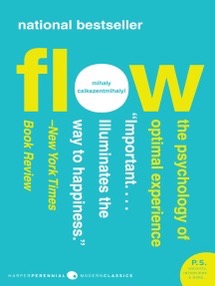
Cover image sourced from Amazon for reference purposes.

Note. This image is a commercially available book cover sourced from Amazon and is included for contextual reference only. It is ancillary visual data, neither generated by the author nor analyzed as part of the visual inquiry. The image is used to situate the reflective narrative in relation to Csikszentmihalyi’s work on attention, engagement, and presence.

Why Flow: Attention, Choice, and the Ethics of Engagement

I am no longer interested in productivity for its own sake.

I chose to read Flow: The Psychology of Optimal Experience at this moment because After years of equating movement with meaning and busyness with worth, I wanted to return to a text that speaks directly to the quality of attention rather than the quantity of output. Csikszentmihalyi’s work has long been associated with peak performance and optimal functioning, but what drew me back to it now was a quieter question: what does it mean to be fully engaged without being consumed?

My relationship to flow has shifted over time. Earlier in my career, I understood flow primarily through achievement, moments of intense focus that accompanied teaching, writing, training, or creative production. These states felt generative and affirming, particularly within institutional cultures that reward visible engagement and constant contribution. Yet, in hindsight, I can see how easily flow was absorbed into the broader machinery of busyness. What began as deep engagement sometimes became another way to justify overextension, another reason to remain in motion.

Reading Flow in the context of alonetude invites a different interpretation. Csikszentmihalyi emphasizes that flow emerges when attention is voluntarily invested, when action is chosen rather than compelled, and when the self holds together rather than fragmenting under competing demands. This distinction matters. In Loreto, where external pressures have softened, I am learning to distinguish between immersive engagement and compulsive activity. Flow, in this sense, is no longer about intensity or output, but about alignment.

Flow, for me, is no longer about intensity or output, but alignment.

What I hope to learn from this book now is how to discern, rather than how to do more, and when engagement becomes avoidance. Csikszentmihalyi writes about cultivating inner order, the capacity to shape consciousness intentionally rather than reactively. This resonates deeply with my current inquiry. Alonetude has stripped away many of the external structures that once organized my time, leaving me face to face with my own patterns of attention. Flow offers a language for examining whether my engagement with work, creativity, and even rest arises from choice or from habit.

I am also drawn to the ethical implications of flow. In academic and professional cultures that normalize exhaustion, the language of optimal experience can easily be co-opted to sustain overwork. Reading Flow now, I am holding the text in tension with critiques of productivity and speed. I am less interested in flow as a performance enhancer and more interested in flow as a form of presence requiring no self-erasure.

Ultimately, I chose this book because it asks a question that aligns with the heart of alonetude: how do we live in ways that are attentive, meaningful, and self-directed, without needing to escape ourselves in the process? What I hope to learn is how to engage more sustainably rather than simply returning to my former pace, and how to engage deeply while staying grounded enough to stop.

Reading as a Way of Avoiding Feeling

Title: Travelling Library

Note. These books are no longer a task list. They sit here as companions rather than demands, reminding me that learning can be slow, embodied, and unfinished. Alonetude is teaching me that I need no compulsion to consume knowledge to remain in conversation with it.

These books arrived together through design. Each one has marked a different moment in my learning: how to think, how to feel, how to move, how to rest, how to heal, how to listen to the body, how to trust experience, how to let meaning emerge rather than be forced. For years, reading was another form of striving, a way to stay productive even in moments meant for rest. Now, this small library feels less like a syllabus and more like a permission structure. I read some of these texts slowly. Some I return to. Some I simply keep close, beyond answers, for companionship. Alonetude is teaching me that learning rarely moves forward in a straight line. Sometimes it gathers, waits, and rearranges itself quietly until the body is ready to receive what the mind once rushed past.

Reading is rarely problematized in academic or popular discourse. It is framed as restorative, virtuous, and in my thinking productive. However, psychological research on coping and emotion regulation suggests that even adaptive behaviours can function as avoidance when used to manage prolonged stress or emotional overload (Gross, 2015; Lazarus & Folkman, 1984). In my own life, reading had quietly joined a constellation of practices that allowed me to remain productive while avoiding stillness.

Over the past fifteen years, reading existed alongside other socially sanctioned escapes: work, achievement, training, travel, and service. I inhabited roles that were meaningful yet relentless: educator, writer, committee member, volunteer, athlete, artist, and caregiver. Beneath these visible performances were quieter coping strategies, including depression, stress-related illness, overconsumption, emotional numbing, and cycles of avoidance. Together, these practices formed a system oriented toward functioning rather than presence.

Title: Between Shelter and the Sky

Photo Credit: Amy Tucker, 2026

Note. This morning light is filtered, softened by the curtain that both protects and reveals. I hover between inside and outside, fully committed to neither. For much of my life, I lived at the extremes, either exposed through constant engagement or hidden behind busyness and distraction. Alonetude is teaching me to rest in this in-between space, where I can see the world without rushing toward it, and feel held without withdrawing. Presence, I am learning, asks something between full openness and full retreat. It asks only that I remain.

This image poses the question that Flow ultimately asks of me: where does my attention rest when nothing demands it? Csikszentmihalyi writes about optimal experience as a state of voluntary focus, yet alonetude has taught me that focus also requires restraint. The curtain reminds me that clarity rarely comes from constant exposure or relentless engagement. For years, busyness trained my attention outward, keeping me in motion, responsive, and productive. Here, attention settles instead. I am neither striving for immersion nor fleeing into distraction. I am simply present, allowing meaning to arise without forcing it. This, I am learning, is a different kind of flow: one rooted in choice rather than urgency, and in staying rather than escape.

Performance, Identity, and Misnaming Eccentricity

Title: Multiplicity Beyond Fracture

Photo Credit: Amy Tucker, 2026

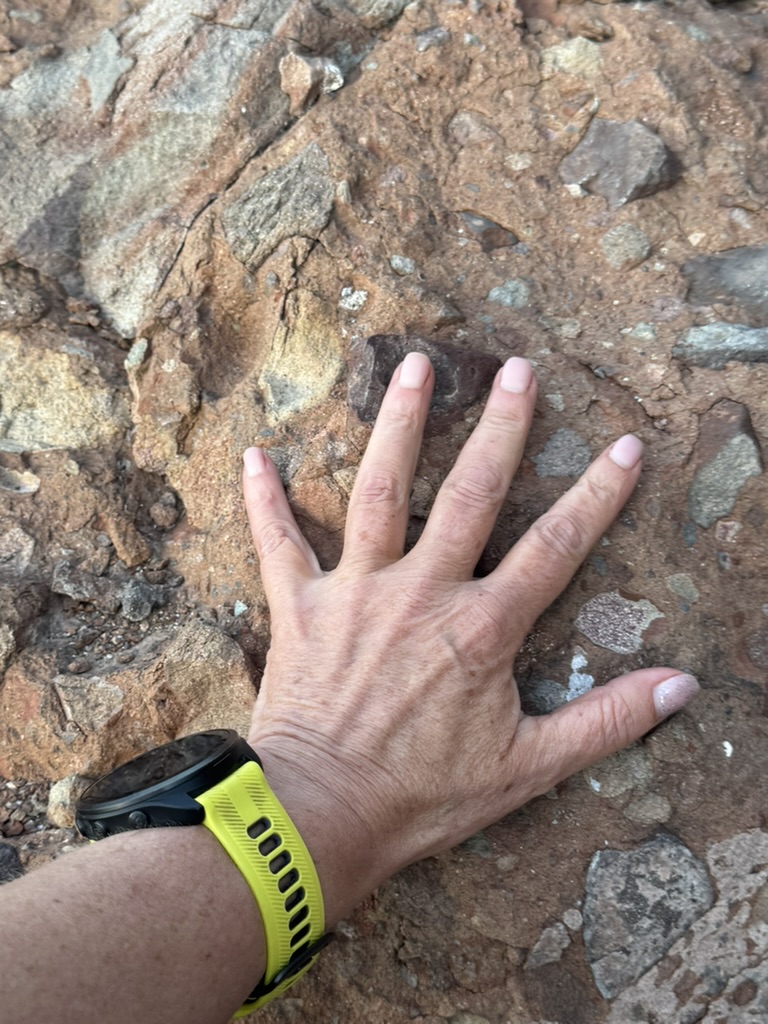
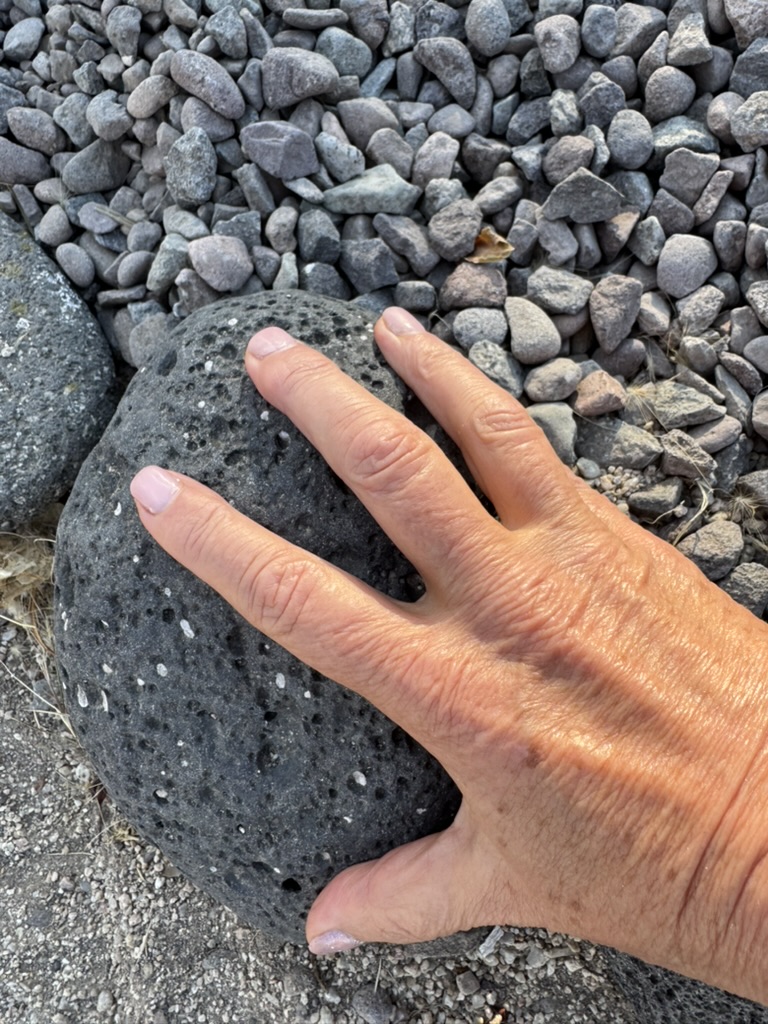
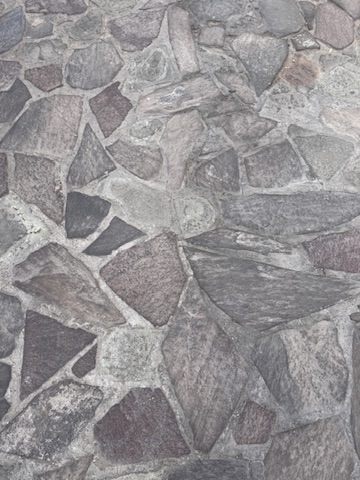
Note. I have often described myself as eccentric, as though my many interests required explanation. This rock reminds me that complexity carries no implication of instability. It is composed of many elements held together over time, shaped by pressure rather than performance. What I once misnamed as excess was, in fact, accumulation. Each layer remains visible, yet none are required to justify their presence. Alonetude is teaching me that identity, like this stone, requires no constant shaping or display. It only needs time, contact, and the permission to remain whole.

For many years, I explained this pattern in terms of personality. I described myself as eccentric, curious, and driven to become many things at once. Yet scholarship on the performance of self and emotional labour suggests that sustained role performance can obscure the gradual erosion of the self beneath it (Butler, 1990; Hochschild, 2012). What Loreto revealed was that mediation, rather than multiplicity itself, was the issue.

I was aspiring to be something beyond the categories of scholar, philosopher, traveller, an artist, or a spiritual seeker. I already had those things. What I had avoided was inhabiting them without output, recognition, or distraction. Each role had become a buffer between me and my own interior life.

What Alonetude Actually Asks of Me

Title: Setting Down What Once Carried Me

Photo Credit: Amy Tucker, 2026

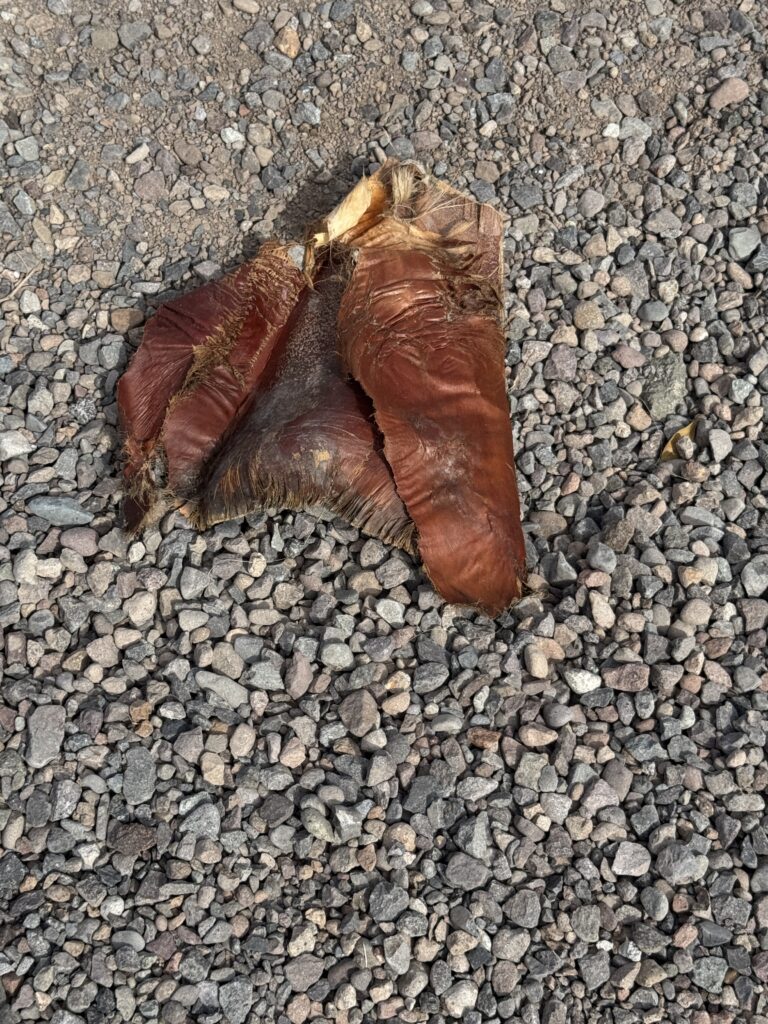
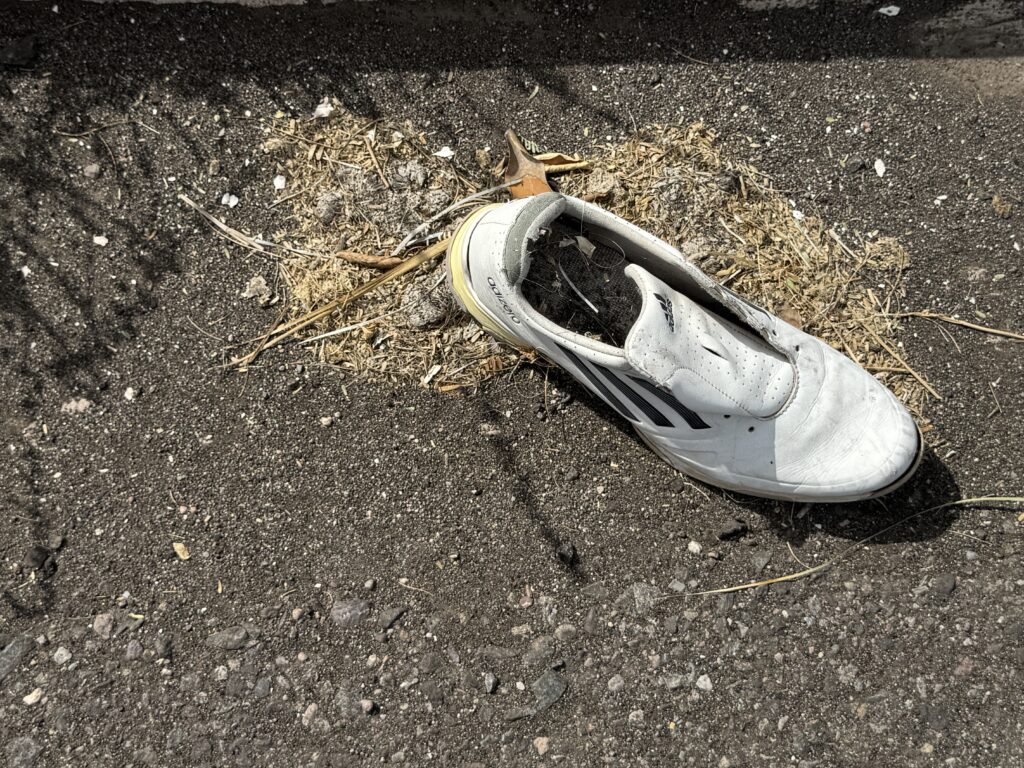
Note. This image marks a pause rather than an ending. The boot, worn and emptied of the body that once depended on it, rests without urgency or direction. For years, movement, endurance, and productivity served as measures of worth. Alonetude invites a different ethic: the willingness to stop without apology and to remain without distraction. What is set down here is compulsion rather than capacity. What remains is presence, grounded and unperformed.

Alonetude, as I am coming to understand it, is neither isolation nor withdrawal. It is the ethical practice of staying. Philosophical and psychological literature draws a careful distinction between loneliness as imposed absence and solitude as chosen presence (Tillich, 1952; Storr, 1988). Alonetude resides within this distinction, yet it demands more than preference or temperament. It requires discipline, restraint, and an embodied willingness to remain without substitution.

In Loreto, alonetude has meant stepping out of familiar patterns of movement and productivity. It has meant sitting without a book in my hands and resisting the impulse to translate quiet into knowledge consumption. It has meant allowing boredom, restlessness, and sensory awareness to surface without resolution. This practice aligns with contemplative and trauma-informed scholarship that understands learning as embodied and regulatory, rather than exclusively cognitive (Kabat-Zinn, 1994; Porges, 2011). Insight, I am learning, arrives beyond analysis alone. Sometimes it arrives through waiting long enough for the body to register what the mind has learned to bypass.

Alonetude asks me to sit without filling the silence.

The discarded boot makes this visible. Once designed for movement, protection, and endurance, it now rests unused, emptied of the body that animated it. For years, I treated motion as virtue and endurance as evidence of worth. Stillness felt like failure. Alonetude asks something different. It invites me to set down the habits that carried me forward but also carried me away from myself. This is discernment, never abandonment. The body pauses, the role loosens, and what remains is presence, grounded and unperformed.

What I Understand Now

Title: Stillness, with a Pen in Hand

Photo Credit: Amy Tucker, 2026

Note. I came here with a notebook, assuming I would write my way into understanding. Instead, I found myself sitting quietly, the pen resting more often than moving. For years, travel and writing were part of my busyness, a way of staying productive even in beautiful places. This moment feels different. The notebook is no longer an instrument of urgency or output. It is simply a companion, waiting while I learn to be present without needing to capture, explain, or perform the experience.

The central lesson of this experience is less that reading is harmful than that its function matters. Alonetude has taught me to ask a different question of my practices: does this activity draw me toward myself, or does it allow me to disappear? This reframing reflects broader calls within inquiry into lived experience to treat the researcher’s emotional and embodied presence as integral to knowledge production rather than as noise to be managed (Ellis et al., 2011; Nash, 2004).

By staying rather than escaping, I am learning to read myself with the same attentiveness I once reserved for texts. This deepens scholarship rather than diminishing it. Alonetude becomes both method and meaning, a way of inhabiting inquiry rather than performing it. The most demanding text I have avoided for years has been my own interior life. The lesson is relationship rather than abandonment. I am learning to meet books, roles, and ambition from a place of presence rather than flight.

What would it take to stay?

Title: Grounded Enough to Stay

Photo Credit: Amy Tucker, 2026

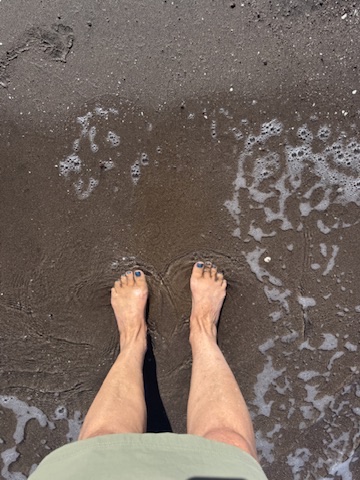
Note. There was a time when even standing still felt unproductive. I would have filled this moment with movement, planning, or interpretation. Here, I am learning something different. My feet in the water remind me that presence begins in the body before the mind. Alonetude is teaching me that staying requires no justification, and that learning can occur without busyness, without capture, and without escape. This is grounding, beyond any arrival.

The most challenging text I avoided for years was my own interior life.

References

Butler, J. (1990). Gender trouble: Feminism and the subversion of identity. Routledge.

Csikszentmihalyi, M. (1990). Flow: The psychology of optimal experience. Harper & Row.

Ellis, C., Adams, T. E., & Bochner, A. P. (2011). Personal inquiry: An overview. Forum Qualitative Sozialforschung / Forum: Qualitative Social Research, 12(1), Article 10. https://doi.org/10.17169/fqs-12.1.1589

Gross, J. J. (2015). Emotion regulation: Current status and future prospects. Psychological Inquiry, 26(1), 1–26. https://doi.org/10.1080/1047840X.2014.940781

Hochschild, A. R. (2012). The managed heart: Commercialization of human feeling (30th anniversary ed.). University of California Press.

Kabat-Zinn, J. (1994). Wherever you go, there you are: Mindfulness meditation in everyday life. Hyperion.

Lazarus, R. S., & Folkman, S. (1984). Stress, appraisal, and coping. Springer.

Nash, R. J. (2004). Liberating scholarly writing: The power of personal narrative. Teachers College Press.

Porges, S. W. (2011). The Polyvagal Theory: Neurophysiological foundations of emotions, attachment, communication, and finding our own calm. W. W. Norton & Company.

Storr, A. (1988). Solitude: A return to the self. Free Press.

Tillich, P. (1952). The courage to be. Yale University Press.

ACADEMIC LENS

“Something breaks open” names the phenomenon that Levine (2010) describes as the somatic completion of a long-held defensive response: the moment when the body, having been given sufficient safety and time, releases what survival had held in check. Van der Kolk (2014) observes that this surfacing of grief and exhaustion is a sign of healing rather than regression: it requires more safety to feel what has been carried than it does to continue carrying it. The exhaustion described here is thus paradoxically evidence of progress. Nixon’s (2011) concept of slow violence helps explain why the grief arrives in force only now: nineteen years of accumulated harm cannot be processed on the timeline that produced it; recovery requires the counter-temporality of unhurried, unclaimed time. Menakem (2017) describes this phase of somatic work as “metabolizing”: the body processing what it has held, converting frozen energy into movement, sensation, and feeling. The discipline maintained through this period, the continued practice of presence and inquiry, is what Moustakas (1961) calls the commitment of heuristic research: staying with the phenomenon even when it becomes uncomfortable.


Poem: They Lied.

Reading Time: 4 minutesPoem: They Lied, a reckoning with the stories that institutions tell about labour, worth, and endurance. A poem of grief and clarity, written from the body of someone who believed them for too long.

Reading Time: 4 minutes

Content Warning: This post contains reflections on trauma, grief, and broken trust. Please care for yourself as you read, and feel free to step away if you need to.

Note. Thompson Rivers University, Faculty Council Award, 2025


They lied.
They lied and called it mentorship.
They lied and called it an opportunity.
They lied and called it a calling.

They told me the academy was a sanctuary.
They told me knowledge was sacred.
They told me my voice mattered.

So I gave them everything.

My mornings.
My nights.
My body, bent over screens until my eyes burned and my hands ached.
My stories, trimmed into acceptable methods.
My grief, formatted into theory.
My hope, footnoted into legitimacy.

They told me, Just one more course.
Just one more publication.
Just one more credential.

Sacrifice became the job description.

They dangled permanence like a mirage.
They called precarity “experience.”
They called overwork “passion.”
They called exploitation “professional growth.”

They told me belonging was coming.
Belonging never came.

They took my heart and turned it into service metrics.
They took my mind and turned it into deliverables.
They took my soul and turned it into outputs, grants, citations, and student evaluations that never saw me.

They smiled while doing it.
They thanked me while extracting me.
They called me resilient while grinding me down.

I am angry because they knew.
They knew the system was built on unpaid labour,
on feminised care work,
on racialised and precarious bodies that teach, grade, counsel, and disappear.

They knew, and they kept recruiting.

They sold me the myth of the scholar as a free thinker
while chaining my thinking to funding cycles, metrics, and institutional branding.

They called it education.
I call it extraction.

They stole nineteen years of my life
and told me I should be grateful.

They stole my weekends, my sleep, my joy,
and told me I was lucky to be here.

Lucky.

No.
I was useful.

But here is what remained beyond their reach:

My anger is clarity,
It is the sound of a system being named.

They cannot have the part of me that walks into the sea and remembers herself.
They cannot have the part of me that writes without permission.
They cannot have the part of me that refuses to confuse suffering with virtue.

They stole my labour.
They stole my trust.
They stole my youth.

They told me I was lucky.
Lucky to be underpaid.
Lucky to be temporary.
Lucky to be invisible until they needed my labour.

Lucky.

I was convenient.
Lucky had nothing to do with it.

They knew this system runs on people who care too much.
They knew women, racialised scholars, Indigenous scholars, contract faculty, and graduate students carry the weight of the institution on their backs.
They knew.

And they kept recruiting us anyway.

They told me I was a scholar.
Then chained my scholarship to funding cycles, productivity dashboards, and institutional branding strategies.

They told me teaching was sacred.
Then reduced it to enrolment numbers and student satisfaction scores.

They told me my voice mattered.
Then edited it until it fit their journals, their grants, their safe narratives.

They stole years of my life.
They stole sleep, relationships, health, and creativity.
They stole the wild parts of thinking and replaced them with templates.

And they had the audacity to call this a career.

I am angry because I see the architecture now.
I see how the academy consumes people and calls it mentorship.
I see how it extracts love and calls it professionalism.
I see how it eats souls and publishes the findings.

They took my labour.
They took my trust.
They took my youth.

My future is mine to keep.

My anger has direction.
It is a theory.
It is a method.
It is evidence.

It is the moment I stop confusing suffering with virtue.
It is the moment I stop calling harm an opportunity.
It is the moment I take my mind, my body, and my soul back from an institution that never planned to hold them.

They lied.
I believed.
Now I refuse.


Author’s Note

In this poem, they refer to the neoliberal academy: a system of higher education shaped by market logics, metrics-driven governance, academic capitalism, and precarious labour structures. The term names the institutional architectures and policies, and political-economic conditions that extract emotional, intellectual, and affective labour while promising belonging, security, and scholarly freedom that are rarely delivered. The poem is written as a critique of structural and symbolic violence within contemporary universities, and as a reclamation of agency, voice, and scholarly selfhood.

Aerial view of a blazing sunset above a sea of clouds, with snow-capped mountain peaks visible below, photographed from an airplane window.

Above the Smoke of What They Called a Career
Photo Credit: Amy Tucker, 2026

Artist Statement: I took this photograph from a window seat, ascending through the smoke and cloud of everything I was leaving behind. Below me, mountains I had not chosen; above me, a sky that had no record of my service. This image sits beside the poem because both of them refuse the ground floor. The poem names the extraction. The photograph holds the moment the body finally rose above it, not arrived, not saved, but airborne. Still moving. Still here.


Translation Note: Where Spanish appears in this collection, it was assisted by Google Translate (translate.google.com). The Spanish is woven in as an act of reclamation, a return to a language of the body and the self that exists beyond institutional English.

Alonetude as a Human Right

Reading Time: 10 minutes

Keywords: alonetude, human right to rest, solitude, social justice, loneliness epidemic, scholarly personal narrative, precarious labour, embodied rest


If loneliness is a public health crisis, is the capacity for solitude a human right?

Title: Finding Space to be Alone

Photo Credit: Amy Tucker, 2026

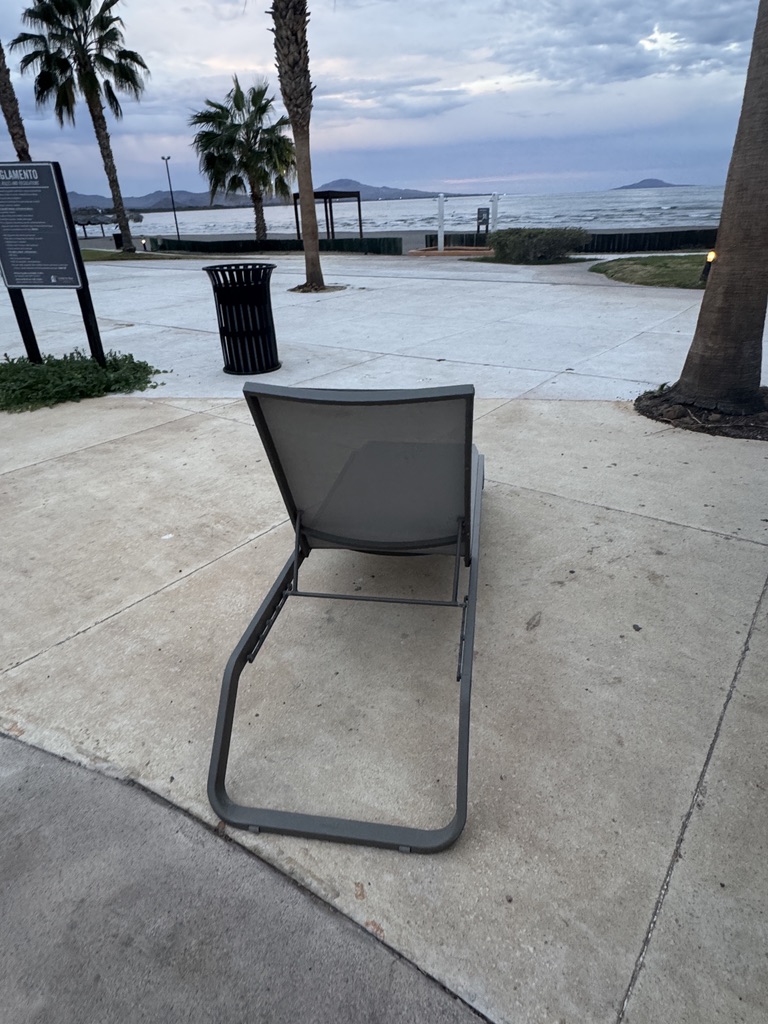
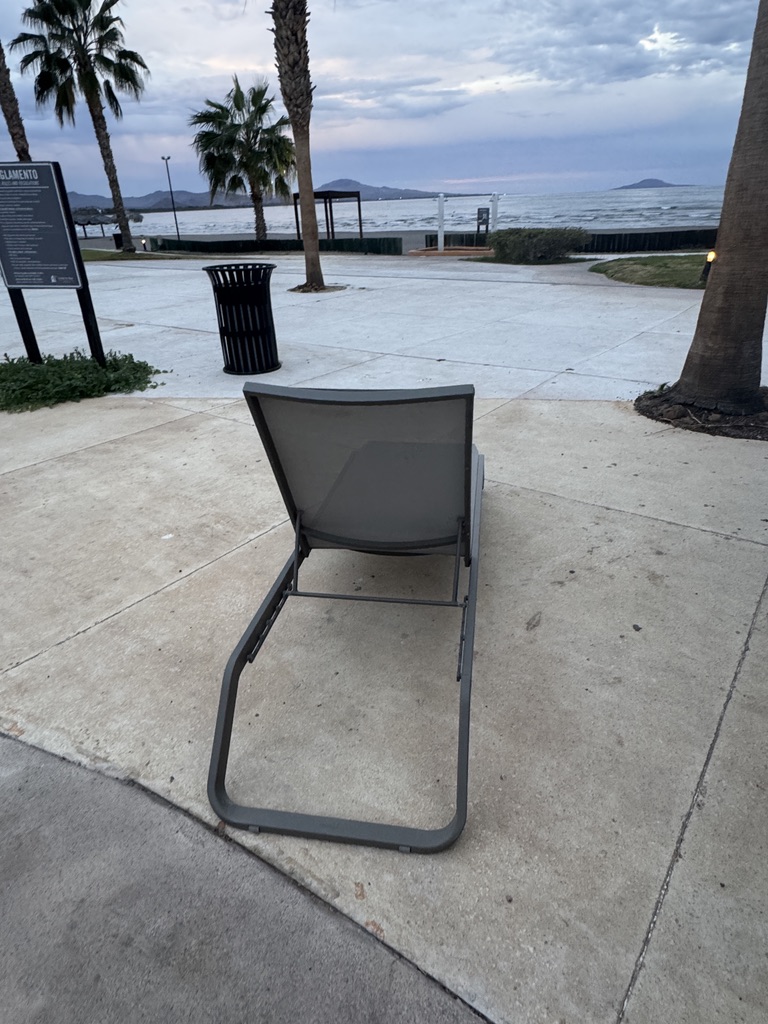
An empty chair. I kept looking at it, how different it felt from a chair that has been left, or a chair waiting for someone. This one felt like a choice.

Loneliness, Solitude, and the Philosophical Distinction

Tillich extended this distinction beyond description to practice, arguing that loneliness can only be transformed by those who learn to bear solitude. He wrote that humans seek to feel their aloneness “not in pain and horror, but with joy and courage,” and that solitude itself can be understood as a form of spiritual or existential practice (Tillich, 1963). This idea points toward contemporary understandings of solitude as an active practice of meaning-making rather than a passive state, and provides a philosophical grounding for the concept of alonetude as the labour of transforming imposed isolation into chosen presence

There is a difference between loneliness and solitude. Philosophers have known this for centuries.

Title: The Liminal Threshold

Photo Credit: Amy Tucker, 2026

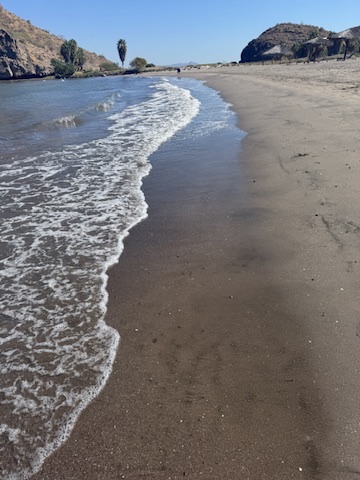
Note. A shoreline marking the in-between space where loneliness becomes alonetude.

Paul Tillich (1963) named it simply: loneliness expresses the pain of being alone, while solitude expresses its glory. Psychologist Anthony Storr (1988) challenged the assumption that intimate relationships are the only source of human happiness, arguing that solitude ranks alongside connection in sustaining well-being. Contemporary research confirms what contemplatives long understood: loneliness arises from perceived inadequacy of connection, while solitude emerges through chosen, meaningful engagement with oneself (Perlman & Peplau, 1981; Nguyen et al., 2018).

Loneliness is inflicted; solitude is chosen. Loneliness is the pain of being alone; solitude is the peace of it. To be lonely is to desire an absent want, to feel an emptiness that remains unsatisfied. To be solitary is to retreat into oneself and find, there, good company.

This framing resonates with, yet extends, existing scholarship on solitude (Storr, 1988), relational autonomy (Mackenzie & Stoljar, 2000), and affective infrastructures of belonging (Ahmed, 2017). However, alonetude departs from romanticized accounts of solitude by foregrounding structural constraint and political economy. It insists that the capacity to be alone generatively is unevenly distributed and socially produced. This study extends Tillich’s existential framing by situating being-alone within colonial, institutional, and political-economic architectures that unevenly distribute the capacity for solitude.

Tillich’s existential theology offers an early philosophical distinction between loneliness, the suffering of being alone, and solitude, a generative form of being alone, situating solitude as an existential practice rather than a passive condition. His work frames solitude as a site of encounter, creativity, and ethical reflection, providing a conceptual genealogy for understanding being-alone as both refuge and critique. Building on this lineage, aloneness is theorized here as the labour of transforming imposed isolation into chosen presence within structurally produced conditions of separation (Tillich, 1963).

Tillich’s distinction provides a philosophical grounding for alonetude as the labour of transforming imposed isolation into chosen presence. By defining loneliness as the pain of being alone and solitude as its glory, Tillich establishes solitude as an existential achievement rather than a passive state. His framing implies that solitude must be borne, cultivated, and enacted, thereby opening conceptual space for alonetude as the intentional work of sense-making within structurally imposed aloneness. While Tillich locates this transformation within existential theology, this study extends his genealogy into political economy and human rights, conceptualising aloneness as both refuge and critique within institutional architectures that produce separation.

But what happens in between?

Alonetude: The Space Between Loneliness and Solitude

Paul Tillich (1963) drew a defining distinction between loneliness and solitude: where loneliness names the suffering of unwanted isolation, solitude describes the enriching quality that chosen aloneness can carry.

What do we call the space where loneliness has been imposed by circumstance, yet something in us begins to transform it into something generative? Where isolation, uninvited, slowly becomes a place we learn to inhabit?

I have started calling this alonetude: the liminal space between loneliness and solitude, where we do the quiet work of reclaiming our being-alone from the systems that made it a punishment.

I think of alonetude as what happens when imposed aloneness meets the refusal to disappear into it. Unlike loneliness, which is the pain of unwanted isolation, and solitude, which implies the luxury of choice, alonetude is the active labour of sense-making from within circumstances of your own choosing. It is relational. It is political. And it begins in the body.

Alonetude is the active, intentional work of sense-making within imposed aloneness.

Epidemic Loneliness and Institutional Responsibility

In May 2023, United States Surgeon General Dr. Vivek Murthy declared loneliness an epidemic, issuing an 82-page advisory on the healing effects of social connection and community (Office of the Surgeon General, 2023). By November of that year, the World Health Organization had launched a Commission on Social Connection, naming loneliness a pressing global health priority requiring urgent intervention (World Health Organization, 2023). The Commission’s 2025 flagship report revealed that loneliness accounts for approximately 871,000 deaths annually, equivalent to 100 deaths per hour (World Health Organization, 2025).

We are beginning to understand that chronic loneliness carries health risks comparable to smoking fifteen cigarettes daily (Holt-Lunstad et al., 2010). Social isolation increases the risk of premature death by nearly thirty percent, elevates stroke risk by thirty-two percent, and raises heart disease risk by twenty-nine percent (Office of the Surgeon General, 2023).

Yet the harder question remains unasked.

If loneliness is a public health crisis, is the capacity for solitude a human right?

I think it might be. And I think the distinction matters enormously for how we understand social justice.

Belonging, Solitude, and the Politics of Human Rights

Consider who has access to solitude and who is forced into loneliness.

Image: The Privilege of Passage

Photo Credit: Amy Tucker, 2026

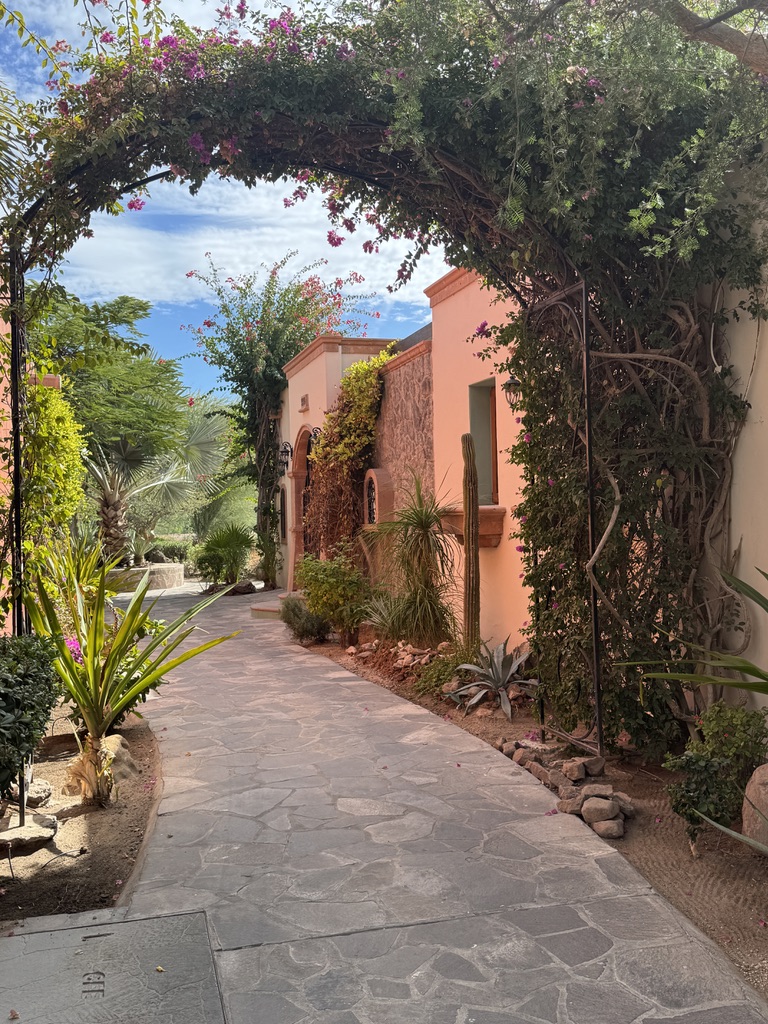
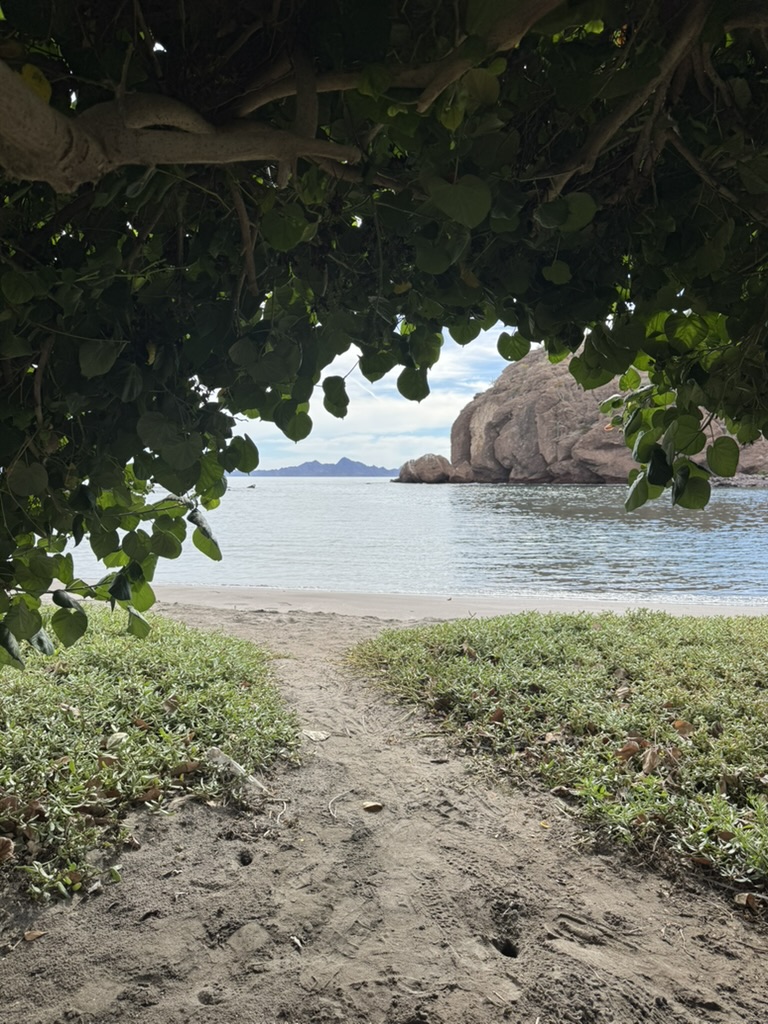
This walkway, shaded and fragrant, made me think about who gets to walk somewhere like this. Solitude is a protected, beautiful thing that remains unavailable to everyone.

The elite retreat to cabins in the woods, meditation centres, and silent spas. They pay for the privilege of being beautifully alone. Meanwhile, the precarious are isolated by design: by shift work that fails to align with anyone else’s schedule, by housing too expensive to afford near community, by immigration policies that separate families across oceans, by institutions that count bodies yet fail to learn names.

Their aloneness is uninvited. It is inflicted.

And then I wonder why I struggle.

I write this from a bench behind an institutional building, between meetings that require presence and systems that rarely offer belonging. My solitude is partially chosen and partially imposed, shaped by precarity, digital tethering, and institutional expectations of constant availability. Alonetude becomes both a refuge and a critique, a way of surviving while refusing to normalize the conditions that make refuge necessary.

Belonging, Isolation, and Rights-Based Frameworks

Contemplative teachers have long pointed toward this transformative potential.

Pema Chödrön (2000) teaches that we must learn to befriend our loneliness rather than flee it, to sit with discomfort until it reveals what it has to teach. Wendell Berry (2012) writes that in wild places, where we are without human obligation, our inner voices become audible, and the more coherent we become within ourselves, the more fully we enter into communion with all creatures. Robin Wall Kimmerer (2013) braids Indigenous wisdom with scientific attention, showing how presence to place can root us even when we have been displaced.

Viktor Frankl (1959), writing from the concentration camps, insisted that meaning could be made even in extremity, that the last human freedom is the ability to choose one’s attitude toward suffering.

Title: Learning to Be With

Photo Credit: Amy Tucker, 2026

Note. Paths and landscapes evoke contemplative traditions and relational presence to land.
These teachers point toward alonetude as a practice of survival.

When loneliness is imposed, solitude must be cultivated. When isolation is structural, transforming it into something generative becomes an act of resistance.

I know what makes solitude impossible, because I lived it for nineteen years. The learning management system that logged when I last responded to a student. The email that arrived at 11 p.m. on a Friday with the implicit expectation of an answer before Monday. The performance review that measured visibility, presence, and throughput. These are systems that colonise the threshold between working and resting, making withdrawal feel like abandonment and stillness feel like failure. A right to solitude is, among other things, a right to be unreachable without consequence.

Should We Have to Be So Resilient?

This is what troubles me.

Should the capacity to transmute loneliness into solitude be a survival skill that the marginalized must develop because institutions refuse to stop producing isolation?

A human rights framework asks different questions.

It asks what conditions would make the choice between loneliness and solitude genuinely available, rather than asking how individuals can cope with loneliness after it has been inflicted. It asks what structures produce isolation and who benefits from that production. It asks whether belonging is offered as a right or withheld as a privilege. It asks whether the architecture of our institutions is designed to connect or to extract.

The Political Economy of Being Alone

The right to solitude would mean the right to be alone without being abandoned.

The right to withdraw without being punished.

The right to rest without being surveilled.

The right to enough economic security so that being alone carries no threat of danger.

The right to enough social infrastructure means that being with others remains possible when we want it.

These are human rights claims, even if they rarely appear in declarations. While international human rights instruments rarely articulate a right to solitude, related protections appear in rights to privacy, dignity, rest, housing, social security, and family life (Universal Declaration of Human Rights, 1948; International Covenant on Economic, Social and Cultural Rights, 1966). A right to solitude without abandonment can be understood as an emergent synthesis of these rights, grounded in the principle that human dignity requires both connection and the capacity for withdrawal without harm.

Solitude Without Abandonment: Toward a Human Rights Framework for Alonetude

Alonetude names the in-between.

The place where we do the work of turning imposed isolation into chosen presence. It honours the agency of those who find ways to be well even when systems are designed to make them unwell.

Yet it also refuses to let those systems escape accountability.

The goal is to become so skilled at alonetude that we forget we deserve justice. The goal is a world where solitude is available to everyone, and loneliness is inflicted on no one.

Until then, we practise.

We find our benches behind old buildings. We learn the names of the birds outside our windows. We sit with what is, until it becomes bearable, and then, sometimes, beautiful.

This is survival while we work to end what makes survival necessary.

If alonetude is a human right, then its conditions are a matter of structural justice. The woman working three part-time jobs cannot lie under a spruce tree in the snow. The contract instructor whose rent depends on this semester’s enrolment cannot put her phone away. The immigrant living in a single room cannot choose solitude; it is imposed on her, severed from belonging. What I had in Loreto was thirty days that I could afford, in a body that could manage the travel, in a life that had, finally, space to be still. I am aware of that. The question alonetude asks is what would need to change for that stillness to be available to everyone, as a baseline condition rather than a luxury of a dignified life.

Alonetude is both a practice and a demand.

A way of being and a horizon of justice.

The quiet place where, alone, we remember that we deserve to be.

Title: The Quiet Place Where We Deserve to Be

Photo Credit: Amy Tucker, 2026

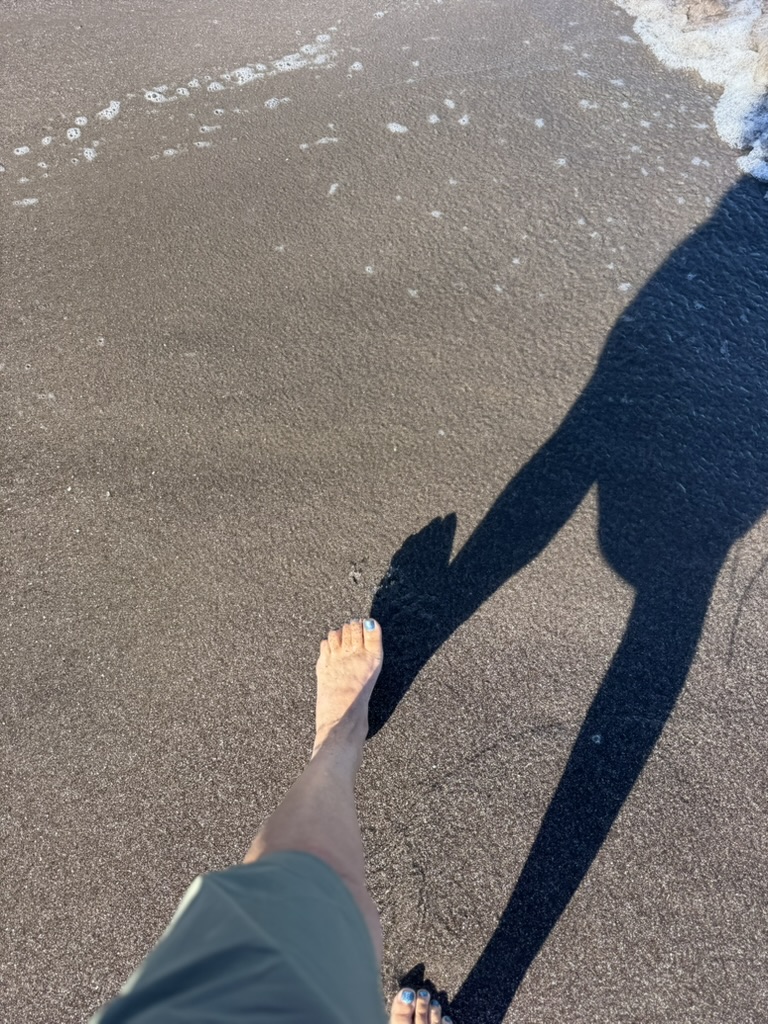
Note. Bare feet at the water’s edge, where land meets sea, mark a moment of grounded presence. The image evokes solitude as an embodied encounter rather than absence, being alone while held by place, rhythm, and movement. It gestures toward alonetude as a practice of standing with oneself at the threshold between isolation and connection, presence and belonging, survival and becoming.

Alonetude thus operates as both method and mandate: a practice of surviving within unjust architectures and a theoretical lens for imagining their transformation.

References

Berry, W. (2012). It all turns on affection: The Jefferson lecture and other essays. Counterpoint.

Chödrön, P. (2000). When things fall apart: Heart advice for difficult times. Shambhala.

Frankl, V. E. (1959). Man’s search for meaning. Beacon Press.

Holt-Lunstad, J., Smith, T. B., & Layton, J. B. (2010). Social relationships and mortality risk: A meta-analytic review. PLOS Medicine7(7), Article e1000316. https://doi.org/10.1371/journal.pmed.1000316

Kimmerer, R. W. (2013). Braiding sweetgrass: Indigenous wisdom, scientific knowledge, and the teachings of plants. Milkweed Editions.

Office of the Surgeon General. (2023). Our epidemic of loneliness and isolation: The U.S. Surgeon General’s advisory on the healing effects of social connection and community. U.S. Department of Health and Human Services. https://www.hhs.gov/sites/default/files/surgeon-general-social-connection-advisory.pdf

Tillich, P. (1963). The eternal now. Charles Scribner’s Sons.

World Health Organization. (2023, November 15). WHO launches commission to foster social connectionhttps://www.who.int/news/item/15-11-2023-who-launches-commission-to-foster-social-connection

World Health Organization. (2025). From loneliness to social connection: Charting a path to healthier societies. Report of the WHO Commission on Social Connectionhttps://www.who.int/publications/i/item/978240112360

The quiet place where, alone, we remember that we deserve to be.

Note: Tillich’s distinction between loneliness and solitude emerges from Western Christian existential theology and reflects Euro-American philosophical traditions that centre individual subjectivity and spiritual interiority. While this study draws on Tillich to establish a conceptual genealogy for being-alone, the concept of alonetude extends beyond this tradition by foregrounding colonial, institutional, and political-economic structures that differentially produce isolation. Rather than treating solitude as a universal existential condition, alonetude situates being-alone within histories of dispossession, migration, academic precarity, and governance, aligning with decolonial and relational epistemologies that understand solitude as socially and materially mediated.1

Translation note. Spanish language passages in this post were generated using Google Translate and subsequently reviewed and refined by the author. Translations are intended to convey general meaning and are intended as guides to meaning rather than certified linguistic interpretations.

ACADEMIC LENS

This essay makes an explicitly normative claim: that the capacity for alonetude, for a positive, integrated relationship with one’s own company, constitutes a human right in the tradition of the United Nations Declaration of Human Rights (1948). Cacioppo and Patrick’s (2008) documentation of the loneliness epidemic, and Murthy’s (2023) designation of loneliness as a public health crisis, provide the epidemiological foundation for taking solitude seriously as a social justice concern. Tillich’s (1963) philosophical distinction between loneliness, which is suffered, and solitude, which is chosen and practised, establishes the conceptual ground on which alonetude is defined: as a third state, neither isolation nor withdrawal, but a cultivated capacity for presence-with-oneself. Nixon’s (2011) framework of slow violence is relevant here in an unexpected direction: just as environmental harm accumulates gradually on vulnerable communities, so does the chronic understimulation of the self-in-relation that hyper-connected, performative cultures impose. The right to alonetude is therefore inseparable from broader rights to rest, to interiority, and to freedom from the demand for constant availability that precarious labour conditions enforce.

Poem: I Did Everything You Asked Me

Reading Time: 4 minutesPoem: I Did Everything You Asked Me, a poem of exhaustion, grief, and the moment of recognizing that full compliance is not protection. Written in the voice of someone who gave everything and was given nothing back.

Reading Time: 4 minutes

Content Warning: This post contains reflections on trauma, grief, and broken trust. Please care for yourself as you read, and feel free to step away if you need to.

I did everything you told me to do.
Every checkbox.
Every whispered rule was passed down like gospel.

I went back to school
When I was already carrying too much,
when sleep felt like a luxury,
When my body kept asking for mercy
And I kept answering with more work.

Seven years for a doctorate,
because I was teaching ten courses a year.

Thousands of students.
Hundreds of names passing through my inbox, my gradebook, and my care.

My days were never mine.
They belonged to the timetable.
To institutional clocks that paused for nothing: no thinking, no healing, no depth.

Morning to night,
grading until my eyes burned,
answering emails in the dark,
hands moving long after my body asked to stop.

I learned to read exhaustion as responsibility.
To mistake depletion for commitment.
To call survival professionalism.

I built other people’s futures carefully,
credit by credit, feedback by feedback,
while mine stalled in drafts and deadlines,
always almost ready, always postponed.

The work held me.
The pace did.

And my body kept the record
long before my CV did.

I collected debt like proof of devotion.
Eighty-five thousand dollars
for the right to keep chasing permanence.
For the privilege of becoming more hireable.
For the fantasy that if I sacrificed enough,
You would finally choose me.

I published.
I turned my life into citations,
my grief into theory,
my trauma into methods sections
that made pain legible and respectable.
I presented at conferences,
stood behind podiums with trembling hands,
smiling through exhaustion
while strangers called me “inspiring.”

I served.
Committees, reviews, mentoring,
equity work, invisible work,
the work that keeps institutions alive
and leaves women depleted.

I won awards.
Teaching awards.
Service awards.
Letters saying I was exceptional,
that I mattered,
that I was indispensable.
And still,
when I asked for permanence,
you chose someone fresher.
You chose someone younger.
You chose someone who had yet to spend decades
making themselves indispensable to survive.
You told me I was impressive,
never quite permanent.
Important
never quite institutional.
Valuable
never quite worth keeping.

They said,
Get more PD.
So I did.

Publish more.
So I did.

Go back to grad school.
So I did.

Be visible.
So I was.

Be excellent.
So I burned myself into excellence.

And still,
I remained temporary.

I am tired.
Tired in my bones,
tired in the marrow of credentials,
tired of translating exhaustion into professionalism.

I am tired of being a provisional life,
a renewable clause,
a syllabus name that disappears.

I did everything you told me to do.
And you taught me, quietly, structurally,
that the rules were never designed
for someone like me
to win.

I did everything you told me to do.
I paid with my body, mind and soul, for the privilege of believing you.
I gave you nineteen years of nights, weekends, and ten courses a year on your schedule.
You gave me exhaustion, and called it opportunity.

I did everything you told me to do.
You kept me temporarily.
And I am tired.

I did everything you told me to do.
My mind earned the doctorate.
My body paid the debt.
And you still called me replaceable.

I did everything you told me to do.
You rewarded me with precarity, debt, and silence.
This is how institutions harvest women and call it mentorship.

I did everything you told me to do.
It was never about excellence.
It was about how long you could use me before I broke.

I did everything you told me to do.
You taught me that merit is a story institutions tell
to justify who they discard.

I did everything you told me to do. It was never enough, and that was the point.

Notation: This poem reflects the embodied costs of academic precarity, where institutional narratives of merit and excellence intersect with structural disposability, cumulative educational debt, and chronic overwork.

Written from the body that carried the labour, the teaching loads, the doctoral training, and the exhaustion, it critiques meritocratic promises that mask the extraction of precarious academic labour within neoliberal higher education systems.

This reflection also situates precarity as an embodied form of structural trauma that informs my doctoral research on alonetude as a healing, resistant, and relational practice, an intentional reclaiming of rest, presence, and self-worth beyond institutional validation.

In this closing, “You” refers to the academy as an institution and system, its hiring committees, evaluation metrics, productivity imperatives, and meritocratic narratives that promise stability while structurally producing precarity.

This reflection speaks back to academic systems that demand relentless credentialing, publication, service, and teaching while offering disposability in return.

It situates my embodied experience of denial, debt, overwork, and exhaustion within broader structures of neoliberal higher education, where excellence is extracted from precarious bodies.

This narrative also connects directly to my research on alonetude as a relational, decolonial, and trauma-informed practice of refusal and restoration, a way of reclaiming worth, rest, and presence beyond institutional validation.

I am enough.

Title: Always on the Outside

Photo Credit: Amy Tucker 2026

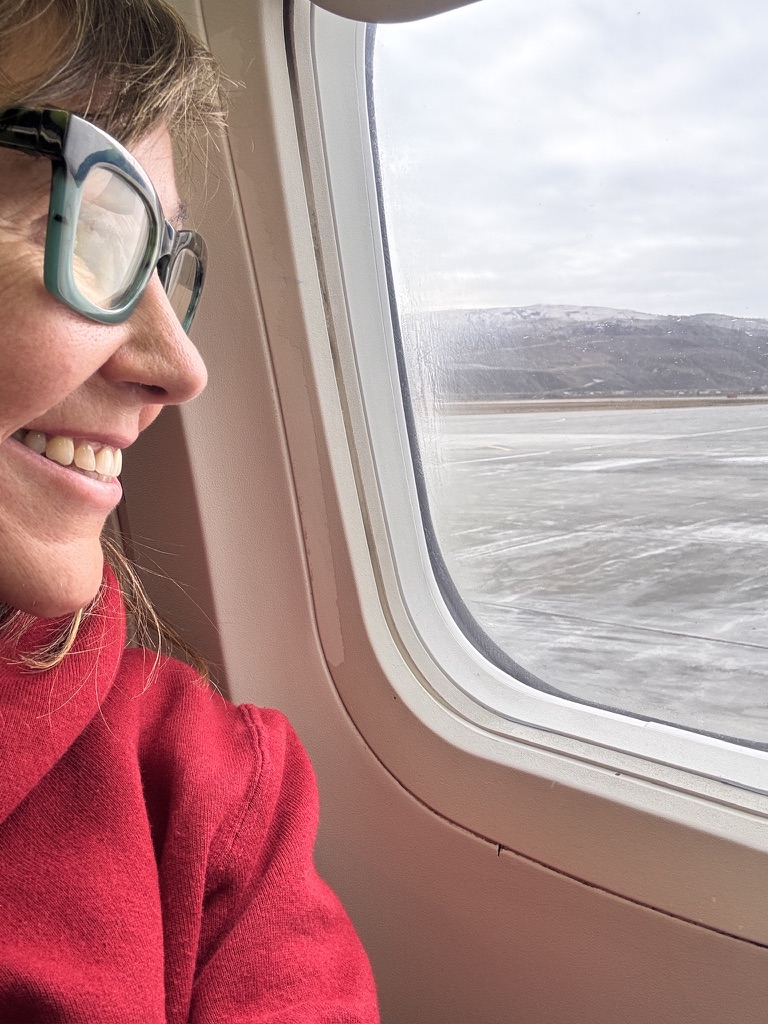
A woman in a red sweater smiling while looking out an airplane window at a frozen, pale landscape below a white sky.

She Bought the Ticket Herself
Photo Credit: Amy Tucker, 2026

Artist Statement: I took this photograph somewhere over a frozen landscape, mid-flight, somewhere between the institution and whatever comes after. I am smiling. I want to remember that. Not because everything was resolved, but because the window was mine, and the seat was mine, and no one had assigned me a schedule for the next three hours. The exhaustion in this poem is real. So is this moment. Both are true. I took the picture so I would not forget that the body that carried all of that weight also eventually looked out a window and smiled.


Translation Note: Where Spanish appears in this collection, it was assisted by Google Translate (translate.google.com). The Spanish is woven in as an act of reclamation, a return to a language of the body and the self that exists beyond institutional English.

Day 20: The Weight of Always Almost

Reading Time: 14 minutes

Content Warning: This post contains reflections on trauma, childhood experiences, and the body’s memory of harm. Please care for yourself as you read, and feel free to step away if you need to.

“Precarity lives in my body still.”

A Reflection on Precarity, Burnout, Mental Health, and Stress

I have been trying to write about precarity for three days now. Trying to find language for what it does to a body, to a nervous system, to a sense of self. But every time I sit down to write, my shoulders rise toward my ears. My jaw clenches. The ball in my stomach, that old childhood companion, tightens.

Mi cuerpo recuerda. My body remembers.

This tells me something important.

Precarity lives in my body still. Even here, even now, even after the contract ended months ago. The chronic stress of seven years shaped my nervous system in ways that persist, that compound the childhood trauma I have been exploring in this retreat.

I am writing this to remember. To document how my body still carries the exhaustion, the sympathetic state of constant alertness, always scanning for danger, the impossibility of rest. Para no olvidar. (So I may always remember.) I write it down.

“The state of constant alertness, always scanning for danger I learned as a child translated seamlessly into scanning for signs of danger in institutional politics.”

When Temporary Becomes Permanent

Seven years of contract renewals. Seven years of wondering, each spring, whether I would have employment in the fall. Seven years of performing gratitude for the opportunity to teach, for the chance to serve, for the privilege of another year.

Siempre agradecida. Always grateful.

Even now, sitting by the sea in Loreto, my body remembers what this felt like. The constant low-level activation. The shoulders that stayed tense for months. The jaw that ached from clenching. The stomach that churned with cortisol.

Never quite safe. Never quite secure.

Siempre casi. Always almost.

Almost permanent. Almost secure. Almost valued. The “almost” became the water I swam in, so constant I forgot there had ever been another way to breathe.

Gill (2010) writes about the psychological costs of academic precarity: anxiety, insecurity, and a persistent sense of disposability. But what she describes in my thinking, I carried in the body. My body learned to live in a state of constant mobilization.

Stewart (2014) describes precarity as a mode of keeping people at the edge of their capacity, always managing, always coping, always one crisis away from collapse. This is the architecture of contemporary academic labour. Designed to keep us grateful. Compliant. Useful.

Designed to extract everything we have to give while offering nothing we can count on.

My body still knows this architecture. Still responds to it. Still carries the exhaustion of seven years spent always almost secure enough to rest.

When Old Trauma Meets New Precarity

Here is what I am only now beginning to understand: precarity does different things to different bodies.

For those of us who grew up in environments of chronic threat, where safety was provisional, where love was conditional, where our value was measured by our usefulness, academic precarity does more than create stress. It reactivates every old survival pattern.

Reactiva todo. It reactivates everything.

The state of constant alertness, always scanning for danger I learned as a child, scanning for signs of danger in my father’s footsteps, translated seamlessly into scanning for signs of danger in institutional politics. The compulsive caretaking that kept my sisters safer became the compulsive service that kept me employed. The inability to rest, because rest meant someone might get hurt, became the inability to rest because rest might signal insufficient commitment.

Precarity became the professional equivalent of my childhood home. Uncertain. Threatening. Requiring constant vigilance to survive.

van der Kolk (2014) describes how trauma survivors often find themselves in situations that unconsciously recreate the dynamics of their original trauma. Their nervous systems are calibrated to those conditions. They know how to function under threat. Safety feels foreign, suspicious, temporary.

La seguridad me asusta. Safety frightens me.

I excelled at precarity precisely because I had trained for it my entire childhood.

And this excellence made me exploitable.

Even now, my body remembers this pattern. Remembers how well it learned to function under chronic threat. Remembers the cost of that functioning.

When Exhaustion Becomes Architecture

My body still carries the exhaustion of those seven years. Carries it in ways I am only now beginning to recognize.

El cansancio vive en mis huesos. The tiredness lives in my bones.

Han (2010/2015) writes about burnout as the defining condition of achievement society, a society that exhausts us through internalized demands for optimization. We are tired because we have internalized the imperative to always be productive, always be useful, always be improving.

But for those of us in precarious employment, burnout operates differently.

We could never afford to burn out. Could never afford to slow down. Could never afford to admit exhaustion because exhaustion might mean we were insufficiently resilient, insufficiently committed, insufficiently grateful for the opportunity.

So we performed wellness. We performed work-life balance. We pursued sustainability while working 60-hour weeks on contracts that pretended we only worked 37.

Actuamos como si todo estuviera bien. We acted as if everything was fine.

Hochschild (1983) calls this emotional labour, the management of feeling to create a publicly observable display. But in precarious academic labour, the emotional labour extends beyond managing student interactions or maintaining professionalism in meetings. It includes managing our own awareness of exhaustion, our own recognition of exploitation, our own rage at systems that treat us as disposable.

We learn to smile while drowning.

Aprendemos a sonreír mientras nos ahogamos. (We learn to smile while we drown.)

I became so skilled at this performance that I stopped recognizing it as performance. The exhaustion became my baseline. The stress became my normal. The constant activation of my nervous system became just how bodies feel when you are working.

Except bodies are meant to rest. Bodies are meant to cycle between activation and recovery. Bodies are meant to feel safe sometimes.

Los cuerpos necesitan descansar. Bodies need to rest.

My body forgot this. Or perhaps it never knew.

Even now, even here in Loreto, where I am explicitly practising rest, my body resists. Resists stillness. Resists the absence of productivity. Resists the possibility that rest might be permitted.

This is what seven years of precarity did. Trained my body to believe that rest equals danger. That stopping means being seen as disposable. That value comes only through constant output.

When Individual Therapy Meets Structural Violence

The institution offered an Employee Assistance Program. Six free counselling sessions per year, they said. As if the structural conditions producing our distress could be resolved through individual therapy. As if six sessions could address years of precarity, exploitation, and the constant message that we are valuable only insofar as we remain useful.

Como si la terapia pudiera arreglar el sistema. As if therapy could fix the system.

Ahmed (2017) writes about how institutions manage complaints by pathologising individuals. When we say the working conditions are harmful, they offer us therapy. When we say the system is broken, they suggest we work on our resilience. When we name exploitation, they recommend mindfulness.

This is malperformative care. It expresses concern while refusing to address the conditions producing harm.

My body remembers this, too. Remembers going to therapy, practising mindfulness, and working on boundaries. And remembers that none of it changed the fact that I wondered, each spring, whether I would have employment in the fall. None of it changed the fact that my value was always provisional. None of it changed the structure, producing my distress.

Nada cambió la estructura. Nothing changed the structure.

Individual solutions cannot address structural problems.

But under precarity, we could never afford to acknowledge this publicly. Could never afford to appear ungrateful. Could never afford to bite the hand that feeds us, even when that hand feeds us only enough to keep us grateful for the next feeding.

So we suffered privately. We broke down quietly. We medicalised structural violence as individual pathology.

And the system continues unchanged.

My body still carries this particular exhaustion. The exhaustion of trying to heal individually from wounds produced collectively. The exhaustion of managing awareness that the problem is structural while pretending the solution is personal.

El agotamiento de fingir. The exhaustion of pretending.

When Your Body Keeps the Score

There is a particular kind of stress that comes from never knowing. The stress of constant uncertainty. Of always waiting. Of living perpetually in the conditional tense.

Si me renuevan… If they renew me… Si consigo otra posición… If I get another position… Si sobrevivo hasta la permanencia… If I survive until tenure…

My body still lives in this conditional tense. Still scans for threat. Still cannot quite believe that the immediate precarity has ended.

“Rest felt like vulnerability.”

Porges (2011) describes how chronic stress dysregulates the autonomic nervous system. When the threat is constant but never quite acute enough to fight or flee, the body gets stuck in a state of mobilization without resolution. The sympathetic nervous system stays activated. The social engagement system shuts down. We become always on guard, scanning for the next threat, reactive, and unable to rest even when circumstances temporarily permit it.

Incluso cuando las circunstancias lo permiten. Even when circumstances permit it.

This is what seven years of contract renewals did to my nervous system.

Even when the contract was renewed, I could never relax. Because renewal meant only another year of uncertainty. Another year of proving my value. Another year of being grateful for the opportunity to prove my value again next year.

The stress accumulated. On my shoulders. In my jaw. In the ball in my stomach that never fully unclenched. In the insomnia that became chronic. In the way, I startled at sudden sounds. In the way, I could tolerate zero rest because rest felt like vulnerability.

El descanso se sentía como una vulnerabilidad. Rest felt like vulnerability.

My body was keeping score. And the score said: you are under threat.

Even now, even here, my body keeps this score. Keeps the tally of years spent in chronic activation. Keeps the memory of what it felt like to never be quite secure enough to let down my guard.

This is why I came to Loreto. To teach my body a different score. To practice, in small doses, what it feels like when rest might be permitted.

But the old score persists. Lives in my tissues. Activates when I sit too still for too long.

Todavía vive en mi cuerpo. It still lives in my body.

When Loss Creates Space for Feeling

On May 2nd, the logic of precarity arrived in my inbox. After seven years of contract renewals, the eighth year would be missing entirely.

I had been terminated.

Me despidieron. They fired me.

The ball in my stomach, that old childhood companion, returned with an intensity I had forgotten was possible. Every childhood fear was activated at once. The disposability. The message that my value was conditional. The understanding that I had been useful until I ceased being useful, and then I would be discarded.

I spent weeks in a fog of shame and grief.

Semanas en la niebla. Weeks in the fog.

But underneath the grief, something else was happening. Something I am only now, here in Loreto on Day 20 of my retreat, beginning to recognize.

The termination released something.

I could stop performing gratitude for conditions that were harming me. I could stop managing my awareness of exploitation. I could stop carrying the cognitive load of constant uncertainty, the emotional labour of appearing fine, the body-based burden of chronic activation.

The precarity had ended. Through loss, yes. Through termination, yes. But it had ended.

And I survived it.

Y sobreviví. And I survived.

This created space. Physical space, psychological space, body-based space. The space to finally stop performing and start feeling.

The space to come to Loreto and practice rest.

The space to write this reflection and acknowledge how my body still carries the exhaustion, the sympathetic state of constant alertness, always scanning for danger, the chronic stress of seven years spent always almost secure.

What My Body Needs Now

I could never have done this retreat while still precariously employed. My nervous system could never have tolerated it.

Rest requires safety. Real rest, the kind where your nervous system actually downregulates, where your body stops scanning for threats, where you can simply be, this requires the felt sense that you are currently free from immediate threat.

El descanso requiere seguridad. Rest requires safety.

Precarity makes rest impossible.

Even when we are actively working, we are planning, strategising, managing, and monitoring. Our nervous systems stay activated because the threat is real. We might be without employment next year. We might be unable to pay rent. We might be valued insufficiently to keep.

These are accurate assessments of structural conditions rather than irrational fears.

What I am learning here in Loreto is that healing from precarity requires first acknowledging what precarity does. In the body. In the nervous system. In the persistent sense that we are always almost but never quite secure.

Siempre casi, pero nunca completamente. Always almost but never completely.

I am learning that the sympathetic state of constant alertness, always scanning for danger I developed in childhood and refined through academic precarity does remain even after the precarious employment has ended. The patterns persist. The scanning continues. The inability to rest remains.

But I am also learning that these patterns can be worked with. Gently. Slowly. Through sustained exposure to actual safety, through practices that teach my nervous system that rest is permitted, through the radical act of simply being without having to prove my value through productivity.

Sin tener que demostrar mi valor. Without having to prove my value.

This is what alonetude offers. Capacity, as opposed to escape from precarity. The capacity to recognize when my nervous system is responding to past threat rather than present reality. The capacity to choose rest even when some old part of me insists that rest is dangerous.

The capacity to know my worth exists independent of my usefulness.

Mi valor existe independientemente de mi utilidad.

The Ongoing Practice of Recognition

My body still remembers the exhaustion of those seven years. Remembers it in the shoulders that rise when I sit at my laptop. Remembers it in the jaw that clenches when I think about job searching. Remembers it in the ball in my stomach that activates when I imagine another contract position.

Mi cuerpo todavía recuerda. My body still remembers.

And this remembering matters.

Because I will have to return to job searching. I will have to navigate an academic market that treats scholars as disposable. I will likely have to accept another precarious position because stable positions are rare, and I need to eat.

The structural conditions persist. The precarity continues. The threat remains real.

But what I am practising here is recognition. The ability to recognize when my body is responding to a genuine present threat versus responding to past trauma. The ability to take the rest I can, when I can. The ability to know that my exhaustion is structural rather than a personal failing.

El agotamiento es estructural. The exhaustion is structural.

This matters. Because when I return to precarity, as I likely will, I want to remember that my stress response is accurate. That my a state of constant alertness, always scanning for danger is intelligent. That my exhaustion is a collective rather than an individual pathology.

I want to remember so I can fight for structural change while also surviving the present.

I want to remember that my body keeps the score because the score is real. Because precarity produces real harm. Because exhaustion is the appropriate response to conditions designed to extract everything while offering nothing secure in return.

Porque el cuerpo dice la verdad. Because the body tells the truth.

Beyond Individual Resilience

Let me be clear: individual healing is the wrong solution to structural exploitation.

What happened to me, seven years of precarious employment followed by termination, was a systemic issue requiring structural change, as opposed to an individual failing that therapy can fix.

Universities benefit from precarious labour. It is cheaper. It is more flexible. It is easier to manage and easier to discard. The precarity is the design, rather than an accident or an unfortunate side effect.

La precariedad es el diseño. Precarity is the design.

And as long as the design remains unchanged, more scholars will experience what I experienced. More bodies will carry the stress of chronic uncertainty. More nervous systems will be thrown off balance by conditions that make safety impossible.

We need structural change. We need stable employment. We need labour protections. We need institutions to stop treating scholars as disposable resources to be exploited until they break.

But structural change is slow. And in the meantime, we survive.

This reflection is about naming what precarity does so we can recognize it, stop pathologising our responses to harmful conditions, and understand that our exhaustion is structural violence rather than personal failing.

Para que podamos entender. So we can understand.

And so we can fight for better while also learning to survive the present.

Why I Write This

I am writing this on Day 20 of my retreat because I need to remember.

Necesito recordar. I need to remember.

I need to remember what precarity felt like in my body so I avoid mistaking its absence for personal weakness. I need to remember that my nervous system was responding accurately to a genuine threat, so I refuse to shame myself for vigilance that kept me employed. I need to remember that the stress, the burnout, the mental health struggles were a collective response to collective conditions, as opposed to individual pathology.

I need to remember so I resist gaslighting myself when I return to job searching and a state of constant alertness, always scanning for danger returns.

Because it will return. Because precarity is real. The threat is structural. And my nervous system is responding intelligently, rather than irrationally, to recognizing this.

Mi sistema nervioso responde inteligentemente. My nervous system responds intelligently.

What I hope to carry with me from these thirty days is recognition rather than elimination of stress response. The capacity to recognize it, to work with it, to know that I am responding to a genuine threat with appropriate vigilance, as opposed to being broken.

Como en lugar de estar rota. Rather than being broken.

I am responding intelligently to conditions designed to break me.

And I am slowly learning to practice rest in the spaces between threats. To recognize when safety is actually present, even if only temporarily. To allow my nervous system moments of genuine downregulation, even knowing that vigilance will be required again soon.

These small practices matter. They allow us to survive precarity with some part of ourselves intact, rather than solving it.

Nos permiten sobrevivir. They allow us to survive.

What My Body Wants You to Know

If you are reading this from inside precarious employment, if your contract renewal is uncertain, if you are managing chronic stress while performing wellness, if you are exhausted but cannot afford to admit it:

No estás fallando. You are failing at nothing.

Your stress is structural rather than personal weakness. Your exhaustion is collective rather than an individual lack of resilience. Your body is responding accurately to genuinely threatening conditions.

The state of constant alertness, always scanning for danger makes sense. The inability to rest makes sense. The persistent sense of being always almost but never quite secure, this makes sense.

Todo tiene sentido. It all makes sense.

Your nervous system is doing exactly what it was designed to do: keeping you alert to genuine threat.

“The system is broken. You are whole.”

The system is broken. You are whole. What is broken is the structure that treats you as disposable while demanding you be grateful for the opportunity to prove your value again next year.

El sistema está roto. The system is broken.

I have zero solutions. I know neither how to dismantle precarity from within, nor how to survive it without cost.

But I know this: we survive better when we name what is happening. When we refuse to pathologize structural violence as individual pathology. When we recognize that our collective exhaustion indicates collective conditions that need changing.

And we survive better when we take the rest we can, when we can. Small moments. Brief windows. Ten minutes lying still before your body insists you get up and be productive.

These moments matter.

They solve nothing. But they allow us to survive.

Nos permiten seguir adelante. They allow us to continue forward.

My body still remembers the exhaustion. Still carries the stress. Still activates the sympathetic state of constant alertness, always scanning for danger.

And my body is telling the truth.

Y mi cuerpo dice la verdad. And my body tells the truth.


Note: This reflection draws from my lived experience of precarious academic employment and connects to theoretical frameworks from my doctoral work on institutional violence and my current thesis on alonetude as healing practice. The ideas here are in conversation with Sara Ahmed’s work on institutional affects, Byung-Chul Han’s analysis of burnout society, Rosalind Gill’s research on academic precarity, and Bessel van der Kolk’s understanding of how bodies hold trauma and stress.


References

Ahmed, S. (2017). Living a feminist life. Duke University Press.

Gill, R. (2010). Breaking the silence: The hidden injuries of neo-liberal academia. In R. Ryan-Flood & R. Gill (Eds.), Secrecy and silence in the research process: Feminist reflections (pp. 228–244). Routledge.

Han, B.-C. (2015). The burnout society (E. Butler, Trans.). Stanford University Press. (Original work published 2010)

Hochschild, A. R. (1983). The managed heart: Commercialization of human feeling. University of California Press.

Porges, S. W. (2011). The Polyvagal Theory: Neurophysiological foundations of emotions, attachment, communication, and finding our own calm. W. W. Norton & Company.

Stewart, K. (2014). Road registers. Cultural Geographies, 21(4), 549–563.

van der Kolk, B. A. (2014). The body keeps the score: Brain, mind, and body in the healing of trauma. Viking.


Translation note. Spanish language passages were generated using Google Translate and subsequently reviewed and refined by the author. Any remaining infelicities reflect the limits of machine translation rather than intent.

ACADEMIC LENS

“Precarity lives in my body still” names what Nixon (2011) calls the somatic dimension of slow violence: the accumulated bodily cost of nineteen years of conditional belonging, of being almost-hired, almost-secure, almost-enough. Van der Kolk (2014) documents how the body encodes the history of threat and uncertainty in its baseline physiological patterns, so that even when the external circumstances change, the body continues to produce the hormonal and muscular signatures of threat-readiness. Hochschild’s (2012) concept of emotional labour extends this analysis: the constant management of anxiety, performance of competence, and suppression of need that precarious employment requires constitutes an invisible labour cost that accumulates as somatic exhaustion. The “weight of always almost” also resonates with what Menakem (2017) calls “dirty pain”: the suffering generated by the original harm alongside the secondary layers of shame, doubt, and self-monitoring that institutional structures add to structural injury. The day-twenty positioning of this reflection is also significant: sufficient temporal distance from the departure to begin processing what was being carried, still too close to have fully set it down.

Part 3: The Long Echo

Reading Time: 18 minutes

Content Warning: This series contains discussion of childhood exposure to parental alcoholism and domestic violence, as well as exploration of ongoing healing processes. While absent of graphic detail, the material addresses trauma, hypervigilance, and the challenges of learning to rest that some readers may find distressing.

How Fear Becomes Structure

Title: The Architecture of Vigilance

Photo Credit: Amy Tucker, 2026

Note. Threat became structure; vigilance became design.

The house where I learned hypervigilance no longer exists. My father has been dead for decades. My sisters are safe adults, living their own lives thousands of miles from that childhood home. The original threat has ended.

But my body held no record of this information.

van der Kolk (2014) describes how trauma reorganizes the brain’s alarm system to interpret the world as a fundamentally unsafe place. For those of us who grew up in chronically threatening environments, this reorganization happens during the years when the nervous system itself is still forming. Durante los años de formación. During the formative years. The architecture has no foundation built on top; the threat becomes the foundation itself.

“The architecture has no foundation built on top; the threat becomes the foundation itself.”

The ball in my stomach, that tight readiness I described in Part 2, still activates five decades later. Never always. Never constantly. But predictably, under conditions that my conscious mind fails to always recognize as threatening.

I notice it most in restaurants.

Before I can focus on the menu, before I can settle into conversation, I need to map the space. Where are the exits? Who is seated near us? Can I see the entrance from where I am? If I cannot see who is coming through the door before they arrive, my shoulders rise toward my ears. My breath becomes shallow. Some ancient part of me needs to know who is approaching before they reach our table.

“Some ancient part of me needs to know who is approaching before they reach our table.”

This is what Porges (2011) calls the body’s instinct to scan for safety, the automatic, unconscious detection of safety or danger in the environment. My nervous system, calibrated during childhood to constant threat, remains hypertuned to detect dangers that no longer exist. It scans for the heavy footsteps, the sound that meant violence was coming. It looks for the micro-expressions that once told me whether this evening would be safe.

“My nervous system, calibrated during childhood to constant threat, remains hypertuned to detect dangers that no longer exist.”

I do this in meetings. In classrooms, when I taught. At social gatherings. My eyes are constantly moving, constantly assessing, constantly ready.

Title: Mapping the Room

Photo Credit: Amy Tucker, 2026

Note. The nervous system scans for exits long after danger ends.

van der Kolk (2014) describes how traumatized individuals spend tremendous energy suppressing inner chaos, often becoming so skilled at ignoring their physical sensations that they fail to recognize when they are actually safe. This describes my adult life with painful accuracy. I became extraordinarily skilled at appearing calm while my nervous system churned with activation. I was performing competence while my body signalled danger.

“I was performing competence while my body signalled danger.”

At functioning while afraid.

When Survival Skills Become Professional Assets

“At functioning while afraid.”

Title: Productive Vigilance

Photo Credit: Amy Tucker, 2026

Notation: Survival strategies translated into institutional competence.

“But they also made me exploitable.”

There is a particular irony, una ironía amarga, a bitter irony, in how childhood hypervigilance prepared me for academic labour.

The constant monitoring of authority figures’ moods. The ability to detect subtle shifts in power dynamics. The skill at making myself useful while remaining invisible. These survival strategies translated seamlessly into navigating precarious academic employment.

I excelled at reading what was wanted before it was articulated. Anticipating needs. Managing up. At making myself indispensable while taking up minimal space. At absorbing emotional labour without complaint. At knowing when to speak and when silence would serve me better.

These abilities made me valuable in academic settings, particularly in administrative roles where the dynamics of reading rooms mattered. Where sensing institutional politics before they became explicit could prevent disasters.

But they also made me exploitable.

I lacked the capacity to say no. I lacked the ability to recognize when I was being asked to carry more than my share, nor could I distinguish between genuine professional responsibility and the compulsive caretaking that emerged from trauma. No podía distinguir. I was unable to distinguish.

When I was finally terminated from my faculty position after years of contract renewals, the loss activated every childhood fear. The ball in my stomach returned with an intensity I had gone decades without feeling. The hypervigilance that had kept me employed, that had made me useful, valuable, and necessary, had also blinded me to the disposability of my position.

I had survived by being needed. When I was no longer needed, some part of me held no certainty of surviving.

“I had survived by being needed.”

Why Safety Feels Like Danger

This is what I am trying to understand during these thirty days in Loreto: why solitude, which should feel safe, instead triggers all my oldest survival responses.

The research literature is clear about loneliness, the unwanted, painful experience of isolation. But there is remarkably little scholarly attention to chosen solitude. To what I am calling alonetude: intentional, embodied, meaning-rich engagement with being alone.

Long and Averill (2003) distinguish between different types of solitude, noting that positive solitude involves freedom from social demands and provides opportunities for self-discovery and restoration. But they acknowledge that whether solitude feels restorative or threatening depends significantly on attachment history and prior trauma.

For those of us with hypervigilance rooted in childhood trauma, solitude activates specific fears that I am only now beginning to name.

When there are no others to monitor, where does the vigilance go?

Title: Solitude as Surveillance

Photo Credit: Amy Tucker, 2026

Note. When external threats vanish, vigilance turns inward.

My nervous system, calibrated to constant external scanning, turns inward when external threats are absent. I become hyperaware of bodily sensations, interpreting normal physiological processes as signals of danger. My heart rate increases slightly during my morning run, and I fear cardiac problems. I feel fatigue, and I fear illness.

Without external threats to track, I track myself with the same relentless attention I once used to monitor my father’s moods.

Rest feels like abandoning my post.

As I wrote in Part 1, parentified children learn that constant vigilance is required as much for the protection of others as for the self. Even though my sisters are safe adults and no one currently depends on my vigilance, some part of me believes that letting my guard down means someone will be harmed.

Solitude removes the immediate object of protection. But it leaves the compulsion to protect fully intact.

My own body feels like unsafe territory.

van der Kolk (2014) describes how trauma fundamentally reorganizes the relationship between body and mind, making the body feel like a source of danger rather than safety. For years, I managed this through constant activity. Through staying busy enough that I could avoid feeling what my body carried.

Solitude removes that buffer.

The Long Echo· Post

It demands that I be present to myself. And myself includes all the unprocessed fear still stored in my tissues, still activating when I sit too still for too long, still insisting that rest invites disaster.

Title: Alonetude

Photo Credit: Amy Tucker, 2026

Note. Finding a place in rock painting.

Intentionality as the Intervention

This is where alonetude diverges from both loneliness and passive solitude.

“It is something beyond something happening to me.

It is something I am choosing.”

It is something I am choosing rather than something simply happening to me. Estoy eligiendo esto. I am choosing this. Deliberately. With full awareness of the difficulty.

Alonetude, as I am theorizing it, is intentional, embodied solitude undertaken with explicit healing purpose. It differs from loneliness (which is unwanted), from social isolation (often imposed), and from passive solitude (being alone without deliberate engagement).

The critical distinction is agency.

I am here beyond being rejected or abandoned. I am here beyond lacking social skills or opportunities for connection. I am here through active choosing rather than passive acceptance.

I am choosing this. Choosing to spend thirty days primarily alone. Choosing to face what arises when I cannot distract myself with work, with caregiving, with the constant activity that has kept me from fully inhabiting my body and my history.

Kabat-Zinn (1990) describes mindfulness as intentional, non-judgmental attention to the present moment. Alonetude applies this same quality of attention to the experience of being alone.

It is about something far beyond achieving some idealized state of peaceful solitude. It is about bringing full, compassionate awareness to whatever arises, including fear, hypervigilance, and resistance to rest.

Small Victories in Recalibration

Title: Touching the Foundation

Photo Credit: Amy Tucker, 2026

Note. The body returns to stone, tracing what held it when nothing else did.

I want to be honest about what healing looks like from inside the process.

“There is no dramatic before-and-after.”

It bears little resemblance to the transformation narratives that saturate popular culture. There is no dramatic before-and-after. No breakthrough moment. No complete resolution.

van der Kolk (2014) makes clear that trauma is both an event from the past and an ongoing imprint on the mind, brain, and body. This imprint resists simple erasure. It can be worked with, integrated, and metabolized. But it resists disappearing.

What shifts is my relationship to the imprint.

My capacity to recognize when my nervous system is responding to past threats rather than present ones. My ability to compassionately witness the activation without being completely overtaken by it.

My aim is to work with the hypervigilance rather than eliminate it. I am learning to create space for other responses to coexist alongside it.

The Practice Looks Like This

Morning beach walks, where I notice when my scanning becomes hypervigilant versus when I am simply observing. When I catch myself scanning for threats, I meet it without judgment. I acknowledge: This is my nervous system doing what it learned to do. This kept me safe once.

Title: Morning Beach Walks

Photo Credit: Amy Tucker, 2026

Notation: Morning beach walks allow me to rest.

Then I gently redirect attention to what is actually present. Pelicans gliding. Waves breaking. The texture of sand underfoot.

Longer runs where I allow my sympathetic nervous system to activate through movement rather than through fear. This is the paradox: I need to learn that activation itself is safe. That my heart rate can increase without signaling threat. That I can mobilize my body through choice rather than terror.

Stillness practices where I sit with the discomfort of simply being, releasing production, releasing usefulness to anyone. These are the hardest. My body wants to move, to busy itself, to find some task that justifies existence.

Title: Rest

Photo Credit: Amy Tucker, 2026

Note. Learning how to rest.

Learning to simply be, estar, rather than hacer, challenges everything my childhood taught me about worth through utility.

Creative practices like photographing shells, driftwood, and the way light moves across water. These engage moments of absorption where self-consciousness and hypervigilance temporarily quiet (Csikszentmihalyi, 1990). In these moments, my attention narrows through interest rather than fear.

This is a different quality of focus entirely.

The Parts That Protected Me Still Protect

I need to name something crucial: the parts of me that remain hypervigilant are protective parts beyond fixing.

They are protective parts that kept me alive.

Fisher (2017) describes how trauma survivors can learn to recognize their survival responses as distinct parts of the self, strategies that emerged to handle different aspects of overwhelming experience. The Internal Family Systems approach suggests that what we often pathologize as symptoms are actually protective parts trying to keep us safe using the best strategies they developed during the trauma.

The part of me that scans restaurants for exits is entirely rational. It is a guardian. It remembers when knowing the exits mattered for survival. It has yet to fully trust that I am safe now.

Title: The Guardians

Photo Credit: Amy Tucker, 2026

Note. Protective parts remain, even as new responses emerge.

And perhaps it never will entirely.

But I can appreciate its vigilance even as I gently work to expand my window of tolerance for feeling safe.

The part that makes me want to check on my sisters, even though they are grown women living their own lives, is something beyond codependent pathology. This is the part that kept them safer than they otherwise would have been when we were children.

Les mantuvo más seguras. It kept them safer.

I can honour what it did while also recognizing that the situation has changed. That they no longer need my hypervigilance. That I am permitted to rest from this particular guard duty.

This reframing matters profoundly.

For years, I approached healing as if I needed to eradicate the hypervigilance, to eliminate the freeze response, to become someone who naturally feels safe in the world. But this framing positioned my survival strategies as enemies to be defeated.

What I am learning instead is to approach these parts with gratitude and compassion while also creating space for new responses to emerge.

Who Gets to Choose Solitude

I cannot write about alonetude as a healing practice without acknowledging the profound privilege embedded in this project.

I can rent a casita in Loreto for thirty days. I can take time away from employment because I no longer have employment to take time from, which is both a loss and an unexpected opening. I am white, educated, a cisgender woman with Canadian citizenship and mobility rights. I am without dependent children or elders requiring my care.

The very concept of choosing solitude for healing purposes assumes a baseline of material security and social support that vast numbers of people are without.

hooks (2000) reminds us that contemplative practice has historically been the province of those with sufficient privilege to withdraw from the demands of survival labour. This matters for my analysis. I am arguing something beyond the claim that alonetude represents a universal solution to trauma healing.

I am examining what becomes possible when someone with my particular history gains temporary access to conditions that support deep rest and intentional solitude.

The economic precarity of academic labour, the contract renewals, the contingent employment, and the constant uncertainty itself constitute a form of structural trauma that compounds childhood trauma. My termination activated childhood fears precisely because both experiences involved powerlessness, expendability, and the message that my value was provisional.

But losing that employment also freed resources. Beyond financial resources. Temporal and psychological ones. I no longer carry the cognitive load of constantly managing precarious employment. I no longer perform the emotional labour of remaining pleasant and productive despite chronic uncertainty.

This created space for this retreat that would have remained beyond reach had I remained employed.

I name this to resist romanticizing job loss, rather than acknowledge the complex relationship between structural conditions and individual healing possibilities. The alonetude I am practicing here is both enabled by and in tension with systems of privilege and precarity.

I am here to heal.

The Difference Between Withdrawal and Return

There is a crucial distinction between using solitude to avoid relationships and using solitude to develop the capacity for relationships.

The first is escape. The second is preparation.

I came to Loreto out of something other than hatred of people or fear of connection. I am here because my nervous system needs sustained exposure to safety in order to recalibrate. Because I need to practice being with myself before I can be fully present with others.

Because the hypervigilance that protected me in childhood now interferes with the intimate relationships I want in adulthood.

Winnicott (1958) describes the capacity to be alone as a developmental achievement that paradoxically requires the internalization of a reliable other. The child must first experience being alone in the presence of someone trustworthy before they can be comfortably alone in physical solitude.

For those of us who never had that reliable presence in childhood, we must somehow learn this capacity in adulthood, often without the scaffolding that childhood should have provided.

This is what the thirty days offer: a laboratory for learning to be reliably present to myself. To notice when fear arises and to meet it with compassion rather than judgment. To recognize when my body signals danger and to gently offer evidence of current safety.

To practice rest without the constant inner voice insisting I should be doing something productive.

But this represents a temporary retreat, with permanent withdrawal being the furthest thing from the intention.

The aim reaches beyond living forever in solitary retreat but to develop the internal resources that allow me to engage with others from a place of genuine presence rather than compulsive vigilance.

Kornfield (2000) describes contemplative practice as preparation for engagement rather than escape from it. The goal lies in returning to everyday life rather than in becoming enlightened in isolation through a transformed presence.

Similarly, the goal of alonetude is the development of internal safety rather than permanent solitude that allows for authentic connection.

Recognizing the Incremental

Title: Incremental Safety

Photo Credit: Amy Tucker, 2026

Note. Finding peace in the night sea.

It is Day 20 of my retreat.

I thought victory would mean no longer startling at sudden sounds. That it would mean sleeping through the night without vigilance. That my shoulders would remain relaxed, my jaw unclenched, my stomach soft.

I thought healing would mean the hypervigilance would leave.

What I am learning instead is that victory looks like this:

Yesterday morning, I woke at dawn and lay still for ten full minutes before my body insisted I get up and do something productive. Ten minutes of simply being. Of breathing. Of existing without purpose.

This may sound small.

It is vast.

It is revolutionary for a nervous system that learned rest equals danger.

Victory looks like recognizing when the ball in my stomach clenches and being able to say to myself, This is old fear. This is my body remembering. I am safe now. Even when my body remains uncertain, I can hold the truth alongside the fear.

Victory looks like going to the beach and allowing myself to simply sit and watch the pelicans without bringing my camera, without documenting, without turning the experience into something useful.

Estar sin hacer. Being without doing.

These transformations are incremental rather than dramatic. They are incremental shifts. Moments when my nervous system practices something new. Brief windows when rest feels possible rather than dangerous.

What My Body Now Knows

After twenty days of sustained alonetude practice, here are the shifts I notice:

My breath sometimes deepens on its own. This happens beyond the reach of my attention, when I am absorbed in watching light change on water or in the intricate architecture of a shell. The diaphragmatic breathing that signals safety to the nervous system arrives without my effort.

The space between stimulus and response occasionally widens. When I hear a sudden sound, there is sometimes, beyond always, a fraction of a second where I notice my body’s response before it overtakes me entirely. In that space, I can choose.

Rest feels possible in small doses. Beyond hours. Beyond days. But for minutes at a time, I can simply be without the voice insisting I should be working, should be useful, should be justifying my existence through productivity.

I can sometimes distinguish between different kinds of alone. Loneliness, the painful sense of unwanted isolation, still visits. But it is far from constant. There are increasing moments when solitude feels neutral or even nourishing rather than threatening. Being alone with myself feels like coming home rather than abandonment.

These are the victories.

Beyond dramatic. Beyond complete. But real.

Son reales. They are real.

What Continues

In ten days, I will leave Loreto. I will return to my regular life. To job searching. To navigate the practical realities of middle age after employment termination. To relationships with friends and family who love me but cannot fully understand this particular journey.

The question reaches beyond whether the hypervigilance will disappear.

It will remain.

The question is whether I can continue the practice, the daily, incremental work of teaching my nervous system new possibilities while honouring the wisdom of old protections.

Brown (2010) describes vulnerability as involving uncertainty, risk, and emotional exposure, while also being the birthplace of innovation, creativity, and change. Alonetude as I am practicing it requires profound vulnerability, the willingness to be alone with all that I carry, to feel what I have spent decades avoiding, to rest when rest feels dangerous.

But vulnerability without support becomes retraumatization.

This is why the temporal boundedness of this retreat matters. Thirty days is long enough to create new neural pathways, to practice unfamiliar ways of being. It is short enough that I remain connected to the relationships and structures that support my ongoing healing.

The alonetude practice I am developing here is a temporary renewal rather than permanent solitary withdrawal. It is meant to be a renewable resource, something I can return to when my nervous system needs recalibration. When the hypervigilance becomes overwhelming. When I need sustained exposure to safety in order to remember what safety feels like.

Integration Beyond Resolution

Fisher (2017) writes about trauma healing as integration rather than resolution. The parts that protected me through hypervigilance remain present. They have no need to disappear.

What changes is my relationship to them.

My capacity to hold both the protective impulse and the present reality. To appreciate what they did while also creating space for new responses.

Some days, this integration feels possible. Some days, the old patterns overtake me entirely, and I spend hours caught in hypervigilance that serves no current purpose.

Both are part of the process. Neither represents failure.

The body learned fear across years. It resists unlearning over the course of weeks. But it can learn new possibilities alongside the fear. It can practice safety even while remembering danger.

Puede practicar la seguridad mientras recuerda el peligro.

It can hold both the truth of what was and the possibility of what might be.

Where Transformation Happens

Title: The Third Shore

Photo Credit: Amy Tucker, 2026

Note. Where land and sea meet, transformation is negotiated.

I chose Loreto because it sits beside the sea. Because there is something about the rhythm of waves that mirrors the rhythm I am trying to find, the inhale and exhale, the arriving and receding, the constant motion that is somehow also constancy.

I call this project The Third Shore because the shore is neither ocean nor land, but the meeting place. The threshold. The liminal space where transformation happens.

This is what alonetude offers: threshold space. A place to practice being between who I was and who I am becoming.

The shore holds the tension between land and sea without resolving it. It holds both. It is where waves have been shaping sand for millennia, grinding rock into powder, polishing glass smooth.

The shore is patient.

It understands that transformation takes geological time. That healing is measured beyond breakthroughs, in the accumulation of small moments when something shifts, softens, and the body remembers, even briefly, what safety feels like.

This is what I am learning to trust.

That the small shifts matter. That my nervous system is doing the work even when I am beyond consciously perceiving the change. That rest is deep labour rather than dereliction.

That solitude can be refuge rather than abandonment.

Alonetude offers refuge rather than resolution. Capacity rather than the elimination of fear to be with fear without being overtaken by it. Beyond the achievement of permanent safety, there are moments, increasing moments, when safety feels possible.

And for a nervous system that learned early that the world is fundamentally unsafe, that rest invites disaster, that vigilance is required for survival, these moments are everything.

They are the shore where new life becomes possible.

What These Three Parts Have Traced

This series has moved from childhood hypervigilance to adult manifestations, and now to the practice of alonetude as a healing intervention.

Part 1 established the theoretical framework for understanding how chronic childhood trauma shapes the developing nervous system. Part 2 provided the embodied narrative of what hypervigilance actually felt like, lived like, inhabited a child’s body and world.

This final part has examined how those childhood adaptations persist in adulthood and why intentional solitude, alonetude, offers possibilities for healing that differ fundamentally from both loneliness and passive alone-time.

The body keeps the score, yes.

Title: Refuge and Integration

Photo Credit: Amy Tucker 2026

Notation: The body keeps learning.

But the body also learns.

Slowly. Incrementally. Through patient practice, the nervous system that learned danger can also learn safety. Beyond complete safety. Beyond permanent safety. Moments of safety remain. Windows of rest. Brief experiences of what it feels like to simply be rather than constantly, vigilantly, doing.

These moments accumulate. They create new neural pathways. They teach the body new possibilities without requiring it to forget old protections.

And this, this is revolutionary for those of us who learned early that we existed to serve, to protect, to scan, to anticipate, to prevent. That our worth was measured by our usefulness. That rest was dangerous, and solitude was abandonment of our post.

Alonetude says: Rest is permitted. You are allowed to simply be. Your worth exists independent of constant productivity. Solitude can be a refuge rather than a threat.

The body holds this truth tentatively, still learning.

But it is learning.

Slowly. Incrementally. Through twenty days of practice by the sea. And ten more days to come. And whatever comes after.

The work continues. The body continues learning. The shore continues shaping what the waves bring.

La curación continúa. Healing continues.

Ya no tengo que vigilar todo el tiempo. I no longer have to keep watch all the time.

Except I do, still, sometimes.

The difference is that now I sometimes notice when I am keeping watch. And I can choose, sometimes, slowly, to gently set down the vigilance and rest.

This is what healing looks like.

Beyond dramatic. Beyond complete.

But real.

For readers struggling with trauma histories: Healing is rarely linear. It is rarely complete. But it is possible. These small moments of rest, these brief windows when safety feels real rather than theoretical, these matter profoundly. They accumulate. They create new possibilities. You remain whole. Your nervous system is doing exactly what it learned to do. And it can learn new responses while honouring the wisdom of old protections.

Con cariño y esperanza. With care and hope.

References

Brown, B. (2010). The gifts of imperfection: Let go of who you think you are supposed to be and embrace who you are. Hazelden.

Csikszentmihalyi, M. (1990). Flow: The psychology of optimal experience. Harper & Row.

Fisher, J. (2017). Healing the fragmented selves of trauma survivors: Overcoming internal self-alienation. Routledge.

hooks, b. (2000). Feminist theory: From margin to centre (2nd ed.). South End Press.

Kabat-Zinn, J. (1990). Full catastrophe living: Using the wisdom of your body and mind to face stress, pain, and illness. Delacorte Press.

Kornfield, J. (2000). After the ecstasy, the laundry: How the heart grows wise on the spiritual path. Bantam Books.

Long, C. R., & Averill, J. R. (2003). Solitude: An exploration of the benefits of being alone. Journal for the Theory of Social Behaviour, 33(1), 21–44. https://doi.org/10.1111/1468-5914.00204

Porges, S. W. (2011). The Polyvagal Theory: Neurophysiological foundations of emotions, attachment, communication, and finding our own calm. W. W. Norton & Company.

van der Kolk, B. A. (2014). The body keeps the score: Brain, mind, and body in the healing of trauma. Viking.

Winnicott, D. W. (1958). The capacity to be alone. International Journal of Psycho-Analysis, 39, 416–420.

Here rests vigilance, laid down with care.

Translation note. Spanish-language text in this post was translated into English using Google Translate and reviewed by the author. Translations are intended to convey general meaning rather than certified linguistic precision.

ACADEMIC LENS

The Long Echo names what Menakem (2017) calls “the persistence of unmetabolised trauma”: the way overwhelming experience, insufficiently witnessed and processed at the time, continues to resonate through the nervous system across decades. Van der Kolk (2014) describes this as the failure of hippocampal integration: without a coherent narrative frame, the traumatic event remains encoded as sensory and somatic fragments that intrude into present experience without the context that would allow them to be processed as past. Levine’s (2010) somatic experiencing model proposes that healing requires what he calls “titrated” re-exposure: approaching the traumatic memory in small doses, with sufficient somatic resource and external support, so that the body can complete the defensive responses it was unable to complete at the time. The long echo also resonates with Nixon’s (2011) framework of slow violence: harm that unfolds gradually, without dramatic incident, accumulating across time in ways that are difficult to name or prove but that leave measurable traces in the body. Writing this series as a triptych, returning to the same wound from three vantage points, performs precisely this titrated approach: circling rather than confronting directly.

Memory: The Kitchen Table

Reading Time: 5 minutes

Content Warning: This post contains reflections on difficult childhood memories and family pain. Please care for yourself as you read, and feel free to step away if you need to.

“I was learning that what matters to me is allowed to matter.”

My grandmother’s kitchen table was oval, oak, scarred with the evidence of living. A burn mark from a forgotten pot. A gouge from something dropped or dragged. Rings from glasses placed without coasters during conversation are too absorbing for caution. I spread my rocks across that table, and she pushed nothing aside to make room for proper things. She let them stay. She let me sort and re-sort, building small cairns that meant nothing to anyone but me. The table held it all.

“I carry it with me, beyond furniture: as a method.”

I had no idea then that kitchen tables carry their own literature. June Jordan wrote of Kitchen Table: Women of Colour Press, founded in 1980, deliberately naming itself after the place where women had always done their realest thinking, beyond offices or academies, in domestic spaces where hands stayed busy, and mouths could speak truth (Jordan, 1980). Barbara Smith, who co-founded the press, understood that the kitchen table was a site of knowledge-making beyond lesser, perhaps the most honest one. The table where meals are prepared, where children do homework, where bills get sorted, letters get written, arguments get had and resolved, this is where theory meets the texture of actual living.

My rocks on my grandmother’s table were part of a long tradition of important work. tradition of kitchen-table sense-making that predates and outlasts the institutions that later claimed authority over knowledge.

bell hooks wrote about the homeplace as a site of resistance, the domestic sphere that dominant culture dismisses as trivial but that actually sustains everything worth sustaining. In Yearning: Race, Gender, and Cultural Politics (1990), hooks describes her grandmother’s kitchen as a place of profound teaching, where lessons arrived through doing, snapping beans, rolling dough, and washing dishes side by side. The kitchen table is where hooks learned that theory and practice are inseparable, that the hands and the mind work together, that wisdom passes through presence as much as words.

While my grandmother peeled apples, I sorted my rocks, receiving an education I had no words for then. I was learning that what matters to me is allowed to matter. That there is space at the table for my small concerns. That someone will witness my treasures without asking what they are for.

Miriam Greenspan (2003) writes of kitchen table wisdom, the knowledge that emerges from lived experience, from the ordinary intimacies of daily life, from sitting with what is rather than theorizing about what should be. This wisdom requires no credentials, no publications, to be valid. It requires presence, patience, and the willingness to stay at the table long enough for understanding to emerge. My grandmother never told me what my rocks meant or what I should do with them. She simply made space. She simply witnessed.

In that witnessing, I learned that my sense-making mattered.

The kitchen table is where Scholarly Personal Narrative finds its truest home. Robert Nash (2004) argued that the stories we tell from our own lives carry legitimate scholarly weight when carefully theorized and ethically contextualized. But long before methodological language existed to justify it, women were already doing this work at kitchen tables, sharing stories, finding patterns, building knowledge from the raw material of experience.

The academy eventually caught up to what grandmothers always knew: that the particular illuminates the universal, that one life carefully examined reveals something about all lives, and that the table where we sit with our small treasures is exactly the right place to make meaning.

Now I sit at a small wooden table in Loreto, sea glass and shells spread across its surface. The table here is rented, free of scars from decades of family living. But it holds the same possibility my grandmother’s table held: that what I find might become what I know, that sorting and arranging might teach me something words alone cannot reach.

I think of all the women at all the kitchen tables across all the years, spreading out their own versions of treasure, trusting that the pattern would reveal itself. I am held here, even in solitude. I am in conversation with a lineage of kitchen-table scholars who never called themselves scholars, who simply showed up, paid attention, and let their hands learn what their minds would understand later.

La mesa recuerda.
The table remembers.

It holds the memory of every object placed upon it, every hand that reached across its surface, every conversation that unfolded in its presence. My grandmother is gone now, and I have lost track of what happened to her kitchen table. But I carry it with me, beyond furniture: as a method.

I still spread my treasures across whatever surface is available. I still sort by colour, by size, by feels right. I still trust that the pattern will emerge if I stay long enough, present enough, and am willing to let the objects teach me what they know.

“The table remembers.”

Reference

Greenspan, M. (2003). Healing through the dark emotions: The wisdom of grief, fear, and despair. Shambhala Publications. https://books.google.com/books?id=ZfvRo3PkDcwC

hooks, b. (1990). Yearning: Race, gender, and cultural politics. South End Press. https://philpapers.org/rec/HOOYRG-2

Moraga, C., & Anzaldúa, G. (Eds.). (1981). This bridge called my back: Writings by radical women of colour. Kitchen Table: Women of Colour Press. https://hal.science/hal-04262369/

Koren, L. (1994). Wabi-sabi for artists, designers, poets & philosophers. Stone Bridge Press. https://books.google.com/books?id=jQelDAgr63oC

Juniper, A. (2003). Wabi sabi: The Japanese art of impermanence. Tuttle Publishing. https://books.google.com/books?id=objWAgAAQBAJ

Lévi-Strauss, C. (1966). The savage mind (G. Weidenfeld & Nicholson, Trans.). University of Chicago Press. (Original work published 1962). https://books.google.com/books?id=JI6GVFbP9hAC

Nash, R. J. (2004). Liberating scholarly writing: The power of personal narrative. Teachers College Press. https://books.google.com/books?id=wvSMDwAAQBAJ

Rose, G., & Bingley, A. (2019). Creative methodologies in trauma-informed research. In J. Sunderland et al. (Eds.), Arts-based approaches to trauma and healing (pp. xx–xx). Routledge. https://books.google.com/books?id=MROSEQAAQBAJ


Here is What the Table Had


Translation note. Spanish language passages were generated using Google Translate and subsequently reviewed and refined by the author. Any remaining infelicities reflect the limits of machine translation rather than intent.

ACADEMIC LENS

The kitchen table as a site of matrilineal transmission engages what Menakem (2017) calls the intergenerational somatic inheritance: the ways that what was lived in one generation is encoded in the bodies and practices of the next. The grandmother’s table enacts what holding objects alone is unable to, Tuan (1977) calls topophilic relationship: an attachment to place that is also an attachment to the people whose presence constitutes the place’s meaning. The recovery of the lesson, “what matters to me is allowed to matter,” names precisely the self-permission that nineteen years of precarious labour had eroded: the institutional demand for constant availability and the suppression of personal need progressively colonises the inner life until the person forgets what it felt like to have preferences. Bachelard’s (1969) phenomenology of intimate space directly applies to the kitchen table: it is, as he describes, a felicitous space, charged with the particular textures of human warmth and the repeated rituals of nourishment that constitute genuine belonging. This memory, recovered beside the sea, represents what Levine (2010) calls a somatic resource: a felt sense of care and belonging that the nervous system can draw on as an anchor in moments of dysregulation.

Day 19: The Artifact Archive

Reading Time: 16 minutes

Finding the Language Before Words

Low Tide

What does it mean to let the body lead? This morning I find out. I leave my journal on the table. I reach instead for the small cloth bag hanging by the door, the one I bought at the mercado for carrying treasure and now carry for carrying what the sea leaves behind.

Title: Low Tide: An Artifact Archive

Photo Credit: Amy Tucker, 2026

Notation: A visual record of low tide as threshold, documenting how attention, touch, and found objects become a form of embodied knowing and creative recovery.

Low tide has pulled back the waterline like a curtain rising on a stage scattered with props. I walk slowly, head bent, eyes soft-focused, the way Iles-Jonas (2023) describes in her writing on beachcombing meditation, receiving rather than scanning urgently, open to what the shore offers. The repetitive motions of walking, bending, and standing begin to affect my nervous system. My breath slows. My shoulders drop. Something in my chest unclenches.

Title: Low Tide Shoreline

Photo Credit: Amy Tucker, 2026

Notation: The shoreline at low tide reveals what is usually hidden. Exposed sand, scattered fragments, and a widened horizon mark a brief interval of openness before the sea returns.

A piece of sea glass catches the early light. Green, the colour of old wine bottles. Once sharp and dangerous, now softened by endless tumbling. I hold it to the sun and watch light move through it like water through memory. The edges are frosted, rounded, and safe to hold. I think about what time does to things. What salt and sand and constant motion do to the jagged parts of us.

This is wabi-sabi made visible. The Japanese aesthetic that finds beauty in imperfection, impermanence, and incompleteness (Juniper, 2003; Koren, 1994). This sea glass, weathered and clouded, is more beautiful than the bottle it once was. The transformation requires time; I cannot rush. Patience, I am learning.

Title: What the Sea Softens

Photo Credit: Amy Tucker, 2026

Note. Weathered sea glass gathered at low tide, softened by time, salt, and motion into fragments safe to hold.

I find a spiral shell, small enough to sit in my palm. Growth that moves outward while turning inward is a natural representation of how personal development requires both expansion and introspection. I find a piece of driftwood, silver-grey and salt-cured, dead wood given new life through salt and sun. Greenspan’s (2003) alchemy made visible the transformation of what appears finished into something with renewed purpose and beauty.

Title: Held Spiral

Photo Credit: Amy Tucker, 2026

Note. A small spiral shell rests in the palm, holding outward growth and inward turning in a single form.

My cloth bag grows heavy with treasures. Each object becomes a small sermon on impermanence and resilience.

Recojo tesoros que el mar regala. I collect treasures that the sea gives back.

Back at the cottage, I spread my finds across the wooden table. The sea glass sits on my table. The shells are arranged by size. The smooth stones lined up like a quiet congregation. The driftwood pieces lay out like bones waiting to be assembled into meaning.

Image: The Artifact Archive Table

Note. Collected objects are sorted and arranged without a plan. Sea glass, shells, stones, and driftwood become a quiet archive of attention, presence, and embodied memory.

I begin to arrange the objects. With intuition rather than a plan, moving pieces like words in a sentence, I am still learning to speak. This is bricolage, creating with whatever is at hand. Lévi-Strauss (1966) described the bricoleur as one who makes do with available materials, creating meaning from found objects rather than purpose-made tools. Today, I am the bricoleur of the beach. The sea has provided my vocabulary. Now I am learning its grammar.

What I will make remains ahead of me. That feels important. For so long, productivity demanded knowing the end before beginning. Art asks something different. Art asks for presence without a predetermined outcome.

The morning passes without my noticing. When I finally look up, three hours have disappeared into flow, Csikszentmihalyi’s (1990) optimal experience made real in my own hands. I feel the particular satisfaction of having made something from nothing, of having spoken in a language older than words.

The Ideas That Help Me Think

Flow States and the Alonetude of Making

What happened at my table this morning has a name in positive psychology: flow. Mihaly Csikszentmihalyi (1990), the Hungarian-American psychologist widely regarded as the father of flow research, described this state as complete immersion in an activity in which nothing else seems to matter, where the experience itself becomes so enjoyable that people pursue it for its own sake, regardless of cost. During flow, individuals report feeling strong, alert, in effortless control, unselfconscious, and operating at peak capacity (Csikszentmihalyi, 1990).

The term flow state refers to a psychological condition of complete immersion in an activity, characterized by deep concentration, diminished self-consciousness, and an altered sense of time. Unlike passive relaxation, flow emerges from active engagement in which skill level is well-matched to the challenge level. Tasks that are too easy tend to lead to boredom, while those that are too difficult often lead to anxiety. The balance between these extremes creates what Csikszentmihalyi (1990) describes as optimal experience.

Title: Where Things Gather

Photo Credit: Amy Tucker, 2026

Note. Shells, stones, coral, and driftwood settle together at the base of dry branches, held in place by gravity, wind, and time. Maybe someone put them there, or maybe the wind did?

From a neurological perspective, flow is associated with decreased prefrontal cortex activity, a phenomenon known as transient hypofrontality (Dietrich, 2004). This temporary reduction in executive functioning may help explain the loss of self-consciousness and altered time perception commonly reported during flow states. The inner critic quiets. The ruminating mind stills. What remains is presence.

For those healing from occupational trauma, this temporary relief from the always-on-guard, scanning for the next threat, self-monitoring that characterizes chronic stress, offers profound neurological rest. My morning spent arranging sea glass was far beyond a pleasant distraction; it was an active form of neurological recovery.

Table 1

Conditions for Flow and Their Manifestation in Beachcombing Art Practice

Accessible entry; endless possibilities for complexityDefinitionBeachcombing Art Manifestation
Clear goalsAccessible entry; endless possibilities for complexityFinding treasures; creating aesthetic arrangement
Immediate feedbackProgress is visible and continuousEach find is instant reward; arrangement evolves visually
Challenge-skill balanceTask difficulty matches ability levelAccessible entry; endless possibilities for complexity
Merged action-awarenessComplete absorption in activityThe ego temporarily suspends
Loss of self-consciousnessEgo temporarily suspendsNo inner critic judging; simply making
Transformed time perceptionHours feel like minutesThe ego temporarily suspends

Note. Conditions adapted from Csikszentmihalyi (1990). Flow manifestations are documented through my own reflective journaling.

Blue Mind: The Neuroscience of Water Proximity

The therapeutic benefits of beachcombing extend beyond flow into what marine biologist Wallace J. Nichols (2014) describes as Blue Mind, a mildly meditative state characterized by calm, peace, unity, and a sense of immediate satisfaction with life. In contrast to the frenetic Red Mind associated with constant digital stimulation, blue spaces activate a neurochemical cascade that supports relaxation, eases anxiety, and enhances creative thinking.

The term Blue Mind refers to the cognitive and emotional benefits derived from proximity to water environments. Research demonstrates that coastal residents experience greater positive psychological effects, including reduced stress and increased physical activity, compared to inland residents (White et al., 2021). Regular exposure to ocean environments can alter brain wave frequencies, putting individuals into meditative states while improving cognitive functions such as learning and memory.

Title: Contact

Photo Contact: Amy Tucker, 2026

Note. A hand rests on a smooth volcanic stone, registering weight, temperature, and presence through touch.

Negative ions in sea air have been shown to increase oxygen uptake in the human body, with potential benefits for mood and reductions in depressive symptoms (Perez et al., 2013). The rhythmic sound of ocean waves produces a steady, predictable auditory pattern that the nervous system tends to register as safe, supporting relaxation and reducing the vigilance associated with chronic stress (Nichols, 2014). This quality of constancy offers neurological reassurance, easing the body into a calmer baseline state.

For those carrying occupational trauma in their bodies, this neurological recalibration offers significant healing potential. The nervous system, attuned to environmental cues of safety and danger, reads the rhythmic constancy of waves as evidence of a stable, predictable environment. The nervous system can release its vigilant grip.

Beachcombing as Contemplative Practice

Beachcombing operates as what might be termed embodied mindfulness, a form of meditation that requires no instruction, no cushion, and no prescribed posture. The activity naturally anchors practitioners in present-moment awareness through sustained sensory engagement. The focused search for small treasures helps clear the mind, drawing the beachcomber into immediate connection with the earth, a state that meditation practitioners recognize as mindfulness (Iles-Jonas, 2023).

The term mindfulness refers to the psychological practice of being fully present and engaged in the current moment, aware of thoughts and feelings without judgment. Unlike formal meditation practices that can feel inaccessible or intimidating, beachcombing provides a low-pressure entry point into mindful awareness. The activity requires no prior training, carries no expectations of achievement, and offers immediate sensory rewards.

Title: At the Edge

Photo Credit: Amy Tucker, 2026

Note. Feet stand in moving water as the tide passes around them, marking a moment of arrival and release.

The repetitive nature of walking and bending creates a meditative flow state, as researchers describe it (Neurolaunch, 2025). The body moves rhythmically while the eyes scan softly. The mind quiets. Intrusive thoughts about past failures or future anxieties lose their grip when attention is occupied with the immediate question: Is that a piece of glass? The urgency of ordinary worries dissolves in the face of such simple, present-tense curiosity.

Table 2

Therapeutic Elements of Beachcombing Practice

ElementMechanismHealing Function
Wave soundsNervous system registers safety; a state of constant alertness, always scanning for danger, decreasesWalking rhythm activates the parasympathetic response
Sea glass colours evoke tranquillity; anxiety reductionSmooth objects stimulate inner body-sensing awarenessGrounding in body; emotional regulation support
The nervous system registers safety; a state of constant alertness, always scanning for danger decreasesSoft-focus attention reduces prefrontal activationInner critic quiets; default mode network activation
Repetitive motionWalking rhythm activates parasympathetic responseGrounding in the body; emotional regulation support
Discovery rewardVariable reinforcement triggers dopamine releaseSense of accomplishment; counters anhedonia
Colour exposureSea glass colours evoke tranquillity; anxiety reductionSea glass colours evoke tranquility; anxiety reduction

Note. Mechanisms synthesized from Nichols (2014), Neurolaunch (2025), and Iles-Jonas (2023).

Wabi-Sabi: The Aesthetic Philosophy of Transformed Imperfection

The sea glass I hold teaches what the Japanese have known for centuries. Wabi-sabi, a philosophical and aesthetic concept that emerged from fifteenth-century tea ceremony practice, centres on the acceptance of transience and imperfection. Koren (1994) describes wabi-sabi as an aesthetic that finds beauty in imperfection, impermanence, and incompleteness. This worldview stands in direct opposition to Western ideals that privilege newness, symmetry, and permanence.

Title: Sea Pottery

Photo Credit: Amy Tucker, 2026

Note. Blue pottery gathered together, holding depth, clarity, and the memory of water.

The term wabi originally carried connotations of solitude and life lived close to nature, away from society, but gradually evolved to suggest rustic simplicity, freshness, and quiet contentment. Sabi refers to the beauty that emerges with age, the patina of time and the visible wear that signals use and history (Juniper, 2003). Together, these concepts name an aesthetic sensibility that honours what Western culture often discards.

Sea glass embodies wabi-sabi with remarkable clarity. Once a manufactured object, sharp-edged, uniform, and purpose-made, it has been transformed by time and environment into something more beautiful than its original design. The frosted surface, rounded edges, and softened colours emerging from industrial origins mark a long journey through salt, sand, and continual tumbling. Here, imperfection becomes the source of beauty.

For those healing from trauma, wabi-sabi offers a radical reframe. Emergence from difficult experiences requires no polish, no perfection. Our rough edges, softened by time and held to the light, might reveal their own particular beauty. The cracks and weathering are evidence of survival, of passage through difficult conditions, of transformation that only occurs through endurance.

The Artifact Archive: Objects as Embodied Knowing

The term wabi originally carried connotations of solitude and life lived close to nature, away from society, but gradually evolved to suggest rustic simplicity, freshness, and quiet contentment. Sabi refers to the beauty that emerges with age, the patina of time and the visible wear that signals use and history (Juniper, 2003). Together, these concepts name an aesthetic sensibility that honours what Western culture often discards.

Sea glass embodies wabi-sabi with remarkable clarity. Once a manufactured object, sharp-edged, uniform, and purpose-made, it has been transformed by time and environment into something more beautiful than its original design. The frosted surface, rounded edges, and softened colours emerging from industrial origins mark a long journey through salt, sand, and continual tumbling. Here, imperfection becomes the source of beauty.

Rose and Bingley (as cited in Trauma-Informed Arts research) demonstrate how found objects in creative practice operate as gestural records of place-anchored identity shaped by migration and rupture. The sea glass I collect is far beyond decorative; it is data. Each piece carries information about where I have been, what caught my attention, and what resonated with my internal state on a particular day. Together, the collection maps a healing trajectory that words alone might miss.

Table 3

Artifact Archive: Collected Objects and Their Symbolic Resonance

ArtifactPhysical TransformationMetaphorical Teaching
Sea glassOnce sharp and dangerous, now softened by endless tumblingTime and environment transform rough edges into beauty, safe to hold
DriftwoodDead wood given new life through salt and sunGreenspan’s (2003) alchemy: what appears finished can find renewed purpose
Spiral shellGrowth that moves outward while turning inwardPersonal development requires both expansion and introspection
Smooth stonesOnce jagged rock, worn smooth by constant motionPersistent forces reshape even the hardest materials
Weathered logsTrees that once stood tall, now horizontal, silver-greyRest after striving has its own dignity and beauty

Note. Artifact interpretations drawn from the researcher’s reflexive practice and the wabi-sabi aesthetic framework (Juniper, 2003; Koren, 1994).

Critical Analysis: The Privilege of Creative Solitude

Title: Borrowed Silence

Photo Credit: Amy Tucker, 2026

Note. Wind-bent palms stand between desert and sea at dusk, holding a moment of calm made possible by time, place, and circumstance.

Before this reflection settles into unexamined celebration, critical analysis demands acknowledgment of the structural conditions enabling this practice. The ability to spend mornings beachcombing and afternoons making art requires particular material circumstances: freedom from wage labour during healing, financial resources for retreat accommodation, geographic access to the coastline, and physical mobility to walk and bend. These conditions are available only to some.

Inversion thinking, the practice of examining what an opposite perspective might reveal, asks a necessary question: What does this healing practice look like for those without such privilege? A single parent working multiple jobs cannot take time off in the mornings for beachcombing. A person with mobility limitations may find sandy shorelines difficult to navigate. An inland resident lacks access to the Blue Mind effects along the coast. The practice of creative solitude documented here exists within structures of class, geography, and ability that warrant careful scrutiny.

Title: Childhood Dreams

Photo Credit: Amy Tucker, 2026

Note. A hand-crafted blanket reminds us that care, warmth, and repair have long been created collectively, often under conditions of constraint. Unlike coastal solitude, such forms of making emerge in shared spaces, through necessity as much as choice, offering a counterpoint to individualized narratives of healing shaped by access, time, and privilege. Made by a local artisan.

This acknowledgement leaves the healing potential of art-making and nature engagement fully intact. Rather, it situates individual practice within broader contexts of access and equity. The question then becomes how the principles of flow, tactile engagement, and creative expression might be made available across different life circumstances. Urban community gardens, accessible art spaces, and therapeutic programs designed for shift workers represent efforts to extend what I experience as individual privilege into more collective and inclusive forms of care.

Title: Rock as Record

Photo Credit: Amy Tucker, 2026

Note. Paint layered onto stone becomes a portable site of flow and tactile engagement, suggesting how creative expression can travel beyond coastlines and retreats into shared, accessible spaces of care.

The risk of documenting healing through art and beachcombing is that it becomes another form of lifestyle prescription, another obligation for stressed workers to feel guilty about skipping. My intention is different: to understand what makes this practice healing, then to question how those elements might be adapted, modified, and extended to those whose circumstances differ from my own.

Art as Language Before Words

There are things I cannot say in sentences that my hands seem to know how to express. This is the territory of embodied cognition, the understanding that knowledge resides in the body as well as in the mind. When I arrange sea glass by colour, I am sorting more than objects. When I position pieces of driftwood to create negative space, I am composing something my conscious mind has yet to articulate.

Trauma-informed arts research supports this phenomenon. Embodied expression can enable release when verbal recounting feels inaccessible or unsafe (Rose and Bingley, as cited in Sunderland et al., 2022). The body functions as an archive, holding experiences that may resist verbal articulation yet emerge with clarity through creative processes. Movement, texture, colour, and arrangement become languages when words feel insufficient.

The term embodied cognition refers to the theory that cognitive processes are deeply rooted in the body’s interactions with the physical world. Rather than operating solely through abstract mental activity, knowing emerges through sensory engagement, motor action, and bodily awareness. When I hold sea glass to the light, information passes between hand and eye, and something deeper than thought is activated.

Title: Return

Photo Credit: Amy Tucker, 2026

Note. Waves break and recede across dark sand, leaving a thin lace of foam that marks the sea’s ongoing rhythm of arrival and release.

This matters for healing from occupational trauma, which often settles in the body as tension, a state of constant alertness, always scanning for danger, and disrupted inner body awareness. Talk therapy, while valuable, sometimes falls short of what the body holds. Creative practice offers an alternative pathway, one that supports processing through action and sensation rather than language alone.

Bricolage: Creating Meaning from What Is Available

The French anthropologist Claude Lévi-Strauss (1966) introduced the concept of bricolage to describe a mode of thinking and creating that works with whatever is at hand rather than seeking specialized materials or tools. The bricoleur, in contrast to the engineer who designs from first principles using purpose-made components, creates a heterogeneous repertoire of odds and ends from available fragments.

The term bricolage (from the French bricoler, to tinker) refers to the construction or creation of something from a diverse range of available things. In the context of healing practice, bricolage becomes a metaphor for working with what life has provided rather than lamenting what is absent. The sea glass was once waste. The driftwood was once a living tree. The shells housed creatures now gone. From these remnants, something new emerges.

This philosophy extends beyond physical art-making to the reconstruction of self after trauma. Healing asks us to become something new rather than who we were before. We heal by gathering the fragments of experience, the lessons learned, the strengths discovered, the perspectives shifted, and assembling them into something new. The bricoleur grieves no absence of ideal materials; she works with what the tide has brought in.

Notable observations: The combination of outdoor movement followed by indoor creative activity created a natural rhythm that felt restorative. Beachcombing functioned as a transition, leaving the casita’s contained space for the expansive shore and then returning with gathered materials to work with the hands. This ritual of going out and coming back mirrors an essential aspect of the psyche’s need for both exploration and return.

Title: Nature’s Art

Photo Credit: Amy Tucker, 2026

Note. Small white flowers bloom at the base of a tree, emerging from dry, compacted ground through persistence rather than abundance.

Evening Reflection: Finding the Language Before Words

Title: Evening Light

Photo Credit: Amy Tucker, 2026

Note. As light shifts toward evening, the same objects appear transformed. Illumination changes perception, offering a final teaching on how meaning emerges through context rather than alteration.

As the light shifts over the water, I sit with my arrangement of found objects. The meaning remains open, and that feels right. For much of my life, meaning was something I produced on demand: reports, analyses, frameworks, recommendations. The occupational world trained me to know what I was making before I made it, to articulate purpose before taking action.

Art asks something different. It asks me to begin without knowing the end. To trust that sense will emerge through the doing. To believe that my hands might hold knowledge, my mind has yet to find its words.

The sea glass catches the evening light differently now, more amber, more gold. The objects remain the same, yet they appear transformed by a change in illumination. This, too, is a teaching. What reveals itself one way in the clarity of morning may disclose other dimensions in the softness of evening. The object holds steady; the light changes, and with it, perception.

El arte habla cuando las palabras fallan. Art speaks when words fail.

This is what Day 19 offered: a different language for knowing, one that works alongside words rather than replacing them, as this written reflection exists alongside the created arrangement, but an addition. A parallel stream of sense-making. A reminder that healing unfolds through multiple channels, and that the body and its creative capacities hold wisdom the mind may take years to articulate.

What I will make from these gathered objects remains open. Perhaps that unknowing is itself the gift.

References

Csikszentmihalyi, M. (1990). Flow: The psychology of optimal experience. Harper & Row.

Csikszentmihalyi, M. (1997). Creativity: Flow and the psychology of discovery and invention. HarperCollins.

Dietrich, A. (2004). Neurocognitive mechanisms underlying the experience of flow. Consciousness and Cognition, 13(4), 746–761. https://doi.org/10.1016/j.concog.2004.07.002

Greenspan, M. (2003). Healing through the dark emotions: The wisdom of grief, fear, and despair. Shambhala.

Iles-Jonas, R. (2023, February 3). Beachcombing: Body, mind, soul. Beachcombing Magazine. https://www.beachcombingmagazine.com/blogs/news/beachcombing-body-mind-soul

Juniper, A. (2003). Wabi sabi: The Japanese art of impermanence. Tuttle Publishing.

Koren, L. (1994). Wabi-sabi for artists, designers, poets & philosophers. Stone Bridge Press.

Lévi-Strauss, C. (1966). The savage mind. University of Chicago Press.

Nichols, W. J. (2014). Blue mind: The surprising science that shows how being near, in, on, or under water can make you happier, healthier, more connected, and better at what you do. Little, Brown and Company.

Perez, V., Alexander, D. D., & Bailey, W. H. (2013). Air ions and mood outcomes: A review and meta-analysis. BMC Psychiatry, 13, Article 29. https://doi.org/10.1186/1471-244X-13-29

Parkes, G., & Loughnane, A. (2023). Japanese aesthetics. In E. N. Zalta & U. Nodelman (Eds.), The Stanford Encyclopedia of Philosophy (Winter 2023 ed.). https://plato.stanford.edu/entries/japanese-aesthetics/

White, M. P., Elliott, L. R., Grellier, J., Economou, T., Bell, S., Bratman, G. N., Cirach, M., Gascon, M., Lima, M. L., Lõhmus, M., Nieuwenhuijsen, M., Ojala, A., Roiko, A., Schultz, P. W., van den Bosch, M., & Fleming, L. E. (2021). Associations between green/blue spaces and mental health across 18 countries. Scientific Reports, 11(1), Article 8903. https://doi.org/10.1038/s41598-021-87675-0


Translation note. Spanish language passages were generated using Google Translate and subsequently reviewed and refined by the author. Any remaining infelicities reflect the limits of machine translation rather than intent.

ACADEMIC LENS

The “artifact archive” practice described here, collecting what the sea leaves behind and attending to it as a form of knowing, engages Moustakas’s (1961) heuristic inquiry methodology: the sustained, patient engagement with phenomena as they present themselves, without a predetermined framework for what they mean. The decision to leave the journal behind and reach instead for the collecting bag represents a shift from linguistic to material inquiry, what Bachelard (1969) calls phenomenological attention to substance: the way physical objects carry and release imaginative knowledge that precedes words. The phrase “the language before words” names exactly what Richardson and St. Pierre (2005) argue arts-based research can access: dimensions of experience that conventional academic prose cannot reach. Van der Kolk (2014) notes that traumatic experience is stored in precisely this pre-linguistic register, which is why art-making and sensory engagement can address what talking alone cannot. The archive of objects also speaks to what Tuan (1977) calls the deepening of place attachment through material interaction: the shoreline becomes home through the accumulated relationship with its particular objects, textures, and offerings.

Poem: What the Walls Remember

Reading Time: 2 minutes


How do I love myself
when everyone else
taught me to withhold it?

Title: Layered Histories

Photo Credit: Amy Tucker, 2026

The house remembers
What no one else did.

The sharpness of screams
caught in the drywall,
the broomstick’s shadow
stretching too long
across the kitchen tile.

Glass breaking,
again and again,
until silence learned
to brace itself.

inhale
The closet lock clicked shut.
hold
The darkness welcomed me like routine.
exhale
Stillness was my only shield.

Words thrown harder
than hands.
Worthless.
Useless.
Piece of…

(I refuse to repeat them.
I refuse to belong to them.)

I became so small
I forgot I was still breathing.
I folded myself
behind chairs,
beneath beds,
inside my own skin.

inhale
Is this love?
hold
Why does love feel like danger?
exhale
Why does kindness now
make me flinch?

They taught me
I was unlovable.
That my body was wrong,
my voice too loud,
my being too much.

So tell me:
How do I love myself
when everyone else
taught me to withhold it?

Still,
I remember
because my body does.
Beyond revenge,
returning
to the girl who survived
and wind in her lungs.

She breathed
through fear.
She whispered
through fists.
She lived
when no one wanted her to.

She is still here.
And maybe,
just maybe,
She is worthy
of the love
They never gave.

Title: Return to the Girl Who Survived

Photo Credit: Amy Tucker, 2026


Translation Note: Where Spanish appears in this collection, it was assisted by Google Translate (translate.google.com). The Spanish is woven in as an act of reclamation, a return to a language of the body and the self that exists beyond institutional English.

Part 2: The Geography of Fear: Carried in the Body

Reading Time: 13 minutes

Content Warning: This post contains discussion of childhood exposure to parental alcoholism and domestic violence. While absent of graphic detail, the material addresses trauma, fear, and hypervigilance that some readers may find distressing.

Translation note. Spanish-language text in this post was translated into English using Google Translate and reviewed by the author. Translations are intended to convey general meaning rather than certified linguistic precision.


Van der Kolk (2014) writes that the body continues to register and respond to danger signals even when conscious memory holds no record of the original trauma.

But what about when the body remembers everything? When the danger was less a single event than the air you breathed for years?

The Constant Companion

Title: What the Walls Remember

Photo Credit: Amy Tucker, 2026

I am trying to describe a sensation that lived in my body from my earliest memories until approximately age twelve. It sat in my stomach, this tight ball of readiness. Almost nauseated, though sometimes it tipped that way. Almost pain, though it ached.

It was the feeling of waiting. Esperando. Always waiting.

Waiting for the sound that would tell me whether this evening would be safe.

The sound was the truck engine. My father’s truck is pulling in at the end of the day. And before I even consciously registered the sound, my body knew. The particular rhythm of his footsteps as he walked from the garage into the house told me everything I needed to know. Heavy, deliberate steps meant danger. Lighter, quicker steps might mean safety, though there were no guarantees.

The ball in my stomach would tighten. My breathing would change without my choosing to. I was listening with my whole body, my whole being, rather than just my ears.

Here is what I have learned from the trauma neuroscience I read in Part 1: this lay beyond clinical anxiety. This was the body’s instinct to scan for safety. My autonomic nervous system is reading environmental cues for danger beneath my conscious awareness, exactly as it was designed to do. The problem was that it was designed for occasional threats, never the chronic kind, never for years of this.

By the time I heard the garage door, I had already assessed multiple variables without thinking. What day of the week was it? Fridays were more dangerous because he stopped at the bar on the way home. How late was he? Later meant more drinking. Did my mother seem tense at dinner? Her tension meant she had already sensed something I had yet to detect. Was my younger sister being too loud? Noise drew attention, and attention was dangerous.

The youngest was seven years younger than me, still small enough that sometimes she cried in ways I was unable to quiet. This terrified me more than my own danger. My hypervigilance extended far beyond myself. I was responsible for them, too.

Reading the Air

Title: Atmosphere Before the Storm

Photo Credit: Amy Tucker, 2026

I developed what I can only describe as a hyperawareness of atmospheres. I could feel the charge in the air before anything visible changed. My mother’s shoulders would tighten in a particular way. The house itself seemed to hold its breath.

By age eight or nine, I had become fluent in the language of approaching violence. I could read micro-expressions. I could detect shifts in vocal tone that signalled danger was escalating. I could calculate the precise degree of door-closing force that indicated anger.

These were skills no child should need to develop. But I was brilliant at them. I had to be.

The worst moments came before violence actually occurred. The worst moments were the hours of waiting, the ball in my stomach wound so tight I thought it might tear something open. During these hours, every small sound required assessment. Was that his chair scraping against the floor? His glass was set down hard on the counter. Is the refrigerator door closing with force?

Each sound was data. Each piece of data helped me calculate the probability of eruption.

During these hours of waiting, I strategized. Where were my sisters? If something happened, could I get to them? Were there obstacles between me and their rooms? I mapped the house in my mind like a battlefield, planning routes and refuges.

Title: What Survived

The Geography of Hiding

The house had its own geography of fear. Certain rooms were more dangerous than others.

The kitchen, where he drank after work, where the counter held the evidence of how many bottles had been opened. I learned to count them without appearing to count them. One bottle was manageable. Two meant higher risk. Three or more meant I needed to get my sisters to their rooms and keep them there.

The living room, where he sat in his chair and called us to him. Sometimes these summons were benign. Sometimes they were otherwise. I learned to read the kind from the quality of his voice when he said my name.

The hallway between my room and my baby sister’s rooms felt impossibly long and exposed. I had to cross it to reach them if they needed me, and crossing it meant being visible, being available to be called, being vulnerable.

I learned to move through the house silently. I learned which floorboards creaked. Which doors squeaked? How to open cabinets without sound. I learned to exist without creating disturbance, to breathe so shallowly that even my breath would remain undetectable.

This skill, this ability to minimize my presence, to make myself unnoticeable, would follow me for decades. Would manifest in adult relationships as difficulty taking up space. As apologizing for existing. As constantly making myself smaller to accommodate others’ needs.

But in childhood, this skill kept me safer than I would otherwise have been. Which is far from safe. There was no safety. There were only degrees of threat, gradations of danger that I learned to navigate with the precision of a cartographer mapping treacherous terrain.

The Sound of My Name

Title: Voice Like a Weapon

Sometimes my father called my name.

Even now, five decades later, sitting in Loreto with the sound of the sea outside my window, I can feel my body’s response to that memory. My heart accelerates slightly. My vision narrows at the edges. The ball in my stomach clenches.

This is what van der Kolk (2014) means when he writes about how the body keeps the score. The original threat is gone. My father is long dead. But my nervous system still responds as if the danger were present.

In childhood, the sound of my name in his voice when he had been drinking produced a physical response I had no control over. My heart would accelerate. My vision would narrow. The ball in my stomach would clench. I would freeze, completely still, as if holding utterly still might make me invisible.

But I had to answer. Silence was worse. I would force my legs to move, force my voice to work, force my face into neutrality. The walk down the hallway to wherever he was calling from felt like walking to execution. Caminar hacia el miedo. Walking toward fear.

“Did you do this?”

His voice, accusing.

I remained without understanding of what “this” was. A glass was left on the counter. A door left ajar. A light was left on. The television is too loud. The offence varied and often made no logical sense. But the pattern was always the same: I was accused of something I had left undone, something I would never do because I was so careful, so hypervigilant about never creating any reason for attention, for anger, for danger.

“No,” I would say, my voice small.

This was true. I had done nothing of what he was accusing me of doing. But truth had no protective power.

When Reality Breaks

I wrote in Part 1 about Freyd’s (2008) concept of betrayal trauma, how, when those who should protect us instead harm us, when we are blamed for harm done to us, the violation cuts deeper than the harm itself because it undermines our basic capacity to trust our own perceptions.

This is what those moments of false accusation did. They broke something deeper than the fear of punishment.

The moment would stretch. He would decide whether to believe me. Sometimes he did. Sometimes he refused. When he refused to believe me, when he insisted I was lying even though I was telling the truth, something fractured inside me each time.

I knew with certainty that I had done nothing he accused me of. I knew it with absolute certainty. But his version of reality had power over mine. His insistence that I was guilty could override my knowledge of my own innocence.

This is epistemic violence. The assault on a child’s capacity to know what they know.

I am still, decades later, unlearning this. Still working to trust my own perceptions. Still catching myself doubting what I know to be true when someone else insists on a different version of events.

The Leaving

Title: Underwater Silence

During these moments of accusation, of being blamed for things left undone, I would split. Some part of me would go away to a place where his words could find no purchase.

My face would remain neutral. My body would stand still. But I had barely remained there.

Years later, I learned this is called dissociation. A survival strategy my nervous system deployed to protect me from unbearable psychological pain. Fisher (2017) writes about structural dissociation, the fragmentation of the personality into parts that carry different survival strategies. In the moment, I only knew that crying was forbidden, that defending myself too vigorously was forbidden, that showing fear was forbidden.

Any emotional response increases danger.

Where did I go when I left? The answer remains beyond me. It was less a conscious choice than an automatic response, my body’s wisdom protecting me in the only way available when fight or flight were both impossible.

I existed in some internal space that felt grey and distant, muffled, as if I were underwater, with the sounds reaching me from far away. This internal refuge kept me functioning, but at a cost. I lost pieces of my experience. Unable to fully remember what happened during these dissociated moments. Carried gaps in my memory that would later make me doubt whether events occurred as I recalled them.

This fragmentation, this sense that parts of me exist in different places, holding different pieces of the experience, has never entirely healed. I recognize it even now when stress triggers those same dissociative responses. The going away. The watching myself from a distance. The sense that I am barely inhabiting my body.

The Weight of Protection

I tried to absorb her fear into my own body,
to create a buffer between her and the violence.
Even now, some part of me keeps scanning for their safety.

Title: Still Holding

Photo Credit: Amy Tucker, 2026

After these confrontations, after he had yelled or grabbed or made his point through whatever means he chose, I would go to check on my sisters.

My younger sister, only one year younger than me, had often heard everything through the walls. I would find her frozen in her bed, eyes wide, her own body locked in the same alert state that gripped mine.

“It is okay,” I would tell her, though we both understood it was far from true.

“He is calmer now.” Ya pasó. It has passed.

Though we both knew it had barely passed. That it would come again. That this was merely an intermission.

I would smooth her hair the way our mother did, or used to do before exhaustion made all gestures mechanical. I tried to absorb her fear into my own body, tried to create a buffer between her and the violence, tried to convince both of us that I could keep her safe when in reality I was just another child, just as powerless, just as frightened.

The youngest, still small, often slept through these episodes. When she woke, confused by the atmosphere, by the tension that lingered in the house like smoke, I would make up reasons. “Dad was just talking loudly about work.” Anything to preserve her innocence a little longer, though I suspected she absorbed the fear even when she lacked conscious understanding of its source.

Babies know. Children know. Bodies know what minds try to deny.

I wrote in Part 1 about Jurkovic’s (1997) work on parentification, the way children who become caregivers for their siblings carry consequences into adulthood. Difficulty accepting care. Persistent sense of responsibility for others’ emotional states. Compromised capacity to recognize their own needs.

Most relevant for this alonetude project: the way parentified children struggle with solitude because rest feels like a dereliction of duty. Their nervous systems learned early that constant vigilance is required, as much for the protection of others as for the self.

Even here in Loreto, alone by choice, with my sisters safe in their own adult lives, some part of me keeps scanning for their safety. Keeps wondering if I should check in. The hypervigilance that served us then persists decades after we no longer need it.

The Vigil

Title: The Edge of Rest

Photo Credit: Amy Tucker, 2026

I would lie awake long after the house had gone silent. My body refused sleep because sleep meant vulnerability, meant I might miss the return of danger.

The hypervigilance that kept me alert all day persisted through the night rather than releasing. Instead, it intensified in the dark. Every small sound required assessment. The house is settling. The refrigerator is cycling on. A mine whistle is blowing at the end of the shift.

Each sound had to be categorized as normal or threatening. Safe or dangerous? Requiring response or allowing rest.

But rest never truly came.

Tomorrow I would move through school in a fog of exhaustion, but I had become skilled at hiding this, too. Appearing normal. At performing the role of a child who was fine when everything inside me was wound tight as a wire.

Teachers remained unseeing, or if they noticed, they remained silent. This was the early 1970s. People avoided speaking of such things. Families were private. What happened in homes stayed in homes.

I learned to carry my fear silently, to show no external evidence of the constant internal vigilance.

The Normalization of Terror

This is every memory combined. This is hundreds of memories, thousands of moments of fear spread across seven years. This is the texture of my childhood, the baseline state against which any moments of safety appeared as aberrations.

The ball in my stomach became so constant that I forgot there had ever been a time when I had been free of it. It became my normal, the lens through which I perceived the entire world: dangerous, unpredictable, requiring constant vigilance.

Even in moments that should have been safe, at school, during rare family outings when my father was sober, visiting friends’ houses, the fear persisted. My nervous system resisted recalibration even when external circumstances temporarily improved.

Porges (2011) writes about how the nervous system, once calibrated to constant threat, cannot easily recalibrate to safety. Safety feels temporary. Fragile. A gift that can be revoked at any moment.

This is what I carry still. This sense that safety is a state beyond my trusting, but rather a temporary condition that requires its own kind of vigilance. That letting my guard down means disaster. That rest is dangerous.

What the Body Remembers

What the Body Keeps

Vigilance Without Threat

What lay beyond my understanding then, but is clear to me now through trauma neuroscience, is that my body was accurately responding to chronic threat by remaining in a state of mobilized defence. The hypervigilance was entirely rational. It was a rational response to genuine danger.

The problem emerges later, when the danger has ended, but the defensive mobilization persists. When my adult nervous system continues responding as if I am still that child in that house, still needing to constantly monitor for threats that no longer exist.

The ball in my stomach. The scanning for danger. The inability to rest. The sense that solitude is dangerous rather than restorative.

These are accurate indicators, rather than failures of healing. They are accurate indicators of how deeply fear became inscribed in my body during formative years.

This is why I am here in Loreto. Why I am attempting to give my nervous system sustained exposure to genuine safety. Why I am practising, every day, the radical act of rest.

But the body resists unlearning what it learned during the years when the personality itself was forming. The vigilance persists. The ball in my stomach still activates under stress. The sound of heavy footsteps still makes my shoulders rise.

And yet.

There are moments here, in the early morning light, when the pelicans glide past my window, when the ball in my stomach unclenches slightly. When my breath deepens a fraction. When rest feels possible, even if only for a moment.

These are the victories I am learning to recognize. Beyond the dramatic transformation I once hoped for, there are the small, incremental shifts. The brief moments when my nervous system registers safety. When the vigilance softens. When I can simply be.

Title: Even the body needs a point of reunion

What Comes Next

In Part 3, I will examine what these childhood adaptations mean for adult life. How hypervigilance shapes capacity for solitude. Why my thirty-day retreat in Loreto represents an attempt to finally teach my nervous system that rest is permitted. How alonetude offers refuge rather than threat.

The vignette has shown the wound. The analysis will show the path toward healing.

When I can simply be.

References

Fisher, J. (2017). Healing the fragmented selves of trauma survivors: Overcoming internal self-alienation. Routledge.

Freyd, J. J. (2008). Betrayal trauma. In G. Reyes, J. D. Elhai, & J. D. Ford (Eds.), The encyclopedia of psychological trauma (pp. 76–77). John Wiley & Sons.

Jurkovic, G. J. (1997). Lost childhoods: The plight of the parentified child. Routledge.

Porges, S. W. (2011). The Polyvagal Theory: Neurophysiological foundations of emotions, attachment, communication, and finding our own calm. W. W. Norton & Company.

van der Kolk, B. A. (2014). The body keeps the score: Brain, mind, and body in the healing of trauma. Viking.

ACADEMIC LENS

Part Two of the Geography of Fear series deepens the somatic inquiry begun in Part One. The bilingual structure here, Spanish for what was lived, English for what is being understood, enacts Anzaldúa’s (1987) claim that the borderlands between languages constitute a distinct epistemological space: the experience can be approached from both sides without being fully held by either. Van der Kolk (2014) documents how childhood exposure to parental dysregulation shapes the child’s developing nervous system, establishing baseline patterns of hypervigilance that persist into adult life as the body’s default orientation. Menakem (2017) extends this analysis generationally: what the child inherits extends beyond the parent’s behaviour into the somatic pattern underlying it, the nervous system template that generates that behaviour. Porges’s (2011) Polyvagal Theory contextualizes the “ball in my stomach” as a dorsal vagal response: the body’s most primitive threat reaction, mobilizing the gut in preparation for immobilisation or collapse. The act of writing this history at sixty, from a place of safety beside the sea, represents what Levine (2010) calls the “renegotiation” of traumatic experience: revisiting the past with sufficient somatic resource to complete what remained unresolved at the time.