Black and White Experiments and the Serious Work of Being Silly
What surprised me was how natural all of this felt. None of it required effort, productivity, or justification. It simply required remembering that curiosity, play, and wonder were never meant to be outgrown.
What I Did Today
Today, I tried to remember what it felt like to be a child. I tried to do, without explanation or permission, the things I once imagined adulthood would allow.
When I was young, I thought being a grown-up meant freedom. I thought it meant staying up as late as I wanted, eating what I wanted, and going where I wanted. I thought adulthood was permission. I had yet to understand that adulthood, particularly adulthood shaped by precarious labour and chronic responsibility, would become its own kind of cage. I had no way of knowing that the freedoms I imagined would be traded for obligations I never explicitly agreed to.
Today, I took some of those freedoms back.
Here is what I did:
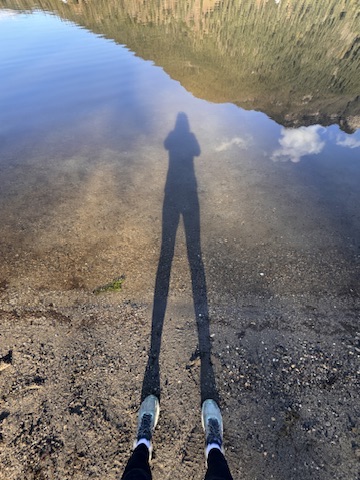
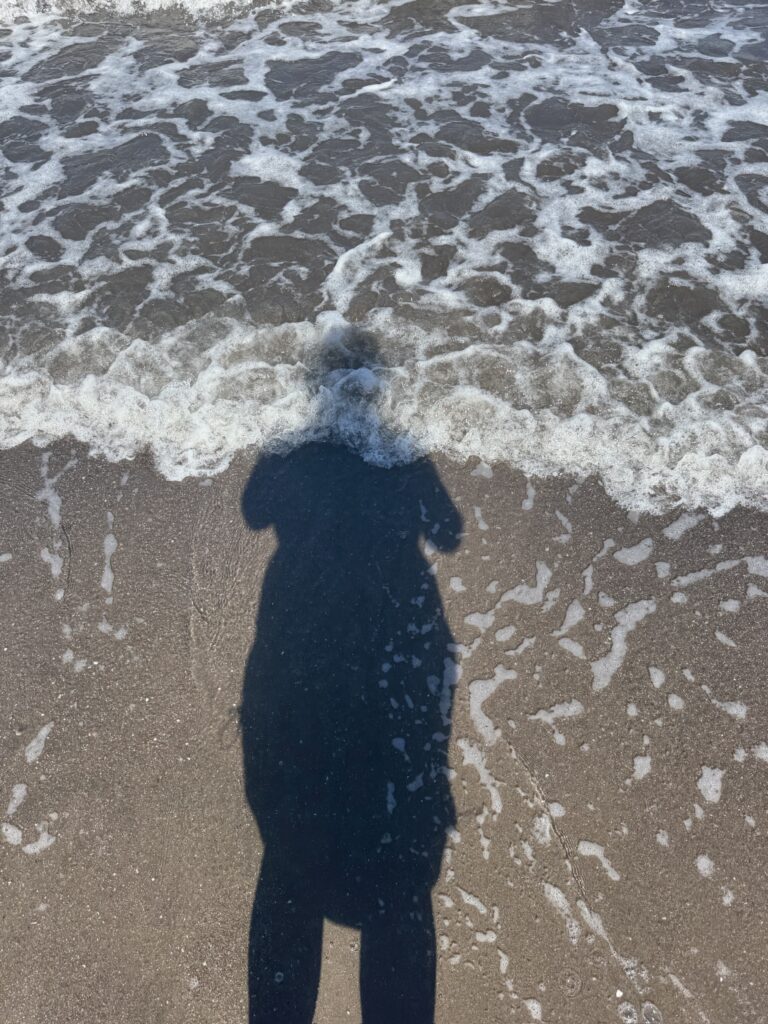
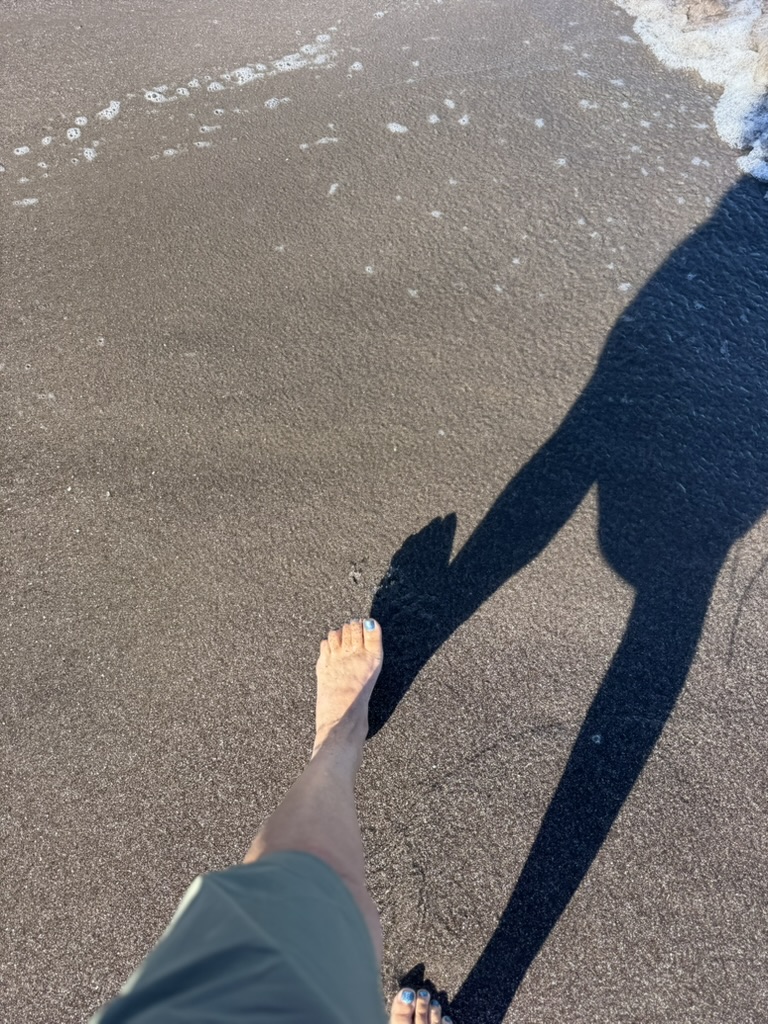
I danced with my shadow, curious about how it moved when I moved.
I ordered dessert for dinner, because pleasure requires no earning first.
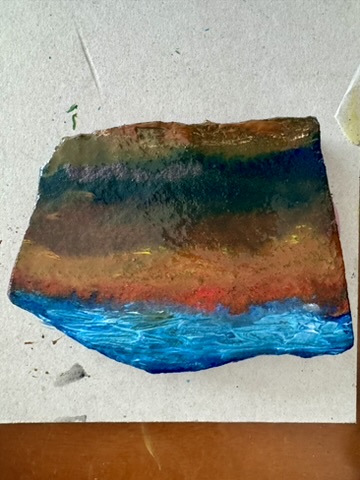
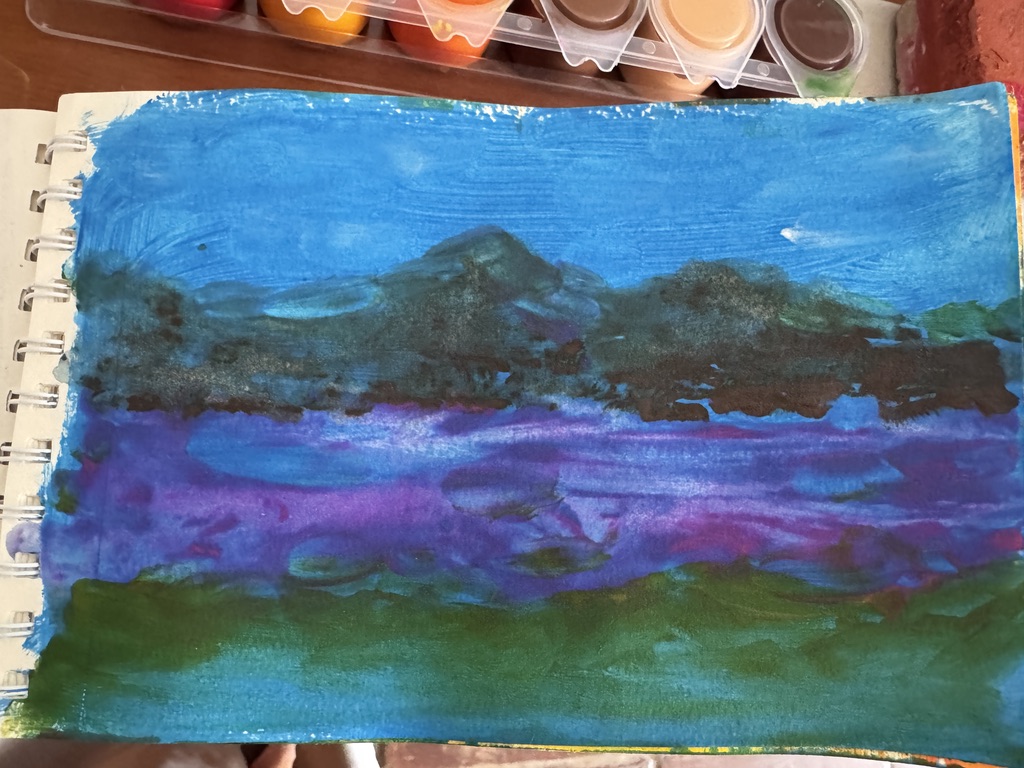
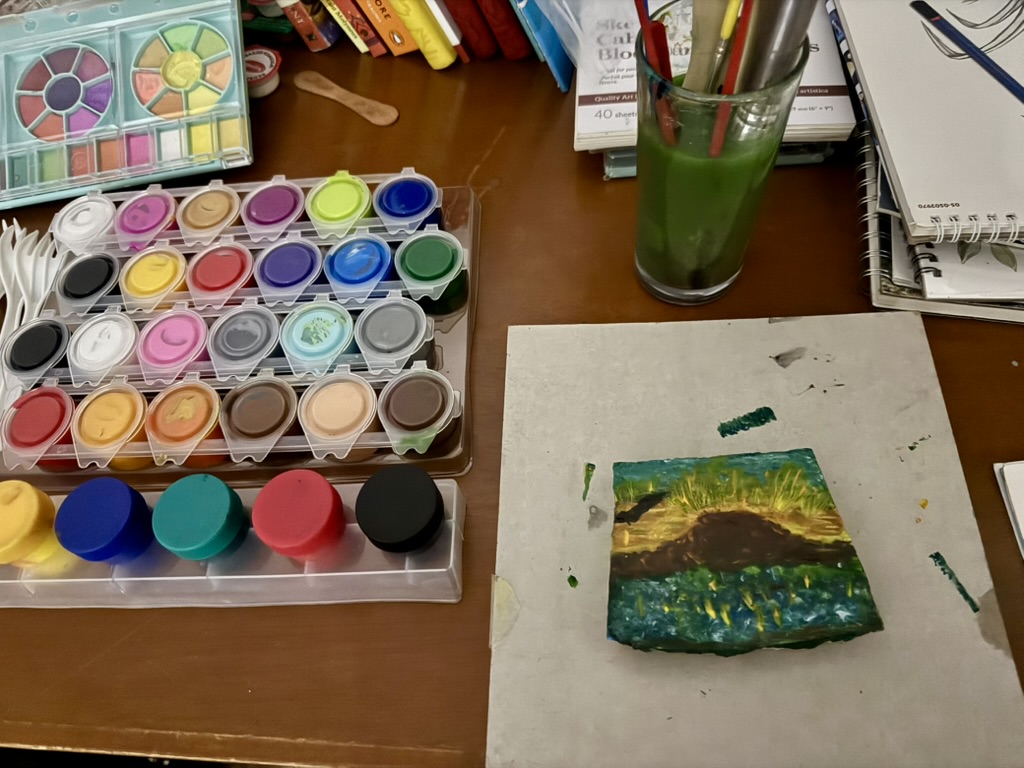
I painted seashells slowly, letting colour decide where it wanted to land.
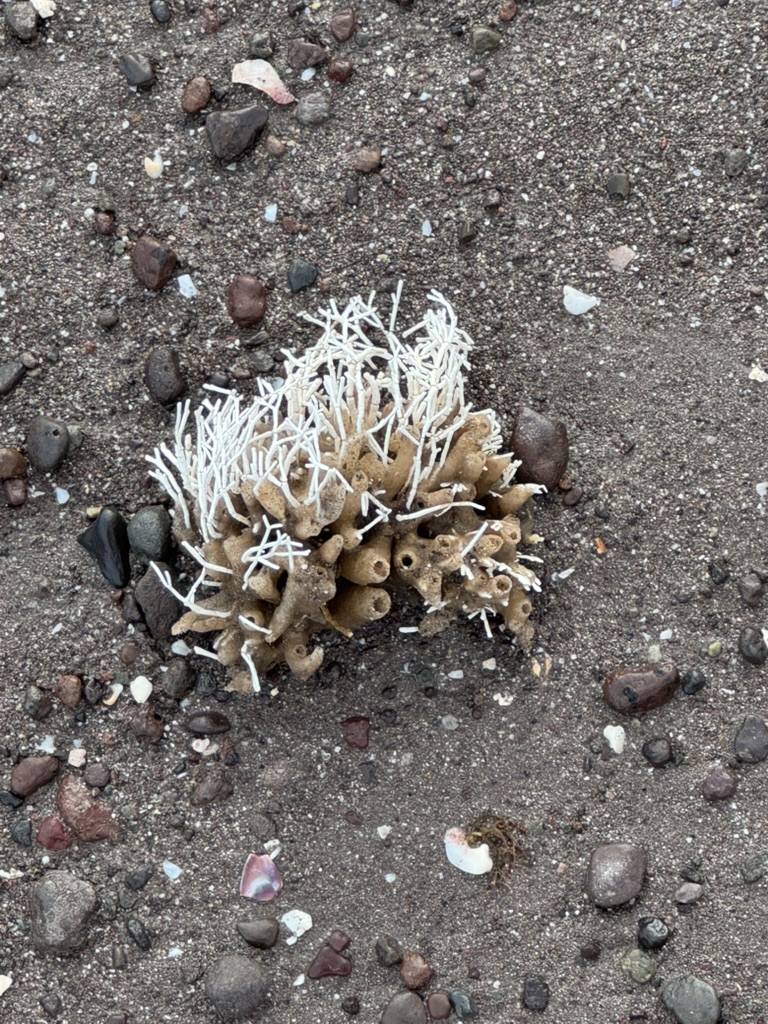
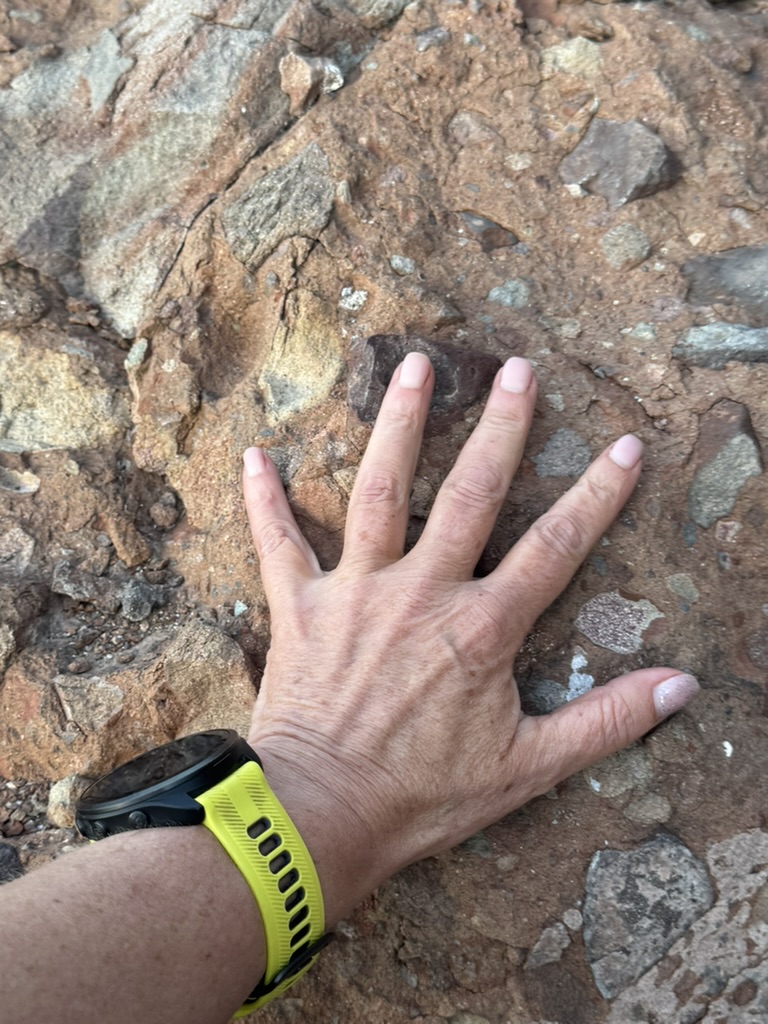
I hunted for treasure simply to practise looking.
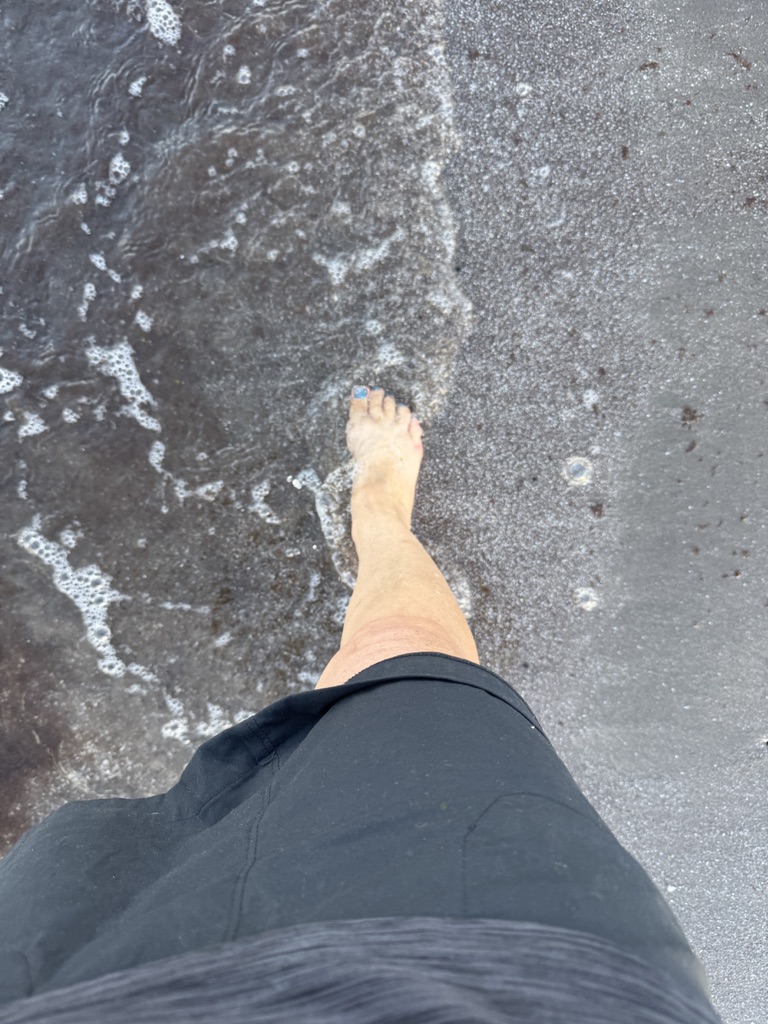
I drew in the sand, knowing the tide would erase it and trusting that was part of the point.
My room went uncleaned, and nothing terrible happened.
I made funny poses for photographs, laughing at myself instead of correcting myself.
I experimented with black-and-white photography, noticing how light and absence speak to one another.
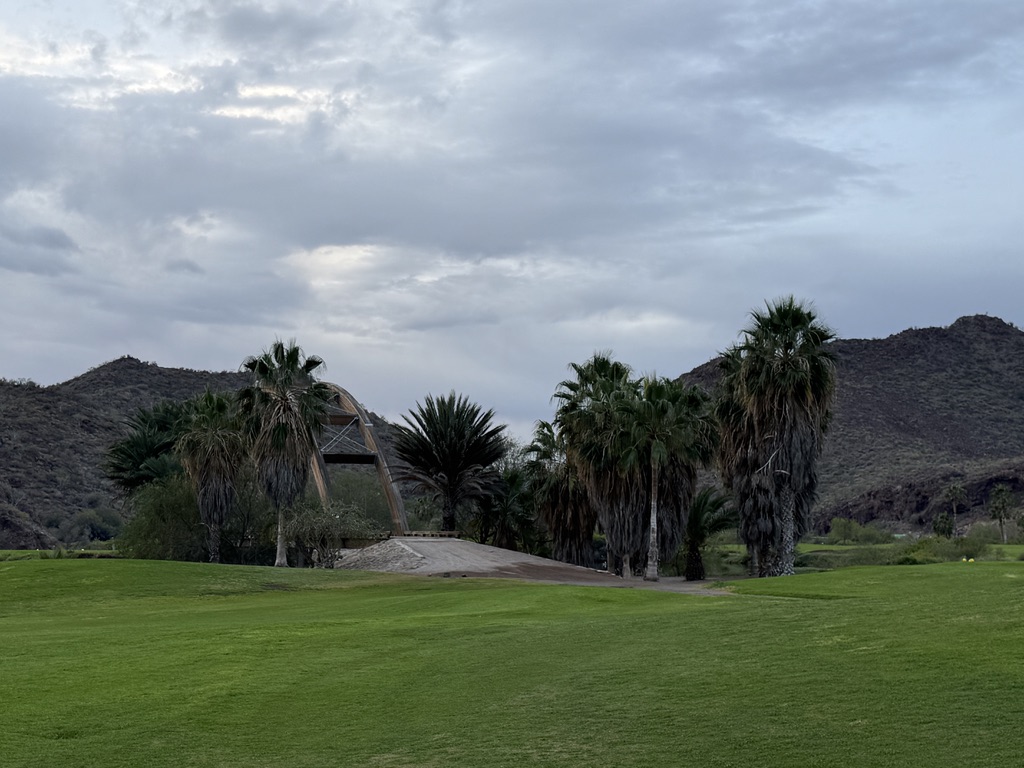
I snuck onto the golf course after dark to walk across the elegant bridges, feeling both brave and gentle at the same time.
And I talked to dogs, which, if I am honest, has always felt like the most sensible thing to do.
Title: Shadow Dance
Artist Statement

I photographed my shadow because shadows are honest. They perform nothing. They simply follow, stretching and shrinking with the angle of the light, revealing the body's position in space. Dancing with my shadow felt ridiculous at first. I am sixty years old. I am a scholar.

 What am I doing, waving my arms at the ground? But that voice, the one that says act your age, the one that says someone might see, is the voice of a culture that has forgotten what play is for. Play researcher Stuart Brown (2009) argues that play stands opposite depression, never work. It is the opposite of depression. Play is how mammals learn, bond, and regulate their nervous systems. My shadow cares nothing about my credentials. It just wants to dance.

Photo Credit: Amy Tucker, January 2026
The Science of Play
I want to take play seriously, which is perhaps a contradiction, but stay with me.
Play is far from frivolous. Far from a waste of time. Far from something we are supposed to outgrow as adults. Play is a biological necessity. It is wired into our nervous systems. It is how we learn, how we connect, how we heal.
Psychiatrist Stuart Brown (2009), founder of the National Institute for Play, has spent decades studying play across species. Brown argues that play is essential for brain development, emotional regulation, and social bonding. In his research with everyone from Nobel laureates to murderers, Brown found a consistent pattern: those who had been deprived of play in childhood showed significant deficits in empathy, problem-solving, and emotional resilience. Play, Brown concludes, is necessary for healthy human development and remains so throughout life.
Neuroscientist Jaak Panksepp (1998), who studied the neuroscience of emotion, identified play as one of the seven primary emotional systems in the mammalian brain. Panksepp discovered that rats laugh when they play, emitting ultrasonic chirps that function like human giggles. Play, Panksepp argued, is hardwired from the start, beyond learned behaviour. It emerges spontaneously when safety conditions are met.
This connects to Stephen Porges’s (2011) polyvagal theory, which I have discussed throughout this blog. Porges emphasises that play requires a sense of felt safety. The social engagement system, which enables play and connection, only comes online when the nervous system perceives safety. When we are in survival mode, when we are anxious or hypervigilant or exhausted, play becomes impossible. The body shuts down the play circuits and redirects resources toward defence.
For years, my nervous system has been in survival mode. Play has been inaccessible to me. I have been too tired, too worried, too busy bracing for the next threat. Today, doing these small, silly things, I felt something shift. My body remembered what play feels like. My nervous system, sensing the absence of threat, allowed the play circuits to come back online.
“Play is not the opposite of work. It is the opposite of depression.” (Brown, 2009, p. 126)
Black and White Experiments
Among today’s plays, the black-and-white photography stood out.
I have been photographing in colour throughout this residency, drawn to the vivid blues of the sea, the warm ochres of the desert, and the bright tiles I found in the empty field. Colour has felt like medicine, like my eyes were starved for saturation after years of grey institutional spaces.
But today I wanted to see differently. I wanted to strip away colour and notice what remained. I wanted to understand how light and shadow speak to one another when hue is removed from the conversation.
Black-and-white photography has a long history as a medium for seeing the essential. Photographer Henri Cartier-Bresson (1952), who helped establish photography as an art form, worked almost exclusively in black and white. He spoke of the decisive moment, the instant when form, gesture, and meaning align. Black and white, Cartier-Bresson believed, revealed the bones of an image, the underlying structure that colour sometimes obscured.
Photographer Minor White (1969) wrote about photography as a contemplative practice. White encouraged photographers to approach their subjects with what he called camera vision, a state of heightened awareness in which the photographer becomes fully present to what is before them. White’s black-and-white images have a meditative quality, inviting slow looking rather than quick consumption.
Today, I tried to approach my playful subjects with a camera’s eye. I photographed my shadow, my sandy drawings, and the bridges on the golf course. I photographed without worrying about whether the images were good. I was experimenting, which is another word for playing.
Title: Witnessing
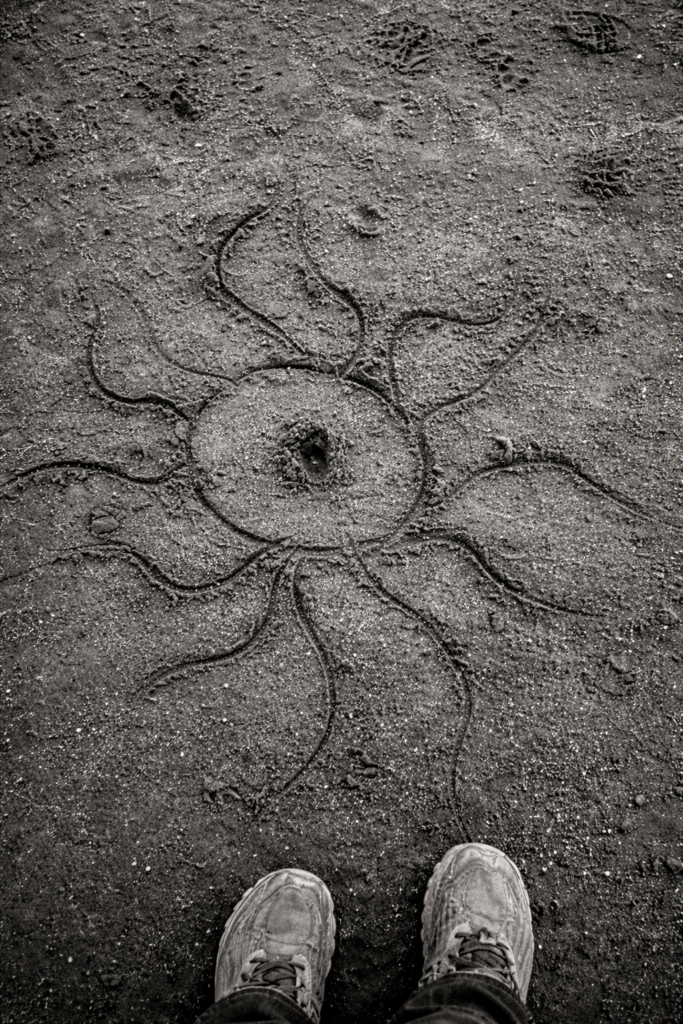
Artist Statement

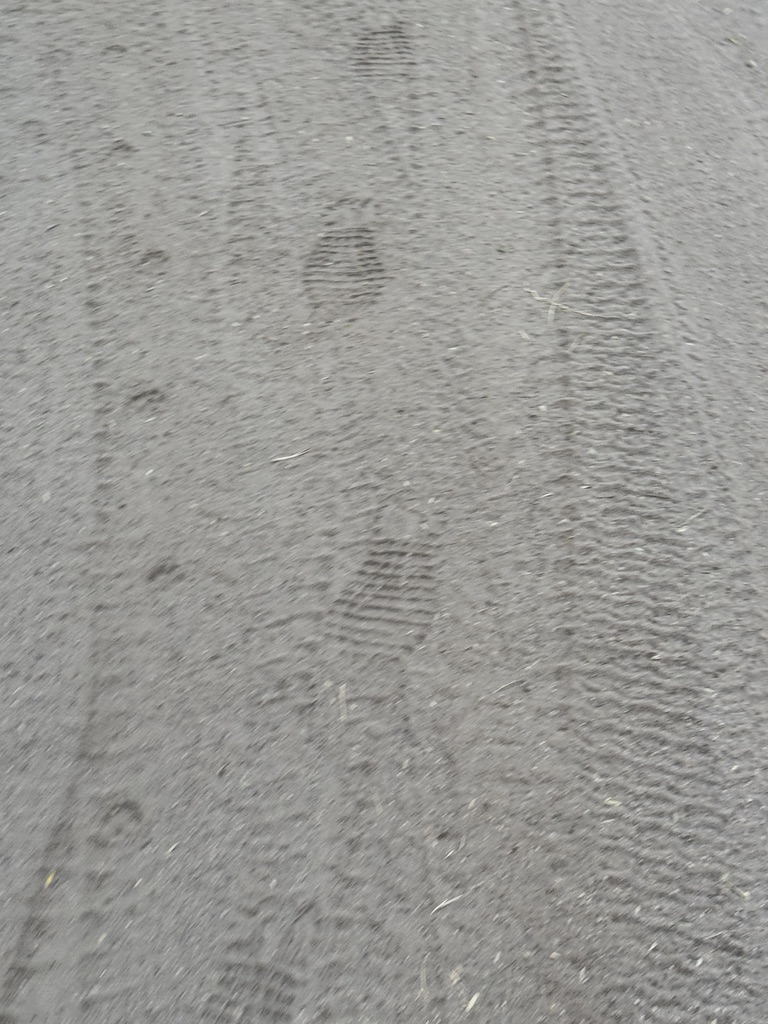
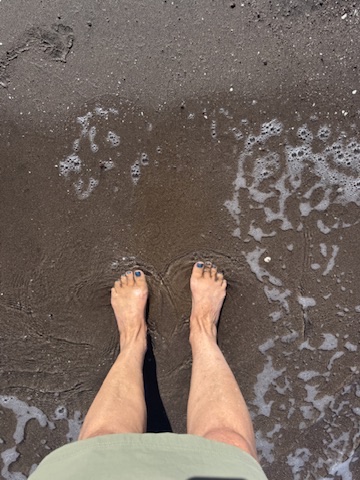
I took this photograph while walking on the shore, attentive to how the ground carries memory. The pattern in the sand felt like a living diagram, a temporary archive of movement, water, and touch. The central circle drew my attention as a small void, a receptive space where something had been and where something else could form. The branching lines reminded me of roots, veins, and pathways, evoking how land and body mirror one another in their capacity to hold experience.

Including my shoes in the frame was a deliberate choice. My presence is partial, grounded, and relational rather than dominant. I stand with the land rather than over it. This image becomes a record of encounter, where my body meets the earth in a moment of pause. In trauma-informed and arts-based research, such moments matter. They mark when attention shifts from analysis to embodied witnessing.

This photograph extends my inquiry into how land teaches through traces. The sand speaks beyond words, yet offers patterns, marks, and impressions that invite interpretation. In Photovoice and Scholarly Personal Narrative, images function as prompts for reflection, memory, and relational meaning-making. Here, the land becomes both collaborator and teacher, offering a visual metaphor for connection, healing, and continuity.

I understand this image as a quiet mapping of relationality. The centre suggests a gathering place, while the lines reaching outward suggest connection across time, body, and place. Standing there, I felt both held and called outward. The photograph is an invitation to notice what remains after movement, after presence, after touch. It is a small practice of ethical witnessing, where attention becomes a form of care.

Photo Credit: Amy Tucker, January 2026
What Play Requires
Play requires specific conditions. It cannot be forced. It cannot be scheduled. It cannot be made productive. The moment we try to instrumentalise play, to make it serve some other purpose, it stops being play.
Philosopher Johan Huizinga (1971), in his foundational work Homo Ludens (which translates to “playing human”), argued that play is a primary category of life, as fundamental as reasoning or making. Huizinga defined play as a voluntary activity that takes place within certain limits of time and space, according to rules freely accepted but absolutely binding. Play, Huizinga insisted, is a stepping outside of ordinary life into a temporary sphere of activity with a disposition all its own.
This helps me understand why play has been so difficult during my years of precarious labour. Precarity erodes the conditions that play requires. When you are constantly uncertain about your employment, when you are hypervigilant about institutional politics, when your nervous system is stuck in chronic activation, you cannot step outside ordinary life. Ordinary life is too threatening. The temporary sphere of play cannot form.
Today, I had what play requires: safety, time, and permission.
Safety: no one was watching, no one was judging, no one needed anything from me.
Time: the day stretched out with nothing scheduled, nothing required, nothing pressing against its edges.
Permission: I gave myself permission to be silly, to be unproductive, to do things that served no purpose except the pleasure of doing them.
These conditions are necessities, never luxuries. And they have been systematically denied to me by the conditions of precarious academic labour.
Precarity erodes the conditions play requires. When your nervous system is stuck in chronic activation, the temporary sphere of play cannot form.
Dessert for Dinner
I want to say something about dessert for dinner, because it was such a small thing, and it felt so large.
For years, I have eaten responsibly. I have eaten in ways that fuelled productivity, that supported training, that kept my body functioning as a machine that could work and work and work. I have thought of food as fuel, as an obligation, as something to manage rather than enjoy.
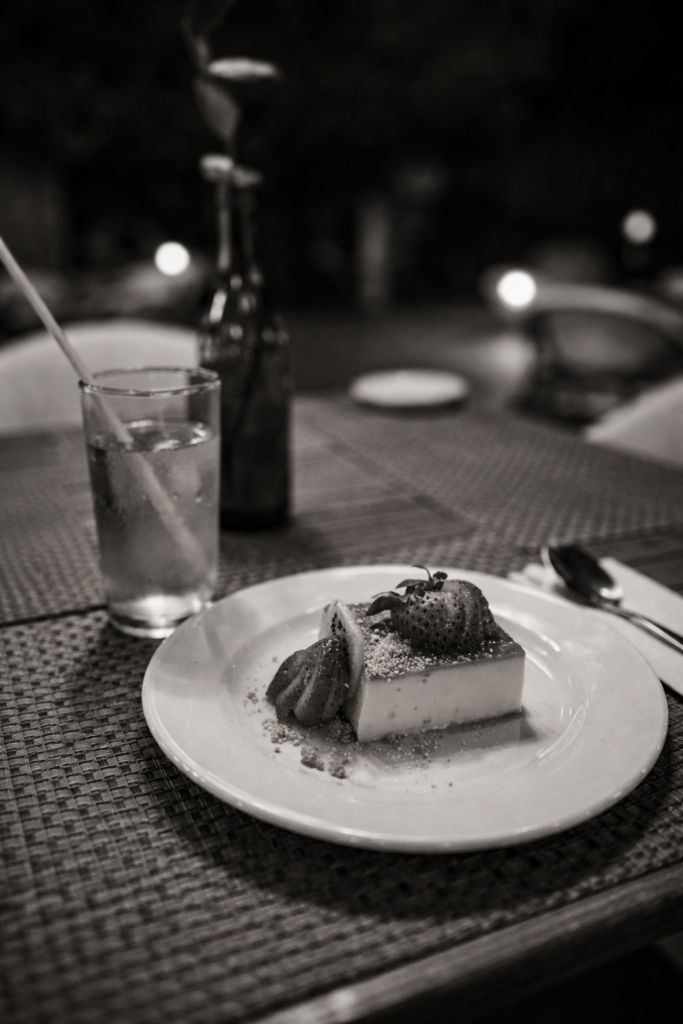
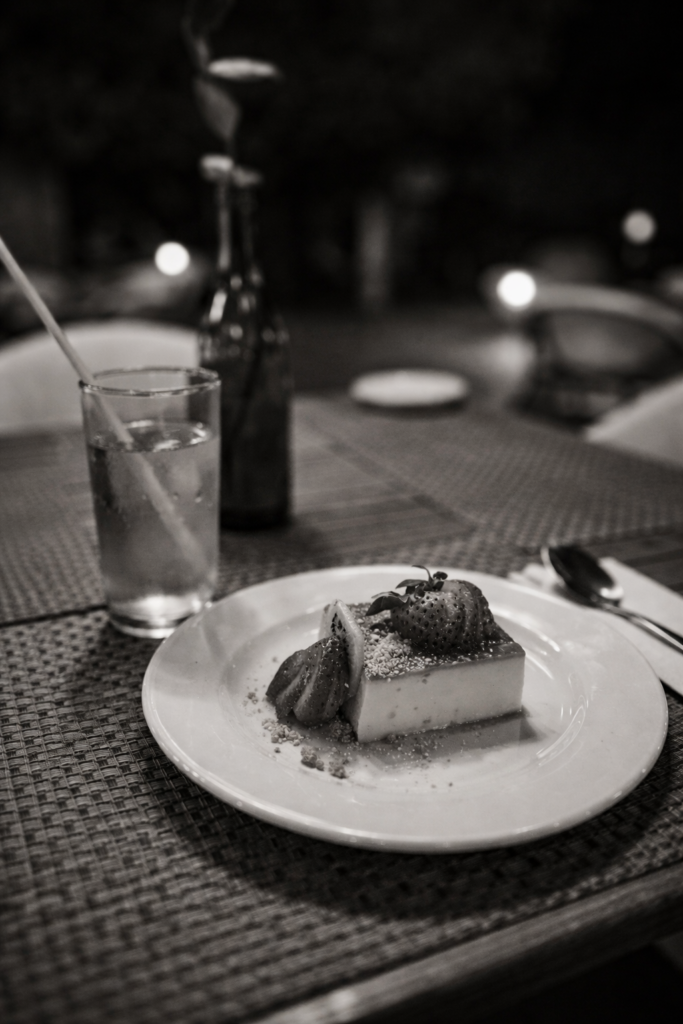
Today, I went to a small restaurant by the water and ordered only dessert. Flan. A cup of coffee. Nothing else.
The waiter looked at me with mild confusion. I smiled and said, Solo postre, por favour. Just dessert, please.
It arrived: creamy, caramel-topped, beautiful. I ate it slowly, savouring each bite. The sweetness was almost overwhelming. Allowing myself sweetness without first earning it.
This is what food researcher and therapist Ellyn Satter (2007) calls eating competence: the ability to eat with joy, flexibility, and attunement to one’s own body. Eating competence is the opposite of rigid dietary rules. It involves trusting the body to know what it needs, allowing pleasure without guilt, and approaching food with curiosity rather than control.
Dessert for dinner was a small act of eating competence. It was me saying to my body: your pleasure matters. What you want matters. Sweetness requires no earning through suffering first.
Title: Dessert for Dinner
Artist Statement

I photographed my dessert to document this small rebellion. The black-and-white treatment makes it feel timeless, like a memory, like something that could have happened yesterday or decades ago. Pleasure is often the first thing we sacrifice when we are in survival mode. We tell ourselves we will enjoy things later, after the work is done and we have earned them. But later keeps receding. The work is never done. Pleasure deferred indefinitely becomes pleasure denied. This photograph says: today I held nothing back. Today I allowed myself sweetness in the middle of everything, as a statement of worth rather than reward.

Photo Credit: Amy Tucker, January 2026
The Golf Course Bridges
After dark, I walked to the golf course at the edge of town. The gates were closed, but a gap in the fence remained. I slipped through.
This is the kind of thing I used to do as a teenager. Sneaking into places I was told were off-limits. The thrill of mild transgression. The feeling of getting away with something.
The golf course was beautiful in the dark. The grass was soft under my feet. The stars were bright overhead. And there were bridges, elegant wooden bridges crossing over water features and sand traps. During the day, these bridges are for golfers. At night, they were for me.
I walked across each bridge slowly, feeling the wood beneath my feet, looking up at the sky. I was trespassing, technically. But the trespass felt gentle, victimless. I damaged nothing. I was just walking across beautiful bridges because I wanted to.
Philosopher Michel de Certeau (1984), in his book The Practice of Everyday Life, writes about the ways ordinary people subvert the structures of power through small acts of resistance. De Certeau calls these acts tactics, as opposed to the strategies employed by those in power. Walking across the golf course bridges at night is a tactic. It is a small refusal of the rules that say certain beautiful spaces are only for certain people at certain times.
Title: Night Bridge
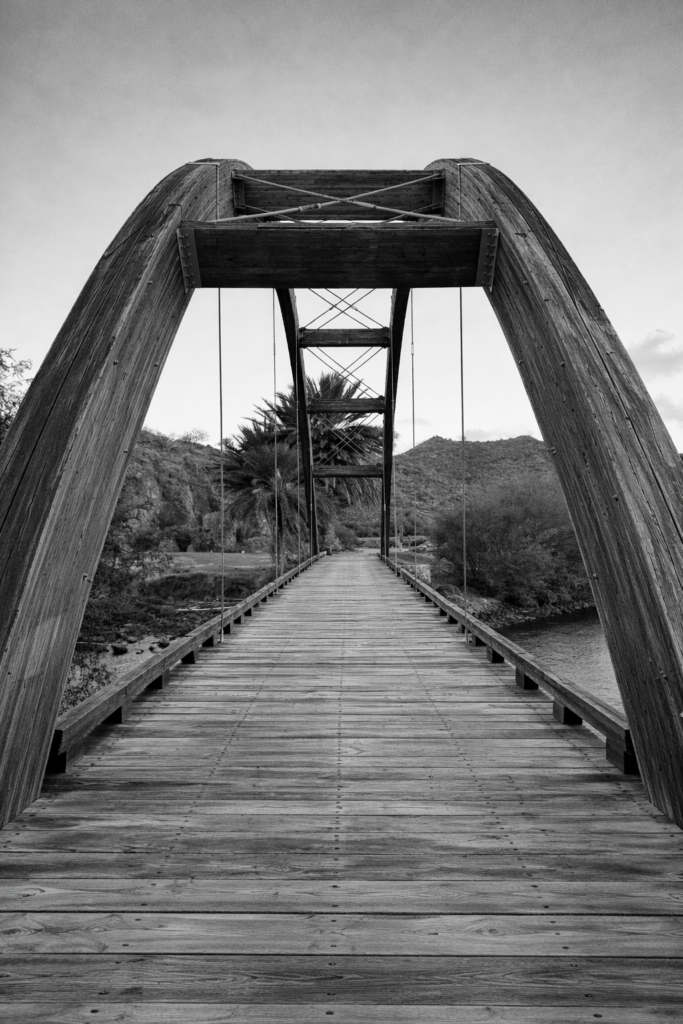
Artist Statement

I nearly let this photograph pass untaken, nervous about being caught. But that nervousness was part of the play. Risk, within safe limits, is part of what makes play exhilarating. Brian Sutton-Smith (1997), a leading play theorist, argues that play always involves some element of uncertainty and a negotiation between order and chaos. Walking across this bridge in the dark, I was negotiating. I was playing with boundaries. I was remembering what it felt like to be young and bold and willing to break small rules for the sake of beauty.

Photo Credit: Amy Tucker, January 2026
The Right to Play
I want to connect today’s activities to the human rights framework that grounds this project.
Article 24 of the Universal Declaration of Human Rights (United Nations, 1948) affirms the right to rest and leisure. Article 27 affirms the right to participate in cultural life and to enjoy the arts. These rights extend beyond children. They belong to adults, too. They are part of a group of 60-year-old women recovering from burnout. They are precarious workers denied the conditions the play requires.
Play researcher René Proyer (2017) has studied playfulness in adults and found that it correlates with psychological well-being, creativity, and life satisfaction. Playful adults, Proyer found, are flexible, curious, and resilient, free of immaturity or irresponsibility. Playfulness is something to cultivate throughout life, beyond outgrowing.
But the conditions of contemporary work make adult play difficult. The expectation of constant availability, the erosion of boundaries between work and leisure, the chronic stress of economic precarity: all of these work against the conditions that play requires. Play becomes something we schedule, something we optimise, something we do for its health benefits rather than for its own sake. And when play becomes instrumental, it stops being play.
Today, I played without instrumentalising it. I danced with my shadow because of joy, never because it would reduce my cortisol levels. I ordered dessert for dinner purely because I wanted it. I snuck onto the golf course purely for the thrill, never because trespassing builds character. I did these things because I wanted to. Because they were fun. Because my body, finally sensing safety, remembered what it felt like to play.
Playfulness is something to cultivate throughout life, beyond outgrowing.
Talking to Dogs
I should say something about talking to dogs.
This behaviour is entirely familiar to me. I have always talked to dogs. I greet them on the street. I ask them about their days. I tell them they are beautiful and good. Their owners can think what they like.
Dogs understand something that adult humans often forget. They live in the present moment. They experience joy without complication. They defer no pleasure. They earn no treats through suffering first. When a dog sees someone it loves, it refuses to pretend to be cool. It wags its entire body.
I aspire to be more like a dog.
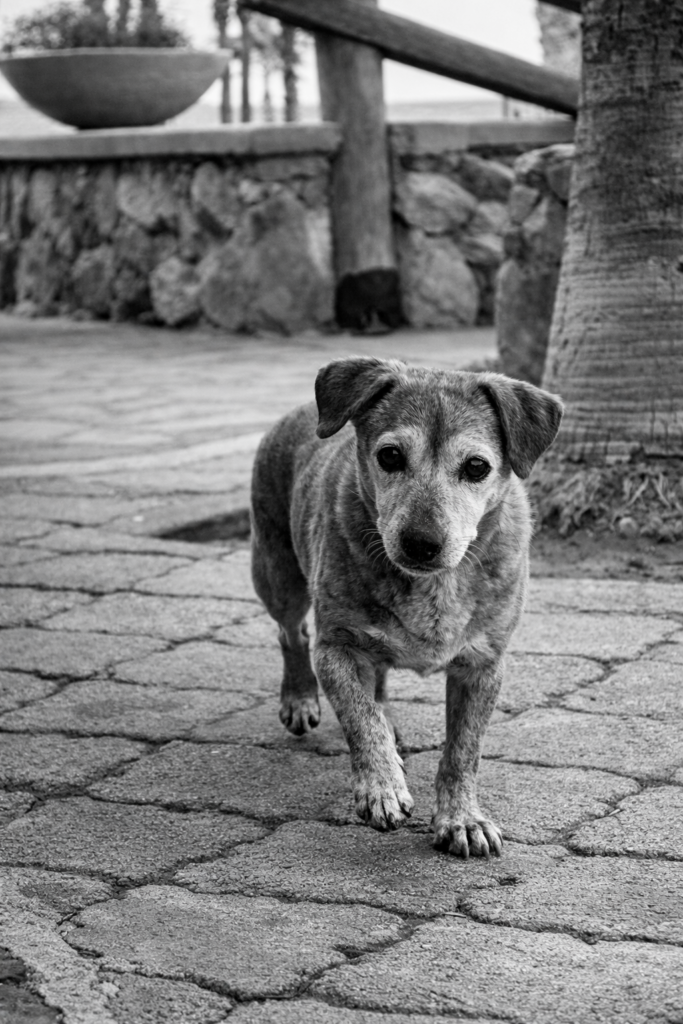
Today, I met a small brown dog on the beach. It was digging in the sand with complete focus, searching for something only it could smell. I sat down nearby and watched. The dog glanced at me, decided I was acceptable, and returned to its digging.
“Hola, perrito,” I said. “¿Qué buscas?” Hello, little dog. What are you looking for?
The dog offered a wagging tail as answer. That was answer enough.
Animal studies scholar Donna Haraway (2008), in her book When Species Meet, writes about the relationships between humans and companion animals. Haraway argues that we become who we are through our interactions with other species. Dogs are far more than pets. They are companion species, beings with whom we share our lives and who shape us as much as we shape them.
My conversation with the beach dog was a moment of interspecies play. Neither of us needed anything from the other. We were just sharing space, sharing curiosity, sharing the pleasure of being alive on a warm evening by the sea.
Title: Playmate
Artist Statement

Dogs remain entirely unaware they are being photographed. They perform nothing. They simply are. This is what I am trying to learn from them: how to be without performing, how to experience joy without complicating it, how to greet each moment with full-body enthusiasm. The black-and-white treatment of this image strips away distractions and lets me focus on the dog's essential dog-ness: the alert ears, the curious eyes, the readiness for whatever comes next. If I could bottle what dogs have and sell it, I would be rich. But it cannot be bottled. It can only be practised, moment by moment, in the company of beings who have never forgotten how to play.

Photo Credit: Amy Tucker, January 2026
What Play Teaches
Today taught me several things.
First: play is still available to me. I thought precarity and burnout had broken something essential, had severed my connection to joy, silliness, and spontaneity. But that connection was buried, never broken. Under exhaustion. Under obligation. Under the weight of seventeen years of chronic stress. Today, with safety, time, and permission, it emerged.
Second: play requires no expensive equipment or exotic locations. It requires only willingness. A shadow to dance with. A piece of flan. A dog to talk to. A golf course bridge to walk across in the dark. Play is available everywhere, all the time, to anyone willing to receive it.
Third: play requires no earning. This was the hardest lesson. I have been trained to believe that pleasure must be earned, that rest must be earned, that fun is a reward for productivity rather than a right of existence. Today I practiced a different logic: play first, simply because I am alive, and play is part of being alive.
Fourth: black-and-white photography is its own kind of play. Removing colour changes how I see. It invites experimentation, curiosity, willingness to fail. The images I made today are experiments, far from masterpieces. Some are blurry. Some are badly composed. All of them are evidence that I was playing, trying something new, and willing to look silly in the name of learning.
Curiosity, play, and wonder were never meant to be outgrown. They were meant to be carried forward, quietly, into a life that knows when to loosen its grip.
What Remains
The day is ending. My room remains a glorious mess. I have sand in my shoes, caramel on my shirt, and images of shadows and bridges stored on my camera.
I feel lighter than I have felt in a very long time.
Tomorrow I will likely do something responsible. I will write, or walk, or continue the quieter practices of this residency. But today I played. Today I remembered what my body knew before precarity taught it to forget. Today I was a child in a sixty-year-old body, and it was exactly right.
van der Kolk (2014) writes that trauma recovery requires the restoration of play and imagination. Processing difficult experiences through talk alone falls short. We must also rebuild our capacity for joy, for spontaneity, for uncomplicated pleasure. Play is medicine. It is as necessary for healing as rest and reflection.
Today I took my medicine. I danced, ate dessert, talked to dogs, and snuck across bridges in the dark. I experimented with my camera, laughed at my own shadow, and refused to clean my room because someone once told me that adults have to keep things tidy.
No one is grading this. No one is watching. No one needs me to justify how I spent my day.
I played. That is enough.
An Invitation
If you have forgotten how to play, I would like to extend a small invitation.
Think of something you wanted to do when you were a child, something that seemed like it would be possible when you were finally a grown-up.
Now do it.
Dance with your shadow. Order dessert for dinner. Talk to a dog. Walk across something beautiful in the dark. Make funny faces. Draw something that will be erased. Experiment with something unfamiliar.
Permission is yours already. No earning required. No justification needed.
You just need to remember that you were once a child who knew how to play, and that child is still in there, waiting for you to remember.
Hoy jugué. Hoy recordé.
Today I played. Today I remembered.
References
Adams, T. D. (2000). Light writing & life writing: Photography in autobiography. UNC Press Books.
Brown, S. (2009). Play: How it shapes the brain, opens the imagination, and invigorates the soul. Avery.
Cartier-Bresson, H. (1952). The decisive moment. Simon & Schuster.
de Certeau, M. (1984). The practice of everyday life (S. Rendall, Trans.). University of California Press.
Haraway, D. J. (2008). When species meet. University of Minnesota Press.
Huizinga, J. (1971). Homo ludens: A study of the play-element in culture. Beacon press.
Panksepp, J. (2004). Affective neuroscience: The foundations of human and animal emotions. Oxford University Press.
Porges, S. W. (2011). The polyvagal theory: Neurophysiological foundations of emotions, attachment, communication, and self-regulation. W. W. Norton & Company.
Proyer, R. T. (2017). A new structural model for the study of adult playfulness: Assessment and exploration of an understudied individual differences variable. Personality and Individual Differences, 108, 113–122. https://doi.org/10.1016/j.paid.2016.12.011
Satter, E. (2007). Eating competence: Definition and evidence for the Satter Eating Competence Model. Journal of Nutrition Education and Behaviour, 39(5), S142–S153. https://doi.org/10.1016/j.jneb.2007.01.006
Sutton-Smith, B. (1997). The ambiguity of play. Harvard University Press.
United Nations. (1948). Universal declaration of human rights. https://www.un.org/en/about-us/universal-declaration-of-human-rights
van der Kolk, B. A. (2014). The body keeps the score: Brain, mind, and body in the healing of trauma. Viking.
White, M. (1969). Mirrors messages manifestations. Aperture.
Translation note. Spanish language passages were generated using Google Translate and subsequently reviewed and refined by the author. Any remaining infelicities reflect the limits of machine translation rather than intent.