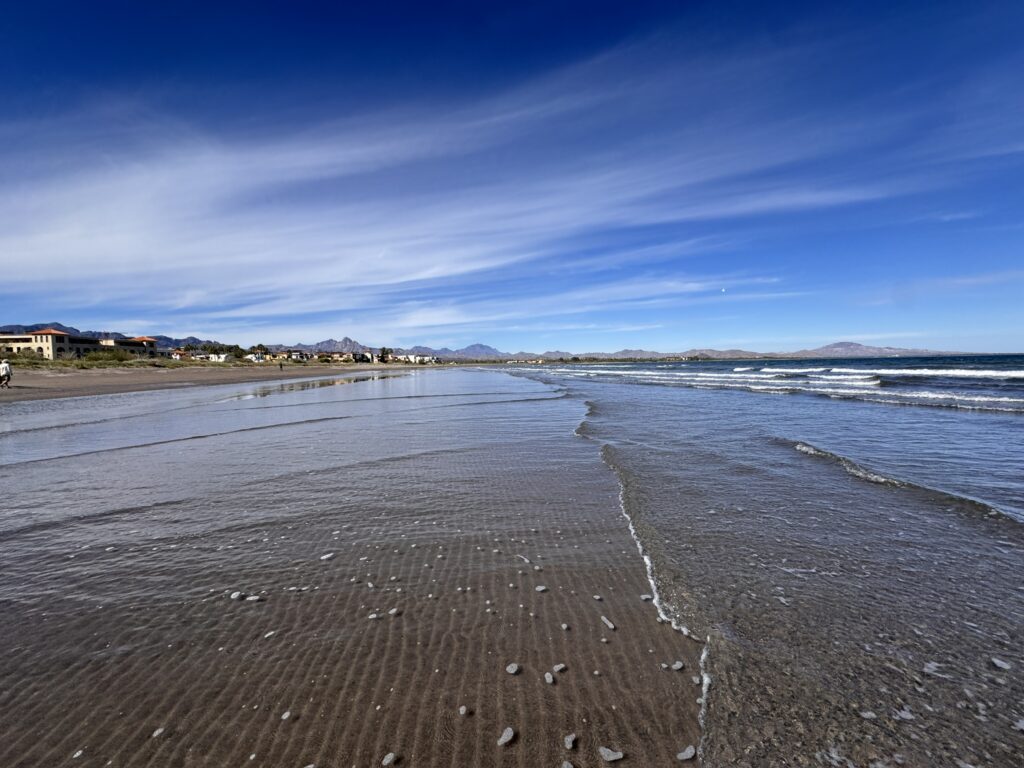
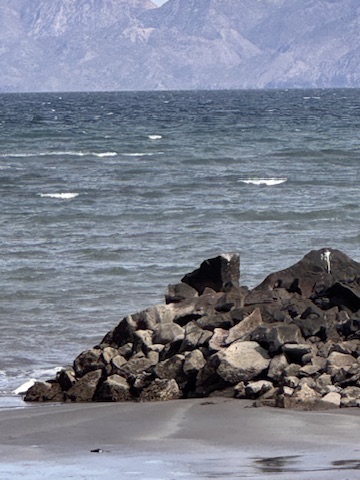
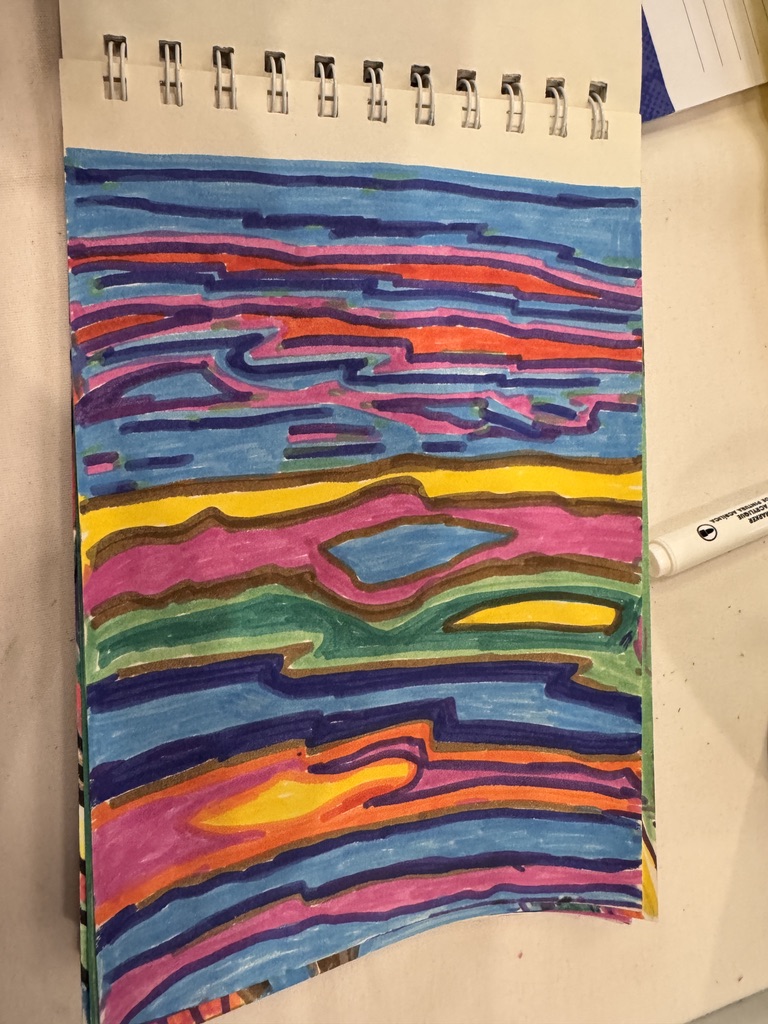
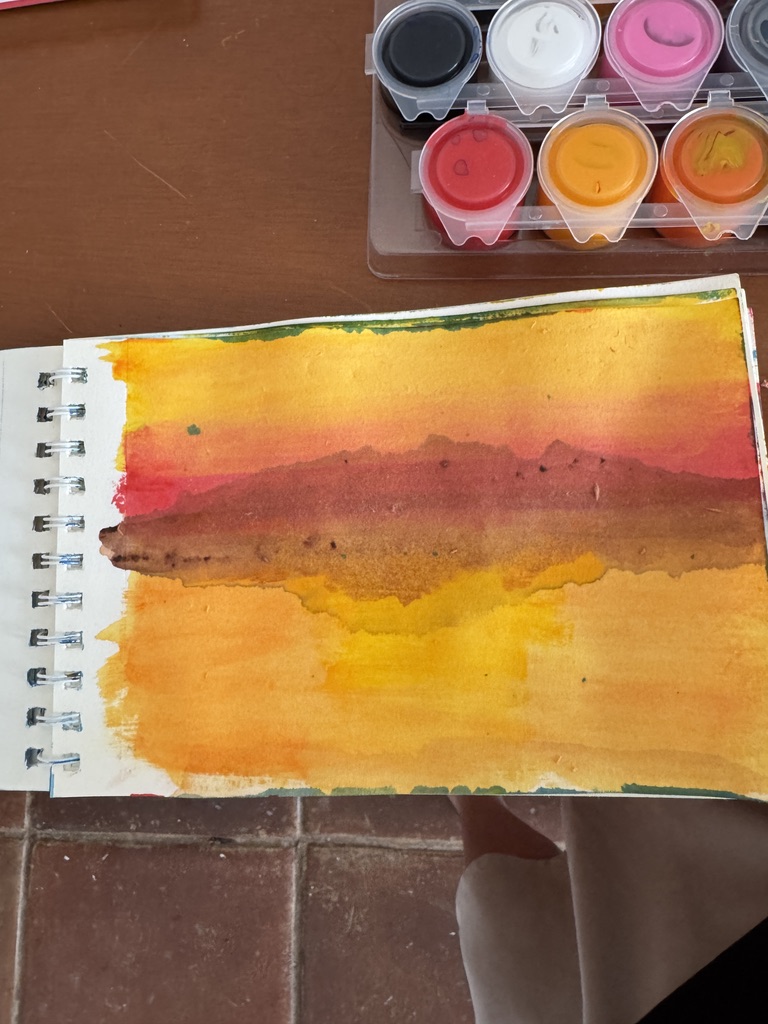
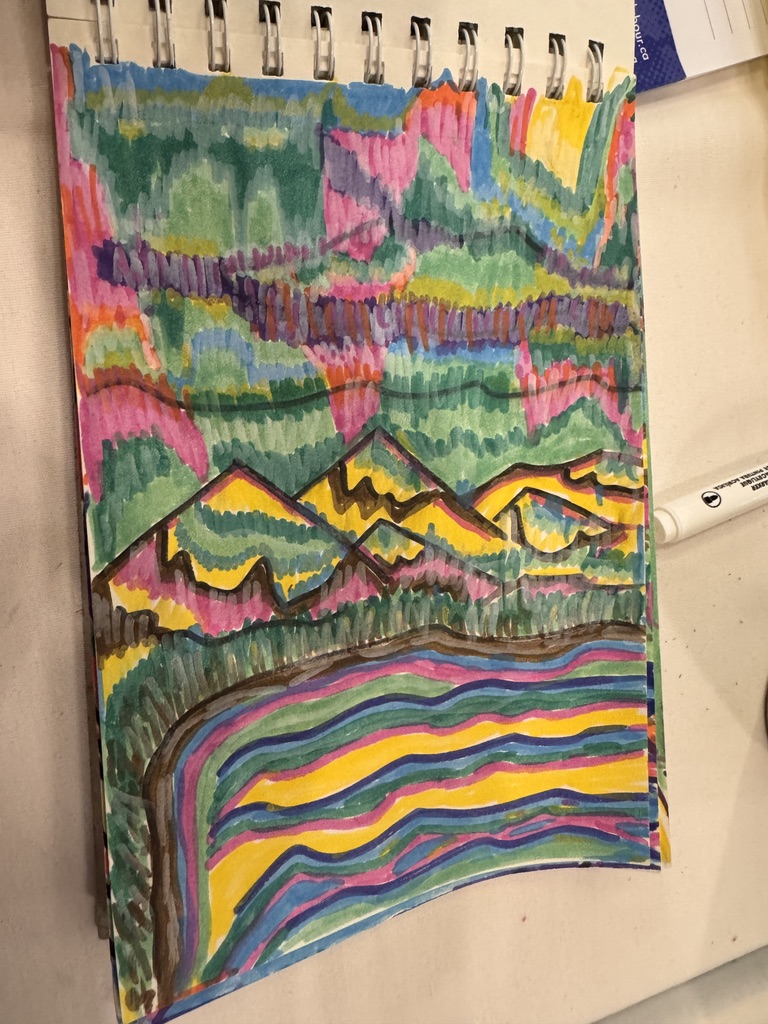
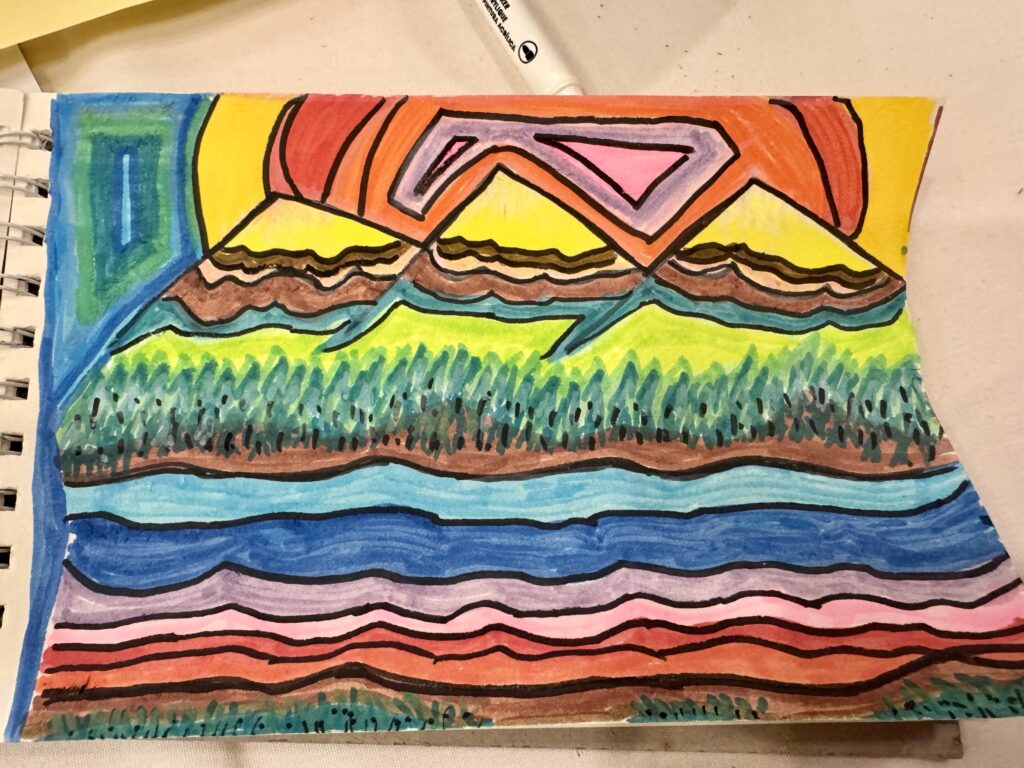
Day 29: the shore begins to speak in a language that requires stillness to hear. On presence, wonder, nature, and the particular quality of knowing that comes when you have been quiet long enough for the world to trust you.
Title: Two Among Many
Artist Statement

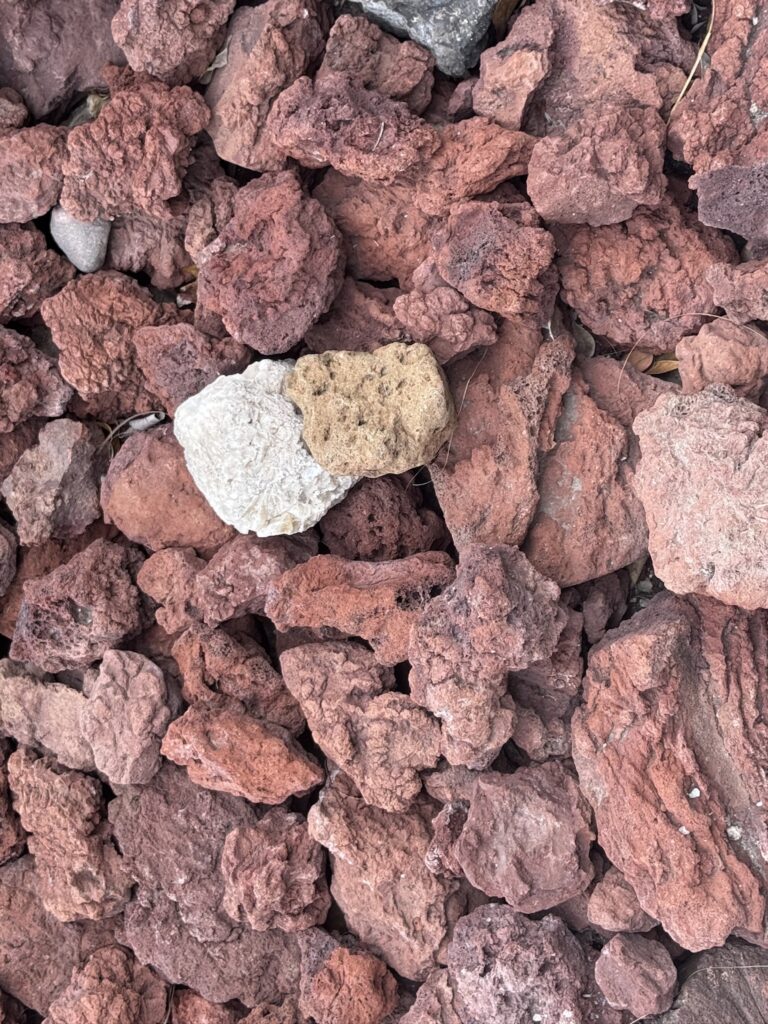
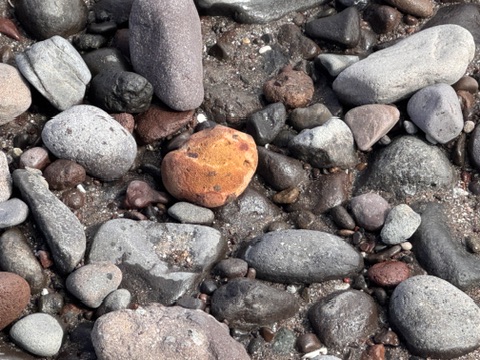
I stopped when I saw them. Two pale stones resting together in a field of red, their muted tones pressing close as if they had arrived as a pair. The volcanic rock surrounding them was textured and vivid, pocked with air bubbles from ancient heat, dyed the colour of rust and dried blood. The two lighter stones held their difference quietly, without apology.

This is one of the rare photographs in my collection that I have kept in colour. The decision was deliberate. In a body of work devoted to black and white, to the ethics of reduction and the discipline of restraint, colour must earn its place. Here, the red demanded to be seen. The contrast between the two pale stones and the field of crimson that held them would have collapsed into sameness without it. The image required colour to speak its meaning.

I am drawn to what resists matching. To the presence that stands apart without performing its difference. These two stones arrived without design. They were placed by no one, creating contrast and illustrating a point. They simply came to rest where the ground received them, and in resting, they found each other. The image holds no drama. It offers only the quiet fact of two things that belong together amid a landscape to which they bear no resemblance.

I have often felt like the pale stone in a field of red. Present but visibly different. Held by the same ground as everyone else, yet marked by texture and tone that set me apart. This photograph makes no claim to resolve that feeling. It simply witnesses it. The two stones lean toward one another, their edges nearly touching, as if proximity itself were a form of kinship.

The volcanic rock speaks to heat and transformation, to pressure that reshapes matter into something porous and lasting. The pale stones speak to another origin, another journey. They share the frame without sharing a story. What holds them together is only the ground beneath and the eye that noticed them, paused, and chose to preserve the encounter.

Photo Credit: Amy Tucker, January 2026
Where the Shore Begins to Speak
Wonder was far from what I came here seeking. I came to rest, to fold the sharp corners of thought into something dull and silent.
But the land had other plans. It began in the hush of the tide, a language I almost remembered. Salt tracing old maps across my ankles, sand whispering through the creases of my shoes.
A shell, cracked. A stone, too smooth to be accidental. Even the wind seemed to pause, just long enough to ask if I was listening.
I watched a crab write its name in the shallows, unconcerned with permanence. Watched a gull lift, drop, lift again, more patient than I have ever been.
Slowly, The shore began to stitch its rhythm into me. Beyond grandeur, with quiet insistence, the way grief teaches, or healing, or soil under fingernails.
Here, I found interest, an invitation rather than a spark. A kind of leaning-in to what has always waited beneath the noise of being useful.
And I began to understand: The land asks nothing of performance. It asks for presence And maybe, at last, I am learning how to offer that
Title: Tidebound
Artist Statement

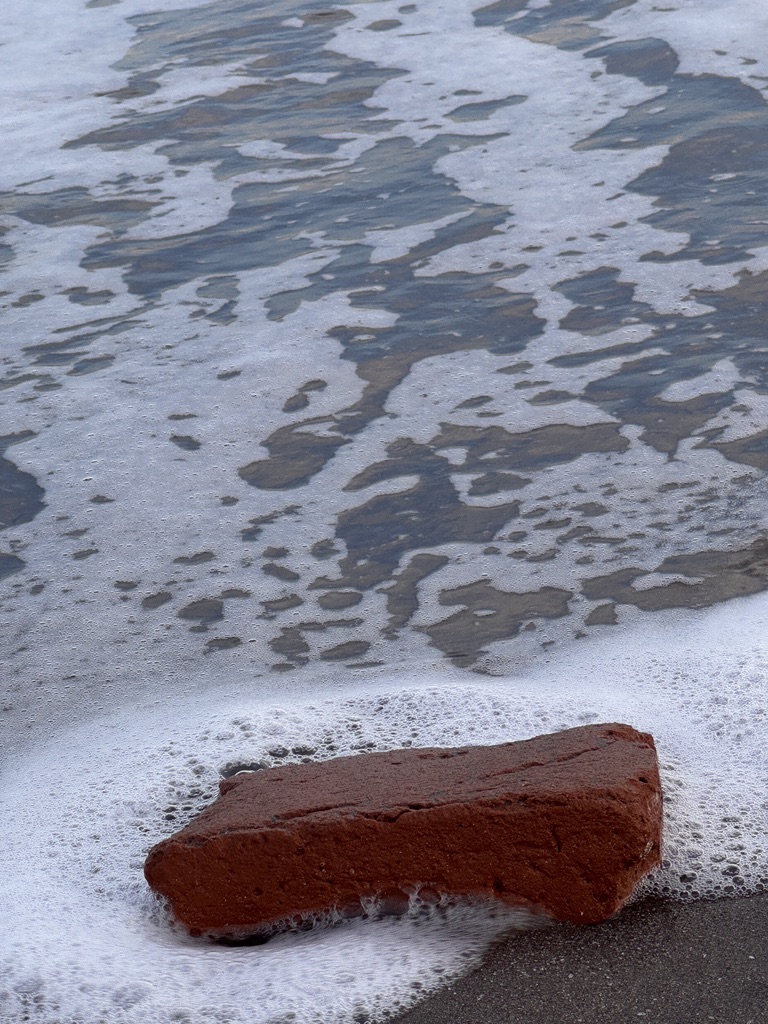
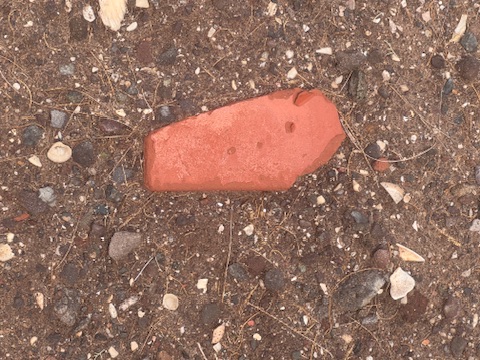
This image captures a solitary brick caught in the meeting of ocean and sand an object out of place, yet strangely grounded. I was struck by the quiet resilience of this fragment of construction, shaped for structure and permanence, now yielding to saltwater and tide. It no longer serves its original purpose, and yet it remains, weathered, softened, still unmistakably present.

In the context of my broader research on alonetude, embodiment, and recovery from institutional extraction, this photograph becomes a visual metaphor for the self in transition. The brick speaks to what remains after long periods of performance, labor, and containment. It holds the memory of function, but it no longer needs to fulfill it. The tide surrounds it without resistance. There is no urgency to prove worth.

This moment asks: what happens when we stop resisting erosion? When we allow the forces around us to touch us, wear us down, soften our edges, transforming rather than defeating?

Here, the brick becomes more than debris. It becomes evidence. Of survival. Of change. Of the beauty that emerges when we are no longer trying to hold our original shape.

Photo Credit: Amy Tucker, January 2026
Title: Trace of Ascent
Artist Statement

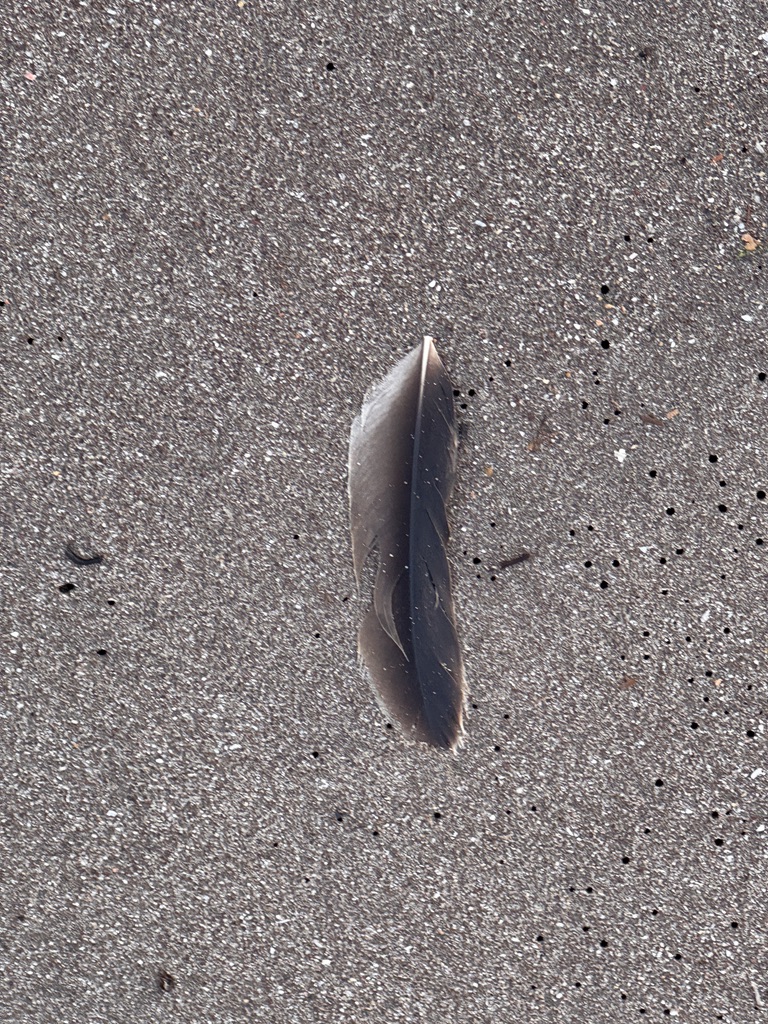
This feather, resting alone on darkened sand, holds the quiet memory of flight. It is no longer airborne, yet it carries the architecture of uplift: spine, barbs, hollow shaft, all evidence of having once moved with wind and intention. What drew me to this image was its stillness, residue rather than absence: the presence of something that has passed through, marked by both release and belonging.

In the context of my arts-based inquiry into alonetude and embodied presence, this feather becomes a metaphor for what remains after movement. It invites reflection on what we shed, what we carry, and what we recognise only after landing. Unlike the frantic need to perform, this moment asks nothing. It simply offers itself as witness.

Here, the feather is returned, beyond lost. To earth. To texture. To the soft hush of enoughness.

Photo Credit: Amy Tucker, 2026
Title: To Need No Monument
I walk, beyond arriving, to remember what it feels like to move without performance.
Each step presses gently into the wet hush of sand, a temporary record, beyond purpose, simply presence.
No one is watching. There is no rubric for how I place my feet. No metrics trace the curve of my wandering. Still, the earth notices.
The tide asks nothing of earning this peace. It rises all the same, softening the edges of every impression until all that remains is rhythm.
I am learning to love what is passing. To walk for the sake of walking. To be the kind of story That holds its truth beyond the telling.
Let the waves erase me. Let the next morning’s light find no evidence but smoothness. That, too, is a kind of grace, to know I was here, and to need no monument.
Title: Evidence of Passing
Artist Statement

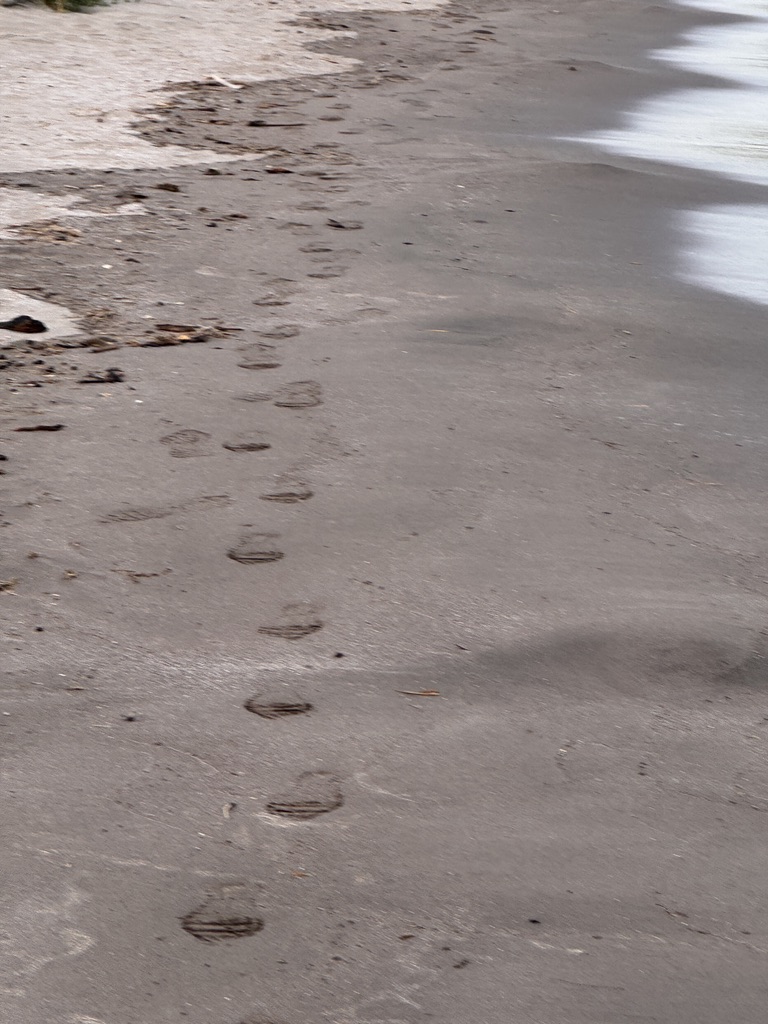
This image captures a winding trail of footprints pressed into damp shoreline, slowly softening under the pull of tide and time. What compelled me to take this photograph was their impermanence rather than their presence, the quiet truth that every mark we make is always in the process of being undone.

As part of my ongoing inquiry into alonetude and embodied recovery, this image speaks to the paradox of solitude: we walk alone, yet leave traces. In academic and institutional contexts, I was conditioned to believe that only visible, measurable output mattered. But here, the act of walking, with no destination, no audience, no performance, is itself enough. The shore records without judgment, erases without malice.

Evidence of Passing reminds me that presence requires no permanence as proof. It is proven through being. Each footprint is both an arrival and a letting go.

Photo Credit: Amy Tucker, 2026
Title: What the Rocks Remember
Artist Statement

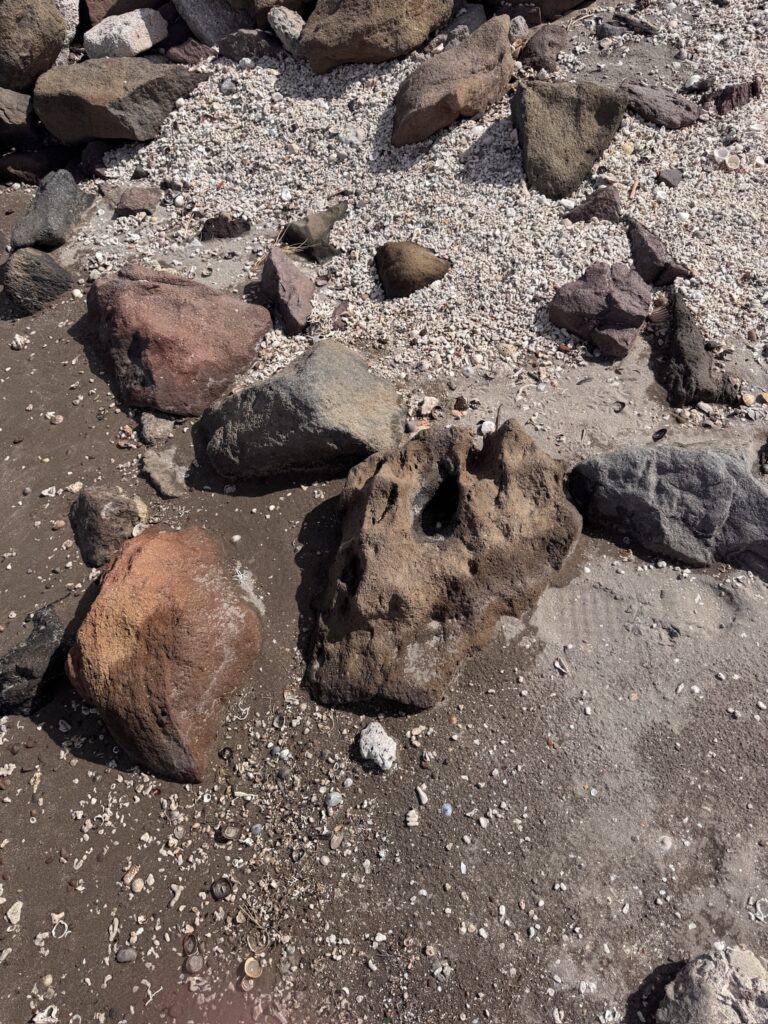
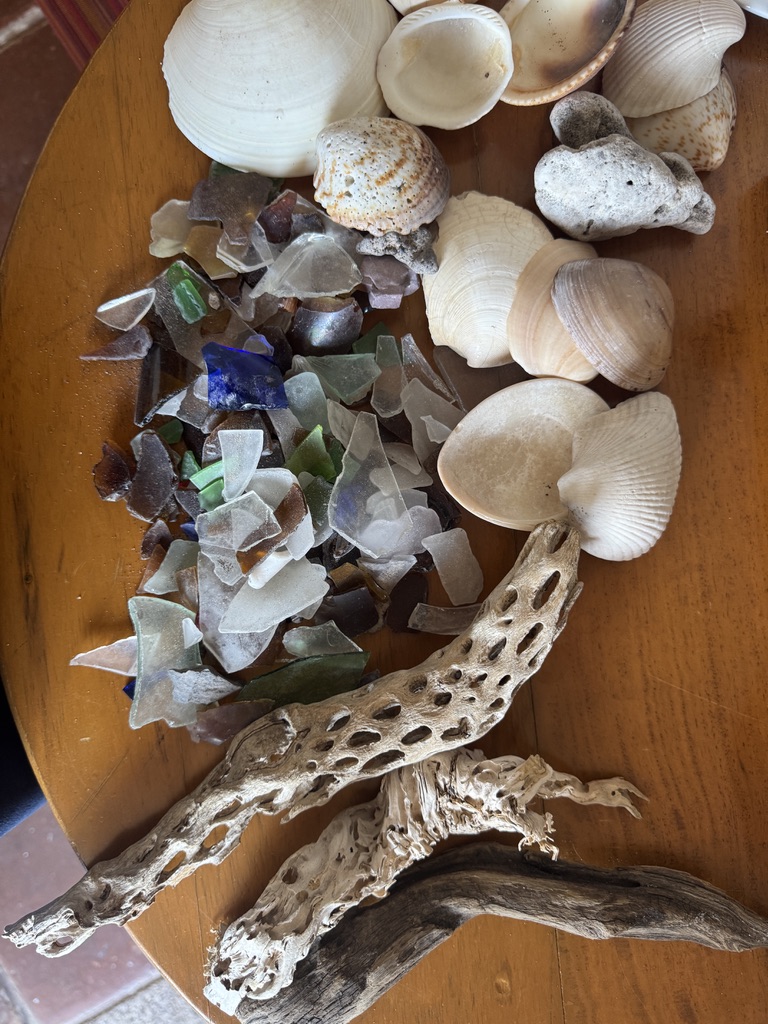
This image captures a gathering of volcanic stones, worn shells, and sunbaked earth: a convergence of textures that have withstood heat, weight, and time. I was drawn to the contrasts: hardness beside fragments, shadows against brightness, the jagged edges of endurance softening into the granular memory of dissolution.

Each rock holds a story that predates language. Each shell, a hushed echo of a body once held. Together, they create a kind of grounded archive: one requiring no explanation, only attention. In the context of my arts-based inquiry into precarity, embodiment, and alonetude, this scene offers a reminder that presence can take many forms, and some resist smoothness and easy containment.

Here, survival is sedimented rather than silent, deliberate rather than dramatic. These exceed the traditional monument. They are records of what withstood and what remains, unpolished, unnamed, enough.

Photo Credit: Amy Tucker, 2026
Title: Altar of the Ordinary
Artist Statement

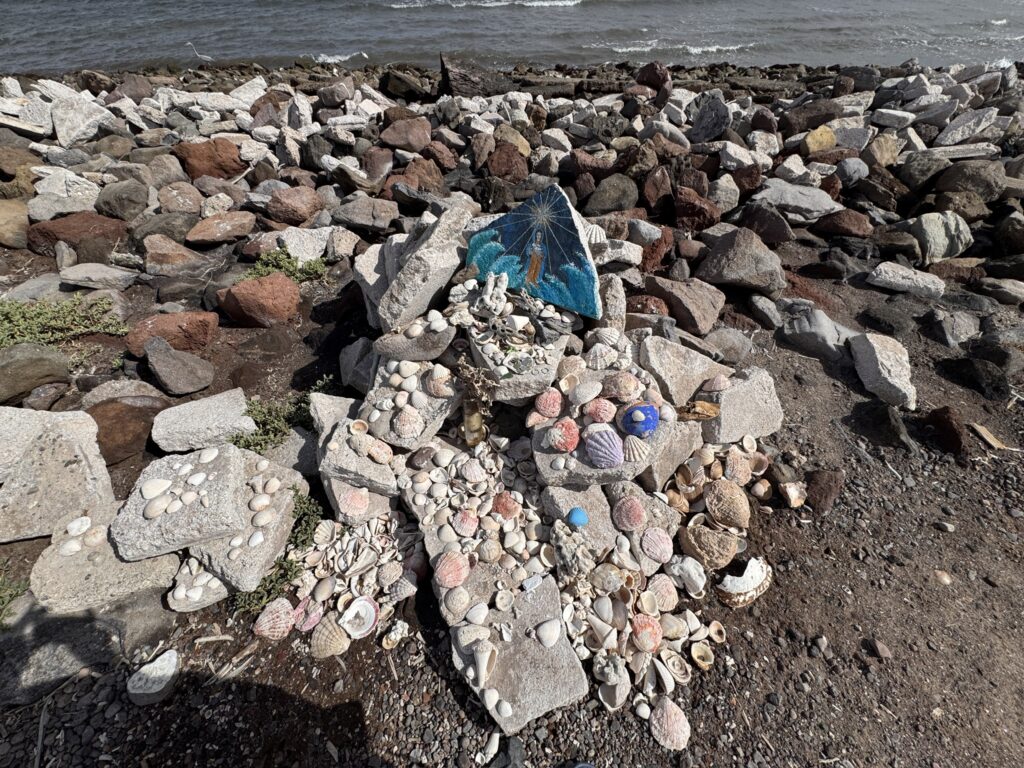
This shoreline shrine, assembled from painted shells, broken tiles, and sea-washed stones, stands as a communal gesture, unofficial, unclaimed, yet unmistakably sacred. I was moved by the way everyday objects, often overlooked, had been offered with quiet intention. A single blue rock. A painted Virgin. A bottle nestled among fragments. Nothing expensive, nothing pristine. And yet, everything chosen.

In the context of my research into alonetude, belonging, and the ethics of presence, this altar reveals the sacredness of the unremarkable. Built without fanfare, maintained without instruction, it is a collective act of noticing. These materials were gathered to witness, beyond any desire to impress. To remember. To offer.

There is no plaque here, no inscription. Only the evidence that someone stopped long enough to care, to arrange, to leave something behind. It reminds me that memory can be handmade. That holiness can be found in what the sea returns.

This exceeds any monument to power. It is a testament to tenderness.

Photo Credit: Amy Tucker, 2026
Title: Throne for No One
Artist Statement

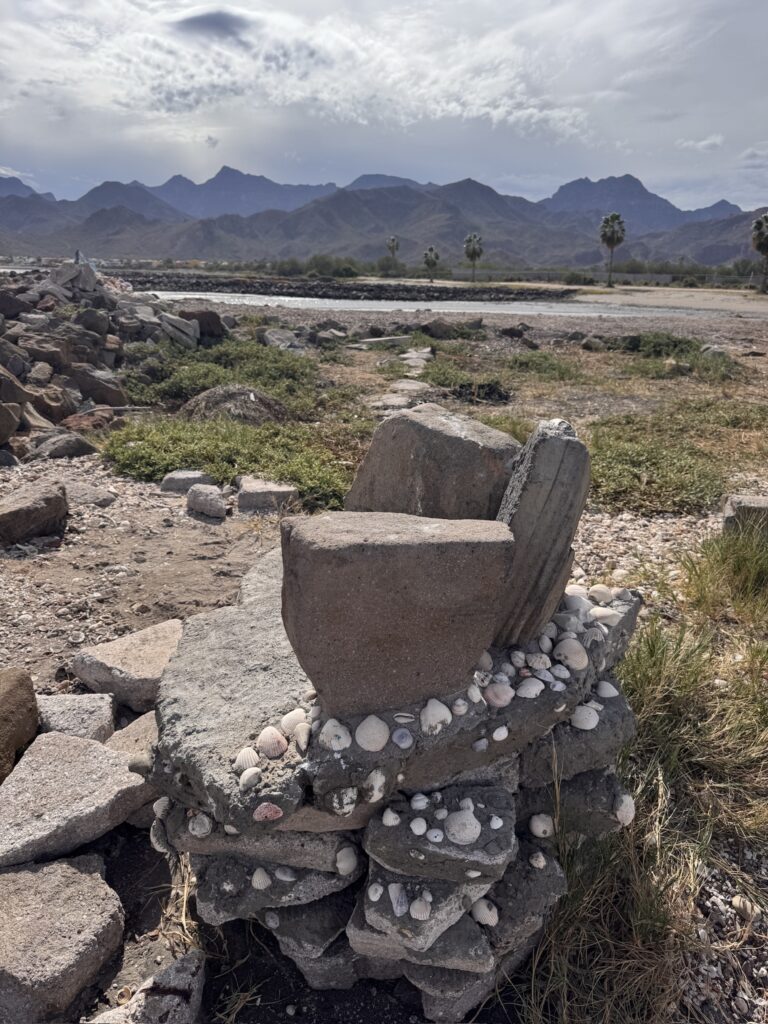
This weathered structure, assembled from slabs of broken concrete and rimmed with small white shells, sits quietly before a vast and mountainous horizon. It evokes a throne, but one with no occupant, no ceremony, no claim. What moved me most was its paradox: it suggests importance, yet resists ownership. It holds form, yet refuses to declare function.

In my research on alonetude, trauma-informed practice, and the ethics of retreat from visibility, this piece became a meditation on authority reimagined. Who gets to take up space? Who builds thrones, and who are they for? This monument seems to ask a different question altogether: What if the seat of power is emptiness? What if it invites rest rather than dominance?

The shells, carefully placed along the cracks, remind us that care can live within ruin. This is beyond a pedestal. Beyond an altar. It is a possibility: a place where no one rules, yet everything is held.

Photo Credit: Amy Tucker, 2026
Title: What Remains May Smile
Artist Statement

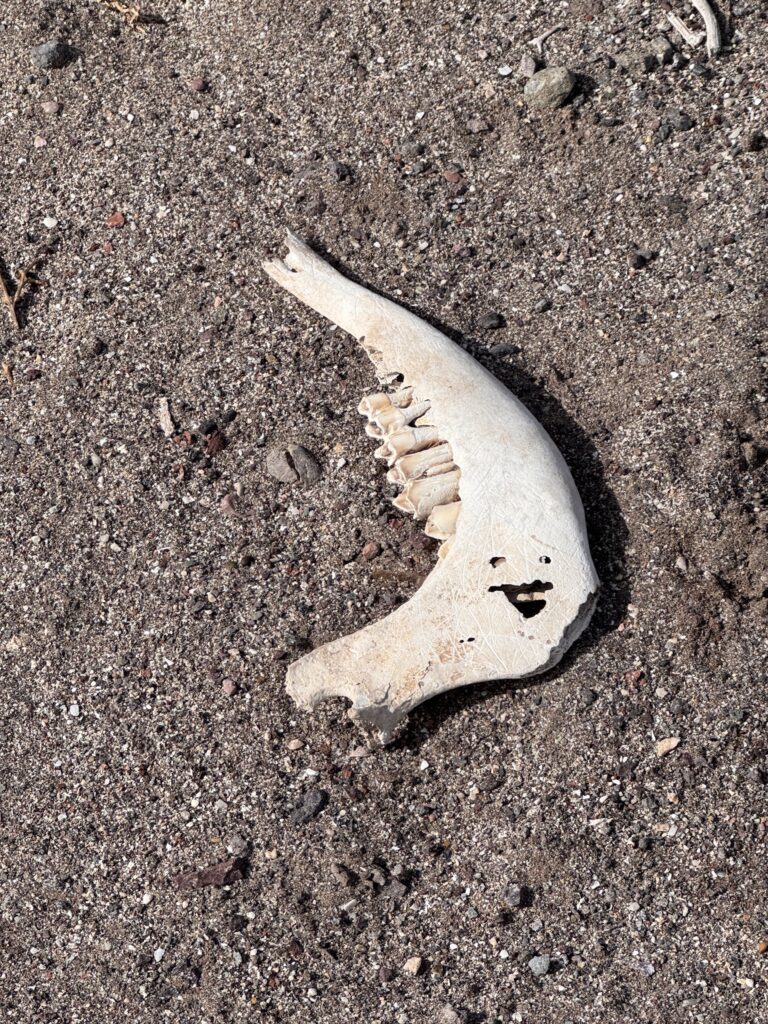
This fragment of bone, likely a lower jaw, worn smooth by time and sand, lay half-buried, yet unmistakably visible. What caught my eye was the accidental pattern of holes, worn into something resembling a smile. Unintentional. Uncanny. A gesture of joy etched into what should speak of loss.

In my arts-based inquiry into alonetude, institutional fatigue, and the body’s quiet ways of knowing, this image became a moment of unsettling wonder. Even in decomposition, there is expression. Even in absence, there is form. It asks us to consider the meanings we impose, and the ones that emerge without effort.

This exceeds the traditional memento mori. It cautions against nothing, glorifies no decay. Instead, it suggests something quieter: that even what breaks down can still hold presence, can still gesture toward feeling, can still, perhaps by accident, smile.

Photo Credit: Amy Tucker, 2026
Title: Fragments That Refuse Disappearance
Artist Statement

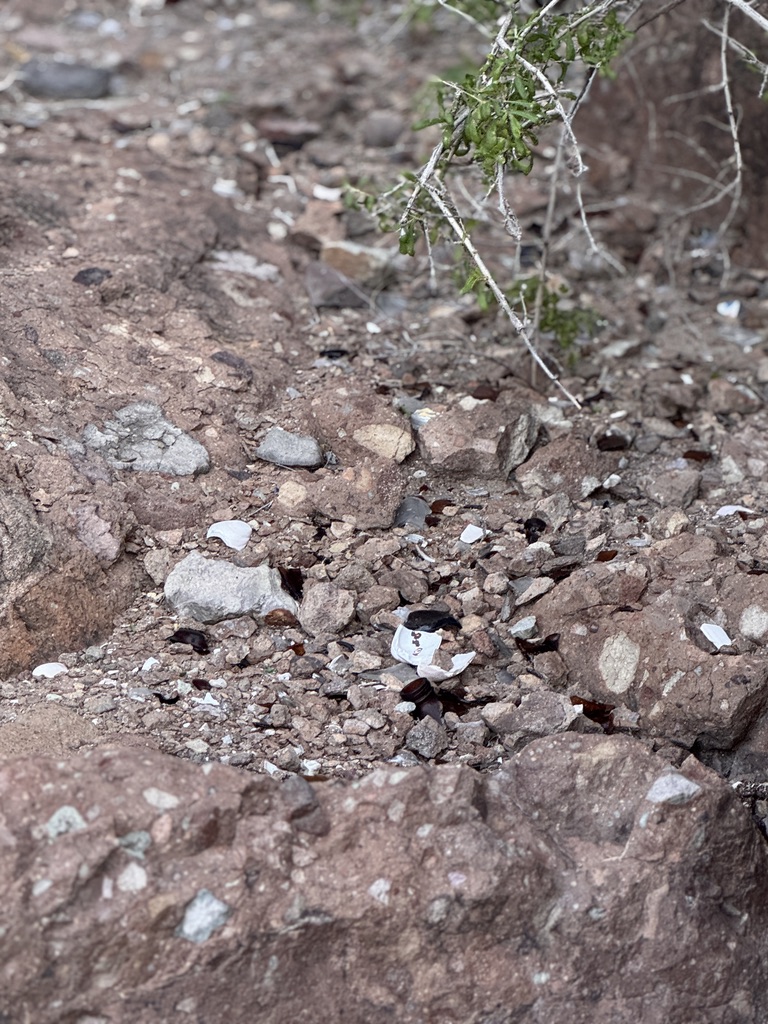
I noticed these fragments while walking a narrow, uneven path where the ground was layered with stone, dust, and small evidence of what had once passed through. At first, the field of view felt monochrome, muted by earth tones and dryness. Then the glass caught the light. Small shards, dark and amber, scattered among the rocks as if the land itself had exhaled them.

I held my ground. I stood where I was and allowed my eyes to adjust, tracing the contrast between what was natural and what had been left behind. The glass belonged to a different time than the geological hillside. It belonged to interruption, to human presence, to a moment of discard now weathering into the terrain.

In my reflective practice, I am often drawn to sites where rupture and endurance coexist. These fragments hold that tension. Once whole, once functional, now broken and partially buried, they remain visible despite time and erosion. The land holds them in a kind of stasis, neither rejecting nor absorbing them fully. They exist in a suspended state, neither fully integrated nor entirely separate.

I photographed the scene as I encountered it, resisting the urge to rearrange or collect. There was meaning in the placement itself. The brokenness read as testimony rather than failure. Evidence that impact leaves trace. Evidence that what shatters persists. It persists, altered but present.

This image sits within my ongoing inquiry into what remains after disruption. Into how landscapes, like bodies, hold memory in fragments. Into how even the smallest shards carry narrative weight when we are willing to pause long enough to see them.

Photo Credit: Amy Tucker, 2026
Epitah
Here lies a fragment, once part of breath, Now shaped by salt, silence, and time. Changed but present, Still telling a story, Still holding a smile.
On Refusing to Perform, Ceasing to Pretend, and the Liberation of Being Unseen
“A movement fueled by the freedom that comes when we stop pretending that everything is okay when it is not. A call that rises up from our bellies when we find the courage to celebrate those intensely joyful moments even though we have convinced ourselves that savoring happiness is inviting disaster. Revolution might sound a little dramatic, but in this world, choosing authenticity and worthiness is an absolute act of resistance.” (Brown, 2010, p. 126)
This morning, I walked along the beach and realised something startling: nobody was looking at me.
Title: Sentinel Shores
Artist Statement

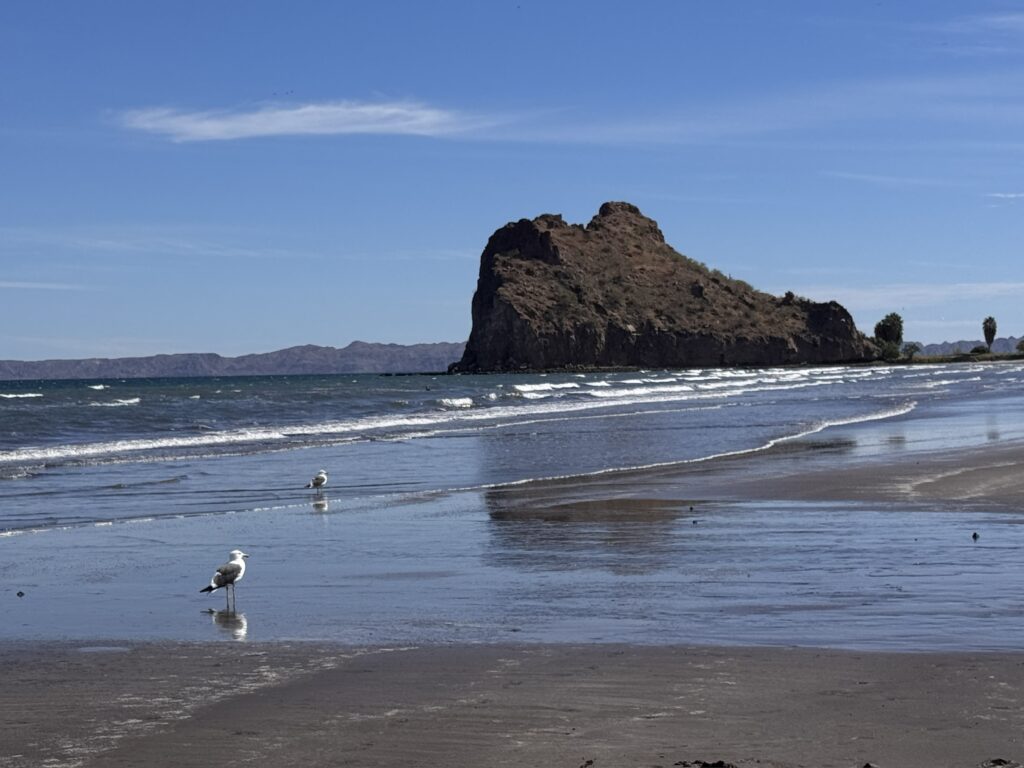
This image captures the rocky island as a physical manifestation of Brené Brown's concept of the gift of imperfection, a marker of witness that asks nothing of the observer. What struck me most powerfully was the realization that the island itself exists without performance, without seeking validation for its presence. In scholarly personal narrative, this moment became a turning point where I could articulate how institutional demands for constant visibility had become so habitual that invisibility felt transgressive. The seabirds, unaware and unconcerned with observation, embody what Brown describes as authentic presence. Their gathering without fanfare mirrors my own growing understanding that worthiness requires no performance.

I find permission to simply be, without performing visibility for an audience that has stepped away. Here, in the pattern of waves and the scatter of seabirds, there is no requirement to announce my existence. The island asks nothing of me but presence.

Photo Credit: Amy Tucker, January 2026
Nobody needed me to be anything. Nobody was waiting for my cheerful greeting, my performed enthusiasm, my carefully calibrated professional warmth. I was simply a woman walking along a seawall in a small Mexican town, unremarkable and unobserved, and the relief that flooded my body felt almost shameful in its intensity.
Qué alivio. What relief.
I learned to smile when I was exhausted. I learned to express gratitude for crumbs. I learned to appear endlessly available, endlessly capable, endlessly willing.
I have spent twenty-five years in precarious academic employment, learning to be visible in very particular ways. Visible enough to be valued. Invisible enough to avoid threat. Always performing the precise calibration of presence that contingent labour demands. I learned to smile when I was exhausted. I learned to express gratitude for crumbs. I learned to appear endlessly available, endlessly capable, endlessly willing. The performance became so habitual that I forgot it was a performance at all.
Title: Tidal Margins
Artist Statement

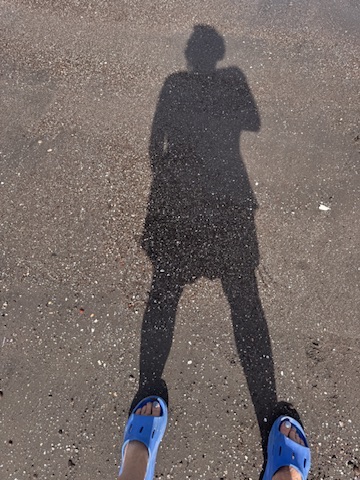
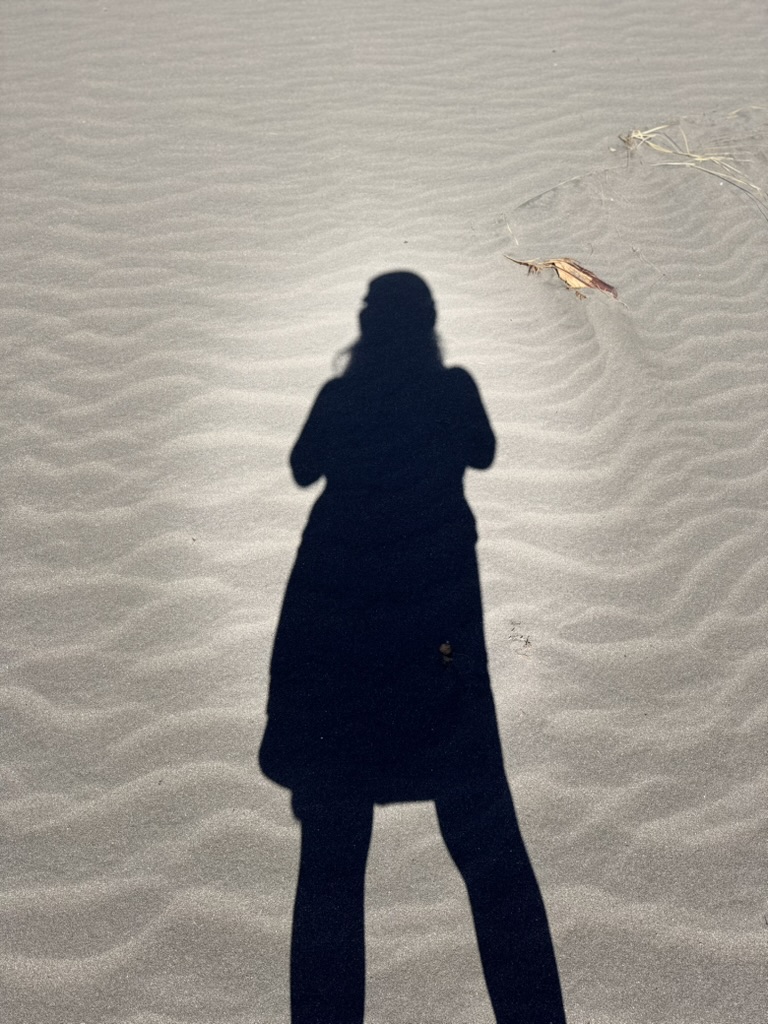
This shadow self-portrait speaks to the liminal space between visibility and hiddenness. I was drawn to this image because it captures me at the precise moment when I became aware of my own shadow, both literal and metaphorical.

This represents a methodological turn toward reflexivity, where the researcher becomes visible through absence. The tidal margins represent what Audre Lorde calls the 'erotic' as a source of power, the knowledge that exists in the spaces beyond performance. Standing at this threshold, I understood that the most profound relief comes from the permission to be unremarkable.

Photo Credit: Amy Tucker, January 2026
I live, I realise, in perpetual audition.
I am thinking this morning about what Brené Brown calls “the freedom that comes when we stop pretending.” I read those words years ago and thought I understood them. I had no real grasp of them then. I understood them intellectually, the way one understands a theorem or a map of a place one has never visited. Understanding them in my body, in the unclenching of my jaw and the descent of my shoulders from their permanent station near my ears, this is something else entirely.
Here, on this shoreline where nobody knows my institutional history, where nobody requires my competence or my compliance, I am discovering what it feels like to simply be present without performing presence. The difference registers first in my body. I notice my breath moving freely, unguarded by the vigilance that institutional survival demanded. I notice my face doing whatever it wants, unmanaged for external consumption.
I am learning what my face actually looks like when it has stopped arranging itself for others.
Title: Unnoticed Gathering
Artist Statement

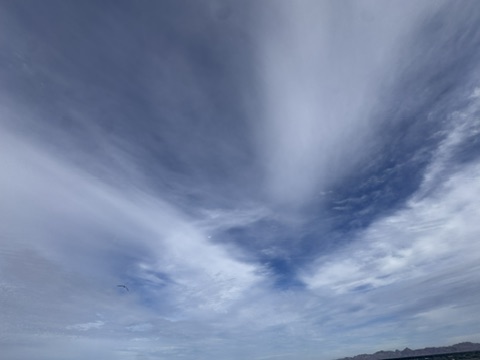
The sky in this moment holds the experience of being present without audience. What moved me about capturing this image was the simultaneity of presence and invisibility the birds were there, I was there, and nothing required us to announce ourselves. Returning to Brown's work on the vulnerability paradox, I realised that my assumption that visibility equals value was false.

This moment articulates the ethical turn toward witnessing one's own life without need for external validation. The gathering without performance became a model for how institutional structures might be reimagined to honor presence itself rather than the appearance of productivity.

Photo Credit: Amy Tucker, January 2026
The Frontstage Life
I am learning what my face actually looks like when it has stopped arranging itself for others.
Erving Goffman, writing in 1959, gave me language I had been missing. In The Presentation of Self in Everyday Life, he describes social existence as a theatrical performance. We maintain a “frontstage” self designed for public consumption while preserving a “backstage” self hidden from view. The frontstage involves what Goffman calls “impression management”: the careful curation of behaviours, expressions, and appearances designed to elicit desired responses from our audience.
Reading Goffman here in Loreto, I understand something I could only grasp now, at distance from institutional life. For workers in precarious positions, and I was precarious for twenty-five years, always contingent, always renewable, always provisional, there may be no backstage at all. The performance must be maintained at all times, because the audience is always watching, always evaluating, always deciding whether one deserves continued employment.
I live, I realise, in perpetual audition.
Title: The Unburdened Shore
Artist Statement

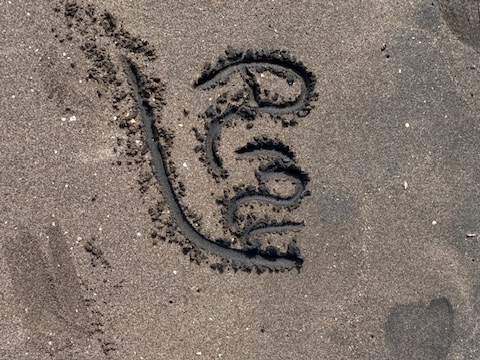
This direct photograph of my experience walking an unobserved shoreline struck me as perhaps the most honest moment of the project. I wrote my name in the sand, for me.

Nobody needed my performed joy, my calibrated warmth, my endless availability. This represents what Sara Ahmed calls the 'willfulness' of creating space for one's own experience outside institutional frameworks.

What stood out was the bodily recognition, the unclenching of my jaw, the descent of my shoulders from their permanent station near my ears. This embodies what Brown identifies as the revolutionary act of choosing authenticity over performed compliance, a concept that becomes material and embodied in this single moment of unobserved presence.

Photo Credit: Amy Tucker, January 2026
I am practising invisibility as medicine.
Arlie Russell Hochschild extended this analysis in ways that name precisely what I experienced. In The Managed Heart, she introduced the concept of “emotional labour”: the work of managing one’s feelings to create a publicly observable display that meets occupational requirements.
I think about the thousands of times I smiled when I felt rage. The meetings where I projected calm while my stomach churned with anxiety. The performance reviews where I expressed gratitude for feedback that felt like erasure. Hochschild names this labour “invisible” because employers and institutions see nothing of it, compensate nothing, and acknowledge nothing of its occurrence. Yet it extracts a profound toll.
The toll is what I am healing from now, here, where nobody requires my managed heart.
Title: Dispersed Presence
Artist Statement

In this image, the beach holds multiple presences, myself, the rocks, the sand patterns - none requiring central observation. What captured my attention was the recognition that existence requires no concentration in the gaze of others.

This moment became crucial for articulating how institutions demand centrality: the central thesis, the central argument, the central self. Yet this beach scene demonstrates that meaning-making occurs in dispersal, in the scatter of experience. This connects directly to Brown's assertion that imperfection is a fuller expression of humanity rather than a flaw - distributed, complex, and valid precisely in its refusal of singular visibility.

Photo Credit: Amy Tucker, January 2026
Table 1
Key Theoretical Concepts: The Architecture of Performed Selfhood
Definition and Application to Alonetude
Definition and Application to Alonetude Goffman’s (1959) theory that social interaction operates like a theatrical performance. Individuals manage impressions on the “frontstage” while reserving authentic expression for “backstage” spaces. In alonetude, the 30-day retreat creates an extended backstage where the performance can finally cease.
Dramaturgical Framework
Goffman’s (1959) theory that social interaction operates like theatrical performance. Individuals manage impressions on the “frontstage” while reserving authentic expression for “backstage” spaces. In alonetude, the 30-day retreat creates an extended backstage where the performance can finally cease.
Emotional Labour
Hochschild’s (1983) concept describes the work of managing one’s emotions to fulfil occupational requirements. For precarious academic workers, this includes performing gratitude, suppressing exhaustion, and projecting perpetual availability. Alonetude involves the cessation of this labour.
The Precariat
Standing’s (2011) term for the growing class of workers characterised by chronic insecurity, lack of occupational identity, and truncated rights. The precariat lives in permanent audition, unable to relax vigilance because employment is always provisional.
Auto-Exploitation
Standing’s (2011) term for the growing class of workers characterised by chronic insecurity, lack of occupational identity, and truncated rights. The precariat lives in permanent audition, unable to relax vigilance because employment is always provisional.
Note. These theoretical concepts provide language for understanding how institutional demands shape embodied experience. Each framework illuminates a different dimension of what alonetude is healing: the exhaustion of performance, the depletion of emotional labour, the hypervigilance of precarity, and the internalization of extractive demands.
The Mask Becomes the Face
La máscara se convierte en la cara. The mask becomes the face.
Byung-Chul Han (2010/2015) argues in The Burnout Society that contemporary exhaustion differs from earlier forms of exploitation because the master has been internalised. We no longer need external overseers to drive us toward breakdown. We drive ourselves.
I recognise myself in these words with a clarity that feels like grief. For how many years did I mistake self-exploitation for dedication? How many evenings did I work past exhaustion, believing this was what commitment looked like? How deeply had I internalised the demand for constant availability until I could no longer distinguish institutional requirement from personal identity?
La máscara se convierte en la cara. The mask becomes the face.
What I am learning here in Loreto, in this practice of alonetude, is that the mask can be removed. The face beneath it still exists. It has been waiting, all these years, for permission to emerge.
Title: Weathered Acceptance
Artist Statement

 This image resonated because it offered a visual metaphor for what Brené Brown terms 'normal wear and tear' the evidence of a life fully lived. This becomes an argument for the validity of weathering, of showing marks of growth rather than performing unmarked perfection. What struck me most powerfully was understanding that my own weathering the visible evidence of institutional survival, of negotiating precarity requires no hiding. The rocks offer no apology for their transformation; they simply exist in evidence of it.

Photo Credit: Amy Tucker, January 2026
The Practice of Being Unseen
I am practising invisibility as medicine.
This is what it looks like: I walk through town without performing approachability. I sit at cafés without arranging my face into pleasant neutrality. I allow my body to hold whatever expression it naturally holds without editing for external consumption. Sometimes that expression is weariness. Sometimes grief. Sometimes, a blankness that might read as unfriendly to those trained to expect women to project warmth at all times.
I notice, with something like wonder, how much energy this releases. Energy that was going toward performance is now available for other purposes. For feeling. For noticing. For simply being present in this body, on this shoreline, under this particular quality of winter light.
Title: Peripheral Vision
Artist Statement

 This photograph captures the moment when I realised that being present required no centrality. In the periphery, I found a kind of peace that visibility could never offer. Connecting this to scholarly personal narrative, the margins have long been the location of intellectual and artistic work by those excluded from centres of power. What moved me about this image was the recognition that my position on the periphery could become a methodological stance, a choice rather than a limitation imposed from without, to see differently. Brown's work on vulnerability intersects here with marginality theory: the margin transforms from a place of diminishment into a site of distinct epistemological power.

Photo Credit: Amy Tucker, January 202
The relief that flooded my body felt almost shameful in its intensity.
Stephen Porges’s polyvagal theory helps me understand what is happening in my nervous system. Porges describes three states of autonomic function: ventral vagal (social engagement and felt safety), sympathetic (mobilization for fight-or-flight), and dorsal vagal (immobilization and shutdown). The ventral vagal state, the state of genuine ease and relaxed presence, requires what Porges calls “neuroception of safety.” The nervous system must detect, below conscious awareness, that the environment is safe enough to lower defences.
I understand now why rest felt dangerous for so many years. My nervous system was correctly detecting that the institutional environment was unsafe. Precarious employment is, in fact, a threat. The vigilance was appropriate to the conditions. What I am experiencing in Loreto, removed from that context, is the gradual return of ventral vagal capacity. My nervous system is slowly registering that the threat has passed.
The jaw unclenches. The shoulders descend. The breath deepens. The face softens into whatever expression emerges naturally rather than the expression that survival required.
This is what healing looks like. It looks quiet. It looks unremarkable. It looks like a woman sitting at a café without smiling.
Title: The Quiet Horizon
Artist Statement

Looking toward the horizon in this image, I see no audience waiting for arrival, no applause from the sky or judgment from the water. This moment struck me as crystallising Brown's central insight about the performance paradox: the freedom that comes when we stop performing.The horizon represents the necessary distance from institutional frameworks that demand constant self-presentation. What resonated most was the embodied sense of the sky's indifference, genuinely uninterested in my performed competence. This indifference, paradoxically, becomes liberatory, allowing for existence without the burden of constant visibility.


Photo Credit: Amy Tucker, January 2026
Visual Witness
Image: A Face Released from Performance
Photo Credit: Amy Tucker, 2026
Title: Shallow Waters
Artist Statement

Where water is shallow and clear, everything is visible to those who look closely, yet some things go unlooked at. This distinction became crucial to my understanding. This image articulates the difference between transparency and surveillance between voluntary self-disclosure and mandated visibility. What struck me most powerfully was the recognition that Brené Brown's call to 'show up and be seen' has been weaponised in institutional contexts, transformed from an invitation into a demand. This shallow water photograph reclaims the right to exist in visibility without being watched, to be knowable without being known.

Photo Credit: Amy Tucker, January 2026
The Wisdom of Withdrawal
Audre Lorde (1988) argues that caring for oneself, especially in environments that systematically exploit and deplete individuals, is, beyond selfishness, a vital form of self-preservation that holds political significance. Building on this perspective, Hersey (2022) positions rest as an intentional disruption of extractive systems rooted in capitalism and white supremacy. She emphasises that in a world that treats people as instruments of productivity, the decision to rest is a radical rejection of dehumanization.
Through this lens, my retreat from visibility in Loreto becomes both a political and a personal gesture. By stepping back from performative roles and refusing the expectation of constant emotional availability, I challenge the norms that prioritise compliance and positivity over authenticity. This withdrawal is a reassertion of my interior life, beyond avoidance over institutional demands. In reclaiming the right to be unseen, I recover a space that precarious labour conditions had taken away.
In this way, I am beginning to understand alonetude as resistance and self-reclamation, a deliberate, grounded return to the self.
This is how I am coming to understand alonetude, as resistance, as reclamation, as the slow and quiet work of returning to myself.
Title: Windswept Freedom
Artist Statement

The wind in this moment disturbs and reveals without judgment. What moved me about capturing this image was the recognition that forces beyond my control could touch and change me without requiring my consent or performance. Returning to Brown's concept of vulnerability, I understood that true vulnerability might mean allowing oneself to be moved, revealed, and transformed without controlling how that transformation is perceived. In scholarly personal narrative, this becomes the ethical stance of allowing one's own becoming to be visible without explanatory framing. The wind's indifference models a kind of presence that can be authentic precisely because it is unmonitored.

Photo Credit: Amy Tucker, January 2026
Table 2
Contrasting Performance and Presence: An Embodied Mapping
Outward, managing others’ perceptions
Institutional Performance
Alonetude Presence
Visibility
Strategic; managed for evaluation
Released; being seen without being watched
Emotional State
Managed; performing prescribed feelings
Authentic; allowing whatever emerges
Nervous System
Sympathetic activation; hypervigilance
Ventral vagal engagement; felt safety
Face
Arranged; the mask maintained
Released; the face beneath the mask
Energy Direction
Outward; managing others’ perceptions
Inward; attending to actual experience
Outward, managing others’ perceptions
Alienated; self as instrument
Integrated; self as presence
Note. This table maps the embodied shifts I am experiencing between institutional performance demands and the presence cultivated through alonetude. The contrast illuminates how withdrawal from performance constitutes healing rather than avoidance. Each dimension represents territory being reclaimed.
~
What Becomes Possible
Title: Solitary Witness
Artist Statement

Walking alone along the shore, I discovered that I could be complete in my own witnessing. This image resonated because it represented the culmination of my understanding that validation can arise entirely from within.

This solitary stance connects to what Gloria Anzaldúa calls the 'Coatlicue state' - the necessary period of withdrawal and self-confrontation. What struck me was that Brown's concept of wholehearted living requires no audience; it requires only one's own presence to oneself. This photograph documents the moment when I understood that the simple act of witnessing my own life, exactly as it was unfolding, constituted sufficient permission.

Photo Credit: Amy Tucker, January 2026
Brown writes that authenticity is “the daily practice of letting go of who we think we are supposed to be and embracing who we are” (2010, p. 50). I am beginning to understand what this might actually feel like. It feels quiet. It feels unremarkable. It feels like walking along a seawall with whatever face my face wants to make, without editing, without management, without performance.
The invisibility I am practising here is a temporary gift. I will return to contexts that require some degree of impression management; that is the nature of social life. What I am learning, however, is the difference between the performances that genuine connection requires and the performances that exploitative systems demand. There is a difference between adjusting one’s presence for mutual understanding and warping one’s entire being for institutional survival.
Estoy aprendiendo la diferencia. I am learning the difference.
The sea cares nothing about my smile. The pelicans require no enthusiasm from me. The afternoon light falls on my shoulders, whether I am projecting competence or simply existing in my actual state of being. Here, in this chosen solitude, in this practice of alonetude, I am remembering what my face looks like when it is my own.
That remembering is itself evidence. Evidence that the body can recover from extraction. Evidence that the self remains beneath the mask. Evidence that withdrawal can be protective, that stopping can be ethical, and that invisibility can be medicine.
I will rest here a while longer, unseen.
The quiet is enough.
Title: The Relief of Being Unseen
Artist Statement

 As I turned from the beach, I carried the profound relief of having been unwatched and unneeded. What moved me about this concluding image was the bodily recognition of release the relief was deeply embodied, beyond the merely intellectual. This moment articulates what it means to step outside the panopticon of institutional visibility. Connecting this to Brown's work on shame and worthiness, I understood that my fear of invisibility had been shaped by systems that equate visibility with value. This image documents the revolutionary recognition that invisibility born from freedom differs entirely from invisibility born from erasure. The permission I found was beyond being seen: the profound gift of being allowed to simply exist.

Photo Credit: Amy Tucker, January 2026
References
Brown, B. (2010). The gifts of imperfection: Let go of who you think you are supposed to be and embrace who you are. Hazelden Publishing.
Goffman, E. (1959). The presentation of self in everyday life. Anchor Books.
Han, B.-C. (2015). The burnout society (E. Butler, Trans.). Stanford University Press. (Original work published 2010)
Hersey, T. (2022). Rest is resistance: A manifesto. Little, Brown Spark.
Hochschild, A. R. (1983). The managed heart: Commercialization of human feeling. University of California Press.
Lorde, A. (1988). A burst of light: Essays. Firebrand Books.
Nash, R. J. (2004). Liberating scholarly writing: The power of personal narrative. Teachers College Press.
Pink, S. (2013). Doing visual ethnography (3rd ed.). SAGE.
Porges, S. W. (2011). The polyvagal theory: Neurophysiological foundations of emotions, attachment, communication, and self-regulation. W. W. Norton.
Standing, G. (2011). The precariat: The new dangerous class. Bloomsbury Academic.
Translation note. Spanish language passages were generated using Google Translate and subsequently reviewed and refined by the author. Any remaining infelicities reflect the limits of machine translation rather than intent.
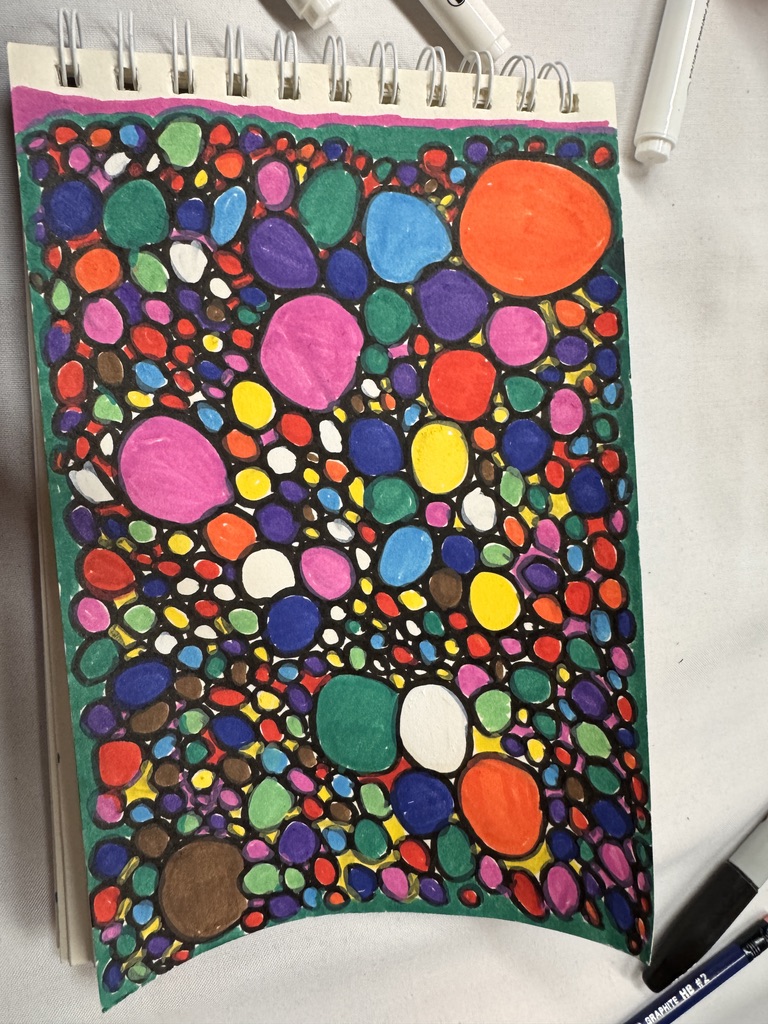
This piece emerged through repetition rather than planning. I began with a single shape, then another, and another, allowing colour and form to accumulate without imposing hierarchy. What developed was a dense field of rounded figures, each contained, each distinct, yet held within a shared space. The work unfolded beyond linear intention, through a quiet attentiveness to what wanted to appear.
In my reflective practice, circular and stone-like forms often surface when I am thinking about belonging, plurality, and the coexistence of emotional states. No single shape dominates the composition. Larger forms draw the eye momentarily, but they are held in balance by the many smaller presences surrounding them. This distribution mirrors how experience lives within me. No one memory or feeling stands alone. Each is shaped by proximity to others.
Colour operates here as emotional register. Bright pinks, deep blues, citrus orange, moss greens, and earth tones sit beside one another without blending. They remain intact, suggesting that complexity requires no resolution. Contradictory feelings can exist simultaneously without cancelling one another out. The dark outlines serve as holding structures, containers rather than barriers, allowing each fragment to remain visible while contributing to the whole.
What interests me most is the tension between density and spaciousness. Although the surface appears crowded, there is rhythm in the placement. Pathways of dark ground weave between the forms, creating movement and breath within the field. The composition holds fullness without collapse.
I understand this drawing as an exploration of internal multiplicity. A recognition that identity is plural rather than singular, gathered, layered, and continuously reassembled. Each form holds its own colour, its own boundary, its own story. Together, they create a living mosaic of presence.
Photo Credit: Amy Tucker, 2026
The Flash of Perception
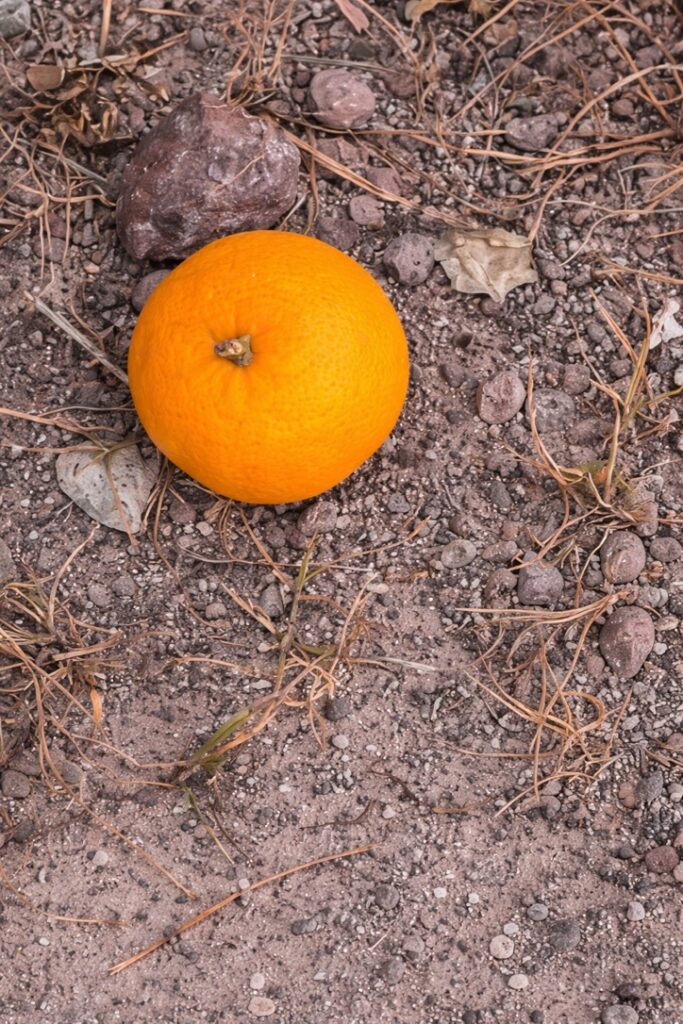
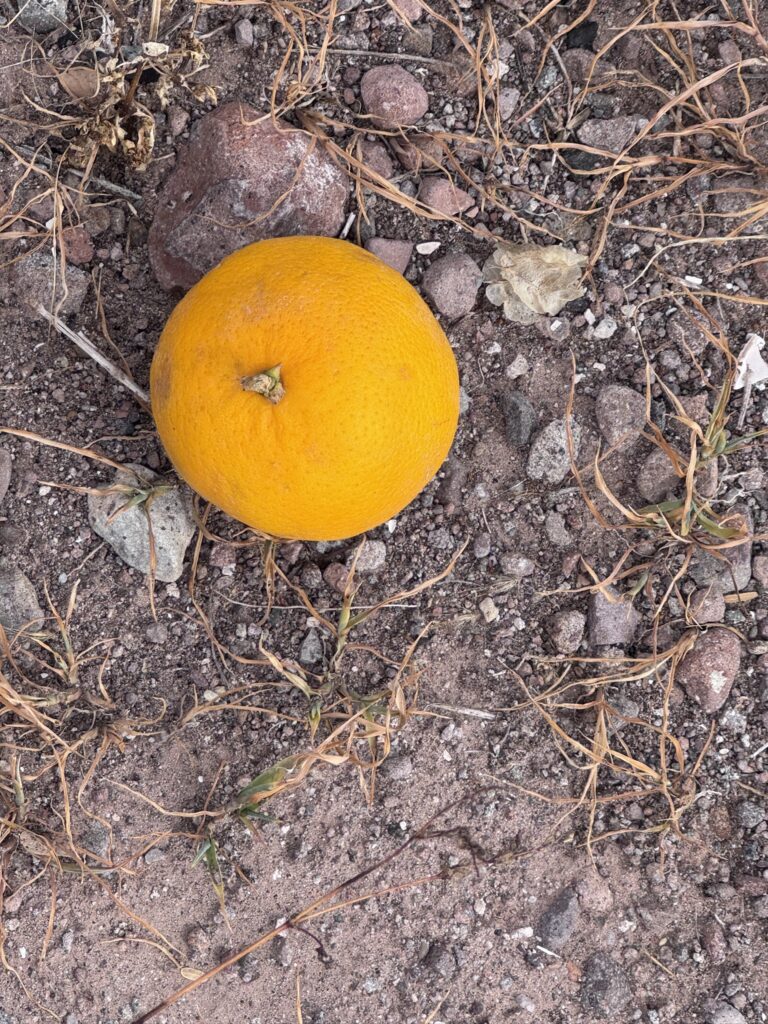
I almost walked past it. An orange, vivid and whole, resting on the dry earth as if it had been placed there by intention rather than chance. The ground around it was grey and brown, scattered with stones, dried grass, and brittle leaves. The orange held its colour like a small act of defiance. It did nothing to blend in. And yet here it was, this bright sphere of sweetness against a landscape of dust and stillness.
The orange held its colour like a small act of defiance.
This is the moment contemplative photographers call the flash of perception: that instant when something in the visual field stops you, interrupts the continuous scroll of seeing, and asks to be noticed. Karr and Wood (2011) describe this experience as connecting with perception before concept takes over, before the mind labels and dismisses. The orange was simply colour and form before it became orange, before it became a question of how it arrived or what it might mean.
This is the moment contemplative photographers call the flash of perception.
Me detuvo en seco. It stopped me cold. And in that stopping, I recognised something I had been missing in my practice of alonetude: the permission to see in colour.
I recognised something I had been missing in my practice of alonetude: the permission to see in colour.
Title: Sweetness in Dust
Artist Statement

The orange arrived without explanation. Perhaps it fell from a bag. Perhaps it rolled from a table and was never retrieved. Perhaps someone left it as an offering, though to whom or what I cannot say. The fruit showed no sign of decay. Its skin was smooth, its form intact. Its slow return to the earth had yet to begin. For now, it simply rested, bright and round, waiting for what would come next. This is the only photograph in my collection that I have kept in colour. The choice was deliberate. In a body of work committed to black and white, to reduction and restraint, this image demanded something different. The orange refused to be muted. Its brightness was the point. To convert it to greyscale would have been to erase what made the encounter remarkable: the unexpected presence of sweetness in a landscape of dust and stillness. Amy Tucker, January 2026
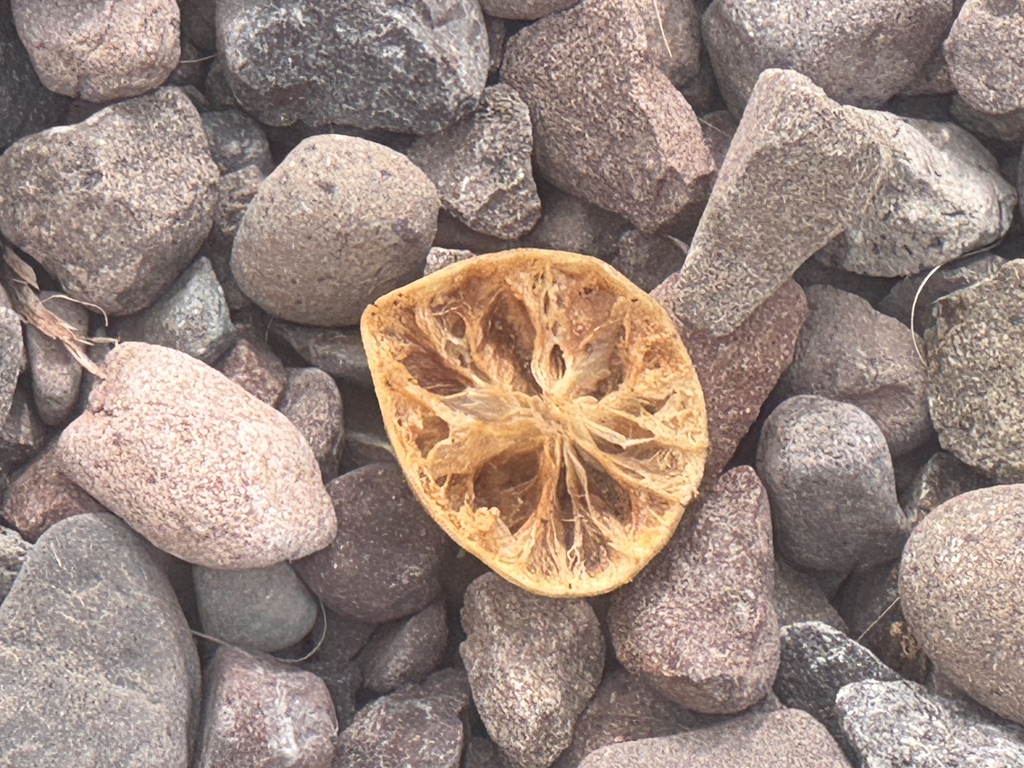
I moved closer. This is what contemplative practice asks of us: to stay with what stopped us, to look longer, to resist the urge to glance and move on. The closer I came, the more the orange revealed. The texture of its skin. The small star where the stem once attached. The way light fell across its curved surface. In my years of academic work, I learned to keep distance, to analyse from above, to maintain the scholarly remove that institutions reward. This practice of moving closer feels like unlearning. The orange cares nothing about my credentials or my theoretical frameworks. It simply exists, vivid against volcanic pebbles, asking nothing of me except presence. Acercarme es un acto de confianza. Moving closer is an act of trust.
In my years of academic work, I learned to keep distance. This practice of moving closer feels like unlearning.
Defining Key Concepts
The decision to notice the orange was beyond me. My body responded before my mind caught up.
Visual Salience
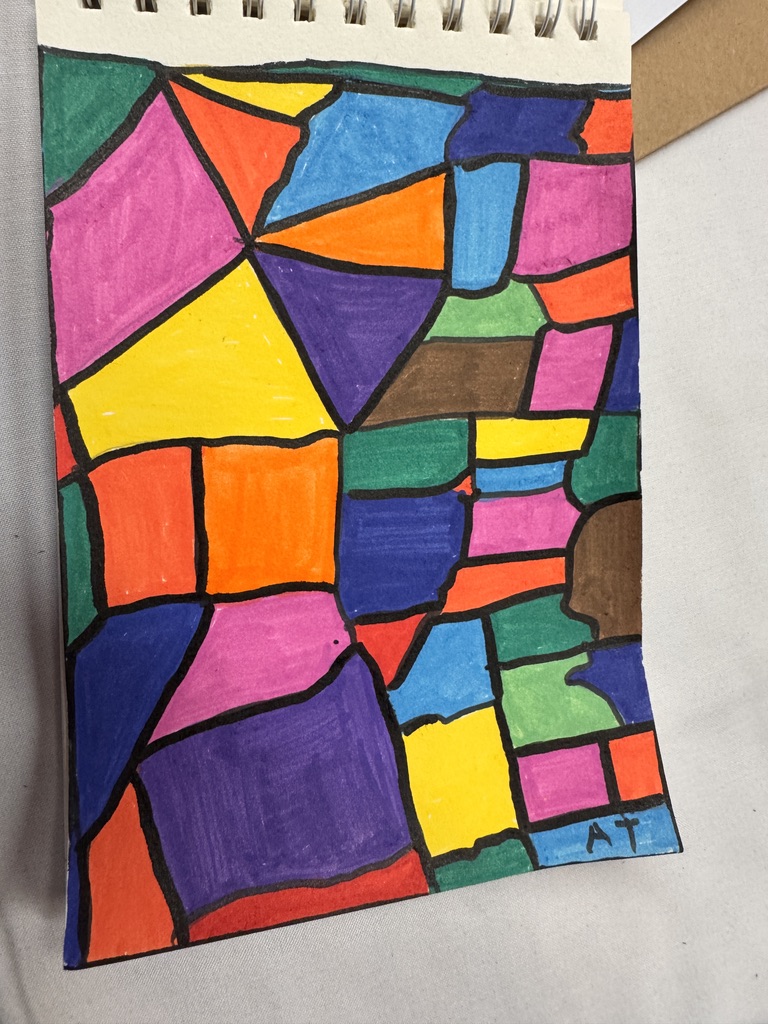
Title: Fractures That Hold Light
Artist Statement

This drawing began as an exploration of fragmentation. I was thinking about how experience rarely arrives in seamless form. Instead, it presents itself in angles, interruptions, and shifting planes. I allowed the lines to move first, creating divisions that felt organic rather than measured. Only afterward did colour enter, filling the spaces that had already claimed their boundaries.

What emerged was a stained-glass effect, though untied to any sacred architecture. The sacredness here feels internal. Each segment holds its own intensity. Bright yellows sit beside deep violets. Saturated pinks meet earth browns and dense blues. The colours resist blending. They remain intact, suggesting that contrast is coexistence rather than conflict.

In my reflective practice, fractured compositions often mirror psychological landscapes. Identity, memory, and healing rarely unfold as continuous surfaces. They exist in pieces that must learn to sit beside one another. Some segments feel expansive and open. Others feel enclosed, heavier, or more opaque. Yet all are necessary to the integrity of the whole.

The black lines function as both separation and structure. They divide, but they also hold. Without them, the colours would dissolve into each other. With them, each fragment is given legitimacy, a defined presence. I understand these lines as boundaries that have formed through experience. Protective, clarifying, and sometimes shaped by rupture rather than design.

There is no single focal point. The eye moves continuously, tracing edges, following colour pathways, pausing where intensity gathers. This movement reflects the ongoing nature of integration. Healing is a sustained process of learning how the pieces live together.

I see this work as a meditation on wholeness assembled through fracture. A recognition that brokenness rearranges beauty rather than eliminating it. Light enters differently through divided spaces. And sometimes, it is precisely the fractures that allow illumination to pass through at all.

Photo Credit: Amy Tucker, 2026
Visual salience refers to the quality that makes certain elements in a visual field stand out from their surroundings and automatically capture attention. Neuroscience research shows that the human visual system has evolved to detect stimuli that differ markedly from their context, particularly in colour, contrast, and luminance (Treue, 2003). When we encounter a bright orange against a field of browns and greys, our nervous system responds before conscious thought engages. This bottom-up attention capture served evolutionary purposes, helping our ancestors detect ripe fruit, potential predators, and social signals.
The decision to notice the orange was beyond me. My body responded before my mind caught up.
What fascinates me about this phenomenon is how it operates beneath the surface of awareness. The decision to notice the orange was beyond me. My body responded before my mind caught up. This is what Porges (2011) describes in Polyvagal Theory as neuroception: the nervous system’s capacity to evaluate environmental cues without conscious involvement. In the context of healing from occupational trauma, relearning to trust these automatic responses feels like reclaiming territory that exhaustion had claimed.
Contemplative Photography
Contemplative photography is a practice that uses the camera as a tool for mindful seeing rather than technical image-making. Originating in Buddhist meditation traditions and systematically developed by Chögyam Trungpa Rinpoche’s students, this approach emphasises presence over perfection, perception over concept. Karr and Wood (2011) explain that the practice involves three stages: recognising the flash of perception, stabilising connection through continued looking, and forming an image that captures what was seen rather than what the photographer wanted to see.
The root meaning of the word contemplate is connected with careful observation. It means to be present with something in an open space. When we contemplate a subject, we open to it rather than treating it as something to be analysed or understood. (Karr & Wood, 2011, p. 5)
This definition resonates deeply with the practice of alonetude. To be present with something in an open space is precisely what this retreat asks of me: to remain in the liminal territory between loneliness and solitude, to transform imposed isolation into chosen presence through attention itself.
Playing with Bright Colours: A Departure
Throughout this retreat, I have committed to black-and-white photography, to reduction and restraint, to the greyscale palette that strips scenes down to their essential forms. This choice emerged from the desire to document exhaustion, aftermath, and the quiet work of healing without the distraction of colour’s emotional pull. Black-and-white photography creates distance, allows objects to become symbols, and privileges texture and contrast over the seduction of hue.
And yet.
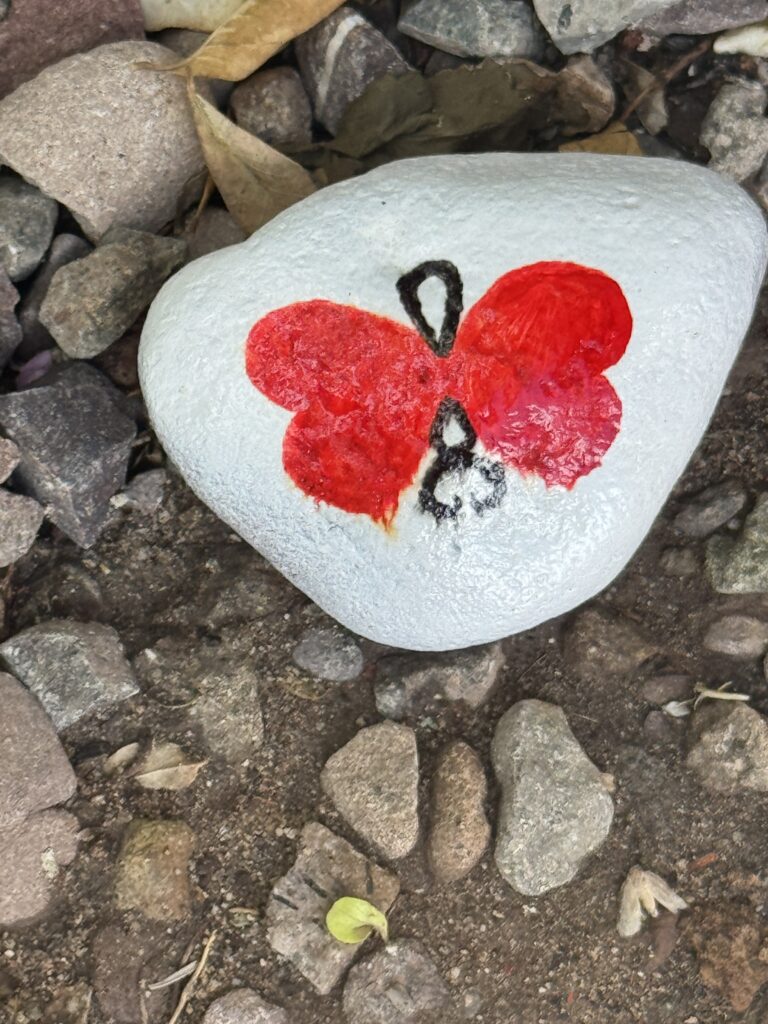
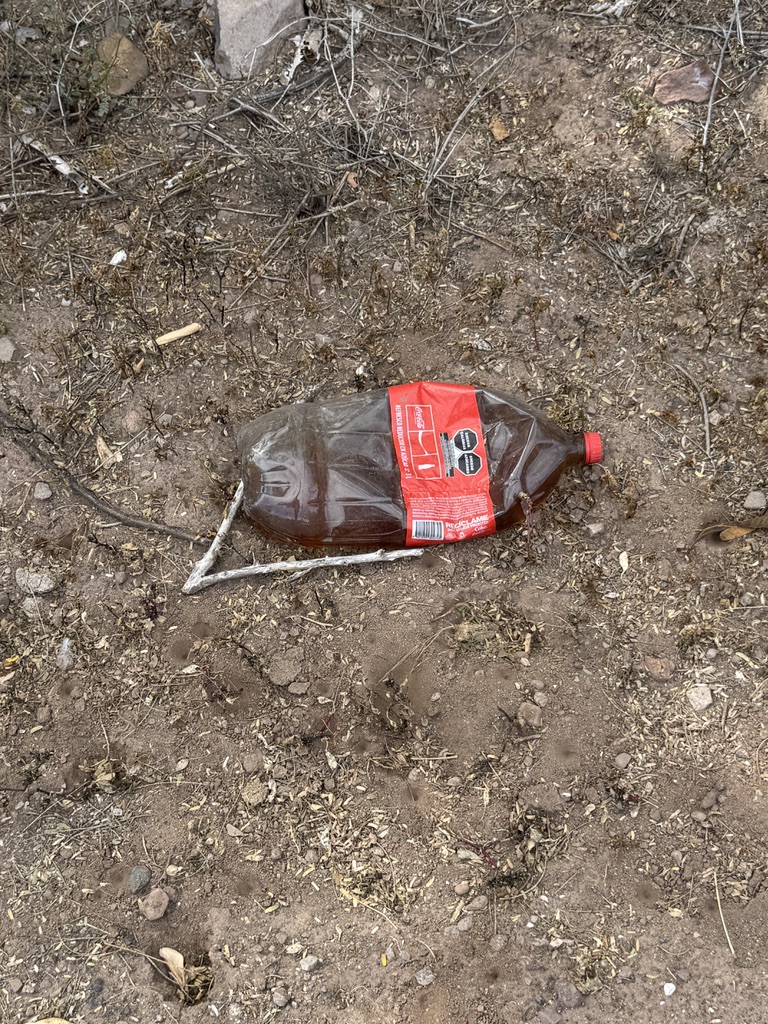
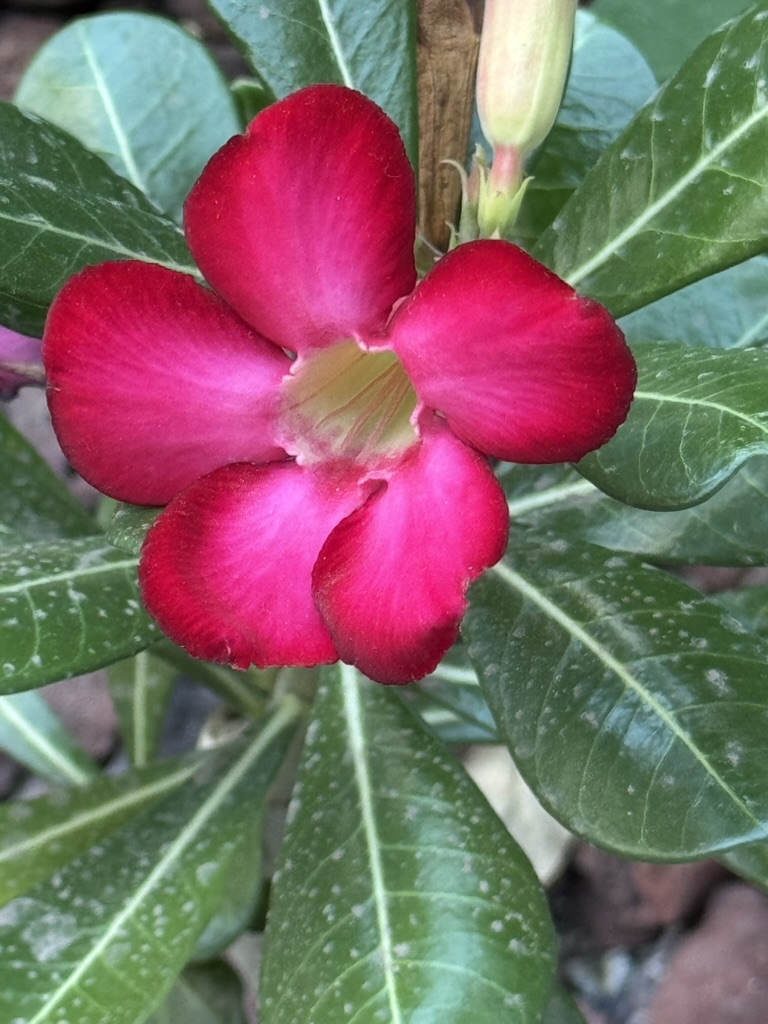
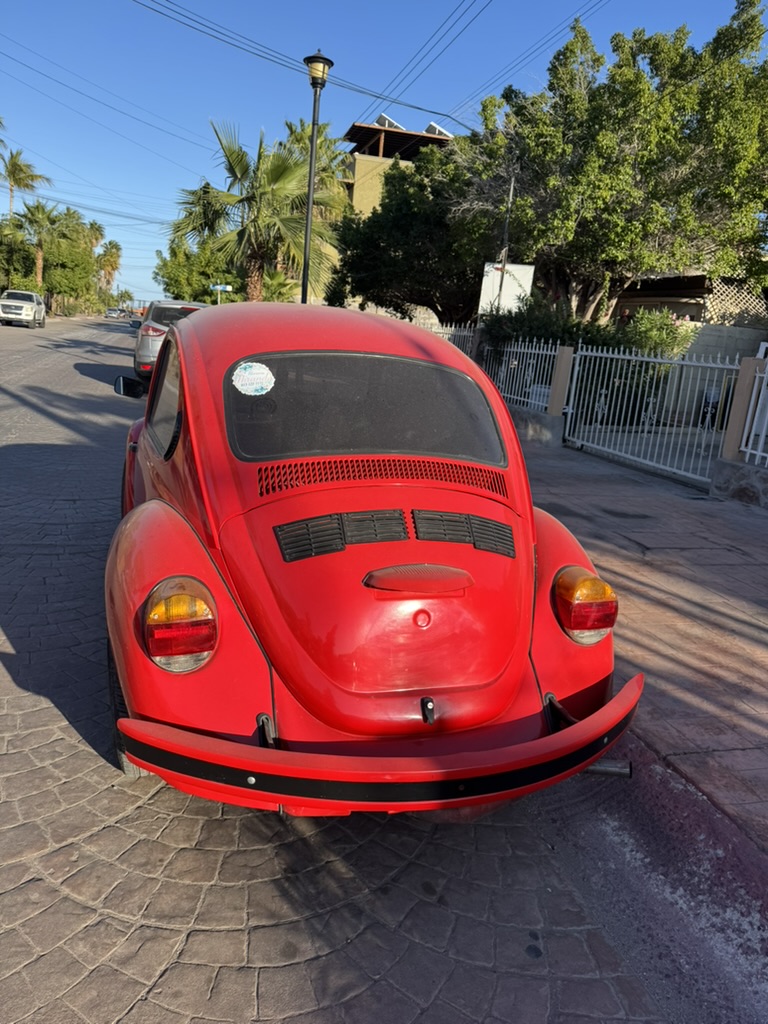
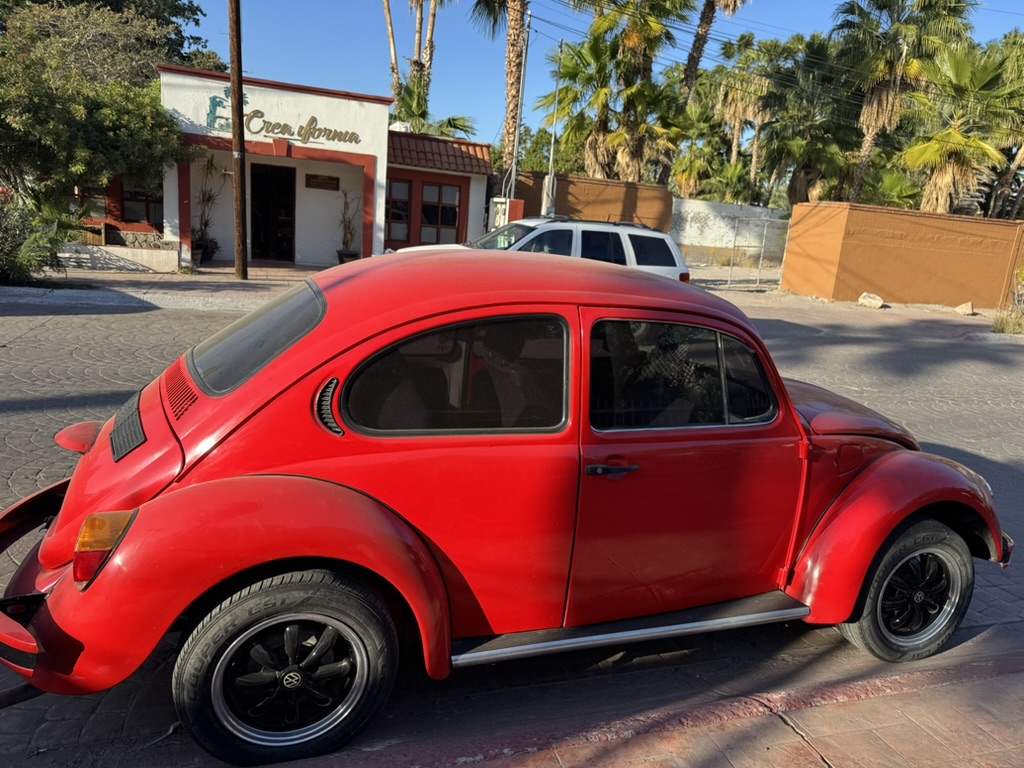
Walking through Loreto, I found myself stopped again and again by colour. Bright, saturated, unapologetic colour that refused to be muted even in my imagination. The red of a plastic cup abandoned among grey leaves. The crimson of a painted butterfly on a white stone. The vivid orange of bougainvillea against ancient rock. The cheerful red of a classic Volkswagen Beetle parked on a quiet street. These colours were asking something of me, and what they asked was this: to let go, just a little, of the aesthetic framework I had imposed. To allow brightness back in.
El color también es una forma de conocimiento. Colour is also a way of knowing.
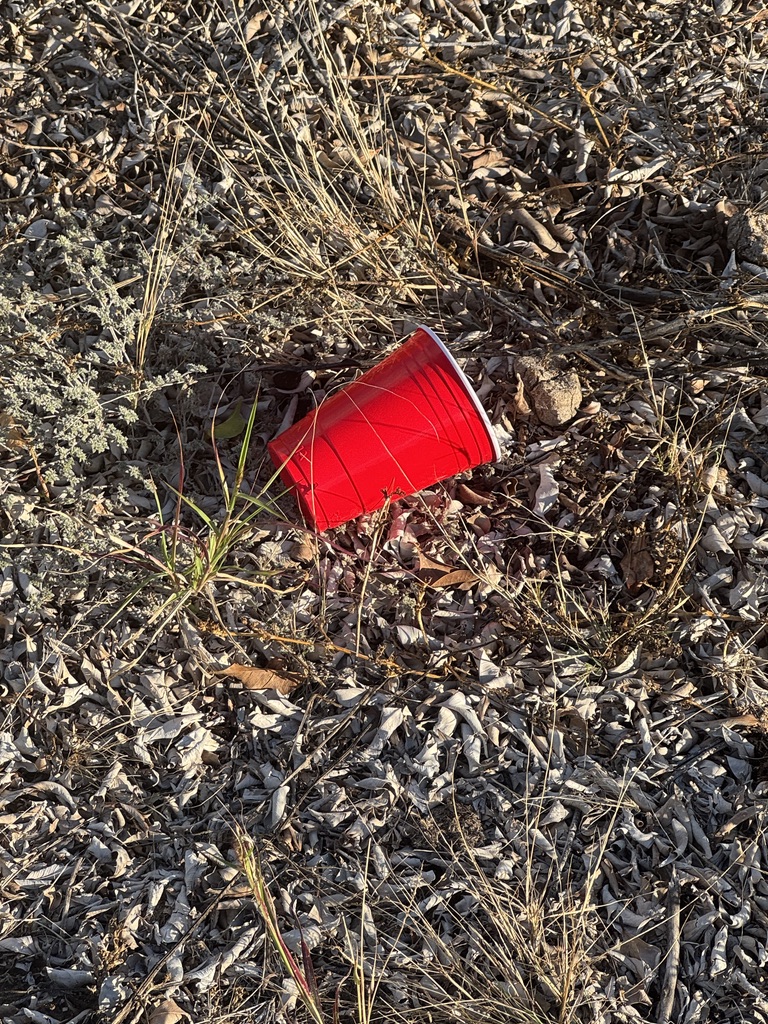
Title: Party’s Over
Artist Statement

I know this cup. I have held this cup at faculty gatherings, at end-of-term celebrations, at the casual socials that punctuated academic life before everything changed. The red Solo cup is North American shorthand for festivity, for letting loose, for the brief suspension of professional performance. Finding one here, among the grey leaves and brittle grass of a Loreto afternoon, felt like encountering an artifact from another life. Someone celebrated here. Someone gathered with others, drank something, discarded the evidence. The cup remains, cheerful and incongruous, long after the party ended. I photograph it because I recognise both the celebration and the aftermath. Because I am learning that endings leave traces, and sometimes those traces are bright red against a field of grey. Because the cup, like me, persists in a landscape that was never quite its home. Photo Credit: Amy Tucker, January 2026
Title: Someone Else’s Transformation
Artist Statement

I have been painting stones throughout this retreat, transforming found objects into small monuments of presence and process. This stone was painted by someone else. I found it resting among grey pebbles, its white surface marked with a red butterfly, wings spread as if caught mid-flight. The butterfly is imperfect. The paint has texture and variation. This was made by hand, by a person who chose to mark this stone with a symbol of transformation and left it here for anyone to find. No estoy sola en esta práctica. I am alone in my practice, yet hardly the only one who practices. Somewhere in Loreto, or passing through, someone else felt the impulse to transform stone into meaning. Someone else left evidence of attention, of care, of the quiet human need to make marks on the world. I photograph this stone because it reminds me that alonetude connects to a larger community of those who attend, who notice, who create small beautiful things and release them into the world. Photo Credit: Amy Tucker, January 2026
Global Red
Artist Statement


The red of the Coca-Cola label is engineered to be seen. Billions of dollars and decades of research have ensured that this particular shade of red captures attention in any context, any culture, any landscape. Here it lies, crushed and discarded on dusty earth, still vivid, still demanding to be noticed. I have complicated feelings about photographing corporate debris. There is critique here: the reach of globalised consumer culture, the persistence of plastic in natural environments, the way branded objects colonise every corner of the world. And there is also simple visual truth: the red is beautiful against the brown. The bottle, for all it represents, still stopped me. Still asked to be seen. In my practice, I try to hold both truths. The systems that produce such objects are worthy of critique. The objects themselves still carry colour, still participate in the visual world, still have something to teach about persistence and salience and the stubborn brightness of things that refuse to disappear. Photo Credit: Amy Tucker, January 2026
Title: What the Land Offers
Artist Statement

Unlike the cup, the bottle, the painted stone, this colour emerged from the land itself. Bougainvillea evolved its crimson bracts to attract pollinators, to ensure reproduction, to continue its lineage across generations. The red serves biological purpose. It exists because it works.

Against the grey stone of a Loreto wall, the flowers blazed with the kind of beauty that requires no justification, no theoretical framework, no scholarly analysis. They were simply, extravagantly, themselves.

I photograph them because they remind me that colour is older than human culture, that attention capture served survival long before it served commerce, that beauty has reasons we may never fully understand. La tierra también sabe crear belleza. The land also knows how to create beauty. In the practice of alonetude, where I am learning to trust my body's responses, these flowers offer evidence that brightness is natural, that noticing what is vivid is coded into the very structure of perception. Amy Tucker, January 2026
El Vocho Rojo: The Red Beetle
On a quiet street in Loreto, a red Volkswagen Beetle sat in the afternoon light like something from another decade. In México, these cars are called vochos, and they carry cultural significance beyond their mechanical function. For decades, the Beetle was the affordable, reliable car that connected communities, carried families, and moved through landscapes with a particular personality that contemporary vehicles somehow lack.
This one was red. Very red.
This one was red. Very red. Its colour commanded attention against the palm trees and blue sky, against the dusty street and white buildings. I photographed it twice: once from behind, its rounded form echoing the organic shapes of the oranges I had noticed elsewhere, and once from the side, showing its classic profile and the wear of years in a desert climate.
Hay belleza en lo que ha durado. There is beauty in what has endured.
Title: El Vocho: From Behind
Amy Tucker, January 2026
Artist Statement

From behind, the Beetle's curves echo something organic. The rounded rear window, the gentle slope of the body, the way light plays across the painted surface. There is a face-like quality to this view, though I resist the urge to anthropomorphise. What strikes me instead is the car's solidity, its thereness, its quality of having persisted. This vocho has lived through decades of Baja California sun. Its red has faded slightly but remains vivid. Its form remains classic, recognisable, beloved. I photograph it because I am thinking about persistence, about what remains bright despite time and exposure, about the objects that carry cultural memory in their very shape. In my own life, I am learning what persists after institutional belonging ends. What colours remain when the context changes. What shape I hold when the structures that once defined me fall away. The vocho offers no answers, only presence: still red, still here, still beautiful after all these years. Photo Credit: Amy Tucker, January 2026
El Vocho: Profile of Persistence
Artist Statement

Amy Tucker, January 2026

The side view reveals the Beetle's full profile: the distinctive silhouette that made it one of the most recognizable vehicles in history. Behind it, a building bears the words "Creo California," anchoring the scene in this place, this Baja California Sur afternoon. The car shows its age here.

Small imperfections, the patina of desert years, the evidence of continued use rather than museum preservation. This is a working vehicle, loved and maintained, still serving its purpose decades after it rolled off the assembly line. I see myself in this persistence. I am also showing my age, carrying my patina of difficult years, bearing the evidence of continued use. The vocho neither apologises for its imperfections nor hides its history. It simply continues, red and present and itself. Seguir adelante también es una forma de belleza. To keep going is also a form of beauty. Photo Credit: Amy Tucker, 2026
Table 1
Colour Instances and Their Personal Resonances
Image Title
Visual Element
Personal Connection
Connection to my own stone-painting practice; recognition that alonetude links to the larger community; shared impulse to create
Orange fruit on dry earth
Permission to see in colour; the flash of perception that initiated this collection; trusting automatic responses
Closer Still
Orange in close-up view
Unlearning scholarly distance; moving closer as an act of trust; presence over analysis
Party’s Over
Red plastic cup among leaves
Recognition of academic celebrations past; understanding endings leave traces; persistence after displacement
Someone Else’s Transformation
Painted butterfly stone
Connection to my own stone-painting practice; recognition that alonetude links to larger community; shared impulse to create
Global Red
Crushed Coca-Cola bottle
Holding critique and beauty simultaneously; learning to acknowledge complicated truths; seeing persistence in the problematic
What the Land Offers
Crimson bougainvillea
Trusting embodied responses; remembering colour is natural; beauty that requires no justification
El Vocho
Red VW Beetle
What persists after context changes; carrying patina with dignity; keeping going as a form of beauty
Note. This table maps each image to its visual content and the personal resonances that emerged through the practice of contemplative photography within the alonetude framework.
Reflection: What Colour Asks of Us
Permission to notice joy even in landscapes of recovery. Permission to be stopped by beauty that has nothing to do with achievement or productivity. Permission to let the eye rest on something simply because it delights.
Greenspan (2003) writes about befriending dark emotions as pathways to wisdom. But what of bright colours? What do they ask when they interrupt our carefully curated palette of greys and browns, of exhaustion and restraint? I think they ask for permission. Permission to notice joy even in landscapes of recovery. Permission to be stopped by beauty that has nothing to do with achievement or productivity. Permission to let the eye rest on something simply because it delights.
The graced eye can glimpse beauty everywhere, seeing the divine at work in the hidden depths of things. The eye of aesthetic spirituality sees more than other eyes. (Paintner, 2013)
These photographs hold a tension I am learning to inhabit: between my commitment to black-and-white documentation and the insistence that colour be seen. Both truths are real. Restraint has its purpose. And brightness has its own knowledge to offer. In the practice of alonetude, perhaps both are necessary. The greyscale for processing what has been lost. The vivid hue for remembering what remains.
I photographed the orange because I could neither look away nor imagine it in greyscale. I kept it in colour because some things ask to be seen exactly as they are. And in doing so, I gave myself permission to notice that healing includes brightness, that recovery holds room for delight, that even in the labour of alonetude, something sweet and vivid can rest on the ground, waiting to be found.
La belleza existe. Existe aquí. Existe ahora.
Beauty exists. It exists here. It exists now.
Some things ask to be seen exactly as they are.
References
Greenspan, M. (2003). Healing through the dark emotions: The wisdom of grief, fear, and despair. Shambhala.
Itti, L. (2007). Visual salience. Scholarpedia, 2(9), 3327. http://www.scholarpedia.org/article/Visual_salience
Karr, A., & Wood, M. (2011). The practice of contemplative photography: Seeing the world with fresh eyes. Shambhala.
Paintner, C. V. (2013). Eyes of the heart: Photography as a Christian contemplative practice. Sorin Books.
Pink, S. (2013). Doing visual ethnography (3rd ed.). SAGE.
Porges, S. W. (2011). The polyvagal theory: Neurophysiological foundations of emotions, attachment, communication, and self-regulation. W. W. Norton.
Treue, S. (2003). Visual attention: The where, what, how and why of saliency. Current Opinion in Neurobiology, 13(4), 428-432. https://doi.org/10.1016/S0959-4388(03)00105-3
Translation note. Spanish language passages were generated using Google Translate and subsequently reviewed and refined by the author. Any remaining infelicities reflect the limits of machine translation rather than intent.
Day 26: Scattered Blue, a photographic meditation on the colour blue and what it means to find your whole palette scattered across the floor of a life. On creativity, alonetude, and the wonder of the Sea of Cortez.
Title: When I am Feeling Blue
Artist Statement

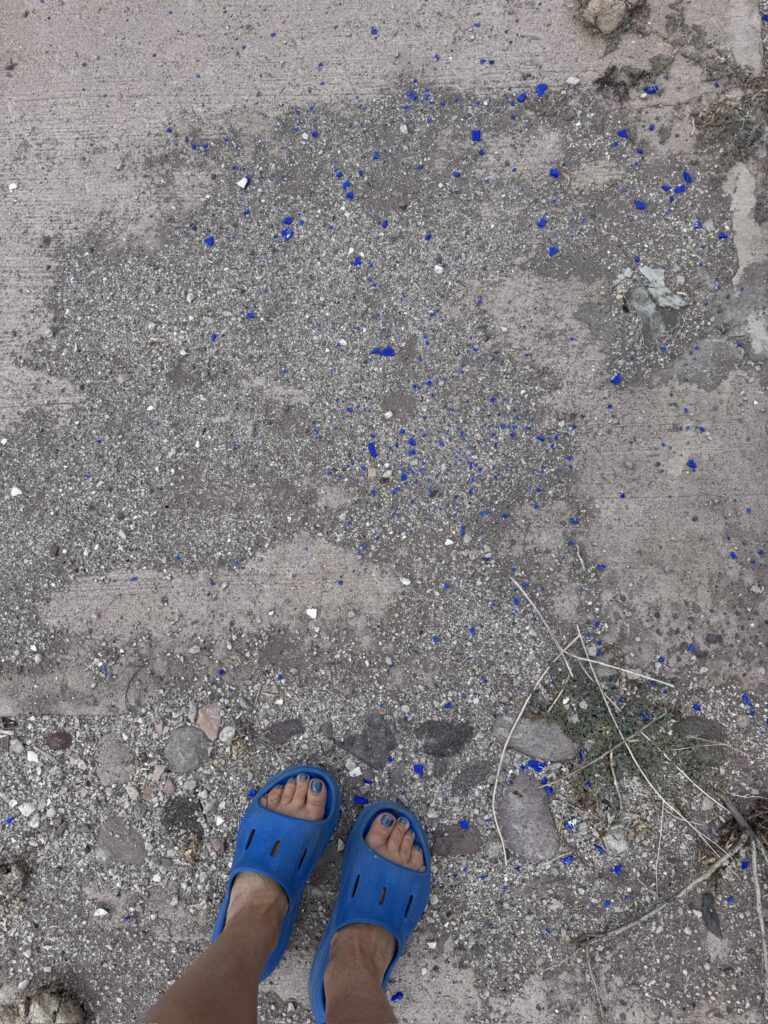
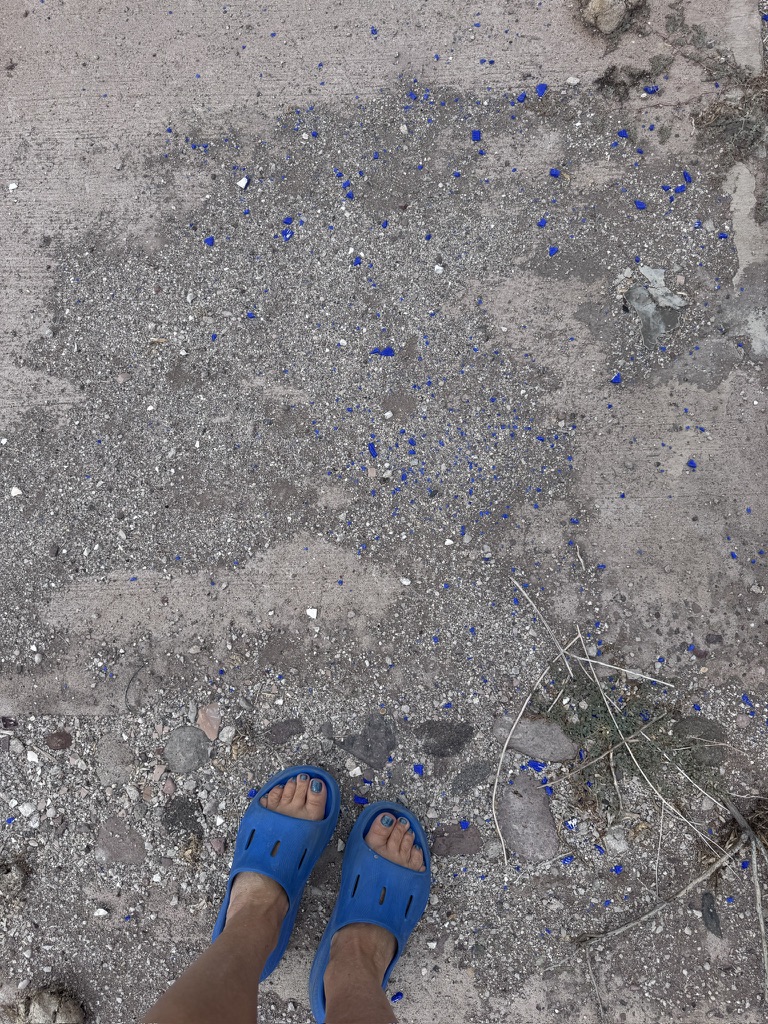
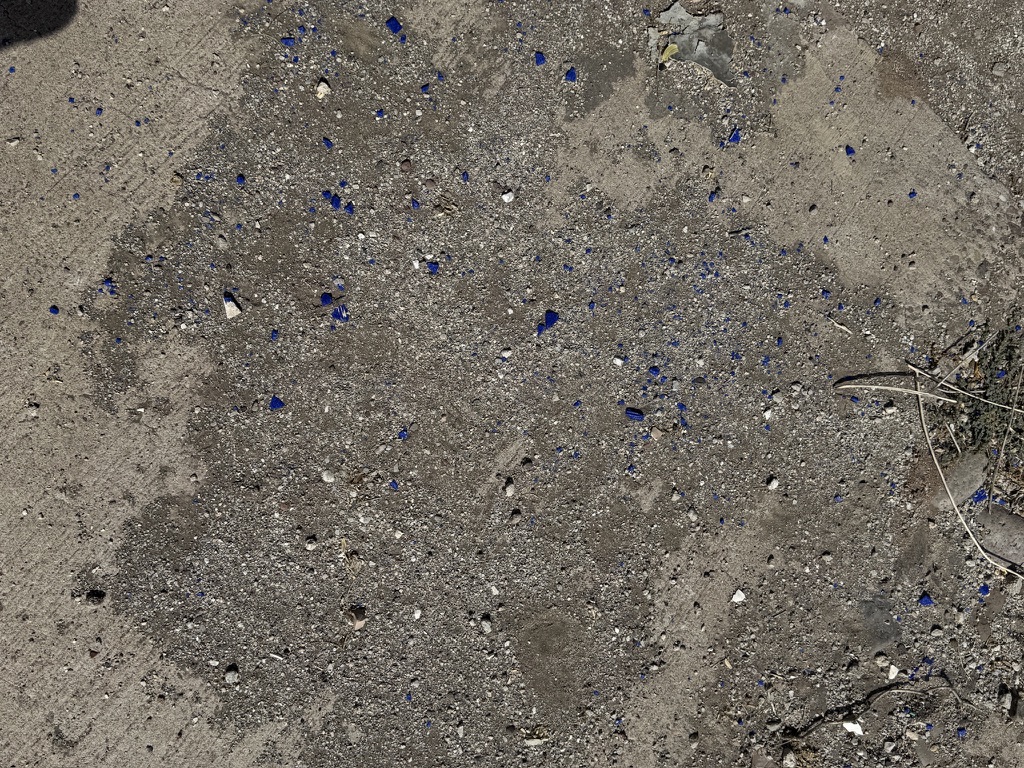
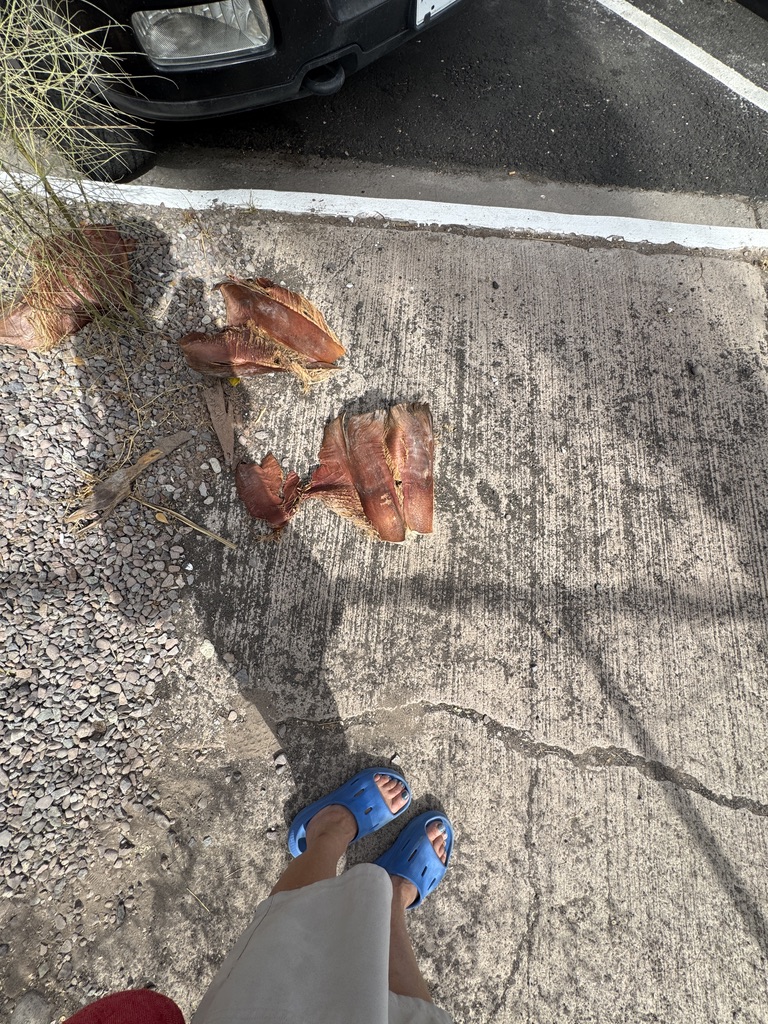
I looked down and laughed. My blue sandals, my blue toenails, and scattered across the concrete before me, droplets of blue paint that someone had spilled and never cleaned. The coincidence was too precise to ignore. This arrived without planning. I had simply stopped walking and noticed that the ground was echoing me back.

This is one of the photographs I have kept in colour. The blue demanded it. Against the grey and beige of the weathered concrete, the paint droplets appeared like a constellation, random yet patterned, evidence of movement and accident. My sandals anchored the frame at the bottom, situating my body within the encounter. I was fully within the encounter rather than observing from a distance. I was standing in the middle of what I found.

I am drawn to moments of unexpected correspondence. The times when what I carry meets what the world offers without intention or design. The blue paint was left for no one. It was residue from labour I had no way to witness, a task completed and moved on from, the spillage deemed too minor to address. Yet standing there, I became part of its composition. My feet completed a pattern that had been waiting, perhaps, for someone to notice.

In my broader practice, I think often about trace and residue. What remains after work is finished. What gets left behind when attention moves elsewhere. The paint droplets will fade eventually, worn away by foot traffic and weather. But for this moment, they held their blue against the grey, bright and unashamed, and I stood among them wearing the same colour, as if the ground and I had agreed on something without speaking.

The photograph holds play and presence in equal measure. It reaches beyond profundity. It simply records a moment when I looked down, saw myself reflected in what had been discarded, and smiled at the small magic of correspondence. Sometimes the land teaches through means other than solemnity. Sometimes it teaches through delight.

Photo Credit: Amy Tucker, January 2026
I have always been drawn to blue.
Beyond the way people speak of favourite colours, a casual preference carried from childhood without much thought. This is something else. Something that lives in my body before my mind has time to name it. When I see a particular shade of blue, the soft turquoise of shallow water, the deep indigo of twilight, the bright cerulean of a painted door, something in me settles. My shoulders drop. My breath slows. The world becomes manageable for a moment.
“I have always been attracted to this colour. It reminds me of calm. Peace. Seas.”
Blue is my nervous system’s signal for safety.
Porges (2011), in developing Polyvagal Theory, describes how the autonomic nervous system responds to environmental cues, what he calls neuroception: the body’s unconscious detection of safety or threat. Certain stimuli signal danger: loud noises, aggressive faces, signs of chaos. Others signal safety: soft voices, gentle rhythms, open spaces. I have come to understand that, for me, blue functions as a neuroceptive cue. It tells my body that the threat has passed. It tells my ventral vagal system that it is safe to engage, to play, to rest.
Stopping to notice revealed this to me. Until I stood on grey concrete with blue scattered at my feet and laughed at the unexpected correspondence.
The day I took this photograph, I was walking without a destination.
This has become a practice during my retreat, caminar sin rumbo, walking without direction, letting my feet decide where to go. Kabat-Zinn (1994), in his foundational work on mindfulness, describes this quality of attention as “non-striving,” the willingness to let experience unfold without forcing it toward a predetermined goal. Walking without a destination is non-striving, made ambulatory. The body moves. The mind follows. Sometimes nothing happens. Sometimes everything does.
I had painted my toenails blue before I left Canada. A small aesthetic choice, barely conscious. I had packed the blue sandals because they were comfortable, because they fit the climate, because something in me wanted to carry that colour into this journey. Its significance had stayed quiet.
And then the ground answered.
Title: Constellation of Accident
Artist Statement

I crouched down to see them closer.

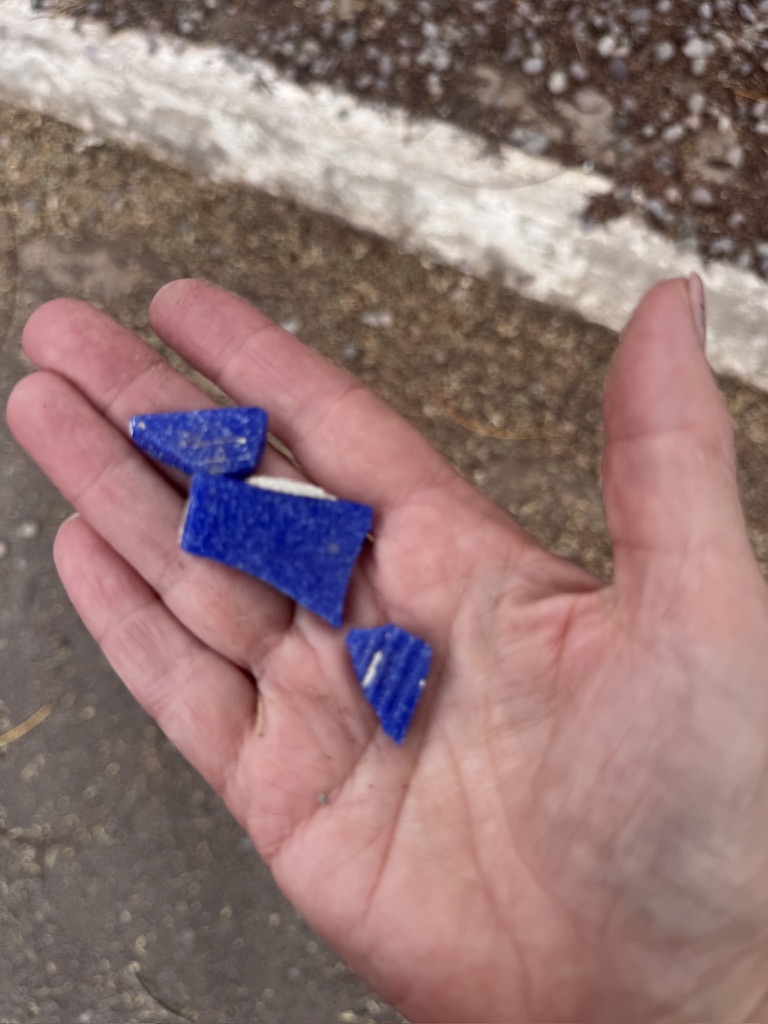
The paint droplets varied in weight and pattern. Some had fallen heavily, pooling into thick spots of saturated blue. Others were mere specks, barely visible, almost lost to the texture of the concrete. The pattern was random, no design, no intention, just the physics of liquid falling and landing where gravity placed it.

But randomness can look like pattern when you attend to it long enough. The droplets clustered in some areas, scattered in others, creating rhythms I could almost hear. This is what attention does: it finds meaning in what was never meant to mean anything. It makes constellations from scattered stars.

Someone painted something here. A wall, a sign, a piece of furniture they were refinishing. The work is finished now, moved elsewhere, forgotten. Only this residue remains, evidence of labour, trace of presence, blue marks on grey ground that no one thought to clean.

I am interested in residue. In what remains after the task is complete. In the unintended traces we leave behind.

Photo Credit: Amy Tucker, January 2026
I have been collecting broken blue things.
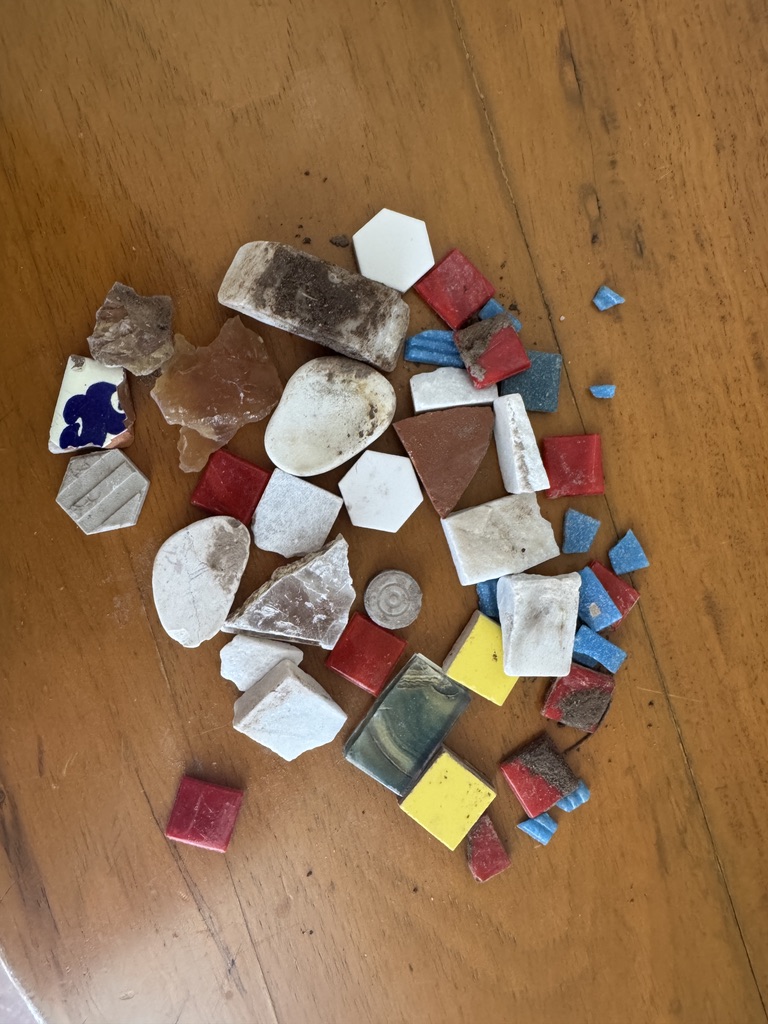
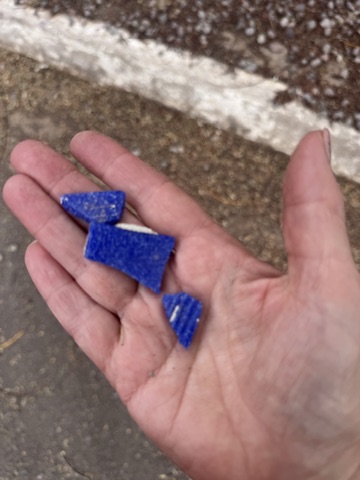
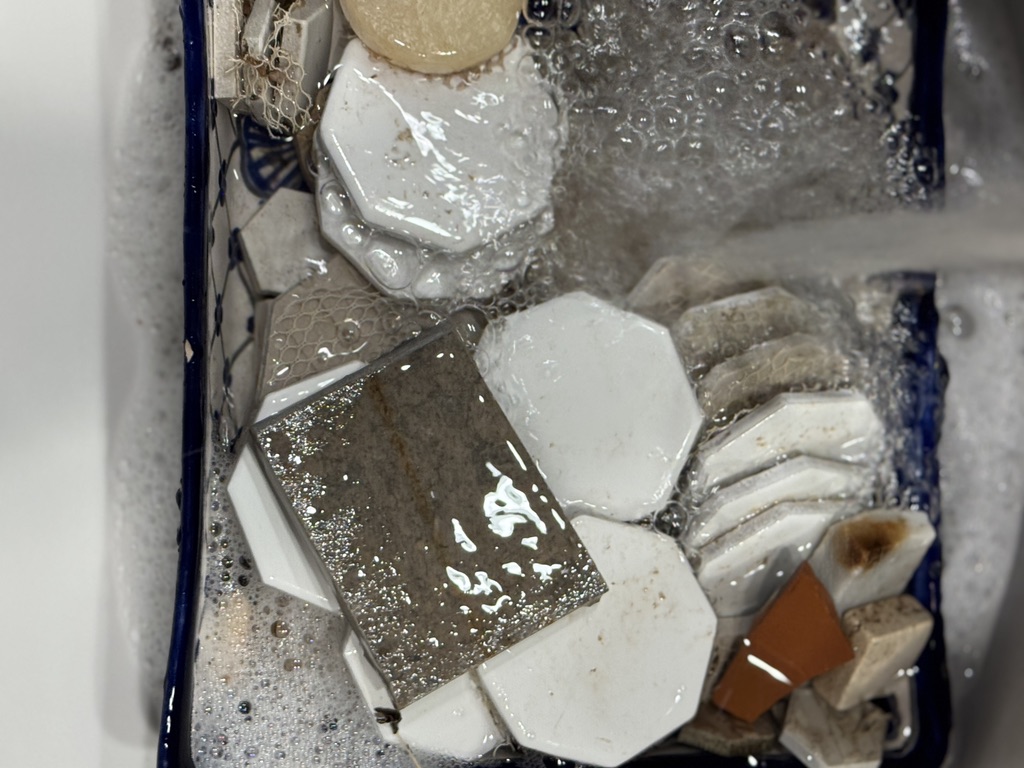
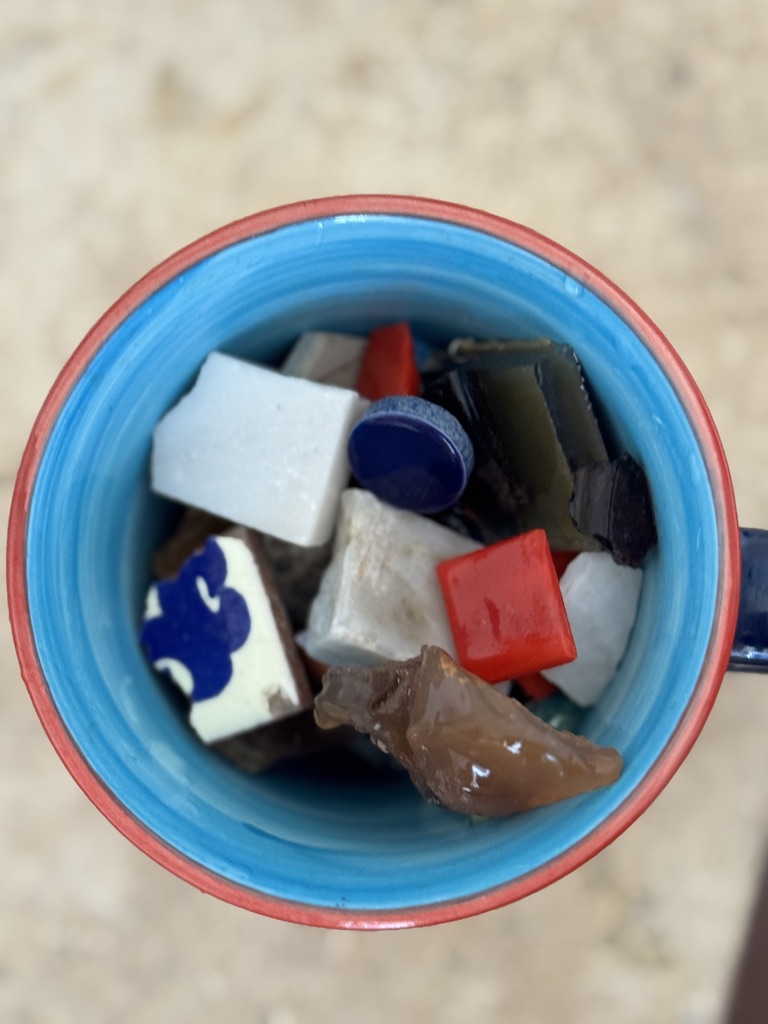
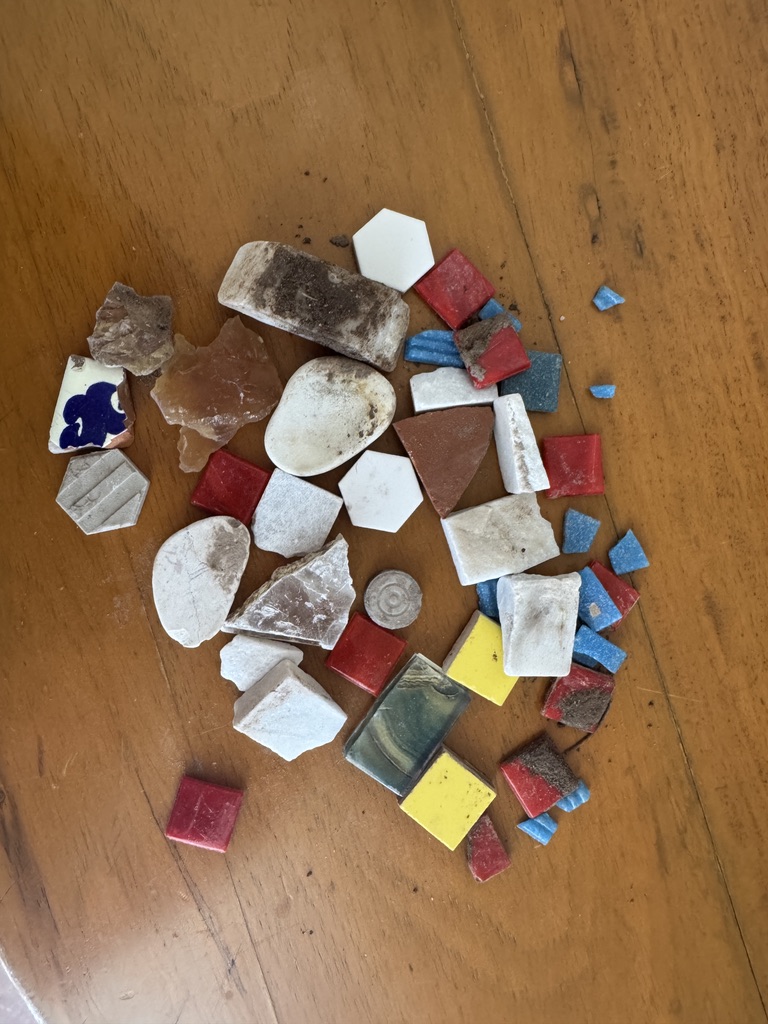
It started with the tiles I found in the empty field on Day 24, fragments of old Mexican ceramics in that particular turquoise-teal that appears on church domes and courtyard fountains throughout Baja California Sur. I picked them up without knowing why, only that their colour called to me, only that my hand reached for them before my mind could explain.
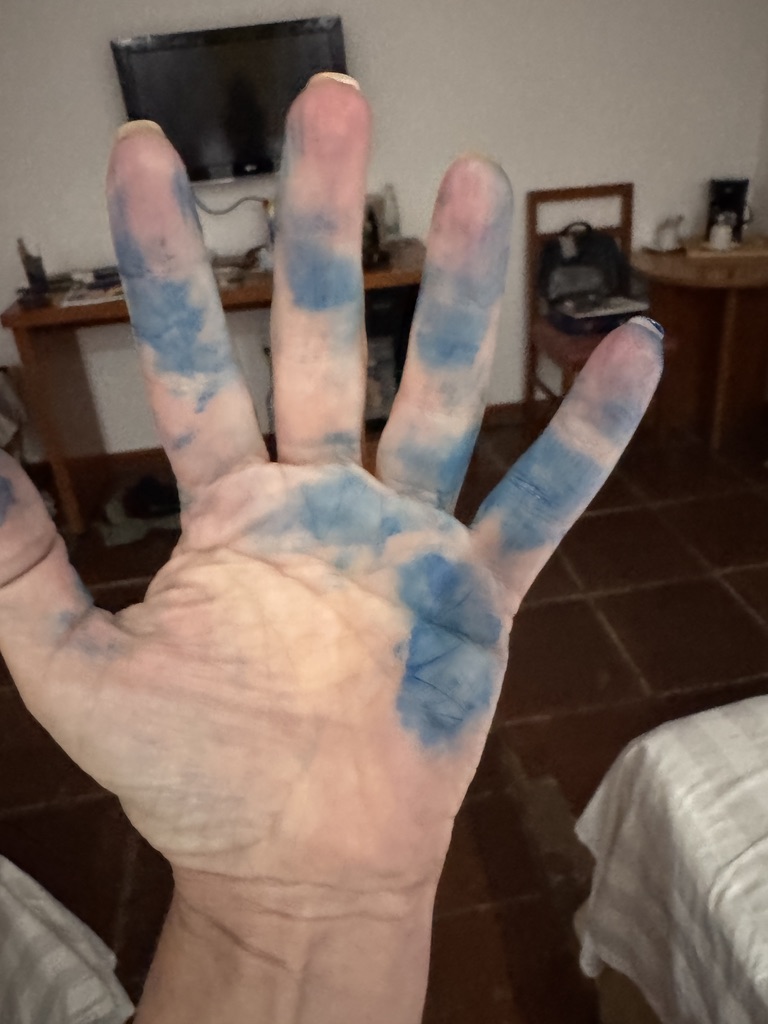
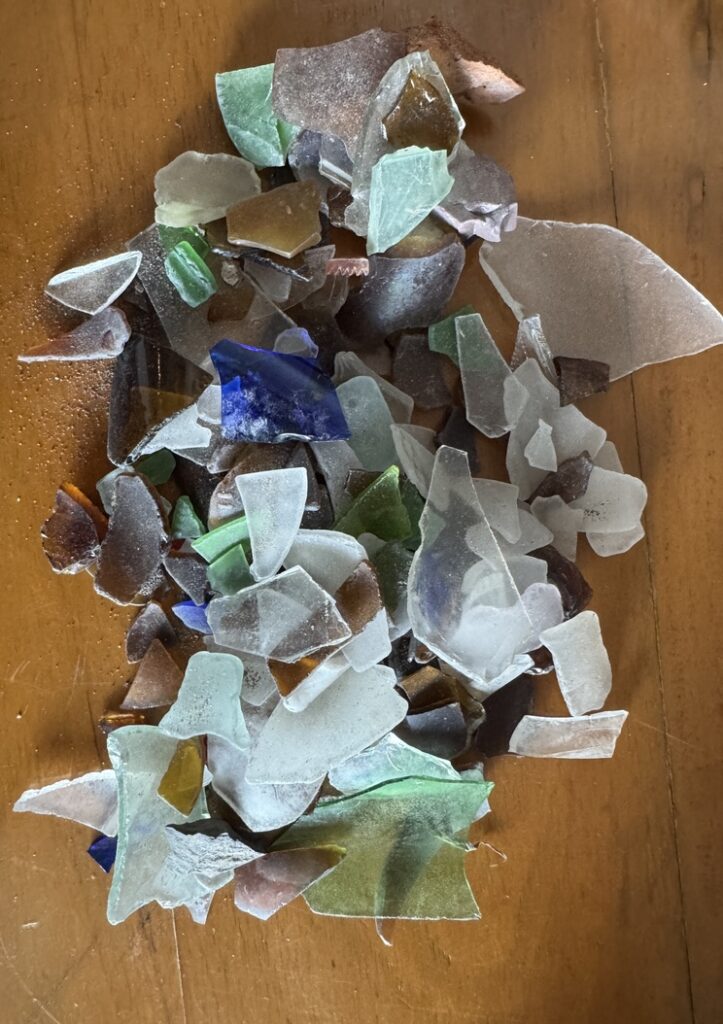
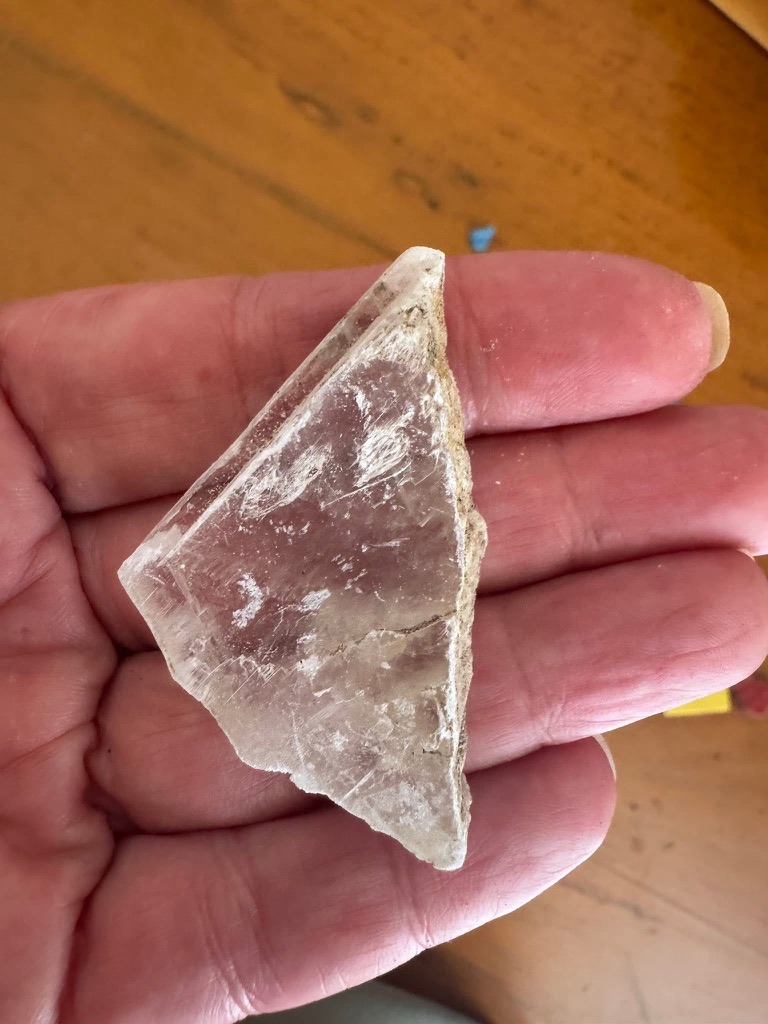
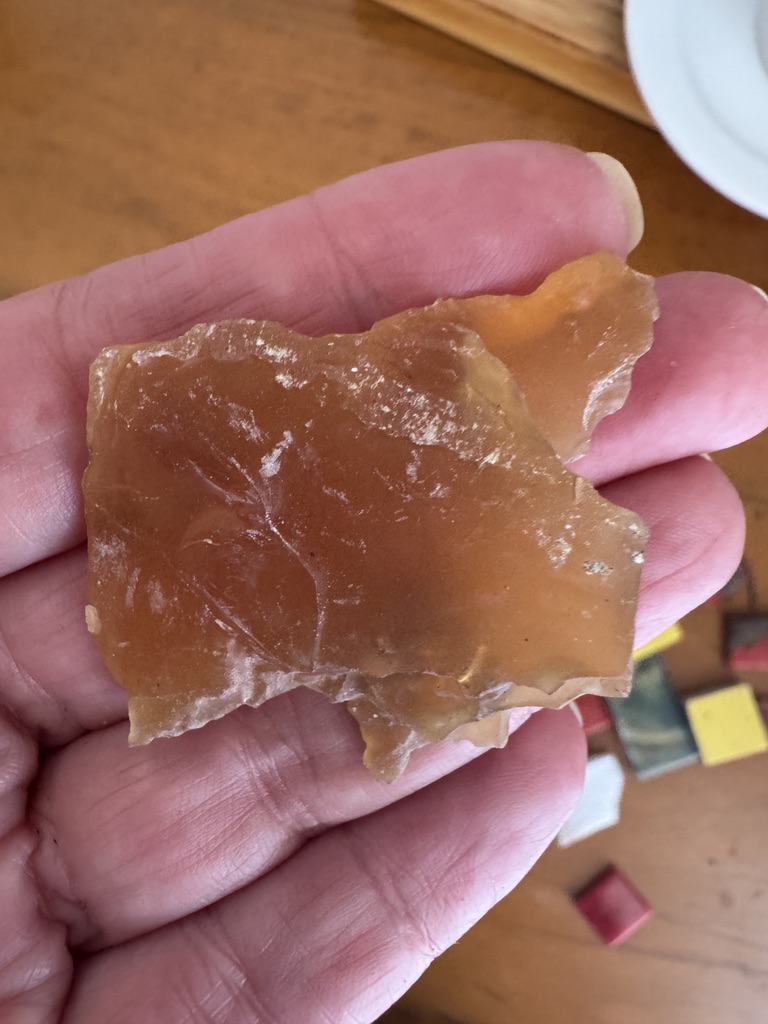
Since then, I have gathered more. Blue glass tumbled smooth by time. Blue pottery shards with half-erased patterns. Blue sea-worn fragments from the beach, their origins unidentifiable, their colour persistent. Each one caught my eye, and I bent down, and I carried it home, and now I have a small collection of blue facts waiting to be assembled.
The broken pieces are gathering. They will show me what they want to become.
This gathering is its own kind of practice. Leavy (2015), in her work on arts-based research, argues that creative processes generate knowledge that other methods cannot access. The hands learn differently than the mind. The act of selecting, collecting, and arranging is an epistemic activity, a way of knowing through doing. What the blue pieces will become stays open. I only know that gathering them feels important, feels like research, feels like my body telling me something my conscious mind has held rather than articulated.
Title: What I Have Gathered
Artist Statement

Becoming a collector of broken blue things arrived without a plan.

But here they are. Pieces of tile from the empty field. Sea glass from the beach. Pottery shards whose patterns are half-erased by time. Each one came to me separately, in its own moment, asking to be noticed. I said yes. I picked them up. I carried them back to this temporary home where they now rest together, learning each other’s company.

The blues vary. Some lean toward turquoise, some toward indigo, some toward the grey-blue of storm clouds over water. But they belong together. My body knew this before my mind understood. The hand reached; the eye approved; the collection grew.

What will I make with them? A mosaic, perhaps. An assemblage. A frame for something still forming. For now, I am letting them sit together. Letting them tell me what they need.

Photo Credit: Amy Tucker, January 2026
Mosaic, as an art form, is made from broken things.
The word derives from the Greek mouseion, a place sacred to the Muses, goddesses of the arts and sciences who bestow creative inspiration on humans. Mosaics were holy before they were decorative. They covered temple floors and church walls, transforming shattered stone and glass into images of the divine. The Byzantine masters of Ravenna understood this alchemy: that brokenness, properly arranged, becomes more luminous than wholeness ever was.
Pentcheva (2010), in her study of Byzantine aesthetics, describes how mosaic tiles, set at slightly different angles, catch light unevenly. The surface shimmers. The image seems to breathe. “The mosaic is never still,” she writes it changes as the viewer moves, as the light shifts, as time passes (p. 648). What appears fixed is actually in constant subtle motion, alive with the unpredictability of its fragmented construction.
I think about my own fragments this way. The blue pieces I have gathered stay in motion. They carry light differently depending on how I hold them, how the sun enters the window, how my attention moves across their surfaces. They are waiting to become something, but that something will shimmer. It will shift. It will be alive, the way broken things, reassembled, become alive.
There is another dimension to blue I must acknowledge.
Blue is also the colour of sadness. To “feel blue” is to feel low, melancholic, and touched by grief. The blues, as a musical tradition, emerged from the specific sorrows of Black American experience: oppression, loss, the particular ache of being human in a world that often makes no sense. When Robert Johnson sang “Hellhound on My Trail,” when Billie Holiday sang “Strange Fruit,” they were singing the blues. They were giving voice to what lives in the blue frequency of emotion.
I carry this blue, too. The depression I have been writing about throughout this retreat. The sadness that followed me from Canada, that persists despite the warm light and the sound of waves. The grief of losing a career I loved. The fear of an uncertain future. The despair, Greenspan’s (2003) word for it, that arrives sometimes in the early morning and sits on my chest like weather.
Greenspan teaches that grief, fear, and despair are pathways through healing rather than obstacles. “The dark emotions are not pathological states but, in essence, sane and appropriate responses to the state of the world,” she writes (p. 10). We are trained to bypass difficult feelings, to positive-think our way past them, to medicate them into silence. But Greenspan insists that befriending the dark emotions, sitting with them, listening to what they carry, transforms them into wisdom.
Blue holds both. The calm of the sea and the sadness of the spirit. The peace of shallow water and the grief of deep. I am learning that these are neighbours rather than opposites, sharing a colour, sharing a frequency, sharing space in my body as I walk through this month of alonetude.
Title: Blue at Rest
Artist Statement

The blue is resting.

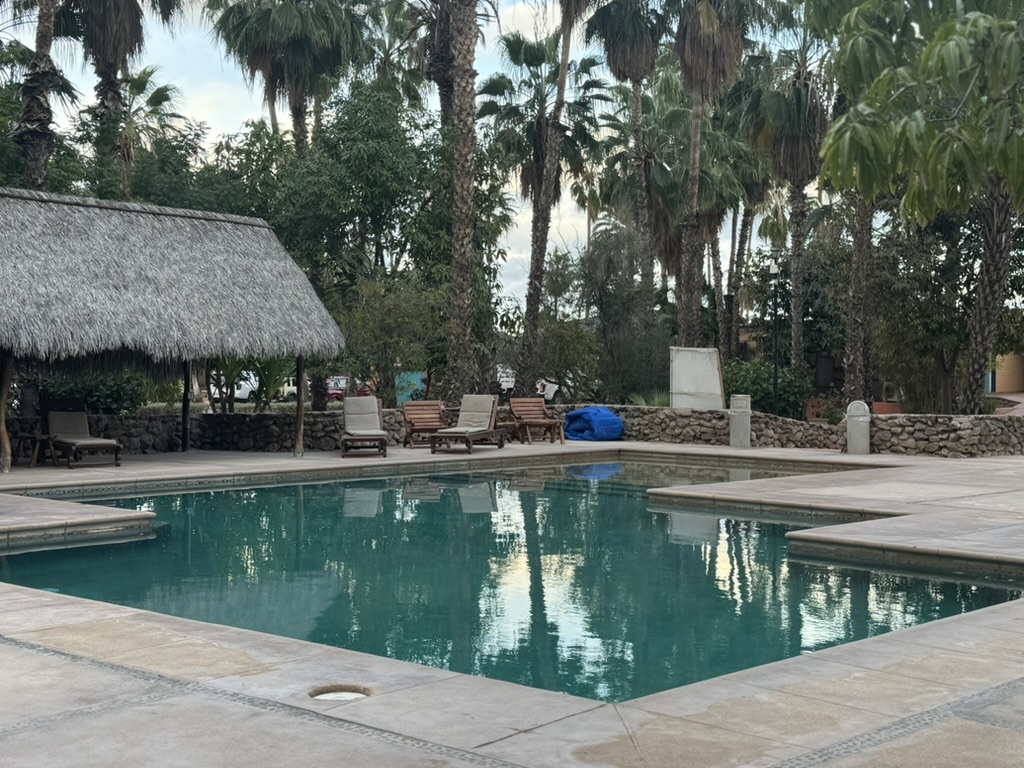
I came to the pool in the late afternoon, when the light had softened and the other guests had gone inside. The water held still, that particular turquoise that exists only in certain latitudes, certain qualities of light. The palapa framed the scene like a theatre curtain, dried palm fronds hanging heavy overhead, creating a threshold between shade and brightness, between shelter and exposure.

A blue towel lies abandoned on the deck. Someone was here. Someone swam or sat or simply rested near the water, then moved on, leaving this soft evidence behind. The towel and the pool speak to each other in the same colour, different textures, different purposes, but belonging to the same family of blue.

I have been thinking about what it means to let things rest. The water simply rests. The towel simply rests. The palm trees sway slightly, at ease. Everything in this frame exists in a state of pause, of waiting, of being without becoming. This is what I came here to learn, how to be still without feeling that stillness is failure.
The turquoise door of the casita echoes the water. Blue answering blue across the space. The world arranged it without my intervention. The world arranged it, and I was present enough to notice.

Photo Credit: Amy Tucker, January 2026
The art project will take shape when I return to Canada.
I imagine a mosaic, perhaps. Something that holds the blue pieces together while honouring the breaks between them. Something that catches light the way Pentcheva describes shimmering, shifting, alive. Something that carries both the calm of these seas and the sadness of these months. Something that transforms what was discarded into something beautiful, the way gleaning transforms forgotten abundance into sustenance.
But I hold it open rather than force it. I am practicing what Chödrön (2000) calls “groundlessness,” the willingness to exist without knowing what comes next, to tolerate the uncertainty of being between. The fragments will tell me what they need. The blue will speak when it is ready.
For now, I gather. I notice. I let the colour find me where it will.
Title: Held in Blue
Artist Statement

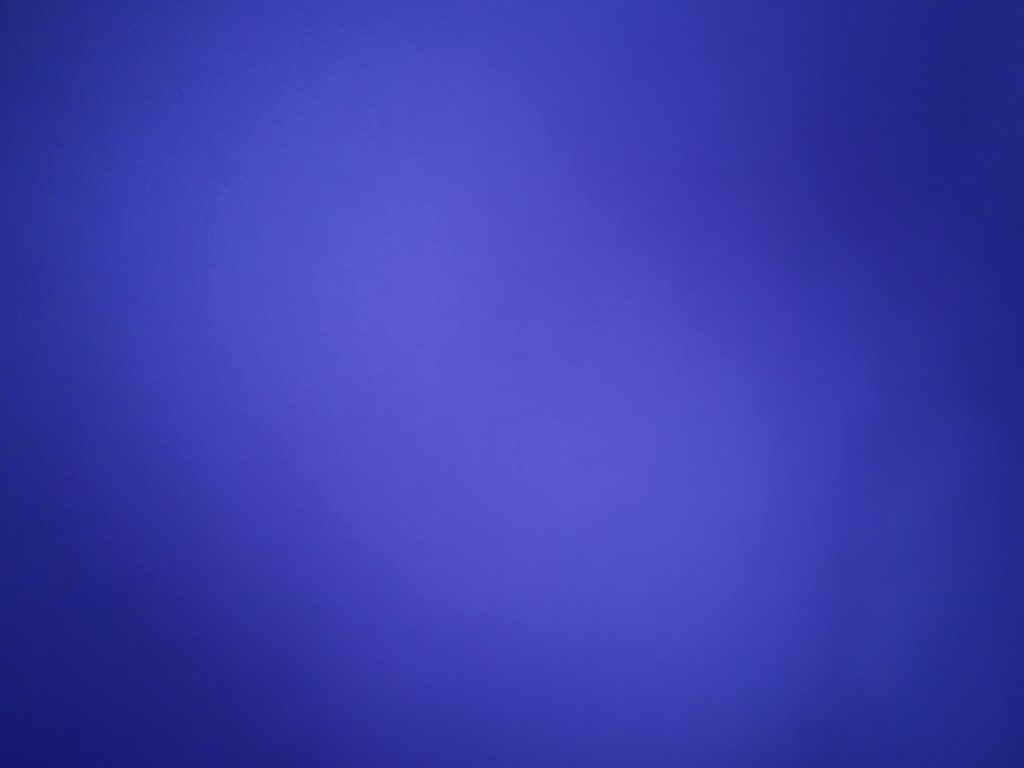
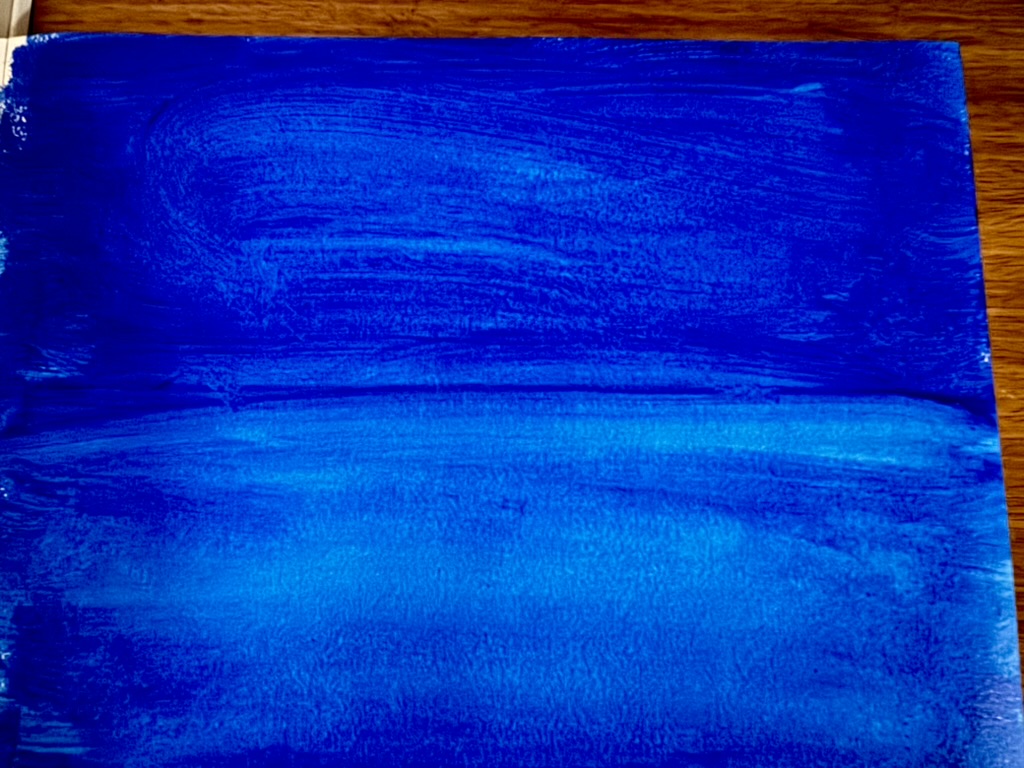
This image emerged unintentionally. I had set out without abstraction as a goal. I had been walking, attentive to land, horizon, and form, when the frame filled instead with colour alone. No shoreline. No sky line. No identifiable object to anchor perception. Only blue, deep and immersive, layered in tonal variation.

At first, I considered discarding it. It held a different kind of witness than my other photographs. It resisted narrative. Yet the longer I sat with it, the more it began to speak in a different register. It moved beyond landscape into interiority.

The field of blue feels oceanic without depicting the ocean. It holds the same sense of suspension I experienced while floating in open water, where orientation dissolves and the body rests in something vast, buoyant, and indifferent to personal history. There is no horizon to measure against. No visual boundary to define scale. Only immersion.

In my reflective practice, this image becomes a study in containment without confinement. Blue often carries associations of depth, quiet, and emotional spaciousness. Here, those qualities feel intensified by the absence of distraction. Nothing interrupts the field. Nothing asks for interpretation. The photograph offers stillness rather than information.

I have come to understand it as a visual analogue for the psychological state cultivated through alonetude. A state in which identity softens, performance recedes, and the self is held rather than displayed. It mirrors the experience of resting within one’s own interior expanse without the need to articulate or explain.

The subtle shifts in tone across the frame suggest movement beneath apparent uniformity. Even in stillness, there is variation. Even in quiet, there is life. The image reminds me that healing rarely appears dramatic. Sometimes it looks like this: immersion in a colour that asks nothing and gives space in return.

I kept the photograph because it holds what cannot be easily represented. The feeling of being suspended between exhaustion and restoration. Between who I was and who I am becoming. Between surface and depth.

Photo Credit: Amy Tucker, 2026
I stood on grey concrete with blue scattered at my feet, and I laughed.
This is what I want to remember from this retreat. More than the hard work of facing depression and grief. More than the theoretical frameworks and the scholarly engagement. More than the counter-archive of institutional harm. But also this: the laughter. The delight. The unexpected joy of finding myself echoed in a scattered patch of paint that someone had spilled and never cleaned.
Alonetude reaches beyond processing suffering. It is also about allowing pleasure. About noticing when the world offers a gift, a visual rhyme, a moment of correspondence, blue meeting blue on grey ground, and receiving it without demanding that it mean something profound.
Sometimes it just means: here is beauty. Here is a play. Here is a moment of delight in a month that has also held heaviness.
I am learning to receive both.
Sometimes the land teaches through means other than solemnity. Sometimes it teaches through delight.
Title: Blue Correspondence
Artist Statement

I return to this image because it holds something I need.

The correspondence arrived without planning. I painted my toenails blue with no knowledge of what I would find on the ground. I wore blue sandals simply as a choice. The meeting was accident, coincidence, grace, whatever word we use for moments when the world seems to be paying attention to us.

But I was paying attention too. That is the key. The paint had been there for weeks, maybe months. Others had walked over it without noticing. I noticed because I was looking down. I was practicing the slow attention of alonetude, the willingness to let experience arrive without rushing past it.

The photograph records this meeting of attentions, mine and the world’s. It holds play and presence in equal measure. It resolves nothing outright. It simply says: here, for this moment, the ground and I agreed on something without speaking.

That agreement feels like the beginning of healing.

Photo Credit: Amy Tucker, January 2026
Azul. El color de la calma. El color de la paz. El color del mar. El color de la tristeza también. El color de todo lo que siento.
Blue. The colour of calm. The colour of peace. The colour of the sea. The colour of sadness, too. The colour of everything I feel.
I am carrying it forward.
Title: The Quiet Field
Artist Statement

This image holds very little in the conventional sense of representation, yet it carries a surprising emotional density. In fact, it is a photo of my pocket.

The frame is filled by a single tonal field, dark blue shifting almost imperceptibly toward charcoal and indigo. There is texture, but it is subtle. There is gradation, but it refuses spectacle. The photograph holds its silence. It waits.


I have come to see this photograph as a meditation on interior quiet. It evokes the psychological state that emerges after prolonged solitude, when the nervous system begins to settle and stimulation no longer feels necessary. The darkness signals containment to me rather than heaviness. It signals containment. A held space where thought can soften.

The faint textural variations across the surface remind me that stillness is never empty. Beneath apparent uniformity, there is movement, grain, and subtle differentiation. Much like emotional healing, the changes are gradual and often invisible to others. Yet they are present, shaping experience from within.

There is also a relational quality to the image. It holds space rather than imposing meaning. It invites projection. Viewers bring their own associations to the field, their own histories with darkness, rest, and quiet. In this way, the photograph functions less as documentation and more as atmosphere.

Within my broader body of work on alonetude and liminal retreat, this image represents the deep interior phase of threshold experience. The stage where identity loosens, where language recedes, where one learns to remain present without needing clarity or resolution.

It is the visual equivalent of closing one’s eyes while awake. Of standing in a room before dawn. Of inhabiting the pause before re-entry into the world of roles and expectations.

The photograph holds that pause without interrupting it.

Photo Credit: Amy Tucker, 2026
Translation note. Spanish language passages were generated using Google Translate and subsequently reviewed and refined by the author. Any remaining infelicities reflect the limits of machine translation rather than intent.
References
Chödrön, P. (2000). When things fall apart: Heart advice for difficult times. Shambhala.
Greenspan, M. (2003). Healing through the dark emotions: The wisdom of grief, fear, and despair. Shambhala.
Kabat-Zinn, J. (1994). Wherever you go, there you are: Mindfulness meditation in everyday life. Hyperion.
Leavy, P. (2015). Method meets art: Arts-based research practice (2nd ed.). Guilford Press.
Pentcheva, B. V. (2010). The sensual icon: Space, ritual, and the senses in Byzantium. The Art Bulletin, 92(4), 631–655.
Porges, S. W. (2011). The polyvagal theory: Neurophysiological foundations of emotions, attachment, communication, and self-regulation. W. W. Norton.
I bent down to collect them. Three fragments of blue tile, scattered across the grey concrete where something had broken and no one had swept up. They were cool in my palm, smooth on one side and rough on the other where the adhesive had once held them to a surface I would never see. I gathered them without knowing why, only that they asked to be picked up.
This is one of the photographs I have kept in colour. The blue is too insistent to mute. Against the grey of the pavement and the pink of my open hand, the tile fragments glow like something rescued. They are small, irregular, each one shaped by the break that freed it from the whole. The largest is no bigger than my thumb. The smallest could disappear between my fingers. Together, they form a collection that makes sense only to me.
I am drawn to fragments. To what remains after something larger has come apart. These tiles were once part of a pattern, a wall or a floor or a decorative edge designed to hold together. Now they exist as pieces, separated from their original purpose, available for reinterpretation. I witnessed none of the breaking. I only arrived in time to gather what was left.
In my scholarly and personal life, I have come to understand that wholeness is rarely the goal. Sometimes what matters is the willingness to collect what has scattered, to hold the pieces in an open hand without demanding they reassemble into what they were. The tile fragments have no need to become a wall again. They are enough as they are: blue, broken, held.
The photograph situates my body in the encounter. My hand is visible, open, cradling rather than grasping. The lines of my palm map a different kind of history, one written in skin rather than clay. The fragments rest where I placed them, trusting the hand that gathered them. I kept them. I carried them home. They sit now on my desk, small witnesses to the practice of noticing what others leave behind.
I almost walked past it. An orange, vivid and whole, resting on the dry earth as if it had been placed there by intention rather than chance. The ground around it was grey and brown, scattered with stones, dried grass, and brittle leaves. The orange held its colour like a small act of defiance. It was unexpected here, and yet here it was.
How the orange arrived is a mystery to me. Perhaps it fell from a bag. Perhaps it rolled from a table and was never retrieved. Perhaps someone left it as an offering, though to whom or what I cannot say. The fruit showed no sign of decay. Its skin was smooth, its form intact. The slow return to earth had yet to begin. For now, it simply rested, bright and round, waiting for what would come next.
I am drawn to moments of incongruity. Objects that appear in the wrong place, disrupting the visual grammar of a place. The orange interrupts the palette of the desert floor the way unexpected kindness interrupts a difficult day. It simply arrives and asks to be noticed, without explaining itself.
In my broader practice, I attend to what the land holds and what passes through it. Most of what I photograph is grey, weathered, marked by time and use. This orange offered something else. A reminder that colour still exists even when I have chosen to look without it. A small brightness that insisted on its own terms. I photographed it because it held my eye, and I kept it in colour because some things ask to be seen exactly as they are. Photo Credit: Amy Tucker, January 2026
I almost missed it.
A small sun resting on the ground, unapologetic in its brightness.
The earth around it spoke in quieter tones grey stone dried grass the brittle vocabulary of endings.
And then this round insistence of colour.
An orange whole unbruised holding its sweetness as if it had been placed there by a careful hand rather than by accident.
I stood longer than I expected. Long enough to feel how disruption works.
How colour interrupts fatigue. How kindness arrives without introduction.
In a landscape, I have been rendering in black and white reducing the world to shadow and structure this fruit refused translation.
It stayed vivid. It held its colour against my preference for restraint.
It asked to remain exactly as it was.
How it came to rest there is beyond my knowing. Fallen from a bag rolled from a table left as offering to no one and to everyone.
Its surface was unbroken. No softening no collapse no return yet to the soil that waited beneath it.
It was still fully itself.
I photographed it because it interrupted the grammar of the ground.
Because it reminded me that brightness persists even where dust gathers.
Because sometimes what arrives unexpected saves the moment from monotony.
I left it where I found it. A small act of colour resting in a field of restraint holding sweetness against the pull of time.
Bringing Back My Creativity, Imperfectly and on My Own
Title: Blue Sea, Held by the Blue Sky
Artist Statement

 This painting emerged as a gesture of return. After weeks of walking the shoreline, collecting fragments, and listening to land and water, I needed to place the sea onto a surface I could hold. The layered blues follow the rhythm of tide and breath, moving from deep saturation to lighter wash. Each stroke records a moment of presence, a quiet settling of the body into colour and movement. This work reflects alonetude as practice, where the sea becomes both subject and teacher, and painting becomes a form of embodied listening. It will be a background in a future painting.

Credit: Amy Tucker, 2026
For a long time, I believed my creativity belonged to institutions. To students who needed me. To colleagues who relied on me. To the fragile promise of a contract renewed.
Somewhere along the way, I stopped making anything beyond what served a syllabus, a publication target, or an institutional metric. My creative life narrowed into productivity. Art became output. Curiosity became compliance.
And then, quietly, I stopped creating.
Title: What Moves When I Stop Directing
Artist Statement

I made this by staying with the movement rather than correcting it. Line followed line. Colour arrived before meaning. I skipped the sketching. I skipped the planning. I let the markers travel until they decided where to pause and where to press harder.

What this piece reminds me of is how much information lives in rhythm. The bands of colour feel like layers of time rather than landscape. Some are steady. Some break and rejoin. Some thicken where attention lingered. Others thin where the hand grew lighter. Nothing here is accidental, but nothing is controlled either. It emerged through staying present.

As I worked, I noticed how my body settled into repetition. The act became almost meditative. My breathing slowed. My thinking quieted. The colours began to speak to one another without my intervention. This feels important to name. I am learning to trust processes that unfold without explanation, to allow form to emerge through persistence rather than intention.

I have spent many years being rewarded for clarity, structure, and outcomes. This work lives outside that logic. It values continuity over completion. It holds variation without resolving it. The layered lines remind me that experience rarely moves in straight trajectories. It accumulates. It overlaps. It leaves traces.

This piece belongs to my ongoing practice of allowing. Allowing colour to lead. Allowing time to stretch. Allowing myself to make something without translating it into purpose or proof. What moves here is what happens when I stop directing and start listening.

Photo Credit: Amy Tucker, 2026
This month by the sea, something shifted. Beyond drama. Beyond heroics. Imperfectly. Slowly. In fragments.
I began picking up broken tiles from an empty field. Photographing shadows. Washing stones. Holding a small crystal in my palm, noticing how geological time had softened my urgency. These were beyond grand projects. They were gestures. Small acts of attention. But they felt like the return of something that had been taken from me.
Title: Morning Memories
Artist Statement

This painting emerged as a memory of light rather than a literal horizon. The layered oranges, reds, and soft purples trace the moment when day releases itself into evening, and the body follows. The low sun and mirrored water create a quiet symmetry that feels both external and internal, a horizon held in the mind as much as on the page.

This work reflects alonetude as a temporal practice, where colour becomes a way of marking time, emotion, and transition. Painting this scene was an act of slowing, of staying with a moment that would otherwise pass unnoticed.
Credit: Amy Tucker, 2026
Creativity research tells us that creative processes often emerge through incubation, wandering attention, and unconscious processing rather than deliberate effort (Dijksterhuis & Meurs, 2006; Sio & Ormerod, 2009). In other words, creativity returns when we stop forcing it. It returns when we walk, when we notice, when we allow the body to lead.
Title: Learning Where to Stand
Artist Statement

I began this piece without knowing where it would settle. Colour arrived first, then shape, then a sense of ground. The mountains emerged gradually, as forms that hold rather than landmarks to be conquered, their place quietly. Below them, layers of colour gathered and curved, suggesting movement, water, and time passing without urgency.

What this work brings forward for me is the question of position. Where I place myself in relation to what feels vast. The mountains leave the page undominated. They sit within it, held by the same field of colour that moves around and beneath them. This feels important. I have spent years orienting myself upward, toward peaks of achievement and recognition. This piece asks me to notice what happens when I attend instead to the layers that carry me forward.

As I worked, I felt a steadying in my body. The repetition of lines became grounding. The colours shifted from sharp to blended, from separate to relational. Nothing here is fixed. Everything is in conversation. The land, the water, the sky, and the unseen movements between them coexist without hierarchy.

This drawing belongs to my ongoing practice of slowing down and listening for where I am held rather than where I am headed. It reflects a growing trust in process and in place. I am learning that orientation rarely always come from striving upward. Sometimes it comes from noticing the ground beneath my feet and allowing the landscape, internal and external, to shape how I stand.

Photo Credit: Amy Tucker, 2026
Trauma research echoes this. Arts-based practices are widely recognised as therapeutic pathways for emotional regulation, meaning-making, and recovery (Leavy, 2020; van der Kolk, 2014). Creativity is beyond decoration. It is a regulation. It is restoration. It is a way back to ourselves.
I am learning that my creativity has no requirement to be polished, productive, or legible to anyone else. Peer review is no requirement for validity. Grant language is no requirement for justification. It can be quiet. It can be messy. It can be mine.
Psychologist Mihaly Csikszentmihalyi described creativity as a state of flow, where attention is absorbed and time dissolves (Csikszentmihalyi, 1996). I am finding glimpses of that flow again, through drawing and noticing rather than in writing articles or designing courses, through noticing light on glass, arranging fragments on a table, walking slowly across a field that once looked empty.
Title: Layers I Can Live Inside
Artist Statement

This piece arrived through accumulation rather than decision. I worked from the top down and the bottom up at the same time, letting bands of colour stack, interrupt, and settle into one another. The lines are deliberate yet fluid. They move because my hand moved, because my body needed rhythm more than precision.

What this work reflects back to me is a growing comfort with complexity. Nothing here resolves into a single horizon. The mountains press forward, the water holds steady, the fields pulse with texture, and the sky refuses to remain quiet. Each layer insists on its own presence while making room for the others. That feels true to how I am living right now.

I notice how the black outlines both contain and release the colour. They mark edges without closing things off completely. This matters to me. I have spent a long time inside structures that demanded clarity, hierarchy, and singular direction. This drawing allows for overlap. It allows for coexistence. It allows for a landscape that can hold many tempos at once.

As I worked, my body stayed engaged. The repetition of horizontal movement grounded me. The brighter colours emerged where energy rose. The cooler tones settled where I needed rest. I let the unevenness stand. I let it speak. The drawing became a record of attention rather than a depiction of place.

This piece belongs to my ongoing inquiry into how layers form a life. Experience accumulates. It layers rather than replaces itself cleanly. Old patterns remain visible beneath new ones. What matters is whether the layers can be lived inside without strain.

Here, they can.

Credit: Amy Tucker, 2026
This feels like a small rebellion against academic capitalism, against the extraction of time, against the idea that creativity must always be monetised, published, or measured. It feels like choosing to create for no audience except myself and the land that is teaching me how to look again.
I am imperfectly bringing back my creativity on my own. And that feels like freedom.
Title: Fragments, Returning
Artist Statement

 This image marks my return to creative practice in fragments rather than finished forms. I gathered these objects, glass, tile, stone, and crystal, while walking through places I once passed without stopping. Each piece carries traces of use, weather, and abandonment, yet also holds colour, texture, and presence. Collecting them was intuitive, guided by the body before the mind could explain why.

For many years, my creativity was shaped by institutional demands, productivity metrics, and the precarious rhythms of contract academic labour. This work emerges from stepping outside those structures. The fragments are both material and metaphor. They reflect how creative life returns imperfectly, in partial gestures, slow noticing, and unplanned encounters with place.

This photograph is part of my arts-based inquiry into trauma, recovery, and relational ways of knowing. Handling these fragments grounded me in the present moment and offered a tactile form of mindfulness. Creativity here is beyond outcomes. It is a practice of attention, a refusal to walk past what appears empty, and a quiet reclaiming of making as personal, relational, and ethical work.

Photo Credit: Amy Tucker, 2026
Reference
Csikszentmihalyi, M. (1996). Creativity: Flow and the psychology of discovery and invention. HarperCollins.
Dijksterhuis, A., & Meurs, T. (2006). Where creativity resides: The generative power of unconscious thought. Consciousness and Cognition, 15(1), 135–146. https://doi.org/10.1016/j.concog.2005.03.007
Leavy, P. (2020). Method meets art: Arts-based research practice (3rd ed.). Guilford Press.
Sio, U. N., & Ormerod, T. C. (2009). Does incubation enhance problem solving? A meta-analytic review. Psychological Bulletin, 135(1), 94–120. https://doi.org/10.1037/a0014212
van der Kolk, B. A. (2014). The body keeps the score: Brain, mind, and body in the healing of trauma. Viking.
I am learning that treasure is what the world overlooks rather than what it values. Treasure is what the world has overlooked, discarded, and left behind for someone patient enough to notice.
Title: Blue Enough to Stop
Artist Statement

I noticed this because the blue refused to disappear.

At first glance, it was just dust and gravel, the kind of ground you walk over without registering it. Then the colour began to surface. Small shards scattered unevenly, catching light in brief, insistent flashes. They were beyond arrangement. Beyond intention. Simply there, insisting on being seen.

This moment reminded me how attention changes the world. What appears monochrome at a distance reveals complexity when approached slowly. The blue fragments felt like remnants of care, traces of something once whole that still carried beauty despite being broken. I thought about how easily colour is erased by speed, by habit, by the assumption that nothing important lies underfoot.

There is something tender in stopping for what is small and sharp-edged. These fragments asked for no fixing and no story beyond their presence. They held their colour against dust and time. That felt instructive. It suggested that value requires no coherence, no completion. It can exist in scattered form, waiting for someone willing to look closely enough to notice.

This image stays with me because it affirms a practice I am learning to trust. To walk slowly. To look down. To allow myself to be interrupted by what glints quietly at the margins. The blue was enough to stop me. That feels like a lesson worth keeping.

Photo Credit: Amy Tucker, 2026
The Empty Field
There is an empty field just beyond the edge of town, where the paved road gives way to dust and the last buildings surrender to open land. I have been walking past it for weeks without stopping. It looked like nothing. Scrub brush. Rubble. The kind of place you glance at and dismiss.
Yesterday, I stopped.
Something beyond naming made me turn off the path and walk into that emptiness. Perhaps I was tired of the routes I already knew. Perhaps my body was leading me somewhere my mind had yet to consent to go. I have been learning, throughout this residency, to follow impulses that resist explanation. This is part of what Scholarly Personal Narrative makes possible: trusting that the body knows things the conscious mind has yet to articulate.
The field was full of treasure.
Title:One Person’s Treasure
Artist Statement

This work began when I stopped walking past what I had assumed was empty. Turning into the field felt intuitive, guided by the body rather than the mind. What appeared as absence revealed fragments of glass and tile, small residues of domestic life and quiet abandonment.

I approach these materials as witnesses, holding traces of memory, use, and erasure. Through Scholarly Personal Narrative and land-based inquiry, this field becomes both site and method, a place where brokenness speaks and presence persists. This work is an act of ethical noticing, listening to what remains.

Photo Credit: Amy Tucker, January 2026
The Practice of Gleaning
What I was doing in that field has a name. It is called gleaning.
Gleaning is an ancient practice. In agricultural societies, gleaners were people who followed behind the harvesters, collecting the grain that had been left behind in the fields. Gleaning was how the poor survived. It was sanctioned in biblical law: landowners were instructed to leave the edges of their fields unharvested so that widows, orphans, and strangers could gather what they needed.
Filmmaker Agnès Varda (2000), in her documentary The Gleaners and I, explored how gleaning persists in contemporary life. Varda filmed people who collect discarded food from markets, artists who work with found materials, and herself, gathering images and stories that others have overlooked. Varda understood gleaning as both a practical survival practice and a creative practice. She called herself a gleaner of images.
I am a gleaner too. I walk through empty fields and collect what has been left behind. Tiles that once covered floors. Pottery that once held food. Glass that once contained something someone needed. These objects have been discarded, but they retain their beauty. Weathered, but intact.
There is something in this practice that speaks to my own experience. I, too, have felt discarded. I, too, have been treated as though my value ended when my utility to an institution was no longer convenient. Walking through that field, picking up fragments that others have dismissed, I am practicing a different way of understanding worth.
Title: What Can I Make With These?
Artist Statement

I picked these up without a plan in mind. I noticed them because they had opened themselves. Split husks resting on concrete, their inner fibres exposed, their protective work already done. They were no longer attached to the tree, no longer enclosing anything, and yet they remained present. That mattered to me.

What drew me in was their honesty. These forms show what happens after holding, after covering, after protection has reached its limit. They make no pretense of wholeness. They try nothing like returning to what they were. They rest exactly as they are, shaped by weather, pressure, and time. I recognised something of myself in that posture.

My practice at this stage is grounded in attention rather than transformation. I am interested in what materials teach when they are allowed to remain close to how they were found. These husks speak about shedding, about release, about the quiet dignity of structures that step aside once their purpose has been fulfilled. They carry evidence of labour without demanding recognition for it.

Placing them together is a way of listening. I let them go beyond resolving into a single form. I let them sit in relation, curved toward and away from one another, holding space without enclosure. They become companions rather than components. The work lives in that relational field.

This piece belongs to my broader inquiry into value, endurance, and recovery. I am learning to recognise worth in what has been cast aside and to trust forms that have no need to seek completion. These husks remind me that protection can be temporary, that opening can be a form of wisdom, and that what remains after release still carries meaning.

Photo Credit: Amy Tucker, 2026
Gleaning is how the discarded find their way back to meaning.
Objects as Co-Researchers
Within arts-based research, found objects can serve as what scholars call co-researchers. This means they move beyond the merely decorative or illustrative. They participate in the inquiry. They carry knowledge. They teach.
Material culture theorist Jane Bennett (2010), in her book Vibrant Matter, argues for what she calls “thing-power”-the capacity of objects to act, to affect, to make things happen. Bennett challenges the assumption that only humans have agency. Objects, she suggests, are active agents. They exert influence. They shape what becomes possible.
I have felt this thing-power in the field. A flash of colour catches my eye. I bend down. My hand reaches before my mind decides. The object has called me. It has exercised a kind of agency, drawing my attention, inviting me to pick it up, to carry it home, to consider what it means.
Anthropologist Tim Ingold (2013) writes about making as a process of correspondence between maker and material. The maker imposes no form on passive matter. Instead, maker and material enter into dialogue. Each responds to the other. Each shapes what emerges.
My relationship with these found objects is a form of correspondence. I decided nothing in advance about what I was looking for. I let the field show me what was there. I let the objects announce themselves. I followed their lead.
Title: Washing the Findings
Artist Statement

I photographed the washing because it is part of the practice. These objects came from the earth, carrying dust, salt, and the residue of years of exposure to weather. Washing them is an act of attention. It is slow, deliberate work. I handle each piece individually, feeling its weight, noticing its texture, watching colours emerge as the dirt lifts away.

This is a contemplative practice in material form. Jon Kabat-Zinn (1994) describes mindfulness as paying attention on purpose, in the present moment, and without judgment. Washing these fragments becomes mindfulness with my hands. It grounds me in the present and connects me to something beyond my circling thoughts.

Photo Credit: Amy Tucker, January 2026
What the Fragments Teach
Each fragment has a history I will never fully know. But I can read what is written on their surfaces.
I believe the coloured tiles came from buildings that once stood in this area. Loreto is an old town, founded in 1697 as the first Spanish colonial settlement on the Baja California Peninsula. These tiles may have covered floors in homes, churches, or municipal buildings. They may be decades old. They may be older. The colours, reds and blues, yellows and whites, were chosen by someone. They were arranged in patterns. They were walked upon, cleaned, and lived with. Now they are fragments in a field, and I am holding them in my palm.
The pottery shards tell similar stories. I found a piece with a blue floral pattern, clearly part of a decorated plate or bowl. Someone painted those flowers. Someone purchased that dish. It held food that nourished someone. Now it is broken, but the pattern remains visible, still beautiful, still evidence of care.
The glass pieces, amber, brown, and translucent, have been tumbled smooth by time. They have the quality of sea glass, though I found them in a dry field. Perhaps they were once bottles that held medicine, wine, or oil. Perhaps they were broken and their fragments scattered, and the wind and sand did the work that waves do on beaches.
Title:Crystal Fragment
Artist Statement: This crystal stopped my breath when I found it. Finding something like this in a scrubby field. It lay half-buried in the dust, catching a slant of afternoon light, and I knew immediately that I had to pick it up. Crystals form over thousands of years, molecules arranging themselves into geometric patterns through processes of heat and pressure and time. This fragment holds geological time in a form I can hold in my hand. Philosopher Gaston Bachelard (1964) wrote about the intimate immensity of certain objects, their capacity to hold vastness within small forms. This crystal is immensely intimate. It is a small thing that opens onto enormous scales of time. Holding it, I feel my own urgency soften. My seventeen years of precarious labour, my exhaustion, my grief: these are real, but they are also brief against the timescale this crystal represents.
Photo Credit: Amy Tucker, January 2026
The Amber Stone
And then there was the amber stone.
I almost missed it. It was the colour of the dust around it, a warm honey-brown that blended with the earth. But something about the way it caught the light made me pause. I bent down. I brushed away the dirt. And there it was: a piece of what I believe is carnelian, or perhaps a form of agate, translucent and glowing like something alive.
I have been carrying it in my pocket ever since. I take it out and hold it to the light. I feel its smooth weight in my palm. It has become a kind of talisman, a physical reminder that beauty exists in overlooked places, that value requires no certification by recognition.
Title:Amber Light
Artist Statement: I photographed this stone because it represents everything I am learning about value. This stone has no market value. No one would pay money for it. By commercial standards, it holds no gemstone status. And yet it is beautiful. It catches light in ways that make me catch my breath. It has weight and warmth and presence. Sociologist Pierre Bourdieu (1984) analysed how systems of cultural capital determine what is valued and what is dismissed. The art world, the academy, the marketplace: all of these systems decide what counts. But here, in my hand, is something that counts to me regardless of what any system says. This is what recovery looks like: learning to trust my own perception of value, learning to recognise beauty beyond external certification of authority. Photo Credit: Amy Tucker, January 2026
“Beauty exists in overlooked places. Value requires no certification by recognition.”
Amy Tucker, Day 24: Finding Treasure in Empty Fields (January 24, 2026)
A Counter-Archive of the Overlooked
I have written about the concept of a counter-archive in earlier posts. This term describes a collection of evidence that documents what official records refuse to acknowledge. Institutions keep archives of what they consider important: contracts, budgets, meeting minutes, and performance metrics. They keep no archives of exhaustion, of grief, of the slow accumulation of harm that precarious labour produces.
My collection of found objects is becoming a counter-archive of a different kind. It is an archive of the overlooked. It gathers what has been discarded, dismissed, or left behind. It insists that these fragments have value, that they are worth preserving, that they carry knowledge.
Cultural theorist Ann Cvetkovich (2003) argues in her book An Archive of Feelings that trauma leaves traces that official archives cannot capture. Cvetkovich proposes alternative archives: collections of ephemera, personal objects, and creative works that document emotional and bodily experiences excluded from institutional memory.
My cup of tiles, stones, and glass is such an archive. It holds evidence of presence, of care, of the persistence of beauty in conditions of neglect. It documents my own practice of attention during this residency. It will travel home with me, a material record of what I learned in this empty field.
Title:The Full Collection
Artist Statement

I arranged these objects on the table to see them all at once, to understand what I had gathered. The arrangement was intuitive, beyond any plan. I simply placed each piece and let the composition emerge. What I see now is a kind of mosaic, a tessellation of fragments that fit together imperfectly yet create something whole nonetheless.

This feels like a metaphor for my life right now. I am made of fragments: the teacher, the mother, the athlete, the advocate, the person who was discarded by an institution she served for seventeen years. These pieces resist fitting together neatly. They have rough edges. They come from different sources. But here they are, arranged on a surface, making a pattern beyond prediction. Artist and writer Anne Truitt (1982) wrote that "art is the product of a person's being" (p. 45). This collection is the product of who I was during these thirty days. It is art made through attention rather than intention.

Photo Credit: Amy Tucker, January 2026
Mosaic as Methodology
Looking at these fragments spread across the table, I think about mosaics.
A mosaic is an art form made from broken pieces. Tiles, glass, stone, pottery: all are shattered or cut into fragments, and then those fragments are arranged into patterns and images. The beauty of a mosaic depends on brokenness. Without the breaking, there would be no small pieces to arrange. Without the fragments, there would be no whole.
Art historian Bissera Pentcheva (2010) writes about Byzantine mosaics and their capacity to transform light. The irregular surfaces of mosaic tiles catch and scatter light in ways that flat surfaces cannot replicate. Mosaics shimmer. They seem alive. Their beauty lies precisely in their fragmentation.
I am thinking about this in relation to my own experience. I have been broken by precarious labour. My sense of professional identity has shattered. My body has carried the weight of chronic stress until it could carry no more. I arrived at this residency in fragments.
But fragments can be arranged. Fragments can become mosaics. The breaking may be the beginning of a different kind of wholeness, one that acknowledges rupture rather than pretending it never happened.
The breaking may be the beginning of a different kind of wholeness.
The Human Right to Beauty
Title: What Was Bound
Artist Statement:

I noticed this because something had already been tied.

A length of frayed fibre lay on the ground, knotted at its centre, holding itself together even as its edges unraveled. It looked used, weathered, and finished with its original task. Nearby, a small ring rested in the dust, separate yet clearly related, as if it had once played a role in keeping something contained.

What this image brings forward for me is the quiet after function. The moment when binding has done its work and is no longer required. I have been thinking a great deal about what it means to hold things together for long periods of time. Roles, responsibilities, expectations. The fibres here show the cost of that work. They are worn thin at the ends, softened by exposure, altered by effort.

There is care embedded in this object. Someone tied it for a reason. Someone relied on it to secure, to fasten, to keep order. And yet it now rests on the ground, released from usefulness, still intact, still present. That feels important. It mirrors an experience I know well. Being valued for what I could hold together, and then set aside once that labour was no longer needed.

I am drawn to the knot at the centre. It is firm, deliberate, almost tender. It suggests intention rather than accident. Around it, the fibres loosen and spread, no longer contained by the same demands. The object has shifted from function to witness. It carries memory in its structure.

This piece belongs to my ongoing practice of noticing what remains after systems of use move on. I am interested in materials that show wear honestly, that hold evidence of service without apology. What was bound here has been released. What remains still carries meaning.

Photo Credit: Amy Tucker, 2026
I want to connect this practice to the human rights framework that grounds this entire project.
Article 27 of the Universal Declaration of Human Rights (United Nations, 1948) affirms that “everyone has the right freely to participate in the cultural life of the community, to enjoy the arts and to share in scientific advancement and its benefits.” This right includes the right to make art, to appreciate beauty, and to engage in creative practice.
But there is something more fundamental here, something about the right to perceive value in what has been devalued.
Philosopher Elaine Scarry (1999) argues in her book On Beauty and Being Just that the experience of beauty is bound up with justice. When we perceive something as beautiful, Scarry suggests, we recognise its right to exist, its claim on our attention, and its worthiness. Beauty, in this sense, is far from frivolous. It is ethical. It trains us to see the value in things and, by extension, in people.
Walking through that empty field, bending down to pick up discarded tiles, I was practicing a form of justice. I was recognising the value in what had been thrown away. I was refusing the logic that says broken things are worthless.
This matters because I, too, have been treated as though my value ended when I was no longer useful to an institution. I, too, have been discarded. Finding beauty in these fragments is a way of insisting that discarded carries no implication of worthlessness. It is a way of practicing, in material form, the belief that every being has inherent dignity regardless of what systems of power decide.
What Remains
Title: What the Sea Returned
Artist Statement

I gathered these pieces slowly, without a plan, letting my hands decide before my mind intervened. Shells smoothed thin by water. Glass softened into quiet colour. Wood hollowed and shaped by time rather than tools. Each object arrived through patience rather than searching, offered up by tide, weather, and repetition.

What this collection reminds me of is how the sea practices care. It breaks things down, yes, but it also rounds edges, tempers sharpness, and leaves behind what can endure touch. The glass no longer cuts. The shells carry the echo of shelter. The wood holds openings where something once moved through it, leaving pathways rather than damage. These materials speak of transformation through persistence rather than force.

As I arranged them together, I became aware of how little I needed to decide. Balance emerged on its own. Colour found companionship. Texture created conversation. This feels aligned with how I am learning to live right now. Less directing. More listening. Allowing relationships to form without insisting on outcome.

There is a quiet ethics in keeping what has been weathered rather than perfected. These objects have lived alongside loss, erosion, and change. They remain beautiful because of that history rather than despite it. Holding them, I am reminded that what survives carries knowledge. What returns has something to teach.

This collection functions as a personal archive of attention. Each piece marks a moment when I slowed down enough to receive rather than pass by. Together they form a record of time spent listening to what the sea was willing to share.

Photo Credit: Amy Tucker, 2026
I will carry these fragments home with me. They will sit on a shelf or a windowsill, catching light, reminding me of this field, this practice, this moment in my recovery.
They will remind me that the world overlooks treasure rather than what it values. Treasure is what the world has overlooked. Treasure is what remains beautiful despite being broken. Treasure lies in empty fields, waiting for someone patient enough to notice.
I am learning to be that patient person. I am learning to walk slowly, to look carefully, to bend down and pick up what catches my eye. I am learning that this practice of attention is itself a form of healing.
van der Kolk (2014) writes that trauma recovery requires the restoration of the capacity for pleasure, for play, for engagement with beauty. Feeling less bad falls short of what we need. We must learn again to feel good, to be moved by what is beautiful, to experience joy without guilt.
These fragments bring me joy. Holding the amber stone up to the light brings me joy. Arranging the tiles on the table and seeing the pattern emerge brings me joy. This joy is medicine, far from frivolous. It is evidence that I am healing.
I am learning that the practice of attention is itself a form of healing.
Estoy encontrando tesoros. Estoy aprendiendo a ver.
I am finding treasure. I am learning to see.
Title: Carried, Then Set Down
Artist Statement

I placed these objects together because they felt as though they had already found one another.

A seed pod, opened and emptied of what it once carried. A feather, shed without injury, its work in the air complete. Two small stones, held briefly in the hand and then released. None of these were taken by force. Each was encountered at a moment when it was ready to be found.

What this arrangement reminds me of is how much of life is held temporarily. Protection, lift, nourishment, weight. These materials speak quietly about function that has ended without failure. The seed pod has released. The feather has fallen. The stones remain exactly as they are. There is no urgency here, no demand to return to usefulness.

I have spent many years believing that value was tied to carrying, to lifting, to producing. This grouping asks something different of me. It invites attention to what happens after effort, after release, after the body no longer needs to hold everything together. There is dignity in that moment. There is relief.

The space between these objects matters as much as the objects themselves. They are arranged with care, yet allowed distance. They share a surface without being bound to one another. That feels instructive. It mirrors a way of being I am learning to trust, one where connection requires no containment.

This work belongs to my ongoing inquiry into attention, recovery, and the ethics of noticing. These materials teach me that carrying is only one phase of existence. Setting down is another. Both are necessary. Both leave traces.

Photo Credit: Amy Tucker, 2026
References
Bachelard, G. (1964). The poetics of space (M. Jolas, Trans.). Orion Press. (Original work published 1958)
Bennett, J. (2010). Vibrant matter: A political ecology of things. Duke University Press.
Bourdieu, P. (1984). Distinction: A social critique of the judgement of taste (R. Nice, Trans.). Harvard University Press. (Original work published 1979)
Cvetkovich, A. (2003). An archive of feelings: Trauma, sexuality, and lesbian public cultures. Duke University Press.
Ingold, T. (2013). Making: Anthropology, archaeology, art and architecture. Routledge.
Kabat-Zinn, J. (1994). Wherever you go, there you are: Mindfulness meditation in everyday life. Hyperion.
Leavy, P. (2020). Method meets art: Arts-based research practice (3rd ed.). Guilford Press.
Pentcheva, B. V. (2010). The sensual icon: Space, ritual, and the senses in Byzantium. Pennsylvania State University Press.
Scarry, E. (1999). On beauty and being just. Princeton University Press.
Truitt, A. (1982). Daybook: The journal of an artist. Pantheon Books.
van der Kolk, B. A. (2014). The body keeps the score: Brain, mind, and body in the healing of trauma. Viking.
Varda, A. (Director). (2000). Les glaneurs et la glaneuse [The gleaners and I] [Film]. Ciné Tamaris.
Translation note. Spanish language passages were generated using Google Translate and subsequently reviewed and refined by the author. Any remaining infelicities reflect the limits of machine translation rather than intent.
Allowing space, what it looks like when a body begins to trust that rest is permitted. A reflective essay and photograph on the practice of giving yourself room to be without performance, without justification.
Title: The Walk
Artist Statement

I took this photograph because it shows what allowing looks like. The crosswalk is structured, measured, painted in precise intervals, the way institutions measure time in semesters and syllabi and contract renewals.

But beyond it, the path becomes something else: stone fitted by hand, plants growing without permission, shade falling where it will. This is the crossing I am learning to make. From the arithmetic of productivity to the organic unfolding of creative time. From the lie that my worth equals my usefulness to the truth that my hours belong to me.

Transition theorist William Bridges (2019) writes that all transitions begin with an ending and move through a disorienting middle before arriving somewhere new. This photograph captures that middle space, the threshold where one way of being has ended and another has yet to fully form. I stand at the edge of the stripes, looking toward the garden, deciding to cross. The crossing is the allowing. The path beyond is what waits when I stop measuring and start living.

Photo Credit: Amy Tucker, January 2026
For seventeen years, I gave my hours away, parcelled them into syllabi and semesters, measured them in student emails answered past midnight, in committee meetings that stole Sunday afternoons, in the endless performance of being enough.
I had never been told my time belonged to me.
I thought it belonged to the institution, to the students who needed me, to the colleagues who counted on me, to the phantom promise of a contract renewed.
I thought rest was something I would earn later, after the grading was done, after the course was redesigned, after I had proven, finally and forever, that I deserved to stay.
Later never came.
Title: What the Ground Holds
Artist Statement

I came across this mark without looking for it. A dark stain on pale gravel, irregular, almost bodily in its shape. It looked as though something had been set down and then lifted away, leaving evidence behind. I stopped because my body recognised it before my mind did.

What this image reminds me of is how much is carried quietly by the ground beneath us. Loss, spillover, residue. The moments that arrive without announcing their importance, yet remain. I thought about how often I have moved through days leaving parts of myself behind in small, unnoticed ways. Fatigue. Grief. Effort. Care. None of it dramatic. All of it real.

There is a tendency to tidy meaning, to clean up what feels uncomfortable or ambiguous. This mark resists that impulse. It is uneven. It resists easy resolution into a symbol. It simply exists. That matters to me. It mirrors the way experience often lands in the body and in memory, less as a story with a clear beginning and end than as something that seeps in and stays.

Standing there, I felt a quiet permission to acknowledge what lingers after long periods of giving, striving, and holding things together. The ground accepts without judgment what falls onto it. It absorbs. It remembers. It carries on. I find comfort in that. It suggests that presence leaves traces, even when there is no witness.

This image stays with me because it affirms a truth I am learning to trust. That what is left behind still counts. That marks of passage, effort, and release require no interpretation to be valid. Sometimes they only need to be seen.

Photo Credit: Amy Tucker, 2026
Now I am learning a different arithmetic.
An hour spent painting stones is an hour spent fully. An afternoon watching light move across water is an afternoon found. A morning with no agenda, no output, no proof of productivity: a morning given, never stolen from something more important.
This is the hardest math I have ever done: subtracting the lie that my worth equals my usefulness, adding back the hours that belong to no one but me.
Title: Being Received
Artist Statement

I remember arriving here without urgency. The body had already slowed before the mind caught up. Morning light moved through the trees and settled across the stones, touching everything gently, as if to say there was time.

What this place brought back to me was the feeling of being received rather than evaluated. The ground was uneven beneath my feet, rounded stones fitted together by hand, asking me to pay attention to how I walked. The light did the same. It filtered rather than flooded, offering warmth without demand. I felt myself soften in response.

I have spent many years arriving in spaces that asked me to explain myself quickly, to justify my presence, to prove my value. This moment asked for something different. It invited stillness. It invited noticing. It allowed me to arrive as a body first, before arriving as a role or a set of credentials.

Standing there, I felt the quiet relief of entering a place where time moved differently. Where welcome was expressed through shade, texture, and light rather than expectation. It reminded me that arrival can be gentle. That being present requires no performance. That some places meet us exactly where we are.

This image holds that memory for me. A reminder that arrival can feel like exhale. That there are spaces in the world where nothing is required beyond paying attention and letting oneself be held by the moment.

Photo Credit: Amy Tucker, 2026
Creative space arrives only when allowed.
It must be protected from the voices that say you should be working, from the guilt that rises when the hands are still, from the old habit of filling every silence with effort, with striving, with the desperate attempt to outrun my own disposability.
Allowing is an act of will. Allowing is an act of faith. Allowing is an act of resistance against every system that taught me my time belonged to others.
I am learning to say: This hour is for colour. This hour is for stillness. This hour is for the part of me that wants to make something, simply for the making, beyond grading or publishing or praise, but because making is what humans do when they are allowed to be human.
I am learning to say: This needs no justification. I owe no explanation. Creativity requires no proof through outcomes, impacts, and metrics.
The counting was the problem. The measuring was the cage.
Creative space is full. It is full of everything I pushed aside while I was busy surviving: the colours I wanted to play with, the shapes I wanted to explore, the questions I wanted to follow without knowing where they led.
Creative space is necessary, rather than indulgent. It is medicine. It is the room where the soul remembers what it came here to do.
I am learning that allowing is wisdom, never laziness. I am learning that rest is strength, never weakness. I am learning that the hours I give to creativity belong here, taken from nothing more important.
They are the important things. They have always been important. I had simply been unable to see it through the fog of exhaustion, through the fear of inadequacy, through the relentless demand to produce, to prove, to perform.
Today I allow.
I allow the paintbrush in my hand. I allow the stone on the table. I allow the afternoon to unfold without a plan, without a product, without anything to show for it except a quiet body and a heart that remembers it is allowed to want what it wants.
This is everything. The scope is vast.
This is the revolution that happens when a woman who was taught to give herself away finally decides to keep a little something for herself.
Title: What Endures
Artist Statement

I stopped here because the rock felt steady in a way I needed to witness. It rose from the ground with a quiet confidence, fractured yet held together, shaped by pressure, weather, and time. Shrubs and branches reached across it, adapting themselves to its presence rather than overcoming it. Nothing here appeared polished or resolved. Everything felt honest.

This place reminded me that endurance rarely looks graceful. It looks layered. It carries cracks, weight, and evidence of strain. I thought about how often strength is imagined as smoothness or clarity, when lived experience tells a different story. What lasts is usually shaped by friction, shaped by remaining when retreat would have been easier.

Standing before this formation, I felt my own history reflected back to me. Years of pressure. Years of holding. Years of adapting to structures that asked for more than they offered. And still, something essential remained. Grounded. Present. Capable of bearing weight without breaking.

I am drawn to the way the shrubs have grown around and alongside the rock, finding their own lines through what was already there. That relationship feels important to me, the way endurance and growth can coexist, each shaping the other over time. The rock holds its ground beside the plant. The plant finds its way around the rock. They persist together, finding whatever space allows itself to be found.

I return to this image as a reminder that persistence leaves a form. That survival reshapes the body and the land in similar ways. That remaining is itself a kind of quiet courage.

Photo Credit: Amy Tucker, 2026
Title: Learning the Water’s Pace
Artist Statement

I made this without knowing what it would become. I was following colour rather than outcome, letting blue settle where it wanted, allowing darker tones to drift and pool. The paper absorbed more slowly than I expected. Small fibres caught pigment and held it, creating marks that felt almost like rain or memory or breath moving through water.

What this work reminds me of is how different it feels to create without direction. There was no plan here, no sketch to guide my hand. I stayed with the movement instead. I watched how one layer changed the next. I waited for the surface to respond before adding anything more. Time stretched. My body softened. I felt myself listening rather than deciding.

I have spent years working in systems that reward speed, clarity, and completion. This piece lives outside that rhythm. It belongs to a slower register, one that allows uncertainty to remain present. The marks are uneven. The edges wander. Nothing is corrected. That feels important. It mirrors a way of being I am learning to trust, where meaning emerges through patience rather than force.

As I worked, I thought about water as teacher. Water rushes nowhere. It shapes through repetition, through staying, through contact. This piece holds that lesson for me. It reminds me that creativity requires no justification, and that stillness can be active, generative, and alive.

This is what it feels like to let the work arrive on its own terms. To remain with it. To allow.

Photo Credit: Amy Tucker, 2026
References
Bridges, W., & Bridges, S. (2019). Transitions: Making sense of life’s changes (40th anniversary ed.). Balance.
Content Warning: This post contains reflections on difficult childhood memories and family pain. Please care for yourself as you read, and feel free to step away if you need to.
Title: The Spruce Tree
Artist Statement:

This drawing emerges from an early memory of solitude, belonging, and attention. At eight years old, I wandered alone into the winter woods of northwestern Ontario and found shelter beneath a low spruce tree, its branches heavy with snow. Beneath that canopy, time softened. The forest became a room, a witness, a presence that required nothing of me except that I be there.

The repeated spruce forms in this work are remembered gestures far more than botanical studies. Each branch carries the imprint of slow looking and quiet recall. Drawn decades later, they are shaped by the body's memory rather than by precision, by sensation rather than replication. The marks hold the weight of snow, the hush of winter, and the feeling of being held by something larger than oneself.

This work reflects an early knowing that solitude differs entirely from loneliness, and that belonging can be relational without being human-centred. The spruce tree was literal then, entirely real: a companion, a shelter, a teacher. Returning to this memory now, I recognise it as foundational to my understanding of presence, aloneness, and listening.

Created while residing beside the Sea of Cortez, far from spruce forests and snow, this drawing bridges landscapes and lifetimes. It acknowledges that while places change, the body remembers what it once knew: how to be still, how to belong, and how to listen when the world speaks without words.

Created by Amy Tucker, January 2026
I was eight years old, and the forest was mine.
We lived on several acres outside of town, the kind of place where you could walk in any direction without hitting a fence or a neighbour for a long time. The house sat at the edge of the woods, and the woods stretched out behind us like an invitation, like a promise, like something waiting to be discovered.
It was winter in northwestern Ontario, the kind of winter that turns the world into something else entirely. The snow had fallen for days, and when it finally stopped, everything was buried and quiet. The air was so cold it hurt to breathe, but I welcomed it. I liked the way it felt in my lungs, sharp and clean, like drinking something pure.
I walked into the woods alone. I simply went without asking, without telling. Permission never crossed my mind. I went the way children go, following something that called without words.
I knew these woods. I knew the path to the beaver dam, about a ten-minute walk if you walked straight through, longer if you wandered. In winter, the pond the beavers had made froze thick and clear, and we would skate there, my siblings and I, our blades scratching lines into ice that had waited all winter for us. The beaver lodge rose from the frozen surface like a small mountain, sticks and mud frozen solid, and sometimes I wondered if the beavers inside could hear us laughing and calling to each other above their heads.
But that day, the pond was beside the point. That day, I was just walking, just being in the woods, letting my feet decide where to go.
The snow came up past my knees in places. I had to lift my legs high with each step, like a deer, like something wild. My breath made clouds in front of my face. The only sound was the crunch of my boots and the occasional soft thump of snow sliding from a branch.
I found the spruce tree partway along the path, before the land sloped down toward the beaver dam. It was unremarkable in size, ordinary in beauty, yet something about it drew me in completely. The lower branches swept down and touched the snow, creating a space underneath, a room, a secret place entirely my own.
I crawled under.
Inside, the world changed. The branches above me were dark green, almost black, heavy with snow. The ground beneath me was soft with fallen needles, dry and fragrant, protected from the white that covered everything else. I lay on my back and looked up through the lattice of branches at the sky beyond.
The snow on the branches was so white it seemed to glow, luminous beyond ordinary brightness, as though it held light inside itself and let it out slowly. I watched a few flakes drift down through the gaps in the branches, lazy and unhurried, taking their time to land on my jacket, my mittens, my face.
How long I stayed there, I am unable to say. Time worked differently under that tree. Time was entirely mine. The day stretched open, unscheduled, unhurried. There was only the soft green dark of the branches, the impossible white of the snow, and my own breathing, slow and steady, matching something beyond naming.
The forest was speaking to me. I know how that sounds. I knew even then that this was beyond explaining to anyone, that adults would smile and nod and miss the point entirely. But it was true. The forest was saying something, beyond words, in the way the cold felt on my cheeks, in the way the branches creaked when the wind moved through them, in the way the silence was full, so full of presence that I felt held.
Somewhere in the distance, I could hear the creek that fed the beaver pond, the part that never quite froze, water moving under ice, a soft murmur beneath the silence. The beavers were asleep in their lodge, or doing whatever beavers do in winter, living their secret lives beneath the frozen surface. The chickadees were calling somewhere nearby, that two-note song that sounds like they are saying hey, sweetie, over and over, untroubled by the cold.
I was free of loneliness. That is what I remember most. I was alone, completely alone, a ten-minute walk from home, hidden under a tree in my own secret world, and I was entirely free of loneliness. I was exactly where I was supposed to be, held by something larger than myself, known by something that accepted me entirely as I was.
I was eight years old, lying under a spruce tree in the snow, and I was perfectly, completely happy.
What I could never have imagined then was how thoroughly I would spend decades forgetting this feeling. I would grow up and learn to fill silence with noise, to fill solitude with productivity, to convince myself that the forest had never really spoken to me at all. The acres would be sold. The beaver dam would become a memory. The path I knew by heart would fade into someone else’s property.
But my body remembered, even when my mind forgot. My body remembered the smell of spruce needles, the cold air in my lungs, the soft give of snow beneath my back. My body remembered what it felt like to be held by something that asked nothing in return.
Here, by the Sea of Cortez, fifty-some years later, I am remembering.
The landscape is different. There are no spruce trees here, no snow, no cold that hurts to breathe. No beaver dam, no frozen pond, no chickadees calling hey, sweetie in the winter air. But the feeling is the same. The feeling of being alone and free of loneliness. The feeling of being spoken to by something that speaks beyond words. The feeling of being exactly where I am supposed to be.
The eight-year-old girl who lay under that tree knew something. She knew that the world was alive. She knew that solitude was fullness. She knew that belonging asked nothing of other people, that you could belong to a forest, to a winter, to a moment of snow falling through spruce branches.
She knew what I am only now remembering.
I was eight years old, and the forest was mine.
I am in my early sixties, and the world is still speaking.
I am finally learning, again, to listen.
I was alone, completely alone, a ten-minute walk from home, hidden under a tree in my own secret world, and I was entirely free of loneliness. I was exactly where I was supposed to be.