Los Perros del Pueblo

The Village Dogs

“You do not have to be good. You only have to let the soft animal of your body love what it loves.”
, Mary Oliver, 1986

The dog stands at the table as though she has been invited. Beyond begging. Beyond servility. Simply present, front paws on the table’s edge, looking out at the Sea of Cortez with the same quality of attention a person might bring to a sunset. Behind her, the early morning light turns everything gold: the water, the sand, the palm fronds moving in whatever breeze comes off the ocean this time of day. A plate of food sits on the white tablecloth. A drink sweats condensation in the heat. The dog notices these things the way you notice things that are simply part of the landscape, neither wanting them nor turning away from them. Just acknowledging: yes, these are here too.

Dog Enjoying the Sunrise
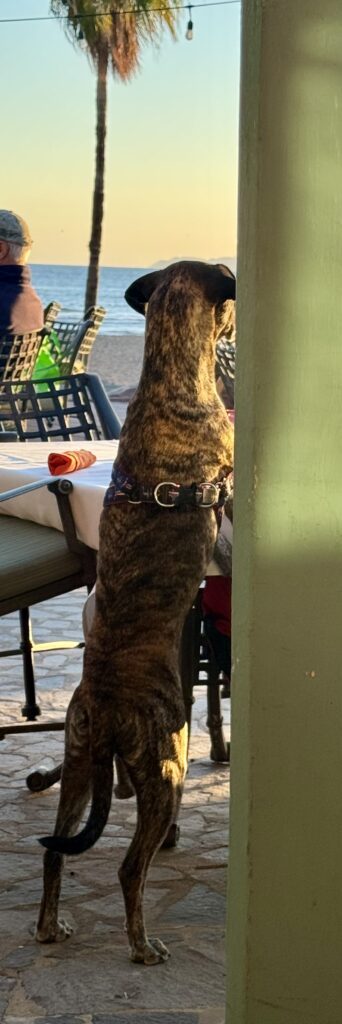
Photo Credit: Amy Tucker, 2026

I took this photograph this morning at a beachside restaurant where I enjoyed a cup of coffee. The dog appeared from nowhere in particular and everywhere at once. She checked the table the way dogs check things: a quick assessment to see whether this moment held anything that required her attention. Then she placed her paws on the table’s edge and turned her gaze outward, toward the water. The owner is getting coffee.

What struck me then and strikes me still looking at the image now is her posture. There is no asking in it. No supplication. No performance of need is designed to elicit care. She works toward nothing. She is simply a dog standing at a table at the edge of the sea, and if that position happens to be where food and drink exist, well, that is where food and drink exist. It leaves unchanged the essential fact of her presence, which requires no justification beyond itself.

I sat there for perhaps twenty minutes watching her. Other tourists approached, took photos, and moved on. A waiter brought fresh coffee to the table. No reluctance. No hurry. This part is complete; the next follows, and both are equally fine.

The village dogs of Loreto have been teaching me something I had yet to discover I needed to learn.

I wrote about them briefly in the early days here: the brown dog with gentle eyes who appeared that first evening, who sniffed my hand and then simply stood beside me in the fading light, two beings with nowhere particular to be. I called her a companion then, though companion suggests a relationship more defined than what we actually share. She appears. She stays, or she leaves. She requires nothing. I offer nothing beyond my presence. And somehow this non-relationship has become one of the steadiest features of my days here.

She is far from the only one. There are perhaps a dozen dogs I see regularly in the village. Brindle and brown and black and that particular dusty tan that seems designed by evolution to blend with sand. Well-fed, free of ownership. Collared occasionally (someone’s gesture of care) but clearly belonging to no one, or perhaps more accurately, belonging to everyone and therefore to themselves.

They move through the village with an ease I recognise as what I am attempting to learn. No schedule. No destination that must be reached. No performance of purpose to justify their occupation of space. They simply are where they are; when they are somewhere else, they are there instead, and the transition requires no explanation, no apology, no account of why the first place stopped being right and the second place became necessary.

My Lady Friend
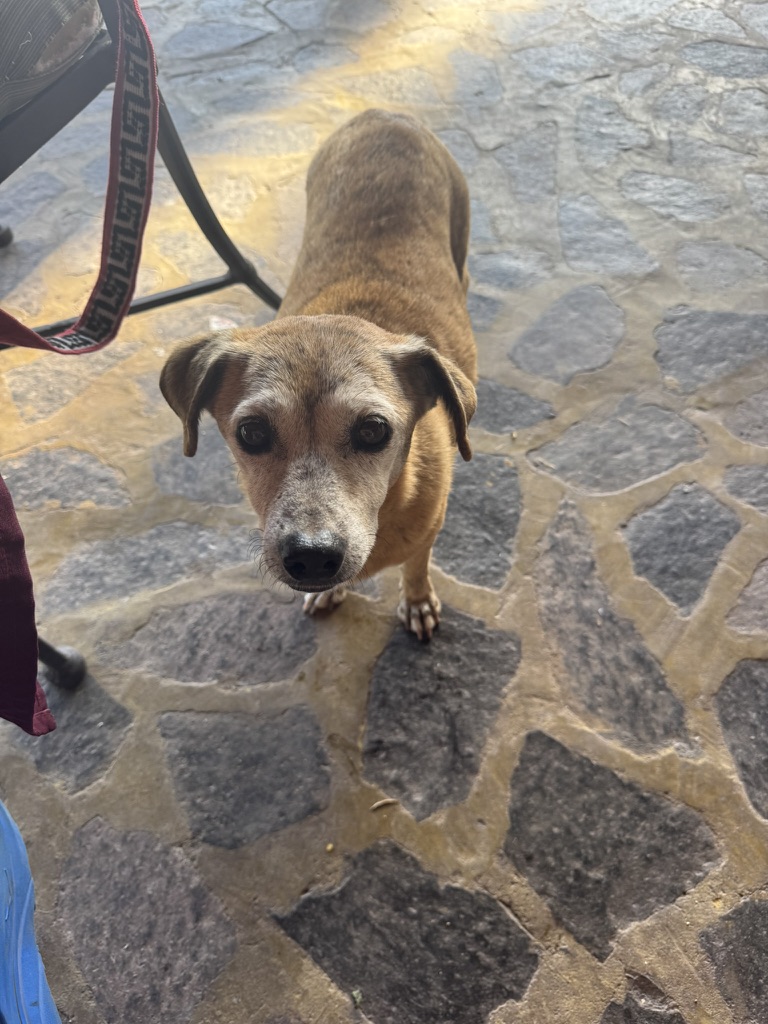
Photo Credit: Amy Tucker, 2026

I have been watching them for twelve days now with increasing attention. The way they navigate public space without claiming it. The way they accept care without becoming obligated. The way they rest in the middle of sidewalks, streets, or restaurant patios without any apparent concern that they might be inconveniencing someone. And the remarkable thing (the thing I am still trying to fully understand) is that the village allows this. More than allows it. Holds it. Make space for it. Treats it as simply as it is.

In the city where I lived for twenty-five years, this would be impossible. Dogs in restaurants must be leashed, under control, and clearly attached to responsible humans. Dogs on public beaches require permits. Dogs that exist without visible owners raise concern: Who is responsible for this animal? Who will manage it? Who vouches for its right to occupy space?

The questions come automatically, reflexively, born from a culture that cannot imagine existence without ownership, without someone being accountable, without the clear assignment of responsibility and control.

But here, the dogs simply exist, and the village simply lets them be. Feeds them when they are hungry. Gives them water when they are thirsty. Tolerates their presence at tables, in shops, and on beaches. And the dogs, for their part, seem to understand the unspoken agreement: we are here together, you and we, and the terms of our togetherness require neither ownership nor abandonment, neither claim nor rejection, just this ongoing negotiation of shared space that somehow works without anyone having to articulate the rules.

I realised, walking back to the cottage in the heat, that I had seen six different dogs in the space of an hour, and each one had seemed perfectly at ease wherever it was. No anxiety. No performance. Just dogs being dogs in the various locations where dogs be.

This is remarkable when you think about it. These are beyond the category of pets that have learned to read human moods and respond to human needs. These are beyond the working dogs with assigned tasks. These are dogs who have somehow negotiated a way of existing alongside humans without becoming dependent on them, without losing whatever essential dog-ness makes them what they are.

They are, I realise, practicing aloneness. Beyond the human version (the one that requires choosing, intending, and reflecting on whether you are doing it right), but alonetude nonetheless. Being with others without losing themselves. Accepting care without becoming obligated. Moving between community and solitude as each moment requires, without any of it needing to be a statement, a position, or a defended choice.

I have been thinking about what these dogs are teaching me about being in community without being consumed by it.

“Settling in asks surrender of nothing. It is choosing to stay with yourself.” Amy Tucker, 2026

For twenty-five years, I worked in an institution that demanded constant availability, constant responsiveness, and constant proof that I was committed, present, and performing my role adequately. Contract faculty hold far less authority to set boundaries than tenured faculty. You are available when needed. You adjust your schedule around theirs. You say yes even when yes costs you more than you can afford because saying no might mean being asked again.

This creates a particular relationship to community and to solitude. Community becomes something you perform. Solitude becomes something you seize in stolen moments, knowing you will be interrupted, knowing you need to stay alert for the email, the call, or the meeting that suddenly arises, requiring an immediate response.

The village dogs know nothing of this exhaustion. They exist in what I can only describe as a gift economy so old and so embedded that it has become invisible. The village feeds them because that is what the village does. The dogs provide companionship because that is what dogs provide. No contract. No performance evaluation. No calculation of whether the exchange balances.

Just: this is how we are together. These are the terms of our coexistence. It holds, or it falls away; if it stops holding, adjustments are made, but none of it requires the elaborate structure of obligation, debt, and credit that governed my professional relationships for all those years.

Watching them, I realise what I am trying to recover. Beyond isolation (I have never wanted that, and this month of intentional solitude has been about drawing near, never about fleeing human contact). What I want is what the dogs have: the capacity to be with others without losing myself. To accept care without becoming obligated. To offer presence without performing. To know when I need to be alone and when I want company, and to trust that both needs are legitimate and neither requires extensive justification.

The dogs are alone together. Present in the community, beyond being consumed by it. They rest in public space without apology. They approach when something interests them and walk away when it loses their interest. And somehow the village holds this, makes room for it, allows dogs to be dogs even amid human activity.

This is the model I am learning to inhabit. Beyond the isolation of withdrawal: the freedom of undefended presence. Being here without bracing. Receiving care without owing. Offering attention without depleting myself.

The brown dog is here again. She has been here for perhaps forty minutes. I have been writing. Neither of us has required anything of the other. We are simply here together, she in her rest and I in my work, and the togetherness asks nothing beyond the acknowledgment that we both occupy this space.
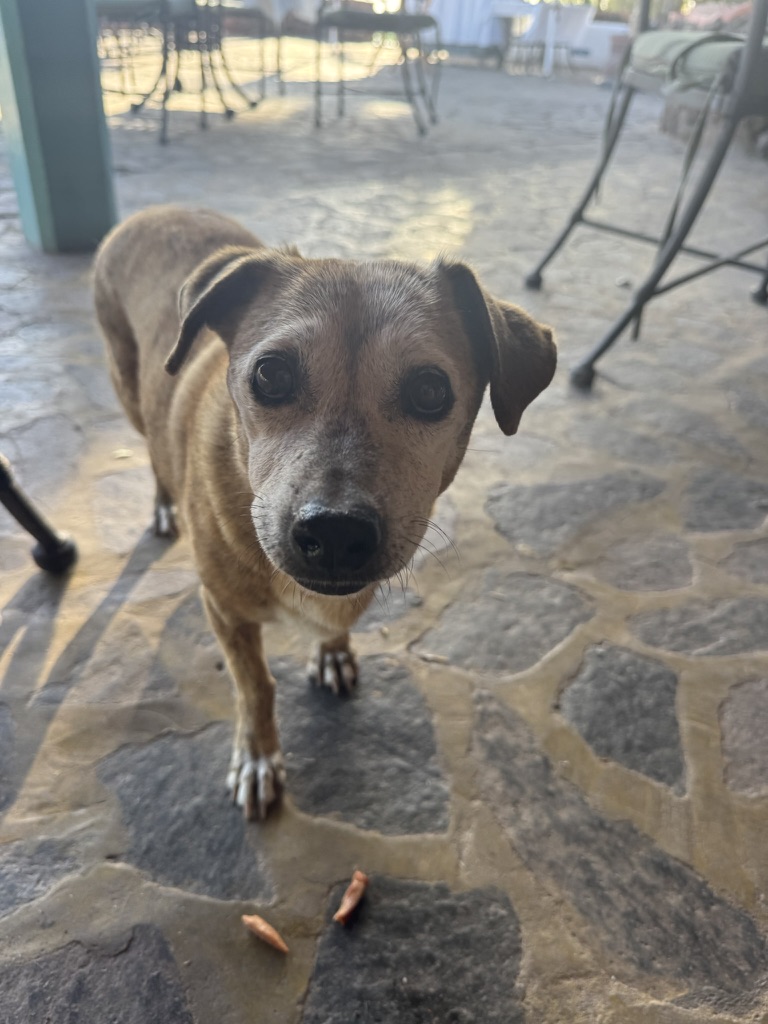
Photo Credit: Amy Tucker, 2026

The dog knows without any of this apparatus. She knows when to trust and when to be wary. She knows when to approach and when to hold distance. She knows when someone will feed her and when someone will pass by. She knows where shade is in the heat of the day and where the evening breeze comes first. She knows all of this immediately, without thought, without reflection, without the constant meta-commentary that humans call consciousness.

This is no less knowing. It is different knowing. And it might be the knowing I most need to recover: the capacity to respond to what is without the endless mediation of thought about response. To be hungry and eat. To be tired and rest. To want solitude and take it. To want company and seek it. Without justification. Without explanation. Without the entire apparatus of defence and rationalization that precarious employment built into me so deeply, I forgot it was anything other than natural.

Just: this is what the body knows. This is what the moment calls for. This is what I do.

The Freedom to Simply Be

“I am allowed to land. I am allowed to stay. I am allowed to soften.”

Amy Tucker, 2026

The dog has left now. I missed her leaving. I was focused on writing, and when I looked up, she was simply gone, off to wherever dogs go when they go. The light continues its shift toward darkness. Soon I will make dinner, following the rhythm that has become automatic. The evening will unfold as it has unfolded for eleven evenings before this one.

But something feels different tonight. Less effortful. Less monitored. As though I am finally beginning to inhabit the routine rather than performing it. Beginning to trust that my body knows what it needs and when, and that I can simply trust without constantly checking and verifying that I am resting correctly.

The dogs are teaching me this. How to be present without performance. How to accept care without obligation. How to exist in a community without losing the capacity for solitude. How to move between togetherness and apartness as the moment requires, without any of it being a statement or a defence or a position requiring elaborate justification.

Los perros del pueblo. The village dogs. Teachers with no awareness teach. Companions who require no relationship. Beings who practice alonetude so naturally they have no word for it because it is simply how they are.

I am learning from them. Slowly. With all the awkwardness of someone who forgot and is now remembering. But learning nonetheless. And tonight, this twelfth evening of intentional solitude, I feel closer to what they know. Closer to trusting my own knowing, the way they trust theirs. Closer to being what I am without the constant overlay of thought about whether I am being it correctly.

And I think again of Mary Oliver, the poet who reminded us to let the soft animal of the body love what it loves. Who asked, without urgency but with piercing clarity: “Tell me, what is it you plan to do / with your one wild and precious life?”

For the first time in a long while, I feel like I have an answer, though beyond words, and beyond any plan. It is in the small things: in the way I sit without bracing, in the way I walk without explanation, in the way I trust the day to shape itself without my need to define it in advance.

I, too, find my front paws on the table’s edge, beyond asking, beyond waiting, just watching the water shift its shape, and feeling the sun arrive exactly as it is.

Beyond performance. Beyond striving.

Just this: the body knows. The moment knows. The dog knows.
And that knowing, I am learning, is enough.

Thank you, my lady friend.

References

Haraway, D. (1988). Situated knowledges: The science question in feminism and the privilege of partial perspective. Feminist Studies, 14(3), 575–599. https://doi.org/10.2307/3178066

Oliver, M. (1986). Wild geese. In Dream work (pp. 14–15). Atlantic Monthly Press.

Serpell, J. (1995). The domestic dog: Its evolution, behaviour and interactions with people. Cambridge University Press.

El Ritmo de los Días

The Rhythm of Days

Observing the Pelicans

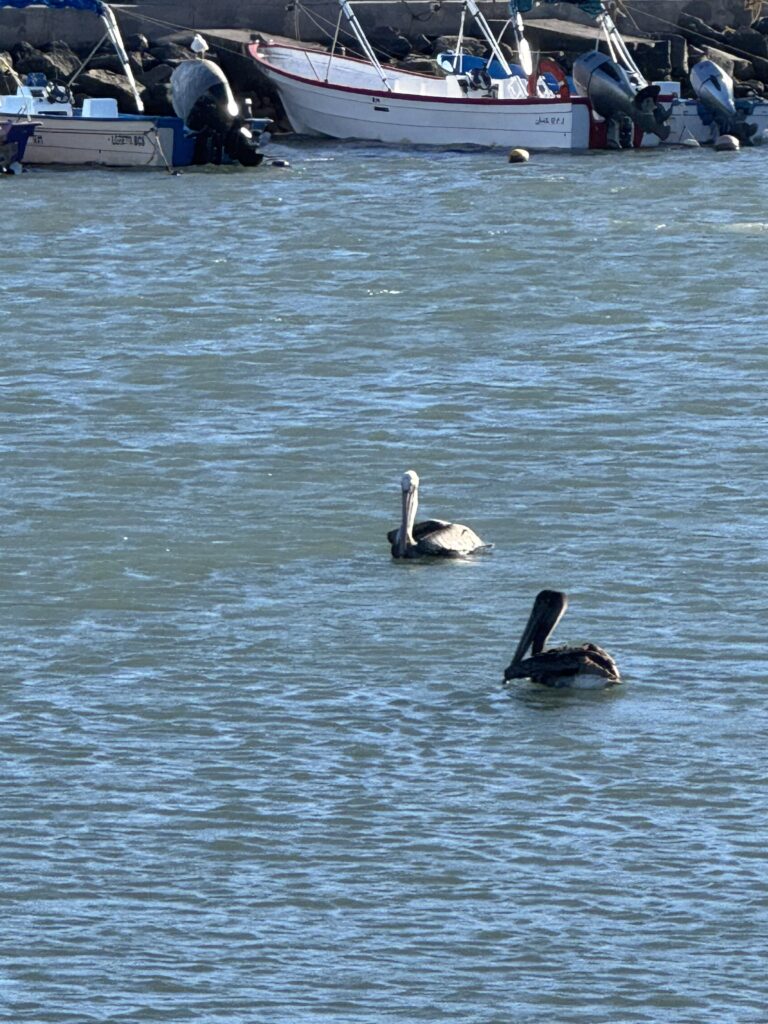
The pelicans know when to stop.

I have been watching them for twenty minutes now, their final flights to roosting sites marked by something I can only describe as completeness. Simply no hurry. No reluctance. Just the simple recognition that the fishing day is done, that rest is what comes next, that tomorrow will bring another cycle.

They raise no question about whether they have fished enough. They carry no worry about tomorrow’s needs. They simply finish when finishing is what the body, the light, and the day require.

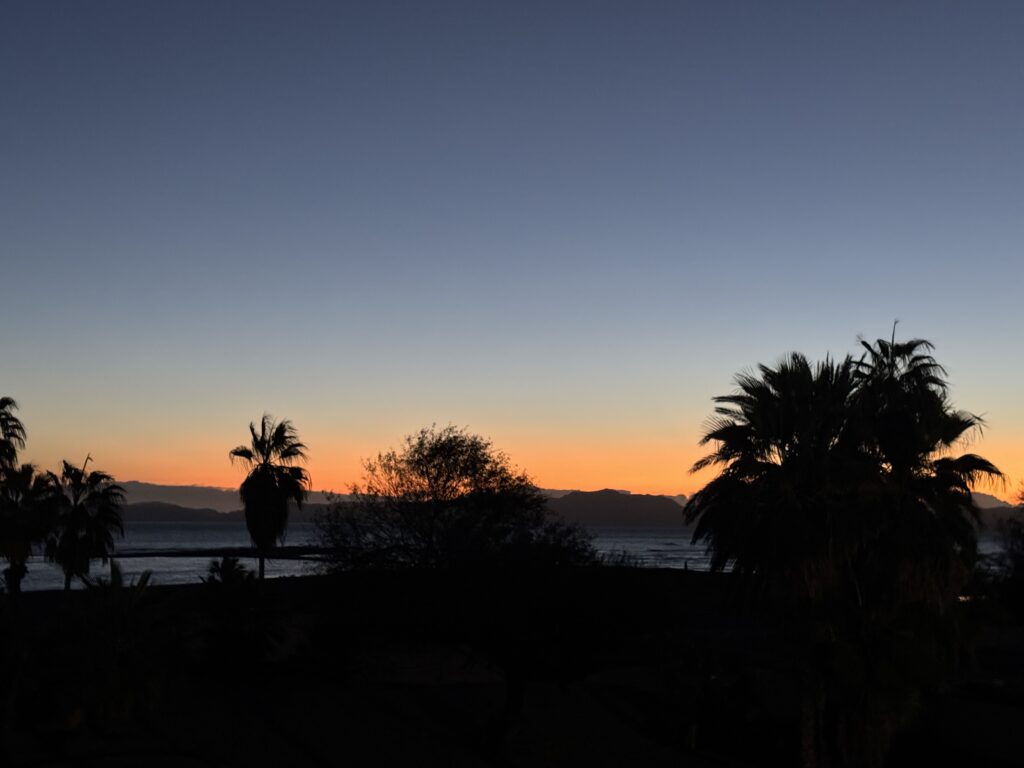
The Three Palms

Photo Credit: Amy Tucker, 2026

Discovering the Pattern

I am learning this. Estoy aprendiendo esto.

Eleven days of the same evening sequence, dinner as light begins to change, gentle movement, watching sky transform, settling into darkness, and something in me is finally believing it. The rhythm is something beyond my imposing. It is something I am joining. Something that was here before I arrived and will continue after I leave.

The pelicans taught me this first. Nowadays, the days themselves are teaching it.

My View

Photo Credit: Amy Tucker, 2026

Tonight, sitting on this balcony as stars appear one by one above the Sea of Cortez, the questions feel less urgent than they did this morning. Less like problems requiring a solution and more like… context. Background. The theoretical scaffolding that helps me understand the larger significance of what I am doing here, yet the thing itself remains just beyond language.

The thing itself is simpler.

Unlearning Vigilance

I came here exhausted. Sleep fragmented, thoughts scattered, body braced against threats that had become so constant I no longer noticed the bracing. Twenty-five years of precarious employment had taught my nervous system a particular kind of vigilance, necessary for survival, corrosive to everything else.

My body was more than tired. It was dysregulated.

I was beyond overworked. I had become wired for survival. Survival allows no room for rest. It requires vigilance, constant adaptation, and the refusal to soften.

Now, after days of consistency, the rhythm is beginning to offer a different experience. A quiet structure. A sense of what comes next. The return of a nervous system that no longer waits for disruption, but begins to anticipate calm.

It is subtle. Gentle. Emerging like light at the edge of morning.

What once felt like repetition now feels like relief. The pattern releases me from constraint. It holds me. It offers what the nervous system has long needed but could never request: predictability, softness, and something that resembles safety.


Eleven days of consistent rhythm, and the bracing is releasing. All at once? No. Dramatically? No. Just gradually, like ice melting so slowly you barely notice the transition from solid to liquid, you only notice one day that what was frozen is now flowing.

Reclaiming Routine

I have been thinking about routine.

For twenty-five years, routine was what I resisted. Every semester brought different courses, different students, different schedules cobbled together from whatever the institution needed and was willing to pay for. I prided myself on adaptability. On being able to shift quickly. On moving without consistency.

But that pride was really a cover story for precarity. You cannot depend on routine when your employment is contingent. You learn instead to be endlessly flexible, endlessly available, ready to reconfigure your life around whatever work appears.

These eleven days have shown me what I lost in that flexibility.

The routine here is simple. Wake with the light. Swim in the morning. Read. Walk in the afternoon when the heat has softened. Watch pelicans. Make dinner as the sky transforms. Sit on the patio as stars appear. Sleep.

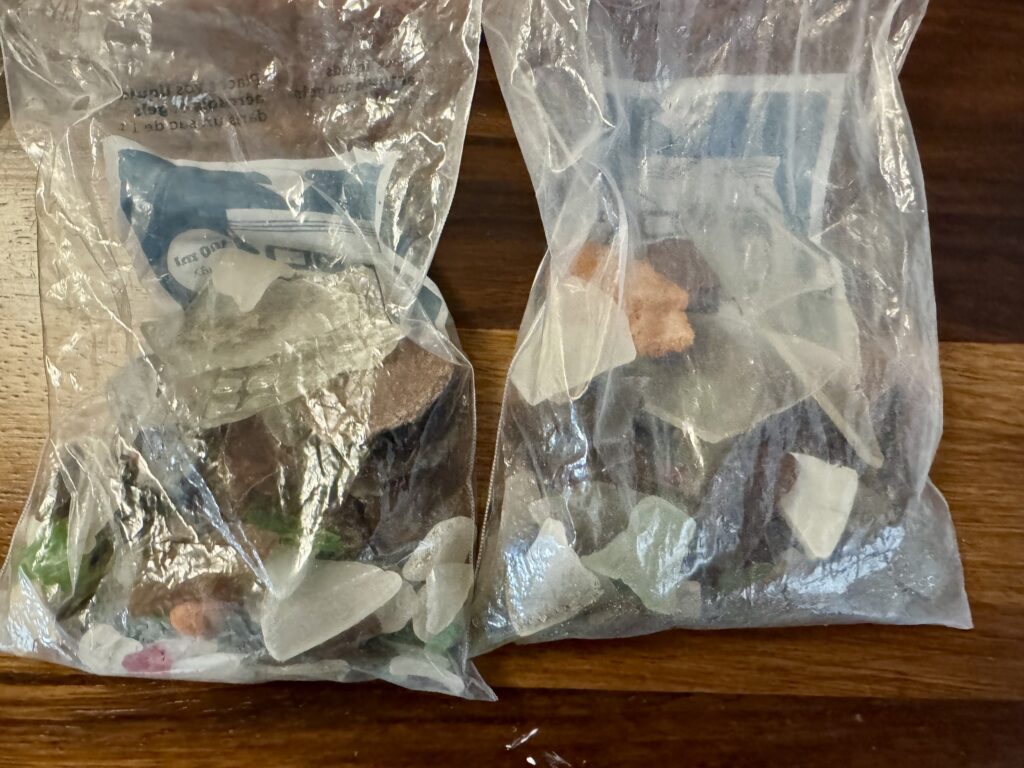
Collected Beach Treasures

Photo Credit: Amy Tucker, 2026

The same pattern, day after day.

It is a healing ritual, organic rather than imposed, beyond the performative, emergent. A sequence the body now recognises as kind. As sacred. As home.

And instead of feeling monotonous or constraining, it feels… liberating. My nervous system knows what comes next. My body can anticipate the rhythm. I can release the need to constantly recalibrate, constantly adjust, and constantly brace for the unexpected.

The routine holds me. And in being held, I can finally let go.

This is what I would call settledness. Or maybe: re-inhabiting the self. It is beyond transcendence. It is about being able to stay with myself, without bracing, without apology.

This is what I came here to discover, though I arrived without knowing it. Beyond dramatic transformation. Beyond sudden enlightenment. Just the quiet recognition that routine is the ally, never the enemy, of freedom. Precarity is. Routine, the kind you choose, the kind that serves your actual needs rather than someone else’s demands, is the structure that makes freedom possible.

Afternoon Seista

Photo Credit: Amy Tucker, 2026

Evening Reflection: What the Day Held

Pelicans are completing their fishing day. Sky is transforming through its sequence. My own completion of the day’s work, reading done, walking done, body cared for, mind given what it needs.

The pattern repeats. And I am learning to trust the pattern.

Tomorrow I will read more deeply, Haraway on situated knowledges, more Ahmed on orientation and the work of reorientation. The theoretical scaffolding continues to grow, helping me grasp the broader significance of what I am documenting here.

But tonight the theory feels secondary to something simpler. To the recognition that my body has stopped bracing. That sleep comes without struggle. That I can sit on a balcony in the evening watching pelicans and feel… at peace. Simply at peace. Without needing to analyse it, justify it, or turn it into something useful.

Good Night Loreto

Photo Credit: Amy Tucker, 2026

This is alonetude. Beyond concept. Beyond framework. Just this: being with yourself in a rhythm that your nervous system trusts, in a place that feels safe enough to finally stop performing, surrounded by the ordinary beauty of birds and water and light that asks nothing of you except that you notice.

I notice.

Lo noto.

And tonight, that is enough.

~

Tonight I will follow the familiar sequence.

Dinner already eaten, simple fish grilled with lime, rice, and vegetables that I no longer think about preparing, my hands knowing now what the routine requires. Cottage already tidied, the small acts of care that signal evening’s approach. Soon I will dim the lights, sit on the patio and watch the stars emerge, then shower and prepare for sleep.

Will I sleep through? Fifth night in a row? Or will tonight bring waking, the pattern interrupted, the nervous system deciding it needs to check, to assess, to maintain some vestige of vigilance?

The answer remains open. But tonight I notice something different in my open-wondering. No anxiety about whether I will sleep. Just… curiosity. The way you might wonder whether it will rain tomorrow. Information that will reveal itself when it reveals itself. Nothing to control. Nothing to fix in advance.

This, too, is letting go. Learning to hold the question without needing to force the answer.

The pelicans carry no worry about tomorrow’s fishing. They simply rest tonight, trusting that tomorrow will bring what it brings, that they will respond to what it requires, that the rhythm will continue, with or without their worry.

I am learning from them. Slowly. With the particular awkwardness that comes from unlearning decades of vigilance. But learning.

The day ends. Another day will begin. The rhythm continues.

And I am here, finally, learning how to join it rather than fight it.

Credit: NotebookLM 2026

El ritmo de los días.
The rhythm of days.

Simple. Constante. Sanador.
Simple. Constant. Healing.

No necesito entenderlo completamente.
Understanding it completely can wait.

Solo necesito confiar en él.
I only need to trust it.

Y esta noche, confío.
And tonight, I trust.

El patrón sostiene.
The pattern holds.

El cuerpo descansa.
The body rests.

Y eso es suficiente.
And that is enough.

When we are at last able to rest, we learn that effort was never the only way to belong.

Amy Tucker, 2026

References

Ahmed, S. (2006). Queer phenomenology: Orientations, objects, others. Duke University Press.

Google. (n.d.). Google Translate. https://translate.google.com

Nash, R. J. (2004). Liberating scholarly writing: The power of personal narrative. Teachers College Press.


Translation Note

Note. Spanish-language passages were generated using Google Translate (Google, n.d.) and subsequently reviewed and refined by the author. Any remaining infelicities reflect the limits of machine translation rather than intent.

La Fundación

Ten days to build a foundation.
Perhaps small, you might think.
Too brief, it seems, for anything significant.

But foundations are built to be solid, never showy.
They are meant to hold.
Hidden underground, bearing weight,
making everything above them possible.

I came here exhausted.
Sleep fragmented, thoughts scattered,
body braced for threats that never came
but whose approach I had learned to anticipate
with the precision of an expert meteorologist
reading the weather that only I could see.

Ten days to teach my nervous system:
The emergency is over.
The storm has passed.
You can stop bracing now.

Ten days of the same evening sequence.
Ten days of the same morning light.
Ten days of pelican fishing at predictable times.
Ten days of waves maintaining their patient rhythm.
Ten days of data accumulating below conscious awareness.

And somewhere in those ten days,
my body decided to believe it.

La fundación sostiene.
The foundation holds.

Without forcing it.
Without earning it.
Without proving myself worthy.

Because I maintained conditions.
Because I honoured rhythms.
Because I stopped interfering
with processes wiser than conscious thought.

Ten days.
Diez días.

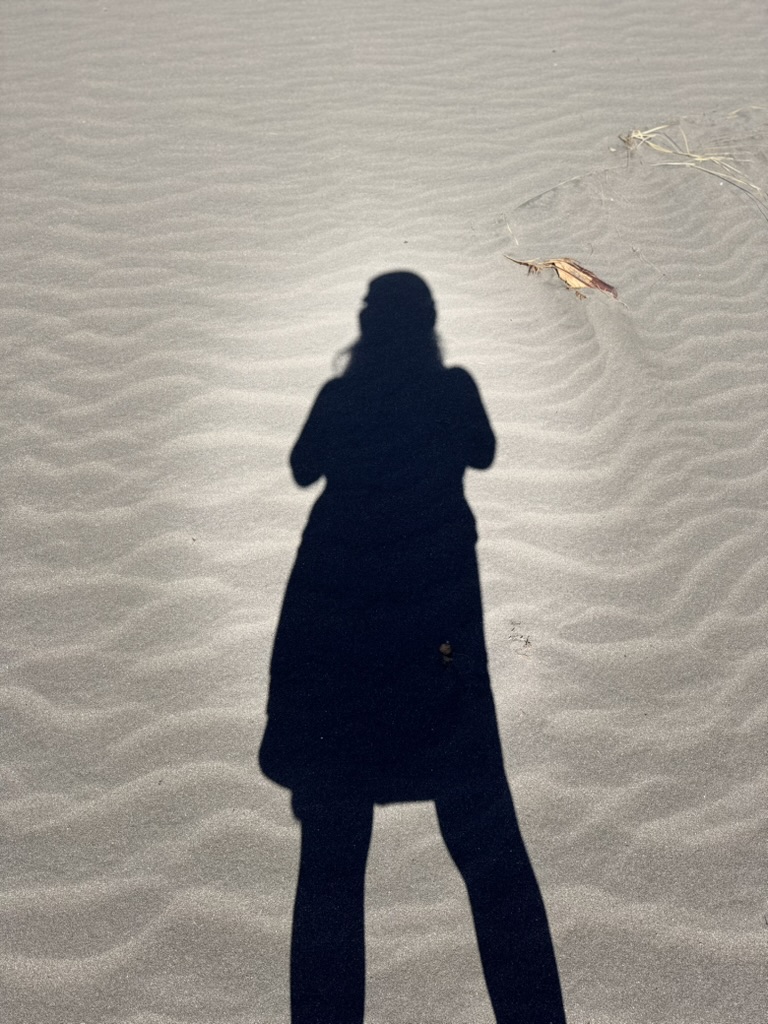
The Sand Shadow

Photo Credit: Amy Tucker, 2026


Translation Note

Note. Spanish-language passages were generated using Google Translate (Google, n.d.) and subsequently reviewed and refined by the author. Any remaining infelicities reflect the limits of machine translation rather than intent.

References

Google. (n.d.). Google Translate. https://translate.google.com

Day Ten: La Fundación

Evening

The light is doing that thing again.

Blue dissolving into gold, gold bleeding into rose, rose deepening into violet. Del azul al oro, al rosa y al violeta. I have watched this transformation from this balcony for ten evenings now, and it has never been the same twice. The colour shifts with cloud cover, humidity, and the presence or absence of wind. Each sunset is singular. Unrepeatable. A gift offered once and then gone.

I am learning to receive it without trying to hold it.

This is harder than it sounds. My instinct, trained by decades of academic work, is to document, to analyse, to pin down. To turn experience into data that can be preserved, referenced, and cited. But sunsets resist this treatment entirely. They happen, they transform, they vanish. All you can do is be present while they occur.

Shadows that Haunt Me

Photo Credit: Amy Tucker, 2026

Ten days. Diez días.

It feels both longer and shorter than that. Longer because so much has shifted, the sleep that consolidates, the thoughts that clarify, the nervous system that learns to trust. Shorter because time here moves differently from time in my old life. The days unfold rather than accumulate into weeks that must be gotten through. They simply unfold, each one complete in itself.

This morning I wrote about being ready for deeper work.

This afternoon, I discovered whether that was true.

Three hours reading Kaplan and Kaplan’s The Experience of Nature. Dense academic writing. Multiple theoretical frameworks were synthesised. Complex arguments are built across chapters. The kind of scholarship that, a month ago, would have required multiple passes, extensive notes, and constant backtracking to passages still just beyond my grasp.

Today, it made sense on first reading.

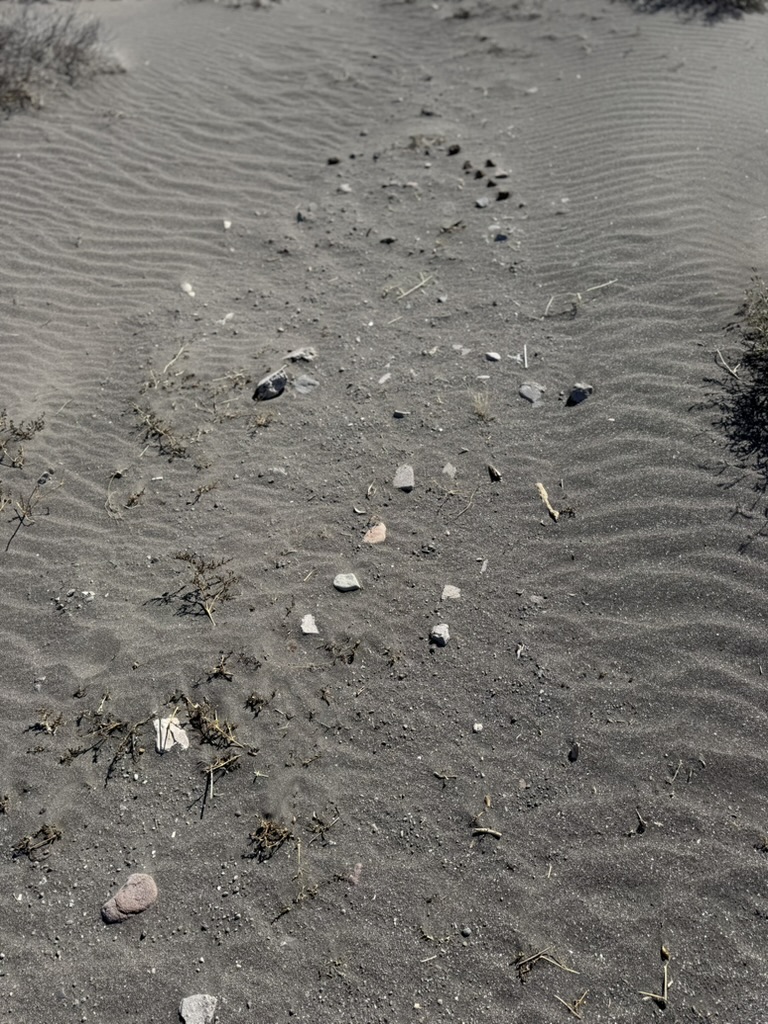
Rock Art

Photo Credit: Amy Tucker, 2026

Some concepts will need return visits, to sit with, to let marinate. But the basic structure of their argument, the way they build their case for nature experience as psychologically restorative, the relationship they trace between environmental qualities and cognitive restoration: clear. Accessible. My mind is following along without forcing it.

This is what full cognitive capacity feels like. The ability to think deeply, with them. To follow sustained arguments. To hold multiple ideas in relationship. To synthesise.

The relief of this is enormous.

I had begun to wonder whether the cognitive impairment was permanent. Whether months of sleep fragmentation and chronic stress had done lasting damage. Whether I would ever again be able to engage with complex theory the way I once had.

The answer, apparently, is yes. Given sufficient rest, given release from chronic threat, given time for the nervous system to recalibrate, the capacity returns.

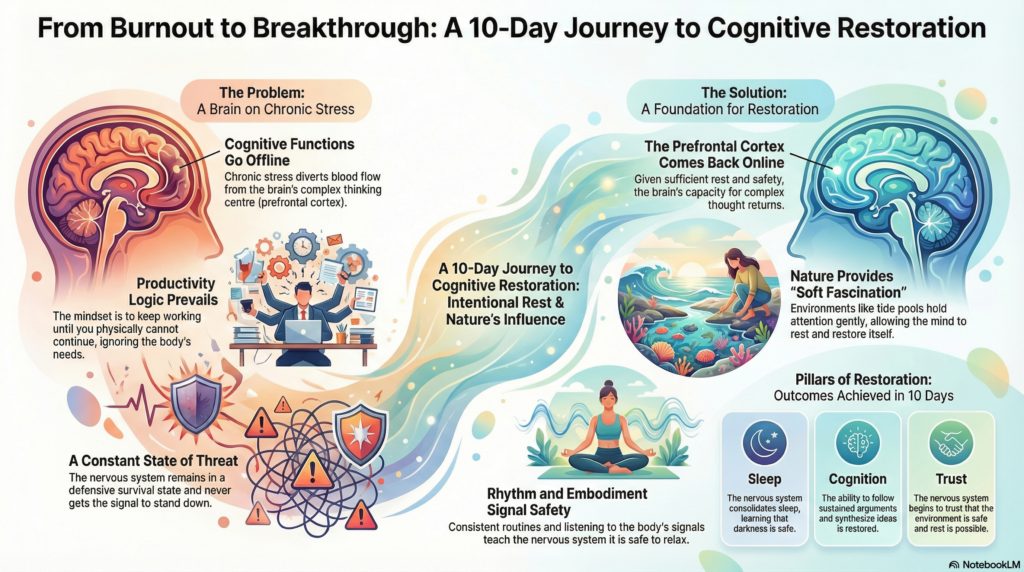
Arnsten’s research on stress and prefrontal function helps me understand why. When the nervous system operates in a defensive state for extended periods, blood flow and glucose are redirected away from the prefrontal cortex, the part of the brain responsible for complex thinking, toward more primitive structures involved in survival. This is adaptive in the short term. Nuanced analysis is useless when facing immediate danger. You need fast, automatic responses.

Google. (n.d.). Google Translate. https://translate.google.com

But when the threat becomes chronic, when the nervous system never gets the signal that it is safe to stand down, those executive functions simply go offline. Offline. Temporarily unavailable. The biological infrastructure that supports complex thought is taken out of commission to conserve resources for survival.

These ten days have convinced my nervous system that the emergency is over. Those resources can be redirected back toward thinking, toward curiosity, toward engagement with ideas.

The prefrontal cortex is online again.

Gracias, cuerpo. Thank you for this restoration.

The Skies Above Me

Photo Credit: Amy Tucker, 2026

After reading, I stopped.

This is remarkable, though it may sound otherwise.

For years, I have operated with a productivity logic that says: if you can still function, you should keep working. Rest is what you do when you literally cannot continue. Until then, push.

This afternoon I was tired. Just tired in that natural way, that comes after sustained intellectual engagement. My body said enough for now. And I listened.

I made lunch. Sat on the patio. Ate without reading, without working, without multitasking. Simply ate. Tasted the food. Felt the sun.

Lunch

Photo Credit: Amy Tucker, 2026

Then I lay in the hammock for an hour.

Resting, in a hammock in the afternoon with the sound of waves, the movement of air, and the warmth of the sun filtered through palm fronds.

This is what Nash means when he writes about Scholarly Personal Narrative as a practice of presence. Being fully in the experience, beyond just documenting it. Allowing yourself to notice what is actually happening rather than constantly narrating it, analysing it, and turning it into something useful.

Sometimes you just lie in a hammock.

That is the whole story.

Rocks!

Photo Credit: Amy Tucker, 2026

Late afternoon, I walked.

Beyond fitness goals or counted steps. Without a destination in mind. Just walking because my body wanted to move, and the beach was there, and the light was beginning to change.

I walked north until I reached the tide pools. Sat on a rock. Watched small crabs scuttle between crevices, tiny fish dart through shallow water, sea anemones open and close their delicate tentacles.

Sea Life

Photo Credit: Amy Tucker, 2026

An entire world in a depression carved into stone by centuries of waves.

Time felt different there. Expansive. Unhurried. As though the afternoon had all the space it needed, and there was no rush to get to the evening. Merleau-Ponty (1945/2012) writes about lived time, time as experienced rather than measured. Time expands when you are fully present and contracts when you are anxious about what comes next.

When I finally stood to walk back, my legs were stiff from sitting, but my mind was quiet in a way months had taken from it. The constant low-level hum of anxiety, the voice that is always calculating, planning, worrying about what needs doing next, had simply stopped.

This is what Kaplan calls “soft fascination.” The quality of engagement that holds your attention gently, without effort, without demanding anything. Natural environments provide this. The movement of water. The scuttling of crabs. The opening and closing of anemones. Your attention is engaged and unhurried. And in that gentle engagement, something in the nervous system settles.

Attention Restoration Theory argues that modern life depletes what they call “directed attention,” the capacity to focus on tasks that require effort, to inhibit distraction, and to sustain concentration. We exhaust this capacity constantly: driving in traffic, responding to emails, sitting through meetings, forcing ourselves to concentrate on work that holds little natural interest.

Nature restores directed attention by allowing rest rather than stimulating further. By providing what Kaplan calls “being away,” a break from the demands that deplete us. By offering soft fascination, engagement without effort. By creating compatibility between what the environment offers and what we need in that moment.

Sitting on that rock watching tide pools, I was away. I was softly fascinated. The environment was perfectly suited to what I needed.

And something that had been tightly wound for months finally loosened.

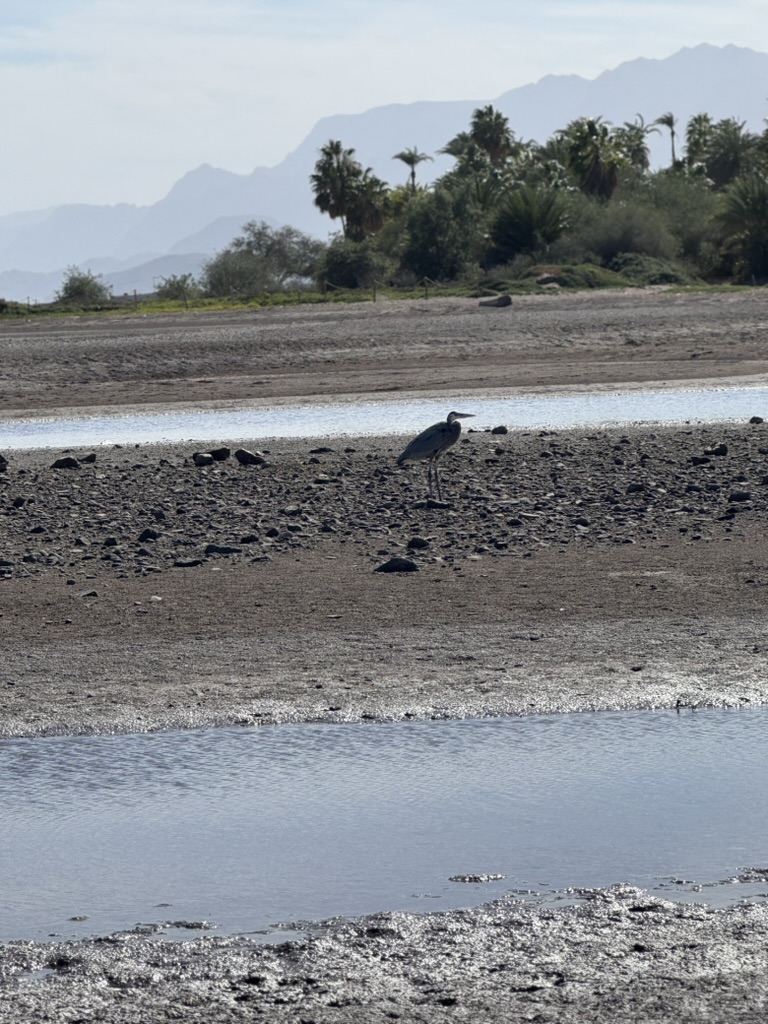
Sea Gulls Fishing

Photo Credit: Amy Tucker, 2026

Evening now.

I made dinner as the light began its transformation. Simple food: canned fish with lime, rice, and vegetables. Ate on the patio. Watched the birds complete their final fishing runs before settling for the night.

Dinner Time

The pattern is so familiar now that I could set a clock by it. Morning fishing. The midday rest. The late afternoon fishing. The evening returns to roosting sites. Day after day, the same rhythm.

Rich with variation, Each day holds its own variations. Weather. Wind. The presence or absence of baitfish near the surface. Sometimes the pelicans fish alone. Sometimes in groups. Sometimes they dive from great heights. Sometimes they simply skim the surface, plucking small fish without submerging.

The rhythm allows for variation. The variation occurs within rhythm. Neither negates the other.

I am learning this. Estoy aprendiendo esto.

Slowly.

What has ten days built?

I have been asking myself this as the light fades and the first stars appear. What is different now from ten days ago when I arrived at this cottage, suitcase still packed, uncertain whether I knew how to stay?

Sleep: Three nights of sleeping through. The pattern is consolidating. My nervous system, learning that night, means rest: that darkness is safe, that vigilance can be released for seven hours without catastrophe.

Cognition: Prefrontal cortex restored. Can read complex theory. Follow sustained arguments. Synthesise across frameworks. Think without forcing each thought into existence through sheer will.

Embodiment: Being in my body rather than trying to manage it from outside. Can feel sensations without them being threatening. Can notice needs before they escalate into emergencies.

Rhythm: Evening sequence established. Morning patterns are consolidating. The body learning to read time through environmental cues, light quality, temperature, the pelicans’ flight patterns, rather than the external demands that structured my old life.

Trust: the foundation beneath everything else. My nervous system is beginning to trust. Trust that this environment is safe. Trust that rest will come. Trust that the next crisis can find me unhurried, the next email that changes everything, the next announcement that requires scrambling, repositioning, and proof of worth.

The foundation holds.

Tomorrow I will build on it. More reading. More theoretical engagement. Days eleven through twenty moving toward integration, bringing embodied experience into conversation with scholarly frameworks. Seeing how research illuminates what the body already knows. Contributing, eventually, to conversations about solitude and healing and the conditions that support nervous system regulation.

But tonight I simply rest in what ten days have created. In the capacity that has been restored. In the trust built brick by brick, through consistent rhythms and environmental cues, my conscious mind barely registered, but my nervous system tracked with precision.

Sea of Cortez

Photo Credit: Amy Tucker, 2026

Long enough to begin.

In an hour, I will begin the evening sequence. The rituals my nervous system has learned to recognise as the approach of rest.

Dinner already eaten. Dishes washed. Cottage tidy. All the small acts of care that signal: evening is here, night is coming, you can begin to let go.

Will I sleep through tonight? Fourth night in a row would confirm the pattern even more strongly. It would give my system even more evidence that this is real, sustainable, and trustworthy.

But even if I wake, even if tonight fragments again, I know more now than I did ten days ago. I know what supports sleep. I know what environmental cues signal safety. I know how to maintain conditions even when the immediate results fall short of my hopes.

Healing releases control of outcomes. It is about maintaining conditions and trusting the system to respond.

I cannot force my nervous system to trust. But I can keep creating the circumstances that make trust possible. Keep following rhythms. Keep honouring the body’s signals. Keep providing the environmental conditions required for safety.

The actual sleeping, the actual healing, the actual transformation. These happen in their own time. Beyond conscious control. According to processes more ancient and wiser than anything my conscious mind can manage.

All I can do is maintain the conditions and step aside.

El umbral. The threshold.

I stand on it tonight. Looking back at the ten days that built a foundation. Looking forward to twenty more that will build on it.

Here. On this threshold. Leaving what was behind, arriving toward what comes next. Noticing what is.

The foundation holds. My body knows this. My nervous system has learned it through accumulated evidence that conscious thought played almost no role in gathering. Tomorrow I build upward from here.

But tonight, esta noche, I rest.

The pelicans have settled for the evening, wherever it is they go when light fails, and the sea turns dark. The stars are beginning to appear, one by one, then a handful, then too many to count. The waves continue their patient rhythm, the same rhythm they have maintained for millions of years, the same rhythm they will maintain long after I have left this place and returned to whatever life awaits me back home.

And I sit on the balcony on the tenth evening, holding the question that all thresholds hold:

What becomes possible when the foundation is sound?

Tomorrow I begin finding out.

La fundación sostiene.
The foundation holds.

Mañana construimos hacia arriba.
Tomorrow we build upward.

Pero esta noche, solo esto.
But tonight, just this.

El mar. Las estrellas. El ritmo constante.
The sea. The stars. The constant rhythm.

Y un cuerpo que finalmente descansa.
And a body that finally rests.

From Burnout to Breakthrough

Credit: NotebookLM, 2026


Translation Note

Note. Spanish-language passages were generated using Google Translate (Google, n.d.) and subsequently reviewed and refined by the author. Any remaining infelicities reflect the limits of machine translation rather than intent.

References

Arnsten, A. F. T. (2009). Stress signalling pathways that impair prefrontal cortex structure and function. Nature Reviews Neuroscience, 10(6), 410–422. https://doi.org/10.1038/nrn2648

Kaplan, R., & Kaplan, S. (1989). The experience of nature: A psychological perspective. Cambridge University Press.

Kaplan, S. (1995). The restorative benefits of nature: Toward an integrative framework. Journal of Environmental Psychology, 15(3), 169–182. https://doi.org/10.1016/0272-4944(95)90001-2

Merleau-Ponty, M. (2012). Phenomenology of perception (D. A. Landes, Trans.). Routledge. (Original work published 1945)

Nash, R. J. (2004). Liberating scholarly writing: The power of personal narrative. Teachers College Press.

Day Nine: Lo Que La Restauración Hace Posible

What Makes Restoration Possible

When the Sky Speaks

Photo Credit: Amy Tucker, 2026

The sky is doing that thing again. Blue becomes gold, becomes rose, becomes violet, and if you blink, you miss the exact moment one colour surrenders to the next. Del azul al oro, al rosa y al violeta. (For the record, I have to look up every word in Spanish in my translator.) I have been sitting here on the balcony watching it happen, trying to find words for what today felt like, and I keep circling back to the same inadequate word: different.

Different. And yes, better.

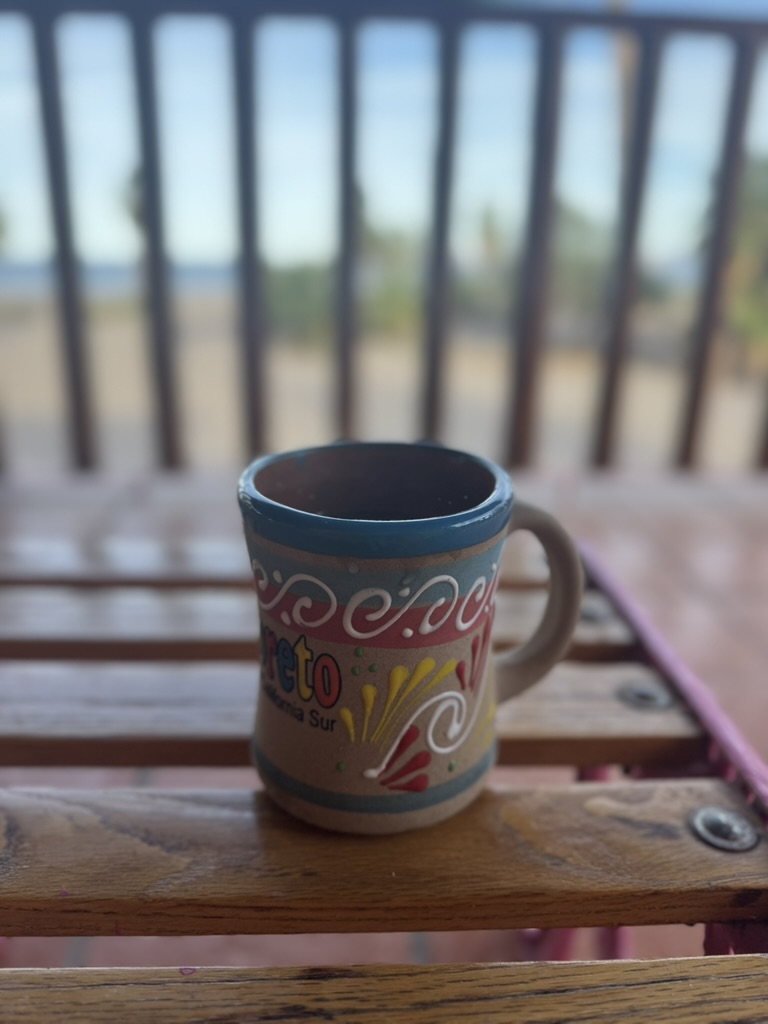
Coffee by the Sea

Photo Credit: Amy Tucker, 2026

Different in a way that makes me realise how long I have been living in that other place. The one where everything costs. Where even simple things, getting out of bed, making coffee, being present in my own life, require negotiation and force and that particular grinding willpower that is really just exhausted determination wearing a productivity costume.

Today arrived without force. No tuve que forzar nada.

I woke without the usual calculation of whether I had enough in the tank to make it through. No caffeine required, no stubbornness invoked to override my body. No careful rationing of attention, like it might run out before sunset.

Things just… happened. Todo fluyó. Thoughts connected. Words came. My body moved through space without requiring constant management. Natural. Like breathing. Like the way I imagine other people, rested people, move through their days without even noticing how easy it is.

Three hours

This morning I wrote for three hours. Tres horas. The kind of writing where you look up and realise time passed, and you were simply in it, beyond the counting, beyond the forcing of each sentence into existence through sheer will.

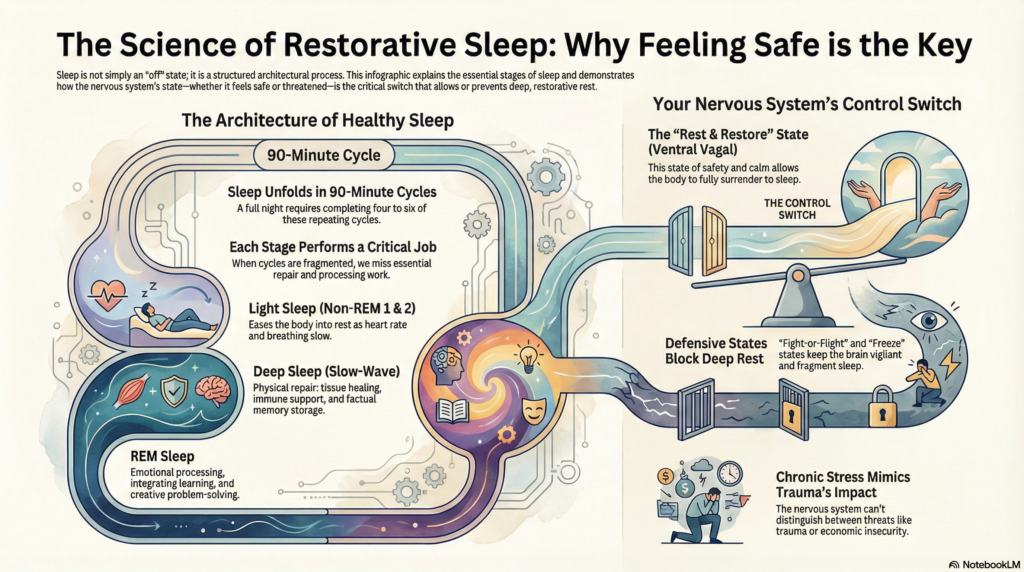
I wrote about what happened last night. About sleep architecture and nervous system states, and why my body finally trusted enough to sleep through. I wove together material from Walker (2017) on sleep cycles and Porges (2011) on the polyvagal system, along with what actually happened in my own body between 11 PM and 6 AM. Complex theoretical frameworks are talking to each other through my experience. All of it makes sense. All of it flowing.

Sleep Cycle

Created: Gemini AI, 2o26

Three months ago, this would have been impossible.

Beyond hard. Impossible.

And I need to be precise about that distinction because it matters.

There is this thing that happens when you have been stressed and sleep-deprived for long enough. People talk about it like you are just a little foggy, a little slower, like turning down the volume on a radio. That description misses what it feels like from inside. From inside, it feels like parts of your brain just… stop. Go dark. Offline (Arnsten, 2009).

The prefrontal cortex, the part that does complex thinking, that holds multiple ideas at once, that synthesises and integrates and makes connections, needs massive resources to run. Blood flow. Glucose. Energy. And when your body thinks it is in danger, when your nervous system has been reading the environment as threatening for weeks or months, those resources get redirected. Away from thinking, toward surviving. The amygdala scans for threats. The brainstem is ready to react. Ancient survival systems running the show while the thinking parts go quiet (Arnsten, 2009; Goldstein & Walker, 2014).

Which makes perfect evolutionary sense if you are running from a predator. Nuance is useless when you need to run. You need fast, automatic, proven responses.

The problem is that economic precarity (precariedad económica) is no predator. Contract uncertainty cannot be outrun. But try telling that to a nervous system running million-year-old software that says: sustained threat equals redirect all resources to survival.

So the thinking parts go offline. Executive functions dim. And you tell yourself you are just tired, that you need to try harder, that you need more coffee.

Untitled

Photo Credit: Amy Tucker, 2026

Except that trying harder proves ineffective when the biological structures that underpin complex thinking have been taken offline to conserve resources for mere survival.

This morning, those structures were back. I could feel it, bodily, somáticamente, in my actual body. I read something from Walker’s work, and I could hold the concept while simultaneously connecting it to Porges and to what happened in my own sleep last night. Three frameworks, held together, talking to each other in my mind.

A month ago, reading that same passage, I would have had to stop. Reread. Make notes. Force comprehension through sheer determination. Today it just… made sense. La comprensión fluyó. Understanding flowed.

The Dissertation

After lunch, I did something I have been avoiding. I opened my dissertation files. The pages I wrote months ago when sleep was breaking every night, when my nervous system was in constant alert, when exhaustion had become so normal I had stopped recognising it as a state separate from just being me. Yes, in addition to pursuing a Master’s in Human Rights and Social Justice, I am also completing a doctorate.

I was bracing for it to be bad. Full of gaps. Incoherent in places. The kind of work you produce when your prefrontal cortex is running on fumes, and you are just trying to get through.

It was good. Actually, genuinely good. The arguments held. The theory was solid. The thinking was clear.

And I sat there staring at these pages I wrote while barely functional and felt this complicated tangle of relief and grief. Una especie de duelo. Because if I could do that work while exhausted, produce something sound while my body was in survival mode, while parts of my brain were literally offline, what might I have been capable of if I had been rested?

What did I lose to those months of pushing through?

I watched the pelican outside my window for a long time. Dive. Rest. Zambullirse y descansar. Dive. Rest. Over and over. That simple rhythm. And something shifted in how I was thinking about the question.

The assumption underneath my grief was that exhausted-me and rested-me are the same person in different states. But that framing misses something. The work I produced while exhausted was shaped by that exhaustion. The questions I asked, the frameworks I reached for, the way I approached the material: all of it came from living inside chronic activation and precarity.

That work has value because it was written from within the very thing it seeks to understand. Nash (2004) argues that lived experience (experiencia vivida) is legitimate scholarly data when you examine it rigorously. My exhaustion was enriching the work. It was part of the data.

What restoration gives me goes beyond redoing that work “properly.” It is the chance to add another layer. To examine chronic activation from the perspective of someone who has lived both states and can now see the relationship between them.

Both matter. Both are real. Both contribute.

I have been writing down what I notice in my body at different points today. For no formal reason. Just because the consistency seemed worth documenting.

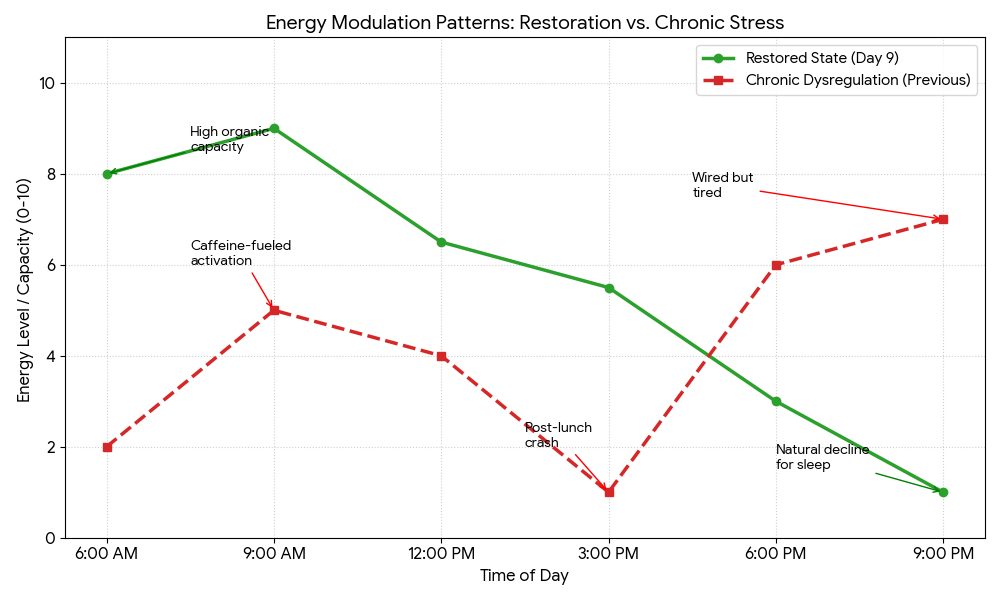
Morning: Waking without an alarm. The body knows what time it is from some internal clock that fragmented sleep had disrupted. That feeling of being actually rested sinks all the way into my bones. Quiet joy mixing with disbelief, mixing with gratitude. High energy but organic, unforced, free of chemical aid, just available. First conscious thought: I slept through.

Mid-morning: Three hours of writing behind me. Shoulders loose. Jaw soft. Hands steady. That focused clarity without the edge of strain I am so used to. Still high energy, sustained without effort. No fatigue. Apparently, complex intellectual work thrives beyond defensive nervous system states. Who knew.

Afternoon: After lunch. Gentle hunger satisfied. Digestion easy. Muscles relaxed. Just… contentment. Being in my body instead of trying to manage it from somewhere outside. Energy is moderate now, appropriate to midday. Body speaking up clearly about needs: thirst, hunger, time to move, instead of waiting until an emergency before getting my attention.

Later afternoon: Reading dissertation. Sitting comfortably without conscious effort. No tension accumulating in neck and shoulders. Emotions complex, that relief-grief tangle, present but manageable. Holding contradictory feelings without my nervous system reading emotional complexity as a threat. Energy is holding steady.

Evening: Sunset. Cooling air. Breath synchronised with waves. Body at ease. Deep peace. That gentle anticipation of evening unfolding. Energy naturally declines as the day winds down. Unwound rather than crashed. Present rather than depleted. Responsive to circadian rhythms, to what is actually needed now.

Night: Preparing for sleep. The body is already beginning the transition. Muscles releasing. Calm. Trust that sleep will come, that my body knows how to do this. Very low energy, sleep-ready. And here is what strikes me: no anxiety about whether tonight will repeat last night. Just readiness.

Looking at this pattern, the way energy moved across the day, I can see how it is supposed to work. La naturalidad. The naturalness of it. High when needed for writing. Moderate for reading. Naturally declining toward rest. Responsive. Appropriate. Organic.

For months, my energy looked nothing like this. Low despite caffeine. Forced into function through will. Brief spikes when adrenaline kicked in. Complete crashes. Forced back up. Anxious and activated at night when I needed sleep.

That is dysregulation wearing a performance of function. That is dysregulation. That is what happens when the nervous system cannot access the state that allows for appropriate energy modulation.

Today, my energy followed the pattern research says is healthy (Kaplan, 1995; Ryan & Deci, 2000). And I know that sounds abstract, mere “research says” abstraction, but from inside it feels like my body finally remembering how to be a body. How to respond to actual needs instead of just surviving threat after threat after threat.

The Pelican’s Teaching

Photo Credit: Amy Tucker, 2026

My hands wanted charcoal this afternoon. For no reason except they wanted it. So I drew the pelican. El pelícano. The one I have been watching all week. Beyond accuracy, Trying to capture the quality of movement. The dive. The pause. The rest. El ritmo. That rhythm.

And here is what I am seeing: effort and ease work as partners. El esfuerzo y la facilidad no son opuestos. They are partners.

The dive takes everything. Wings folding, body plummeting, that violent entry into water, struggling with a fish. Real effort. Then the rest is complete. Body still on the surface, conserving, digesting. Real rest.

Neither negates the other. The effort is recognised; it simply requires rest. The rest is earned, because it follows effort. They are both necessary. Both are part of the natural rhythm.

I have been living like they are in competition. Like rest is something I have to earn through sufficient effort. Like, I can only access it once I have accomplished enough to justify it. Like needing rest means I am weak or inefficient or somehow failing.

El pelícano no piensa así. The pelican holds no such story. The pelican dives when hungry. Rests because the body needs to conserve energy between dives. Neither requires justification. Both are what the body needs.

I am learning this. Despacio. Slowly. Con dificultad. With difficulty. But learning.

What I am afraid of

It is almost time for bed, and there is a question I have been avoiding all day. What if last night was a fluke? What if tonight I wake at 2 AM with thoughts racing? What if my nervous system’s trust was temporary, contingent, fragile?

I can feel anxiety activating around this. Shoulders tensing. Breathe shallow. Hypervigilance creeping back: scanning, trying to control, attempting to guarantee through worry that last night repeats.

But here is what I learned this morning, what the research showed me: nervous systems bypass conscious decisions about safety entirely. They respond to environmental cues. Señales ambientales. To patterns repeated across time. To accumulate data (Porges, 2011).

Nine nights now. Same evening sequence. Same environmental cues. That is data my nervous system has been gathering.

One night of unbroken sleep does something more interesting than erase that pattern. It confirms it. The conditions that supported last night’s rest remain. Evening rhythm is stable. The acoustic environment provides low-frequency, rhythmic patterns that signal safety. Darkness is complete and held safely. Predictability that allowed my system to trust enough to release vigilance.

I cannot control whether I sleep through tonight. But I can maintain the conditions that supported last night. Follow the same sequence. Honrar el ritmo. Honour the rhythm. Trust my nervous system is doing what nervous systems do: gathering data, testing predictions, updating assessments.

And if I wake tonight? That is also data. Data. Information about how healing actually proceeds when you get close enough to see it.

Nine days

Nueve días. Nine cycles of morning and evening. Nine progressions dark to light to dark. The pattern repeats but is never exactly the same. Each day is similar in structure, unique in texture, in quality, in what it shows me.

Today showed capacity. Hoy reveló capacidad. The capacity to think clearly. Write with rigour and creativity. Hold complexity without overwhelm. Feel contradictory emotions without dysregulation. Notice what the body needs and respond appropriately.

I had begun to think these capacities were gone. Diminished permanently by months of stress and fragmentation. But they were offline, waiting. Estaban desconectadas. Waiting for conditions that would let them function.

Last night’s unbroken sleep provided those conditions. Seven hours of sustained regulation. Seven hours of complete sleep cycles. Seven hours of trust.

And today, the harvest. La cosecha de ese descanso. Clear thinking. Sustained energy. Natural rhythms.

Tomorrow night will bring its own data. Sleep through or wake, either contributes to understanding. The nervous system is learning what safety feels like. El sistema nervioso está aprendiendo cómo se siente la seguridad. Learning to recognise it. Trust it. That learning moves in spirals, circling back. Some nights, complete rest, some partial waking. Both teaching the system about regulation, about what supports healing, about the gradual recalibration from threat to safety.

What Direction?

Photo Credit: Amy Tucker, 2026

What I know tonight, sitting here as the last light fades and first stars appear above the sea, mientras se desvanece la última luz del cielo y aparecen las primeras estrellas sobre el mar: healing is something concrete and measurable, It is a concrete, lived, measurable reality.

My body slept through last night. First time in months.

My mind engaged in complex theoretical work today. First time in weeks.

My energy modulated appropriately across the day. First time I can remember.

Facts. Data points. The larger pattern of regulation and recovery is becoming visible.

El ritmo continúa. The rhythm continues. The pattern repeats. The body learns. And I, finally, am learning to trust this.

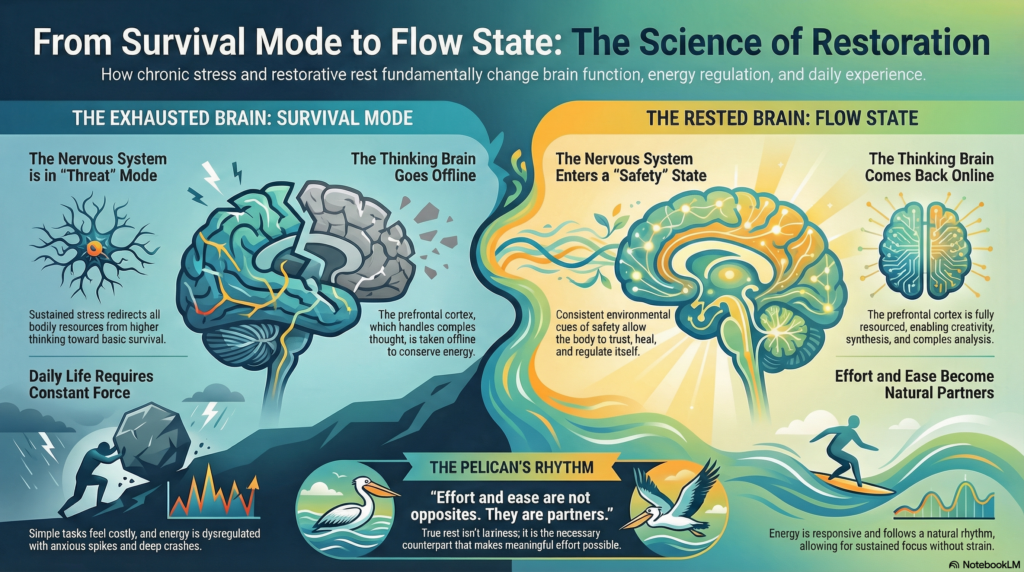
Figure 2: From Survival Mode to Flow State

Credit: NotebookLM, 2026

Gracias, cuerpo. Thank you, body.

Por este día de claridad. For this day of clarity.

Por mostrarme lo que es posible cuando descansas. For showing me what is possible when you rest.

Por enseñarme que el esfuerzo y la facilidad son socios, no enemigos. For teaching me that effort and ease are partners.

Por el ritmo. For the rhythm.

The Lion’s Breath

Photo Credit: Amy Tucker, 2026


Translation Note

Note. Spanish-language passages were generated using Google Translate (Google, n.d.) and subsequently reviewed and refined by the author. Any remaining infelicities reflect the limits of machine translation rather than intent.

References

Arnsten, A. F. T. (2009). Stress signalling pathways that impair prefrontal cortex structure and function. Nature Reviews Neuroscience, 10(6), 410–422. https://doi.org/10.1038/nrn2648

Goldstein, A. N., & Walker, M. P. (2014). The role of sleep in emotional brain function. Annual Review of Clinical Psychology, 10, 679–708. https://doi.org/10.1146/annurev-clinpsy-032813-153716

Google. (n.d.). Google Translate. https://translate.google.com

Kaplan, S. (1995). The restorative benefits of nature: Toward an integrative framework. Journal of Environmental Psychology, 15(3), 169–182. https://doi.org/10.1016/0272-4944(95)90001-2

Kaplan, R., & Kaplan, S. (1989). The experience of nature: A psychological perspective. Cambridge University Press.
Nash, R. J. (2004). Liberating scholarly writing: The power of personal narrative. Teachers College Press.

Porges, S. W. (2011). The polyvagal theory: Neurophysiological foundations of emotions, attachment, communication, and self-regulation. W. W. Norton & Company.

Ryan, R. M., & Deci, E. L. (2000). Self-determination theory and the facilitation of intrinsic motivation, social development, and well-being. American Psychologist, 55(1), 68–78. https://doi.org/10.1037/0003-066X.55.1.68

Walker, M. (2017). Why we sleep: Unlocking the power of sleep and dreams. Scribner.

Academic Lens

What restoration makes possible — the return of curiosity, appetite, creative impulse — is the clinical literature's definition of recovery from burnout (Maslach, Schaufeli, & Leiter, 2001): the restoration of engagement, efficacy, and energy that chronic overextension depletes. Ryan and Deci's (2000) self-determination theory frames this as the re-emergence of intrinsic motivation once external demands are suspended. This entry marks a pivot point in the inquiry: the beginning of the third phase, where alonetude stops being survival and starts being inquiry.

Day Three: Día Tres: Perdida en el Azul

Lost in the Blue

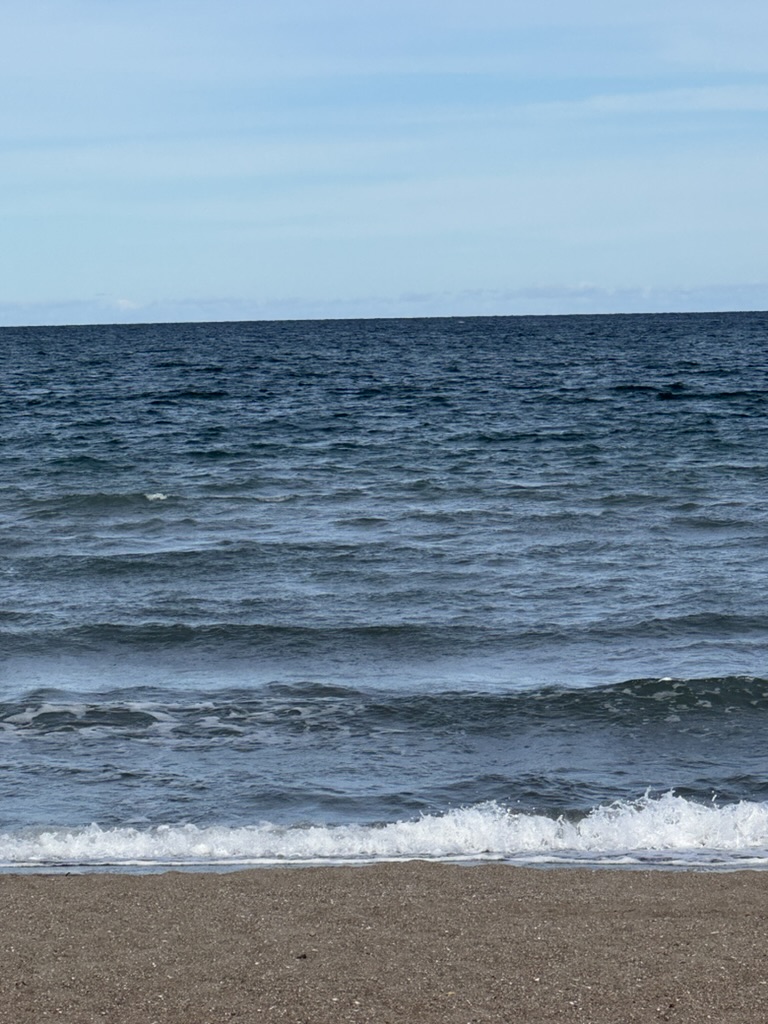
I have been staring at the sea for two hours. Maybe three. Time has become slippery here, something I can no longer hold in my hands. Rachel and Stephen Kaplan (1989) wrote about fascination, the effortless attention that natural environments invite, a quality of engagement that restores rather than depletes. The sea fascinates without demanding. It holds my gaze without asking anything in return.

Today I permitted myself to do nothing. I said it out loud this morning, standing in the kitchen of the casita with coffee warming my palms: Hoy, nada. Today, nothing. The words felt dangerous, like a confession. Tricia Hersey (2022), founder of The Nap Ministry, writes that rest is a form of resistance, a refusal to participate in systems that reduce human worth to productivity. “We will rest,” she insists, “and from that space, we will resist” (p. 12). I am trying to believe her.

El Mar y Sus Preguntas / The Sea and Its Questions

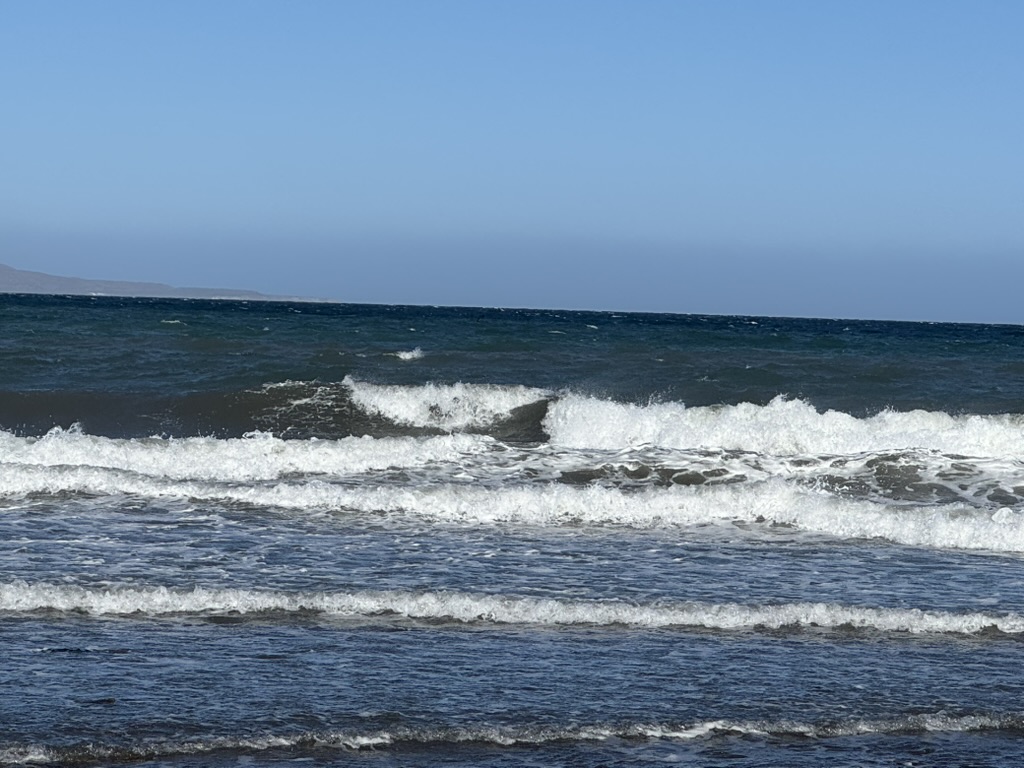
The Sea of Cortez is a particular blue I have never seen before. It shifts throughout the day, turquoise in the morning light, deeper sapphire by noon, silver-grey as evening approaches. This is what the Kaplans (1989) call soft fascination, a gentle hold on attention that leaves space for reflection, distinct from the hard fascination of screens and urgent notifications that dominate modern life. I watch the water change, and my thoughts change with it, drifting from one thing to another with no clear direction.

I think about my mother, who died eleven years ago and whom I still miss in ways that surprise me. Grief, writes Miriam Greenspan (2003), is one of the dark emotions, those feelings our culture teaches us to suppress or transcend rather than honour. She argues that grief carries wisdom if we can bear to feel it fully, that “the way out is through” (p. 8). Here, with nothing to distract me, grief surfaces like sea glass, worn smooth by time but still present, still catching light.

I think about the students I have taught over twenty-five years, wondering where they are now, whether they are happy. I think about the papers I should be grading, the emails I should be answering, and then I remember: I am here to stop shoulding myself.

Debería. I should. The word haunts me even in Spanish. Ryan and Deci (2017), in their foundational work on self-determination theory, distinguish between autonomous motivation, acting from genuine interest and valued choice, and controlled motivation, acting from internal or external pressure. The voice of should is the voice of controlled motivation, and I have let it run my life for decades.

El mar no juzga. Solo recibe.

The sea receives, without judgment.

Pensamientos Sueltos / Loose Thoughts

My mind wanders. This is what minds do when you stop giving them tasks. Neuroscientists call this the default mode network, the brain regions that activate when external demands release their hold (Buckner et al., 2008). Far from idle, this network supports self-reflection, autobiographical memory, and the imagining of the future. The wandering mind is working, just on different problems than our productivity culture recognises.

I think about the word retirement and how it sounds like something is being put away, stored in a closet, made invisible. I am 60. I am approaching the end of one kind of life and the beginning of another. Dan McAdams (2001), the narrative psychologist, writes that identity is an ongoing story we tell ourselves, a personal myth that integrates past and present into a coherent sense of self. Sitting here watching the waves, I wonder who I will be when I am no longer someone who works. The question has no answer yet. Perhaps that is why I keep asking it.

I think about all the women I know who are tired. Tired in their bones, exhausted in their souls, tired in ways that sleep alone cannot remedy. Sharon Blackie (2019) writes about the “long soul” of women at midlife, the accumulated weight of decades spent tending to others, and the fierce necessity of reclaiming time for oneself. We carry so much. We have been carrying for so long. I wonder if any of them are sitting somewhere right now, staring at water, permitting themselves to rest.

I think about the word enough to determine whether I have done enough. Whether I am enough. Brené Brown (2010) names this the voice of scarcity, the cultural message that we are never sufficient, that worthiness must be earned through endless striving. “Wholehearted living,” she writes, “is about engaging in our lives from a place of worthiness” (p. 1). I am 60 years old and still learning that my right to exist requires no earning.

The sea offers no answers. It just keeps moving, wave after wave, patient and indifferent and somehow, because of that, kind.

El Cuerpo Descansa / The Body Rests

I have done almost nothing today, and my body is grateful. I can feel it in the way my shoulders have dropped, the way my jaw has unclenched. Stephen Porges (2011) calls this the shift from sympathetic activation, the mobilised state of fight or flight, to ventral vagal engagement, the calm alertness that emerges when the nervous system perceives safety. Small surrenders. The body knows how to rest if we let it. The problem is the letting.

I ate breakfast slowly this morning. Papaya, yogurt, and strong coffee. Jon Kabat-Zinn (1994), who brought mindfulness practice to Western medicine, writes about mindful eating, the simple act of being fully present with food. I tasted each bite instead of eating while scrolling, eating while working, eating while planning what comes next. Just eating. Just tasting. Just being a body receiving nourishment.

Qué lujo, I thought. What a luxury. And then I felt sad, because eating slowly should be ordinary, should be the baseline of a human life, and instead it feels like an extravagance I have to travel thousands of kilometres to access. This is what Hersey (2022) means when she writes that rest has become a privilege rather than a right, a commodity rather than a necessity.

Lo Que Emerge / What Surfaces

When you stop moving, things rise. Memories. Feelings. The sediment you have been outrunning for years. Greenspan (2003) writes that the dark emotions, including grief, fear, and despair, are messengers carrying information we need: “They tell us something about ourselves and our world that we need to know” (p. 5). Solitude creates the conditions for these messages to be received.

Today, I remembered a conversation with a colleague from years ago. She told me I worked too hard, that I would burn out if I kept going at that pace. I smiled and thanked her, and changed nothing. Christina Maslach (Maslach & Leiter, 2016), who pioneered burnout research, defines burnout as a syndrome of emotional exhaustion, depersonalization, and reduced personal accomplishment resulting from chronic workplace stress. I wore my exhaustion like a badge, proof of my dedication, evidence of my worth. I had no way to know then that worth is birthright, that existing requires no proof of value.

I am learning this now, at 60, staring at the sea. Better late than never, I suppose. Better here than nowhere at all. Weinstein et al. (2021), in their narrative study of solitude across the lifespan, found that older adults often experience solitude as more restorative than younger people, having learned, perhaps through accumulated wisdom, how to be at peace in their own company.

A pelican dove into the water while I was writing that last sentence. It emerged with a fish in its beak, shook the water from its feathers, and flew on. Life continuing. The ordinary miracle of survival.

Estoy aquí. Eso es suficiente.

I am here. That is enough.

Al Atardecer / Toward Evening

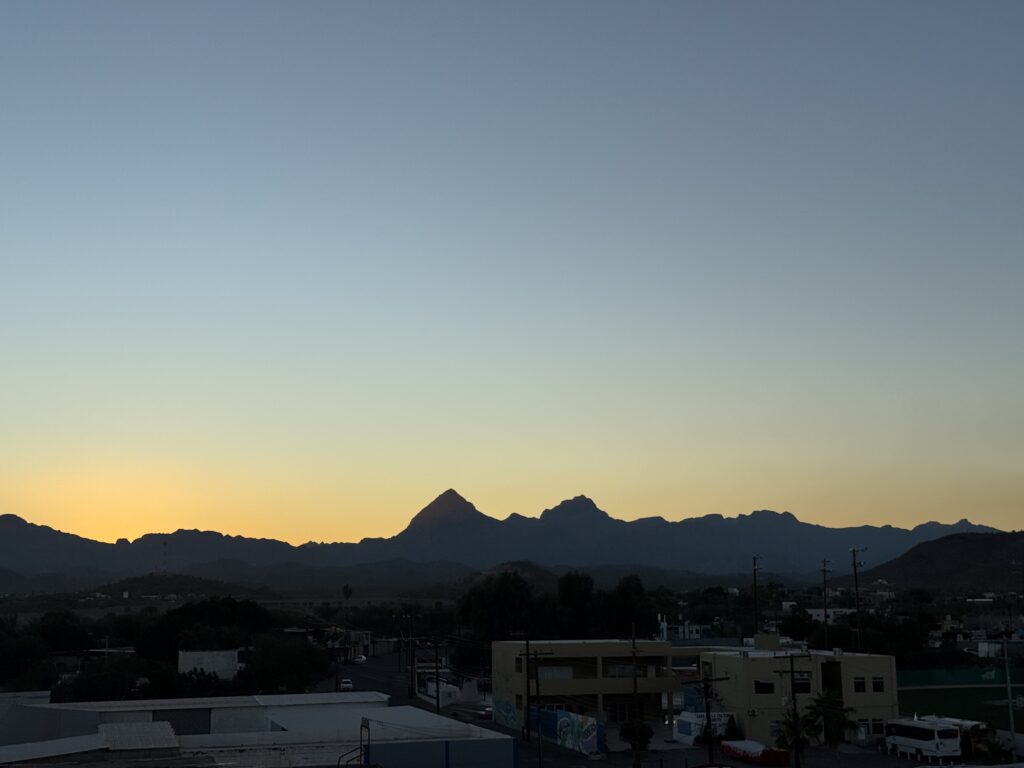
The light is changing now. Golden hour, photographers call it. The mountains across the bay have turned pink and purple, colours I would dismiss as exaggerated if I saw them in a painting. But here they are, real and impossible, demanding to be witnessed. This witnessing, this full presence to beauty, is what Abraham Maslow (1964) called a peak experience, a moment of heightened awareness that transcends ordinary consciousness.

I walked to the malecón this afternoon, to move my body, just to feel my feet on solid ground. An old man was fishing from the seawall. He nodded at me, and I nodded back. No words necessary. Just two people sharing space at the edge of the water, each lost in our own thoughts. Nguyen et al. (2018) found that self-chosen solitude supports affective self-regulation, the capacity to modulate emotional states from within rather than seeking external distraction. The old fisherman seemed to understand this intuitively.

¿Qué busca? I wanted to ask him. What are you looking for? But I suspect he would have turned the question back to me, and I am still working on my answer.

Antes de Dormir / Before Sleep

I accomplished nothing today. I produced nothing. I checked nothing off any list.

And yet.

I breathed. I watched. I let my mind wander without yanking it back to productivity. I sat with myself, which is harder than it sounds when you have spent decades avoiding that very thing. Long and Averill (2003) argue that the capacity for solitude is a skill, something that can be cultivated through practice. Today was practice. Tomorrow will be practice too.

Mañana, quizás, haré más. Tomorrow, perhaps, I will do more. Or perhaps I will do precisely this again. Maybe this is the work I came here to do: the slow, invisible labour of learning to be still what Robert Nash (2004) calls me-search, the deep dive into personal experience that precedes scholarly understanding. I am doing the me-search now, though it looks like nothing at all.

El mar sigue respirando.

The sea keeps breathing.

Yo también.

So do I.

Con cariño,

Amy

Loreto, Day Three


Translation Note

Note. Spanish-language passages were generated using Google Translate (Google, n.d.) and subsequently reviewed and refined by the author. Any remaining infelicities reflect the limits of machine translation rather than intent.

References

Blackie, S. (2019). If women rose rooted: A life-changing journey to authenticity and belonging. September Publishing.

Brown, B. (2010). The gifts of imperfection: Let go of who you think you are supposed to be and embrace who you are. Hazelden.

Buckner, R. L., Andrews-Hanna, J. R., & Schacter, D. L. (2008). The brain’s default network: Anatomy, function, and relevance to disease. Annals of the New York Academy of Sciences, 1124(1), 1–38. https://doi.org/10.1196/annals.1440.011

Google. (n.d.). Google Translate. https://translate.google.com

Greenspan, M. (2003). Healing through the dark emotions: The wisdom of grief, fear, and despair. Shambhala.

Hersey, T. (2022). Rest is resistance: A manifesto. Little, Brown Spark.

Kabat-Zinn, J. (1994). Wherever you go, there you are: Mindfulness meditation in everyday life. Hyperion.

Kaplan, R., & Kaplan, S. (1989). The experience of nature: A psychological perspective. Cambridge University Press.
Long, C. R., & Averill, J. R. (2003). Solitude: An exploration of benefits of being alone. Journal for the Theory of Social Behaviour, 33(1), 21–44. https://doi.org/10.1111/1468-5914.00204

Maslach, C., & Leiter, M. P. (2016). Understanding the burnout experience: Recent research and its implications for psychiatry. World Psychiatry, 15(2), 103–111. https://doi.org/10.1002/wps.20311

Maslow, A. H. (1964). Religions, values, and peak-experiences. Ohio State University Press.

McAdams, D. P. (2001). The psychology of life stories. Review of General Psychology, 5(2), 100–122. https://doi.org/10.1037/1089-2680.5.2.100

Nash, R. J. (2004). Liberating scholarly writing: The power of personal narrative. Teachers College Press.

Nguyen, T.-V. T., Ryan, R. M., & Deci, E. L. (2018). Solitude as an approach to affective self-regulation. Personality and Social Psychology Bulletin, 44(1), 92–106. https://doi.org/10.1177/0146167217733073

Porges, S. W. (2011). The polyvagal theory: Neurophysiological foundations of emotions, attachment, communication, and self-regulation. W. W. Norton.

Ryan, R. M., & Deci, E. L. (2017). Self-determination theory: Basic psychological needs in motivation, development, and wellness. Guilford Press.

Weinstein, N., Nguyen, T.-V., & Hansen, H. (2021). What time alone offers: Narratives of solitude from adolescence to older adulthood. Frontiers in Psychology, 12, Article 714518. https://doi.org/10.3389/fpsyg.2021.714518

Academic Lens

Being lost in the blue — absorbed into the sea and sky — is an encounter with what Csikszentmihalyi (1990) calls flow in its most elemental form: total absorption that dissolves the boundary between self and environment. In attention restoration theory (Kaplan & Kaplan, 1989), this state of soft fascination is the primary mechanism of psychological recovery — the mind neither straining nor idle, but gently held. The bilingual title "perdida" (lost/feminine) also carries a gendered valence: a woman permitting herself to be directionless is a quietly transgressive act.

Mi Madre, a la distancia

Content Warning: This post contains reflections on grief, loss, and emotional exhaustion. Please care for yourself as you read, and feel free to step away if you need to.

My Mother, From a Distance

(shared with permission)

You can listen to the NotebookLM Podcast here: https://notebooklm.google.com/notebook/c0840e9a-a297-49e5-b98d-3630125bb460?artifactId=e8fa1cc2-12a9-48f9-9462-5dec351d84b9

My mother is 80 years old. She now lives alone in an old folks’ home in Lethbridge, Alberta. I am sitting on a terrace in Mexico, watching the Sea of Cortez turn from blue to silver in the fading light, and I am thinking about her hands.

She has always had capable hands. Hands that kneaded bread dough on Sunday mornings, the kitchen warm with yeast and CBC radio playing softly in the background. Hands that crotched quilts for babies born, each stitch a prayer, each pattern chosen with care. Hands that combed my hair before church, her fingers quick and certain. The spirit of God’s hands, I think, though I hold that comparison with uncertainty, standing outside her faith and the faith I was raised in. Perhaps they are simply mother hands, shaped by decades of service, of showing up, of being useful to everyone but herself.

Recuerdos de Su Cocina / Memories of Her Kitchen

I remember standing on a step stool beside her at the counter, learning to roll pierogi. “Not too much flour,” she would say, her hands guiding mine. “You want it tender, not tough.” I was seven, maybe eight. The kitchen smelled of potatoes and cheese, and outside, the wind was blowing snow against the windows. I felt safe in that kitchen, in the warmth of the oven, in the certainty of her presence beside me.

Yi-Fu Tuan (1977), the humanist geographer, writes about topophilia, the affective bond between people and place. My mother’s kitchen was my first topophilic space, a location where I learned that love could be measured in teaspoons and rolling pins, in the quiet act of making something nourishing with your hands. I carry that kitchen with me still, even here, 2,800 kilometres away, watching a sea she has never seen.

She taught me to can plums in late summer, the kitchen steaming, jars lined up on the counter like soldiers. We would work for hours, cutting and slicing and packing fruit into hot glass, the syrup sweet and golden. “This will taste like sunshine in January,” she would say, and she was right. Those jars, lined up in the cold room, were promises against the long, cold winter. They were her way of saying, “I will take care of you.” I will make sure you have enough.

El amor de una madre vive en lo que prepara.

A mother’s love lives in what she prepares.

La Fe de Mi Madre / My Mother’s Faith

She raised me in the Church of Jehovah’s Witnesses, a faith I no longer practice but whose rhythms still live somewhere deep in my body. I remember the scratch of my Sunday dress against my legs, the smell of the Kingdom Hall a mix of old hymnals and furniture polish and the faint sweetness of old lady sweat. I remember my mother’s voice beside me, singing hymns she knew by heart, her alto steady and sure.

She believed, and still believes, in something with certainty as she later switched to the Mormon Church. I never saw “her God” in the way she did. For her, the gospel is as real as the mountains outside my home in British Columbia, as solid as the bread she bakes, as certain as the sun rising over the prairie. She knows that families are eternal, that her late husband waits for her beyond the veil, that God has a plan, and she is part of it. I envy her this certainty sometimes, the way it holds her steady through grief and loss and the long silence of widowhood.

I left the Church in my teens, quietly, without announcement, the way one might slip out of a party before the host notices. It was quiet, undramatic. There was no single moment of rupture, no crisis of faith that announced itself with thunder. It was more like a slow loosening, a gradual recognition that I no longer believed what I had been taught to believe, that the structure that held my mother so securely felt to me like a house I had outgrown.

Sandra Bloom (2007) writes about ambiguous loss, defined as grief that accompanies losses that are unclear, unresolved, and without the finality of death. I wonder sometimes if my mother grieves the daughter she thought she was raising, the one who would marry in the temple and bear children in the covenant and sit beside her in the celestial kingdom. I am still her daughter, but I am also a kind of ghost of the daughter she imagined. This is a loss we hold in silence, a room in our relationship we have agreed to keep closed.

Pequeñas Bondades / Small Kindnesses

And yet she loves me. This I know. I know it in the way she asks about my work, even when my work puzzles her, her questions sincere and slightly bewildered: “So you are still teaching at that university?” Yes, Mom. Still teaching. Her way of showing love is more in spirit than in words or deeds.

Gary Chapman (1992) popularised the concept of love languages, the idea that people express and receive love in different ways: words of affirmation, quality time, receiving gifts, acts of service, and physical touch. My mother’s love language has always been acts of service, the doing of things, the making and mending and bringing of soup through snowstorms. She rarely says “I love you” directly, but she says it in every jar of peaches, every quilt, every four-hour drive through dangerous weather.

El amor no siempre tiene palabras. A veces tiene sopa de pollo.

Love finds other vessels. Sometimes it has chicken soup.

Viuda / Widow

Her husband died two years ago. They had been married for only a few years, long enough that she had learned the shape of his presence: the way he took his soda, the sound of his wheelchair in the hallway, the weight of his hand on her leg as he sat next to her.

I think about her alone in that apartment, moving through rooms that still hold his absence. The recliner where he sat to watch the news. The side of the bed that is still, somehow, his side, even though he will never lie there again. Miriam Greenspan (2004) writes that grief is one of the dark emotions, those feelings our culture teaches us to rush through rather than honour. “Grief is the emotion of connection,” she writes, “the binding force of love turned into the dark energy of sorrow” (p. 98).

My mother’s faith offers her a framework for this sorrow: the belief that marriage is eternal, that she will see him again, that death is a temporary separation rather than a final goodbye. I hold a different view, but I am grateful she has it. It gives her something to hold in the long nights, something to reach for when the house feels too quiet, and the bed feels too empty, and the grief feels too heavy to bear alone.

When I call her on Sunday evenings, she tells me about the temple sessions and the neighbour who helped her with the puzzle. She tells me about the weather, about the cat who visits her backyard, and about the book she is reading from the church library. She keeps to herself the moments when she reaches for him in the night and finds only empty sheets. She keeps to herself the crying in the shower, where no one can hear. These things I imagine, because I am her daughter, because I know her, because some things carry their meaning without words.

Lo Que Más Recuerdo / What I Remember Most

I remember her hands in the garden, turning soil, planting seeds, pulling weeds with a determination that seemed almost fierce. She grew tomatoes, potatoes, and carrots, and every summer we would spend long evenings in the backyard, the light golden and slanted, the smell of earth and green things all around us. “Everything needs tending,” she told me once, her fingers in the dirt, a tomato plant cupped gently in her palm. “Gardens, families, faith. You have to show up and do the work.”

After she left my dad in 1977, I remember her sitting at the kitchen table late at night, paying bills by the light of a single lamp, her forehead creased with worry she tried to hide from us children. I had no way to understand then what I understand now: how hard she worked, how much she sacrificed, how many of her own dreams she set aside so that we could have enough. I wonder what she wanted to be before she became a mother. I wonder if she remembers.

I remember the way she cried when she missed my grade eight graduation, her face wet with loss and somehow also sad, almost knowingly, that she had to choose to put food on the table over celebration. For years, I made her feel guilty about this, but as a parent, only I can now understand how challenging life can be as a single mother. Love and loss are always tangled together; mothers carry a grief their children cannot fully see.

Judith Herman (1992), in her landmark work on psychological trauma, writes about the importance of witnessing, the act of truly seeing another person’s experience and honouring it as real. I want to witness my mother. I want to see beyond the capable hands and the Sunday faith and the birthday cards that arrive on time, but also the woman beneath all that doing, the woman who had dreams before she had children, who carries losses she has never spoken aloud, who has spent eighty years being useful and may never have learned that she was allowed to simply be.

Detrás de cada madre hay una mujer que olvidamos ver.

Behind every mother is a woman we forget to see.

La Distancia Entre Nosotras / The Distance Between Us

There are 2,800 kilometres between Loreto and Lethbridge. I looked it up. It would take thirty hours to drive, if you could drive across the Sea of Cortez, which, of course, you cannot. The distance feels larger than kilometres can measure: the distance between faith and its absence, between the life she imagined for me and the life I have made, between who she raised me to be and who I have become.

Carol Gilligan (1982), in her foundational work on women’s moral development, argued that women often define themselves through relationships, through connection, through care for others. She called this the ethic of care, a moral framework centred on responsibility and responsiveness rather than abstract principles of justice. My mother embodies this ethic. She has spent eighty years caring for her children, her husbands, her clients, anyone who needed a casserole, a listening ear, or a quilt stitched with prayers. I wonder if she knows how to care for herself. I wonder if anyone ever taught her that she was allowed.

I am here in Mexico learning to rest, learning to be still, learning to believe that I am enough without producing, without performing, without earning my place. And I wonder: did I learn my relentlessness from her? Did she learn it from her mother? How many generations of women have run themselves ragged in service to others, believing that rest was selfishness, that stillness was sin, that their worth depended on their usefulness?

Una Carta Que No Enviaré / A Letter Left Unsent

Querida Mamá,

I am sitting by the sea in Mexico, thinking about you. I am thinking about your hands and your faith and the way you have always shown love through doing. I am thinking about the perogies you taught me to roll, the plums we canned in the summer heat, the quilt you drove through a snowstorm to bring me.

I am thinking about how tired you must be. How tired you have always been. How you never learned to rest because no one ever told you that rest was allowed. I wish I could give you what I am learning here: the knowledge that you are enough, that you have always been enough, that your worth was never something you had to earn.

I am sorry I left the Church. I am sorry I cannot be the daughter you imagined. I am sorry for all the silences between us, the questions we leave unasked, the truths we keep hidden to protect each other. But I am grateful, too. Grateful that you loved me anyway. Grateful that you still call on Sundays. Grateful that your faith gives you comfort even though I cannot share it.

I see you, Mom. I see the woman behind the capable hands, behind the Sunday faith, behind the chicken soup and the quilts. I see how much you have given. I see how much it costs. I wish I had told you sooner. I am telling you now, even though you will never read this letter.

Te quiero, Mamá. Siempre.

This letter will stay here. James Pennebaker (1997), whose research on expressive writing demonstrated the healing power of putting painful experiences into words, found that writing about difficult emotions can improve both psychological and physical health, even if the writing is never shared. The writing itself is the medicine. I am writing my way toward understanding, toward compassion, toward a peace I am still learning to name.

Esta Noche / Tonight

The sun has set. The sea is dark now, just the sound of waves and the occasional cry of a seabird. In Lethbridge, it is already late. My mother is probably in bed, her scriptures on the nightstand, her prayers said, the empty space beside her filled with faith and memory and the shape of a husband who is no longer there.

I will call her tomorrow. I will ask about the church, the neighbour and whether she has been sleeping well. I will keep this essay to myself, keep the memories I have been turning over like stones, about the letter I wrote and will never send. Some things are better held gently, privately, like a prayer offered in silence.

But tonight, across 2,800 kilometres of desert and mountain and sea, I am holding her in my heart. I am thanking her for the hands that shaped me, even as I am learning to shape myself differently. I am forgiving us both for the silences, for the distances, for the love that has always struggled to find its words. I am seeing her, finally, fully: as my mother and as a woman: tired and faithful and braver than I ever knew, standing in her kitchen, rolling out pie crust, teaching me without words that love is something you make with your hands.

Ella es mi madre.

She is my mother.

Y yo soy su hija.

And I am her daughter.

Eso es todo. Eso es suficiente.

That is everything. That is enough.

References

Bloom, S. L. (2007). Loss, trauma, and resilience: Therapeutic work with ambiguous loss. Psychiatric Services58(3), 419-420.

Chapman, G. (1992). The five love languages: How to express heartfelt commitment to your mate. Northfield Publishing.

Gilligan, C. (1982). In a different voice: Psychological theory and women’s development. Harvard University Press.

Google. (n.d.). Google Translate. https://translate.google.com

Greenspan, M. (2004). Healing through the dark emotions: The wisdom of grief, fear, and despair. Shambhala.

Herman, J. L. (1992). Trauma and recovery: The aftermath of violence, from domestic abuse to political terror. Basic Books.

Pennebaker, J. W. (1997). Opening up: The healing power of expressing emotions. Guilford Press.

Tuan, Y.-F. (1977). Space and place: The perspective of experience. University of Minnesota Press.


Translation Note

Note. Spanish-language passages were generated using Google Translate (Google, n.d.) and subsequently reviewed and refined by the author. Any remaining infelicities reflect the limits of machine translation rather than intent.

Day Nine: El Ritmo (Morning)

When the Body Finally Rests


Understanding Sleep Architecture and What It Requires for Healing

Desert Rose

Photo Credit: Amy Tucker, 2026

To understand why last night matters so much, why one night of unbroken sleep marks such an important moment in this healing process, I need to explain how sleep actually works. I came to grasp this fully only after reading the research. Sleep is layered, active work. It is far more than “being unconscious” for seven or eight hours. Sleep is a process, a carefully organised progression through distinct stages that unfolds in a specific order throughout the night. Researchers refer to this pattern as sleep architecture (Walker, 2017).

Here is how it works. When we sleep, we move through stages. There are stages of light sleep, which researchers call Stage 1 and Stage 2 non-rapid eye movement sleep, or non-REM sleep for short. Then there is deep sleep, the third stage of non-REM sleep. Scientists also call this slow-wave sleep because, when they measure brain activity during this stage with an electroencephalogram, they see large, slow waves. Finally, there is rapid eye movement (REM) sleep, named for the rapid eye movements that occur during this stage, even though the body is asleep (Walker, 2017).

We cycle through all stages all night. Instead, we repeatedly cycle through all of these stages. One complete cycle, from light sleep through deep sleep to REM sleep and back, takes about ninety minutes. A good night’s sleep involves completing four to six of these cycles, which is why we need seven to nine hours of sleep (Walker, 2017).

What I am learning is that each stage does something different and important for the body and mind. Light sleep is a transitional state. It eases us from being awake into deeper states. During this stage, our heart rate slows, our breathing steadies, and we begin to disconnect from what is happening around us. Deep slow-wave sleep is when the body undergoes physical repair. This is when tissues heal, the immune system strengthens, growth hormones are released, and our brains store the factual information we learned during the day, the kind of memory we can consciously recall later (Walker, 2017). REM sleep does different work. This is when we process emotions, when our brains integrate new learning with what we already know, when creative problem-solving happens, and when our psychological equilibrium gets maintained (Germain, 2013; Walker, 2017).

When sleep gets fragmented, when we wake up frequently or leave cycles incomplete, we miss essential processes. The body is unable to finish its maintenance work. This is what had been happening to me for months.

What the research taught me, and what my own body confirmed over these nine days, is that this architecture requires a specific function of the nervous system. Progression through these stages occurs only when the nervous system is in a particular state. Stephen Porges (2011, 2022), who developed something called Polyvagal Theory, calls this the ventral vagal state. I will explain what this means because it is central to understanding what changed last night.

The ventral vagal complex is part of the parasympathetic nervous system, which is associated with rest and restoration. Porges describes it as the most recent evolutionary branch of this system, unique to mammals. When we are in this ventral vagal state, we feel safe. Our bodies can engage socially with others. Porges calls this “mammalian calm,” the state that allows for rest, restoration, intimacy, and even play. You can recognise this state in the body: the heart rate steadies with healthy variability, breathing is calm, the facial muscles relax, and we can make comfortable eye contact with others. And critically for sleep, in this state, we can surrender to unconsciousness without our nervous system remaining vigilant, constantly scanning for threats (Porges, 2011, 2022).

Crown of Thorns

Photo Credit: Amy Tucker, 2026

The problem is that when the nervous system remains in a defensive state, sleep deteriorates. There are two main defensive states. One is sympathetic activation, commonly known as the fight-or-flight response. When this system activates, heart rate increases, cortisol rises, muscles tense, and alertness heightens. The body is preparing to fight or run. The other defensive state is dorsal vagal shutdown, also known as the freeze or collapse response. This is when the body immobilises, when we dissociate, when we metaphorically “play dead” because the threat feels overwhelming (Porges, 2011, 2022). When the nervous system stays in either of these defensive states, sleep becomes fragmented, shallow, and non-restorative (Germain, 2013; Mellman et al., 2002). The hypervigilance, the constant scanning for potential threats, prevents the deep relaxation that complete sleep cycles require. The nervous system resists fully surrendering to sleep because, below conscious awareness, it assesses that doing so would leave us vulnerable to harm.

The research on trauma makes this relationship very clear. People diagnosed with post-traumatic stress disorder, or PTSD, show severely disrupted sleep across multiple measures. Their sleep architecture looks broken. They obtain significantly less slow-wave sleep, resulting in less physical restoration. Their REM sleep is highly fragmented, compromising emotional processing. They wake frequently during the night, driven by what researchers call autonomic hyperarousal, the nervous system’s persistent scanning for threat operating even during sleep (Germain, 2013; Mellman et al., 2002; van der Kolk, 2014).

But here is what matters for understanding my own experience: diagnosable PTSD is unnecessary to experience these patterns. Chronic occupational stress, particularly the sustained and unpredictable stress of precarious employment, produces remarkably similar patterns through the same underlying mechanism (Åkerstedt, 2006; Lallukka et al., 2010). Economic precarity, the sustained threat to livelihood and financial security, generates the same kind of autonomic hyperarousal that traumatic events produce. The nervous system cannot distinguish between different types of threats to survival. It responds to the pattern of threat rather than to the specific content.

When I say I slept through the night, I mean that my autonomic nervous system maintained a ventral vagal state, that state of felt safety, across multiple ninety-minute sleep cycles for seven consecutive hours. My body held the physiological state associated with safety long enough to complete the full restorative architecture of sleep. This is something my system has been unable to accomplish for longer than I want to admit.

Desert Rose

Photo Credit: Amy Tucker, 2026

Nine days. Nine complete cycles of consistent environmental cues, predictable daily rhythms, and the systematic absence of things my nervous system reads as threats. That is what it took for my nervous system to shift its baseline assessment from “unsafe, must remain vigilant” to “safe enough to rest completely.”

Table 1

Sleep Architecture and Autonomic States: Physiological Functions, Indicators, and Impacts of Disruption

Sleep Stage or Physiological StateCategoryDescription and Biological FunctionPhysical IndicatorsImpact of Disruption or StressKey Research CitationsSource
Stage 1 & 2 Non-REMNon-REM Sleep (Light Sleep)Transitional states that ease the body from wakefulness into deeper sleep and progressive disconnection from the environment, supporting essential maintenance processes and preparation for restorative sleep.Slowing heart rate; steadier breathing; reduced muscle tone.Fragmentation disrupts maintenance processes and prevents progression into deeper restorative sleep cycles.Walker (2017)The Architecture of Sleep and the Science of Safety
Stage 3 Slow-wave SleepNon-REM Sleep (Deep Sleep)Primary stage for physical repair, tissue healing, immune strengthening, and growth hormone release; supports consolidation of factual and recallable memories.Large, slow brain waves measured by EEG (delta waves).Loss of physical restoration; markedly reduced in individuals experiencing chronic stress or PTSD.Walker (2017); Germain (2013); Mellman et al. (2002); van der Kolk (2014)The Architecture of Sleep and the Science of Safety
REM SleepRapid Eye Movement SleepProcesses emotions, integrates new learning with prior knowledge, supports creativity, and maintains psychological balance.Rapid eye movements with muscle atonia; variable heart rate and breathing.Fragmentation impairs emotional processing and memory integration; commonly interrupted by autonomic hyperarousal in PTSD.Walker (2017); Germain (2013); Mellman et al. (2002)The Architecture of Sleep and the Science of Safety
Ventral Vagal StateParasympathetic State (Rest and Restoration)State of felt safety that enables rest, social engagement, and the capacity to surrender to unconsciousness without vigilance.Steady heart rate with healthy variability; calm breathing; relaxed facial muscles; ease in eye contact.Inability to sustain this state interrupts restorative sleep cycles and shifts the system into defensive states.Porges (2011, 2022)The Architecture of Sleep and the Science of Safety
Sympathetic ActivationDefensive State (Fight-or-Flight)Mobilization response to perceived threat, maintaining alertness and readiness for action.Elevated heart rate; increased cortisol; muscle tension; heightened alertness.Sleep becomes shallow, fragmented, and non-restorative as the body resists relinquishing vigilance.Porges (2011, 2022); Germain (2013); Mellman et al. (2002)The Architecture of Sleep and the Science of Safety
Dorsal Vagal ShutdownDefensive State (Freeze or Collapse)Immobilization response to overwhelming threat, associated with dissociation and withdrawal.Reduced movement; dissociation; lowered metabolic activity.Produces fragmented, non-restorative sleep and prevents the deep relaxation required for full sleep architecture.Porges (2011, 2022); Germain (2013); Mellman et al. (2002)The Architecture of Sleep and the Science of Safety

Note: This table integrates sleep-stage physiology with autonomic nervous system states to illustrate how safety, threat, and stress shape sleep quality. It emphasises the interdependence between sleep architecture and autonomic regulation in restorative sleep and in trauma-related disruption.

The Science of Resorative Sleep

Created by Notebook LM, 2026

This moment has clarified that restorative sleep is neither accidental nor simply a matter of time spent in bed. It is an embodied outcome of safety. Sleep architecture unfolds fully when the nervous system assesses the environment and the broader conditions of life as safe enough to release vigilance. One uninterrupted night mattered because it marked a physiological shift rather than a behavioural one. My body sustained a ventral vagal state long enough to complete multiple cycles of repair, integration, and emotional processing. Healing, in this sense, emerged through conditions rather than effort. It arose as the threat receded, rhythms stabilised, and my nervous system received permission to rest. This understanding reframes sleep as a diagnostic signal of safety and a quiet indicator of recovery already underway.

References

Åkerstedt, T. (2006). Psychosocial stress and impaired sleep. Scandinavian Journal of Work, Environment & Health, 32(6), 493–501. https://doi.org/10.5271/sjweh.1054

Germain, A. (2013). Sleep disturbances as the hallmark of PTSD: Where are we now? American Journal of Psychiatry, 170(4), 372–382. https://doi.org/10.1176/appi.ajp.2012.12040432

Lallukka, T., Rahkonen, O., Lahelma, E., & Arber, S. (2010). Sleep complaints in middle-aged women and men: The contribution of working conditions and work-family conflicts. Journal of Sleep Research, 19(3), 466–477. https://doi.org/10.1111/j.1365-2869.2010.00821.x

Mellman, T. A., Bustamante, V., Fins, A. I., Pigeon, W. R., & Nolan, B. (2002). REM sleep and the early development of posttraumatic stress disorder. American Journal of Psychiatry, 159(10), 1696–1701. https://doi.org/10.1176/appi.ajp.159.10.1696

Porges, S. W. (2011). The polyvagal theory: Neurophysiological foundations of emotions, attachment, communication, and self-regulation. W. W. Norton & Company.

Porges, S. W. (2022). Polyvagal theory: A science of safety. Frontiers in Integrative Neuroscience, 16, Article 871227. https://doi.org/10.3389/fnint.2022.871227

van der Kolk, B. A. (2014). The body keeps the score: Brain, mind, and body in the healing of trauma. Viking.

Walker, M. (2017). Why we sleep: Unlocking the power of sleep and dreams. Scribner.

Academic Lens

Finding a morning rhythm in a new place is a form of what Csikszentmihalyi (1990) calls the early conditions for flow: a structure that is self-chosen, repeatable, and calibrated to one's own pace. The body's uptake of a different daily rhythm also reflects Porges's (2011) polyvagal model: the nervous system co-regulating with the environment rather than with institutional time. Rhythm, here, is not productivity — it is the somatic baseline from which genuine inquiry becomes possible.

Day Eight: La Quietud: Vespers

Evening Reflection: When the Shoulders Finally Drop

Video Credit: Gemini, 2026

The sky over the Sea of Cortez turns amber and rose as I write this, the eighth sunset of this retreat. Eight days. One complete week plus one day of threshold-crossing. Long enough for the body to begin believing what the mind decided: that this time is mine, that rest is permitted, that I can stop performing vigilance.

This evening, I sat on the small balcony with nothing but cooling coffee and the sound of waves returning to shore. No task. No plan. No productive purpose. Just sitting as the light changed, watching pelicans settle onto pilings for the night, their bodies perfectly still after a day of diving. They looked the way I feel tonight, arrived, finally, into stillness.

Evening Tide, Sea of Cortez. Rhythm Without Demand.

Photo Credit: Amy Tucker, 2026

La quietud. The quietness. The settling. The quality of being that emerges when striving pauses long enough for presence to surface.

Blue Background Water Colour

Credit: Amy Tucker, 2025

What Happens When the Body Exhales

For eight days now, I have been tracking my somatic state with the methodological rigour this research requires, but also with growing tenderness toward what the body reveals. This evening’s observation differs from previous entries in a manner best described as qualitative rather than quantitative. Something has shifted. Something has softened. The shoulders that have lived near my ears for years, decades, perhaps, have finally dropped.

Stephen Porges (2011, 2022) writes that the autonomic nervous system functions as a surveillance mechanism, continuously scanning for cues of safety or threat through what he terms neuroception. This scanning occurs below conscious awareness, shaping our physiological state before we have language to describe our feelings. For years, my neuroception detected threat everywhere: in the precarity of contract work, in institutional politics, in the endless demands that arrived faster than I could meet them, in the quiet terror of never being enough.

Here, by the sea, the cues have changed. Predictable rhythm. Consistent warmth. The constancy of waves. The absence of urgent demands. No emails requiring immediate response. No meetings to navigate. No performances to sustain. Day by day, hour by hour, my nervous system has been gathering evidence: this place is safe. This time is protected. You can rest.

Tonight, the shoulders finally believed it. They dropped. And with that, the tears came.

Circulation Without Effort

Photo Credit: Amy Tucker, 2026

The Grief That Hides in Muscle

It is a strange thing to discover that your body has been holding grief in places you had never thought to look. The shoulders, apparently, have been carrying years of it. The jaw, too, clenched through countless nights of fitful sleep, grinding away anxiety that had nowhere else to go. The chest, held tight against the vulnerability of being seen as struggling, as uncertain, as anything less than fully competent.

Bessel van der Kolk (2014) documents how trauma, and I would add chronic stress, chronic precarity, and chronic performance of adequacy, gets stored in the body’s tissues, in patterns of tension and bracing that become so familiar we forget they were learned. The body keeps the score, he writes, when the mind refuses to. My body has been keeping score for a very long time.

As my shoulders dropped tonight, something released. Tears came, quiet and steady, undramatic, arriving like rain after a long drought. I wept for the woman who carried so much for so long. I wept for the years of vigilance that never brought the security they promised. I wept for all the moments I had held rigid because softening felt dangerous, because survival required staying braced.

Miriam Greenspan (2004) writes that grief is a kind of alchemy, transforming pain into wisdom when we allow ourselves to feel it fully rather than bypassing it in favour of premature healing. Tonight’s tears were recognition. They were recognised. They were the body finally releasing what it no longer needed to carry.

When we give sorrow words, the grief that does not speak whispers the o’erfraught heart and bids it break.
Adapted from Shakespeare, as cited in Greenspan (2004, p. 28)

But sometimes grief needs no words. Sometimes the shoulders drop, and the body speaks its own truth.

Stone Angel

Photo Credit: Amy Tucker, 2026

Evening Somatic Record

Table 1
Day 8 Somatic Tracking: Evening Entry

TimeAutonomic StatePhysical SensationsEmotional QualityNotes
6:00 PMVentral vagalShoulders noticeably lower, jaw loose, deep breath available without effortPeaceful, tender, slightly tearfulFirst evening where settling feels complete rather than effortful
7:30 PMVentral vagalWarmth in chest, softness in belly, feet groundedGrateful, present, emotionally openTears came and passed gently; no activation followed
9:00 PMVentral vagalThe first evening in years where sleep feels like an arrival rather than a collapseQuiet contentment, readiness for restThe first evening in years where sleep feels like arrival rather than collapse

Note. VV = ventral vagal state, characterised by parasympathetic activation, social engagement capacity, and felt safety (Porges, 2011). Tonight marks the first sustained evening-long ventral vagal state without sympathetic activation spikes.

What Eight Days Has Taught

If someone had told me on Day 1 that eight days would be enough to feel this different, I would have dismissed the possibility entirely. Eight days against decades of patterning? Impossible. And yet here I am, shoulders lower, breath deeper, tears falling freely because safety has become believable enough for grief to surface.

Attention Restoration Theory (Kaplan & Kaplan, 1989; Kaplan, 1995) proposes that natural environments restore depleted cognitive and attentional resources through four key qualities: being away (psychological distance from demands), extent (environmental richness), soft fascination (gentle engagement), and compatibility (alignment between environment and purpose). This retreat has offered all four. But what the theory leaves unnamed, what no theory fully reaches, is the embodied dimension of restoration.

Restoration is somatic first. It is somatic. It is muscular. It is nervous-system-deep. The mind can decide to rest, but the body must be convinced. That convincing takes time, takes consistency, takes environmental cues repeated until the ancient mammalian brain that governs survival finally accepts: we are safe here.

Eight days. That is how long it took for my shoulders to believe it.

Interoceptive Deepening

Another shift tonight: the clarity of internal signals. I knew I was hungry before hunger became uncomfortable. I felt thirsty early enough to address it gently. I noticed fatigue creeping in and sat down rather than pushing through. These micro-adjustments represent interoceptive awareness, the capacity to perceive and interpret internal bodily states (Craig, 2002; Mehling et al., 2012), and represent a significant development from Week 1.

When the nervous system operates in chronic defence, interoception dims. The body’s quieter signals get overridden by louder demands: deadlines, obligations, others’ needs. We learn to ignore hunger until it becomes urgent, to override fatigue with caffeine and willpower, to silence the body’s requests for rest because rest feels dangerous when survival depends on constant output.

Here, eight days into chosen stillness, interoception has returned. I am learning again to hear what my body communicates. I am remembering that these signals are information, data rather than weakness; that responding to them is wisdom, attunement rather than indulgence.

Table 2
Interoceptive Awareness Development: Days 1–8

Struggled to sustain attention to the body; mind wandered constantlyDay 1Day 8
NoticingDifficult to detect subtle bodily cues; awareness fragmentedClear, early detection of hunger, thirst, fatigue, temperature changes
Struggled to sustain attention to body; mind wandered constantlyAttention to body was fragmented; mind wandered constantlyCan maintain gentle attention to internal states without forcing
Emotional AwarenessDisconnection between physical sensation and emotional stateGrowing recognition of how emotions manifest somatically
Self-RegulationLimited capacity to use bodily awareness for regulationBeginning to use breath, posture, movement responsively
Body ListeningTendency to override or ignore bodily signalsIncreasing trust in body’s communications
TrustingBody felt unreliable, unpredictableEmerging sense that body’s signals are trustworthy data

Note. Framework adapted from Multidimensional Assessment of Interoceptive Awareness (MAIA; Mehling et al., 2012). Interoceptive capacity improves with reduced cognitive load and increased felt safety.

Sea Treasure

Photo Credit: Amy Tucker, 2026

Visual Documentation: Artifacts of Settling

Tonight’s artifact collection includes the grey-blue pebble I found this morning on the beach walk, smooth, palm-sized, temperature-neutral. I have carried it all day, a tangible reminder of what settling feels like. The stone has been tumbled by tides for who knows how long, its roughness worn away by countless returns to shore. It is complete without being perfect. It is whole because the sea has shaped it, held whole by that very shaping.

I also photographed my hands this evening, palms open and resting on my thighs, fingers slightly curled. The image captures something about receptivity, about the body’s capacity to be open without gripping. These hands have held so much: students’ struggles, institutional politics, my own relentless standards. Tonight they are empty. Tonight they rest.

Tomorrow I will try charcoal drawing. I want to capture the quality of light at sunset, the way amber and rose bleed into each other across the water. Charcoal feels right for this: the smudging, the imprecision, the way it cannot be controlled entirely. A medium that requires surrender.

Theoretical Integration: When Safety Permits Grief

Tonight’s experience illuminates a vital relationship between nervous-system regulation and emotional processing. Porges (2022) emphasises that the social engagement system, which involves the ventral vagal state of safety and connection, must be activated before deeper emotional work becomes possible. When we are in sympathetic activation (fight-or-flight) or dorsal vagal shutdown (freeze), we lack the physiological capacity for the kind of emotional experience that supports integration and healing.

This explains why my grief waited eight days to arrive. The tears had to wait until my body released its defence mode. Safety had to stabilise first. The ventral vagal state had to become reliable, consistent, and trustworthy. Only then could the grief surface without overwhelming me, without triggering a return to vigilance.

The Whale Sculpture

Photo Credit: Amy Tucker, 2026

Deb Dana (2018, 2020), translating Polyvagal Theory into therapeutic practice, describes this as “building the ventral vagal muscle,” strengthening the nervous system’s capacity to remain regulated even when difficult emotions arise. Eight days of consistent safety cues have built enough ventral vagal capacity that I could cry tonight without dysregulating. The tears came and passed like weather, leaving me softer rather than depleted.

This has implications for our understanding of healing from burnout. We cannot think our way out of nervous system dysregulation. We cannot use willpower to override autonomic states shaped by years of chronic stress. We need environments that consistently communicate safety. We need time, more than we think, less than we fear. We need conditions that allow the body to gather evidence slowly, patiently, until it finally believes: we are allowed to rest.

Spanish Lessons the Sea Teaches

The Spanish phrase I learned today from a local fisher: déjate llevar, let yourself be carried. He was describing how to swim in the Sea of Cortez, how to work with the current rather than against it. But the phrase resonated beyond its literal meaning.

Let Yourself Be Carried

Photo Credit: Amy Tucker, 2026

Déjate llevar. Let yourself be carried. Stop resisting. Stop bracing. Allow the existing support.

I have spent decades swimming against currents that were stronger than I could overcome: institutional precarity, economic insecurity, and cultural narratives that equate worth with productivity. I exhausted myself with that swimming. Here, eight evenings into learning a different way, I am beginning to understand the expression “dejar de llevar.” I am beginning to let the sea, this place, this time, this intentional solitude, carry me.

The shoulders dropped tonight because I finally trusted what was holding me. The grief came because safety made space for it. The healing is happening because I stopped swimming long enough to float.

End of Day Eight

Day 8 marks the threshold: the body has settled enough that analysis can be sophisticated without overwhelming. The artifacts I have been collecting, pebbles, photographs, and journal entries documenting sensory experience, can now begin to speak to one another, to reveal patterns, and to illuminate the mechanisms by which solitude supports healing.

But tonight, analysis waits. Tonight, there is only the amber sky fading to violet, the pelicans motionless on their pilings, the sound of water returning to shore. There is only this body, finally soft, finally believing in its own safety. There is only gratitude for eight days that changed everything by teaching one simple thing:

The shoulders can drop. The grief can come. The healing can happen. All we need is time, permission, and a place that holds us gently whilst we remember who we are when we stop performing strength.

The Settling

Photo Credit: Amy Tucker, 2026

La quietud. The settling. The arrival. Finally being here.

Gracias, Mar. Thank you, seaa

Por enseñarme a descansar. For teaching me to rest.

Figure X. The Somatic Arrival: How the Body Learns to Let Go

Image Credit: NotebookLM 2026

Note: The Somatic Arrival: A conceptual synthesis of nervous system settling, interoceptive return, and grief release observed across Days 1–8 of the retreat.

Listen to the podcast here by NotebookLM: https://notebooklm.google.com/notebook/5a728afe-1ad0-4fea-93aa-d87f483fe24f?artifactId=b2f3b31c-ebc2-4fc2-bcdc-c4b2891ff5fe


Translation Note

Note. Spanish-language passages were generated using Google Translate (Google, n.d.) and subsequently reviewed and refined by the author. Any remaining infelicities reflect the limits of machine translation rather than intent.

References

Craig, A. D. (2002). How do you feel? Interoception: The sense of the physiological condition of the body. Nature Reviews Neuroscience, 3(8), 655–666. https://doi.org/10.1038/nrn894

Dana, D. (2018). The polyvagal theory in therapy: Engaging the rhythm of regulation. W. W. Norton & Company.

Dana, D. (2020). Polyvagal exercises for safety and connection: 50 client-centred practices. W. W. Norton & Company.

Google. (n.d.). Google Translate. https://translate.google.com

Greenspan, M. (2004). Healing through the dark emotions: The wisdom of grief, fear, and despair. Shambhala Publications.

Kaplan, R., & Kaplan, S. (1989). The experience of nature: A psychological perspective. Cambridge University Press.
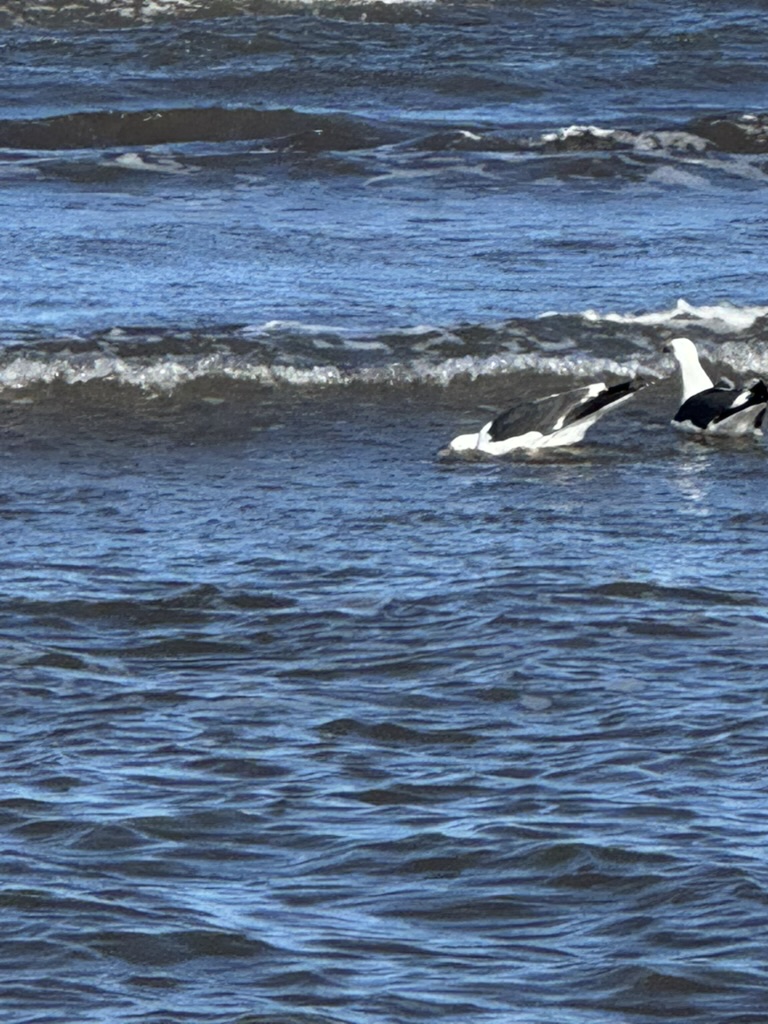
Kaplan, S. (1995). The restorative benefits of nature: Toward an integrative framework. Journal of Environmental Psychology, 15(3), 169–182. https://doi.org/10.1016/0272-4944(95)90001-2

Mehling, W. E., Price, C., Daubenmier, J. J., Acree, M., Bartmess, E., & Stewart, A. (2012). The Multidimensional Assessment of Interoceptive Awareness (MAIA). PLoS ONE, 7(11), Article e48230. https://doi.org/10.1371/journal.pone.0048230

Porges, S. W. (2011). The polyvagal theory: Neurophysiological foundations of emotions, attachment, communication, and self-regulation. W. W. Norton & Company.

Porges, S. W. (2022). Polyvagal theory: A science of safety. Frontiers in Integrative Neuroscience, 16, Article 871227. https://doi.org/10.3389/fnint.2022.871227

van der Kolk, B. A. (2014). The body keeps the score: Brain, mind, and body in the healing of trauma. Viking Press.
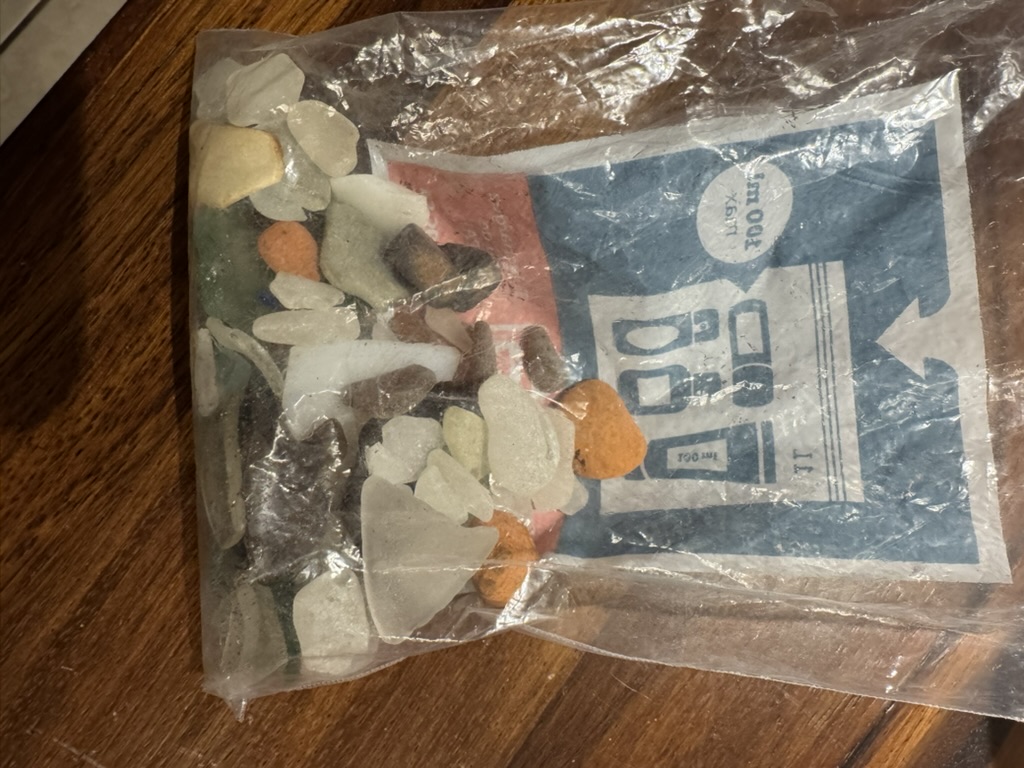
Day Eight: ¿Y Si Me Suelto?

What If I Let Go

I woke this morning with a tightness in my chest that had nothing to do with the night before.

The sleep had been deep, the room cool, the sea audible through the open window. Everything about this place says rest. And yet my body woke braced, as though preparing for something that never arrived.

I lay still for a long time, watching the ceiling lighten. Trying to name what I was feeling.

It took a while to find the word. When it came, it surprised me.

Fear.

The Shape of It

The fear lives elsewhere. I have settled into Loreto more easily than I expected. Solitude has become companionable. Silence I am learning to inhabit.

The fear is of what happens if I truly let go.

For years, decades, I have held myself together through effort. Through vigilance. Through the constant, quiet work of monitoring, anticipating, and performing competence. I have been the one who could be counted on. The one who showed up prepared. The one who held more than her share because holding felt safer than asking for help.

That holding has become so familiar that I cannot quite imagine who I would be without it.

And so the fear: if I release the grip, if I stop the vigilance, if I truly rest, will I ever want to return to life as it was? Will I lose the capacity for striving that kept me employed, that kept me useful, that kept me worthy of belonging?

Will I, in some fundamental way, stop being the person I have always been?

The Paradox: Productivity and Rest

Created by Gemini AI Tool, 2026

The Paradox of Letting Go

There is a strange paradox here. I came to this retreat because I was exhausted by the holding. Because the vigilance had worn grooves in my nervous system that no longer served me. Because I wanted, desperately, to rest.

And now that rest is possible, I am afraid of it.

Afraid that rest will undo me. That I will sink into it and never surface. The woman who emerges from this month will be unrecognizable to herself and to others. That she will have lost her edge, her drive, her usefulness.

The fear reveals how deeply I have tied my worth to my capacity for effort. How thoroughly I have believed that I am only as valuable as what I produce.

Brené Brown (2010) calls this the use of exhaustion as a status symbol and productivity as self-worth. She identifies it as one of the things we must consciously release if we want to live what she calls a wholehearted life. Reading those words years ago, I nodded in recognition. Living them is harder.

Halfway There

Credit: Amy Tucker, 2026

Creating Safety for the Self

In my academic work, I have written about psychological safety: the conditions that allow people to take interpersonal risks without fear of embarrassment, shame, or punishment (Edmondson, 1999). In classrooms and workplaces, psychological safety means being able to ask questions, admit mistakes, and offer ideas that might fail. It means knowing that vulnerability will be met with support rather than judgment.

I have spent years trying to create psychological safety for students. I have rarely thought about creating it for myself.

What would it mean to approach my own interior with the same care I offer others? To make it safe for myself to rest without proving I deserve it? To let go without requiring a plan for what comes next?

Psychological safety, I am learning, begins within. It begins with the quiet assurance that I will stay with myself, whatever surfaces. That I will meet my need for rest with gentleness. That I will carry this retreat forward as what it is: a return to myself.
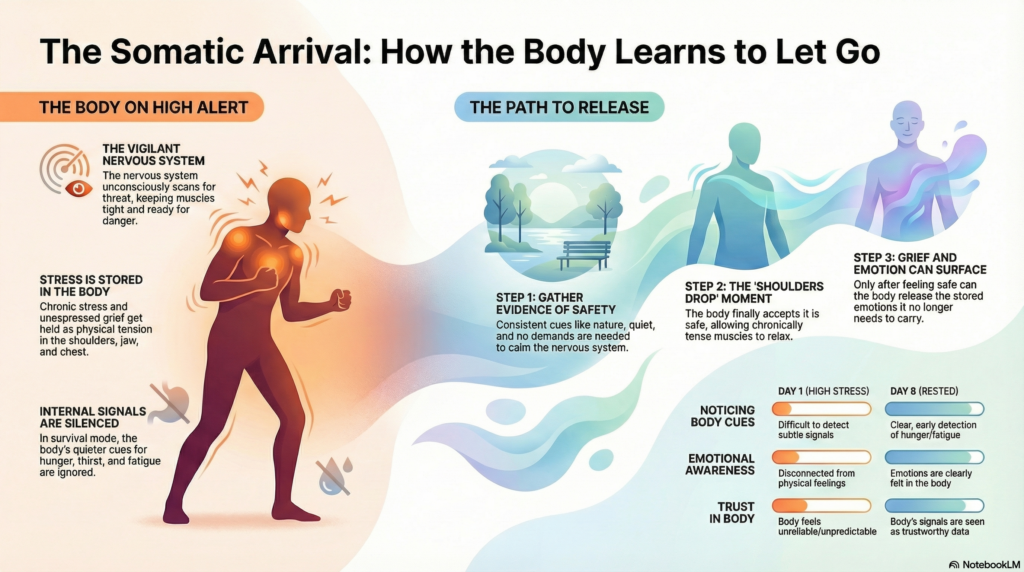
The body knows when it is safe. Stephen Porges (2022) has shown that feelings of safety arise from internal physiological states and from cues that signal the nervous system can stand down from vigilance. Those cues can come from the environment, from the relationship, from the breath, from the stillness.
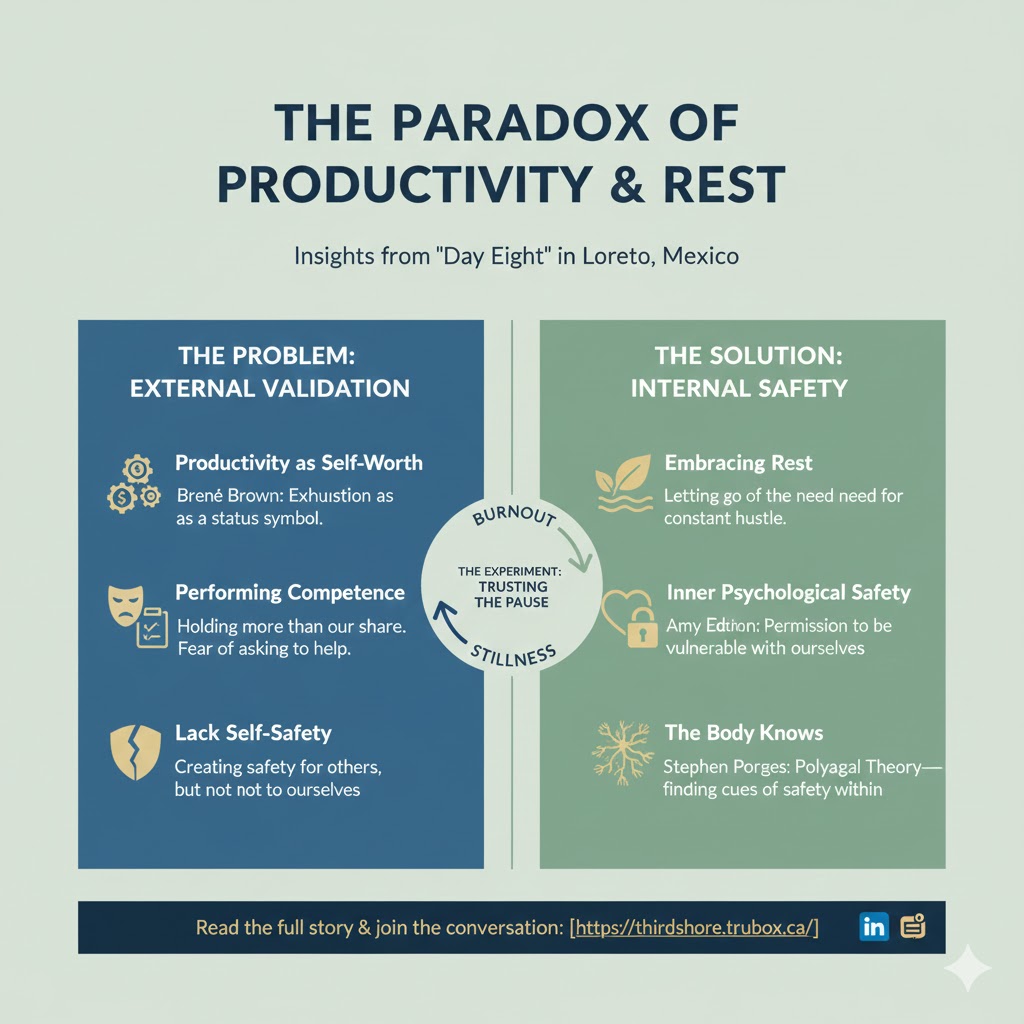
They can also come from the stories we tell ourselves about what we are allowed to need.
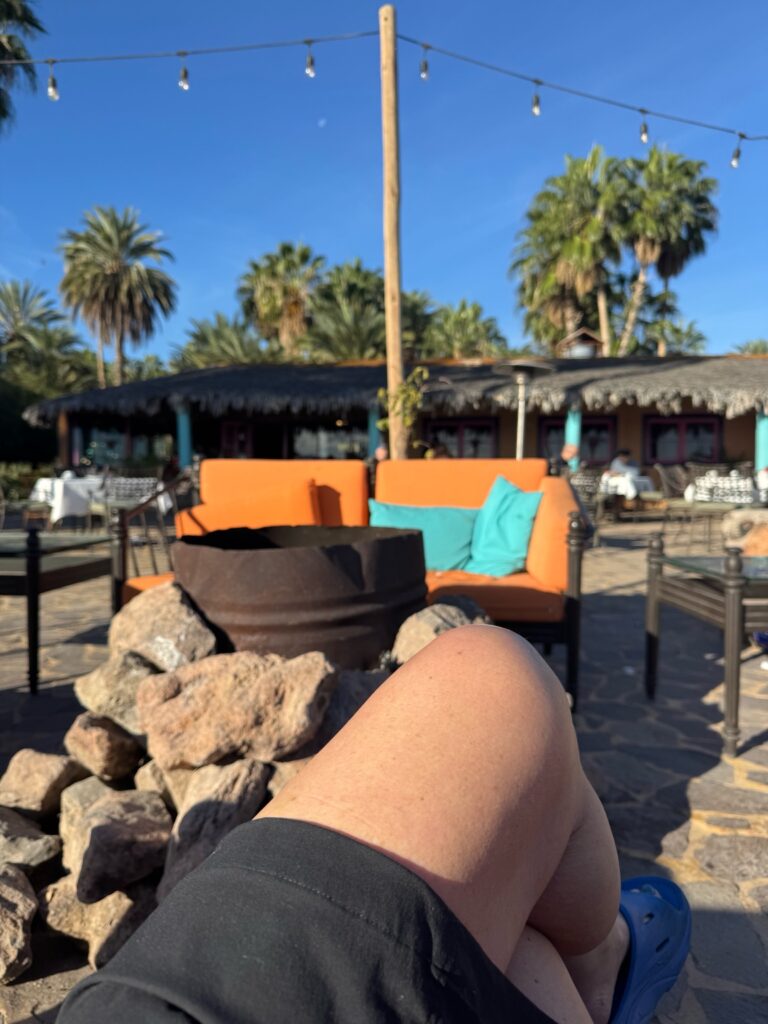
The Fear Beneath the Fear

There is another fear beneath this one, harder to name.

I am afraid that if I let go completely, I will lose the capacity to love the life I have built. That the stillness will reveal how much of my striving was compensation rather than calling. That I will look back at my career, my choices, my years of effortful contribution, and feel only exhaustion rather than meaning.

I am afraid of becoming someone who no longer wants to return.

And beneath even that: I am afraid that letting go will reveal an emptiness I have been running from. That, without the structure of obligation, without the identity of educator, without the constant motion, I will find nothing but blank space where a self should be.

This is the fear that woke me this morning. This is what tightened my chest before dawn.

Staying With It

I left my phone untouched. I resisted the pull toward plans or tasks or the small urgencies that usually rescue me from discomfort.

I stayed.

I let the fear be present without trying to fix it. I breathed into the tightness in my chest. I asked, with as much curiosity as I could muster: What are you trying to protect?

The answer came slowly. The fear is trying to protect me from loss. Loss of identity. Loss of purpose. Loss of the scaffolding that has held my life in place for so long.

I thanked it. I mean that genuinely. The fear has kept me functional through years that might otherwise have broken me. It has helped me show up when showing up was required. It has been a kind of armour, and armour serves a purpose.

But armour is heavy. And I am in a place now where I can set it down, even briefly. Even experimentally.

An Experiment in Trust

What if letting go means finding? What if the woman who emerges from stillness is clarified rather than diminished? What if rest reveals presence rather than emptiness?

I cannot know without trying. I cannot know from the outside. I can only know by going in.

Brown (2010) writes about cultivating intuition and trusting faith, which requires letting go of the need for certainty. Certainty is what I have always sought. Plans, structures, contingencies. The illusion that if I prepare enough, I can prevent loss. The illusion that control keeps me safe.

Here in Loreto, the illusion is harder to maintain. The sea holds itself apart from my plans. The mountains hold their shape with or without my watching. The pelicans fish without consulting my schedule. Life here unfolds without my management, and it unfolds beautifully.

Perhaps I, too, can unfold without so much management.

Perhaps the self that emerges from stillness will be someone I recognise after all. Perhaps she will be someone I have been waiting to meet.

Morning, After

I made coffee. I carried it to the small balcony. I sat in the chair that had become familiar over these eight days and watched the light strengthen over the water.

The fear remained. It sat beside me like a companion, still present but no longer gripping. I had acknowledged it. I had listened. I had refused to let it drive me back into motion.

This, I think, is what the discipline of staying means. It means feeling the fear fully. It means feeling the fear and remaining anyway. It means creating enough safety within myself to be present with uncertainty, with open-handedness, with the vulnerability of letting go.

The morning was quiet. A boat moved slowly across the bay. Somewhere, someone was beginning their day with purpose and direction. I was beginning mine with a question still ahead of me.

That felt honest. That felt like enough.

¿Y si me suelto? What if I let go?

I hold the question open. But I am willing to find out.


Note. Spanish-language passages were generated using Google Translate (Google, n.d.) and subsequently reviewed and refined by the author. Any remaining infelicities reflect the limits of machine translation rather than intent.

References

Brown, B. (2010). The gifts of imperfection: Let go of who you think you are supposed to be and embrace who you are. Hazelden Publishing.

Edmondson, A. (1999). Psychological safety and learning behaviour in work teams. Administrative Science Quarterly, 44(2), 350–383. https://doi.org/10.2307/2666999

Google. (n.d.). Google Translate. https://translate.google.com

Porges, S. W. (2022). Polyvagal safety: Attachment, communication, self-regulation. W. W. Norton & Company.