I spent the last few days talking to rocks.
Mostly silently. But definitely talking. Asking questions. Wondering aloud. Sitting in front of volcanic rock faces on Coronado Island, trying to understand what I was seeing.
And here is the thing. They answered.
In the way they held their shapes. In how they carried their histories. In what form does patient transformation take over millions of years when you slow down enough to see it?
I am sixty years old, and I am learning to listen to stone.
Rock Chairs
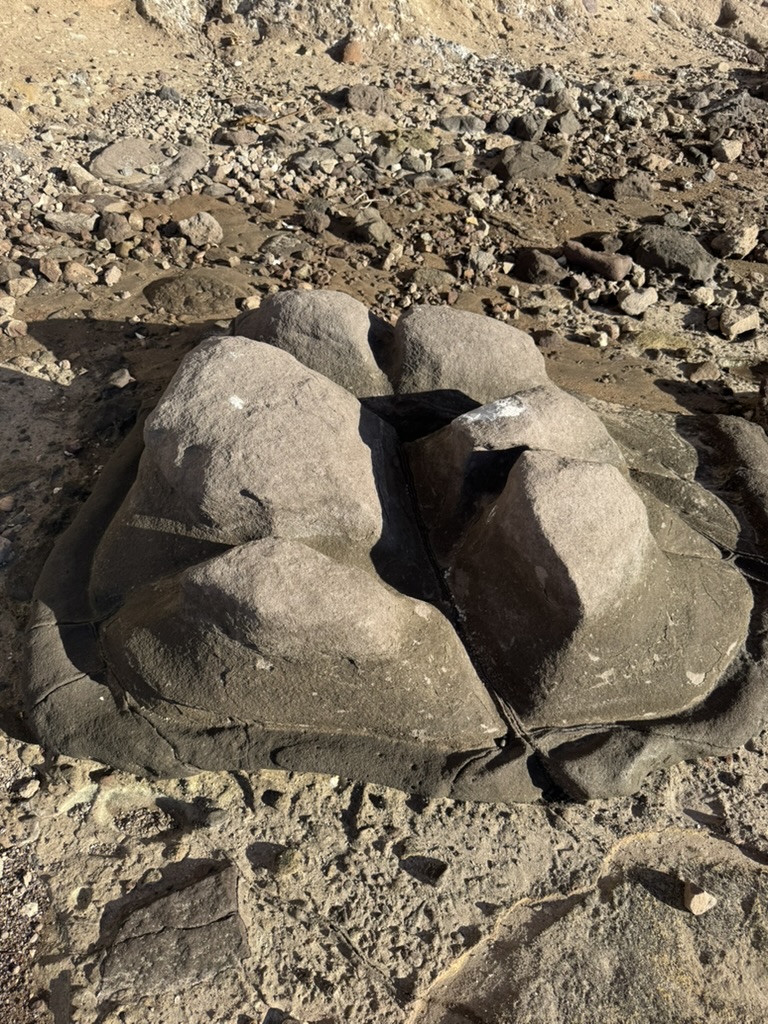
The Rock That Looks Like It Is Melting
There is a rock face on the north side of the island that stopped me completely.
It looks like it is melting. Actually melting. You can see where lava poured down, where it pooled, where it started to cool, but had barely finished when the temperature dropped enough to freeze it in place.
The History of Time
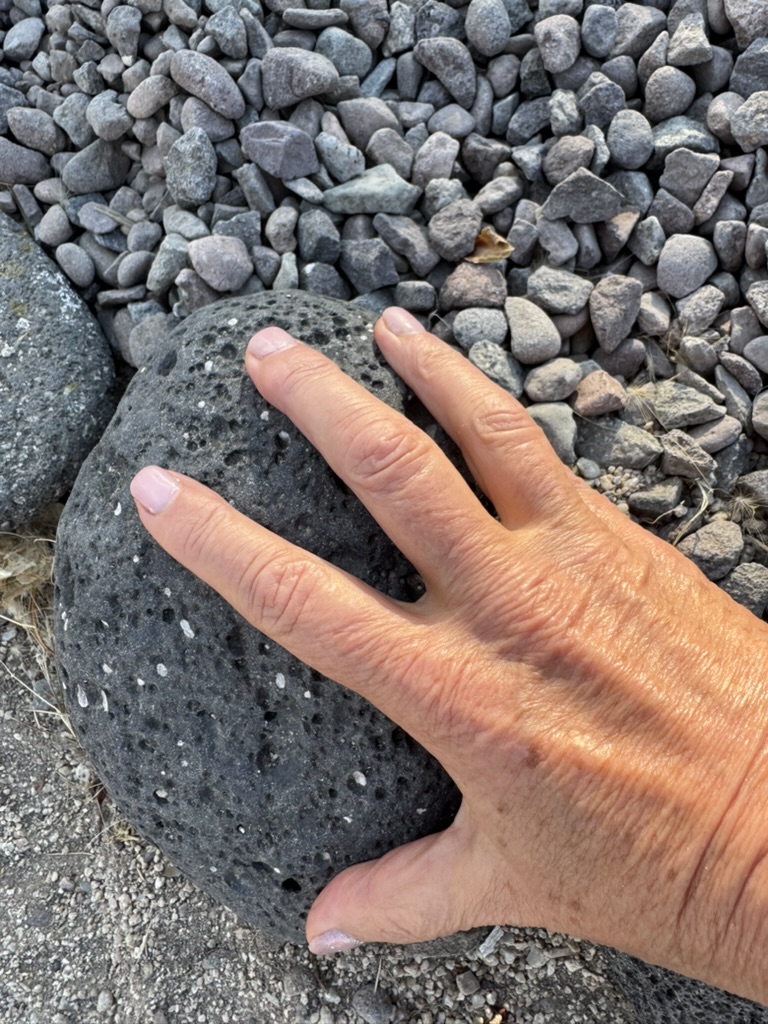
Frozen mid-flow. Caught between liquid and solid. Holding that in-between state for millions of years.
I stood there for twenty minutes just staring.
Trying to imagine the heat that would make rock flow like water. Trying to comprehend the violence of that moment. Everything around it is burning or fleeing or already gone. And then the cooling. The gradual solidification. The transformation from a destroying force into a peaceful habitat where birds now nest and lichens grow.
And I thought this was what I was trying to do.
Hold the memory of heat without burning.
Carry what happened without being destroyed by it.
Be transformed by fire but remain myself through the transformation.
The rock face has been doing this for millions of years. I am on day fifteen. But we are doing the same work. Just at different speeds.
Esta piedra recuerda. This stone remembers.
And it is teaching me how to remember without burning.
The One That Is Broken But Still Standing
Crack in the Wall
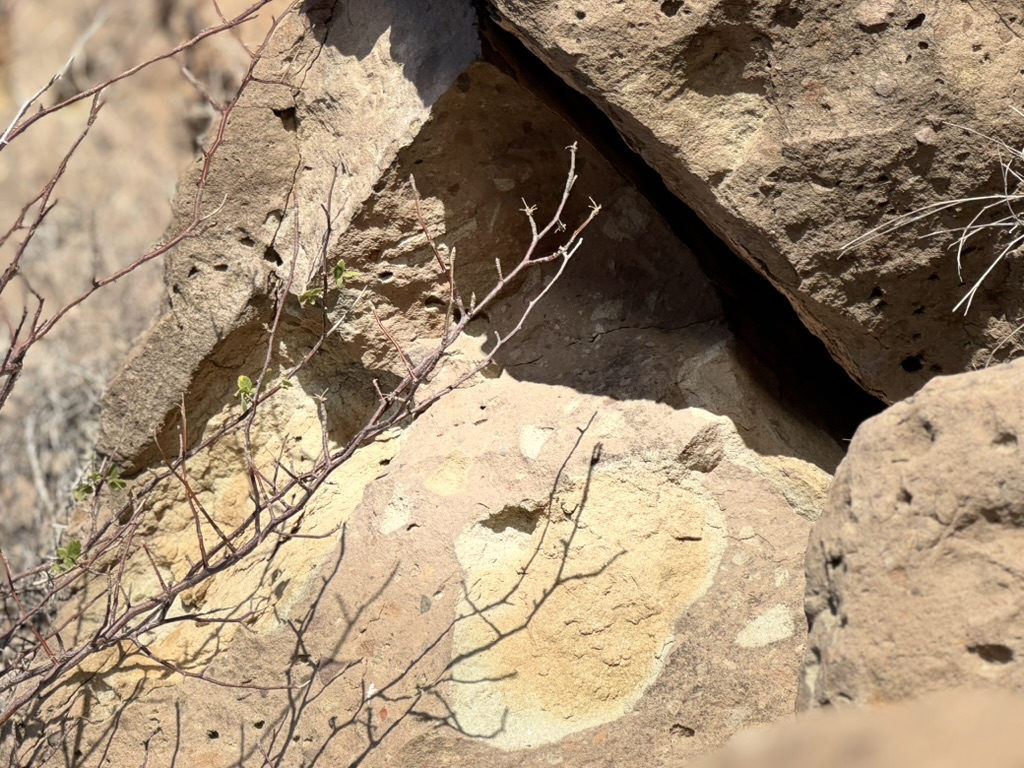
There is another rock face with a vertical crack running through it. Maybe three meters tall. Maybe a centimetre wide at the widest point.
Something broke it. Thermal shock when cold water hit hot stone, maybe. Or an earthquake. Or just the accumulated stress of millions of temperature cycles. Expanding in heat. Contracting in cold. Until finally the rock could hold no more and split.
But here is what strikes me. It is still standing.
The two sides of the fracture have stayed together. Held by friction and weight. Stable despite the split. You can see light through the crack. You can see exactly where it broke. But it is still here. Still doing the work of being rock. Still holding the island together.
I looked at this fracture for a long time.
Thought about my own breaking points. The places where pressure exceeded what I could hold. The visible marks of moments when I could carry no more.
And I thought maybe breaking is just honest.
Maybe fractures are how we know something is real. Has limits. Can be stressed. Carries the history of what it has weathered.
There is a Japanese art form called kintsugi, where broken pottery is repaired with gold. The philosophy is that breakage and repair are part of the object’s history and should be honoured, made visible rather than hidden. That something can be more beautiful for having been broken and carefully mended.
The fractured rock needs no gold. But it has the same quality.
Here is where I broke.
Here is where stress exceeded capacity.
Here is how I continue anyway. Fractured but standing. Marked but functional.
La fractura no es el final. The fracture is the end of nothing.
It is part of the story.
The Smooth One That Should Be Rough
Rock Face
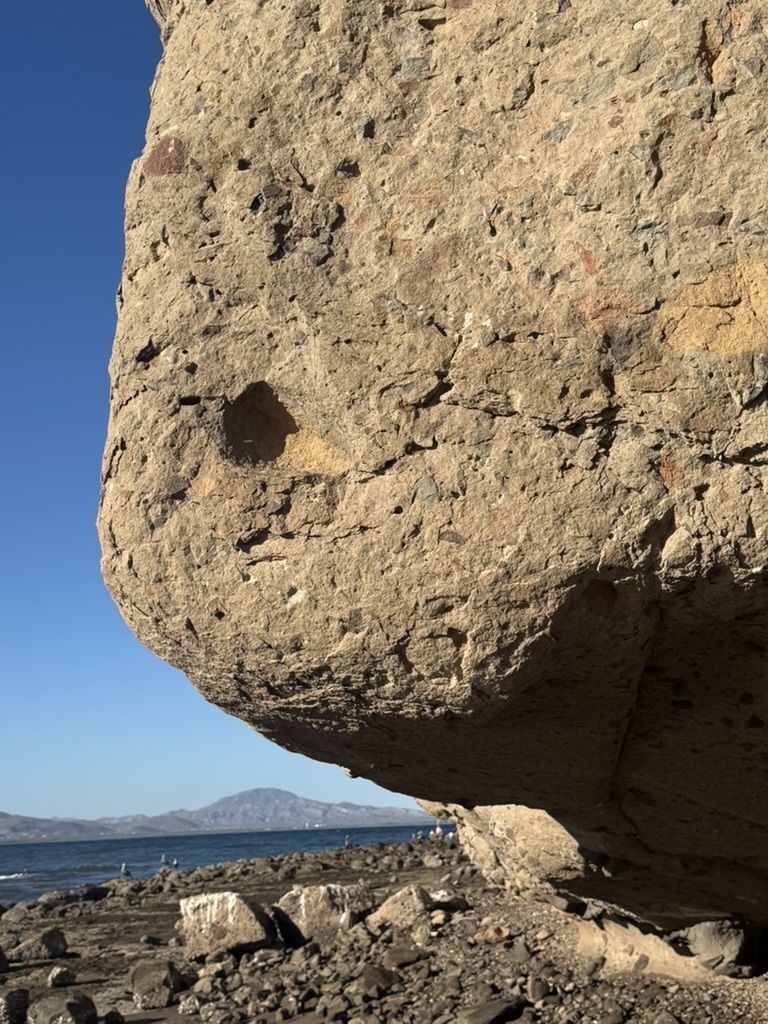
Volcanic rock should be rough. Textured. Showing all the marks of how it cooled. Gas bubbles. Crystalline structures. The molten material is solidifying rapidly.
But there is a rock face on the eastern side that is impossibly smooth.
Worn smooth by thousands of years of wind carrying sand. By water moving across it twice daily with tides. The patient’s work of erosion removes everything that protrudes, leaving only the most resistant material.
I ran my hand across this surface and felt time differently than I usually feel it.
Hours and days and years dissolved. What remained was geological time. The kind of time where my entire life is too brief to register. Where everything I think matters is just noise in a system that has been running for billions of years.
This should feel crushing, right? Should make everything seem pointless?
But it feels the opposite.
It feels freeing.
The pressure to make my life matter in some permanent way dissolves when I realise nothing is permanent. Stone is temporary. Mountains are temporary. Even continents are temporary. Everything is wearing away. Everything is becoming something else so slowly we mistake it for stillness.
I need only be here. Touching this smooth stone. Learning from its patience. Understanding that wearing away is simply what everything does.
The question becomes, what shape do you hold while it is happening?
La piedra no resiste el desgaste. The stone receives erosion rather than resisting it.
Simplemente sucede. It simply happens.
And the stone continues being beautiful. Changing slowly. But beautiful.
Rock Tunnel
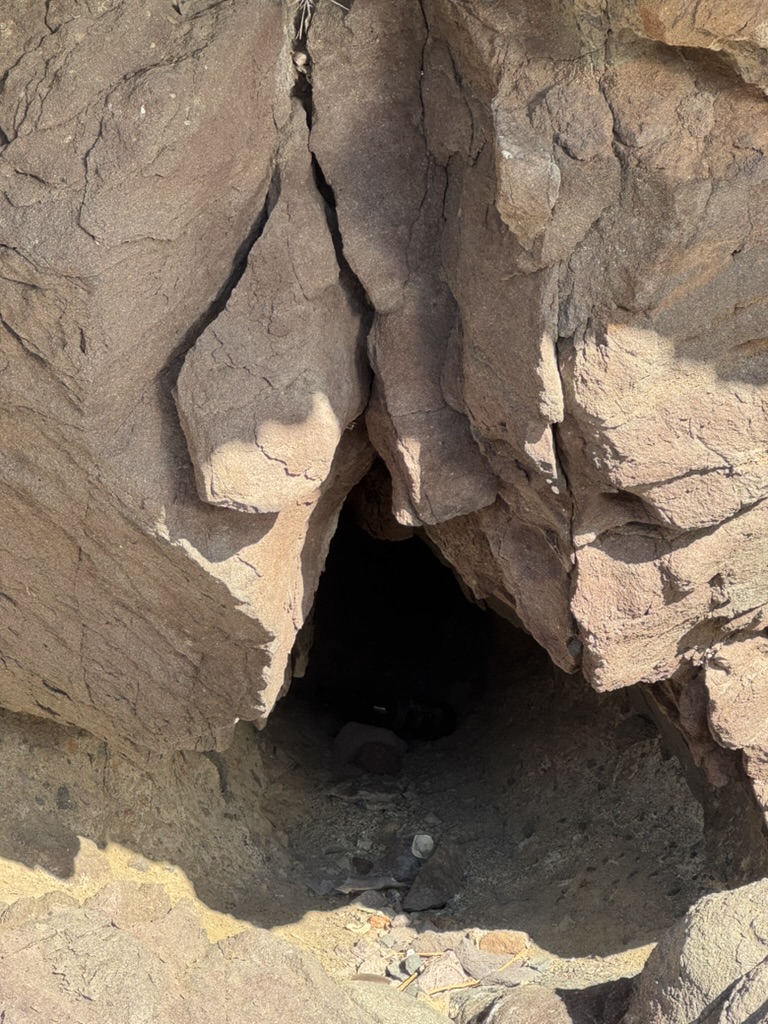
The One Covered in Barnacles
At the waterline, a rock is completely covered in barnacles. Thousands of them. Layer upon layer of small white shells so dense that the original stone beneath lies hidden from view.
I touched this carefully (barnacles are sharp) and felt the roughness, the complexity, the way they had created an entirely new surface.
The original rock is still there. Still solid. Still doing the work of being rock. But you would never know what it looked like before the barnacles arrived.
And I thought this is me at sixty.
All these layers of experience accumulated over decades. Jobs I have held. Places I have lived. People I have loved. Losses I have carried. Joys I have known. All of it is building up. Changing my surface. Making me something different than what I was beneath.
And this is okay.
I am trying to get back to the original, unbarnacled version of myself. Some pure state before life happened to me makes no sense.
I am the whole thing. Rock plus everything that has accumulated on it. All the layers together make up whatever I mean at this moment.
Las capas cuentan la historia. The layers tell the story.
The original stone plus everything else. All of it together.
The Fingers Reaching Toward Sky
Fingers Reaching for the Sky
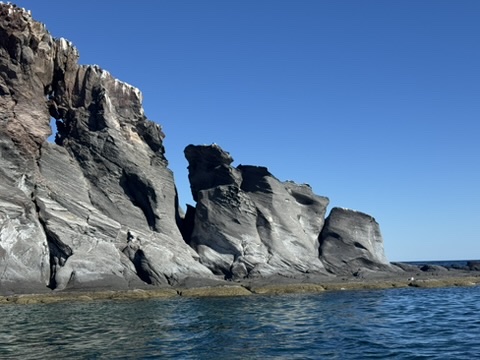
On the western edge, a rock formation rises from the water like fingers reaching upward.
Five distinct pillars. Maybe two meters tall. Separated by erosion but still connected at the base. They look intentional. Looks like a sculpture. Looks like someone (or something) was trying to grasp the sky.
Of course, no one made them. Water and wind made them by removing everything else. Leaving only these harder pillars that resisted the longest.
But they look like reaching.
And standing in front of them, I felt the same impulse. To reach. To extend beyond my current boundaries. To stretch toward something beyond my current reach.
Here is what struck me. These pillars have been reaching for millions of years. They will never actually grasp the sky. The reaching is the point. The reaching is what they do.
And I thought maybe this is enough.
Maybe reaching without grasping is valid.
Maybe the attempt itself matters.
Maybe continuing to reach despite never quite arriving is what makes you worthy of standing there at all.
I have spent so much energy trying to secure things. Trying to arrive somewhere stable and permanent where I could finally stop reaching and just be.
But maybe the reaching is the point. Maybe the effort to grow, to stretch, to extend beyond my current limitations is what I am supposed to be doing. And arriving at ‘done,’ ‘secure,’ or ‘finished’ is impossible, because being alive means continuing to reach.
Alcanzar sin llegar. To reach without arriving.
This too is valid.
The effort itself matters.
Rock Face
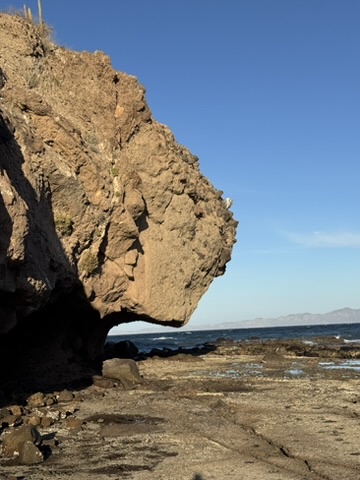
What I Am Learning From Stone
Life in the Stone
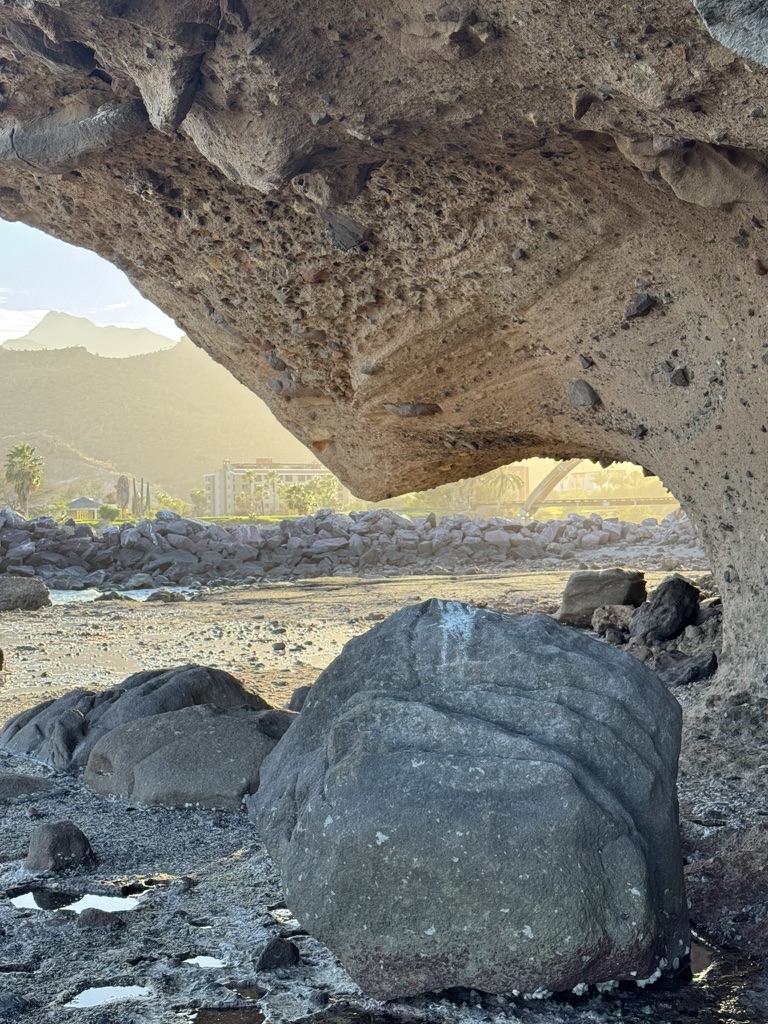
I have been walking around this island touching rocks. Sitting with them. Trying to learn what they know.
And here is what they are teaching me.
Transformation is slow. Nothing happens suddenly in geological time. Fire becomes stone over timescales that exceed human comprehension. Erosion works grain by grain. Everything that looks stable is actually moving. Just so slowly, my brief human perception mistakes motion for stillness.
After five months of crisis, after twenty-five years of precarious employment, I forgot this. Forgot that healing takes time. Forgot that becoming someone different from you requires patience. The rocks are reminding me. Slow change is still change. Patient work over time moves mountains.
Breaking is honest. The fractured rock face still stands. Still functions. Fractures are part of the story rather than the conclusion. What broke me ended nothing. Just marked me. Made me different. Made my story more complex.
Accumulation creates complexity. The barnacle-covered rock is more interesting than smooth rock. More textured. More alive. What accumulates on you over time is the life you have lived, layered on the foundation you were given.
Reaching matters more than grasping. The stone fingers will never touch the sky. But they reach anyway. The reaching itself is beautiful. The effort itself matters.
Patience is active. The smooth rock achieved its smoothness through millions of encounters with water and wind. Each encounter removed something infinitesimal. But the accumulation of infinitesimal changes creates transformation. Patience is active participation in slow becoming rather than passive waiting.
The Small Stone I Carried Home
Special Rock
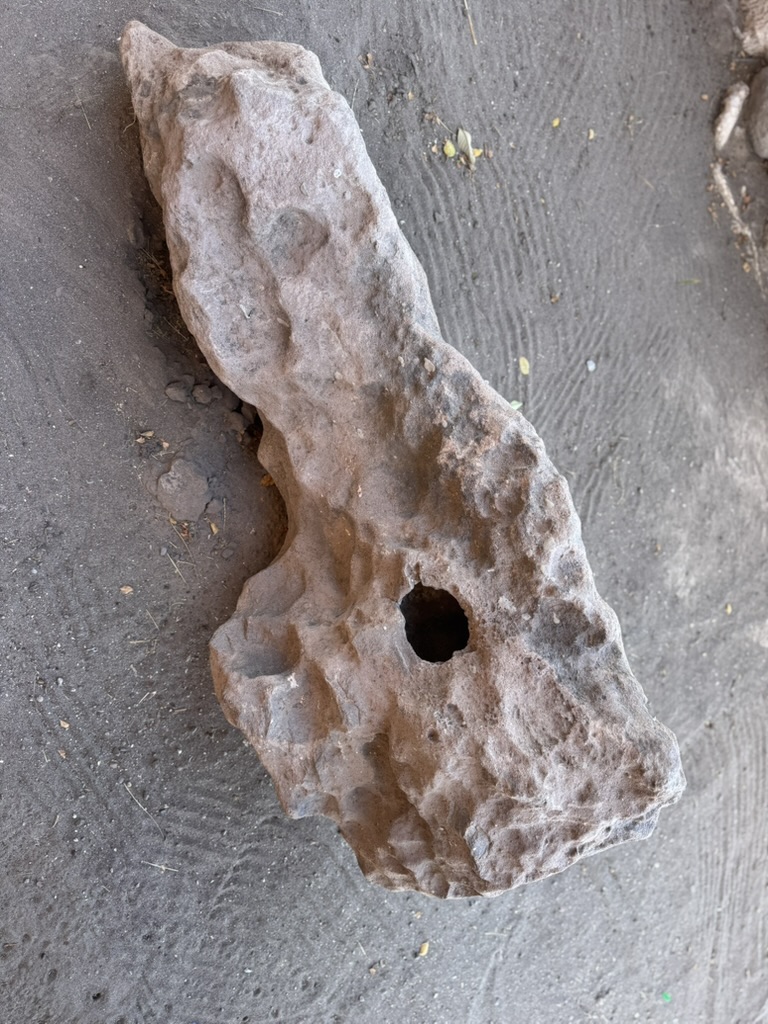
On my last day on the island, I picked up one small stone. Fits in my palm. Black basalt with rust-red oxidation patches. Smooth on one side where water wore it. Rough, on the other hand, is where a break exposed fresh surface.
I brought it back to the cottage.
It sits on the patio now. Every morning I touch it. Feel the contrast between smooth and rough. Notice how the sun warms it. Watch how rain darkens it temporarily, then how it dries back to its original colours.
The rock is still changing. Even here. Even in my care. Oxidation continues. Morning dew dissolves microscopic amounts of minerals. Daily temperature changes create stresses too small to see but real enough to eventually, inevitably, cause new fractures.
This rock is a teacher I brought home.
A reminder that transformation is slow. That breaking ends nothing. That accumulation creates beauty. That reaching without grasping is enough. That patience is how mountains move.
When I return to the life I left, when I re-enter the urgency and demands and constant pressure, this rock will sit on my desk.
Will be cool under my hand when I need cooling.
Will be solid when I need grounding.
Will be patient when I have forgotten how.
Esta piedra recuerda a mí. This rock remembers for me.
What I learned here. That change can be slow. That time is longer than I think. That patience is possible. That some stories take millions of years to tell.
Y está bien. And that is okay.
A Question For You
Standing Dreams
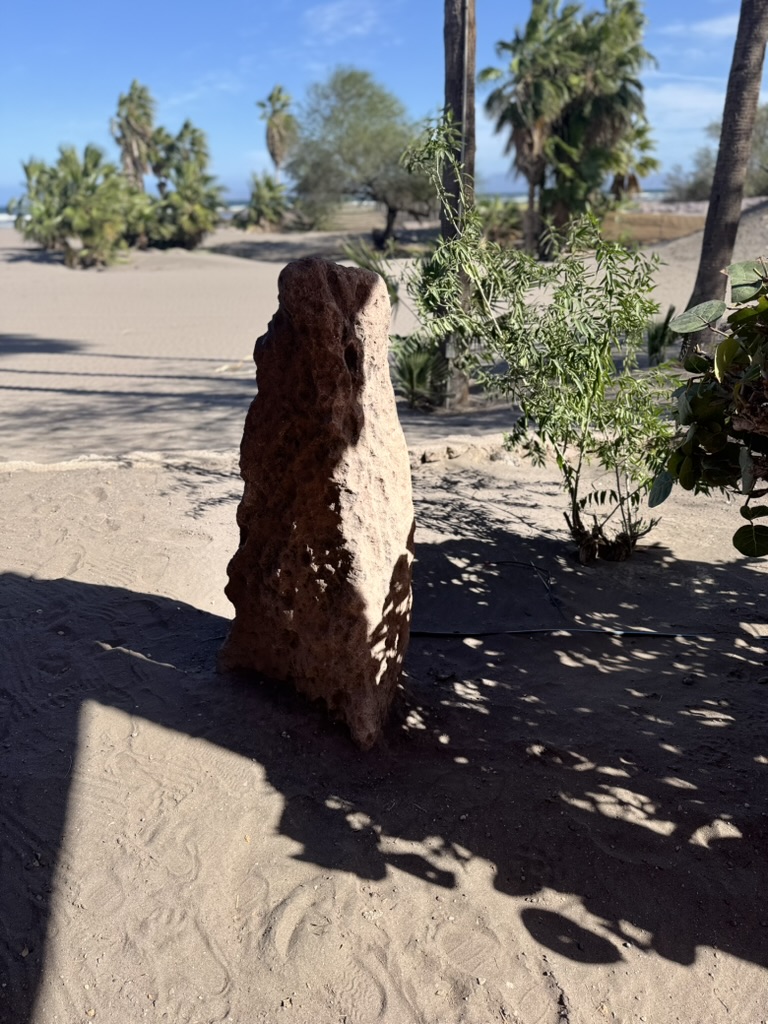
When was the last time you sat with something long enough to learn from it?
No analysing. No using. No thinking about it. Simply sitting with it. Letting it teach through its presence. It is patience. Its way of being in the world.
I am learning this at sixty. Learning to slow down enough to hear what the world has been saying all along. Learning to listen to teachers who speak in textures and colours, and the patient holding of shapes across deep time.
The rocks have been here for millions of years. They are in no hurry. They have time to teach.
And I am finally slow enough to learn.
If you are learning to slow down, to listen to unlikely teachers, to trust that transformation takes time, I would love to have you join the conversation.
The rocks and I will be here. Patient. Waiting.
Gracias, piedras. Por enseñarme paciencia. Por mostrarme que la transformación es lenta. Por recordarme que las fracturas cuentan historias. Por demostrar que alcanzar importa. Por estar aquí, de forma constante, mientras aprendo a estar presente.
Thank you, stones. For teaching me patience. For showing me that transformation is slow. For reminding me that fractures tell stories. For demonstrating that reaching matters. For being here, constant, while I learn to be present.
Rock Stories
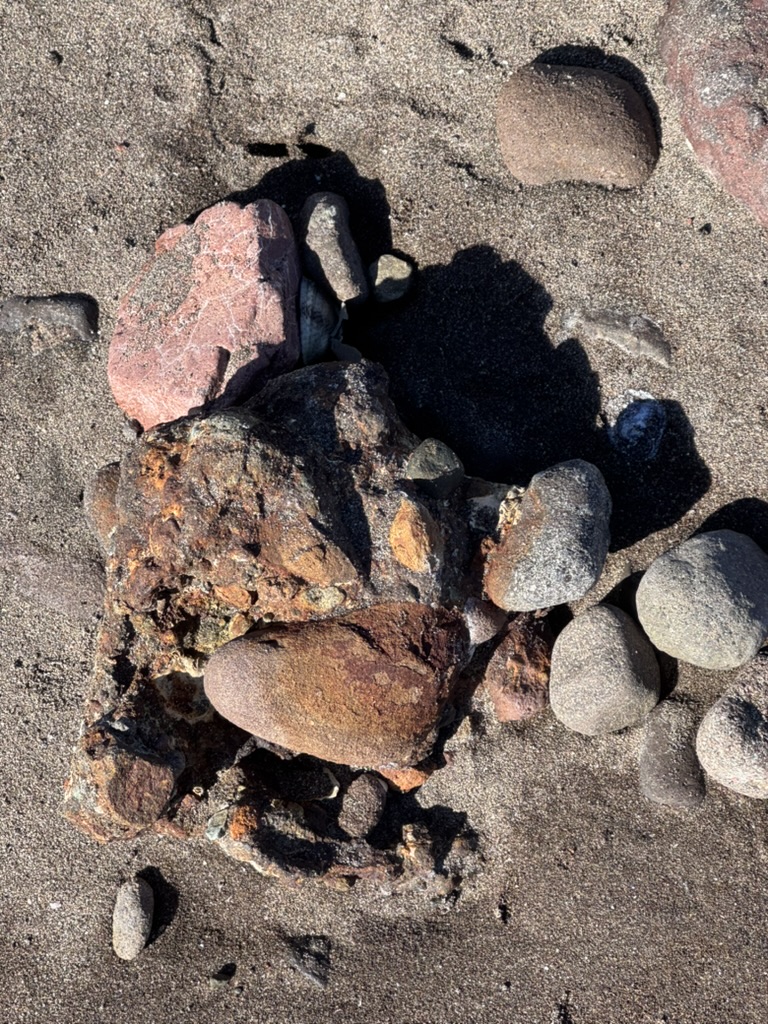
Translation note. Spanish language passages were generated using Google Translate and subsequently reviewed and refined by the author. Any remaining infelicities reflect the limits of machine translation rather than intent.