I woke before the light this morning. I woke free of anxiety. My thoughts moved gently rather than racing toward demands. I was simply awake in the way an animal wakes: aware, present, responsive to some internal signal that sleep was complete and consciousness could return. I slept solidly last night.
Crack of Dawn
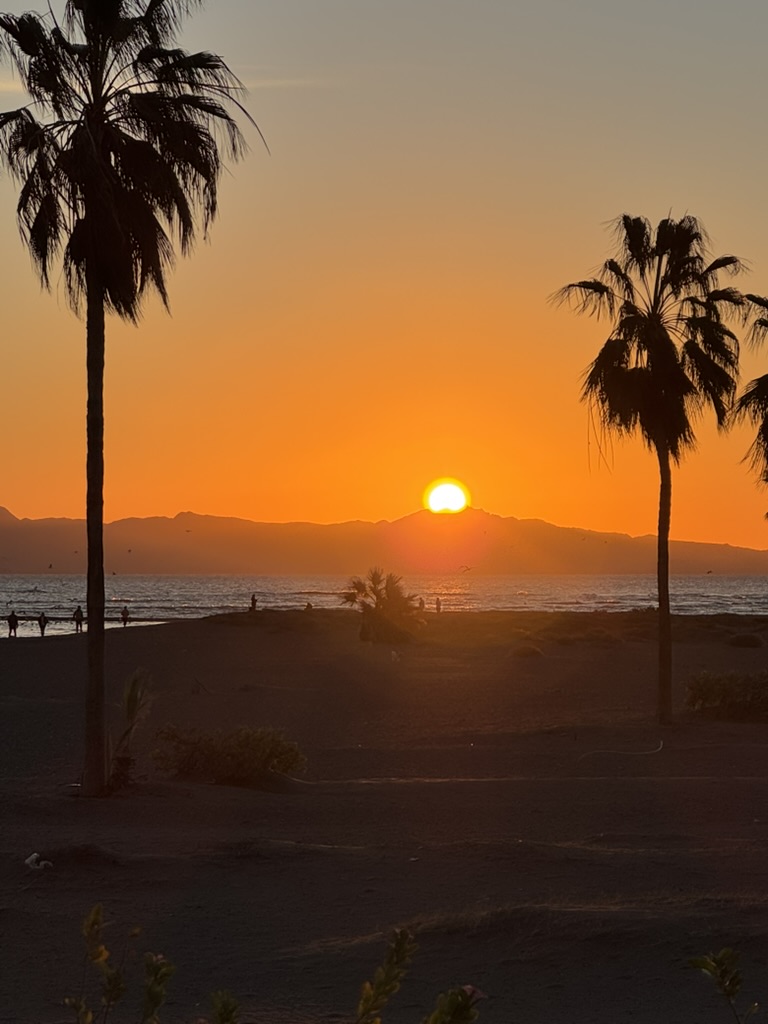
Photo Credit: January 13, 2026
The darkness held a particular quality at this hour. It was dense and gentle. The Sea of Cortez whispered rather than spoke, its sound intimate and close, as though sharing secrets only pre-dawn can hear. I lay there listening, tracking the gradual shift from deep black to grey to that moment just before sunrise, when the world begins to remember colour.
Fifth morning of unbroken sleep. Cinco mañanas.
I notice how differently I hold this information now than on Day Nine, when the pattern first established itself. Then it felt miraculous, fragile, something that might shatter if examined too closely. Now it feels ordinary. It is natural-ordinary, the way breathing is ordinary: essential, life-sustaining, but no longer requiring constant amazement.
My system no longer scans for threats upon waking. It simply wakes, assesses the environment as safe through accumulated data points (consistent sounds, familiar light patterns, the absence of disruption), and allows consciousness to emerge without the defensive mobilization that characterised my mornings for months before arriving here. This is co-regulation with place. The sea, the light, and the flight patterns of pelicans are my companions in restoration. My nervous system orients to their constancy.
This is re-inhabitation. A return to the deeper rhythms that survived beneath who I had to become. Learning has shifted from conscious recognition to embodied knowledge. From something I observe to something I am.
The light is beginning now.
A View From My Deck
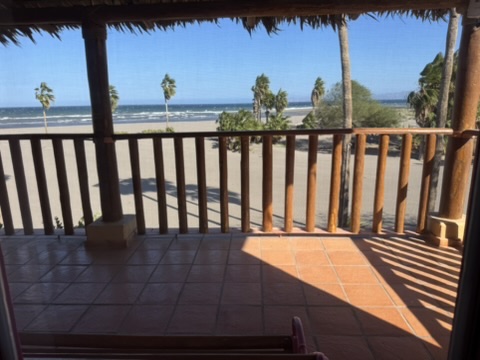
Photo Credit: Amy Tucker, 2026
I can see it even with my eyes closed: the gradual brightening that comes before sunrise, the world remembering itself. I get up, pull on clothes, and walk to the balcony. The pelicans are already fishing, their morning routine as established as my own has become.
I watch one pelican dive. The complete commitment of it: wings folding, body dropping, the compact missile of intention entering water with barely a splash. Surfaces. Waits. The fish is visible in the throat pouch, and the backward tilt of the head sends it down. Then stillness. Complete stillness. The body rests on water while the system processes what it has caught. No hurry. The pelican rests with what it has before seeking the next fish. Digests. Allows the body to complete one cycle before beginning another.
Esto también es una enseñanza. This too is a teaching.
The pelican dives because its body signals hunger, beyond any schedule that dictates it should fish at this hour. This is intrinsic motivation in its purest form: action arising from internal states rather than external pressures or rewards.
For twenty-five years, I lived according to externally imposed rhythms. What I was experiencing, I now understand, was chronic autonomy frustration, one of the three basic psychological needs Self-Determination Theory identifies as essential for well-being.
This kind of exhaustion is disproportionately borne by women. Especially those navigating midlife in systems that reward endless availability and punish embodied limits. What I am naming here extends beyond personal recovery. It is a reclamation of rhythm in a world that teaches women to ignore their own.
What Gabor Maté (2022) calls “the myth of normal” is unravelling. I no longer pathologise exhaustion or anxiety as personal flaws. I see them as natural responses to abnormal conditions, conditions I am now beginning to unlearn.
What is Normal?
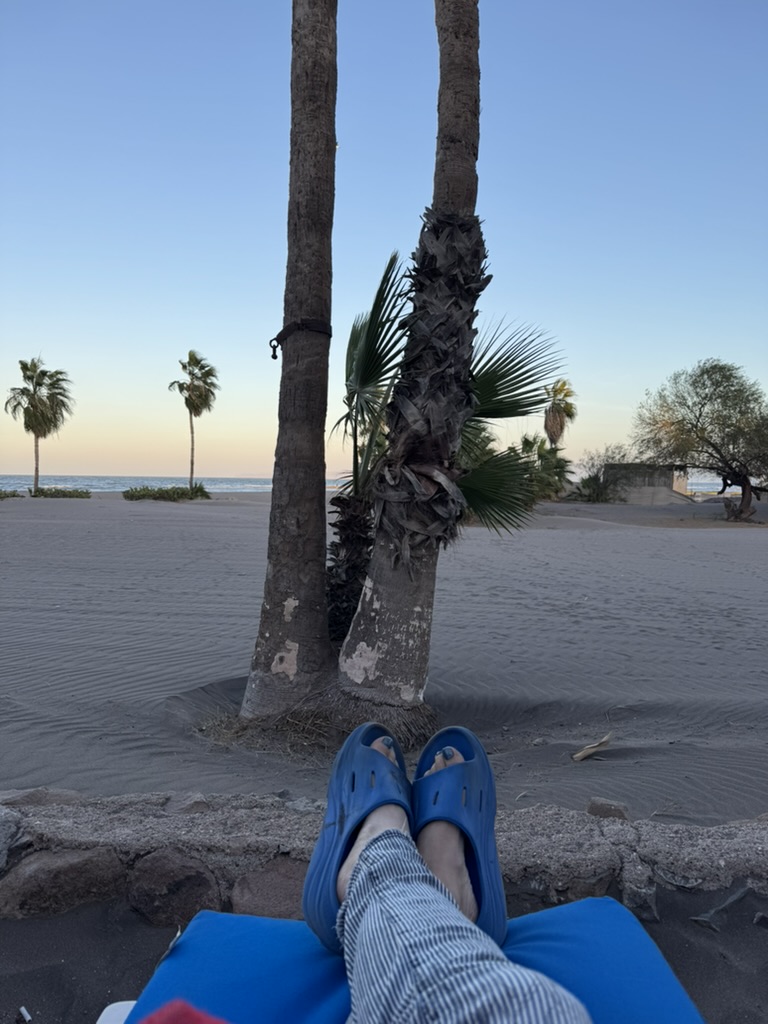
Photo Credit: Amy Tucker, 2026
Twelve days ago, I arrived here holding the question of whether I could stay. I am here. The days unfold. The routine continues. And somewhere in the last twelve days, I stopped asking for permission and simply started living.
This is what Haraway (1988) means by situated knowledge: beyond abstract theorising about what knowledge might be, grounded in the concrete recognition that I am in this body, in this place, at this moment, noticing what I notice. That observation matters.
Coming here, choosing this documentation, claiming this experience as scholarship: these are acts of resistance against that denial. I am saying my knowing matters. My observation counts. My embodied experience constitutes valid data.
The sunrise is happening now. The pattern provides structure. The variation provides life.
How do I document my own experience with enough rigour to make it a scholarship while remaining present enough to actually experience what I am documenting?
The theoretical scaffolding continues to build. But this morning, before the reading begins, I simply sit with what is here. Water. Birds. Light. Breath. The embodied reality that theory helps me understand but cannot replace.
And you, reading this: what has your morning taught you? What rhythms in your life have asked to be trusted, held without cross-examination?
Coffee now. The smell of it. The warmth of the cup. The first sip that signals morning has arrived, you are awake, and the day is beginning.
I think about routine again. It has stopped feeling like a constraint and has become a container. The predictability allows spontaneity because the calculating has quieted.
My body is learning to read time by sunrise, by the pelicans’ fishing patterns, by the quality of light at different hours. These serve as zeitgebers, helping my disrupted circadian system recalibrate to a more natural rhythm.
Now I know the difference. Freedom is a structure you choose that holds you safely and that you can trust to continue even when you stop monitoring it.
Soon I will swim. What I am learning through swimming is what Csikszentmihalyi (1990) calls flow, though the flow I experience is quieter than what he typically describes.
Perhaps this is what alonetude looks like in motion. Beyond performance or accomplishment. Just being fully present with yourself in an activity that asks nothing beyond presence itself.
Rock Art
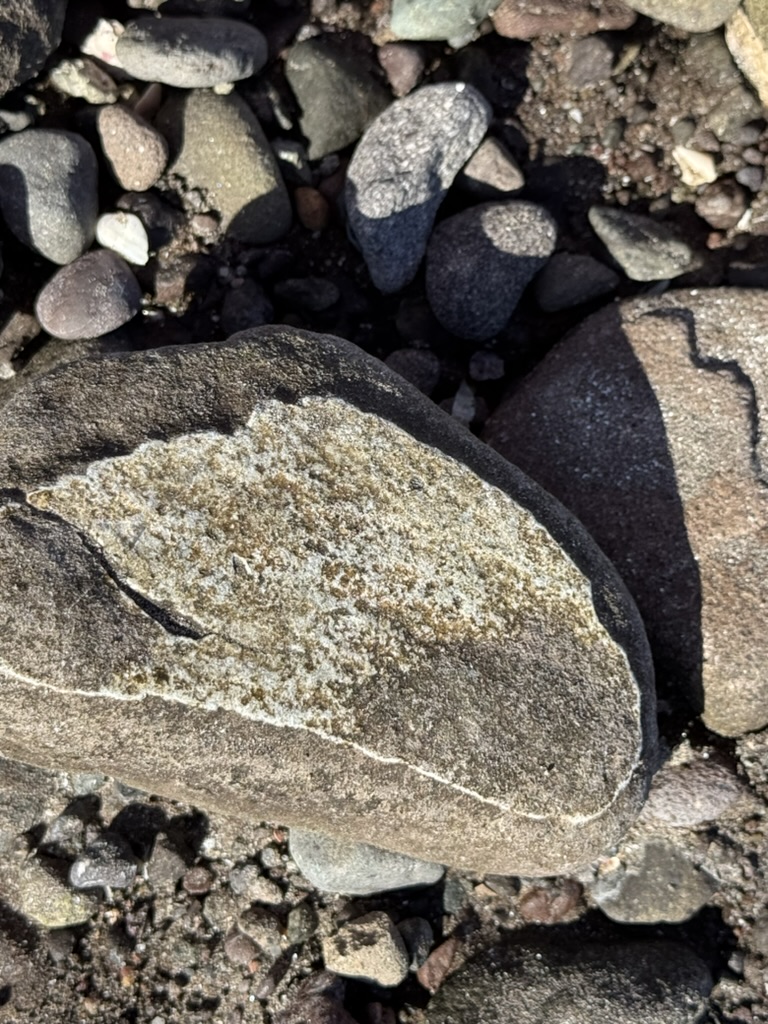
Photo Credit: Amy Tucker, 2o26
La luz me sostiene. The light holds me.
El mar me enseña. The sea teaches me.
Y mi cuerpo recuerda. And my body remembers.
Translation Note
Note. Spanish-language passages were generated using Google Translate (Google, n.d.) and subsequently reviewed and refined by the author. Any remaining infelicities reflect the limits of machine translation rather than intent.
References
Csikszentmihalyi, M. (1990). Flow: The psychology of optimal experience. Harper & Row.
Google. (n.d.). Google Translate. https://translate.google.com
Haraway, D. J. (1988). Situated knowledges: The science question in feminism and the privilege of partial perspective. Feminist Studies, 14(3), 575–599. https://doi.org/10.2307/3178066
Maté, G., & Maté, D. (2022). The myth of normal: Trauma, illness, and healing in a toxic culture. Avery.