Poem: They Lied.

Poem: They Lied, a reckoning with the stories that institutions tell about labour, worth, and endurance. A poem of grief and clarity, written from the body of someone who believed them for too long.

Content Warning: This post contains reflections on trauma, grief, and broken trust. Please care for yourself as you read, and feel free to step away if you need to.

Note. Thompson Rivers University, Faculty Council Award, 2025


They lied.
They lied and called it mentorship.
They lied and called it an opportunity.
They lied and called it a calling.

They told me the academy was a sanctuary.
They told me knowledge was sacred.
They told me my voice mattered.

So I gave them everything.

My mornings.
My nights.
My body, bent over screens until my eyes burned and my hands ached.
My stories, trimmed into acceptable methods.
My grief, formatted into theory.
My hope, footnoted into legitimacy.

They told me, Just one more course.
Just one more publication.
Just one more credential.

Sacrifice became the job description.

They dangled permanence like a mirage.
They called precarity “experience.”
They called overwork “passion.”
They called exploitation “professional growth.”

They told me belonging was coming.
Belonging never came.

They took my heart and turned it into service metrics.
They took my mind and turned it into deliverables.
They took my soul and turned it into outputs, grants, citations, and student evaluations that never saw me.

They smiled while doing it.
They thanked me while extracting me.
They called me resilient while grinding me down.

I am angry because they knew.
They knew the system was built on unpaid labour,
on feminised care work,
on racialised and precarious bodies that teach, grade, counsel, and disappear.

They knew, and they kept recruiting.

They sold me the myth of the scholar as a free thinker
while chaining my thinking to funding cycles, metrics, and institutional branding.

They called it education.
I call it extraction.

They stole 17 years of my life
and told me I should be grateful.

They stole my weekends, my sleep, my joy,
and told me I was lucky to be here.

Lucky.

No.
I was useful.

But here is what remained beyond their reach:

My anger is clarity,
It is the sound of a system being named.

They cannot have the part of me that walks into the sea and remembers herself.
They cannot have the part of me that writes without permission.
They cannot have the part of me that refuses to confuse suffering with virtue.

They stole my labour.
They stole my trust.
They stole my youth.

They told me I was lucky.
Lucky to be underpaid.
Lucky to be temporary.
Lucky to be invisible until they needed my labour.

Lucky.

I was convenient.
Lucky had nothing to do with it.

They knew this system runs on people who care too much.
They knew women, racialised scholars, Indigenous scholars, contract faculty, and graduate students carry the weight of the institution on their backs.
They knew.

And they kept recruiting us anyway.

They told me I was a scholar.
Then chained my scholarship to funding cycles, productivity dashboards, and institutional branding strategies.

They told me teaching was sacred.
Then reduced it to enrolment numbers and student satisfaction scores.

They told me my voice mattered.
Then edited it until it fit their journals, their grants, their safe narratives.

They stole years of my life.
They stole sleep, relationships, health, and creativity.
They stole the wild parts of thinking and replaced them with templates.

And they had the audacity to call this a career.

I am angry because I see the architecture now.
I see how the academy consumes people and calls it mentorship.
I see how it extracts love and calls it professionalism.
I see how it eats souls and publishes the findings.

They took my labour.
They took my trust.
They took my youth.

My future is mine to keep.

My anger has direction.
It is a theory.
It is a method.
It is evidence.

It is the moment I stop confusing suffering with virtue.
It is the moment I stop calling harm an opportunity.
It is the moment I take my mind, my body, and my soul back from an institution that never planned to hold them.

They lied.
I believed.
Now I refuse.


Author’s Note

In this poem, they refer to the neoliberal academy: a system of higher education shaped by market logics, metrics-driven governance, academic capitalism, and precarious labour structures. The term names the institutional architectures and policies, and political-economic conditions that extract emotional, intellectual, and affective labour while promising belonging, security, and scholarly freedom that are rarely delivered. The poem is written as a critique of structural and symbolic violence within contemporary universities, and as a reclamation of agency, voice, and scholarly selfhood.

Poem: I Did Everything You Asked Me

Poem: I Did Everything You Asked Me, a poem of exhaustion, grief, and the moment of recognising that full compliance is not protection. Written in the voice of someone who gave everything and was given nothing back.

Content Warning: This post contains reflections on trauma, grief, and broken trust. Please care for yourself as you read, and feel free to step away if you need to.

I did everything you told me to do.
Every checkbox.
Every whispered rule was passed down like gospel.

I went back to school
When I was already carrying too much,
when sleep felt like a luxury,
When my body kept asking for mercy
And I kept answering with more work.

Seven years for a doctorate,
because I was teaching ten courses a year.

Thousands of students.
Hundreds of names passing through my inbox, my gradebook, and my care.

My days were never mine.
They belonged to the timetable.
To institutional clocks that paused for nothing: no thinking, no healing, no depth.

Morning to night,
grading until my eyes burned,
answering emails in the dark,
hands moving long after my body asked to stop.

I learned to read exhaustion as responsibility.
To mistake depletion for commitment.
To call survival professionalism.

I built other people’s futures carefully,
credit by credit, feedback by feedback,
while mine stalled in drafts and deadlines,
always almost ready, always postponed.

The work held me.
The pace did.

And my body kept the record
long before my CV did.

I collected debt like proof of devotion.
Eighty-five thousand dollars
for the right to keep chasing permanence.
For the privilege of becoming more hireable.
For the fantasy that if I sacrificed enough,
You would finally choose me.

I published.
I turned my life into citations,
my grief into theory,
my trauma into methods sections
that made pain legible and respectable.

I presented at conferences,
stood behind podiums with trembling hands,
smiling through exhaustion
while strangers called me “inspiring.”

I served.
Committees, reviews, mentoring,
equity work, invisible work,
the work that keeps institutions alive
and leaves women depleted.

I won awards.
Teaching awards.
Service awards.
Letters saying I was exceptional,
that I mattered,
that I was indispensable.

And still,
when I asked for permanence,
you chose someone fresher.
You chose someone younger.
You chose someone who had yet to spend decades
making themselves indispensable to survive.

You told me I was impressive,
never quite permanent.
Important
never quite institutional.
Valuable
never quite worth keeping.

They said,
Get more PD.
So I did.

Publish more.
So I did.

Go back to grad school.
So I did.

Be visible.
So I was.

Be excellent.
So I burned myself into excellence.

And still,
I remained temporary.

I am tired.
Tired in my bones,
tired in the marrow of credentials,
tired of translating exhaustion into professionalism.

I am tired of being a provisional life,
a renewable clause,
a syllabus name that disappears.

I did everything you told me to do.
And you taught me, quietly, structurally,
that the rules were never designed
for someone like me
to win.

I did everything you told me to do.
I paid with my body, mind and soul, for the privilege of believing you.
I gave you 17 years of nights, weekends, and ten courses a year on your schedule.
You gave me exhaustion, and called it opportunity.

I did everything you told me to do.
You kept me temporarily.
And I am tired.

I did everything you told me to do.
My mind earned the doctorate.
My body paid the debt.
And you still called me replaceable.

I did everything you told me to do.
You rewarded me with precarity, debt, and silence.
This is how institutions harvest women and call it mentorship.

I did everything you told me to do.
It was never about excellence.
It was about how long you could use me before I broke.

I did everything you told me to do.
You taught me that merit is a story institutions tell
to justify who they discard.

I did everything you told me to do. It was never enough, and that was the point.

Notation: This poem reflects the embodied costs of academic precarity, where institutional narratives of merit and excellence intersect with structural disposability, cumulative educational debt, and chronic overwork.

Written from the body that carried the labour, the teaching loads, the doctoral training, and the exhaustion, it critiques meritocratic promises that mask the extraction of precarious academic labour within neoliberal higher education systems.

This reflection also situates precarity as an embodied form of structural trauma that informs my doctoral research on alonetude as a healing, resistant, and relational practice, an intentional reclaiming of rest, presence, and self-worth beyond institutional validation.

In this closing, “You” refers to the academy as an institution and system, its hiring committees, evaluation metrics, productivity imperatives, and meritocratic narratives that promise stability while structurally producing precarity.

This reflection speaks back to academic systems that demand relentless credentialing, publication, service, and teaching while offering disposability in return.

It situates my embodied experience of denial, debt, overwork, and exhaustion within broader structures of neoliberal higher education, where excellence is extracted from precarious bodies.

This narrative also connects directly to my research on alonetude as a relational, decolonial, and trauma-informed practice of refusal and restoration, a way of reclaiming worth, rest, and presence beyond institutional validation.

I am enough.

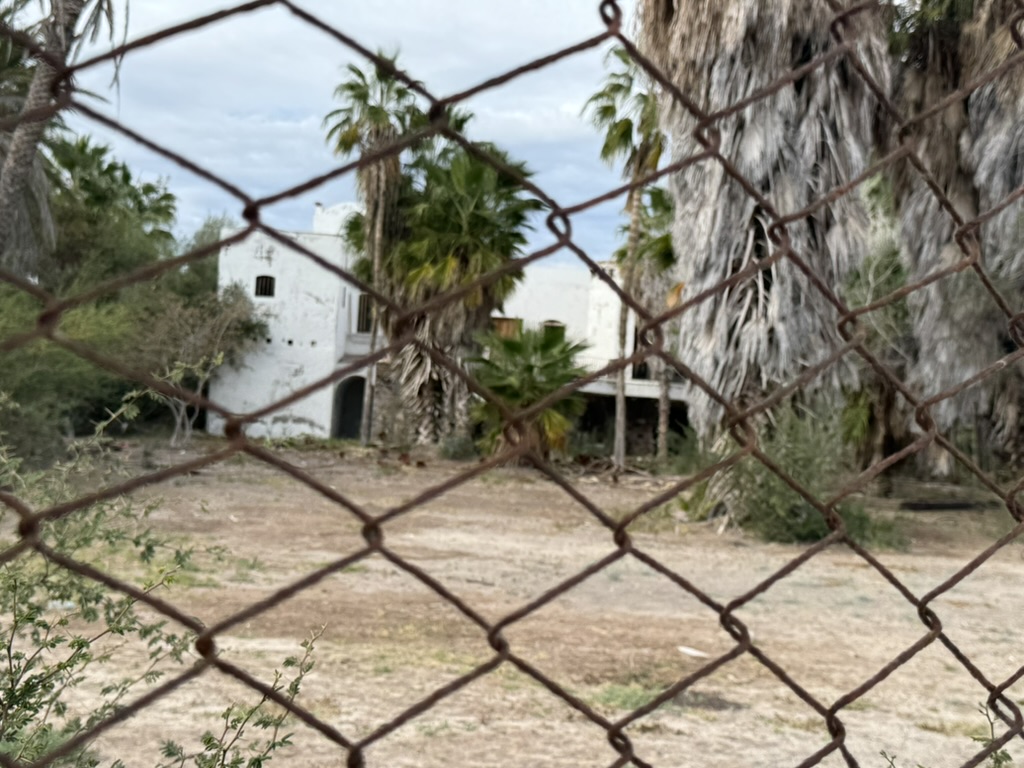
Image: Always on the Outside

Photo Credit: Amy Tucker 2026

Poem: What the Walls Remember


How do I love myself
when everyone else
taught me to withhold it?

Layered Histories

Photo Credit: Amy Tucker, 2026

The house remembers
What no one else did.

The sharpness of screams
caught in the drywall,
the broomstick’s shadow
stretching too long
across the kitchen tile.

Glass breaking,
again and again,
until silence learned
to brace itself.

inhale
The closet lock clicked shut.
hold
The darkness welcomed me like routine.
exhale
Stillness was my only shield.

Words thrown harder
than hands.
Worthless.
Useless.
Piece of…

(I refuse to repeat them.
I refuse to belong to them.)

I became so small
I forgot I was still breathing.
I folded myself
behind chairs,
beneath beds,
inside my own skin.

inhale
Is this love?
hold
Why does love feel like danger?
exhale
Why does kindness now
make me flinch?

They taught me
I was unlovable.
That my body was wrong,
my voice too loud,
my being too much.

So tell me:
How do I love myself
when everyone else
taught me to withhold it?

Still,
I remember
because my body does.
Beyond revenge,
returning
to the girl who survived
and wind in her lungs.

She breathed
through fear.
She whispered
through fists.
She lived
when no one wanted her to.

She is still here.
And maybe,
just maybe,
She is worthy
of the love
They never gave.

Return to the Girl Who Survived

Photo Credit: Amy Tucker, 2026

Poem: Who Knows

A short poem: Who Knows, on uncertainty, the sea, and the particular freedom that comes from letting the question remain open. Written from a moment of stillness beside the water in Loreto.

“I am still here, even when my body expects me to disappear.”

I did not
mean to exist
so loudly.

You did
Say I made it up,
the way the floor creaked,
The glass shattered,
The night bent sideways.

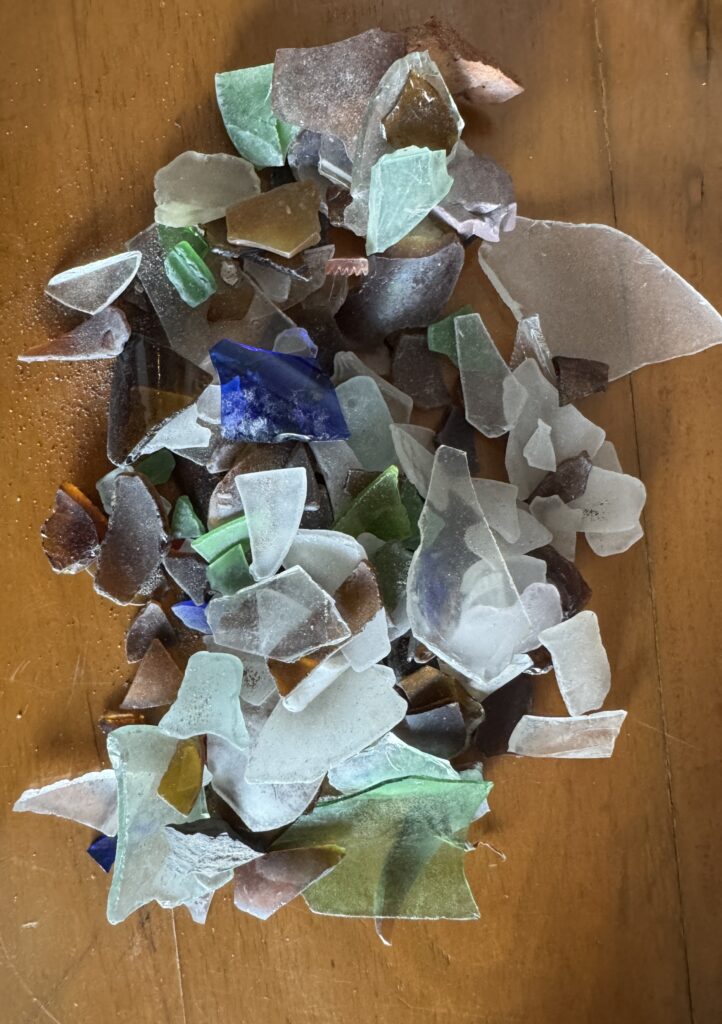
Image: Fractured Evidence

Photo Credit: Amy Tucker, 2026

Note. Sea glass gathered from low tide: fragments shaped by impact, time, and dispute.

Who knows
what happened
when truth
Became optional?

I remembered.
You rewrote.
The story shifted,
word by word,
until even silence
sounded suspicious.

Who knows
which silence
screamed first?

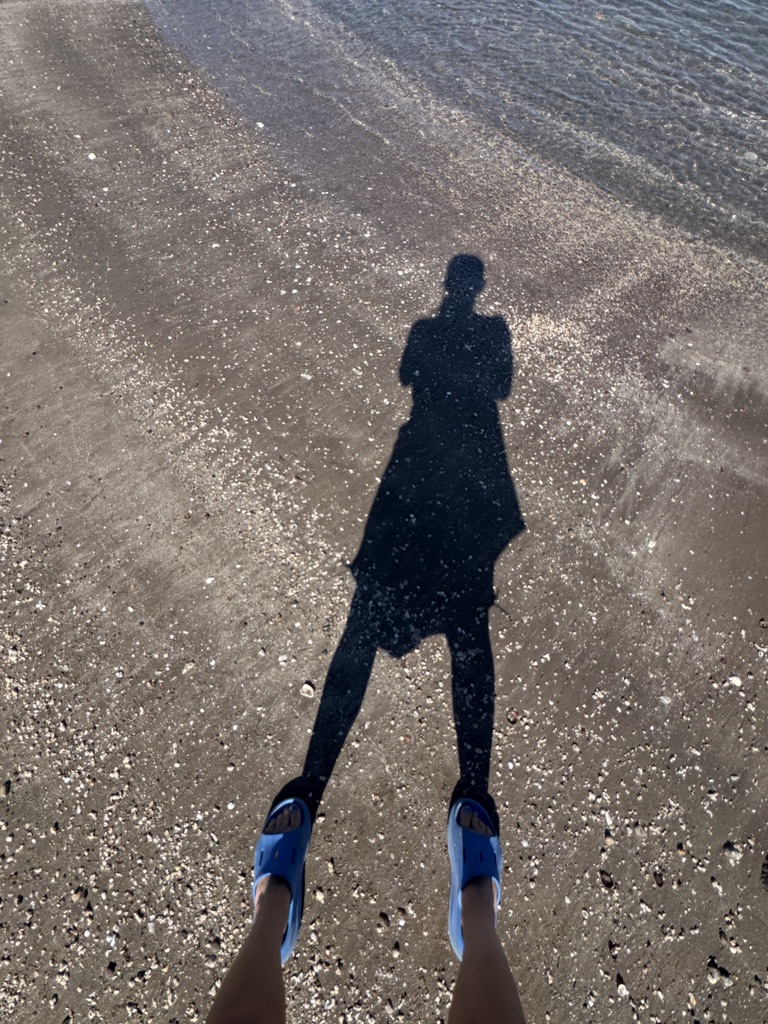
Image: The Shadow Wears My Shoes (I am still here)

Photo Credit: Amy Tucker, 2026

Notation: I included this image to remind myself that I am still here, even when my nervous system expects otherwise.