Title: What Gives Me Life
Artist Statement

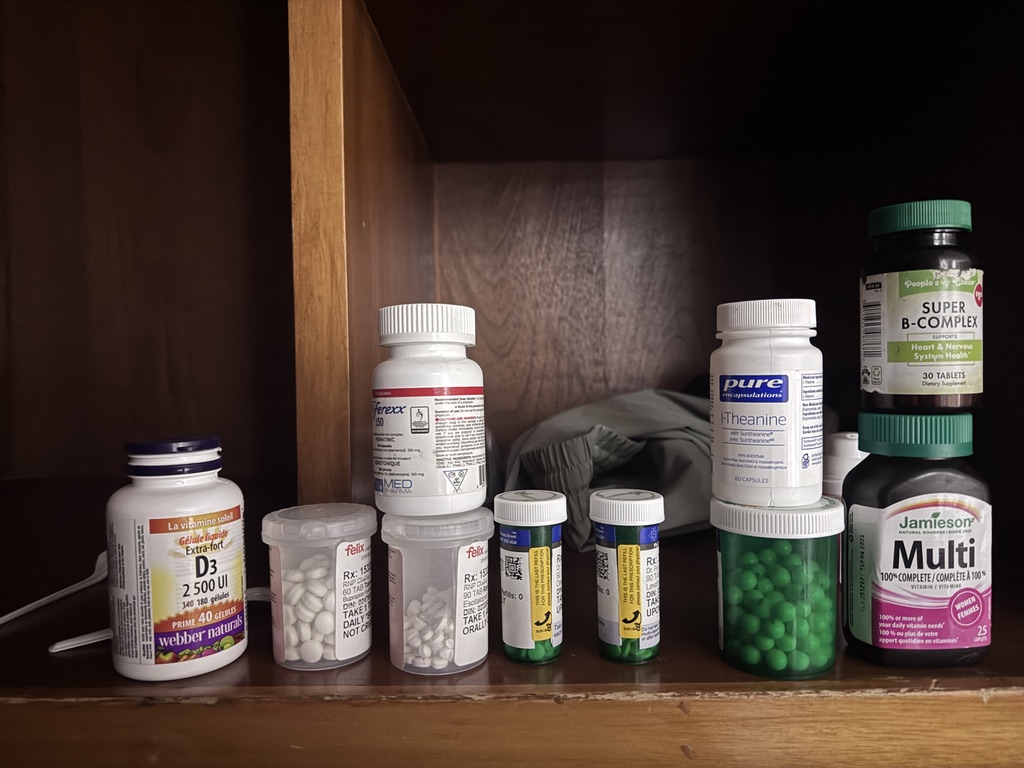
This collection speaks of dependency and care, of the daily negotiations required to maintain balance. I stopped when I saw these bottles lined up like a private apothecary, each label marking a different struggle being addressed, managed, and contained.

Photo Credit: Amy Tucker, January 2026
These medications are architecture, never crutches for the broken. They are architecture for survival, structures that hold space for healing to occur.
Amy Tucker, 2026
For years, I hid these interventions in shame, viewing them through a lens of failure. The wellness industry had convinced me that my need for pharmaceutical support indicated weakness, that natural remedies and willpower should be enough. Yet what I have come to understand is something different entirely.
There is no romance in them. Only practicality. Only the quiet persistence of someone determined to continue despite the weight of invisible struggles. The different hues of the capsules and tablets, the varied dosages: these represent my refusal to disappear, to fade into the background or surrender to the pull of despair.
I took this photograph as a witness, beyond any admission. Proof that seeking help is a strength. That understanding what your body and mind require is clarity, never compromise. On the wooden shelf, they sit, ordinary objects transformed into something sacred through the simple act of being seen.
Title: What Depression Looks Like
Artist Statement

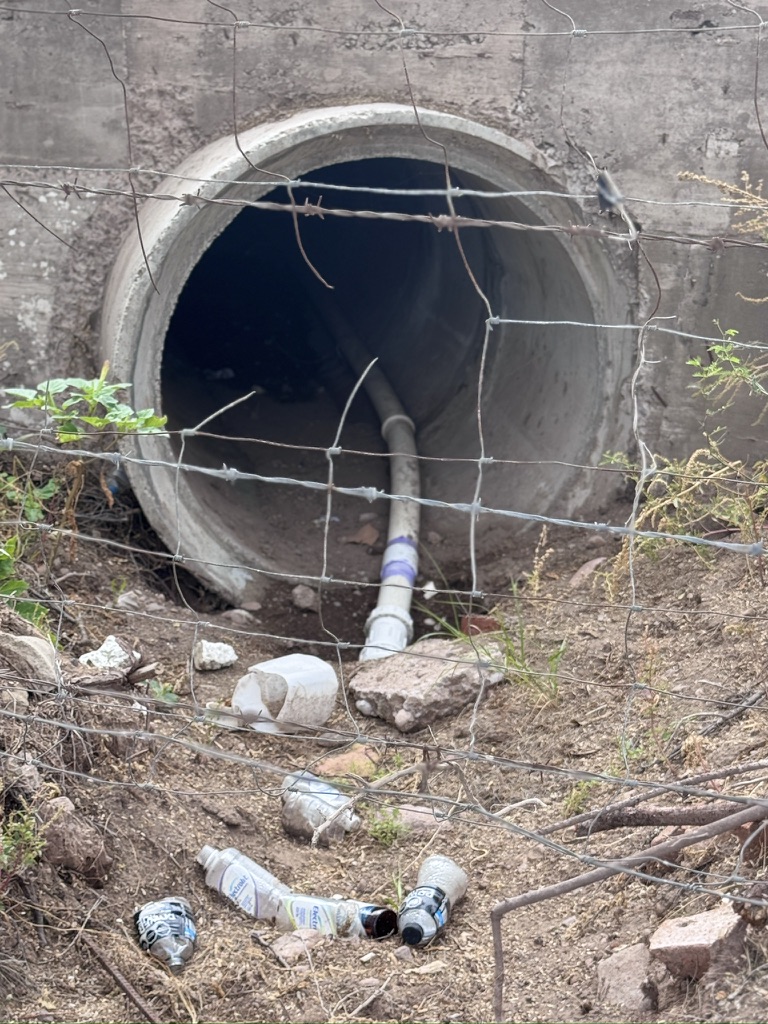
I discovered this structure on one of my walks and paused for a long time before it. The darkness within held a terrible familiarity. Depression manifests as a corridor you cannot see beyond, a place where things vanish. The barbed wire felt equally recognizable, the barriers between where I am and where I want to be. The ways in which moving toward wholeness becomes an act requiring deliberate will.

The empty bottles scattered in the dirt became a meditation on difference. I thought of my own medications, the ones I depend on. The contrast is stark. Some are abandoned, left behind. Others continue their work, filling the spaces within me, allowing me to stand upright and document this moment, rather than being consumed by the darkness they represent.

Photo Credit: Amy Tucker, January 2026
The structure itself offers no explanation. It simply opens into shadow. Some days that is precisely what occurs in the landscape of my own mind.
Amy Tucker, 2026
The diagnosis arrived two years ago, though in retrospect I can trace its shape much further back. What I had named dedication, I was in fact describing the shape of anxiety. What I believed was discipline was the armour of a mind protecting itself. For years, I confused my ability to maintain momentum with evidence of my worth, all the while describing the symptoms of a mind under siege.
This photograph makes no claim to resolve the discomfort. It bears witness to it. Without drama, without explanation. Simply two mismatched things, a presence and its opposite, existing together in the frame.
Title: The Shape I Left Behind
Artist Statement

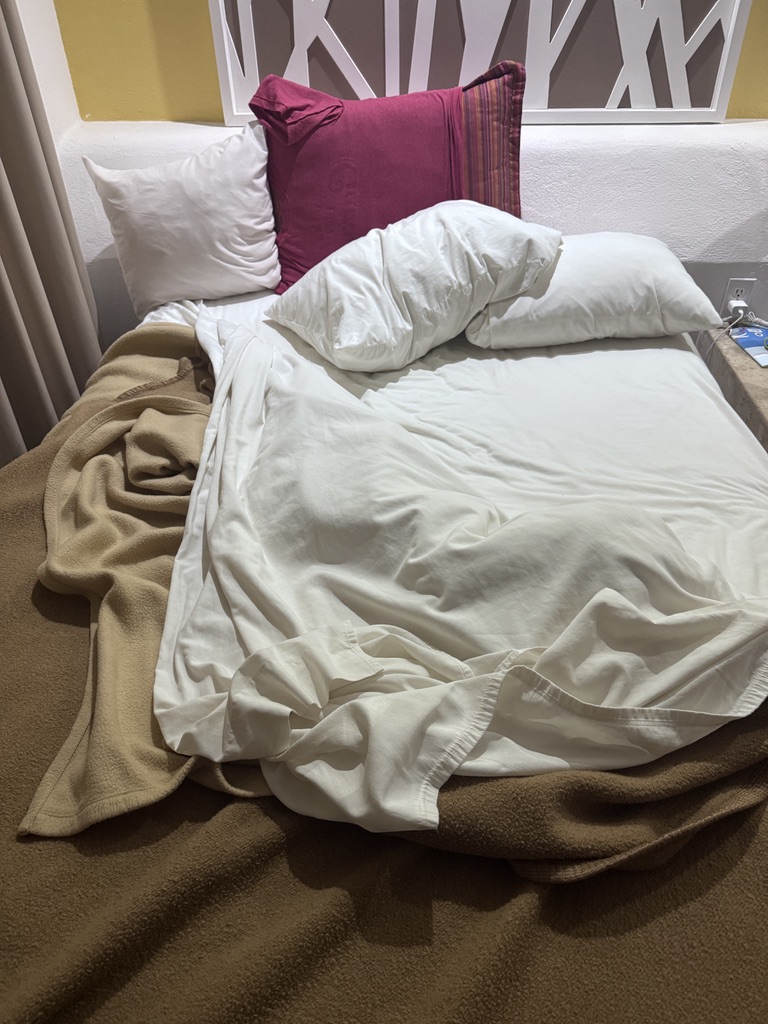
This bed records a quiet interval between rest and return. The sheets are unsettled, the pillows uneven, bearing the imprint of a body that has risen yet lingers in its leaving. Nothing here is staged. This is how the night ended and how the morning began.

I am interested in these transitional spaces, where effort pauses, and performance is absent. An unmade bed is often read as disorder, yet what I see is evidence of care extended inward. Rest taken seriously. A body allowed to occupy space without apology, without tidying itself away for an imagined audience.

The layering of textures matters to me. The weight of the blankets, the softness of the pillows, and the slight collapse at the centre all speak to containment rather than chaos. This is presence lingering, far from absence. A trace of someone choosing to stay a little longer, to gather strength before re-entering the day.

I photographed this moment as a form of witness. To honour rest as labour. To acknowledge that recovery leaves marks. To remind myself that it is acceptable, necessary even, to leave evidence of having been here.

Photo Credit: Amy Tucker, 2026
How Geography Became My Responsibility
I came believing that place could remake me.
That distance from everything I knew could reconstruct what was broken.
México was supposed to be my healing place,
the sea, the light, the possibility of becoming someone lighter.

But the land had other intentions.
What began as respite unfolded into confrontation.
I learned, in the hush of the tide,
what I had avoided understanding for decades:
that geography alone cannot do the work of healing.
That no distance is far enough to outrun yourself.

I thought I was coming to a sanctuary.
I have learned instead that I am the sanctuary.
That the work of healing happens less through location
than through the refusal to disappear,
through the willingness to face what presents itself.
Through medication and practice.
Through therapy and truth-telling.
Through the small acts of continued presence.

The medicines on the shelf speak to this.
They whisper: you are worth keeping alive.
They testify: your suffering is real and your resistance is real.
They proclaim: wellness is beside the point, you have only to show up.

I have been diagnosed with depression and anxiety.
Two years now, and the understanding only deepens.
What I thought was strength was the weight of unprocessed grief.
What I believed was discipline was the armor of a mind protecting itself.

But I am tired of that work.
So on this third shore, México, I am learning a different language.
Spanish words, yes, among others.
Rather, the language of permission.
The vocabulary of limits.
The grammar of self-compassion.

Mexico was supposed to be my healing place.
It still may be.
But in ways I had never imagined.
Instead, it is becoming the place where I learn
that healing is the practice of becoming, beyond transformation into someone new.
It is the practice of showing up, exactly as I am,
again and again and again.
P.S.
I arrived in México with no way of knowing that the next thirty days would fundamentally change how I understood myself. I came expecting the sea, the warmth, the distance to heal me. Instead, I have come to realise that healing is something you do, rather than something that happens to you. It is something you become willing to do.
These photographs, this documentation of my daily pills and the darkness of depression, are evidence of that willingness. They show me, now in retrospect, that I have stopped hiding. That somewhere between arriving broken and these final days, I learned to call myself by my real name instead of apologising for taking up space.
This journey has changed what I believe is possible. The struggle stays, and I can live alongside it with honesty. With medication and practice. With the simple, radical act of showing up for myself, again and again.
That is the real transformation.
Here rests the evidence of care: beyond cure, beyond triumph, the steady labour of staying.
These objects mark a life held together by honesty, support, and the courage to be seen.
I name them without shame, as architecture for survival and witnesses to persistence.
I was here. I chose to remain.
Title: What the Ceiling Could No Longer Hold
Artist Statement

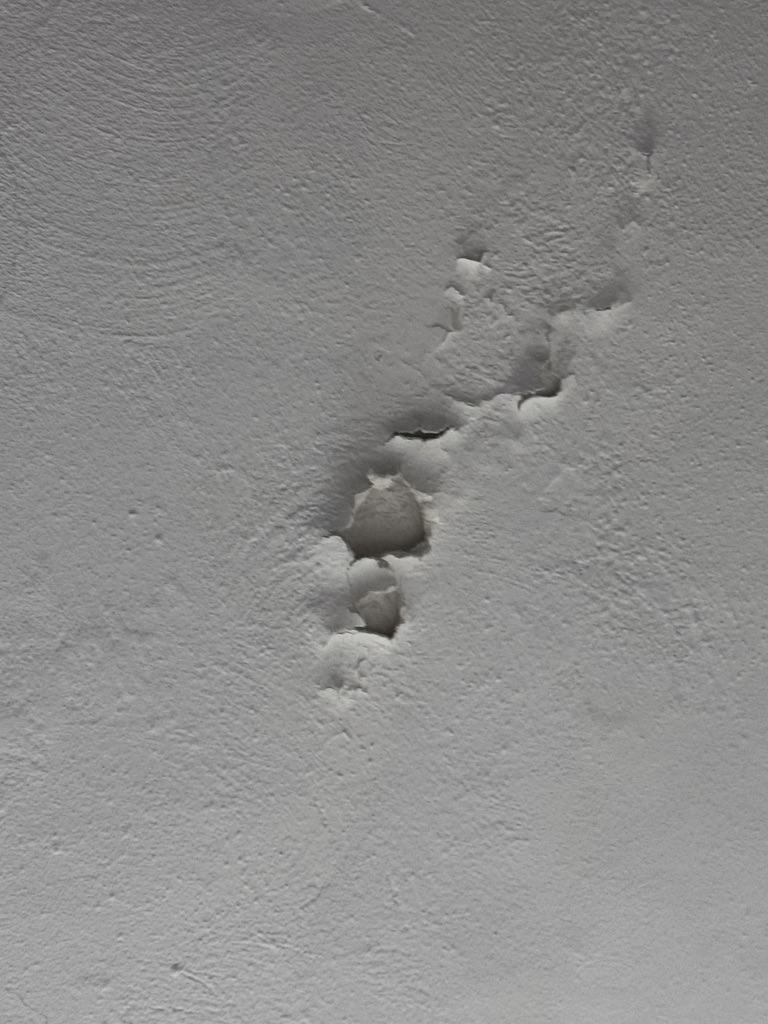
I noticed this damage only after I had stopped looking for meaning. The ceiling, a surface meant to be invisible and dependable, had begun to give way. Paint peeled back in layers, exposing what lay beneath, tracing a quiet rupture that had been forming long before it announced itself.

I am drawn to these moments of structural honesty. The failure is cumulative, rarely sudden. Moisture, pressure, time. What appears as neglect is often endurance pushed past its capacity. This image became a mirror for how strain registers when it is carried silently, when maintenance replaces care, and when surfaces are expected to remain intact regardless of what they absorb.

I photographed this as testimony, beyond any record of decay. A record of something refusing to perform wholeness any longer. The peeling paint refuses to dramatise its condition. It simply tells the truth of what it can no longer contain.

In attending to this fracture, I am practising a form of witnessing that matters deeply to my work: staying with what breaks slowly, without assigning blame, and allowing the evidence of wear to be seen.

Photo Credit: Amy Tucker, 2026
Title: I am Still Here
Artist Statement (Scholarly Personal Narrative Reflection)

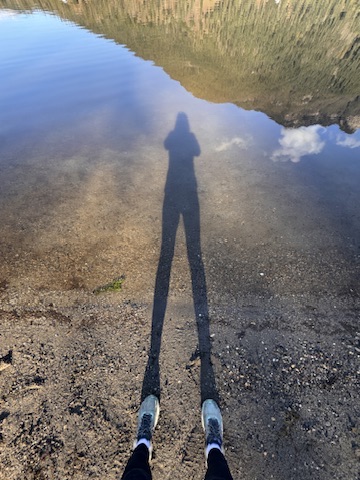
This photograph was taken while standing at the edge of still water, where reflection replaces surface and the ground seems to hold more than it reveals. I had no intention of photographing myself. I was noticing the clarity of the water, the way the mountain line folded into the sky, when my shadow entered the frame. Long, elongated, almost unfamiliar in proportion, it stretched across the shoreline and into the mirrored landscape beyond.

I paused when I saw it. There was something steadying in the recognition. The body appears here only as silhouette, reduced to outline and posture, yet unmistakably present. The shadow performs nothing. It explains nothing. It simply marks existence within a particular moment of light.

In my reflective practice, I have been thinking about visibility and endurance. About what remains when identity markers fall away, when professional roles, expectations, and external validations grow quieter. The shadow becomes a kind of evidence. Proof of standing. Proof of continuing. Proof that presence requires no spectacle to be real.

The water holds both the world and its inversion. Sky below, earth above. The image rests within that reversal, suggesting that survival is rarely linear. We move through reflection, through distortion, through unfamiliar angles of self-recognition. Yet even within inversion, the body remains upright, held by gravity and ground.

This photograph reminds me that persistence is often quiet. It rarely announces itself in milestones or declarations. Sometimes it appears as a shadow at the shoreline, lengthened by late light, steady and unbroken.

I am still here.

Photo Credit: Amy Tucker, 2026
Translation note. Spanish language passages were generated using Google Translate and subsequently reviewed and refined by the author. Any remaining infelicities reflect the limits of machine translation rather than intent.