On Refusing to Perform, Ceasing to Pretend, and the Liberation of Being Unseen
“A movement fueled by the freedom that comes when we stop pretending that everything is okay when it is not. A call that rises up from our bellies when we find the courage to celebrate those intensely joyful moments even though we have convinced ourselves that savoring happiness is inviting disaster. Revolution might sound a little dramatic, but in this world, choosing authenticity and worthiness is an absolute act of resistance.” (Brown, 2010, p. 126)
This morning, I walked along the beach and realised something startling: nobody was looking at me.
Title: Sentinel Shores

Artist Statement

This image captures the rocky island as a physical manifestation of Brené Brown's concept of the gift of imperfection, a marker of witness that asks nothing of the observer. What struck me most powerfully was the realization that the island itself exists without performance, without seeking validation for its presence. In scholarly personal narrative, this moment became a turning point where I could articulate how institutional demands for constant visibility had become so habitual that invisibility felt transgressive. The seabirds, unaware and unconcerned with observation, embody what Brown describes as authentic presence. Their gathering without fanfare mirrors my own growing understanding that worthiness requires no performance.

I find permission to simply be, without performing visibility for an audience that has stepped away. Here, in the pattern of waves and the scatter of seabirds, there is no requirement to announce my existence. The island asks nothing of me but presence.

Photo Credit: Amy Tucker, January 2026
Nobody needed me to be anything. Nobody was waiting for my cheerful greeting, my performed enthusiasm, my carefully calibrated professional warmth. I was simply a woman walking along a seawall in a small Mexican town, unremarkable and unobserved, and the relief that flooded my body felt almost shameful in its intensity.
Qué alivio. What relief.
I learned to smile when I was exhausted. I learned to express gratitude for crumbs. I learned to appear endlessly available, endlessly capable, endlessly willing.
I have spent twenty-five years in precarious academic employment, learning to be visible in very particular ways. Visible enough to be valued. Invisible enough to avoid threat. Always performing the precise calibration of presence that contingent labour demands. I learned to smile when I was exhausted. I learned to express gratitude for crumbs. I learned to appear endlessly available, endlessly capable, endlessly willing. The performance became so habitual that I forgot it was a performance at all.
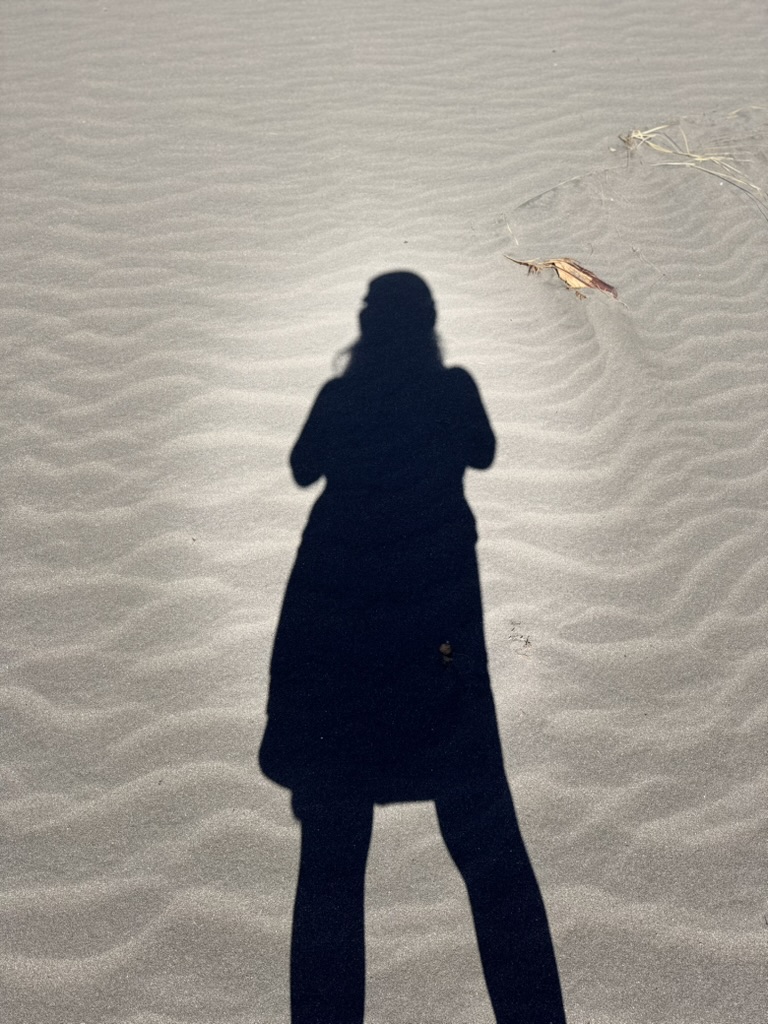
Title: Tidal Margins
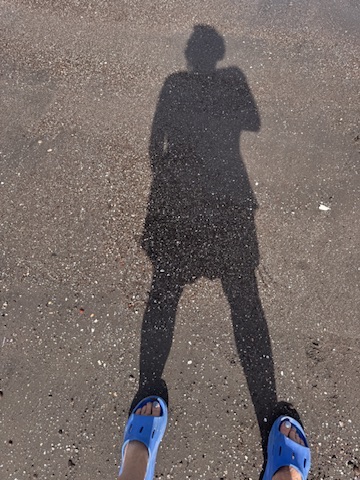
Artist Statement

This shadow self-portrait speaks to the liminal space between visibility and hiddenness. I was drawn to this image because it captures me at the precise moment when I became aware of my own shadow, both literal and metaphorical.

This represents a methodological turn toward reflexivity, where the researcher becomes visible through absence. The tidal margins represent what Audre Lorde calls the 'erotic' as a source of power, the knowledge that exists in the spaces beyond performance. Standing at this threshold, I understood that the most profound relief comes from the permission to be unremarkable.

Photo Credit: Amy Tucker, January 2026
I live, I realise, in perpetual audition.
I am thinking this morning about what Brené Brown calls “the freedom that comes when we stop pretending.” I read those words years ago and thought I understood them. I had no real grasp of them then. I understood them intellectually, the way one understands a theorem or a map of a place one has never visited. Understanding them in my body, in the unclenching of my jaw and the descent of my shoulders from their permanent station near my ears, this is something else entirely.
Here, on this shoreline where nobody knows my institutional history, where nobody requires my competence or my compliance, I am discovering what it feels like to simply be present without performing presence. The difference registers first in my body. I notice my breath moving freely, unguarded by the vigilance that institutional survival demanded. I notice my face doing whatever it wants, unmanaged for external consumption.
I am learning what my face actually looks like when it has stopped arranging itself for others.
Title: Unnoticed Gathering
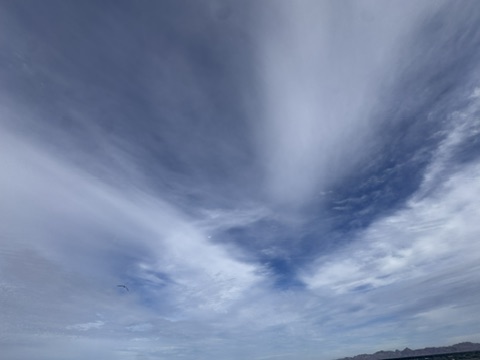
Artist Statement

The sky in this moment holds the experience of being present without audience. What moved me about capturing this image was the simultaneity of presence and invisibility the birds were there, I was there, and nothing required us to announce ourselves. Returning to Brown's work on the vulnerability paradox, I realised that my assumption that visibility equals value was false.

This moment articulates the ethical turn toward witnessing one's own life without need for external validation. The gathering without performance became a model for how institutional structures might be reimagined to honor presence itself rather than the appearance of productivity.

Photo Credit: Amy Tucker, January 2026
The Frontstage Life
I am learning what my face actually looks like when it has stopped arranging itself for others.
Erving Goffman, writing in 1959, gave me language I had been missing. In The Presentation of Self in Everyday Life, he describes social existence as a theatrical performance. We maintain a “frontstage” self designed for public consumption while preserving a “backstage” self hidden from view. The frontstage involves what Goffman calls “impression management”: the careful curation of behaviours, expressions, and appearances designed to elicit desired responses from our audience.
Reading Goffman here in Loreto, I understand something I could only grasp now, at distance from institutional life. For workers in precarious positions, and I was precarious for twenty-five years, always contingent, always renewable, always provisional, there may be no backstage at all. The performance must be maintained at all times, because the audience is always watching, always evaluating, always deciding whether one deserves continued employment.
I live, I realise, in perpetual audition.
Title: The Unburdened Shore
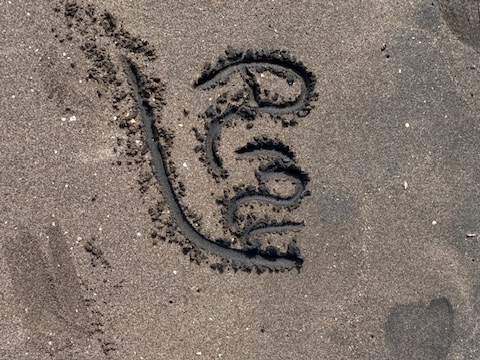
Artist Statement

This direct photograph of my experience walking an unobserved shoreline struck me as perhaps the most honest moment of the project. I wrote my name in the sand, for me.

Nobody needed my performed joy, my calibrated warmth, my endless availability. This represents what Sara Ahmed calls the 'willfulness' of creating space for one's own experience outside institutional frameworks.

What stood out was the bodily recognition, the unclenching of my jaw, the descent of my shoulders from their permanent station near my ears. This embodies what Brown identifies as the revolutionary act of choosing authenticity over performed compliance, a concept that becomes material and embodied in this single moment of unobserved presence.

Photo Credit: Amy Tucker, January 2026
I am practising invisibility as medicine.
Arlie Russell Hochschild extended this analysis in ways that name precisely what I experienced. In The Managed Heart, she introduced the concept of “emotional labour”: the work of managing one’s feelings to create a publicly observable display that meets occupational requirements.
I think about the thousands of times I smiled when I felt rage. The meetings where I projected calm while my stomach churned with anxiety. The performance reviews where I expressed gratitude for feedback that felt like erasure. Hochschild names this labour “invisible” because employers and institutions see nothing of it, compensate nothing, and acknowledge nothing of its occurrence. Yet it extracts a profound toll.
The toll is what I am healing from now, here, where nobody requires my managed heart.
Title: Dispersed Presence
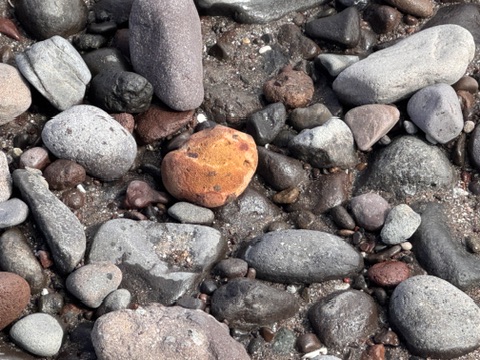
Artist Statement

In this image, the beach holds multiple presences, myself, the rocks, the sand patterns - none requiring central observation. What captured my attention was the recognition that existence requires no concentration in the gaze of others.

This moment became crucial for articulating how institutions demand centrality: the central thesis, the central argument, the central self. Yet this beach scene demonstrates that meaning-making occurs in dispersal, in the scatter of experience. This connects directly to Brown's assertion that imperfection is a fuller expression of humanity rather than a flaw - distributed, complex, and valid precisely in its refusal of singular visibility.

Photo Credit: Amy Tucker, January 2026
Table 1
Key Theoretical Concepts: The Architecture of Performed Selfhood
| Definition and Application to Alonetude | Definition and Application to Alonetude Goffman’s (1959) theory that social interaction operates like a theatrical performance. Individuals manage impressions on the “frontstage” while reserving authentic expression for “backstage” spaces. In alonetude, the 30-day retreat creates an extended backstage where the performance can finally cease. |
| Dramaturgical Framework | Goffman’s (1959) theory that social interaction operates like theatrical performance. Individuals manage impressions on the “frontstage” while reserving authentic expression for “backstage” spaces. In alonetude, the 30-day retreat creates an extended backstage where the performance can finally cease. |
| Emotional Labour | Hochschild’s (1983) concept describes the work of managing one’s emotions to fulfil occupational requirements. For precarious academic workers, this includes performing gratitude, suppressing exhaustion, and projecting perpetual availability. Alonetude involves the cessation of this labour. |
| The Precariat | Standing’s (2011) term for the growing class of workers characterised by chronic insecurity, lack of occupational identity, and truncated rights. The precariat lives in permanent audition, unable to relax vigilance because employment is always provisional. |
| Auto-Exploitation | Standing’s (2011) term for the growing class of workers characterised by chronic insecurity, lack of occupational identity, and truncated rights. The precariat lives in permanent audition, unable to relax vigilance because employment is always provisional. |
Note. These theoretical concepts provide language for understanding how institutional demands shape embodied experience. Each framework illuminates a different dimension of what alonetude is healing: the exhaustion of performance, the depletion of emotional labour, the hypervigilance of precarity, and the internalization of extractive demands.
The Mask Becomes the Face
La máscara se convierte en la cara. The mask becomes the face.
Byung-Chul Han (2010/2015) argues in The Burnout Society that contemporary exhaustion differs from earlier forms of exploitation because the master has been internalised. We no longer need external overseers to drive us toward breakdown. We drive ourselves.
I recognise myself in these words with a clarity that feels like grief. For how many years did I mistake self-exploitation for dedication? How many evenings did I work past exhaustion, believing this was what commitment looked like? How deeply had I internalised the demand for constant availability until I could no longer distinguish institutional requirement from personal identity?
La máscara se convierte en la cara. The mask becomes the face.
What I am learning here in Loreto, in this practice of alonetude, is that the mask can be removed. The face beneath it still exists. It has been waiting, all these years, for permission to emerge.
Title: Weathered Acceptance
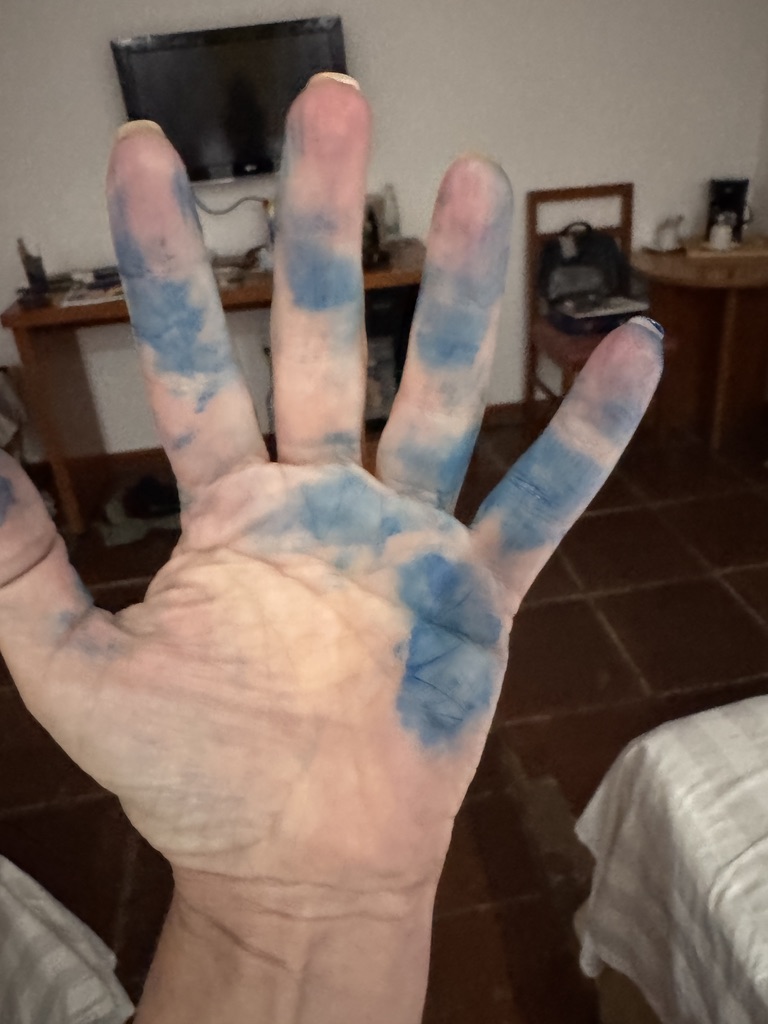
Artist Statement

 This image resonated because it offered a visual metaphor for what Brené Brown terms 'normal wear and tear' the evidence of a life fully lived. This becomes an argument for the validity of weathering, of showing marks of growth rather than performing unmarked perfection. What struck me most powerfully was understanding that my own weathering the visible evidence of institutional survival, of negotiating precarity requires no hiding. The rocks offer no apology for their transformation; they simply exist in evidence of it.

Photo Credit: Amy Tucker, January 2026
The Practice of Being Unseen
I am practising invisibility as medicine.
This is what it looks like: I walk through town without performing approachability. I sit at cafés without arranging my face into pleasant neutrality. I allow my body to hold whatever expression it naturally holds without editing for external consumption. Sometimes that expression is weariness. Sometimes grief. Sometimes, a blankness that might read as unfriendly to those trained to expect women to project warmth at all times.
I notice, with something like wonder, how much energy this releases. Energy that was going toward performance is now available for other purposes. For feeling. For noticing. For simply being present in this body, on this shoreline, under this particular quality of winter light.
Title: Peripheral Vision
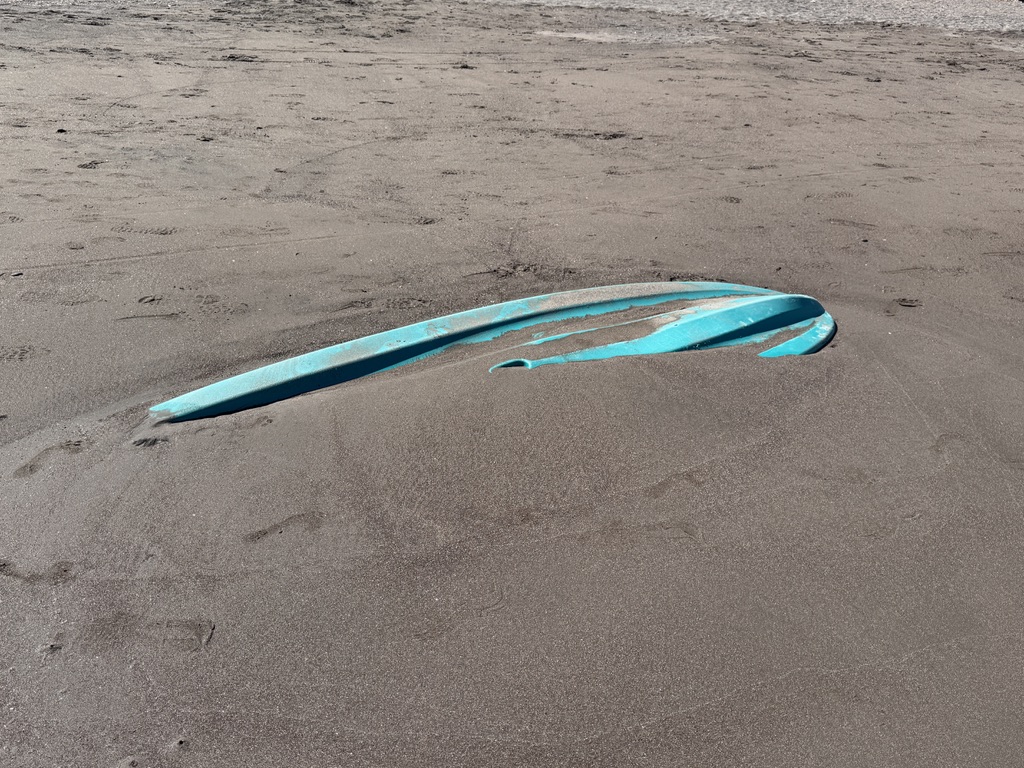
Artist Statement

 This photograph captures the moment when I realised that being present required no centrality. In the periphery, I found a kind of peace that visibility could never offer. Connecting this to scholarly personal narrative, the margins have long been the location of intellectual and artistic work by those excluded from centres of power. What moved me about this image was the recognition that my position on the periphery could become a methodological stance, a choice rather than a limitation imposed from without, to see differently. Brown's work on vulnerability intersects here with marginality theory: the margin transforms from a place of diminishment into a site of distinct epistemological power.

Photo Credit: Amy Tucker, January 202
The relief that flooded my body felt almost shameful in its intensity.
Stephen Porges’s polyvagal theory helps me understand what is happening in my nervous system. Porges describes three states of autonomic function: ventral vagal (social engagement and felt safety), sympathetic (mobilization for fight-or-flight), and dorsal vagal (immobilization and shutdown). The ventral vagal state, the state of genuine ease and relaxed presence, requires what Porges calls “neuroception of safety.” The nervous system must detect, below conscious awareness, that the environment is safe enough to lower defences.
I understand now why rest felt dangerous for so many years. My nervous system was correctly detecting that the institutional environment was unsafe. Precarious employment is, in fact, a threat. The vigilance was appropriate to the conditions. What I am experiencing in Loreto, removed from that context, is the gradual return of ventral vagal capacity. My nervous system is slowly registering that the threat has passed.
The jaw unclenches. The shoulders descend. The breath deepens. The face softens into whatever expression emerges naturally rather than the expression that survival required.
This is what healing looks like. It looks quiet. It looks unremarkable. It looks like a woman sitting at a café without smiling.
Title: The Quiet Horizon
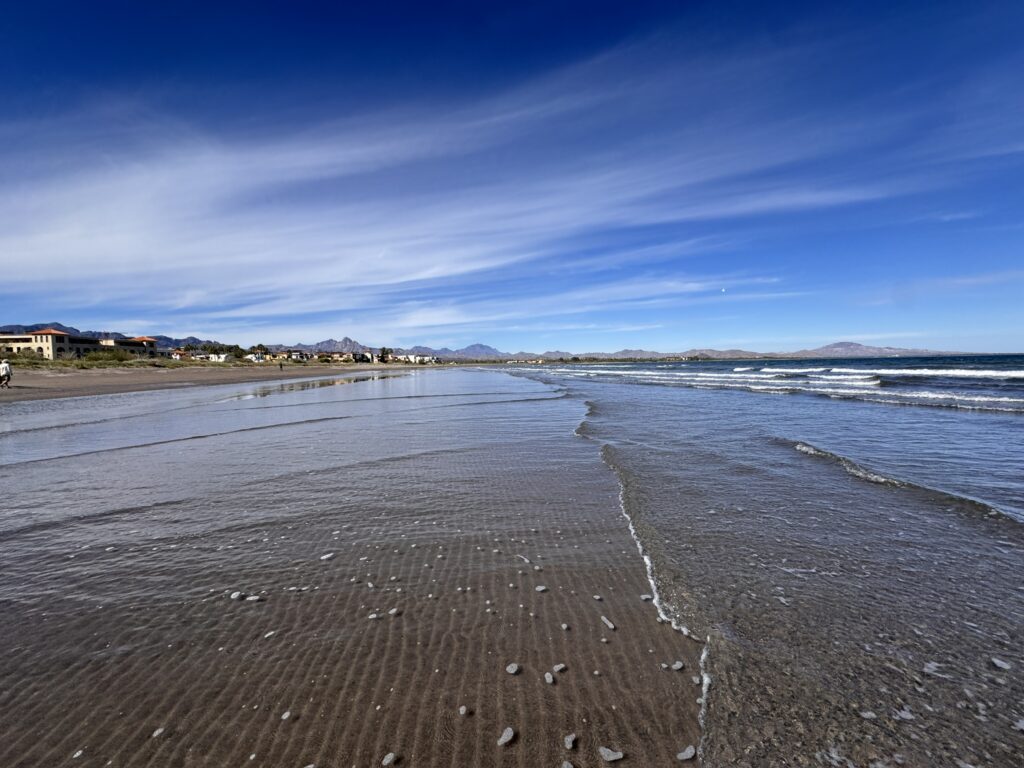
Artist Statement

Looking toward the horizon in this image, I see no audience waiting for arrival, no applause from the sky or judgment from the water. This moment struck me as crystallising Brown's central insight about the performance paradox: the freedom that comes when we stop performing.The horizon represents the necessary distance from institutional frameworks that demand constant self-presentation. What resonated most was the embodied sense of the sky's indifference, genuinely uninterested in my performed competence. This indifference, paradoxically, becomes liberatory, allowing for existence without the burden of constant visibility.


Photo Credit: Amy Tucker, January 2026
Visual Witness
Image: A Face Released from Performance
Photo Credit: Amy Tucker, 2026
Title: Shallow Waters

Artist Statement

Where water is shallow and clear, everything is visible to those who look closely, yet some things go unlooked at. This distinction became crucial to my understanding. This image articulates the difference between transparency and surveillance between voluntary self-disclosure and mandated visibility. What struck me most powerfully was the recognition that Brené Brown's call to 'show up and be seen' has been weaponised in institutional contexts, transformed from an invitation into a demand. This shallow water photograph reclaims the right to exist in visibility without being watched, to be knowable without being known.

Photo Credit: Amy Tucker, January 2026
The Wisdom of Withdrawal
Audre Lorde (1988) argues that caring for oneself, especially in environments that systematically exploit and deplete individuals, is, beyond selfishness, a vital form of self-preservation that holds political significance. Building on this perspective, Hersey (2022) positions rest as an intentional disruption of extractive systems rooted in capitalism and white supremacy. She emphasises that in a world that treats people as instruments of productivity, the decision to rest is a radical rejection of dehumanization.
Through this lens, my retreat from visibility in Loreto becomes both a political and a personal gesture. By stepping back from performative roles and refusing the expectation of constant emotional availability, I challenge the norms that prioritise compliance and positivity over authenticity. This withdrawal is a reassertion of my interior life, beyond avoidance over institutional demands. In reclaiming the right to be unseen, I recover a space that precarious labour conditions had taken away.
In this way, I am beginning to understand alonetude as resistance and self-reclamation, a deliberate, grounded return to the self.
This is how I am coming to understand alonetude, as resistance, as reclamation, as the slow and quiet work of returning to myself.
Title: Windswept Freedom
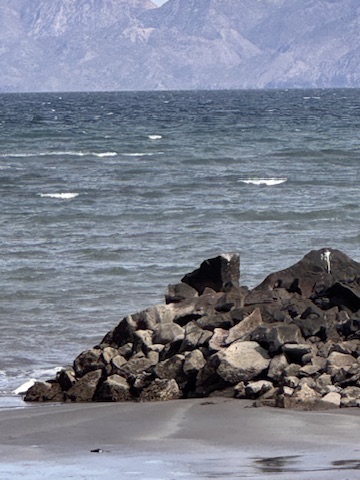
Artist Statement

The wind in this moment disturbs and reveals without judgment. What moved me about capturing this image was the recognition that forces beyond my control could touch and change me without requiring my consent or performance. Returning to Brown's concept of vulnerability, I understood that true vulnerability might mean allowing oneself to be moved, revealed, and transformed without controlling how that transformation is perceived. In scholarly personal narrative, this becomes the ethical stance of allowing one's own becoming to be visible without explanatory framing. The wind's indifference models a kind of presence that can be authentic precisely because it is unmonitored.

Photo Credit: Amy Tucker, January 2026
Table 2
Contrasting Performance and Presence: An Embodied Mapping
| Outward, managing others’ perceptions | Institutional Performance | Alonetude Presence |
| Visibility | Strategic; managed for evaluation | Released; being seen without being watched |
| Emotional State | Managed; performing prescribed feelings | Authentic; allowing whatever emerges |
| Nervous System | Sympathetic activation; hypervigilance | Ventral vagal engagement; felt safety |
| Face | Arranged; the mask maintained | Released; the face beneath the mask |
| Energy Direction | Outward; managing others’ perceptions | Inward; attending to actual experience |
| Outward, managing others’ perceptions | Alienated; self as instrument | Integrated; self as presence |
Note. This table maps the embodied shifts I am experiencing between institutional performance demands and the presence cultivated through alonetude. The contrast illuminates how withdrawal from performance constitutes healing rather than avoidance. Each dimension represents territory being reclaimed.
~
What Becomes Possible
Title: Solitary Witness

Artist Statement

Walking alone along the shore, I discovered that I could be complete in my own witnessing. This image resonated because it represented the culmination of my understanding that validation can arise entirely from within.

This solitary stance connects to what Gloria Anzaldúa calls the 'Coatlicue state' - the necessary period of withdrawal and self-confrontation. What struck me was that Brown's concept of wholehearted living requires no audience; it requires only one's own presence to oneself. This photograph documents the moment when I understood that the simple act of witnessing my own life, exactly as it was unfolding, constituted sufficient permission.

Photo Credit: Amy Tucker, January 2026
Brown writes that authenticity is “the daily practice of letting go of who we think we are supposed to be and embracing who we are” (2010, p. 50). I am beginning to understand what this might actually feel like. It feels quiet. It feels unremarkable. It feels like walking along a seawall with whatever face my face wants to make, without editing, without management, without performance.
The invisibility I am practising here is a temporary gift. I will return to contexts that require some degree of impression management; that is the nature of social life. What I am learning, however, is the difference between the performances that genuine connection requires and the performances that exploitative systems demand. There is a difference between adjusting one’s presence for mutual understanding and warping one’s entire being for institutional survival.
Estoy aprendiendo la diferencia. I am learning the difference.
The sea cares nothing about my smile. The pelicans require no enthusiasm from me. The afternoon light falls on my shoulders, whether I am projecting competence or simply existing in my actual state of being. Here, in this chosen solitude, in this practice of alonetude, I am remembering what my face looks like when it is my own.
That remembering is itself evidence. Evidence that the body can recover from extraction. Evidence that the self remains beneath the mask. Evidence that withdrawal can be protective, that stopping can be ethical, and that invisibility can be medicine.
I will rest here a while longer, unseen.
The quiet is enough.
Title: The Relief of Being Unseen
Artist Statement

 As I turned from the beach, I carried the profound relief of having been unwatched and unneeded. What moved me about this concluding image was the bodily recognition of release the relief was deeply embodied, beyond the merely intellectual. This moment articulates what it means to step outside the panopticon of institutional visibility. Connecting this to Brown's work on shame and worthiness, I understood that my fear of invisibility had been shaped by systems that equate visibility with value. This image documents the revolutionary recognition that invisibility born from freedom differs entirely from invisibility born from erasure. The permission I found was beyond being seen: the profound gift of being allowed to simply exist.

Photo Credit: Amy Tucker, January 2026
References
Brown, B. (2010). The gifts of imperfection: Let go of who you think you are supposed to be and embrace who you are. Hazelden Publishing.
Goffman, E. (1959). The presentation of self in everyday life. Anchor Books.
Han, B.-C. (2015). The burnout society (E. Butler, Trans.). Stanford University Press. (Original work published 2010)
Hersey, T. (2022). Rest is resistance: A manifesto. Little, Brown Spark.
Hochschild, A. R. (1983). The managed heart: Commercialization of human feeling. University of California Press.
Lorde, A. (1988). A burst of light: Essays. Firebrand Books.
Nash, R. J. (2004). Liberating scholarly writing: The power of personal narrative. Teachers College Press.
Pink, S. (2013). Doing visual ethnography (3rd ed.). SAGE.
Porges, S. W. (2011). The polyvagal theory: Neurophysiological foundations of emotions, attachment, communication, and self-regulation. W. W. Norton.
Standing, G. (2011). The precariat: The new dangerous class. Bloomsbury Academic.
Translation note. Spanish language passages were generated using Google Translate and subsequently reviewed and refined by the author. Any remaining infelicities reflect the limits of machine translation rather than intent.