Title: The Walk
Artist Statement

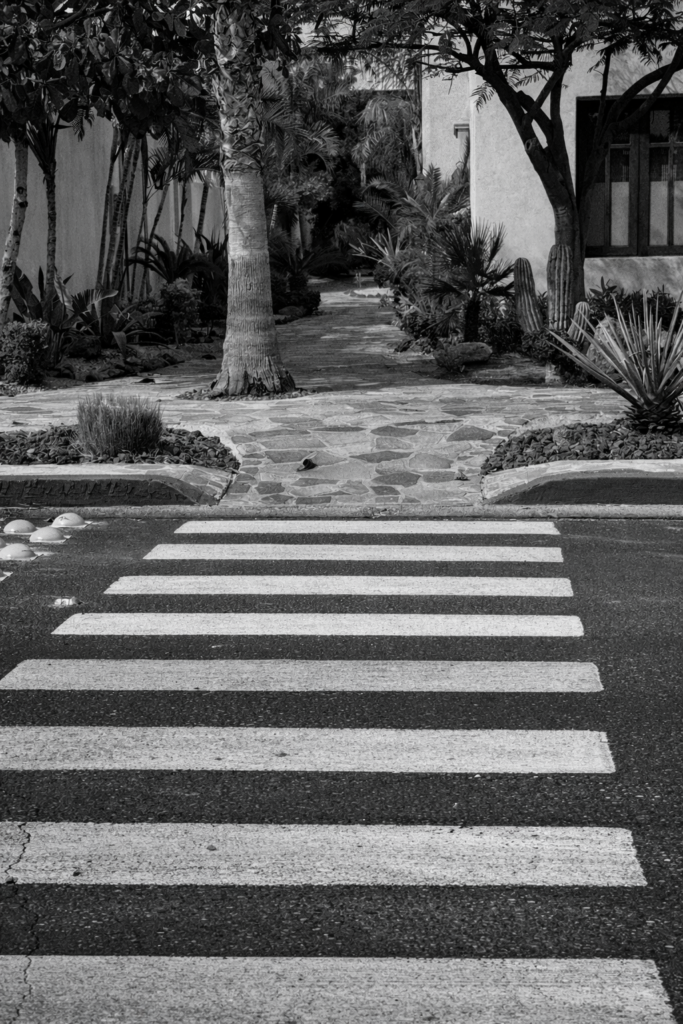
I took this photograph because it shows what allowing looks like. The crosswalk is structured, measured, painted in precise intervals, the way institutions measure time in semesters and syllabi and contract renewals.

But beyond it, the path becomes something else: stone fitted by hand, plants growing without permission, shade falling where it will. This is the crossing I am learning to make. From the arithmetic of productivity to the organic unfolding of creative time. From the lie that my worth equals my usefulness to the truth that my hours belong to me.

Transition theorist William Bridges (2019) writes that all transitions begin with an ending and move through a disorienting middle before arriving somewhere new. This photograph captures that middle space, the threshold where one way of being has ended and another has yet to fully form. I stand at the edge of the stripes, looking toward the garden, deciding to cross. The crossing is the allowing. The path beyond is what waits when I stop measuring and start living.

Photo Credit: Amy Tucker, January 2026
For seventeen years, I gave my hours away, parcelled them into syllabi and semesters, measured them in student emails answered past midnight, in committee meetings that stole Sunday afternoons, in the endless performance of being enough.
I had never been told my time belonged to me.
I thought it belonged to the institution, to the students who needed me, to the colleagues who counted on me, to the phantom promise of a contract renewed.
I thought rest was something I would earn later, after the grading was done, after the course was redesigned, after I had proven, finally and forever, that I deserved to stay.
Later never came.
Title: What the Ground Holds
Artist Statement

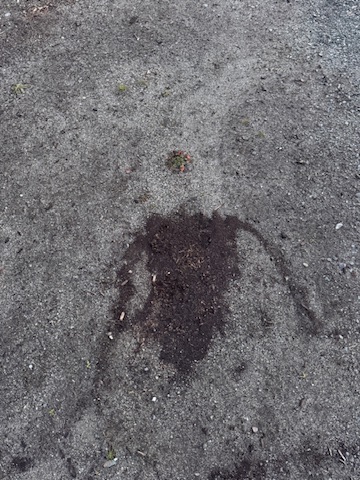
I came across this mark without looking for it. A dark stain on pale gravel, irregular, almost bodily in its shape. It looked as though something had been set down and then lifted away, leaving evidence behind. I stopped because my body recognised it before my mind did.

What this image reminds me of is how much is carried quietly by the ground beneath us. Loss, spillover, residue. The moments that arrive without announcing their importance, yet remain. I thought about how often I have moved through days leaving parts of myself behind in small, unnoticed ways. Fatigue. Grief. Effort. Care. None of it dramatic. All of it real.

There is a tendency to tidy meaning, to clean up what feels uncomfortable or ambiguous. This mark resists that impulse. It is uneven. It resists easy resolution into a symbol. It simply exists. That matters to me. It mirrors the way experience often lands in the body and in memory, less as a story with a clear beginning and end than as something that seeps in and stays.

Standing there, I felt a quiet permission to acknowledge what lingers after long periods of giving, striving, and holding things together. The ground accepts without judgment what falls onto it. It absorbs. It remembers. It carries on. I find comfort in that. It suggests that presence leaves traces, even when there is no witness.

This image stays with me because it affirms a truth I am learning to trust. That what is left behind still counts. That marks of passage, effort, and release require no interpretation to be valid. Sometimes they only need to be seen.

Photo Credit: Amy Tucker, 2026
Now I am learning a different arithmetic.
An hour spent painting stones is an hour spent fully. An afternoon watching light move across water is an afternoon found. A morning with no agenda, no output, no proof of productivity: a morning given, never stolen from something more important.
This is the hardest math I have ever done: subtracting the lie that my worth equals my usefulness, adding back the hours that belong to no one but me.
Title: Being Received
Artist Statement

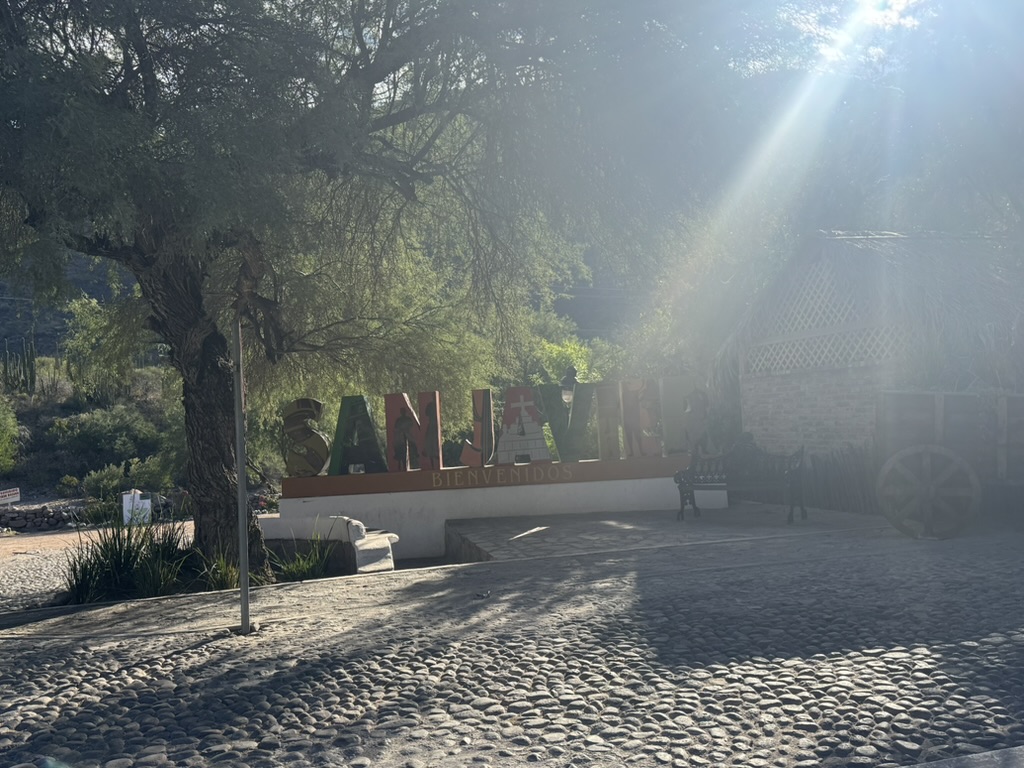
I remember arriving here without urgency. The body had already slowed before the mind caught up. Morning light moved through the trees and settled across the stones, touching everything gently, as if to say there was time.

What this place brought back to me was the feeling of being received rather than evaluated. The ground was uneven beneath my feet, rounded stones fitted together by hand, asking me to pay attention to how I walked. The light did the same. It filtered rather than flooded, offering warmth without demand. I felt myself soften in response.

I have spent many years arriving in spaces that asked me to explain myself quickly, to justify my presence, to prove my value. This moment asked for something different. It invited stillness. It invited noticing. It allowed me to arrive as a body first, before arriving as a role or a set of credentials.

Standing there, I felt the quiet relief of entering a place where time moved differently. Where welcome was expressed through shade, texture, and light rather than expectation. It reminded me that arrival can be gentle. That being present requires no performance. That some places meet us exactly where we are.

This image holds that memory for me. A reminder that arrival can feel like exhale. That there are spaces in the world where nothing is required beyond paying attention and letting oneself be held by the moment.

Photo Credit: Amy Tucker, 2026
Creative space arrives only when allowed.
It must be protected from the voices that say you should be working, from the guilt that rises when the hands are still, from the old habit of filling every silence with effort, with striving, with the desperate attempt to outrun my own disposability.
Allowing is an act of will. Allowing is an act of faith. Allowing is an act of resistance against every system that taught me my time belonged to others.
I am learning to say: This hour is for colour. This hour is for stillness. This hour is for the part of me that wants to make something, simply for the making, beyond grading or publishing or praise, but because making is what humans do when they are allowed to be human.
I am learning to say: This needs no justification. I owe no explanation. Creativity requires no proof through outcomes, impacts, and metrics.
The counting was the problem. The measuring was the cage.
Creative space is full. It is full of everything I pushed aside while I was busy surviving: the colours I wanted to play with, the shapes I wanted to explore, the questions I wanted to follow without knowing where they led.
Creative space is necessary, rather than indulgent. It is medicine. It is the room where the soul remembers what it came here to do.
I am learning that allowing is wisdom, never laziness. I am learning that rest is strength, never weakness. I am learning that the hours I give to creativity belong here, taken from nothing more important.
They are the important things. They have always been important. I had simply been unable to see it through the fog of exhaustion, through the fear of inadequacy, through the relentless demand to produce, to prove, to perform.
Today I allow.
I allow the paintbrush in my hand. I allow the stone on the table. I allow the afternoon to unfold without a plan, without a product, without anything to show for it except a quiet body and a heart that remembers it is allowed to want what it wants.
This is everything. The scope is vast.
This is the revolution that happens when a woman who was taught to give herself away finally decides to keep a little something for herself.
Title: What Endures
Artist Statement

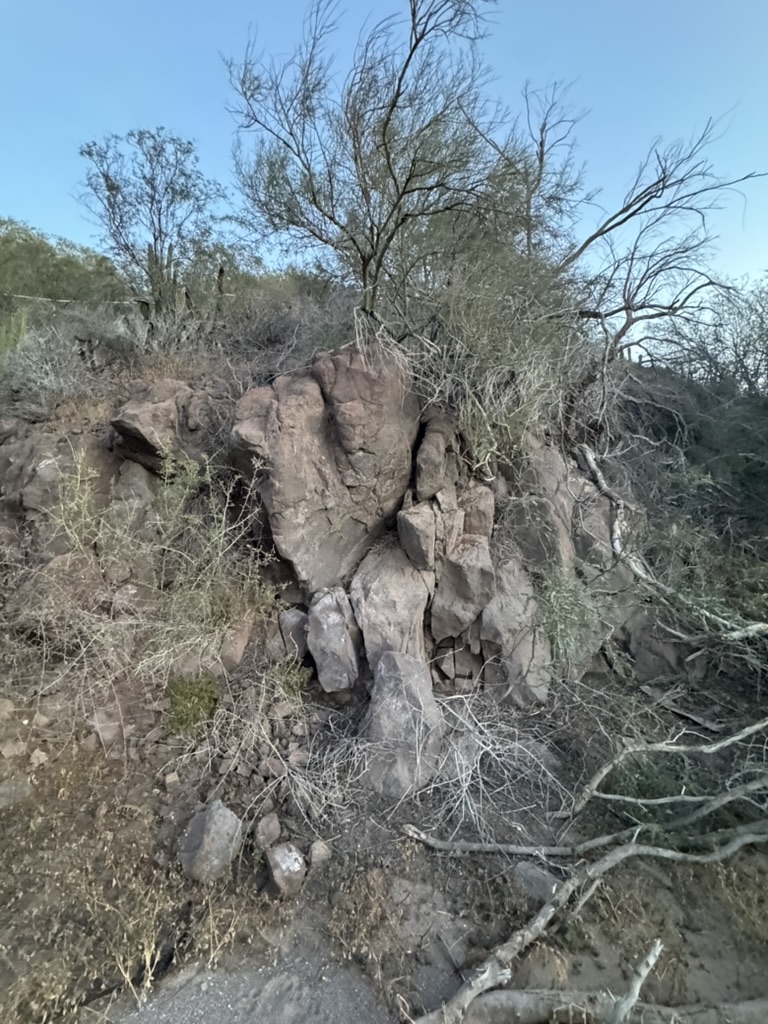
I stopped here because the rock felt steady in a way I needed to witness. It rose from the ground with a quiet confidence, fractured yet held together, shaped by pressure, weather, and time. Shrubs and branches reached across it, adapting themselves to its presence rather than overcoming it. Nothing here appeared polished or resolved. Everything felt honest.

This place reminded me that endurance rarely looks graceful. It looks layered. It carries cracks, weight, and evidence of strain. I thought about how often strength is imagined as smoothness or clarity, when lived experience tells a different story. What lasts is usually shaped by friction, shaped by remaining when retreat would have been easier.

Standing before this formation, I felt my own history reflected back to me. Years of pressure. Years of holding. Years of adapting to structures that asked for more than they offered. And still, something essential remained. Grounded. Present. Capable of bearing weight without breaking.

I am drawn to the way the shrubs have grown around and alongside the rock, finding their own lines through what was already there. That relationship feels important to me, the way endurance and growth can coexist, each shaping the other over time. The rock holds its ground beside the plant. The plant finds its way around the rock. They persist together, finding whatever space allows itself to be found.

I return to this image as a reminder that persistence leaves a form. That survival reshapes the body and the land in similar ways. That remaining is itself a kind of quiet courage.

Photo Credit: Amy Tucker, 2026
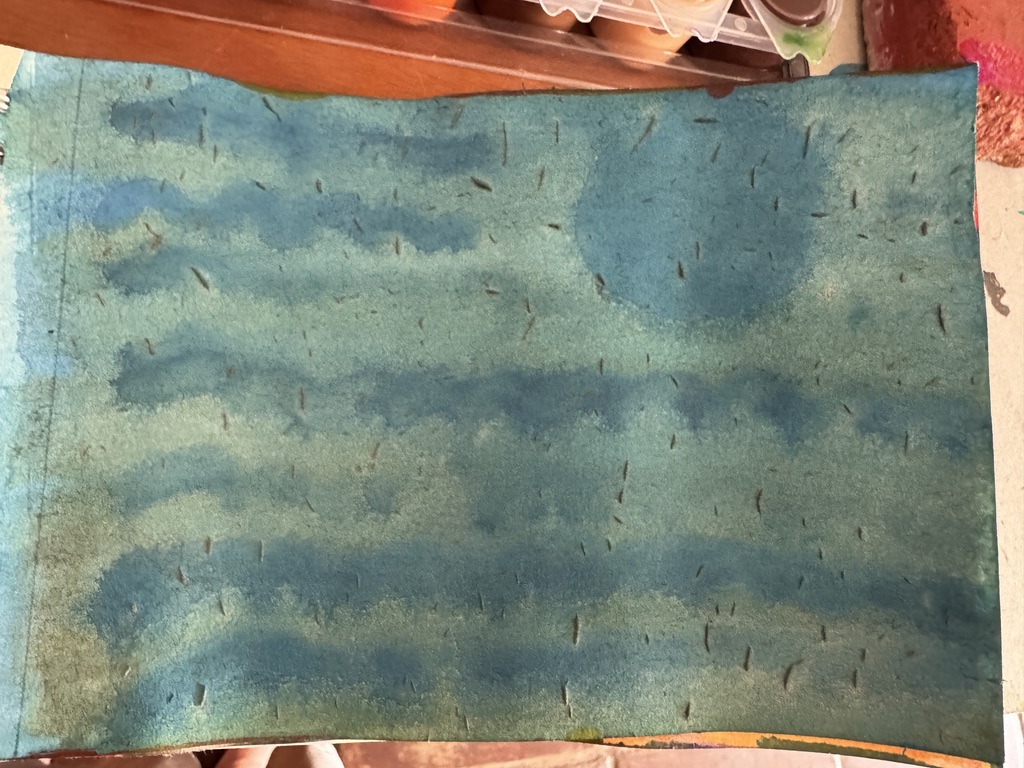
Title: Learning the Water’s Pace
Artist Statement

I made this without knowing what it would become. I was following colour rather than outcome, letting blue settle where it wanted, allowing darker tones to drift and pool. The paper absorbed more slowly than I expected. Small fibres caught pigment and held it, creating marks that felt almost like rain or memory or breath moving through water.

What this work reminds me of is how different it feels to create without direction. There was no plan here, no sketch to guide my hand. I stayed with the movement instead. I watched how one layer changed the next. I waited for the surface to respond before adding anything more. Time stretched. My body softened. I felt myself listening rather than deciding.

I have spent years working in systems that reward speed, clarity, and completion. This piece lives outside that rhythm. It belongs to a slower register, one that allows uncertainty to remain present. The marks are uneven. The edges wander. Nothing is corrected. That feels important. It mirrors a way of being I am learning to trust, where meaning emerges through patience rather than force.

As I worked, I thought about water as teacher. Water rushes nowhere. It shapes through repetition, through staying, through contact. This piece holds that lesson for me. It reminds me that creativity requires no justification, and that stillness can be active, generative, and alive.

This is what it feels like to let the work arrive on its own terms. To remain with it. To allow.

Photo Credit: Amy Tucker, 2026
References
Bridges, W., & Bridges, S. (2019). Transitions: Making sense of life’s changes (40th anniversary ed.). Balance.