Evening Reflection: When the Shoulders Finally Drop
The sky over the Sea of Cortez turns amber and rose as I write this, the eighth sunset of this retreat. Eight days. One complete week plus one day of threshold-crossing. Long enough for the body to begin believing what the mind decided: that this time is mine, that rest is permitted, that I can stop performing vigilance.
This evening, I sat on the small balcony with nothing but cooling coffee and the sound of waves returning to shore. No task. No plan. No productive purpose. Just sitting as the light changed, watching pelicans settle onto pilings for the night, their bodies perfectly still after a day of diving. They looked the way I feel tonight, arrived, finally, into stillness.
Evening Tide, Sea of Cortez. Rhythm Without Demand.

Photo Credit: Amy Tucker, 2026
La quietud. The quietness. The settling. The quality of being that emerges when striving pauses long enough for presence to surface.
Blue Background Water Colour

Credit: Amy Tucker, 2025
What Happens When the Body Exhales
For eight days now, I have been tracking my somatic state with the methodological rigour this research requires, but also with growing tenderness toward what the body reveals. This evening’s observation differs from previous entries in a manner best described as qualitative rather than quantitative. Something has shifted. Something has softened. The shoulders that have lived near my ears for years, decades, perhaps, have finally dropped.
Stephen Porges (2011, 2022) writes that the autonomic nervous system functions as a surveillance mechanism, continuously scanning for cues of safety or threat through what he terms neuroception. This scanning occurs below conscious awareness, shaping our physiological state before we have language to describe our feelings. For years, my neuroception detected threat everywhere: in the precarity of contract work, in institutional politics, in the endless demands that arrived faster than I could meet them, in the quiet terror of never being enough.
Here, by the sea, the cues have changed. Predictable rhythm. Consistent warmth. The constancy of waves. The absence of urgent demands. No emails requiring immediate response. No meetings to navigate. No performances to sustain. Day by day, hour by hour, my nervous system has been gathering evidence: this place is safe. This time is protected. You can rest.
Tonight, the shoulders finally believed it. They dropped. And with that, the tears came.
Circulation Without Effort
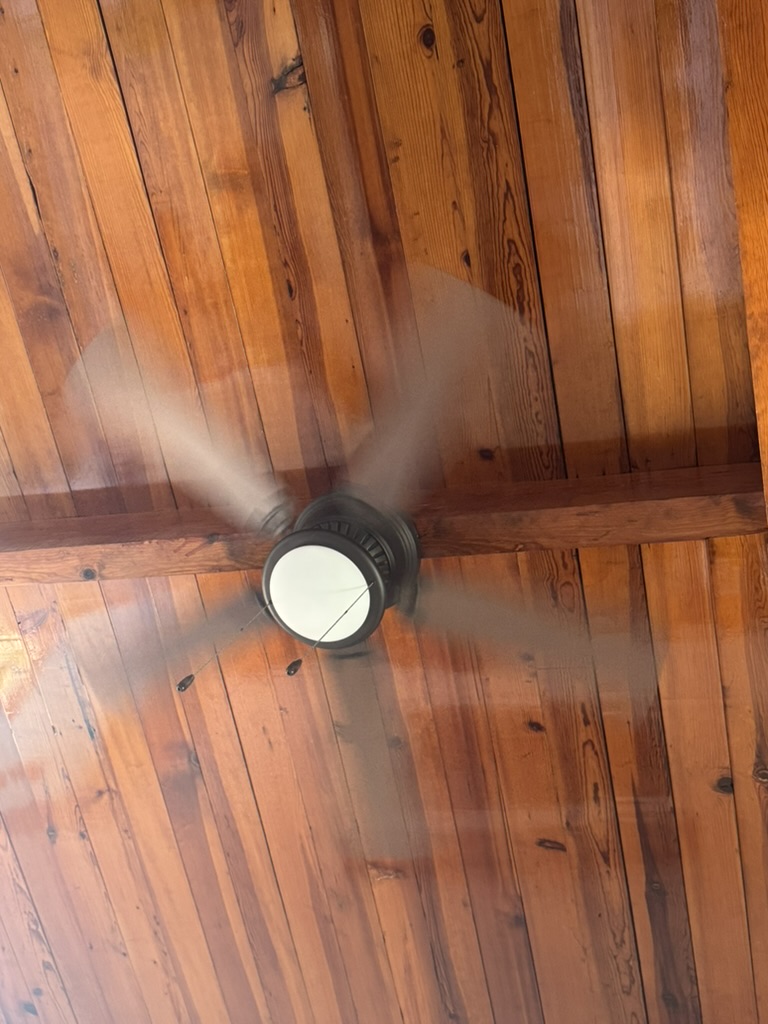
Photo Credit: Amy Tucker, 2026
The Grief That Hides in Muscle
It is a strange thing to discover that your body has been holding grief in places you had never thought to look. The shoulders, apparently, have been carrying years of it. The jaw, too, clenched through countless nights of fitful sleep, grinding away anxiety that had nowhere else to go. The chest, held tight against the vulnerability of being seen as struggling, as uncertain, as anything less than fully competent.
Bessel van der Kolk (2014) documents how trauma, and I would add chronic stress, chronic precarity, and chronic performance of adequacy, gets stored in the body’s tissues, in patterns of tension and bracing that become so familiar we forget they were learned. The body keeps the score, he writes, when the mind refuses to. My body has been keeping score for a very long time.
As my shoulders dropped tonight, something released. Tears came, quiet and steady, undramatic, arriving like rain after a long drought. I wept for the woman who carried so much for so long. I wept for the years of vigilance that never brought the security they promised. I wept for all the moments I had held rigid because softening felt dangerous, because survival required staying braced.
Miriam Greenspan (2004) writes that grief is a kind of alchemy, transforming pain into wisdom when we allow ourselves to feel it fully rather than bypassing it in favour of premature healing. Tonight’s tears were recognition. They were recognised. They were the body finally releasing what it no longer needed to carry.
When we give sorrow words, the grief that does not speak whispers the o’erfraught heart and bids it break.
Adapted from Shakespeare, as cited in Greenspan (2004, p. 28)
But sometimes grief needs no words. Sometimes the shoulders drop, and the body speaks its own truth.
Stone Angel
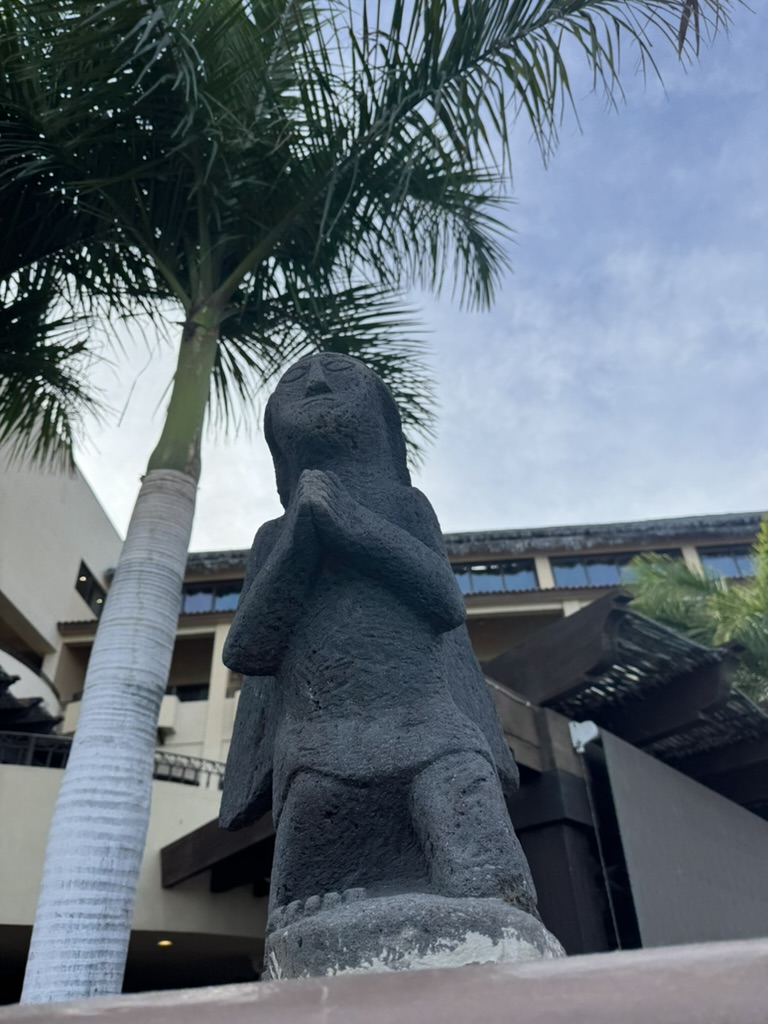
Photo Credit: Amy Tucker, 2026
Evening Somatic Record
Table 1
Day 8 Somatic Tracking: Evening Entry
| Time | Autonomic State | Physical Sensations | Emotional Quality | Notes |
|---|---|---|---|---|
| 6:00 PM | Ventral vagal | Shoulders noticeably lower, jaw loose, deep breath available without effort | Peaceful, tender, slightly tearful | First evening where settling feels complete rather than effortful |
| 7:30 PM | Ventral vagal | Warmth in chest, softness in belly, feet grounded | Grateful, present, emotionally open | Tears came and passed gently; no activation followed |
| 9:00 PM | Ventral vagal | The first evening in years where sleep feels like an arrival rather than a collapse | Quiet contentment, readiness for rest | The first evening in years where sleep feels like arrival rather than collapse |
Note. VV = ventral vagal state, characterised by parasympathetic activation, social engagement capacity, and felt safety (Porges, 2011). Tonight marks the first sustained evening-long ventral vagal state without sympathetic activation spikes.
What Eight Days Has Taught
If someone had told me on Day 1 that eight days would be enough to feel this different, I would have dismissed the possibility entirely. Eight days against decades of patterning? Impossible. And yet here I am, shoulders lower, breath deeper, tears falling freely because safety has become believable enough for grief to surface.
Attention Restoration Theory (Kaplan & Kaplan, 1989; Kaplan, 1995) proposes that natural environments restore depleted cognitive and attentional resources through four key qualities: being away (psychological distance from demands), extent (environmental richness), soft fascination (gentle engagement), and compatibility (alignment between environment and purpose). This retreat has offered all four. But what the theory leaves unnamed, what no theory fully reaches, is the embodied dimension of restoration.
Restoration is somatic first. It is somatic. It is muscular. It is nervous-system-deep. The mind can decide to rest, but the body must be convinced. That convincing takes time, takes consistency, takes environmental cues repeated until the ancient mammalian brain that governs survival finally accepts: we are safe here.
Eight days. That is how long it took for my shoulders to believe it.
Interoceptive Deepening
Another shift tonight: the clarity of internal signals. I knew I was hungry before hunger became uncomfortable. I felt thirsty early enough to address it gently. I noticed fatigue creeping in and sat down rather than pushing through. These micro-adjustments represent interoceptive awareness, the capacity to perceive and interpret internal bodily states (Craig, 2002; Mehling et al., 2012), and represent a significant development from Week 1.
When the nervous system operates in chronic defence, interoception dims. The body’s quieter signals get overridden by louder demands: deadlines, obligations, others’ needs. We learn to ignore hunger until it becomes urgent, to override fatigue with caffeine and willpower, to silence the body’s requests for rest because rest feels dangerous when survival depends on constant output.
Here, eight days into chosen stillness, interoception has returned. I am learning again to hear what my body communicates. I am remembering that these signals are information, data rather than weakness; that responding to them is wisdom, attunement rather than indulgence.
Table 2
Interoceptive Awareness Development: Days 1–8
| Struggled to sustain attention to the body; mind wandered constantly | Day 1 | Day 8 |
|---|---|---|
| Noticing | Difficult to detect subtle bodily cues; awareness fragmented | Clear, early detection of hunger, thirst, fatigue, temperature changes |
| Struggled to sustain attention to body; mind wandered constantly | Attention to body was fragmented; mind wandered constantly | Can maintain gentle attention to internal states without forcing |
| Emotional Awareness | Disconnection between physical sensation and emotional state | Growing recognition of how emotions manifest somatically |
| Self-Regulation | Limited capacity to use bodily awareness for regulation | Beginning to use breath, posture, movement responsively |
| Body Listening | Tendency to override or ignore bodily signals | Increasing trust in body’s communications |
| Trusting | Body felt unreliable, unpredictable | Emerging sense that body’s signals are trustworthy data |
Note. Framework adapted from Multidimensional Assessment of Interoceptive Awareness (MAIA; Mehling et al., 2012). Interoceptive capacity improves with reduced cognitive load and increased felt safety.
Sea Treasure
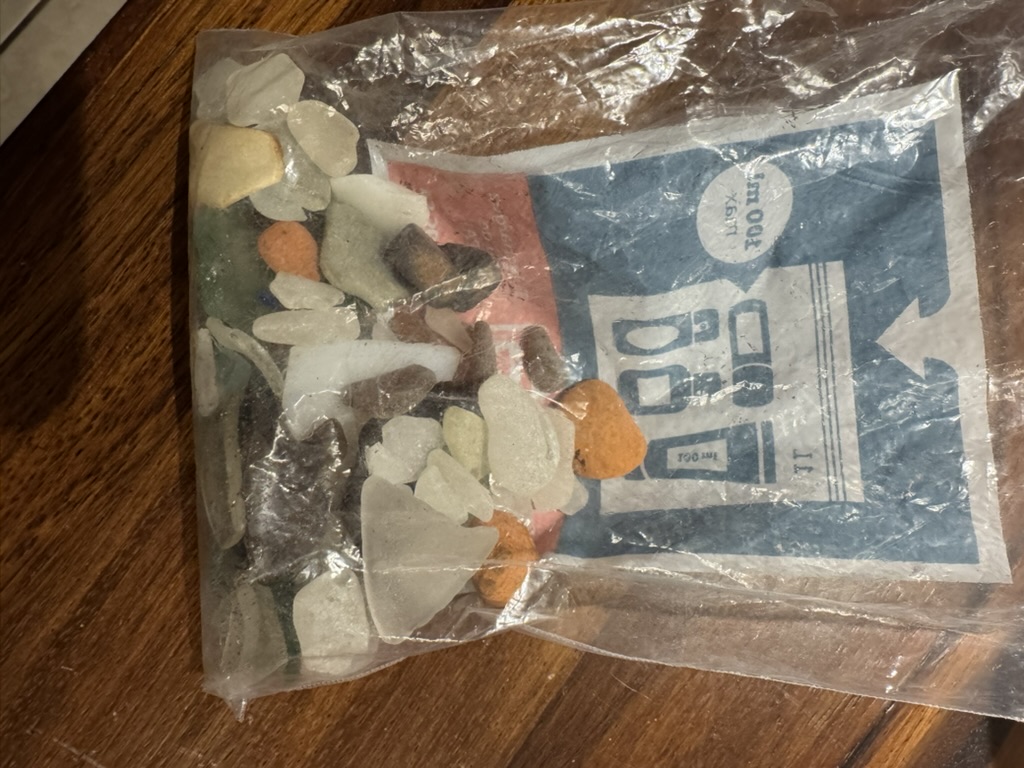
Photo Credit: Amy Tucker, 2026
Visual Documentation: Artifacts of Settling
Tonight’s artifact collection includes the grey-blue pebble I found this morning on the beach walk, smooth, palm-sized, temperature-neutral. I have carried it all day, a tangible reminder of what settling feels like. The stone has been tumbled by tides for who knows how long, its roughness worn away by countless returns to shore. It is complete without being perfect. It is whole because the sea has shaped it, held whole by that very shaping.
I also photographed my hands this evening, palms open and resting on my thighs, fingers slightly curled. The image captures something about receptivity, about the body’s capacity to be open without gripping. These hands have held so much: students’ struggles, institutional politics, my own relentless standards. Tonight they are empty. Tonight they rest.
Tomorrow I will try charcoal drawing. I want to capture the quality of light at sunset, the way amber and rose bleed into each other across the water. Charcoal feels right for this: the smudging, the imprecision, the way it cannot be controlled entirely. A medium that requires surrender.
Theoretical Integration: When Safety Permits Grief
Tonight’s experience illuminates a vital relationship between nervous-system regulation and emotional processing. Porges (2022) emphasises that the social engagement system, which involves the ventral vagal state of safety and connection, must be activated before deeper emotional work becomes possible. When we are in sympathetic activation (fight-or-flight) or dorsal vagal shutdown (freeze), we lack the physiological capacity for the kind of emotional experience that supports integration and healing.
This explains why my grief waited eight days to arrive. The tears had to wait until my body released its defence mode. Safety had to stabilise first. The ventral vagal state had to become reliable, consistent, and trustworthy. Only then could the grief surface without overwhelming me, without triggering a return to vigilance.
The Whale Sculpture
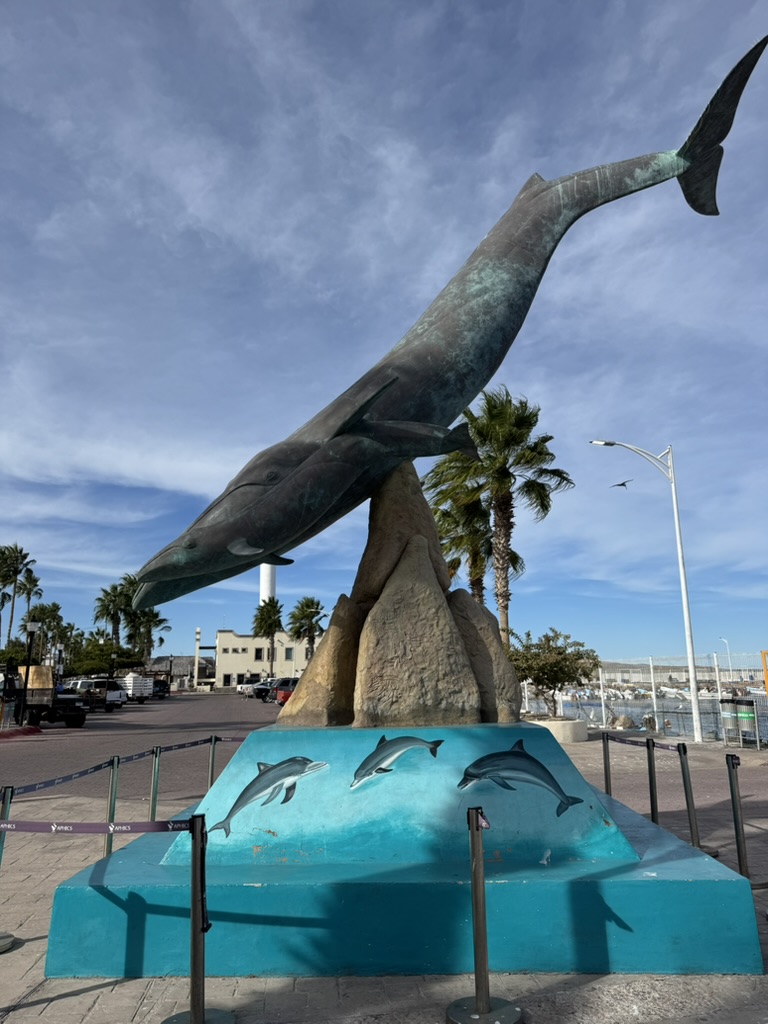
Photo Credit: Amy Tucker, 2026
Deb Dana (2018, 2020), translating Polyvagal Theory into therapeutic practice, describes this as “building the ventral vagal muscle,” strengthening the nervous system’s capacity to remain regulated even when difficult emotions arise. Eight days of consistent safety cues have built enough ventral vagal capacity that I could cry tonight without dysregulating. The tears came and passed like weather, leaving me softer rather than depleted.
This has implications for our understanding of healing from burnout. We cannot think our way out of nervous system dysregulation. We cannot use willpower to override autonomic states shaped by years of chronic stress. We need environments that consistently communicate safety. We need time, more than we think, less than we fear. We need conditions that allow the body to gather evidence slowly, patiently, until it finally believes: we are allowed to rest.
Spanish Lessons the Sea Teaches
The Spanish phrase I learned today from a local fisher: déjate llevar, let yourself be carried. He was describing how to swim in the Sea of Cortez, how to work with the current rather than against it. But the phrase resonated beyond its literal meaning.
Let Yourself Be Carried

Photo Credit: Amy Tucker, 2026
Déjate llevar. Let yourself be carried. Stop resisting. Stop bracing. Allow the existing support.
I have spent decades swimming against currents that were stronger than I could overcome: institutional precarity, economic insecurity, and cultural narratives that equate worth with productivity. I exhausted myself with that swimming. Here, eight evenings into learning a different way, I am beginning to understand the expression “dejar de llevar.” I am beginning to let the sea, this place, this time, this intentional solitude, carry me.
The shoulders dropped tonight because I finally trusted what was holding me. The grief came because safety made space for it. The healing is happening because I stopped swimming long enough to float.
End of Day Eight
Day 8 marks the threshold: the body has settled enough that analysis can be sophisticated without overwhelming. The artifacts I have been collecting, pebbles, photographs, and journal entries documenting sensory experience, can now begin to speak to one another, to reveal patterns, and to illuminate the mechanisms by which solitude supports healing.
But tonight, analysis waits. Tonight, there is only the amber sky fading to violet, the pelicans motionless on their pilings, the sound of water returning to shore. There is only this body, finally soft, finally believing in its own safety. There is only gratitude for eight days that changed everything by teaching one simple thing:
The shoulders can drop. The grief can come. The healing can happen. All we need is time, permission, and a place that holds us gently whilst we remember who we are when we stop performing strength.
The Settling

Photo Credit: Amy Tucker, 2026
La quietud. The settling. The arrival. Finally being here.
Gracias, Mar. Thank you, seaa
Por enseñarme a descansar. For teaching me to rest.
Figure X. The Somatic Arrival: How the Body Learns to Let Go
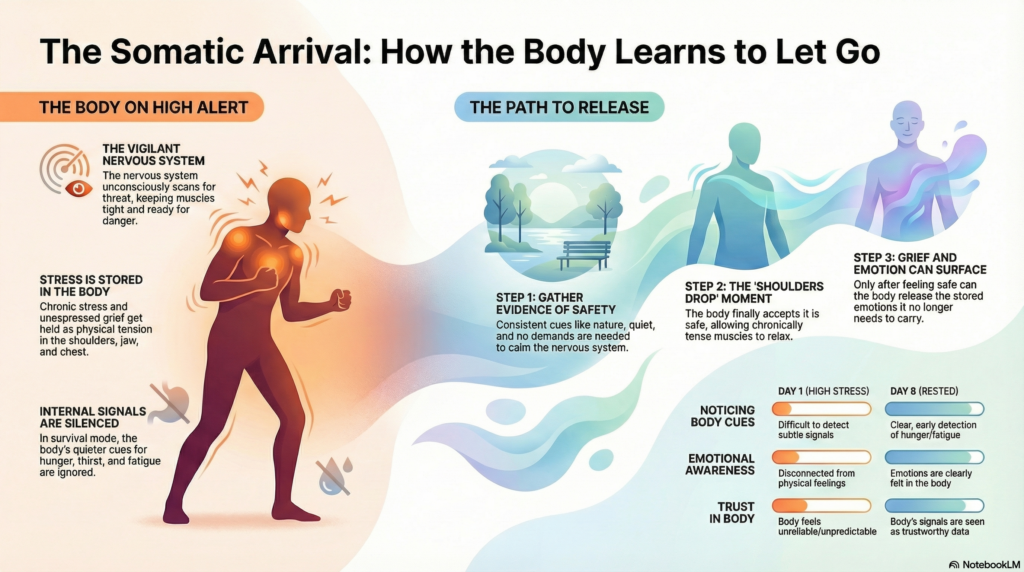
Image Credit: NotebookLM 2026
Note: The Somatic Arrival: A conceptual synthesis of nervous system settling, interoceptive return, and grief release observed across Days 1–8 of the retreat.
Listen to the podcast here by NotebookLM: https://notebooklm.google.com/notebook/5a728afe-1ad0-4fea-93aa-d87f483fe24f?artifactId=b2f3b31c-ebc2-4fc2-bcdc-c4b2891ff5fe
Translation Note
Note. Spanish-language passages were generated using Google Translate (Google, n.d.) and subsequently reviewed and refined by the author. Any remaining infelicities reflect the limits of machine translation rather than intent.
References
Craig, A. D. (2002). How do you feel? Interoception: The sense of the physiological condition of the body. Nature Reviews Neuroscience, 3(8), 655–666. https://doi.org/10.1038/nrn894
Dana, D. (2018). The polyvagal theory in therapy: Engaging the rhythm of regulation. W. W. Norton & Company.
Dana, D. (2020). Polyvagal exercises for safety and connection: 50 client-centred practices. W. W. Norton & Company.
Google. (n.d.). Google Translate. https://translate.google.com
Google. (2026). La Quietud [AI-generated image]. NotebookLM. https://notebooklm.google.com
Google. (2026). Evening Reflection: When the Shoulders Finally Drop [AI-generated video]. Gemini. https://gemini.google.com
Greenspan, M. (2004). Healing through the dark emotions: The wisdom of grief, fear, and despair. Shambhala Publications.
Kaplan, R., & Kaplan, S. (1989). The experience of nature: A psychological perspective. Cambridge University Press.
Kaplan, S. (1995). The restorative benefits of nature: Toward an integrative framework. Journal of Environmental Psychology, 15(3), 169–182. https://doi.org/10.1016/0272-4944(95)90001-2
Mehling, W. E., Price, C., Daubenmier, J. J., Acree, M., Bartmess, E., & Stewart, A. (2012). The Multidimensional Assessment of Interoceptive Awareness (MAIA). PLoS ONE, 7(11), Article e48230. https://doi.org/10.1371/journal.pone.0048230
Porges, S. W. (2011). The polyvagal theory: Neurophysiological foundations of emotions, attachment, communication, and self-regulation. W. W. Norton & Company.
Porges, S. W. (2022). Polyvagal theory: A science of safety. Frontiers in Integrative Neuroscience, 16, Article 871227. https://doi.org/10.3389/fnint.2022.871227
van der Kolk, B. A. (2014). The body keeps the score: Brain, mind, and body in the healing of trauma. Viking Press.