The Grief That Comes With Rest
No one told me that when the shoulders finally drop, the tears begin.
That the body, loosening its grip on years of vigilance, releases more than tension.
It releases the unlived hours, the dinners declined, the phone calls cut short, the visits swallowed by marking, by meetings, by the endless proving that I deserved to exist.
I thought healing would feel like relief. And it does. But it also feels like mourning for the woman who said yes when she meant no, who took the third contract and the fourth, who lay awake calculating how to be indispensable because dispensable meant invisible, and invisible meant gone.
Duelo, the Spanish say. The same word for grief and for duel, as if mourning were a kind of combat, a reckoning with what was lost while you were too busy to notice the losing.
Here is what I grieve:
The mornings I woke, I was already braced. The jaw that forgot how to soften. The breath held shallow for years like a child waiting to be scolded.
The writing I set aside. The ideas that flickered and faded because there was no sustained time, only stolen minutes between someone else’s demands.
The woman I might have become if I had trusted that I was enough without the constant performance of usefulness.
Miriam Greenspan says there are no negative emotions, only unskillful ways of refusing to feel them.
She says grief transmutes into gratitude if we let it move through us, if we stop building walls against the flood.
So I am letting it flood.
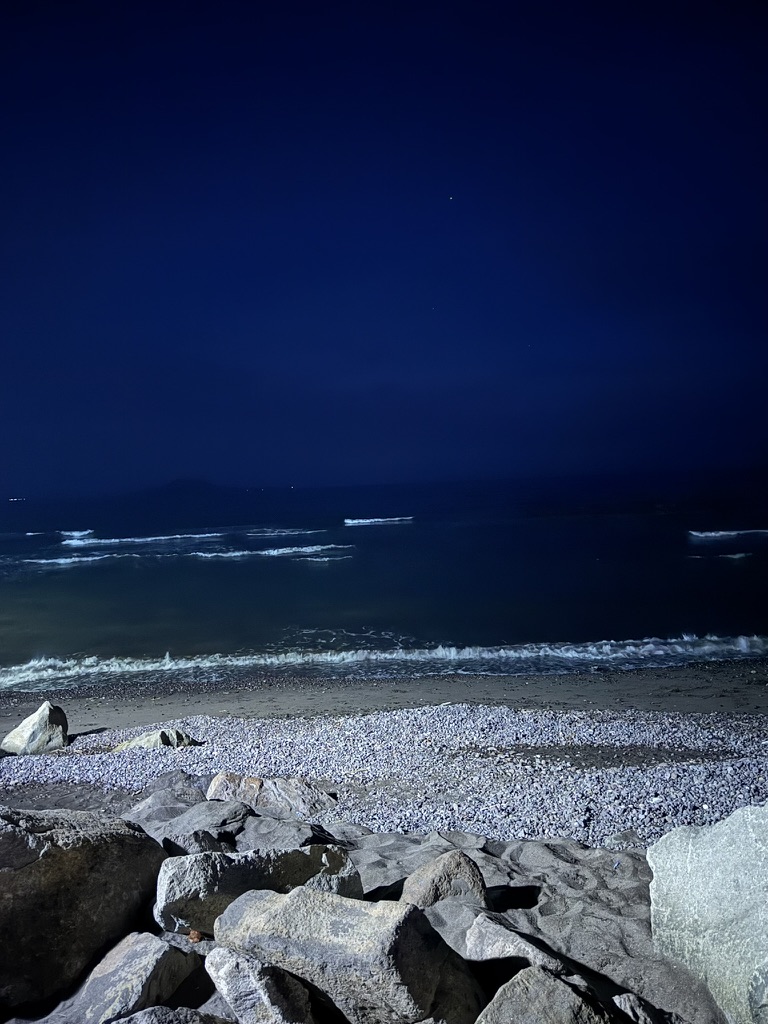
Here by the sea, where the pelicans rest between dives, where no one asks me to prove anything, where the waves keep their ancient rhythm without apology, I am letting the tears come for all the years I could not afford to cry.
This is what the body knows that the mind resists:
Safety is not the absence of grief. Safety is what allows grief to arrive finally.
The shoulders drop, and the sorrow rises. The jaw softens, and the unlived life asks to be mourned.
I am learning that healing is not linear, not a simple arc from broken to whole. It is a spiral, circling back through what we buried to survive, gathering the fragments we left behind when we were running too fast to carry them.
El duelo que viene con el descanso.
The grief that comes with rest. The mourning that arrives only when we stop.
The tears I could not cry while I was trying to be everything for everyone.
The woman I am becoming as I let myself grieve the woman I could not be.
The pelicans do not seem to grieve. But perhaps that is because they have never been asked to earn their right to float.
They dive when hungry. They rest when full. They have not learned to fear their own stillness.
I am unlearning.
Here, by the sea, with salt on my face that might be spray, that might be tears, that might be both, I am unlearning the terror of rest.
Descansa, the sea says. Rest.
And I do. And I weep. And both are holy.
Author: amytucker
Weytk.
I am Amy Tucker, an educator whose life has been shaped by questions of belonging, precarity, and the institutions that hold us or let us fall.
I was the first person in my family to attend university. By the time I was twenty-five, I was a single mother of three, working at a donut shop, taking courses part-time when I could afford them, learning what it means to calculate whether you can afford both groceries and textbooks. Those years taught me things about resilience and systemic exclusion that no textbook could convey. They also taught me that the academy is simultaneously a site of possibility and a space where people like me were never quite expected to arrive.
For twenty-five years, I have worked in education, including eighteen years at Thompson Rivers University on the unceded territory of the Tk'emlúps te Secwépemc within Secwépemcúl'ecw. Seventeen of those years have been as a contract faculty member, teaching organisational behaviour, business ethics, strategic leadership, teamwork, creativity and innovation, and human resources. I also serve as Prior Learning Assessment Advisor, guiding learners to recognise and document the knowledge they carry from lived experience. My pedagogy draws from trauma-informed education, Indigenous methodologies, and humanities theory, approaching each subject as a human question shaped by power, meaning, and the knowledge systems we choose to honour.
I am currently completing my Doctor of Social Sciences at Royal Roads University, with defence expected in early Winter 2026. My dissertation, Through Our Eyes: A Photovoice Study of Belonging, Precarity, and Possibility with International Students in Higher Education, employs participatory visual methodology to document how international business students experience and theorise the gap between institutional inclusion rhetoric and lived belonging. The research integrates sociology, leadership, communication, ethics, and higher education studies, grounded in what I call asymmetrical precarity: a recognition that precarities can rhyme without being identical, enabling solidarity without appropriation.
I serve as Chair of the Non-Regular Faculty Committee for the Federation of Post-Secondary Educators of BC, advocating for sessional and contract educators whose resilience too often subsidises institutional failures they never created. This work is inseparable from my scholarship: both are forms of witnessing, naming, and refusing to accept conditions that diminish human dignity.
My research interests include academic precarity, equity and inclusion in post-secondary institutions, labour in higher education, community-based and participatory methodologies, trauma-informed pedagogy, AI ethics, and leadership in crisis. I seek an interdisciplinary postdoctoral position, doctoral fellowship, or qualitative research project to continue this work.
Beyond academia, I am a monthly columnist for The Kamloops Chronicle and a regular book reviewer for The British Columbia Review. I represent Team Canada in age-group triathlon and am a long-distance open-water swimmer, finding in endurance sport the same lessons I find in scholarship: that meaningful work requires patience, that discomfort is often the pathway to transformation, and that we are capable of more than we imagine when we refuse to quit.
I carry within me threads of French ancestry reaching back to Acadian territory, a distant Mi'kmaq connection I hold with curiosity and respect rather than claim, and an Austrian grandfather who crossed an ocean knowing that belonging must be made rather than assumed. These inheritances shape how I understand identity, territory, and the ethics of conducting research and teaching on Indigenous lands.
I believe the classroom remains the most radical space of possibility in the academy. I believe research should serve transformation. And I believe that belonging, when it comes, is made rather than given.
Kukwstsétsemc.
View all posts by amytucker