Brown Pelican

Photo Credit: Amy Tucker, 2026
The Body Begins to Remember Safety
I woke this morning without an alarm, and for several minutes I lay still, noticing.
My shoulders rested flat against the mattress. My jaw hung loose. My breath moved in long, unhurried waves, rising and falling like the sea I could hear through the open window. These details might seem unremarkable to someone who has always slept peacefully, but for me, they marked a shift I had almost forgotten was possible.
For years, I have woken braced. Shoulders already climbing toward my ears. Jaw clenched against the night. Breath shallow and quick, as though the day’s demands had already begun pressing against my chest before I opened my eyes. I had normalised this state to the point that I no longer recognised it as anything other than how mornings felt.
This morning was different. The body had begun to remember something older than vigilance. It had started to remember safety.
And with that, remembering came something I had tried to avoid. The grief.
The Science of Felt Safety
Stephen Porges (2011, 2022), the neuroscientist who developed Polyvagal Theory, offers a framework for understanding my experience this morning. His research demonstrates that feelings of safety emerge from internal physiological states regulated by the autonomic nervous system, which operates largely below conscious awareness. We arrive at safety through the body, long before conscious thought; the body perceives it first, through what Porges terms neuroception.
Title: The Pool

Photo Credit: Amy Tucker, 2026
Neuroception
Neuroception refers to the nervous system’s continuous, unconscious scanning of the environment and internal bodily signals for cues of safety, danger, or life threat (Porges, 2003, 2004). Unlike perception, which involves conscious awareness and interpretation, neuroception operates below the threshold of awareness, triggering reflexive shifts in autonomic state without requiring conscious evaluation of the environment. This process evolved to enable our ancestors to respond rapidly to threats, but it can become miscalibrated by chronic stress, trauma, or prolonged exposure to demanding environments.
Polyvagal Theory proposes that mammals possess three primary autonomic states, each associated with distinct neural circuits that emerged at different points in evolutionary history (Porges, 2011). These states form a hierarchy, with the newest and most sophisticated circuit supporting social connection and calm, and the oldest supporting immobilization and shutdown.
What I Am Learning in the Body
Understanding the theory helps me name what I have been experiencing. For much of the past several years, and perhaps much longer, my nervous system has operated in a state of chronic sympathetic activation. The demands of academic work, the precarity of contract positions, the emotional labour of supporting students through their own struggles, the vigilance required to navigate institutional politics: all of these kept my body in a low-grade state of mobilization, ready to respond to the next challenge, the next deadline, the next crisis.
I became so accustomed to this state that I mistook it for normal. The tight shoulders, the clenched jaw, the shallow breathing, the difficulty sleeping through the night: these seemed features of adult life rather than symptoms of a nervous system stuck in defence mode. Bessel van der Kolk (2014) describes how people who have experienced chronic stress often feel perpetually unsafe within their own bodies. The body becomes a place of tension rather than rest, alert rather than ease.
Here, by the Sea of Cortez, something is shifting. The cues my nervous system receives have changed. The rhythm of the waves provides what Porges might call prosodic cues of safety: low-frequency sounds that signal the absence of threat. The warmth of the sun, the slow pace of the days, the absence of urgent demands, and the faces of people moving without hurry all communicate safety to a body that has been listening for danger.
Deb Dana (2018, 2020), whose work translates Polyvagal Theory into practical application, describes the process of befriending one’s nervous system. She writes about learning to notice the micro-moments of ventral vagal connection, what she calls glimmers: small sparks of safety and calm that can be cultivated and expanded over time. I am learning to notice these glimmers here. The warmth of coffee in my hands. The sound of pelicans diving. The way my breath deepens when I sit by the water.
Title: Pelicans Waiting for Dinner

Photo Credit: Amy Tucker, January 2026
The Grief That Comes With Softening
But here is what arrived unbidden: as the body begins to soften, grief rises to meet it.
This morning, after noticing my loose jaw and flat shoulders, I lay in the early light and felt the tears come. They were tears of relief, certainly, but they were also tears of mourning. Mourning for all the years I spent braced against a world that demanded constant vigilance. Mourning for the woman who took on contract after contract because she was terrified that if she said no, there would be nothing. Mourning for the version of myself who believed she had to be everything for everyone, and who quietly disappeared in the effort.
Miriam Greenspan (2003), in her essential work Healing Through the Dark Emotions, argues that grief, fear, and despair are transformative rather than pathological when we allow ourselves to experience them fully. She calls this process emotional alchemy: the transmutation of difficult emotions into wisdom and connection. But the alchemy only works if we are willing to feel what we have been avoiding.
Title: The Circle of Life

Photo Credit: Amy Tucker, January 2026
Emotional Alchemy
Emotional alchemy refers to the transformational process through which emotions culturally labelled as negative, such as grief, fear, and despair, can become pathways to gratitude, joy, and faith when they are authentically and mindfully felt rather than suppressed or bypassed (Greenspan, 2003). This framework challenges the dominant cultural emphasis on emotional control and positivity, suggesting instead that what we call healing requires moving through rather than around rugged emotional terrain.
I have been avoiding this grief for a very long time. There was no space for it in a life organised around survival. When you are juggling three contracts across two institutions, preparing courses in whatever hours remain after committee meetings and student advising, there is no time to sit with the question of what you might be losing in the process. The hamster wheel of precarious academic labour does what it is designed to do: it keeps you running too fast to notice that you are running in place.
An Accounting of What Was Lost
What did I lose in those years of overwork and fear-driven striving? The list is long, and I am only beginning to acknowledge it.
Time with people I love. The dinners declined because I had marking. The phone calls were cut short because I had to prepare for tomorrow’s class. The visits went untaken, because there was no time, no money, no energy left over after the institution had taken its share.
My own creative work. The writing projects set aside, year after year, while I wrote endless course outlines, assessment rubrics and committee reports. The ideas flickered and faded for lack of sustained time to develop them.
My health. The chronic tension I normalised. The sleep I sacrificed. The stress that accumulated in my body while I told myself I was fine, I could handle it, this was just what working hard looked like.
Presence. The capacity to be fully present where I was, rather than mentally composing tomorrow’s lecture or worrying about next semester’s contract while sitting at my own dinner table. The ability to rest without feeling guilty, to play without calculating what I should be accomplishing instead.
Myself. Somewhere along the way, in trying to be everything for everyone, I lost track of who I was outside of producing, performing, and proving my worth through labour. The woman who existed before she became a human productivity machine.
Crab Life
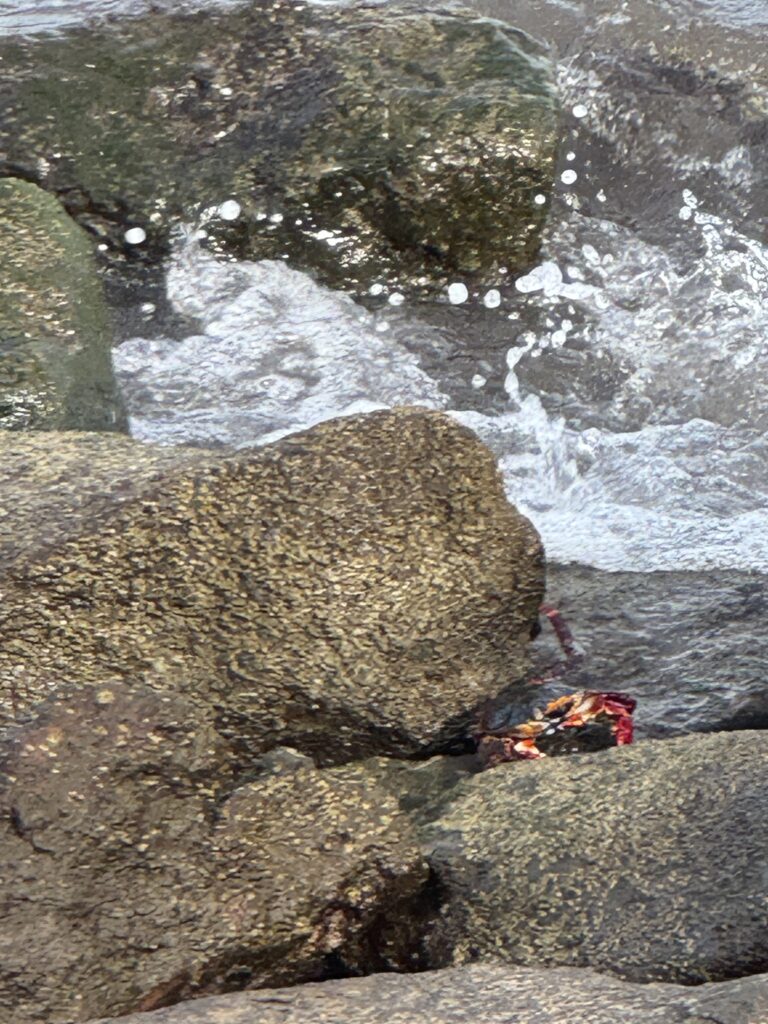
Photo Credit: Amy Tucker, 2026
The Fear Beneath the Overwork
Why did I accept so many contracts? Why did I work through weekends, through holidays, through the body’s increasingly urgent signals that something was wrong?
The answer is simple and painful: fear.
Fear that if I said no to one contract, there might never be another. Fear that I would be forgotten, passed over, rendered invisible in a system that treats contract employees as interchangeable parts. Fear that my value depended entirely on my usefulness, and that the moment I stopped being maximally useful, I would cease to matter
This fear was entirely rational. The conditions of precarious academic employment are designed to produce exactly this kind of anxiety. As I explored in my earlier research on contract faculty experiences, the structure of term-by-term appointments creates what scholars have called artificial scarcity: a manufactured sense that opportunities are scarce, competition is fierce. One must constantly prove one’s worth to secure even temporary belonging.
Title: Prayers for the Sailors

Photo Credit: Amy Tucker, January 2026
Artificial Scarcity
Artificial scarcity is the institutional production of resource scarcity that serves extractive logics rather than reflecting genuine constraints. In academic contexts, this manifests as deliberately limited contract renewals, competition for positions that could be made permanent, and funding models that pit workers against one another for resources that institutions choose to withhold. The effect is to transfer risk from institution to worker while intensifying individual self-exploitation to maintain employability.
Greenspan (2003) writes that suppressed fear often converts into anxiety, hypervigilance, or what she calls “toxic rage” that finds no appropriate outlet. For me, the fear transmuted into overwork: a constant striving that kept the terror at bay by keeping me too busy to feel it. The hamster wheel spun fast enough that I could pretend I was going somewhere.
Allowing the Dark Emotions
Title: The Land Before Time

Photo Credit: Amy Tucker, January 2026
Greenspan (2003) insists that we cannot heal by bypassing the dark emotions. We can only heal by moving through them. This morning, lying in the grey light with tears running into my hair, I began to let myself grieve what was lost.
I grieved for the years of contracted time, sold in increments to institutions that refused to commit. I grieved for the version of myself who believed she had to earn her right to exist through constant productivity. I grieved for the students I taught while running on empty, giving them less than they deserved because I had nothing left to give. I grieved for the relationships I neglected, the boundaries I failed to uphold, and the needs I refused to acknowledge, because acknowledging them would have required slowing down.
And I grieved for the woman I might have become if I had been able to trust that I was enough. The woman who wrote her own work, who rested without guilt, who knew her value stood apart from her usefulness to others. The woman who could be, without having to justify her existence through labour constantly.
That woman is still possible. She is emerging slowly, her shoulders learning to drop and her jaw to soften. However, her emergence requires mourning the years during which she had been unable to exist fully. Grief is part of becoming.
Title: Pillars of Life

Photo Credit: Amy Tucker, January 2026
A Somatic Record
Following the methodology I developed for this project, I have been tracking my somatic state each morning and evening. The patterns are beginning to reveal themselves. What I notice now is that the emergence of grief marks a new phase in the body’s work. The nervous system begins to settle, and the emotions held at bay by chronic activation begin to surface.
Table 1
Somatic Log: Days 1–6
| Day | Morning Observation | Evening Observation | Primary State |
|---|---|---|---|
| 1 | Tight chest, shallow breathing, jaw clenched | Restless, difficulty settling | SA |
| 2 | Woke with a loose jaw | Some softening after water time | SA → VV |
| 3 | Breath deeper, still some tension | Easier sleep, fewer interruptions | SA/VV |
| 4 | Woke with looser jaw | Calm, present, grounded | VV |
| 5 | Recognition of overachiever pattern | Emotional release, then peace | SA → VV |
| 6 | Shoulders flat, jaw loose; grief arose | Tears for lost years; then gentle calm | VV + grief |
Note. States are classified according to Polyvagal Theory (Porges, 2011). VV = ventral vagal; SA = sympathetic activation. The trajectory across Days 1–6 reflects a gradual shift from sympathetic activation toward ventral vagal regulation, with grief emerging as a regulated and tolerable affective state.
Day six marks the continuation of physical settling alongside the emergence of emotional content that demands its own kind of attention. The body softens enough to feel what it has been protecting me from feeling. This is precisely what Greenspan describes: the dark emotions arise when we finally create conditions safe enough to hold them.
Complicating the Framework
Title: Paradise

Photo Credit: Amy Tucker, January 2026
It would be tempting to treat this grief as purely personal, a private mourning for private losses. But intellectual honesty requires acknowledging the structural dimensions of my experience. My nervous system became dysregulated through specific, structural conditions. The conditions of precarious academic labour, the expectations of constant productivity, and the erosion of secure employment are systemic features of contemporary work that affect millions.
Byung-Chul Han (2010/2015), in The Burnout Society, describes how neoliberal economies produce subjects who exploit themselves more thoroughly than any external master could. We become subjects of achievement, experiencing our self-exploitation as freedom, as choice, as personal ambition. The violence is hidden because it comes from within. The exhaustion feels like personal failure rather than structural extraction.
Healing my own nervous system, while valuable, leaves untouched the conditions that initially caused the dysregulation. I hold both truths: personal healing matters, and structural change remains necessary. The grief I feel this morning is mine, but it is also collective. It belongs to every contract worker who said yes when they wanted to say no. It applies to anyone who has tried to be everything for everyone and lost themselves in the effort.
Title: The Monkey Face

Photo Credit: Amy Tucker, January 2026
The Body Archive
One of the most generative ideas I have encountered in my research is the body as archive. The body stores experience in ways that resist verbal articulation but emerge vividly through attention to somatic sensation. Muscle tension, posture, breath patterns, sensory associations: these hold histories that may never have been consciously processed or integrated into narrative memory.
When I notice my shoulders dropping, I am reading the archive. The body is releasing its record of vigilance, one slight relaxation at a time. When my jaw softens in sleep, the body is revising its story, replacing the narrative of threat with emerging evidence of safety. When tears come, the body finally allows what was stored to flow outward. The grief I feel is archived, years of unshed tears for years of unlived moments.
van der Kolk (2014) describes trauma as an experience that becomes stuck in the body, unable to complete its natural cycle of activation and discharge. The inverse may also be true: healing becomes possible when the body finds conditions that allow it to complete cycles interrupted by chronic stress. The sea, the warmth, the solitude, the absence of demand: these may be creating the conditions my body needs to process what it has been carrying. The grief is part of that processing.
Title: Sea Lions

What the Pelicans Know
Photo Credit: Amy Tucker, January 2026
Later this morning, after the tears had passed and I had dressed and walked to the water, I watched the pelicans again. They rest on the water between dives, floating with apparent ease, their bodies loose and buoyant. They seem to know something about the alternation between effort and rest, between activation and recovery, that I am only now beginning to learn.
The pelicans show no sign of grief. But perhaps that is because they have never lost access to their own rhythm. They have never been asked to produce constantly, to prove their worth through labour, to fear that rest makes them dispensable. They dive when hungry, float when satisfied, and fly when they choose. The simplicity of it undoes something in me.
Porges (2022) argues that safety is a biological imperative, suggesting that social connectedness and the experience of felt safety are fundamental human needs wired into our physiology. Perhaps the grief I feel is the recognition of how long I lived without this safety, how long I ran on vigilance and fear, how much I sacrificed to a system that asked everything and offered no guarantee in return.
Day six. The shoulders are learning to drop. The jaw is learning to soften. The breath is learning to deepen. And the tears are learning to fall. All of it is necessary. All of it is the body doing its quiet work of remembering what it means to be safe, and mourning the years when safety had been beyond reach.
Greenspan (2003) promises that grief, fully felt, transmutes into gratitude. I am still on the way. But I trust the process. I trust the tears. I trust the sea and the pelicans and this slow, patient body, finally allowed to feel what it has been carrying.
Safety, it turns out, is something the body both recognises and grieves. It is something the body grieves when it finally arrives.
Title: The Path

Photo Credit: Amy Tucker, January 2026
Title: Life on the Sea
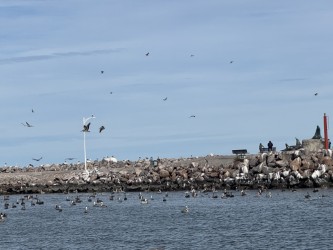
Photo Credit: Amy Tucker, January 2026
I am still here.
References
Dana, D. (2018).
The polyvagal theory in therapy: Engaging the rhythm of regulation.
W. W. Norton.
Dana, D. (2020).
Polyvagal exercises for safety and connection: 50 client-centred practices.
W. W. Norton.
Google. (n.d.). Google Translate. https://translate.google.com
Greenspan, M. (2003).
Healing through the dark emotions: The wisdom of grief, fear, and despair.
Shambhala Publications.
Han, B.-C. (2015).
The burnout society.
Stanford University Press.
Porges, S. W. (2003).
Social engagement and attachment: A phylogenetic perspective.
Annals of the New York Academy of Sciences, 1008(1), 31–47.
https://doi.org/10.1196/annals.1301.004
Porges, S. W. (2004). Neuroception: A subconscious system for detecting threats and safety. Zero to Three, 24(5), 19–24.
Porges, S. W. (2011).
The polyvagal theory: Neurophysiological foundations of emotions, attachment, communication, and self-regulation.
W. W. Norton.
Porges, S. W. (2022).
Polyvagal theory: A science of safety.
Frontiers in Integrative Neuroscience, 16, Article 871227.
https://doi.org/10.3389/fnint.2022.871227
van der Kolk, B. A. (2014).
The body keeps the score: Brain, mind, and body in the healing of trauma.
Viking.
Note. Spanish-language passages were generated using Google Translate (Google, n.d.) and subsequently reviewed and refined by the author. Any remaining infelicities reflect the limits of machine translation rather than intent.