Living Inside Precarity
The Somatic Archive of What Institutions Leave Unnamed
Keywords: alonetude, precarious labour, somatic archive, institutional harm, embodiment, healing, solitude, identity, scholarly personal narrative
Alonetude exists between being alone, loneliness, and solitude, where presence replaces performance.
The Weight I Carry
I am sitting in an airport terminal, somewhere between the life I have been living and the life I am trying to reach. The fluorescent lights hum above me. Strangers move past with purpose. My body is here, but my nervous system is still scanning, still bracing, still waiting for the next demand.
This is what precarity feels like from the inside. It is a labour condition, yes, and also a way of living in a body that has forgotten how to rest.
Psychiatrist Bessel van der Kolk (2014) writes that “traumatised people chronically feel unsafe inside their bodies… The past is alive in the form of gnawing interior discomfort” (p. 103). When I read those words, I recognised myself. The gnawing is familiar. It has lived in my stomach for years. I had simply stopped noticing it because noticing felt like a luxury beyond reach.
For more than eighteen years, I have lived inside the slow violence of precarious academic labour. Slow violence, a term coined by literary scholar Rob Nixon (2011), describes harm that unfolds gradually and often invisibly, accumulating over time rather than arriving as a single dramatic event. Precarious labour is slow violence. It arrives without announcement. It settles. It accumulates. It becomes the water you swim in until you forget you are wet.
The phrase maybe next semester has followed me through contracts, calendars, and classrooms. It has accumulated as a quiet weight in my body, a residue difficult to name. Over time, that uncertainty settled into my jaw, my breath, and my nervous system. This is how survival feels when flexibility is demanded, and care remains absent.
Title: Pretending I Am Okay
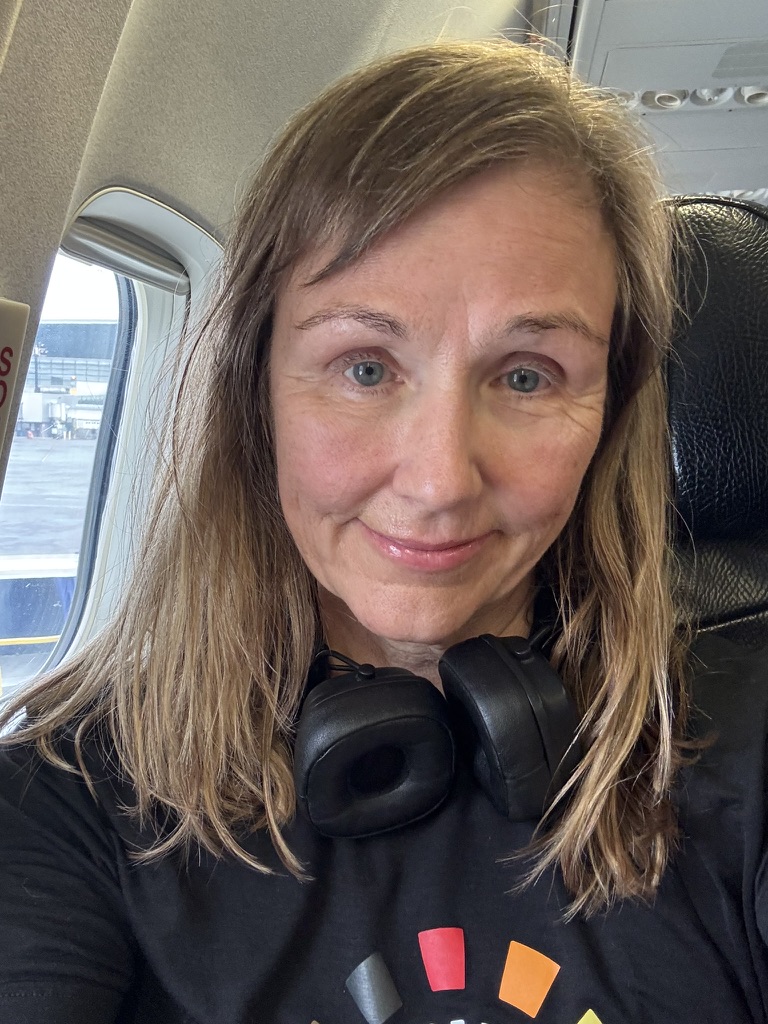
Artist Statement

I chose this image because it documents the performance of precarious labour demands. For seventeen years, I showed up. I smiled. I won teaching awards. I served on committees. I said yes when I meant no. I performed wellness because the alternative felt too risky. What would happen if they saw how tired I really was? Would they renew my contract if they knew I was struggling? This photograph is evidence of what sociologist Arlie Hochschild (2012) calls emotional labour, the work of managing one's own emotions to fulfill the requirements of a job. Emotional labour is exhausting precisely because it is invisible. It appears on no workload document. It earns no compensation. But it is real, and it accumulates in the body. This image documents that accumulation.

Photo Credit: Amy Tucker, 2026
The Somatic Archive
I have come to think of my body as an archive. An archive, in the traditional sense, is a place where records are kept. It is where we store documents that matter, evidence of what has happened. My body is an archive of what institutions leave unnamed.
The term somatic comes from the Greek soma, meaning “body.” When I speak of a somatic archive, I mean the way my body has recorded and stored my experiences of precarious labour. These records are held in my jaw, which clenches without my awareness. They are held in my shoulders, which rise toward my ears when I hear an email notification. They are held in my breath, which shallows in the presence of institutional authority. They are held in my sleep, which remains shallow and easily disrupted.
Van der Kolk (2014) established that the body keeps the score. What I am learning is that my body has been keeping score for seventeen years. It has recorded every contract renewal that came late. Every semester, I taught an overload to make ends meet. Every meeting where I was treated as disposable. Every time I was reminded, subtly or directly, that I occupied the margins.
These experiences passed through me without resolution, through me. They accumulated. They settled. They became part of how my nervous system operates.
The body becomes an archive of what institutions leave unnamed.
The Nervous System Trapped in Activation
Neuroscientist Stephen Porges (2011) developed polyvagal theory to explain how the autonomic nervous system responds to safety and threat. I introduced this theory in my opening post, but I want to return to it here because it helps me understand what has happened to my body.
Porges (2011) writes that “even though we may not be aware of danger on a cognitive level, on a neurophysiological level, our body has already started a sequence of neural processes” (p. 11). This means my body can respond to a threat even when my conscious mind insists that everything is fine. My nervous system has its own intelligence. It reads cues from the environment and responds accordingly, often before I am aware of what is happening.
For years, my nervous system has been stuck in what Porges (2011) calls sympathetic activation. This is the fight-or-flight response. It is useful in genuine emergencies. It mobilises energy, quickens the heart, and sharpens attention. But it becomes harmful when it is chronic. When the nervous system remains in a state of sympathetic activation for years, it begins to treat that state as normal. The body forgets what safety feels like.
Porges (2011) observes that “only in a safe environment is it adaptive and appropriate to inhibit defensive systems and engage socially” (p. 13). I have felt unsafe at work for a very long time. My body has been vigilant, scanning, bracing. It has been waiting for the next threat, the next demand, the next reminder that my position was contingent.
This residency is an attempt to shift my nervous system toward what Porges (2011) calls the ventral vagal state. This is the state of safety and connection. It is the state from which healing becomes possible. But I cannot simply decide to feel safe. I must create the conditions that allow my nervous system to perceive safety. That is why I am here, by the sea, in a place where no one needs anything from me.
The Neutral Zone
Transition theorist William Bridges (2019) describes a three-phase model of change. The first phase is endings, where something familiar comes to a close. The third phase is new beginnings, where something new emerges. But between these two phases lies what Bridges calls the neutral zone.
The neutral zone is disorienting. It is the space where the old identity has ended, but the new self is still in formation. Bridges (2019) describes it as a time of confusion, uncertainty, and even despair. It is also, he argues, a time of profound creativity and possibility, if we can tolerate the discomfort of holding open who we are becoming.
I am in the neutral zone. The identity I built over seventeen years, the contract faculty member, the award-winning educator, the person who was always available, has ended. That person existed in a relationship to an institution that no longer employs her. Without the institution, who am I?
The honest answer: I hold the question open still. I am sitting in the uncertainty, trying to resist the urge to fill it with busyness, with productivity, with another performance of competence. Bridges (2019) suggests that the neutral zone requires slowing down and a willingness to be in the in-between without rushing toward resolution.
This is harder than it sounds. My nervous system wants to do something. It wants to scan for threats, make plans, and solve problems. Sitting with uncertainty feels dangerous to a body trained by precarity to always be preparing for the next crisis.
Title: Suitcase Is Packed
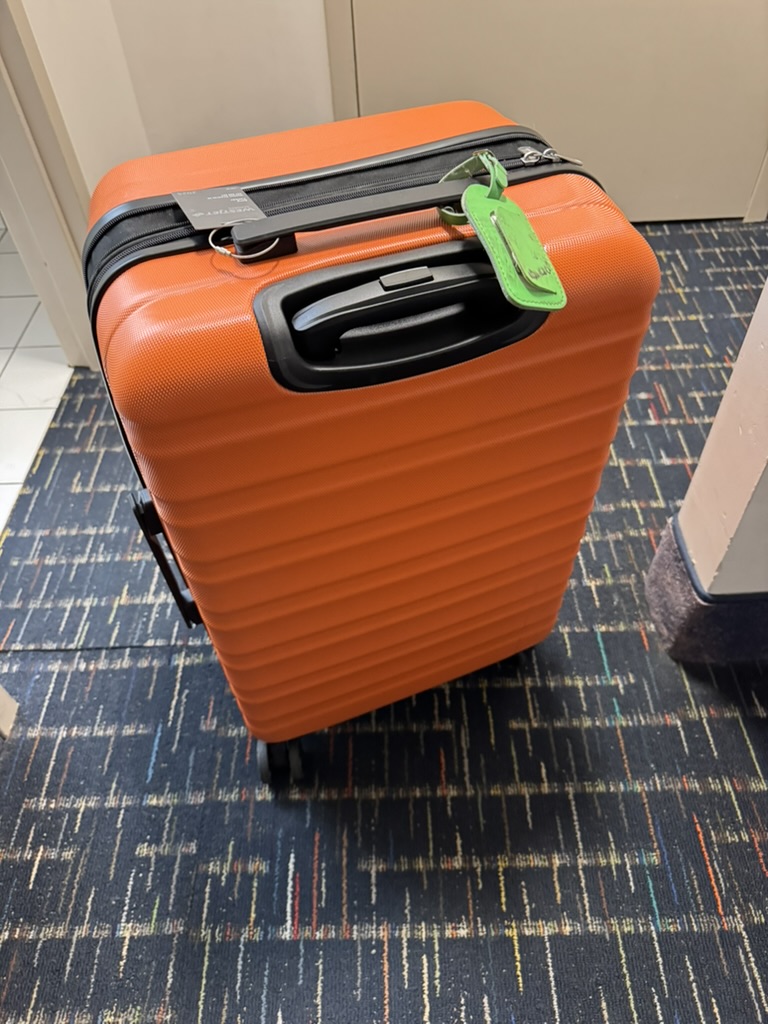
Artist Statement

I photographed this suitcase because it represents a boundary. Everything I am bringing fits inside. I made deliberate choices about what to carry and what to leave behind. I left behind the stacks of academic books that usually travel with me. I left behind the multiple devices that keep me tethered to institutional demands. I packed clothes, a camera, watercolours, and a notebook. I packed tools for presence rather than tools for productivity. This image connects to the concept of liminality, the threshold state described by anthropologist Victor Turner (1969).

A packed suitcase is liminal. It belongs neither fully to the place being left nor to the place being entered. It holds the traveller's identity in suspension. I chose the colour orange without thinking about it, but now I notice that orange is the colour of warmth, of citrus, of the desert flowers I will soon see. It is also the colour of safety vests, of visibility, of being seen. Perhaps I chose it because I am tired of being invisible.

Photo Credit: Amy Tucker, January 2026
From Performance to Presence
Nineteenth-century psychologist Pierre Janet, as cited in van der Kolk (2014), observed that “traumatic stress is an illness of not being able to be fully alive in the present” (p. 314). This resonates deeply. For years, I have been present only for performance. I have been performing presence while my attention remained split, part of me always monitoring for danger, calculating risks, managing impressions.
Performance, in the sociological sense developed by Erving Goffman (1959), refers to the way we present ourselves to others in social situations. Goffman argued that social life is like a stage, where we play roles and manage the impressions we create. This is entirely human. It is simply how social interaction works. But for precarious workers, the stakes of performance are particularly high. We perform competence, enthusiasm, and wellness because our livelihoods depend on it. We cannot afford to let the mask slip.
My goal for this residency is to move from performance to presence. I want to practice being with myself without an audience. I want to discover what it feels like to be free from the tether of my productivity.
This is unfamiliar territory. I have spent so many years being available to others that I have become profoundly unavailable to myself. I have lost the thread of my own wanting, my own needing, my own feeling. These are things I need to relearn.
I have spent so many years being available to others that I have become profoundly unavailable to myself.
The Unthought Known
Psychoanalyst Christopher Bollas (2017) introduced the concept of the unthought known. This phrase describes knowledge we hold in our bodies and our being, still waiting to be articulated in conscious thought. It is what we know without knowing that we know it.
I carry a great deal of unthought known. My body holds knowledge about precarity that I have never fully articulated. It knows things about survival, about adaptation, about the cost of endurance. This knowledge has been waiting for words to catch up.
Scholarly Personal Narrative, the methodology I am using throughout this project, provides a framework for accessing the unthought known. By attending carefully to my own experience, by sitting with sensation and memory rather than rushing past them, I create conditions for embodied knowledge to surface.
Bollas (2017) suggests that the unthought known often emerges in moments of stillness, when we stop the busyness that usually keeps it submerged. This is another reason for this residency. I need to be still long enough for what I know to become thinkable.
Alonetude: The Concept Takes Root
The concept of alonetude first took root during the global stillness of the COVID-19 pandemic. While the world outside was fraught with uncertainty, I discovered something unexpected. For the first time in my career, the absence of institutional obligation felt like freedom.
This was confusing. I was isolated, like everyone else. The news was frightening. The future was uncertain. And yet, paradoxically, I felt more at peace than I had in years. The quiet felt more like peace than loneliness. The absence of commuting, of meetings, of the constant performance of institutional belonging, created space for something I had been without for a very long time.
I began to wonder about this. What was the difference between the isolation I was experiencing and the loneliness I had felt at other times in my life? What made this aloneness feel restorative rather than painful?
The answer, I began to realise, had to do with choice. During the pandemic, aloneness was imposed on everyone. But within that imposed condition, I was able to choose how I inhabited my solitude. I could structure my days according to my own rhythms. I could attend to my own needs without constantly deferring to institutional demands. The aloneness was imposed, but the quality of presence within it was chosen.
This is what I am calling alonetude: the agentic labour of transforming imposed isolation into chosen presence. It is a practice, something that must be cultivated. It requires intention, attention, and care rather than arriving on its own.
Rest as a Human Right
I want to return to the human rights framing I established in my opening post, because it matters deeply to what I am doing here.
Article 24 of the Universal Declaration of Human Rights (United Nations, 1948) affirms the right to rest and leisure. This is a fundamental human right, no suggestion or reward for productivity, as essential to human dignity as the right to food, shelter, and freedom from torture.
And yet. For the past seventeen years, I have been unable to fully exercise this right. I have worked through summers, through illnesses, through grief. I have taught overload semesters to pay my bills. I have never had a sabbatical, paid or otherwise, until now. And even this sabbatical is unpaid. I am funding my own rest because my institution refused to prioritise it.
Education scholar Robert Nash (2004) reminds us that “etymologically, the word ‘scholar’ goes back to… skholē, meaning leisure or play” (p. 42). The original scholars were people with enough leisure to think, to wonder, to follow curiosity without the pressure of immediate utility. What does it mean that contemporary academics, particularly those of us in precarious positions, have so little leisure that we cannot embody the original meaning of our vocation?
I am choosing to treat the right to rest as lived practice rather than distant declaration. This residency is an exercise of a fundamental human right that has been systematically denied to me by the conditions of my labour.
Title: The Stories Rocks Tell
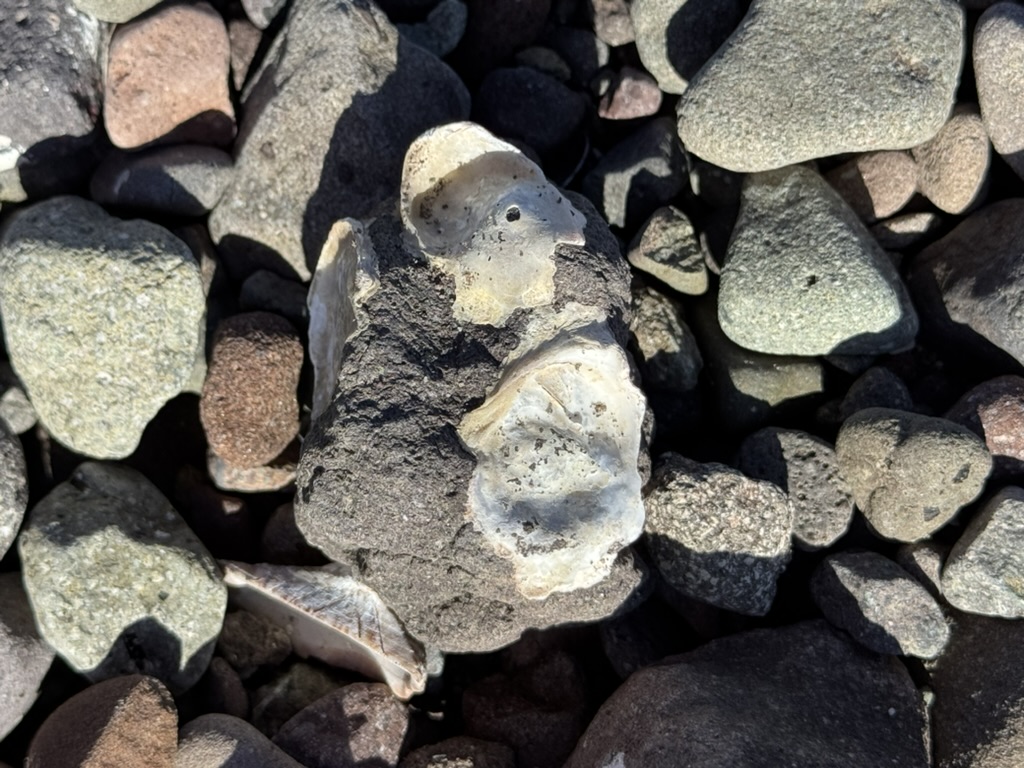
Artist Statement

I began collecting stones during this journey, and I photograph them because they teach me about time. A stone is patient. It takes its time. It has been shaped by forces acting over thousands or millions of years. When I hold a stone, I am holding time I cannot comprehend.

This practice connects to what environmental psychologists Rachel Kaplan and Stephen Kaplan (1989) call soft fascination, the kind of gentle, effortless attention that natural objects invite. Soft fascination is restorative. It allows directed attention to recover from the depletion caused by sustained cognitive effort. These stones are small teachers. They remind me that my urgency is one way among many to be in the world. They remind me that slowness is wisdom. They remind me that I, too, am being shaped by forces beyond my control, always becoming.

Photo Credit: Amy Tucker, January 2026
Moving Research into the Body
Scholarly Personal Narrative, developed by Robert Nash (2004), shifts inquiry from the library into the body. This is a profound methodological move. It says that lived experience is data. It is evidence. It is a legitimate site of knowledge production.
Nash (2004) writes that “scholarly personal narrative writing is the unabashed, up-front admission that your own life signifies…” (pp. 23–24). This admission is both liberating and frightening. It liberates me from the pretence that I am a detached observer of phenomena held at a safe distance. It frightens me because it requires vulnerability. I cannot hide behind the passive voice or the third person. I must say I. I must own what I know and how I know it.
Nash (2004) describes the elements of effective scholarly personal narrative:
The Personal: I use my own transition, my own exhaustion, my own body as the primary site of inquiry.
The Scholarly: I anchor my experiences in established theories of transition, neurobiology, trauma, and human rights.
The Universal: My story of burnout serves as a mirror for a broader systemic crisis in academic labour.
Nash (2004) encourages writers to trust their own voices. He writes: “Do not risk losing something vital and special to your humanity: your own gritty and beautiful, hard-won voice” (pp. 26–27). I am trying to trust my voice. I am trying to believe that what I have lived is worth telling, that my experience contributes to understanding, that my story might offer something to others who recognise themselves in it.
Daily Practices by the Sea
Title: Learning the Rhythm
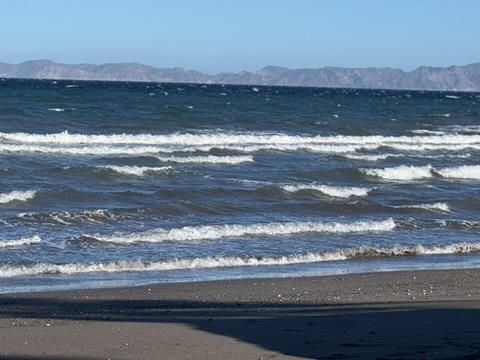
Artist Statement

I stood at the shoreline watching the waves come in, one after the other, without urgency. There was no need to measure time here. The water moved as it always has, steady and unconcerned with outcome.

I found myself staying longer than planned. Beyond thinking. Just watching the repetition, the way each wave arrived fully and then released itself back into the whole.

Within the Alonetude project, this moment became a quiet lesson in pacing. Nothing forced. Nothing held. Motion without pressure.

I am learning that restoration has its own rhythm. It cannot be rushed. It can only be entered.

Photo Credit: Amy Tucker, February 2026
Van der Kolk (2014) writes that “neuroscience research shows that the only way we can change the way we feel is by becoming aware of our inner experience” (p. 209). Healing requires interoception, the capacity to sense and interpret signals from within the body. Interoception is how we know when we are hungry, tired, anxious, or at peace. For those of us who have spent years overriding our bodies’ signals, interoception must be relearned.
My plan for the days ahead remains intentionally simple:
Writing in the morning light. Words come differently when the day is new and quiet.
Swimming in salt water. The sea holds me, and for once, I release the work of holding myself.
Walking without a destination. Movement without purpose. Presence without productivity.
Painting without expectation. Colour and water on paper. No outcome required.
Sitting long enough to feel sensation return. This is perhaps the hardest practice of all.
These are ordinary activities that create conditions, beyond any elaborate intervention, for awareness. They are the practical application of what I am calling the discipline of arrival, which is the practice of landing fully in a moment without any next thing pressing against the edge of the current thing.
Porges (2011) emphasises that physiological regulation is biological and experiential, shaping how individuals engage with the world, relationships, and perceived risk. If I want to experience the world differently, I must shift my physiological state. This cannot be accomplished through willpower alone. It requires environmental conditions that communicate safety to my nervous system. It requires time. It requires patience with a body that has forgotten what rest feels like.
Title: White Ford Bronco

Artist Statement

I passed this white Ford Bronco while walking, sun already high, palm shadows stretching across the road. It was parked without urgency, dust settled into its surface, gear strapped to the roof as if ready but in no rush to move.

I stopped because it felt familiar. The stance drew me rather than the vehicle itself. Prepared, yet resting. Capable of motion, yet still.

Within the Alonetude project, this moment reflected something I am learning to practise. Readiness can hold stillness. One can be equipped for the road while allowing pause.

I am beginning to understand that rest is part of the journey rather than its opposite.


Photo Credit: Amy Tucker, February 2026
Stepping onto the Third Shore
I think of this month as a movement toward what I am calling the Third Shore. If one shore is loneliness (the pain of unwanted isolation) and another shore is solitude (the peace of chosen aloneness), then the third shore is alonetude: the space where imposed isolation is transformed through attention and care into something generative.
The third shore is a threshold. It is a liminal space. It is a quality of presence rather than a destination to be reached and possessed. It is a quality of presence to be practised.
I arrive by the sea to listen. To write. To breathe. To remember what a body feels like when it receives permission to rest.
Van der Kolk (2014) writes that “agency starts with what scientists call interoception” (p. 209). Interoception, as I explained earlier, is the capacity to sense the body’s internal state. It is the foundation of agency because we can only act on our own behalf when we know what we need.
I am here to recover my interoception. I am here to relearn the signals my body has been sending that I have spent years ignoring. I am here to discover what I need, what I want, who I am beyond performance for an institution that no longer employs me.
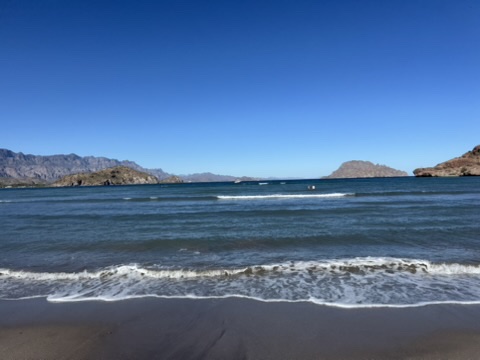
Title: Sea of Cortez
Artist Statement

The sea is why I came here. I needed to be near water. I needed the sound of waves, the smell of salt, the horizon line that reminds me how small my concerns are against the scale of geological time. Environmental psychologist Roger Ulrich (1983) demonstrated that visual exposure to water and natural environments reduces stress and supports psychological restoration. This is physiology, beyond metaphor. My nervous system responds to this landscape in ways my conscious mind cannot fully control. I photograph the sea because it is my co-researcher in this inquiry. It holds space for me. It asks nothing. It continues its ancient rhythms regardless of whether I am watching. There is comfort in that indifference. There is freedom in being witnessed by something that holds me beyond performance.

Photo Credit: Amy Tucker, January 2026
I arrive by the sea to listen, to write, and to remember what a body feels like when it receives permission to rest.
An Invitation to Continue
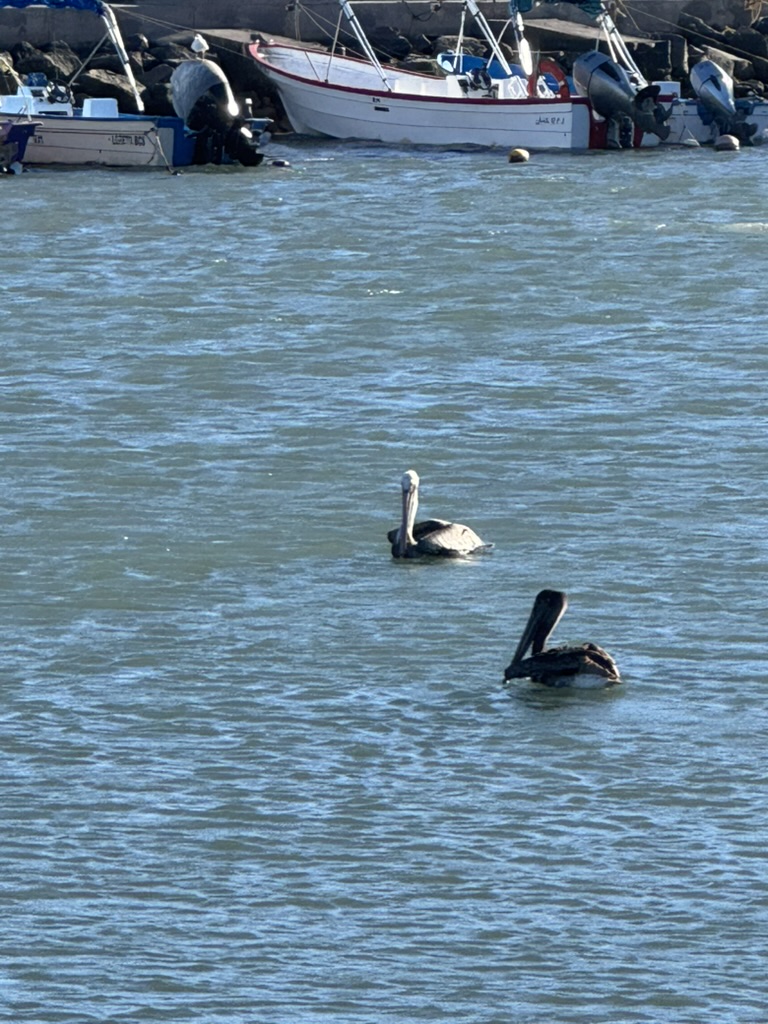
Title: Holding the Same
Artist Statement

Two pelicans moved slowly across the marina, bodies low, unhurried, carried more than directed by the tide. Boats rested behind them, tethered, waiting for other hands, other departures.

I lingered here longer than expected. What held my attention was their rhythm rather than the birds themselves. Separate, yet aligned. Moving through the same water without the need to converge.

Within the Alonetude inquiry, this moment offered a gentle teaching. Solitude allows proximity without requiring isolation. It allows proximity without pressure. Presence without performance.

There is room to share space while still remaining wholly one’s own.

Photo Credit: Amy Tucker, February 2026
This is the second entry in a thirty-day inquiry. I hold what comes next as still open. I know only that I am here, that my body is beginning to register the absence of institutional demand, and that something is shifting in ways I cannot yet name.
If you are reading this and you recognise yourself in these words, I want you to know: you are held in a community of exhaustion. It is structural. It is systemic, lodged in conditions beyond your personal failing.
And if you are lucky enough to have security, to have rest, to have a body that rests rather than constantly bracing for the next threat, I hope this offers a window into what precarious labour actually feels like from the inside. I hope it helps you understand why your contingent colleagues seem tired, why they hesitate to say no, and why they perform well even when they are struggling.
The sea is calling. I am going to answer.
Estoy llegando. Estoy aprendiendo a descansar.
I am arriving. I am learning to rest.
Note. Spanish-language passages were generated using Google Translate (Google, n.d.) and subsequently reviewed and refined by the author. Any remaining infelicities reflect the limits of machine translation rather than intent.
References
Bollas, C. (2017). The shadow of the object: Psychoanalysis of the unthought known. Routledge.
Bridges, W., & Bridges, S. (2019). Transitions: Making sense of life’s changes (40th anniversary ed.). Balance.
Goffman, E. (1959). The presentation of self in everyday life. Doubleday.
Google. (n.d.). Google Translate. https://translate.google.com
Hochschild, A. R. (2012). The managed heart: Commercialization of human feeling. University of California Press.
Kaplan, R., & Kaplan, S. (1989). The experience of nature: A psychological perspective. Cambridge University Press.
Nash, R. J. (2004). Liberating scholarly writing: The power of personal narrative. Teachers College Press.
Nixon, R. (2011). Slow violence and the environmentalism of the poor. Harvard University Press.
Porges, S. W. (2011). The polyvagal theory: Neurophysiological foundations of emotions, attachment, communication, and self-regulation. W. W. Norton & Company.
Turner, V. (1969). The ritual process: Structure and anti-structure. Aldine Publishing.
Ulrich, R. S. (1983). Aesthetic and affective response to natural environment. In I. Altman & J. F. Wohlwill (Eds.), Human behaviour and environment: Advances in theory and research (Vol. 6, pp. 85–125). Plenum Press.
United Nations. (1948). Universal declaration of human rights. https://www.un.org/en/about-us/universal-declaration-of-human-rights
van der Kolk, B. A. (2014). The body keeps the score: Brain, mind, and body in the healing of trauma. Viking.